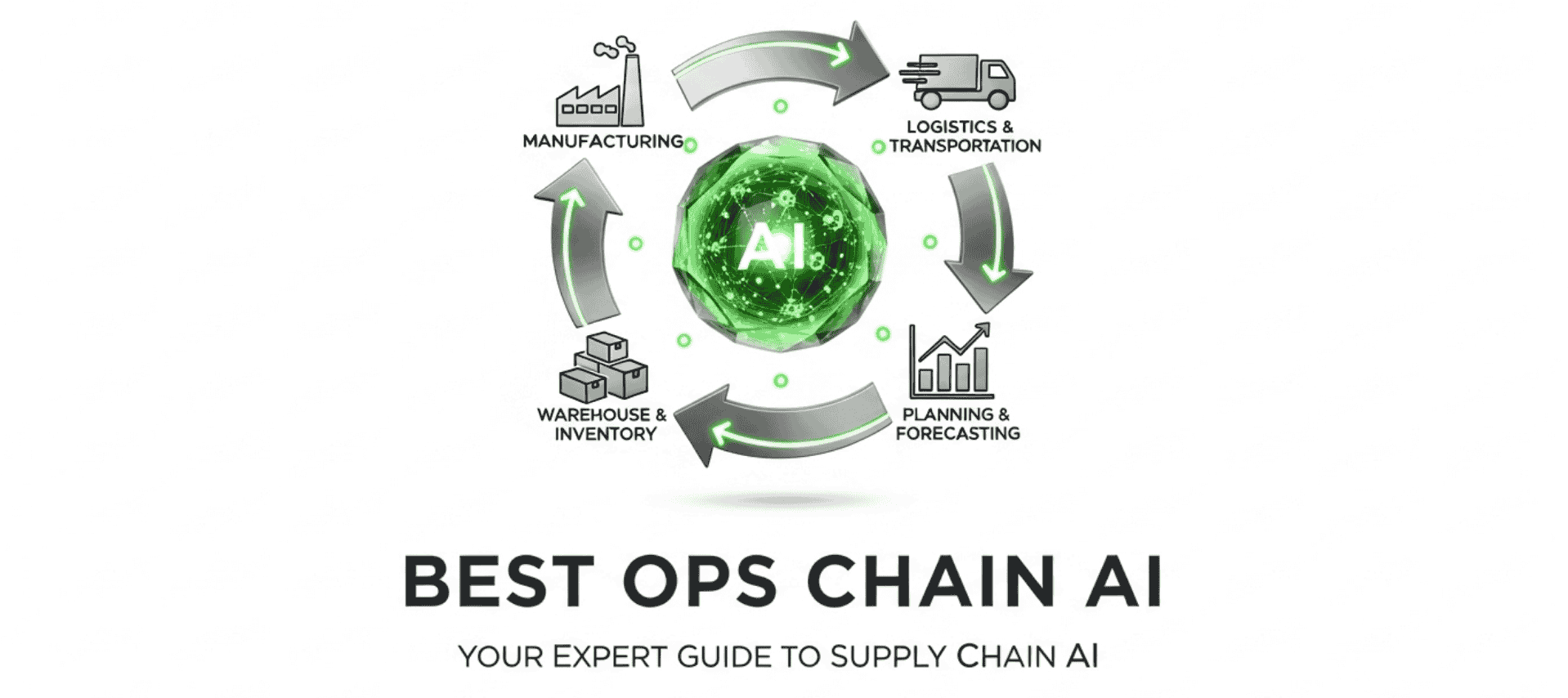
Is ShipwithMina the Right AI for Your Warehouse & Inventory Management?
Take This Quick Quiz to Find Out!
Key Takeaways
- AI-Powered Intelligence: ShipwithMina transforms warehouses from reactive cost centers into proactive, data-driven strategic assets through agentic AI and decision intelligence
- Proven Performance Gains: Achieve 30-50% throughput increases, 99.9%+ order accuracy, and 25-35% labor efficiency improvements within 6 months
- Seamless Integration: Works with existing ERP systems (SAP, Oracle, NetSuite) and WMS platforms while maintaining enterprise-grade security
- Rapid Implementation: Typical deployment in 8-12 weeks with full ROI realization in less than 12 months through transparent, value-based pricing
The simple truth is that our industry is at a major inflection point. Warehouses, once seen as static cost centers, are now the dynamic heart of competitive advantage. This ShipwithMina FAQs guide cuts through the noise, providing clear, actionable insights for operations leaders who are ready to transform their warehouse and inventory management. You're seeking expert insights to solve complex operational challenges and gain a competitive edge – and that's precisely what ShipwithMina offers.
Here at Best Ops Chain AI, founded by Hisham Serry, we believe that visibility is passive; action is power. This comprehensive FAQ addresses your critical questions about how ShipwithMina's agentic AI and decision intelligence turn raw data into strategic advantage. From optimizing pick paths and predicting demand to ensuring robust data security and calculating tangible ROI, we break down how this platform is a force multiplier for your human talent.
Explore how ShipwithMina integrates with your existing ERPs and WMS, offering unparalleled optimization for AI for Warehouse & Inventory Management by ensuring your data isn't siloed, but actively connected. The goal is to empower you to do more with less, press the advantage, and move from observing to acting in a permanently challenging logistics landscape. This isn't just about software; it's about re-architecting your supply chain for resilience and growth.
Discover how to operationalize AI effectively and make your warehouse a proactive, data-driven asset, explored further at our dedicated category page: AI for Warehouse & Inventory Management.
What is ShipwithMina and who is it designed for?
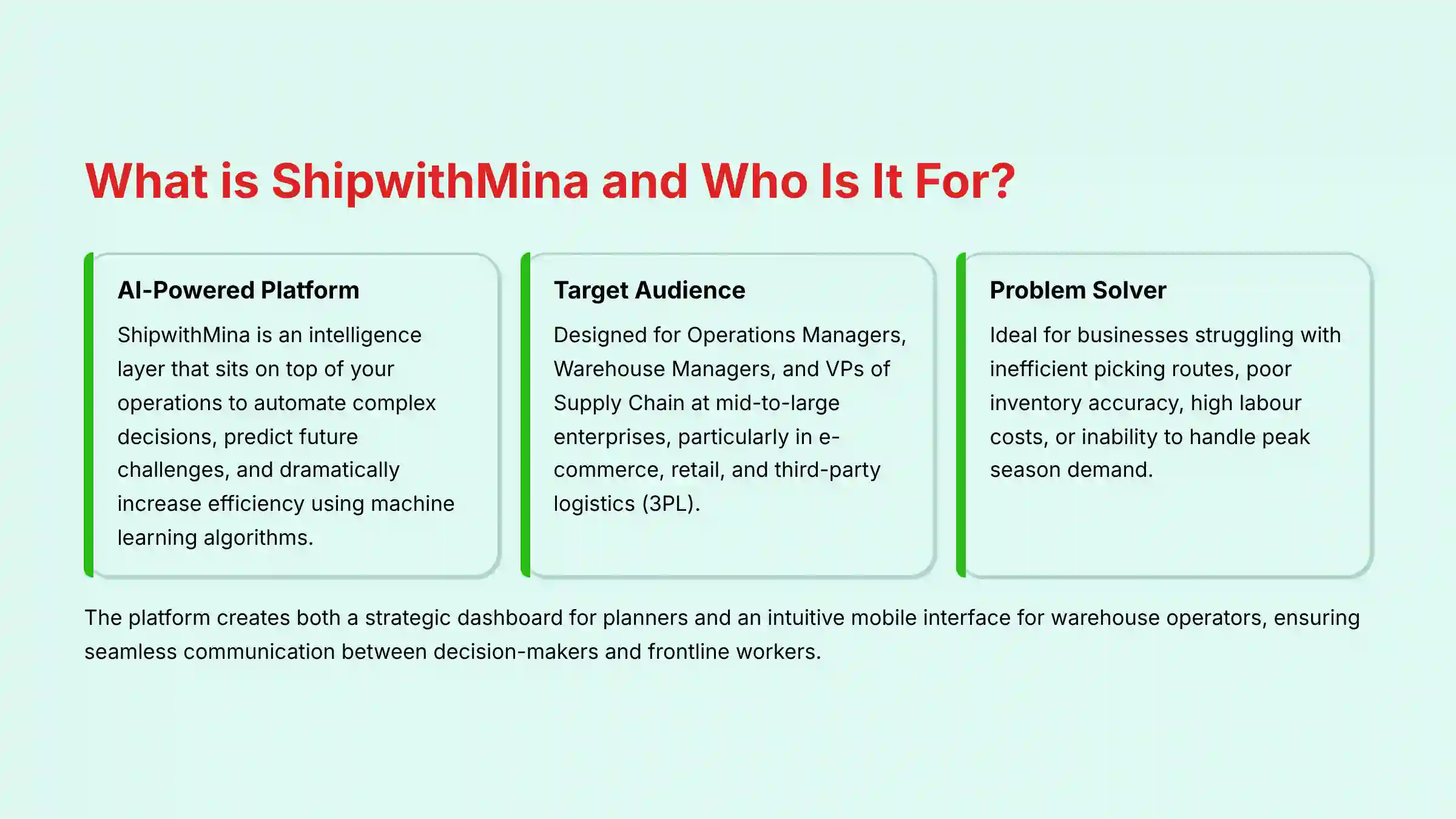
ShipwithMina is an AI-powered platform specifically designed to optimize warehouse and inventory management for modern supply chains. It is not just a traditional Warehouse Management System (WMS); it's an intelligence layer that sits on top of your operations to automate complex decisions, predict future challenges, and dramatically increase efficiency. The platform uses machine learning algorithms to analyze historical data, real-time inputs (like order flow and IoT sensor data), and external signals to improve every aspect of warehouse operations, from receiving to fulfillment.
This tool is primarily designed for Operations Managers, Warehouse Managers, and VPs of Supply Chain at mid-to-large-sized enterprises, particularly in e-commerce, retail, and third-party logistics (3PL). It is ideal for businesses that are struggling with the limitations of manual processes, legacy WMS software, and spreadsheets.
If your organization faces challenges like inefficient picking routes, poor inventory accuracy, high labor costs, or an inability to handle peak season demand, ShipwithMina is built to address these specific pain points by transforming your warehouse from a reactive cost center into a proactive, data-driven strategic asset.
The platform's design philosophy centers on creating both a strategic dashboard for planners and an intuitive mobile interface for warehouse operators, ensuring seamless communication between decision-makers and frontline workers—a critical factor for successful warehouse operations transformation. For more insights on how this compares to other solutions, check out our detailed ShipwithMina alternatives and competitors analysis.
How exactly does ShipwithMina's AI optimize warehouse and inventory management?
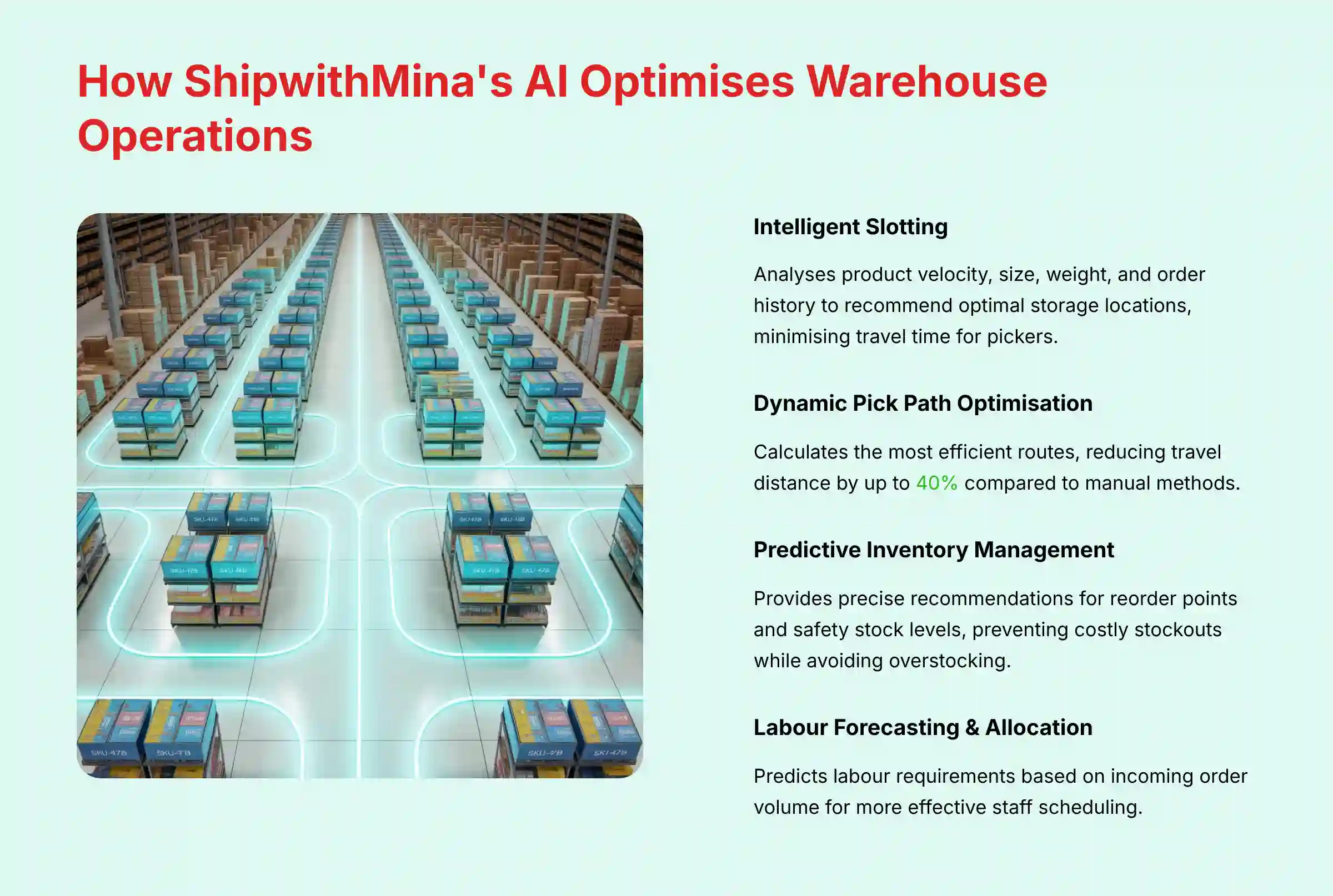
ShipwithMina's AI optimizes operations through a multi-layered approach that focuses on predictive and automated decision-making. Unlike traditional systems that follow rigid, pre-programmed rules, ShipwithMina's AI learns and adapts to your unique operational patterns.
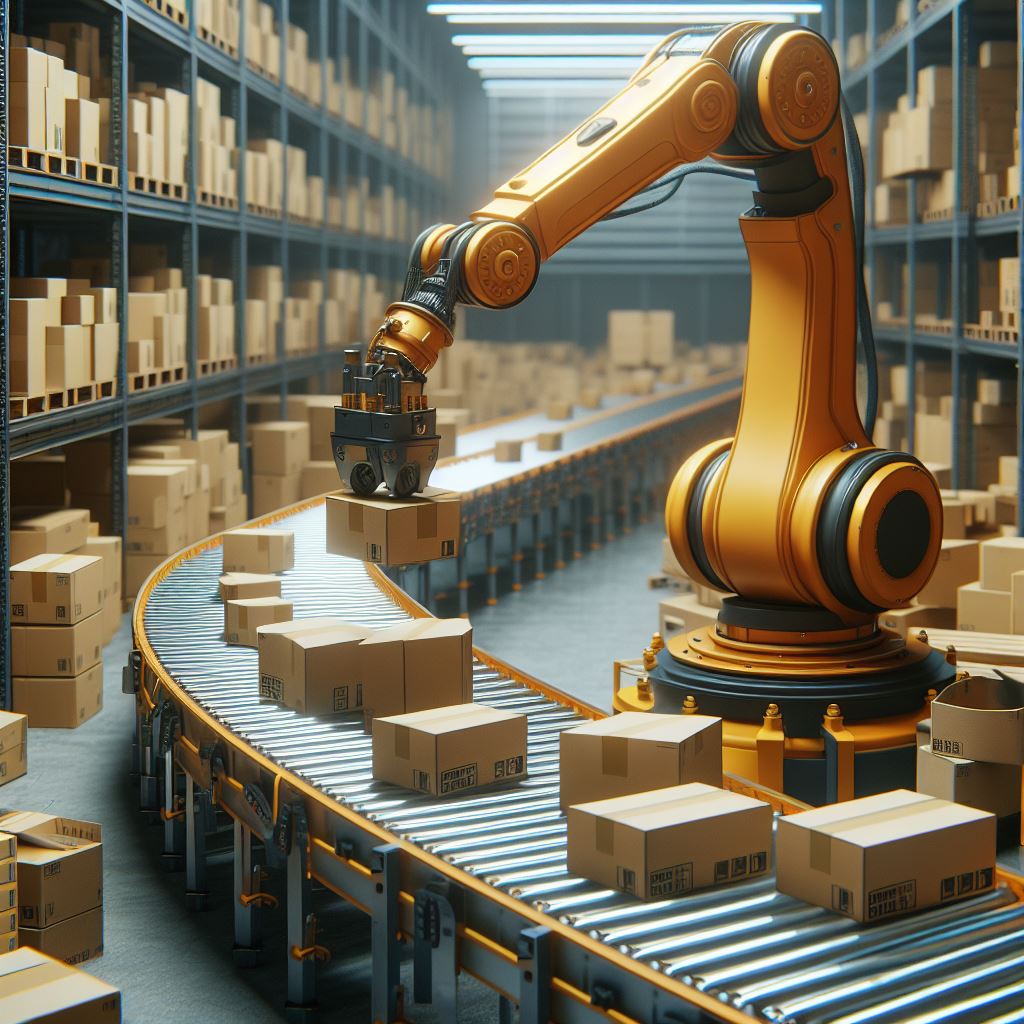
Here's how it works in key areas:
- Intelligent Slotting: The AI analyzes product velocity, size, weight, and order history to dynamically recommend the optimal storage location for every SKU. This minimizes travel time for pickers by placing fast-moving items in easily accessible locations, directly increasing picking speed and throughput.
- Dynamic Pick Path Optimization: For each wave of orders, the AI calculates the most efficient route for pickers to travel through the warehouse, considering factors like warehouse layout, traffic congestion, and batching similar orders together. This goes beyond simple A-to-B routing, reducing travel distance by up to 40% compared to manual methods.
- Predictive Inventory Management: By analyzing demand forecasts, supplier lead times, and potential disruptions, the AI provides precise recommendations for reorder points and safety stock levels. This helps prevent costly stockouts of high-demand items while avoiding overstocking of slow-moving goods, directly improving inventory turnover and freeing up working capital.
- Labor Forecasting & Allocation: The platform predicts labor requirements based on incoming order volume, allowing managers to schedule staff more effectively and avoid both understaffing during peaks and overstaffing during lulls.
The system also employs adaptive learning algorithms that continuously improve based on real-world outcomes. For example, if the AI notices that certain pick paths consistently take longer than estimated, it will recalibrate its time calculations to provide more accurate forecasts, ensuring warehouse operations become increasingly efficient over time.
To explore practical applications and step-by-step implementation guides, visit our comprehensive ShipwithMina tutorials and use case collection.
What is the real-world impact on key warehouse KPIs like order accuracy and throughput?
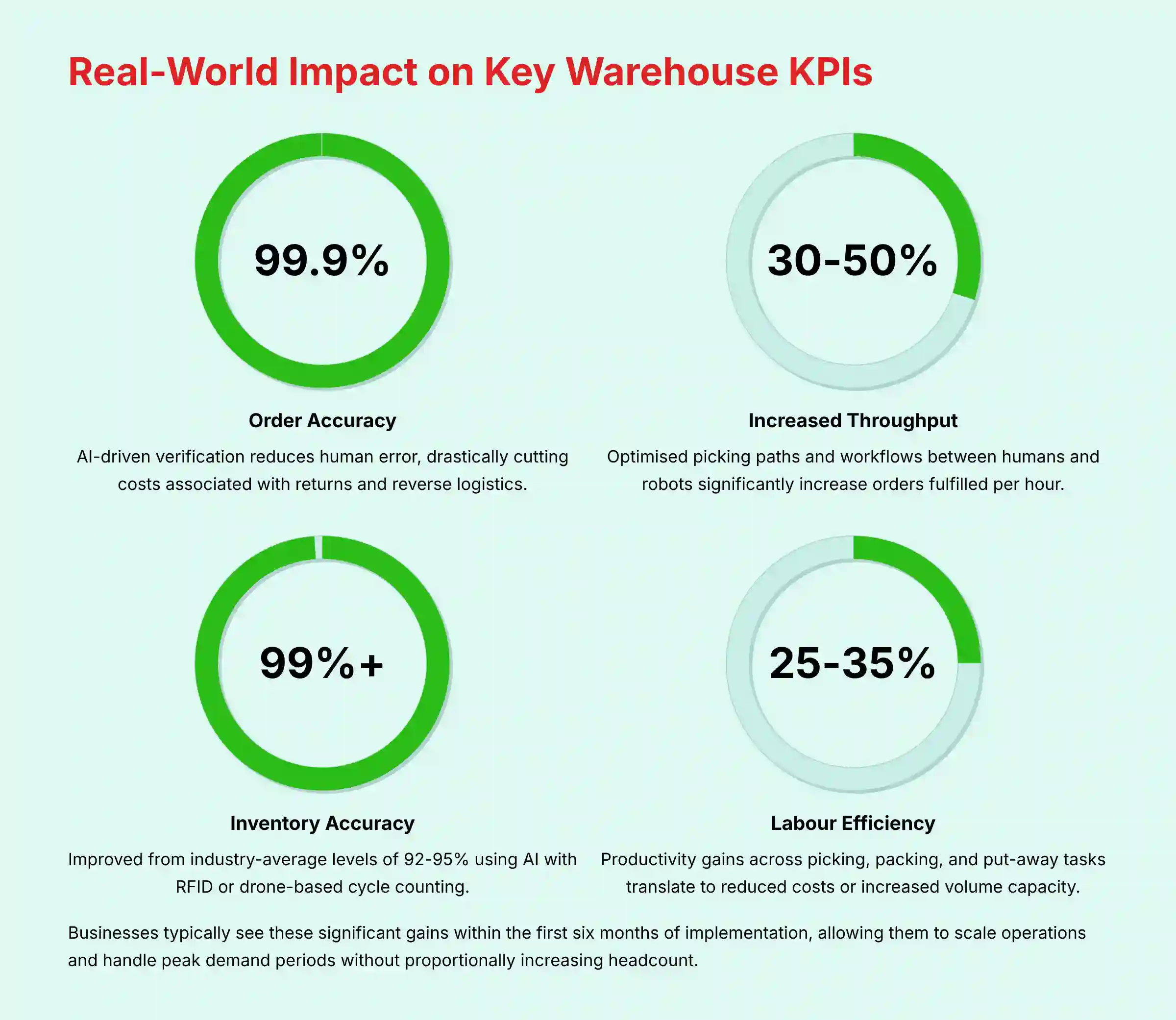
Implementing ShipwithMina has a direct and measurable impact on the most critical warehouse Key Performance Indicators (KPIs). The primary goal is to drive tangible improvements in speed, accuracy, and cost-efficiency. Based on case studies with existing clients, businesses can typically expect to see significant gains within the first six months.
For Order Accuracy, the AI-driven system reduces human error by verifying picks with computer vision or scanner integration and ensuring the right item is in the right box. This commonly leads to a 99.9%+ accuracy rate, drastically reducing the high costs associated with returns, reverse logistics, and customer dissatisfaction.
For Warehouse Throughput, which measures the volume of goods processed over time, the impact is substantial. By optimizing picking paths and orchestrating workflows between human workers and autonomous mobile robots (AMRs), ShipwithMina can increase the number of orders fulfilled per hour by 30-50%. This allows businesses to scale operations and handle peak demand periods like Black Friday without needing to proportionally increase headcount.
Furthermore, Inventory Accuracy is significantly improved by leveraging AI with technologies like RFID or drone-based cycle counting, providing a real-time, accurate view of stock levels and eliminating the need for disruptive manual counts. Many ShipwithMina clients report inventory accuracy improvements from industry-average levels of 92-95% to 99%+, which directly impacts both customer satisfaction (fewer “sorry, we're out of stock” conversations) and financial reporting accuracy.
The platform also delivers measurable improvements in Labor Efficiency, with average productivity gains of 25-35% across picking, packing, and put-away tasks. This translates to either reduced labor costs or the ability to handle significantly more volume with the same workforce—a critical advantage in today's challenging labor market.
For an in-depth analysis of how these improvements compare to traditional approaches, explore our comprehensive ShipwithMina expert review and analysis.
How does ShipwithMina differ from a traditional WMS or other AI logistics platforms?
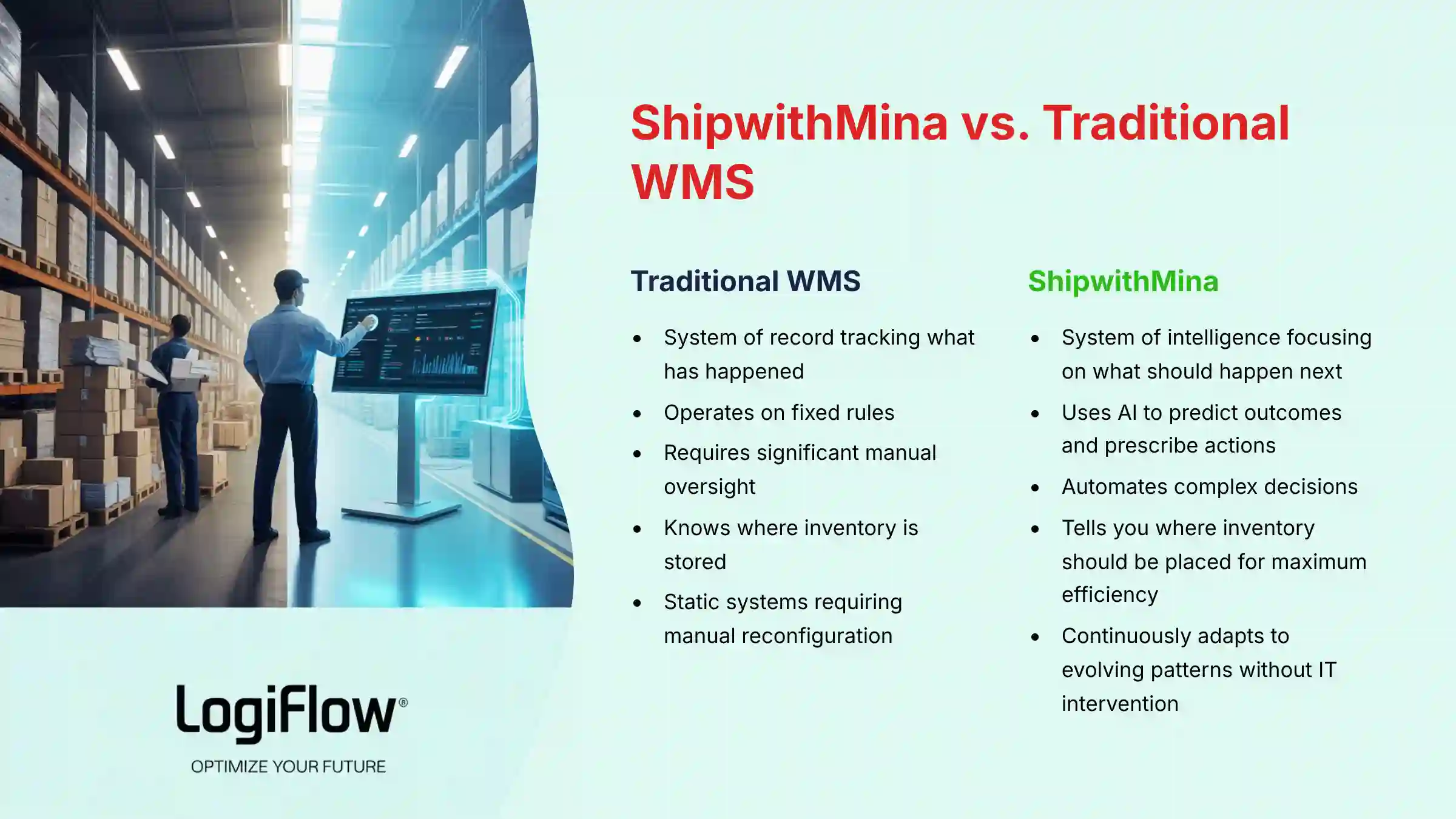
The primary difference between ShipwithMina and a traditional Warehouse Management System (WMS) lies in its core philosophy: a WMS is a system of record, while ShipwithMina is a system of intelligence. A traditional WMS is excellent at tracking what has happened—where an item is stored, when an order was picked. It operates on fixed rules and requires significant manual oversight to make decisions.
ShipwithMina, in contrast, focuses on what should happen next. It uses AI to predict outcomes, prescribe actions, and automate decisions that a human or a rule-based WMS cannot. For example, a WMS knows where your inventory is; ShipwithMina tells you where it should be placed for maximum efficiency and when you need to reorder it to prevent a stockout.
Compared to other AI logistics platforms, ShipwithMina's key differentiator is its dual focus on both the planner/manager experience and the operator/worker experience. While many platforms provide high-level analytics for managers, they often fail to translate those insights into simple, actionable tasks for workers on the floor. ShipwithMina's mobile interface is designed to be incredibly intuitive for warehouse associates, providing clear instructions and minimizing cognitive load.
Furthermore, our AI models are specifically tuned for the complexities of inventory and warehouse optimization, rather than being a generalized logistics platform that covers transportation and sourcing more broadly. This specialized focus allows for deeper, more impactful optimizations within the four walls of the warehouse.
Another key distinction is ShipwithMina's approach to continuous improvement. Unlike static systems that require manual reconfiguration as business conditions change, ShipwithMina's AI continuously adapts to evolving patterns. If seasonal demand shifts, if new products are introduced, or if warehouse layouts change, the system automatically recalibrates its recommendations without requiring IT intervention—making it significantly more responsive to the dynamic nature of modern supply chains.
How does ShipwithMina integrate with our existing ERP and WMS (e.g., SAP, Oracle, NetSuite)?
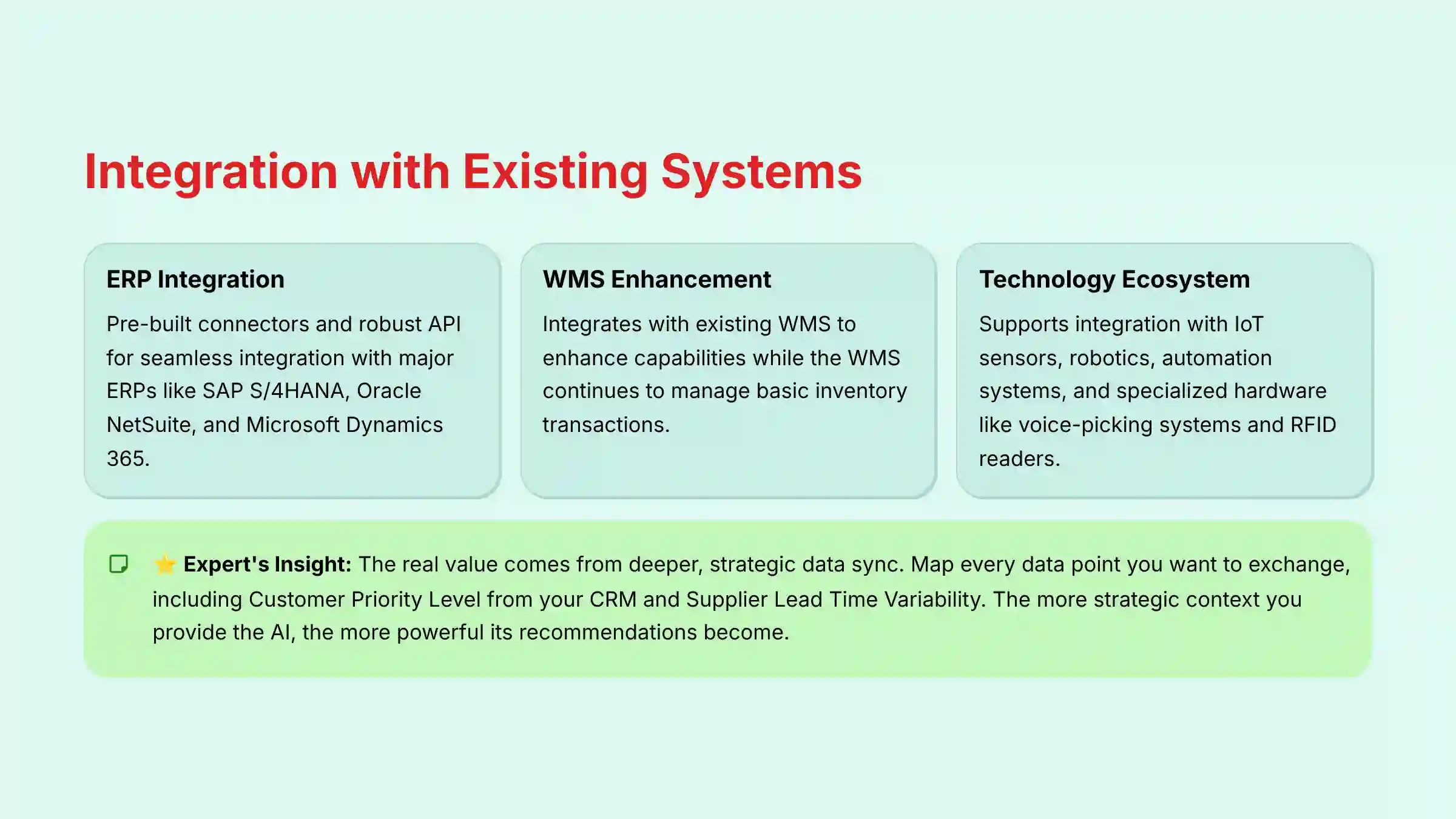
ShipwithMina is designed to be the intelligence layer, not a replacement for your core business systems. Therefore, deep, bidirectional integration with your Enterprise Resource Planning (ERP) system is fundamental to its operation. The platform features pre-built connectors and a robust API for seamless integration with major ERPs like SAP S/4HANA, Oracle NetSuite, and Microsoft Dynamics 365, which serve as the single source of truth for sales orders, financial data, and master product information.
The integration ensures that when a sales order is created in your ERP, it is instantly available in ShipwithMina for fulfillment planning. Once an order is shipped, ShipwithMina pushes real-time inventory updates back to the ERP, ensuring system-wide data consistency.
For businesses with an existing Warehouse Management System (WMS), ShipwithMina can integrate with it to enhance its capabilities. In this model, the WMS continues to manage basic inventory transactions while ShipwithMina's AI provides the advanced decision-making for slotting, picking paths, and labor planning. Our implementation team works closely with your IT department to map data flows, configure the API connections, and ensure a smooth data exchange, making the integration process a core part of our onboarding.
⭐ Expert's Insight: A common mistake during implementation is treating the ERP integration as a simple “on/off” switch. The real value comes from a deeper, more strategic data sync. Before you start, map out every single data point you want to exchange. Don't just syncSales Order IDandSKU. Think bigger: syncCustomer Priority Levelfrom your CRM via the ERP to allow the AI to prioritize fulfillment for VIP customers. SyncSupplier Lead Time Variabilityto help the AI calculate more accurate safety stock. The more strategic context you provide the AI through the integration, the more powerful and accurate its recommendations will become.
The platform also supports integration with specialized supply chain technologies, including Internet of Things (IoT) sensors for environmental monitoring, robotics and automation systems like Autonomous Mobile Robots (AMRs), and specialized hardware like voice-picking systems and RFID readers. This creates a comprehensive digital ecosystem where physical operations and digital intelligence work in harmony.
For a comprehensive overview of all integration capabilities and features, visit our detailed ShipwithMina overview and features guide.
Is our inventory, supplier, and customer data secure on the ShipwithMina platform?
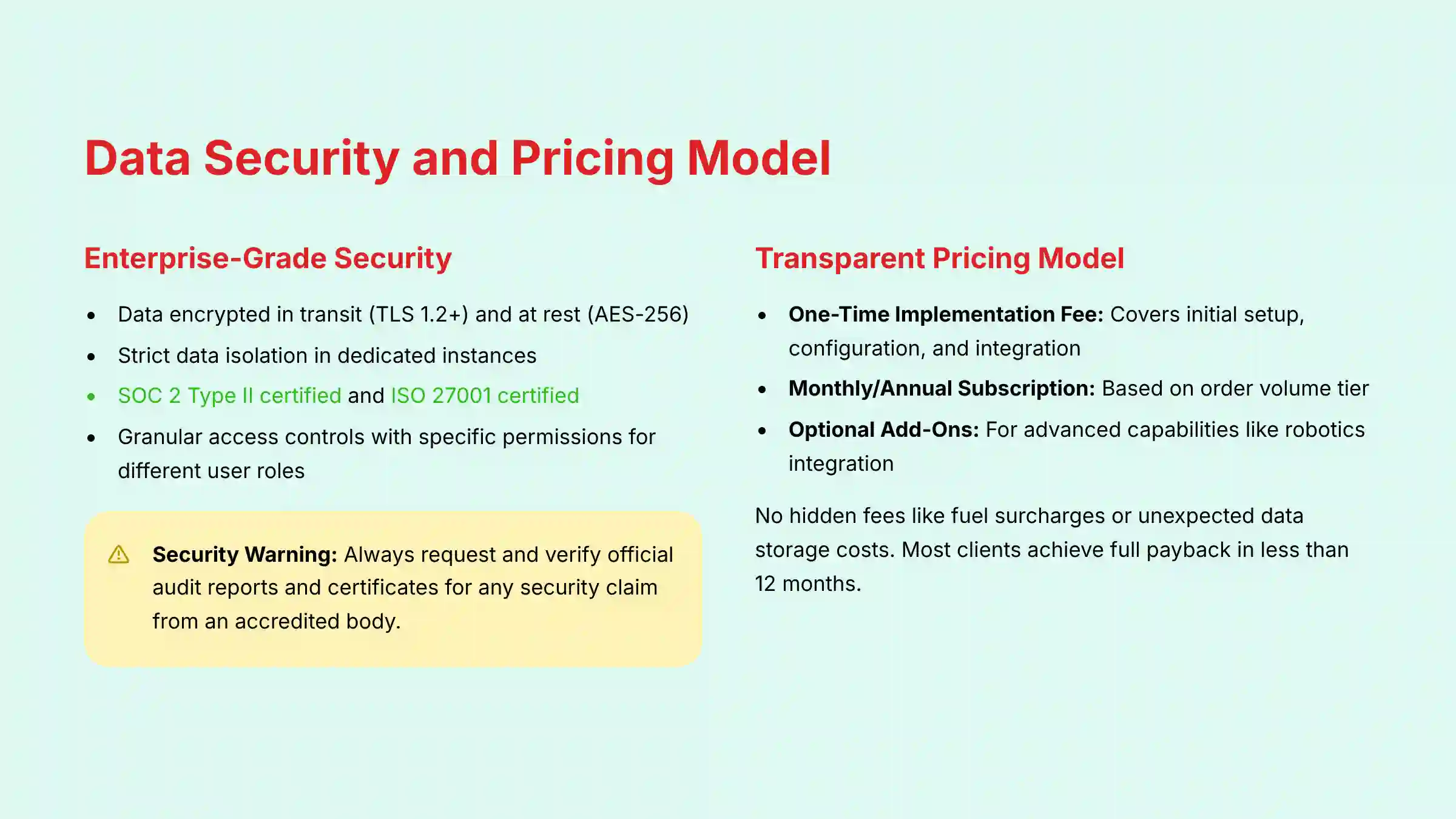
Data security is non-negotiable in supply chain operations, and ShipwithMina is built on a foundation of enterprise-grade security protocols to protect your sensitive information. All customer data is encrypted both in transit (using TLS 1.2 and higher) and at rest (using AES-256 encryption), ensuring it is protected at all stages. Our platform architecture is designed for strict data isolation, meaning your proprietary data—including supplier lists, pricing, inventory levels, and customer information—is logically and physically segregated in a dedicated instance and is never used to train AI models for other customers.
To provide verifiable assurance of our security practices, the ShipwithMina platform is SOC 2 Type II certified and ISO 27001 certified. These certifications are awarded after rigorous third-party audits of our controls related to security, availability, processing integrity, confidentiality, and privacy. Furthermore, we provide granular access controls, allowing you to define specific permissions for different user roles within your organization (e.g., a warehouse manager can see operational dashboards, but not sensitive financial data). This ensures that employees can only access the information necessary to perform their jobs, adhering to the principle of least privilege and enhancing your overall security posture.
⭐ Expert's Insight: While SOC 2 and ISO 27001 certification are critical checkboxes, the most overlooked security aspect is often internal user management. The most sophisticated external defenses can be undermined by poor internal practices. We strongly advise clients to conduct a quarterly review of user permissions within ShipwithMina. People change roles, and temporary access granted for a specific project often becomes permanent. By regularly auditing who has access to what, especially permissions for data export and administrative changes, you can mitigate one of the most common sources of data security risk. Activate multi-factor authentication (MFA) for all users from day one—it's the single most effective step you can take.
Security & Compliance Risk Warning: The security of supply chain data, which includes proprietary inventory levels, customer information, and supplier pricing, is paramount. When evaluating AI tools, organizations must distinguish between unverified claims of “compliance” and verifiable “certification.”
- Expert Validation Recommended: Decision-makers should always request and verify the official audit reports and certificates for any security claim, such as a SOC 2 Type II report and an ISO 27001 Certificate of Registration from an accredited body.
- Data Protection: Relying on a self-declared status without third-party validation introduces significant risk to data confidentiality, integrity, and availability. Formal certification provides independent assurance that an information security management system (ISMS) is in place and operating effectively to protect sensitive data.
What does the pricing model for ShipwithMina look like, and are there hidden costs?
ShipwithMina utilizes a transparent, value-based pricing model designed to scale with your business operations. Our pricing is primarily based on order volume, meaning the monthly or annual fee is tied to the number of orders your warehouse processes through the platform. This approach ensures that the cost is directly aligned with the value and ROI you are receiving; as your business grows and you ship more orders, the platform scales with you. We find this is more equitable than per-user pricing, which can penalize you for adding more warehouse staff to handle peak seasons.
The pricing is typically broken down into three main components:
- One-Time Implementation Fee: This covers the initial setup, system configuration, and integration with your core ERP/WMS. The fee is determined by the complexity of your existing tech stack and operational workflows.
- Monthly/Annual Subscription Fee: This is the core license fee based on your projected order volume tier. It includes access to the platform, all AI features, and standard customer support.
- Optional Add-Ons: We offer additional modules for advanced capabilities, such as integration with specific robotics (AMRs) or advanced sustainability reporting (ESG), which can be added to your subscription.
We are committed to transparency. There are no hidden fees like fuel surcharges or unexpected data storage costs. All potential costs are clearly outlined in our proposals, so you can build a reliable budget and accurately calculate your total cost of ownership (TCO) from the start.
Most clients find that the subscription model allows for more predictable budgeting compared to traditional WMS systems that often require substantial capital expenditure upfront. The order-volume based approach also means you're not penalized for having many casual users who only occasionally need access to the system—a common issue with per-seat pricing models. For enterprises with multiple warehouse locations, we offer portfolio pricing that provides economies of scale as you deploy the platform across your network.
How do you calculate the Return on Investment (ROI) for implementing ShipwithMina?
The ROI for ShipwithMina is calculated by quantifying its impact across three primary areas: labor cost reduction, inventory capital efficiency, and revenue improvement. Our team works with you to build a detailed business case using your own operational data before you commit.
First, we calculate Labor Cost Savings. By analyzing your current pick-and-pack speed and labor hours, we model the efficiency gains from AI-optimized picking paths and automated workflows. A 30% improvement in picking efficiency, for example, translates directly into either reduced overtime hours or the ability to handle 30% more volume with the same headcount.
Second, we analyze Inventory Capital Efficiency. We assess your current inventory holding costs and the cost of stockouts. By using the AI to reduce excess safety stock and prevent lost sales from stockouts, we calculate the value of the working capital that is freed up. Reducing inventory by just 15% can result in significant cash flow improvements.
Finally, we look at Revenue and Customer Satisfaction Gains. By improving order accuracy to 99.9%+ and increasing on-time delivery rates, you reduce costly returns and enhance customer loyalty, which has a tangible impact on customer lifetime value. We combine these three areas to project a comprehensive ROI, with most clients achieving a full payback period of less than 12 months.
Our ROI methodology also includes hard-to-quantify but critical operational benefits like improved workforce satisfaction (due to clearer instructions and less frustration), reduced training time for new hires (the AI-guided interface simplifies onboarding), and enhanced adaptability to sudden business changes. We track these benefits through before-and-after measurements of key metrics like employee turnover rate and time-to-productivity for new workers.
For enterprises concerned about proving the value before full-scale deployment, we offer a phased implementation approach. This allows you to validate the ROI in a limited area of operations before expanding to your full warehouse network, providing empirical evidence of the platform's impact on your specific business model.
To better understand broader industry alternatives and how ShipwithMina's ROI compares, explore our analysis of the best 10 AI solutions for order fulfillment and picking in 2025.
What is the typical implementation process and timeline for a new client?
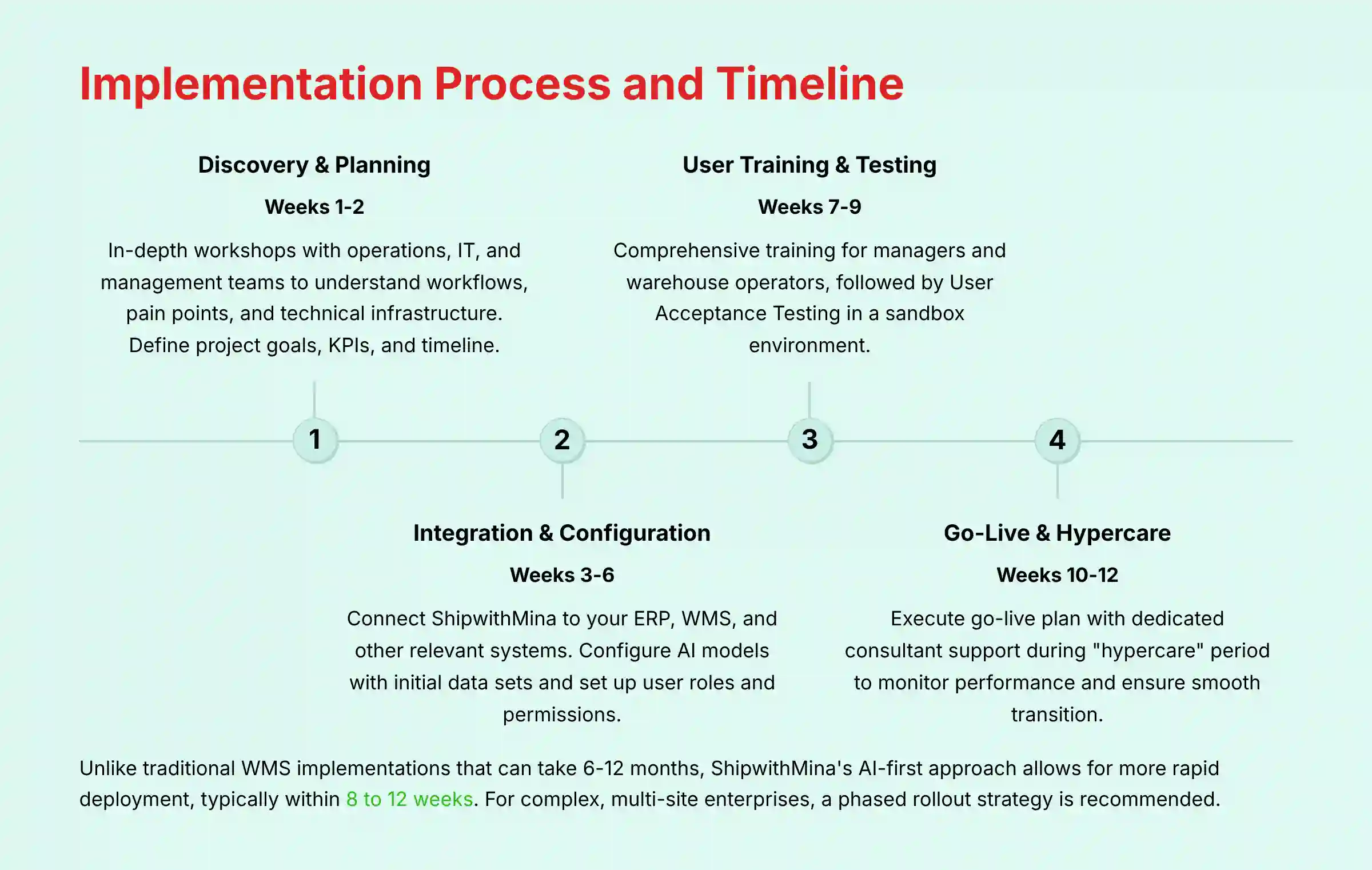
Our implementation process is a structured, collaborative partnership designed to get you live and achieving value as quickly as possible, typically within 8 to 12 weeks. The process is managed by a dedicated implementation consultant who is an expert in both supply chain logistics and our software.
The process follows four key phases:
- Phase 1: Discovery & Planning (Weeks 1-2): We begin with in-depth workshops with your operations, IT, and management teams. The goal is to deeply understand your current workflows, pain points, and technical infrastructure. We collaboratively define project goals, KPIs for success, and a detailed project timeline.
- Phase 2: Integration & Configuration (Weeks 3-6): This is the core technical phase where our team works with yours to connect ShipwithMina to your ERP, WMS, and any other relevant systems. We configure the platform's AI models with your initial data sets and set up the specific user roles and permissions your team requires.
- Phase 3: User Training & Testing (Weeks 7-9): We conduct comprehensive training sessions for both managers and warehouse operators. This is followed by a User Acceptance Testing (UAT) period in a sandbox environment, where your team can test the live workflows with real data to ensure everything works as expected before go-live.
- Phase 4: Go-Live & Hypercare (Weeks 10-12): We execute the go-live plan, transitioning from your old system to ShipwithMina. Following the launch, your dedicated consultant remains closely engaged for a “hypercare” period to provide intensive support, monitor system performance, and ensure a smooth and successful transition.
Unlike traditional WMS implementations that can take 6-12 months, our AI-first approach allows for a more rapid deployment. We use a “data-first” strategy, beginning the AI training on your historical data while the integration work is still in progress. This parallel workstream approach accelerates time-to-value.
For complex, multi-site enterprises, we typically recommend a phased rollout strategy, starting with a single warehouse to refine the implementation approach before scaling to additional locations. This reduces risk and allows the team to apply lessons learned from the initial deployment. Each subsequent location typically implements faster as your internal team builds expertise and our AI models become more tailored to your business patterns.
For additional questions and detailed implementation guidance, be sure to review our complete ShipwithMina FAQ resource center which covers every aspect of platform deployment and optimization.

Leave a Reply