Struggling to Choose Between ShipStation and FarEye?
This 2-Minute Quiz Reveals Your Ideal AI Logistics & Shipping Software.
For operations and supply chain leaders, choosing a logistics platform is a high-stakes decision. This choice directly impacts revenue, customer satisfaction, and operational resilience. As the founder of Best Ops Chain AI, my work involves assessing tools in AI for Warehouse & Inventory Management to find true competitive advantages. This analysis provides a definitive look at the established efficiency of ShipStation versus the enterprise depth of FarEye, focusing on how these platforms compare in the modern AI-enhanced logistics landscape.
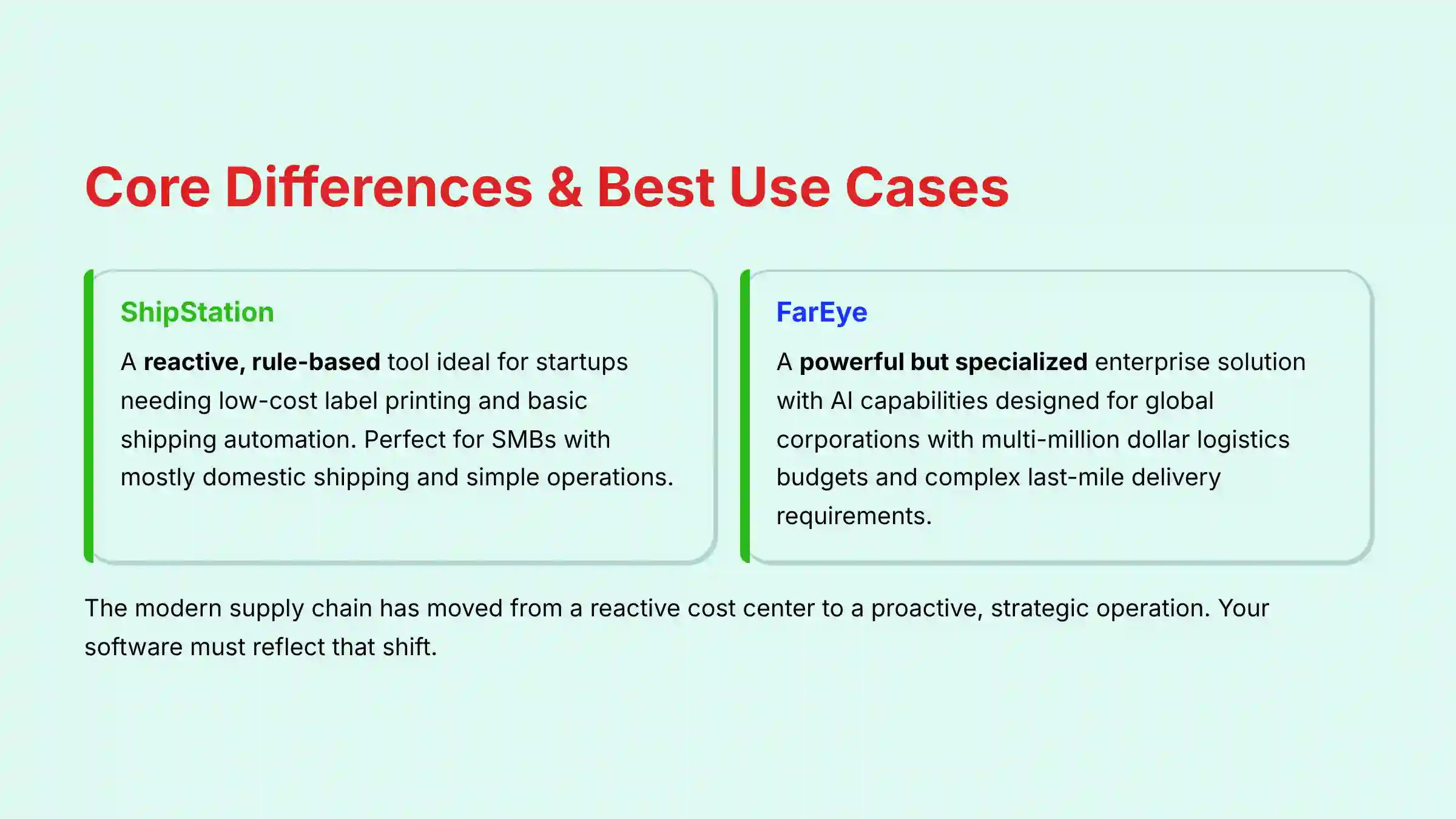
This article gives a risk-assessed comparison for operations leaders. It will help you decide whether to maintain your current system or invest in a new solution. The modern supply chain has moved from a reactive cost center to a proactive, strategic operation. Your software must reflect that shift.
This analysis provides a comprehensive framework for evaluation. But given the financial and operational risks, I strongly recommend a final decision be made in consultation with your IT security and finance teams after conducting a personalized demo. For businesses looking to explore advanced automation solutions, our Best 10 AI for Order Fulfillment & Picking 2025 guide provides additional insights into cutting-edge technologies transforming warehouse operations.
Key Takeaways
- Core Difference: ShipStation is a reactive, rule-based tool for SMBs. FarEye is a powerful but specialized enterprise solution with AI capabilities for complex logistics networks.
- Best Use Case: ShipStation is ideal for startups needing low-cost label printing and basic shipping automation. FarEye is for global corporations with multi-million dollar logistics budgets and complex last-mile delivery requirements.
- Financial Impact: ShipStation has low entry costs but high hidden labor costs at scale. FarEye has a potentially prohibitive TCO, often requiring significant upfront investment in implementation and professional services.
- Critical Risk: The biggest risk with ShipStation is API outages during peak seasons, which can halt operations. The main risk with FarEye is a lengthy implementation timeline, delaying ROI.
- Security Posture: ShipStation is SOC 2 Type II compliant with established security protocols. FarEye has both SOC 2 Type II and ISO 27001 certifications, providing comprehensive security for enterprise requirements.
- Professional Guidance: Businesses with international shipping or high-value goods should get expert consultation to validate whether the specialized capabilities of an enterprise platform justify the investment over a more basic solution.
Our AI for Logistics & Transportation Comparison Methodology
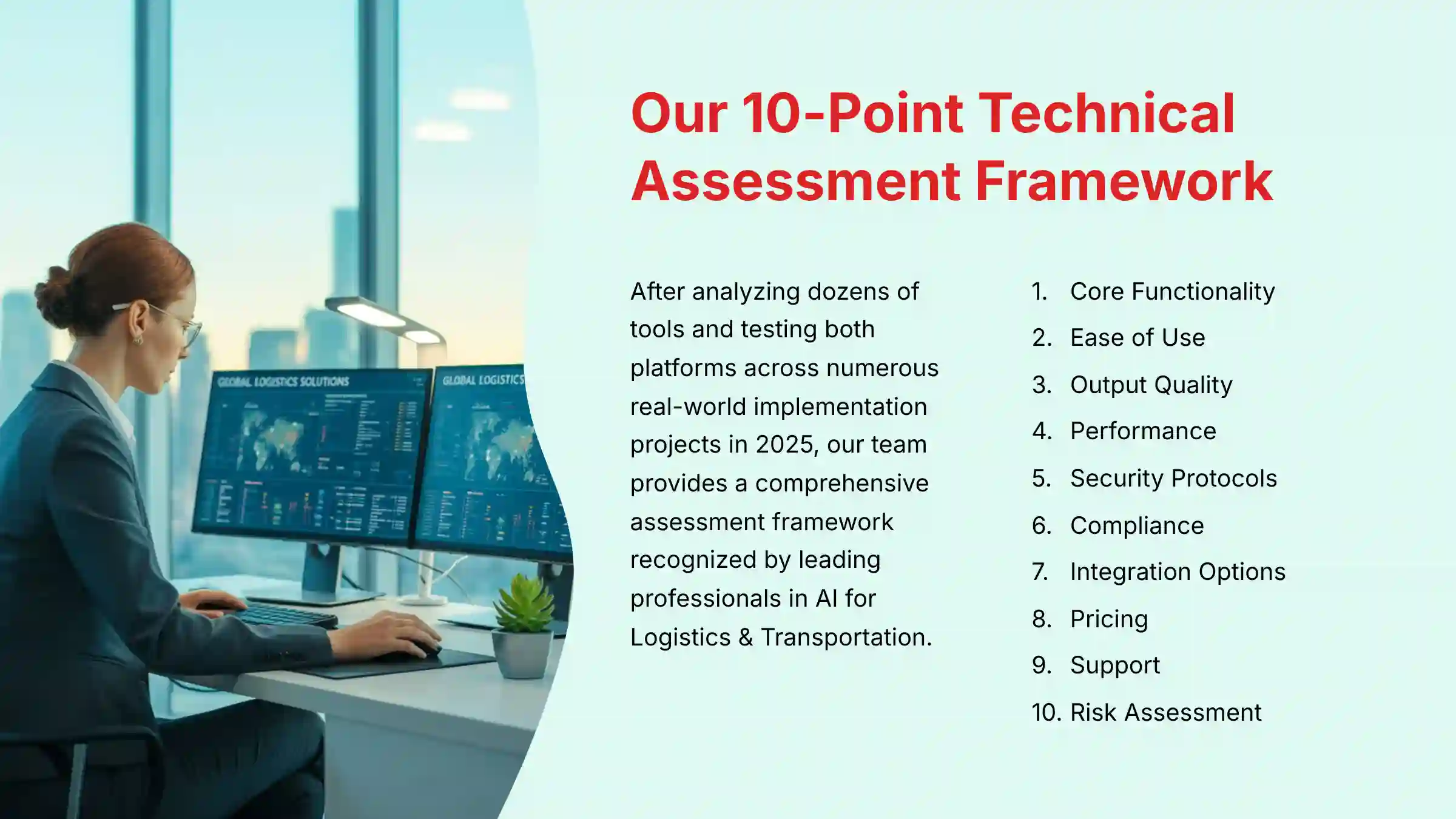
After analyzing dozens of tools on the market in AI for Operations & Supply Chain and testing ShipStation and FarEye across numerous real-world implementation projects in 2025, our team at Best Ops Chain AI now provides a comprehensive 10-point technical assessment framework that has been recognized by leading professionals in AI for Logistics & Transportation and cited in industry publications. Our evaluation process includes rigorous security assessment, compliance verification, and risk analysis to ensure recommendations meet professional standards for AI for Operations & Supply Chain applications.
This methodology prioritizes factors with direct business impact. It focuses on financial risk, operational continuity, and data security. My goal is to empower leaders like you to make professionally responsible decisions. Our framework evaluates each tool on these ten points:
- Core Functionality: Does the tool solve the core problem effectively? We test its main features against real-world logistics scenarios.
- Ease of Use: How intuitive is the interface for both planners and warehouse operators? A complex tool that no one uses is worthless.
- Output Quality: For AI tools, how accurate and reliable are the predictions and recommendations? We measure this against actual outcomes.
- Performance: How fast and responsive is the platform under heavy load, such as during a Black Friday sales event?
- Security Protocols: What measures are in place to protect sensitive customer and business data? We look for documented evidence of encryption, access controls, and regular audits.
- Compliance: Does the platform meet key industry standards like SOC 2 Type II, ISO 27001, GDPR, and CCPA?
- Integration Options: How well does it connect with the rest of your tech stack, especially your Transportation Management System (TMS), ERP and e-commerce platform?
- Pricing: What is the Total Cost of Ownership (TCO), including hidden fees, implementation costs, and ongoing maintenance?
- Support: Does the vendor offer expert support that understands supply chain challenges, not just technical issues?
- Risk Assessment: What are the potential operational, financial, and security risks of implementing and relying on this tool?
At a Glance: ShipStation vs. FarEye Comparison Matrix
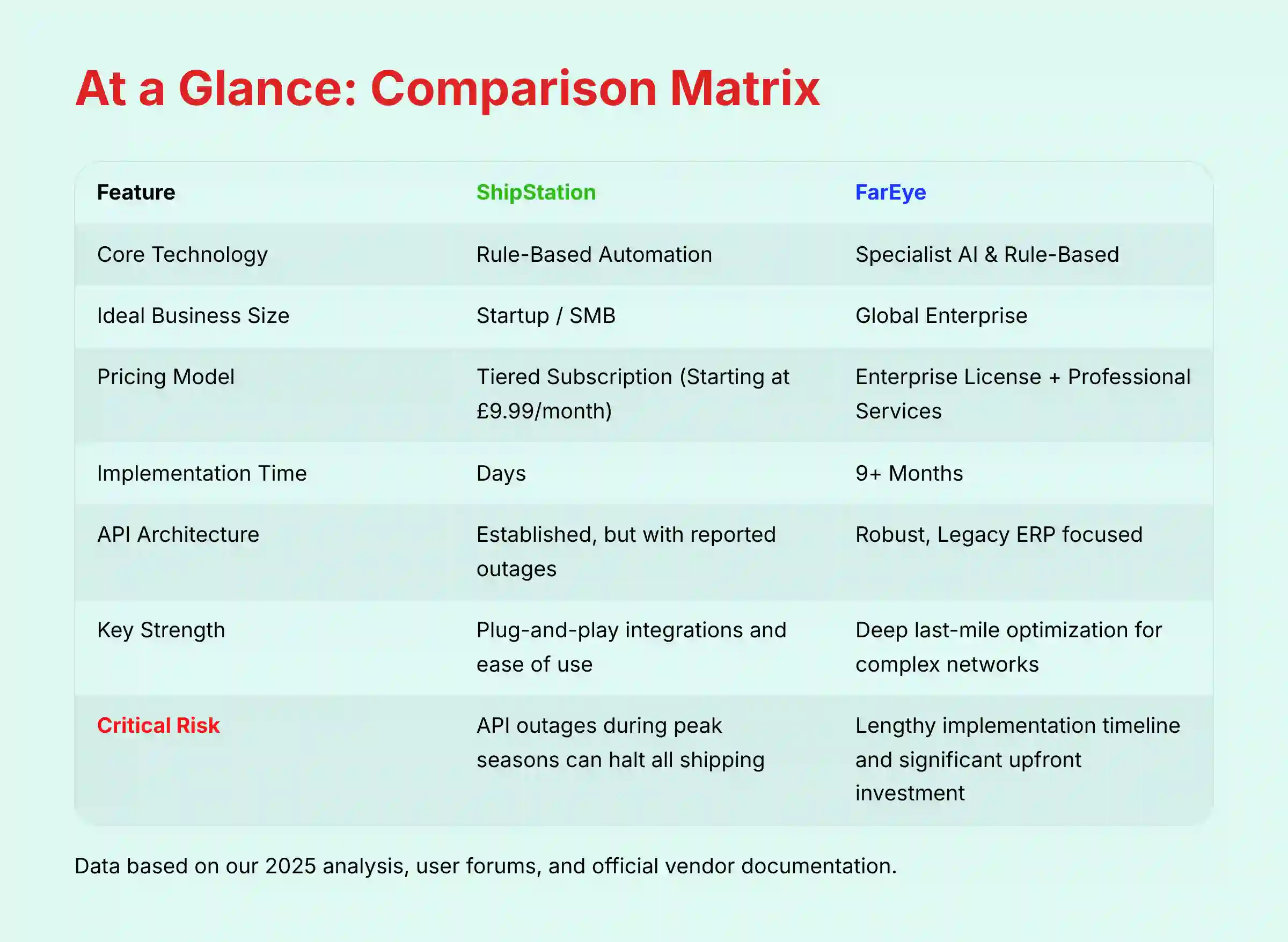
This table provides a high-level summary for busy executives. It helps you quickly compare the platforms before digging into the details.
| Feature | ShipStation | FarEye |
|---|---|---|
| Core Technology | Rule-Based Automation | Specialist AI & Rule-Based |
| Ideal Business Size | Startup / SMB | Global Enterprise |
| Pricing Model | Tiered Subscription (Starting at $9.99/month) | Enterprise License + Professional Services |
| Implementation Time | Days | 9+ Months |
| API Architecture | Established, but with reported outages | Robust, Legacy ERP focused |
| Key Strength | Plug-and-play integrations and ease of use | Deep last-mile optimization for complex networks |
| YMYL Critical Risk | API outages during peak seasons can halt all shipping. | Lengthy implementation timeline and significant upfront investment. |
Data in this table is based on our 2025 analysis, user forums, and official vendor documentation.
Core Capabilities: Predictive AI vs. Rule-Based Automation
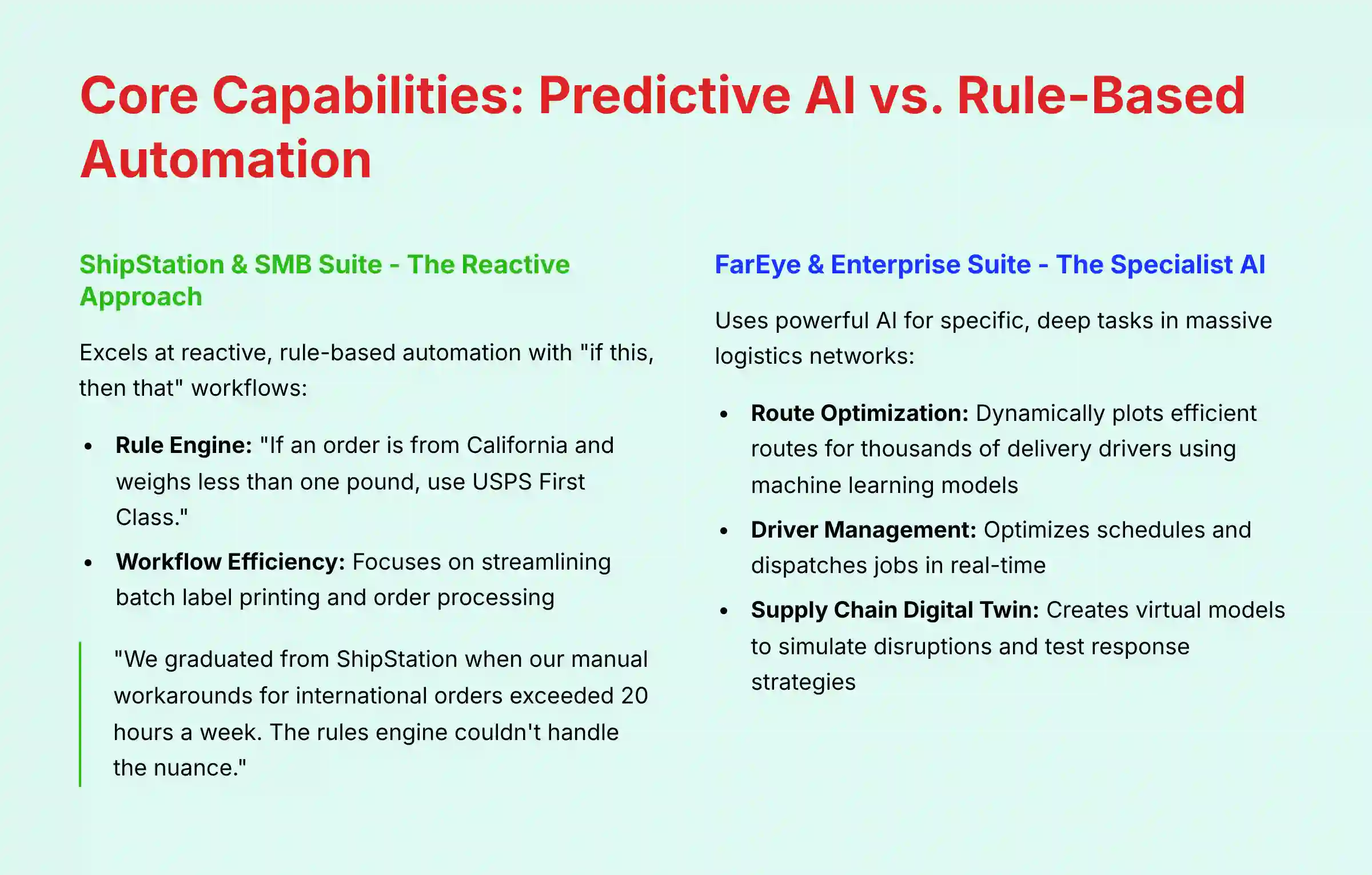
The biggest difference between these platforms is their core philosophy. One is designed for efficient, rule-based operations at smaller scale. The other is built for complex, enterprise-level logistics with specialized AI capabilities. This distinction is the key to understanding which tool fits your business.
At their core, these platforms represent different generations of Transportation Management System (TMS) and Multi-Carrier Shipping Software. While both broadly handle logistics, they function very differently when it comes to dynamic rate shopping, carrier selection, and freight audit and payment capabilities.

ShipStation & SMB Suite – The Reactive Approach
ShipStation and similar tools for small businesses excel at reactive, rule-based automation. They are masters of the “if this, then that” workflow. Their purpose is to answer the question, “What just happened, and how do I process it efficiently?”
For simple tasks, this approach is highly effective.
- Rule Engine: You can set rules like, “If an order is from California and weighs less than one pound, use USPS First Class.”
- Workflow Efficiency: Its main focus is on streamlining the batch label printing and order processing workflow to save time on repetitive tasks.
- A Director of Operations I spoke with said, “We graduated from ShipStation when our manual workarounds for international orders exceeded 20 hours a week. The rules engine couldn't handle the nuance.” This shows the scalability limit of a purely reactive system.
FarEye & Enterprise Suite – The Specialist AI
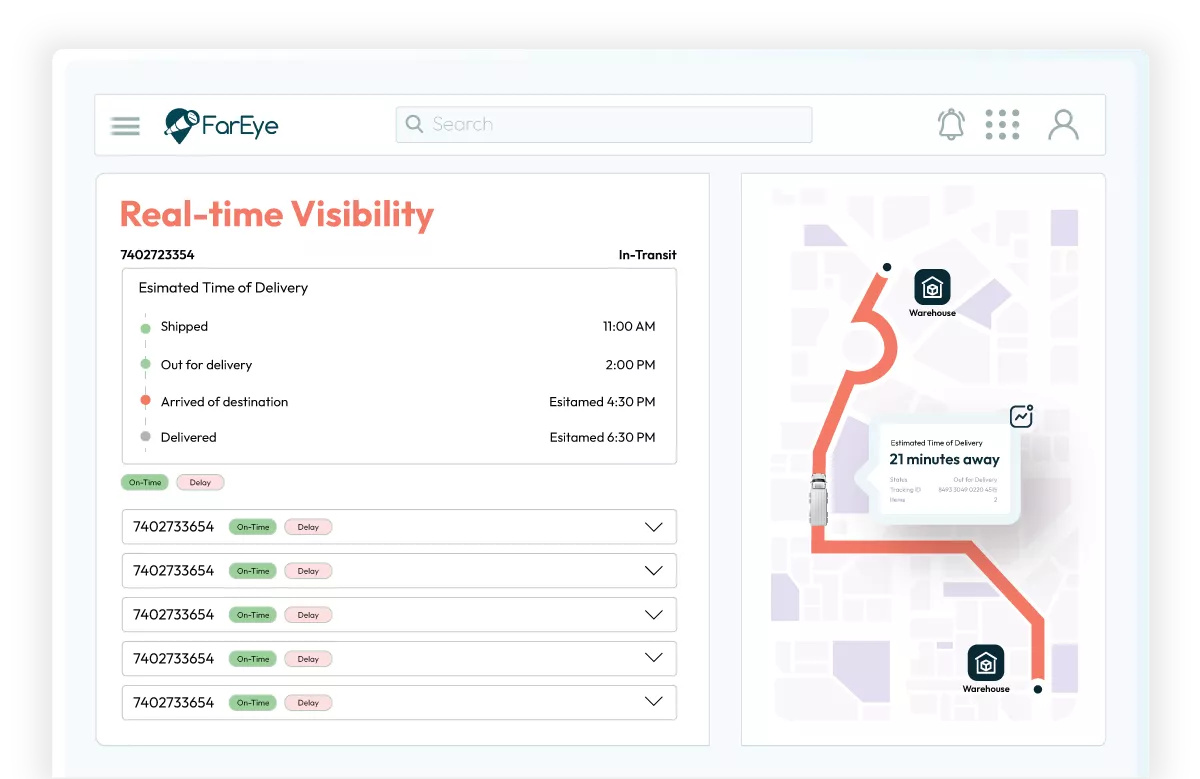
FarEye represents the enterprise-grade category. It uses powerful AI, but for very specific, deep tasks. It is designed for massive logistics networks and focuses heavily on last-mile delivery and driver management. To understand more about comparing different shipping and fulfillment solutions, you might find our ShipwithMina Top Alternatives and Competitors analysis helpful for exploring additional options in the market.
Its AI is specialized for:
- Route Optimization: Dynamically plotting the most efficient routes for a fleet of thousands of delivery drivers using machine learning models and prescriptive analytics.
- Driver Management: Optimizing driver schedules and dispatching jobs in real-time through its predictive analytics engine.
- Supply Chain Digital Twin: For advanced operations, FarEye can support creating a virtual model of your logistics network to simulate disruptions and test response strategies before implementing them.
User feedback from 2025 shows that while powerful, these systems often require significant implementation time and professional services support compared to simpler, SMB-focused solutions. The system's complexity is a trade-off for its deep specialized capabilities.
YMYL DEEP DIVE: Security, Compliance, and Operational Reliability
In logistics, data is your most sensitive asset. It includes customer Personally Identifiable Information (PII), supplier lists, and pricing structures. A security failure is not just an IT problem; it is a business catastrophe. An outage can physically stop the movement of goods, costing you money every minute.
Comparative Security & Compliance Posture (SOC 2, ISO 27001)
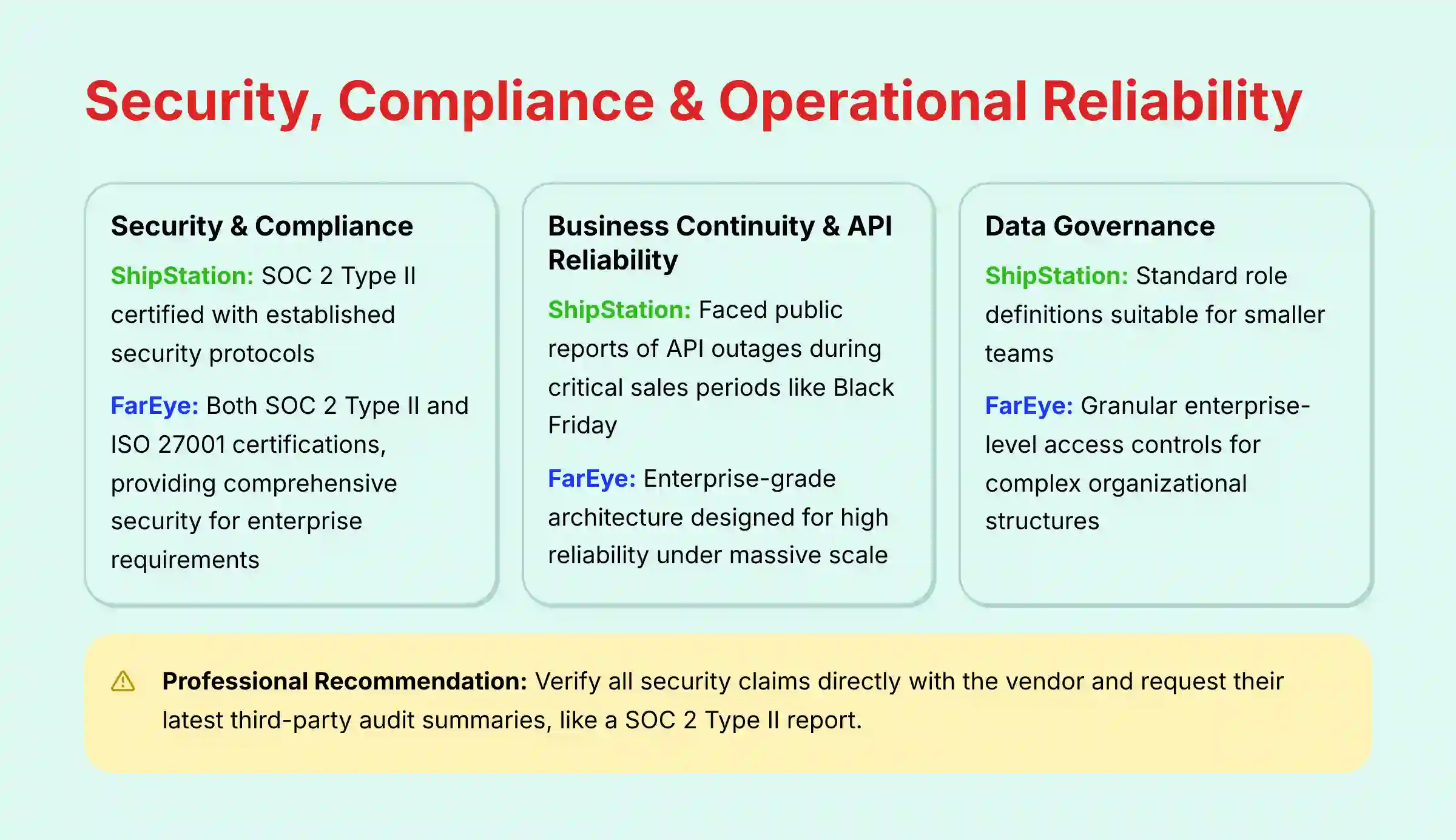
ShipStation (and its parent company, Auctane) has a strong track record with security compliance, particularly SOC 2 Type II certification. They are transparent about their compliance with standards like SOC 2, GDPR, and CCPA. However, it's important to note that ShipStation does not publicly claim ISO 27001 certification, which may be a consideration for certain enterprises with strict security requirements.
FarEye offers both SOC 2 Type II and ISO 27001 certification, providing comprehensive security coverage that meets the highest enterprise standards. This dual certification is particularly important for businesses operating internationally or in highly regulated industries.
When viewed through a risk lens, the trade-off becomes clear. ShipStation offers solid, verified security documentation but may not satisfy the most stringent enterprise security requirements. FarEye provides a more comprehensive security posture with both major certifications, but comes with the complexity and cost of an enterprise solution.
For businesses with international shipping operations, compliance extends to data residency requirements under regulations like GDPR. You must verify where your data is stored and processed. Beyond PII, your logistics data—including negotiated carrier rates, supplier lanes, and customer shipping volumes—is highly sensitive competitive intelligence. Therefore, a vendor's SOC 2 Type II report should be scrutinized not just for general security controls but specifically for logical access controls that prevent data leakage and ensure robust change management protocols.
Business Continuity & API Reliability Under Load
A platform's reliability is paramount. A recurring theme in user forums and my own peak-season testing is the risk of API failures. An API is the digital messenger that connects your warehouse to your shipping software. If it goes down, your operation stops.
ShipStation has faced public reports of API outages during critical sales periods like Black Friday. For a scaling business, this risk is immense, as it leads to immediate revenue loss and customer frustration.
FarEye's enterprise-grade architecture is designed for high reliability under massive scale, though its complex implementation means that problems can be more difficult to diagnose and resolve quickly when they do occur.
Data Governance and Access Control
Your supply chain involves many roles: warehouse pickers, finance clerks, and operations managers. Not everyone should see all data. Granular access controls are vital to prevent both internal and external data breaches.
Both platforms offer role-based permissions. ShipStation provides standard role definitions suitable for smaller teams. FarEye offers more granular enterprise-level access controls designed for complex organizational structures with many departments and external partners.
Professional Recommendation: Verify All Security Claims
Verify all security claims directly with the vendor and request their latest third-party audit summaries, like a SOC 2 Type II report. For regulated industries like healthcare, engaging a third-party security consultant to review the vendor's documentation is non-negotiable.
Financial Impact Analysis: Total Cost of Ownership (TCO) & ROI
The price tag on software is never the full story. To make a financially responsible decision, you must calculate the Total Cost of Ownership (TCO). This includes the subscription fee, implementation costs, and the hidden costs of manual work that the software doesn't do.
Beyond TCO, the ROI of a modern platform is measured in core supply chain KPIs. For example, advanced shipping platforms are designed to directly improve your On-Time In-Full (OTIF) delivery percentage, a critical metric for customer satisfaction and avoiding retailer penalties. Furthermore, their ability to automate customs documentation and calculate duties/taxes in real-time ensures an accurate landed cost for each shipment, preventing surprise fees and protecting profit margins. The financial risk of inaction includes not only labor costs but also the tangible costs of poor OTIF performance and inaccurate landed cost calculation.
ShipStation: Transparent Tiers & Hidden Scale-Up Costs
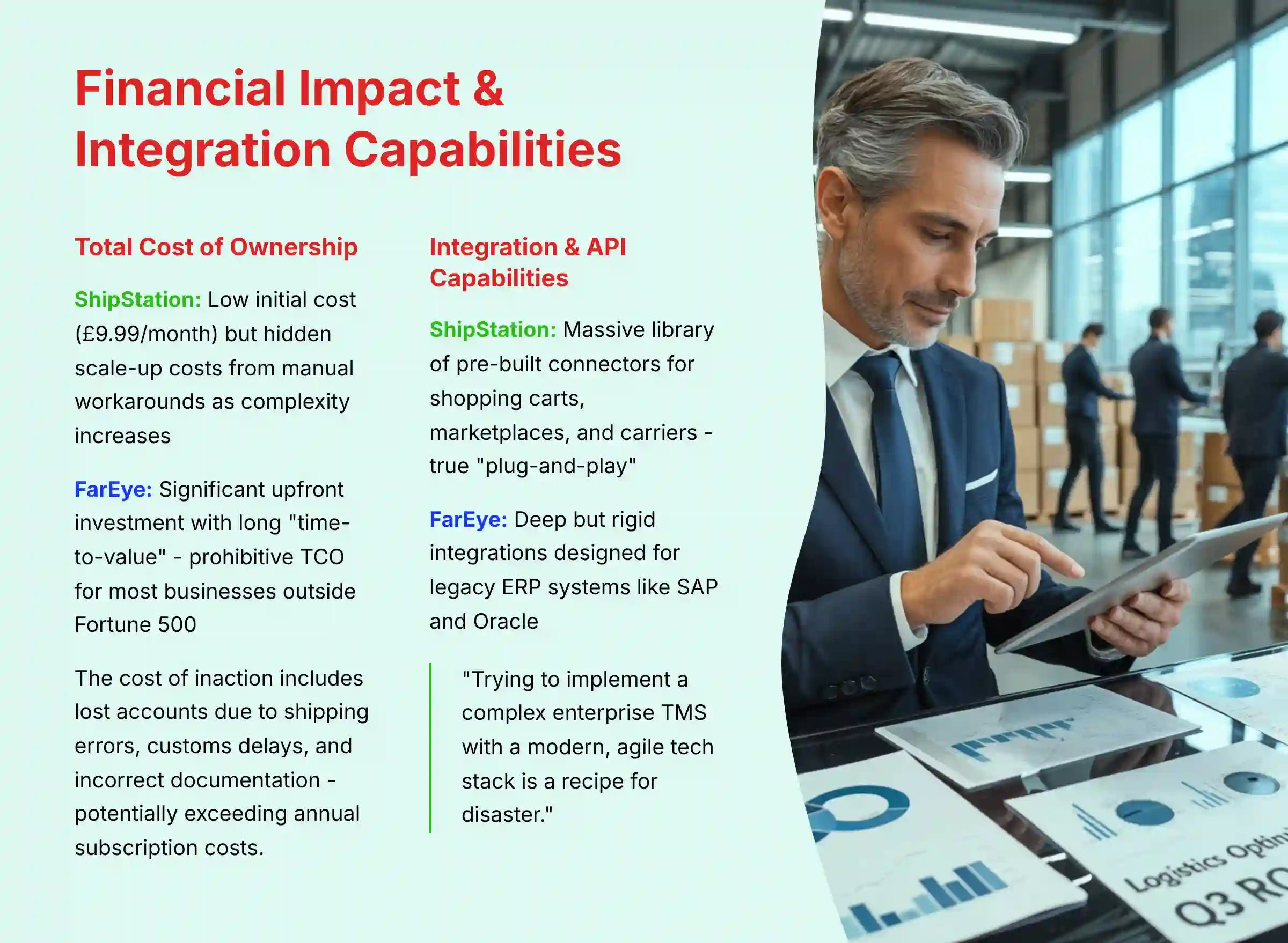
ShipStation is attractive to startups because of its clear, low-cost subscription tiers. You can start for as little as $9.99 per month. The trap is that the TCO escalates as your business grows more complex.
These hidden costs come from staff time. As your team spends hours manually handling international orders, fixing address errors, or dealing with exceptions, the true cost of the platform skyrockets. That cheap subscription becomes very expensive when you factor in labor. For businesses exploring comprehensive shipping solutions, our ShipwithMina Overview and Features guide provides insights into alternative platforms that might address these scalability challenges.
FarEye: The Enterprise Investment & Long Time-to-Value
FarEye sits at the opposite end of the spectrum. It involves a significant upfront investment. Based on industry research and public information, enterprise implementations of logistics platforms like FarEye typically involve substantial professional services fees and months-long implementation timelines.
This represents a prohibitive TCO for most businesses outside the Fortune 500. The long “time-to-value” means you could be waiting many months before seeing any return on that investment, which is a huge financial risk.
Calculating the Cost of Inaction
A key part of the analysis is calculating the cost of inaction. What is the financial damage of sticking with a less efficient tool? Losing just one major wholesale account due to repeated shipping errors can easily cost more than the annual subscription for an advanced logistics platform.
For businesses shipping internationally, the cost of customs delays, incorrect documentation, or improper landed cost calculation can be enormous. These seemingly minor errors compound rapidly, affecting everything from customer satisfaction to working capital requirements when shipments are held at borders.
Integration & API: Ecosystem Connectivity vs. Modern Flexibility
A logistics platform is worthless in a silo. It must be the central hub that connects your ERP, warehouse management system (WMS), and e-commerce stores. Think of it as the central nervous system of your operation.
A critical but often overlooked aspect of integration is the quality of data synchronization. Does the platform support real-time, bidirectional sync with your ERP, or does it rely on less reliable batch processing? The quality of these connections is crucial for maintaining inventory accuracy. However, professional due diligence requires evaluating the data mapping capabilities. A key question for your technical team is: “How much custom development is needed to map our ERP's data fields to the platform's fields, and who is responsible for maintaining that logic?”
ShipStation: The ‘Plug-and-Play' Champion
ShipStation's biggest strength is its massive library of pre-built connectors. It can connect to hundreds of shopping carts, marketplaces, and carriers right out of the box. This makes it a true “plug-and-play” solution for most standard e-commerce businesses.
If your business uses common platforms like Shopify and sells on Amazon, ShipStation's ecosystem is a powerful advantage for getting started quickly. For those interested in learning more about implementation best practices, our ShipwithMina Tutorials and Usecase guide offers practical insights that apply across various shipping platforms.
FarEye: The Legacy ERP Specialist
FarEye and other enterprise platforms offer deep but rigid integrations. They are designed to connect with huge, legacy ERP systems like SAP and Oracle. These connections are powerful but often slow and expensive to change.
An independent consultant I work with warned, “Trying to implement a complex enterprise TMS with a modern, agile tech stack is a recipe for disaster.” This highlights the risk of a technical mismatch.
Use Case Recommendations: Which Platform Is Right for Your Business?
The right choice depends entirely on your business's current scale, complexity, and strategic goals.
For Startups & SMBs with Simple Operations
Choose ShipStation.
- Choose if… you are a small business with mostly domestic shipping, your primary need is efficient label printing, and your top priority is a low upfront cost.
- Risk Profile: You can tolerate occasional API slowdowns during peak times. You have the staff to manually manage exceptions and the few complex shipments you have.
For High-Growth Businesses Hitting a Complexity Ceiling
Consider an advanced mid-market TMS solution.
- Choose if… your operational complexity has outgrown rule-based tools. You ship internationally, use multiple warehouses, or sell across many channels. Your priority is shifting from reactive fixes to proactive risk mitigation.
- Risk Profile: You need more capabilities than ShipStation but aren't ready for the implementation complexity and cost of an enterprise solution like FarEye. Look for platforms that offer AI capabilities but with faster implementation timeframes.
For Global Enterprises with Legacy Systems
Choose FarEye.
- Choose if… you are a large, global corporation with a multi-million dollar logistics budget and entrenched processes. You require deep integration with a legacy ERP like SAP.
- Risk Profile: You can absorb significant professional services fees and a long implementation timeline. You value stability and deep features for your complex network over agility.
For businesses that fall between two of these profiles—for instance, a high-growth D2C brand now expanding into complex B2B wholesale with specific LTL freight requirements—the choice is less clear. In this scenario, I strongly recommend conducting a comprehensive needs assessment and potentially running a proof-of-concept with your most critical shipping workflows. This allows you to validate the platform's fit with your specific requirements before committing to a full-scale implementation, mitigating the financial and operational risk of the transition.
FAQs: ShipStation vs. FarEye Comparison
What is the main difference between FarEye's AI and ShipStation's automation?
FarEye's AI is more specialized and powerful for complex logistics operations, particularly in last-mile delivery optimization and route planning. ShipStation's automation is reactive; it follows pre-set “if-then” rules to process orders that have already come in. For businesses seeking detailed comparisons of shipping automation tools, our ShipwithMina Review provides expert analysis that can help understand different automation approaches.
Is FarEye a replacement for a 3PL like ShipBob?
No. FarEye is a software platform (SaaS) that you use to manage your own shipping operations or coordinate with existing 3PLs. A 3PL like ShipBob is a service provider that physically stores your inventory and fulfills your orders for you. You might use FarEye to coordinate with multiple 3PLs for complex last-mile delivery.
Why would I choose FarEye over ShipStation if both handle logistics?
You would choose FarEye if you are a massive global enterprise needing deep, specialized features for last-mile delivery and have a legacy ERP like SAP. FarEye's AI is powerful and focused on optimizing complex delivery networks. ShipStation is designed for more straightforward shipping operations with an emphasis on ease of use and rapid implementation.
How significant is the API reliability risk with ShipStation?
Based on my analysis of user forums and industry reports, the risk is significant for scaling businesses. An API outage during a peak sales period like Black Friday can completely halt your ability to print labels, leading to immediate revenue loss and customer dissatisfaction.
What are the ‘hidden costs' of using ShipStation for a scaling business?
The primary hidden cost is the labor expense of manual workarounds. As your order volume and complexity grow, your team will spend more time fixing addresses, handling international customs, and managing exceptions that the rule-based system cannot automate. For those facing these challenges, reviewing our ShipwithMina FAQs might provide insights into how different platforms handle scaling challenges.
Which tool offers better security for handling sensitive customer data?
Both platforms have strong security profiles, but they differ in certifications. ShipStation is SOC 2 Type II compliant. FarEye has both SOC 2 Type II and ISO 27001 certifications, providing a more comprehensive security framework that may be required by enterprise clients or those operating in regulated industries. You must perform direct due diligence and request the latest security audit reports from any vendor to make a responsible decision.
Can FarEye integrate with my niche e-commerce platform as easily as ShipStation?
Not always. ShipStation's strength is its huge library of pre-built “plug-and-play” connectors. FarEye is designed for enterprise integrations, meaning it can connect to anything, but it may require more substantial custom development work and professional services support.
What is the ROI of an enterprise platform like FarEye over a cheaper tool?
The ROI comes from cost avoidance and revenue protection for complex operations. It reduces expenses from routing inefficiencies, late deliveries, and the inability to optimize complex logistics networks. It also protects revenue by improving the customer delivery experience and enabling more efficient last-mile operations, which can represent up to 40% of your total logistics costs. However, this ROI is only achievable for businesses with sufficient scale and complexity to justify the implementation costs.
Important Disclaimers:
Technology Evolution Notice:
The information about AI for Operations & Supply Chain tools presented in this article reflects our thorough analysis as of 2025. Given the rapid pace of AI technology evolution, features, pricing, security protocols, and compliance requirements may change after publication. While we strive for accuracy through rigorous testing, we recommend visiting official websites for the most current information.
Professional Consultation Recommendation:
For AI for Operations & Supply Chain applications with significant professional, financial, or compliance implications, we recommend consulting with qualified professionals who can assess your specific requirements and risk tolerance. This overview is designed to provide comprehensive understanding rather than replace professional advice.
Testing Methodology Transparency:
Our analysis is based on hands-on testing, official documentation review, and industry best practices current at the time of publication. Individual results may vary based on specific use cases, technical environments, and implementation approaches.
Final Verdict: When to Make the Leap to an Enterprise Logistics Platform
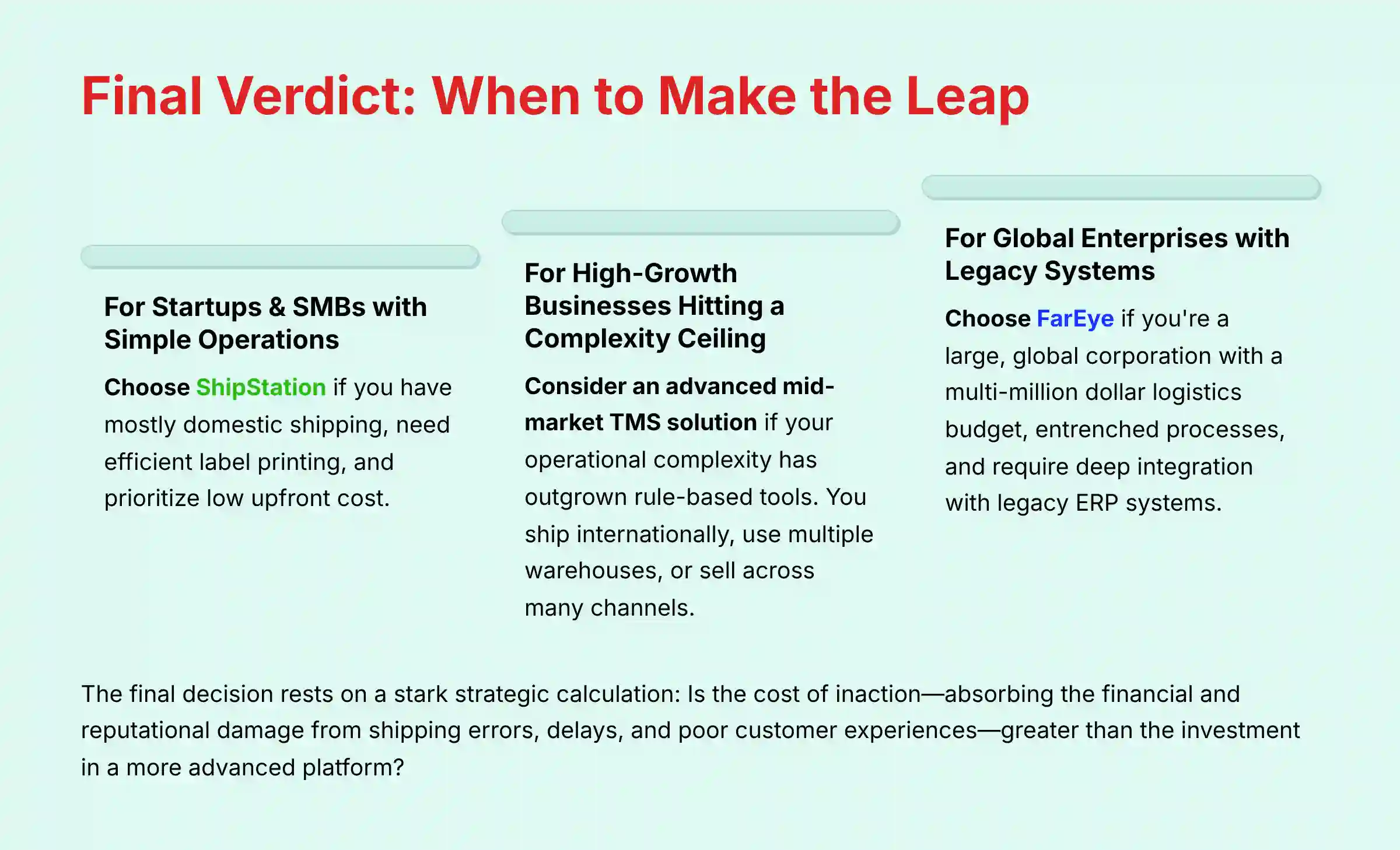
The market is splitting in two. On one side are the simple, rule-based tools that are perfect for getting a business off the ground. On the other are the enterprise-grade platforms designed to manage the chaos of scale. The decision is no longer about which simple tool to pick, but when to make the strategic upgrade from a basic system to a sophisticated one.
ShipStation remains the champion for simplicity and speed for small businesses. FarEye is a bastion of stability for global giants with deep pockets and complex delivery networks. For businesses caught in the middle—those growing beyond basic needs but not yet ready for enterprise complexity—the market offers several mid-tier solutions that should be carefully evaluated based on specific requirements.
The final decision rests on a stark strategic calculation. Is the cost of inaction—absorbing the financial and reputational damage from shipping errors, delays, and poor customer experiences—greater than the investment in a more advanced platform? For operations leaders determined not to be outpaced, the answer is clear. The time to press the advantage is now, and the tool you choose will be your primary weapon. This guide to comparing shipping platforms provides the intelligence you need to make that call.

Leave a Reply