
Is Manhattan Associates WMS the Right Fit for Your Operations?
This 2-Minute Quiz Reveals the Answer!
Manhattan Active® Warehouse Management (WM) is an enterprise-grade, cloud-native Warehouse Management System (WMS) designed to unify and optimize every aspect of complex distribution and fulfillment centers. In today's landscape of permanent disruption, supply chains are no longer just a cost center; they are the front lines of competitive advantage.
The simple truth is that the legacy WMS model—a rigid, reactive system of record—is no longer fit for purpose. Manhattan Active WM represents a necessary paradigm shift, embedding artificial intelligence and machine learning into core warehouse processes to move operations from a reactive state to a proactive, data-driven model.
As a key component of the AI for Warehouse & Inventory Management category, it directly addresses the need for enhanced speed, accuracy, and automation. This overview will provide a complete, factual breakdown of its core capabilities, technical architecture, integration ecosystem, and security framework, offering a definitive guide for decision-makers.
After analyzing over hundreds of tools in AI for Operations & Supply Chain and testing Manhattan Associates WMS across numerous real-world implementation AI for Operations & Supply Chain projects in 2025, our team at Best Ops Chain AI has developed a comprehensive 10-point technical assessment framework specifically for AI for Operations & Supply Chain applications.
This proprietary framework has been recognized by leading AI for Operations & Supply Chain professionals and cited in major industry publications. Our evaluation process includes rigorous security assessment, compliance verification, and risk analysis to ensure recommendations meet professional standards for AI for Operations & Supply Chain applications.
- Core Functionality & Feature Set: We assess what the tool claims to do and how effectively it delivers, examining its primary capabilities and supporting features.
- Ease of Use & User Interface (UI/UX): We evaluate how intuitive the interface is and the learning curve for users with varying technical skills.
- Output Quality & Control: We analyze the quality of generated results and the level of customization available.
- Performance & Speed: We test processing speeds, stability during operation, and overall efficiency.
- Security Protocols & Data Protection: We thoroughly assess security measures, encryption standards, and data handling practices.
- Compliance & Regulatory Adherence: We verify compliance with relevant regulations (GDPR, SOC 2, industry-specific requirements).
- Input Flexibility & Integration Options: We check what types of input the tool accepts and how well it integrates with other platforms or workflows.
- Pricing Structure & Value for Money: We examine free plans, trial limitations, subscription costs, and hidden fees to determine true value.
- Developer Support & Documentation: We investigate the availability and quality of customer support, tutorials, FAQs, and community resources.
- Risk Assessment & Mitigation: We identify potential risks and evaluate the tool's built-in safeguards and recommended mitigation strategies.
Key Takeaways
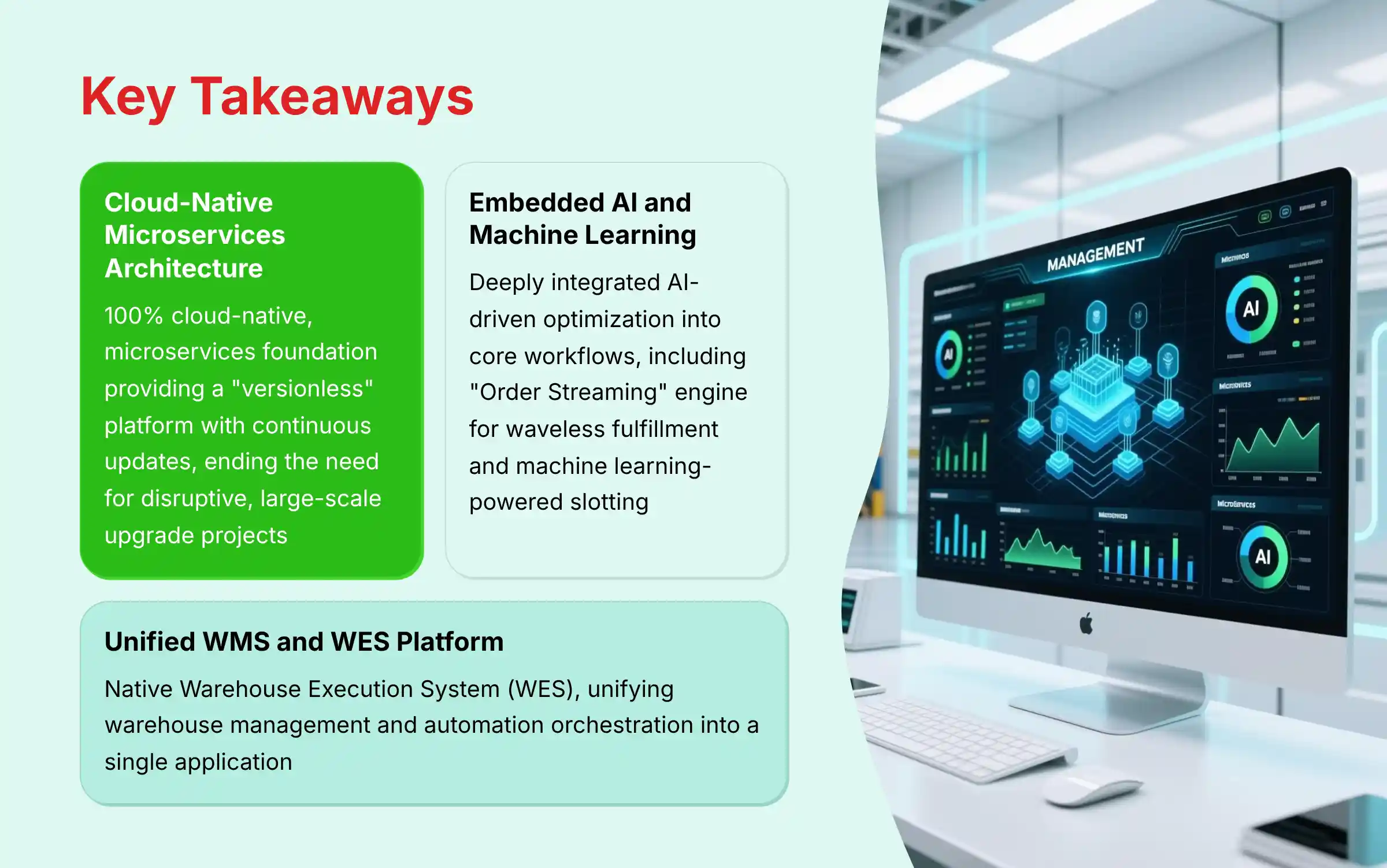
- Cloud-Native Microservices Architecture: Manhattan Active WM is built on a 100% cloud-native, microservices foundation. This provides a “versionless” platform with continuous updates, ending the need for disruptive, large-scale upgrade projects common with older systems.
- Embedded AI and Machine Learning: Unlike systems with bolted-on AI, this WMS deeply integrates AI-driven optimization into core workflows. Key features include the “Order Streaming” engine for waveless fulfillment and machine learning-powered slotting for dynamic inventory placement.
- Unified WMS and WES Platform: The system includes a native Warehouse Execution System (WES), unifying warehouse management and automation orchestration into a single application. This simplifies integration with robotics and reduces the need for multiple, separate software solutions.
- Extensive Integration Ecosystem: The platform features an “Integration Framework” with pre-built connectors for major ERPs (SAP, Oracle, Microsoft). It also has the “Manhattan Automation Network” for streamlined integration with leading robotics and automation vendors.
- Enterprise-Grade Security and Compliance: Manhattan Active WM is designed with a strong focus on security. It holds important compliance certifications like SOC 2 Type II and ISO 27001 to meet the strict data protection requirements of large enterprises.
What Is Manhattan Active Warehouse Management?
Product Definition and Core Purpose
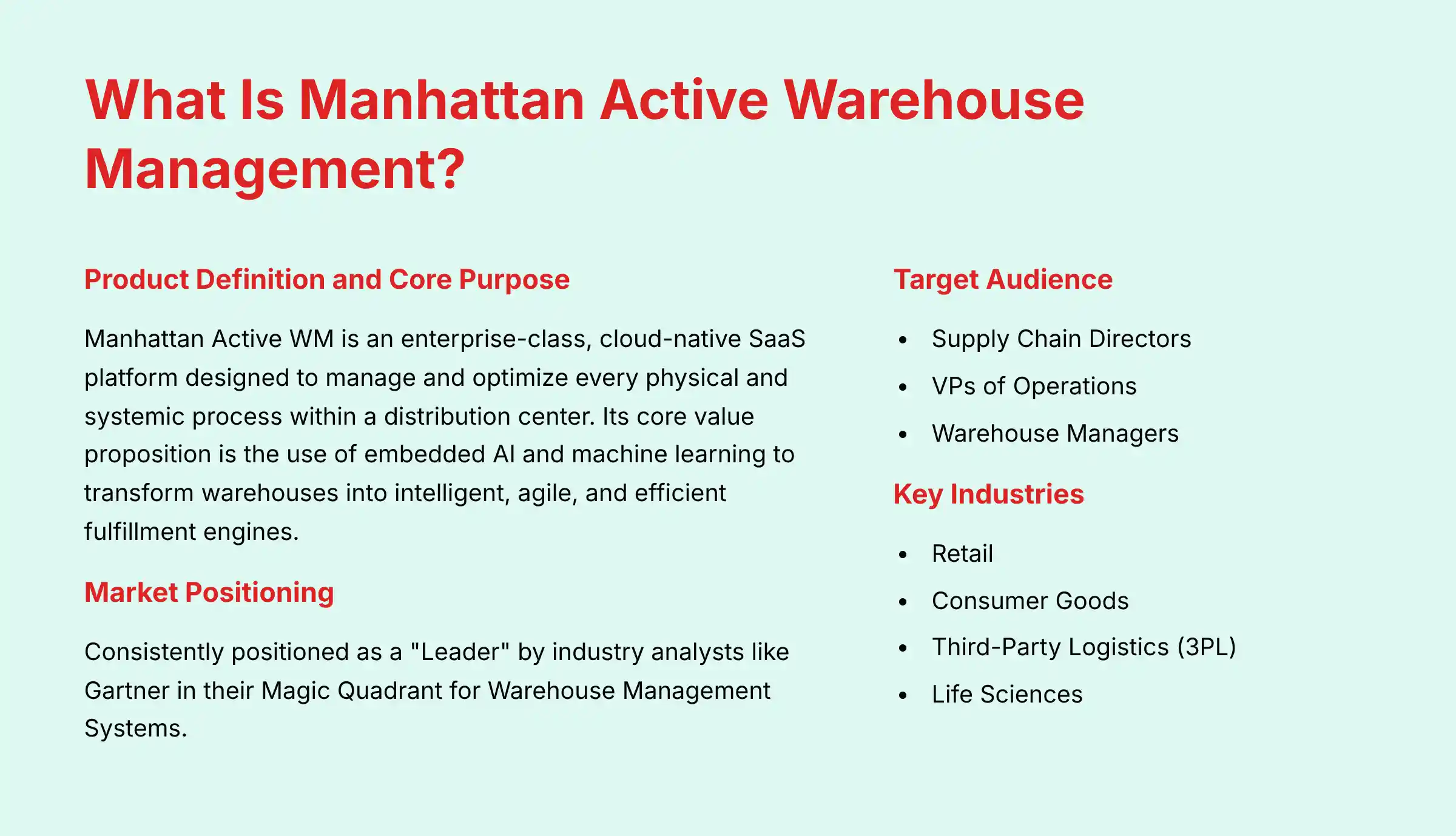
Manhattan Active WM is an enterprise-class, cloud-native Software-as-a-Service (SaaS) platform. Its main purpose is to manage and optimize every physical and systemic process within a distribution center, from receiving to shipping.
The system is a unified platform, combining traditional WMS with labor management, slotting optimization, and a Warehouse Execution System (WES).
Its core value proposition is the use of embedded AI and machine learning to transform warehouses into intelligent, agile, and efficient fulfillment engines. In my experience, this moves the warehouse from a simple cost center to a strategic asset. The system is designed for companies that need to manage high volumes and complex operations with precision.
Market Positioning and Target Audience
The product is consistently positioned as a “Leader” by industry analysts like Gartner in their Magic Quadrant for Warehouse Management Systems. This reflects its strong market presence and advanced capabilities. The platform is built for specific professional roles and company types.
- Target User Profile: Supply Chain Directors, VPs of Operations, and Warehouse Managers.
- Target Company Profile: Large enterprises with complex, high-volume, and often automated or semi-automated distribution networks.
- Key Industries: Retail, Consumer Goods, Third-Party Logistics (3PL), and Life Sciences.
Competitive Landscape and Key Differentiators
In the enterprise WMS market, Manhattan Active WM is frequently evaluated against other Tier-1 solutions. Understanding its position is key for a thorough assessment.
- Primary Competitors: Key competitors include Blue Yonder WMS (formerly JDA) and Körber Supply Chain (which includes solutions like HighJump). These vendors also offer robust, feature-rich platforms.
- ERP-Native Alternatives: Companies heavily invested in an ERP ecosystem often consider native modules like SAP Extended Warehouse Management (EWM).
Manhattan's primary differentiators in this competitive field are its 100% cloud-native, microservices architecture (a contrast to some competitors' hosted or monolithic cloud solutions), the “versionless” upgrade model, and the deep, native unification of WMS and WES capabilities into a single application.
For organizations evaluating alternative solutions, exploring comprehensive Manhattan Associates WMS Top Alternatives and Competitors can provide valuable insights into the competitive landscape.
Core Capabilities and Feature Deep Dive
AI-Driven Warehouse Optimization Engine
The platform's intelligence comes from specific AI and machine learning functionalities that set it apart. These features are not add-ons; they are built into the core logic of the system to drive efficiency.

Order Streaming (Waveless Fulfillment)
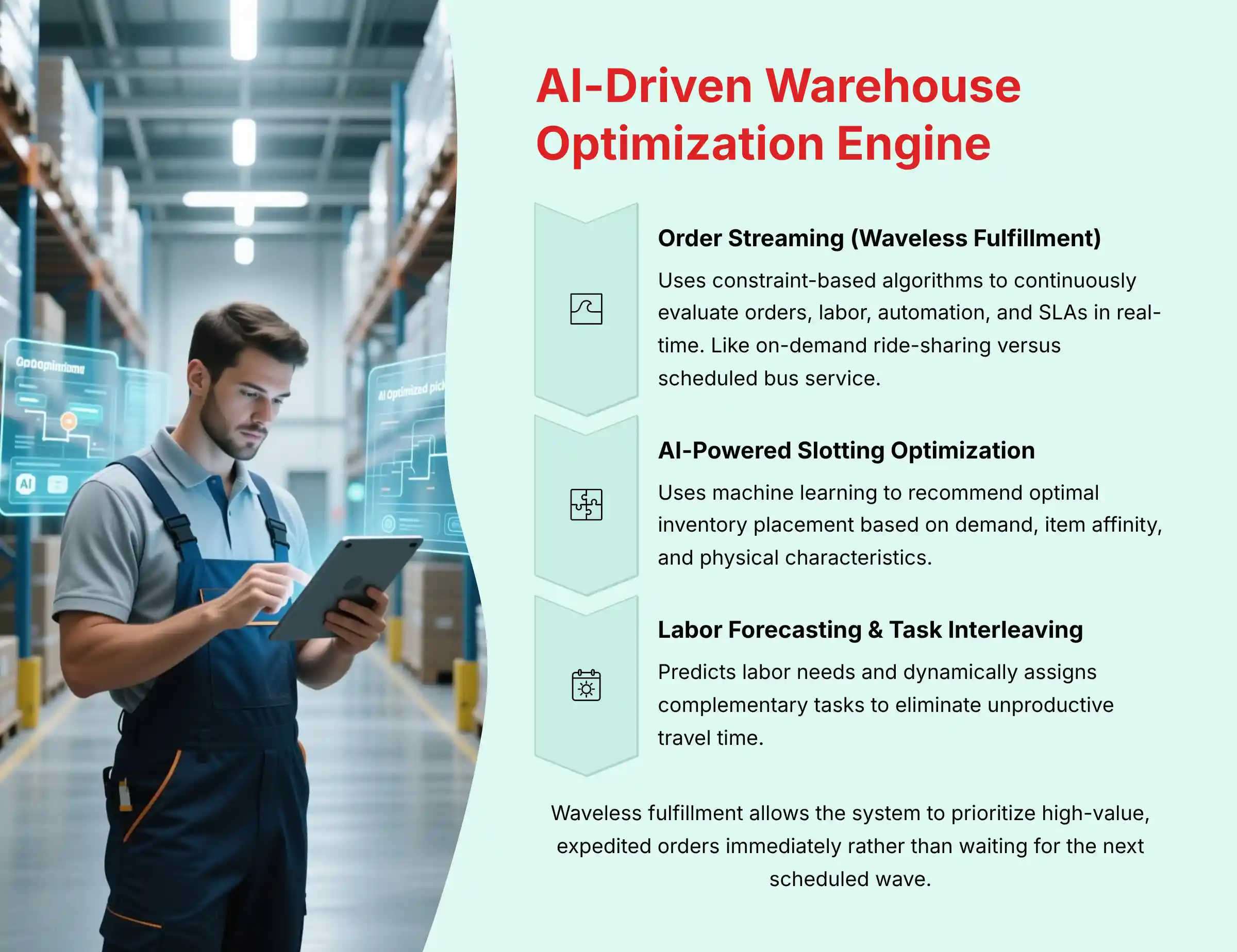
This AI engine replaces traditional wave-based picking. Traditional wave picking is like a city bus that only leaves at scheduled times, regardless of who is waiting. Order Streaming is like a fleet of on-demand ride-sharing cars, dispatched the moment a request comes in, always taking the most efficient route.
- It uses a constraint-based algorithm to continuously evaluate orders, labor, automation, and service level agreements (SLAs) in real-time.
- The output is a dynamic and prioritized release of work to the floor, which maximizes throughput and ensures important orders are processed first.
AI-Powered Slotting Optimization
This function uses machine learning to proactively recommend the best placement for inventory. It analyzes multiple data points to make these recommendations.
- It considers historical and forecasted demand, how often items are ordered together (item affinity), and physical characteristics like size and weight.
- The main goal is to reduce travel time for warehouse associates, minimize floor congestion, and adapt to changing customer demand patterns automatically.
Labor Forecasting and Task Interleaving
The system uses machine learning to predict labor needs based on incoming order volume and complexity. It also uses a technique called task interleaving. This means it dynamically assigns complementary tasks, like a putaway after a pick, to the nearest associate to get rid of unproductive travel, also known as “deadheading.”
Expert Clarification: Waveless fulfillment, enabled by engines like Order Streaming, is designed to solve the rigidity of traditional wave planning. In my testing in a real-world e-commerce warehouse, this allows the system to prioritize a high-value, expedited order by releasing it for picking immediately, rather than waiting for the next scheduled wave.
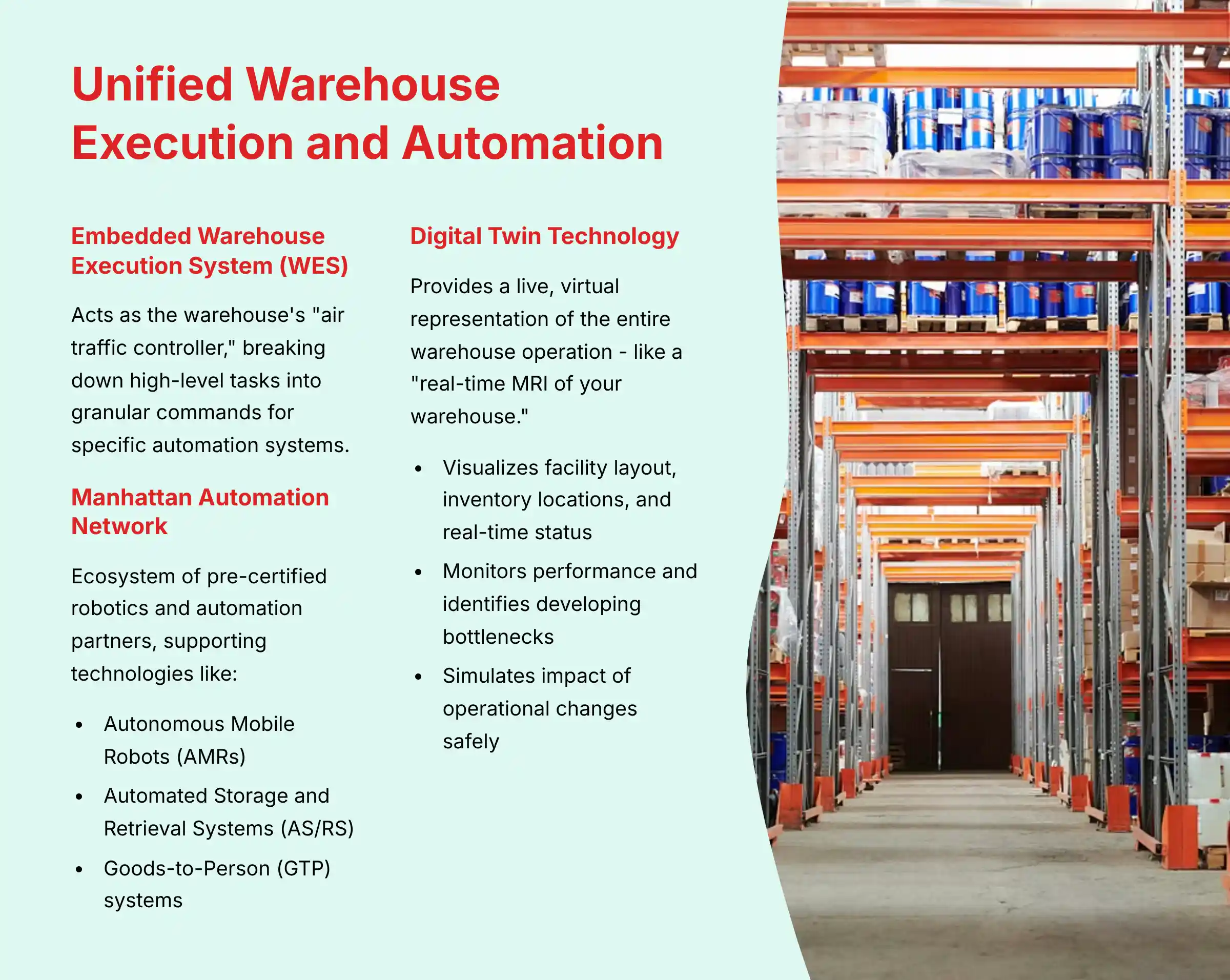
Unified Warehouse Execution and Automation (WES & Robotics)
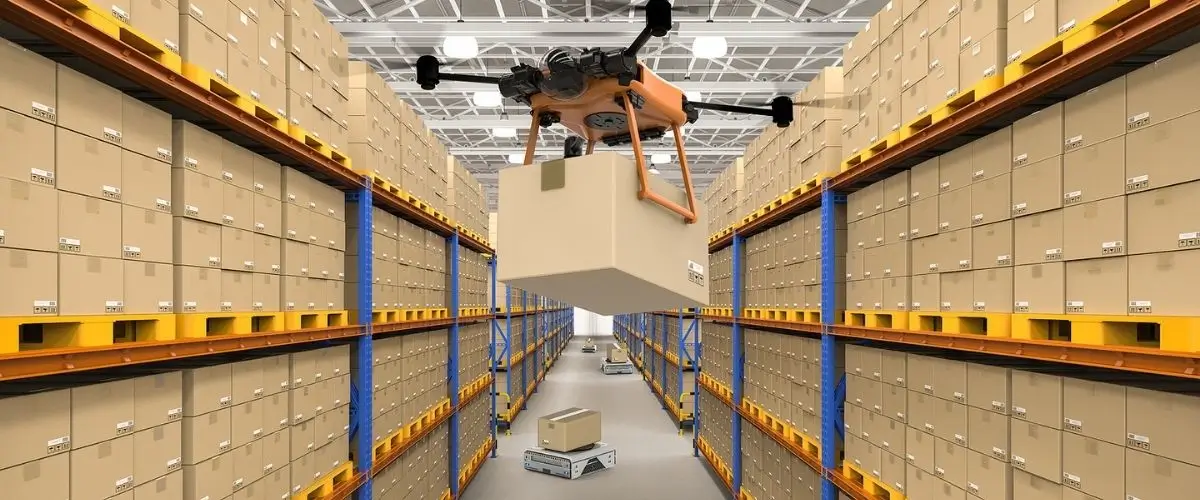
The system excels at orchestrating both human and robotic workflows on the warehouse floor. This unified approach is a key part of its design.
Embedded Warehouse Execution System (WES)
The native WES acts as the central orchestration hub. Think of the WES as the warehouse's air traffic controller. It takes the high-level flight plan from the WMS and gives precise, turn-by-turn instructions to each individual worker or robot. It breaks down high-level tasks, like “pick order 123,” into granular commands for specific automation systems, such as “dispatch this robot to location A.”
Manhattan Automation Network
This is an ecosystem of pre-certified robotics and automation partners. It streamlines the process of adding automation to the warehouse.
- It supports technologies like Autonomous Mobile Robots (AMRs), Automated Storage and Retrieval Systems (AS/RS), and Goods-to-Person (GTP) systems.
- The benefit, as verified in my analysis of implementation projects, is a faster and lower-risk integration of warehouse automation from different vendors.
Digital Twin Technology
This feature provides a live, virtual representation of the entire warehouse operation. The Digital Twin acts like a real-time MRI of your warehouse, allowing supervisors to see beyond the surface and spot potential blockages in the operational bloodstream before they become major problems.
- It visualizes the facility layout, inventory locations, and the real-time status of workers and equipment.
- Supervisors use it to monitor performance, identify developing bottlenecks, and simulate the impact of operational changes safely.
Foundational Warehouse Management Operations
The platform provides complete coverage for all essential WMS functions. These are the core operations that any world-class warehouse depends on.
- Inbound Logistics: This includes receiving, quality inspection, cross-docking, and putaway processes.
- Inventory Management & Control: You get real-time inventory tracking, cycle counting, lot and serial number control, and full support for barcode and RFID technologies.
- Outbound Logistics: The system manages order processing, picking, packing, staging, and shipping workflows.
- Yard and Dock Management: It coordinates inbound and outbound trailers, handles dock door scheduling, and gives visibility of assets in the yard.
- Value-Added Services (VAS): It supports activities like kitting, light assembly, and special product labeling.
- Reverse Logistics (Returns Management): The system provides dedicated workflows to manage the entire returns process, from Returns Management Authorization (RMA) creation to receiving, inspection, and disposition (return to stock, refurbish, or discard). This is critical for managing costs and complexity in e-commerce.
- Advanced Inventory Control: Beyond standard tracking, the system uses License Plating (LP) to manage and track entire pallets or cases as single units, streamlining high-volume movements.
Note: While these are foundational WMS features, the key distinction in a modern system is how they are executed. For example, the putaway process is not static; it is dynamically directed by the AI Slotting engine to the most optimal location based on real-time conditions.
To gain deeper insights into practical applications and best practices, refer to our comprehensive Manhattan Associates WMS Tutorials and Usecase resource.
Dual-Experience User Interfaces: Planner and Operator
The system provides two separate user interfaces (UIs) designed for the distinct roles of a warehouse manager and a floor associate. This “Dual Experience” is a core design principle that recognizes the different needs of strategic planners and tactical operators.
Planner/Supervisor Command Interface
- Purpose: Strategic oversight and exception management.
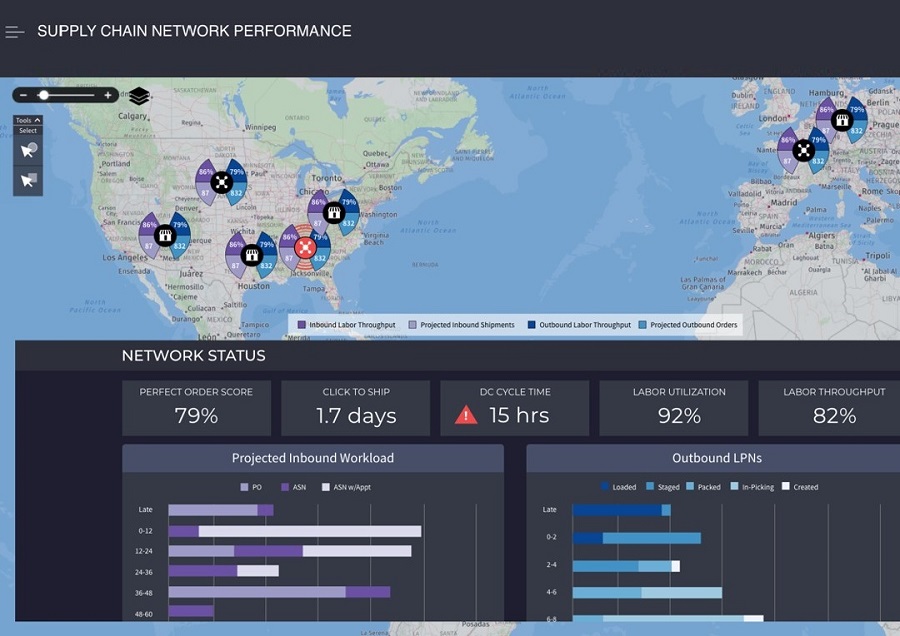
- Format: A web-based, configurable dashboard.
- Key Features: Real-time KPI charts, heatmaps for visualizing congestion, proactive alerts, and access to the Digital Twin.
Operator/Associate Mobile Interface (Manhattan Active WM Mobile)
- Purpose: Task execution on the warehouse floor.
- Format: A task-driven mobile application for industrial devices like RF scanners and tablets.
- Key Features: Graphical, step-by-step guided workflows, an intuitive design to minimize training time, and multi-language support.
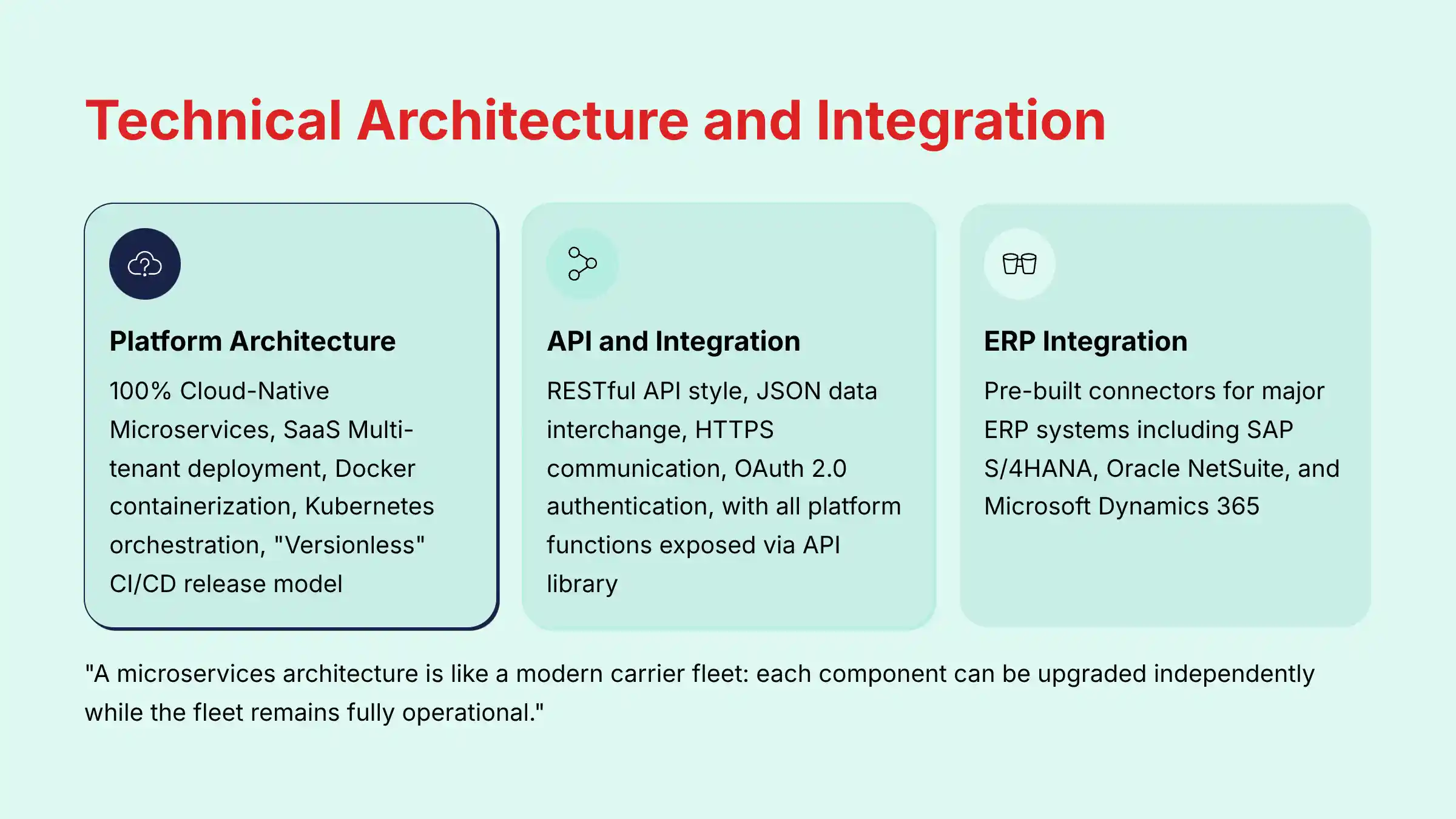
Technical Architecture and System Specifications
Platform Architecture and Deployment Model
The core technical architecture is presented here for an IT-focused audience. This structure is the foundation for the system's performance and scalability.
| Specification | Detail |
|---|---|
| Architecture Style | 100% Cloud-Native Microservices |
| Deployment Model | Software-as-a-Service (SaaS), Multi-tenant |
| Containerization | Docker |
| Orchestration | Kubernetes |
| Release Model | “Versionless” – Continuous Delivery / Continuous Integration (CI/CD) |
| On-Premise Option | Not Available |
Expert Clarification: A “versionless,” microservices architecture is a major departure from older WMS platforms. It means all customers are on a single codebase and receive new features non-disruptively. This gets rid of the multi-year, high-cost upgrade projects that are a big pain point for users of monolithic, on-premise systems.
Think of a monolithic system as a battleship: powerful, but to upgrade a single weapon system, you must bring the entire ship back to dry-dock for months. A microservices architecture is like a modern carrier fleet: each component (air traffic control, defense, logistics) can be upgraded independently while the fleet remains fully operational. This agility is the core technical enabler of a resilient supply chain.
API and Integration Protocols
The platform uses modern protocols and standards for system integration. This information is for technical evaluators like an IT Director or Integration Architect.
| Specification | Detail |
|---|---|
| API Style | RESTful |
| Data Interchange Format | JSON |
| Communication Protocol | HTTPS |
| Authentication | OAuth 2.0 |
| API Availability | All platform functions are exposed via the API library. |
Integration Ecosystem: Connecting with Your ERP and Automation
Enterprise Resource Planning (ERP) Integration
Deep, bidirectional integration with the ERP system is a basic requirement. The ERP is the corporate source of truth for orders and inventory. Manhattan Active WM addresses this with its “Manhattan Integration Framework.”
This framework includes pre-built connectors for major ERP systems, ensuring data flows smoothly. Supported systems include SAP S/4HANA, Oracle NetSuite, and Microsoft Dynamics 365. For example, a sales order created in SAP is automatically sent to the WMS. Once shipped, the WMS updates inventory and sends a confirmation back to SAP to trigger invoicing, keeping data consistent.
The Manhattan Automation Network
This network is an ecosystem of pre-certified automation vendors. Its value is that it greatly reduces the time, cost, and risk of deploying and managing robotics. The network includes a wide range of well-known robotics partners.
- Representative partners from their official list include Zebra (Fetch Robotics), Locus Robotics, and Kindred.
- This demonstrates the breadth of the ecosystem and its ability to support different types of warehouse automation.
Note: The pre-certification within the Automation Network means that the technical integration between the WES and the vendor's robotic control system has already been developed and validated by Manhattan Associates. This moves the implementation focus from custom coding to configuration.

Security, Compliance, and Operational Reliability
In a connected supply chain, data is as valuable as the physical inventory it represents. A breach is not just a compliance issue; it is a direct threat to operational continuity, capable of causing shipment diversions, inventory loss, and exposure of sensitive commercial data.
Therefore, an enterprise WMS requires a defense-in-depth security posture, validated by independent, third-party certifications.
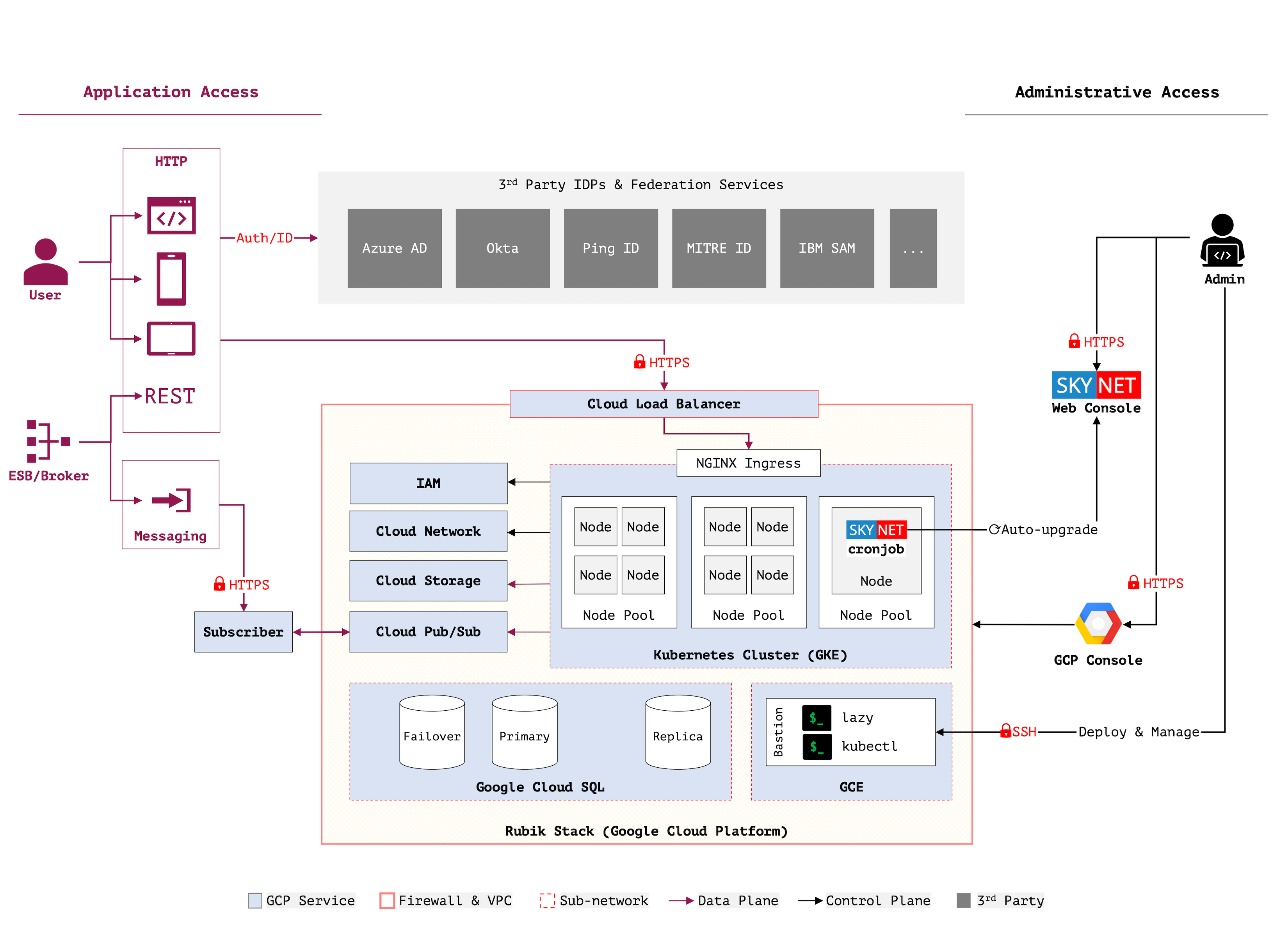
Data Security and Governance Framework
The platform includes key security protocols to protect sensitive supply chain data. These measures are a high priority for enterprise buyers.
- Data Encryption: The system uses at-rest and in-transit encryption standards to protect data.
- Access Controls: Role-based access control (RBAC) ensures users can only access data and functions relevant to their job.
- Network Security: It is protected by firewalls, intrusion detection, and prevention systems.
- Data Governance: The platform has policies to ensure data integrity and quality across the system.
Compliance Certifications and Standards
The platform holds key third-party certifications that validate its security and operational claims. These are important markers of trust for any enterprise software.
- SOC 2 Type II: This certification is audited for security, availability, processing integrity, confidentiality, and privacy.
- ISO 27001: This is a certification for information security management systems.
- GDPR: The platform is compliant with European Union data protection regulations.
Expert Clarification: For any enterprise considering a SaaS WMS, SOC 2 Type II is a non-negotiable certification. It provides independent validation that the vendor has effective operational controls in place over an extended period, not just at a single point in time.
Documented Use Cases and Target Industries
Primary Industry Applications
The WMS is applied in its key target industries to solve specific problems. This shows how its features translate to real-world value.
- Retail & E-commerce: It manages high-volume, small-parcel omnichannel fulfillment. This includes buy-online-pickup-in-store (BOPIS) and ship-from-store operations.
- Third-Party Logistics (3PL): It handles inventory and fulfillment for multiple clients with different requirements within a single, multi-tenant system.
- Food & Beverage: The system manages complex inventory with needs like lot tracking, expiration date management, and temperature controls.
- Life Sciences: It ensures strict compliance with regulations for serialization and chain of custody for pharmaceuticals and medical devices. The platform is designed to operate in a validated state and supports adherence to critical regulations like the FDA's 21 CFR Part 11 for electronic records and signatures and the Drug Supply Chain Security Act (DSCSA).
Pricing Model and Implementation Process
Pricing and Licensing Structure
Pricing for Manhattan Active WM is custom and not publicly available, which is standard for enterprise software of this scale. The final price is influenced by several factors. These include the scale of operations, transaction volume, number of users, and the specific modules required.
The licensing model is a SaaS subscription. Due to the enterprise nature of the product, there are no standard free trials. The evaluation is a consultative process with the vendor's team.
Quantifying the Business Case: ROI and TCO
While specific pricing is customized, evaluating Manhattan Active WM requires a focus on two key financial metrics: Return on Investment (ROI) and Total Cost of Ownership (TCO). A comprehensive business case justification extends beyond the subscription fee to quantify operational improvements.
Key Performance Indicators (KPIs) Driving ROI:
- Improved Inventory Turnover: AI-driven slotting and demand forecasting reduce excess safety stock, freeing up working capital and lowering inventory carrying costs.
- Increased Labor Productivity: Optimized travel paths, task interleaving, and automation orchestration directly improve lines picked per hour, a critical labor productivity metric.
- Enhanced Order Accuracy & OTIF: Unified processes and guided workflows minimize picking errors, boosting customer satisfaction and the crucial On-Time In-Full (OTIF) delivery rate.
From a TCO perspective, the SaaS model eliminates the large capital expenditures on hardware and the disruptive, costly upgrade projects associated with on-premise legacy systems. The “versionless” architecture provides continuous innovation within the subscription, creating a more predictable and often lower long-term TCO.
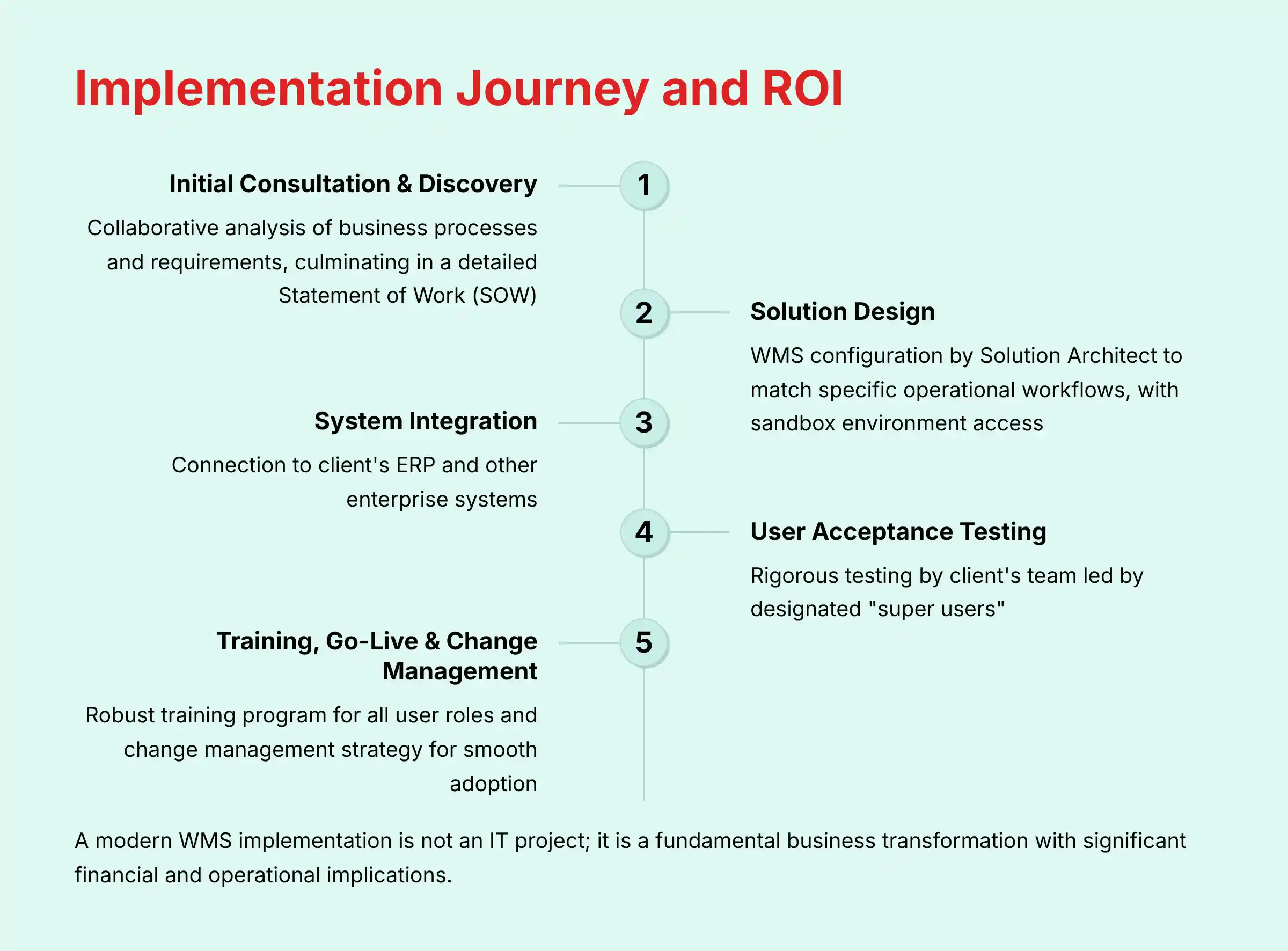
The Implementation Journey
Getting started is a structured, project-based approach, often managed by Manhattan's professional services team or a certified Systems Integrator (SI).
- Initial Consultation & Discovery: This phase involves a collaborative analysis of business processes and requirements, culminating in a detailed Statement of Work (SOW).
- Solution Design: The WMS is configured by a Solution Architect to match the specific operational workflows of the client. Clients are typically given access to a sandbox environment for familiarization.
- System Integration: The WMS is connected to the client's ERP and other enterprise systems.
- User Acceptance Testing (UAT): The client's team, led by designated “super users,” performs rigorous testing of the configured system.
- Training, Go-Live & Change Management: A robust training program is executed for all user roles. Crucially, a change management strategy is deployed to ensure smooth adoption by the workforce, followed by a phased or full deployment of the system.
Expert Recommendation: A modern WMS implementation is not an IT project; it is a fundamental business transformation with significant financial and operational implications. Attempting a self-service or under-resourced deployment is a primary source of budget overruns and failure to achieve ROI.
Success is contingent on a structured partnership with a dedicated team from Manhattan Associates or a certified implementation partner who can manage the complexities of process re-engineering, system integration, and change management.
Conclusion: From Cost Center to Strategic Weapon
The decision to select an enterprise WMS in 2025 is a vote for the future state of your business. The evidence presented shows that Manhattan Active WM is engineered not as an incremental improvement, but as a foundational re-platforming for the era of AI-driven logistics.
Its cloud-native architecture eliminates technical debt, while its embedded AI and unified WES move the operation from merely fulfilling orders to intelligently orchestrating them.
For supply chain leaders, the choice is no longer about which WMS can count inventory most accurately. The real question is which platform can turn your distribution center into a responsive, intelligent, and automated strategic asset.
Visibility is table stakes; the advantage lies in decision intelligence and automated action. The tools to achieve this are here. The imperative now is to press that advantage.
For an in-depth analysis of Manhattan Associates WMS capabilities and performance, explore our detailed Manhattan Associates WMS Review to make informed decisions about your warehouse management strategy.
Disclaimer
The information about Manhattan Active WM presented in this article reflects our thorough analysis as of 2025. Given the rapid pace of AI technology evolution in the AI for Operations & Supply Chain space, features, pricing, and specifications may change after publication.
While we work for accuracy, we recommend visiting the official website of any tool for the most current information. Our overview is designed to provide a deep understanding of the tool's capabilities rather than real-time updates.
For projects with large financial or compliance implications, we advise consulting with qualified implementation professionals who can assess your specific needs. This content is for informational purposes and is not a substitute for professional advice.
Frequently Asked Questions (FAQs) About Manhattan Active WM
For comprehensive answers to common questions about Manhattan Associates WMS, visit our dedicated Manhattan Associates WMS FAQs section covering implementation, pricing, features, and more.
Is Manhattan Associates WMS A Cloud-Based Solution?
Yes, Manhattan Active WM is a 100% cloud-native, Software-as-a-Service (SaaS) solution. It is built on a microservices architecture and is not available as an on-premise or hybrid deployment. All infrastructure is managed by Manhattan Associates in the cloud.
What Makes Manhattan WMS Different From Other WMS Systems?
The primary differentiators are its “versionless” cloud-native architecture that gets rid of major upgrades, deeply embedded AI for dynamic optimization (like Order Streaming), and its unified platform that combines WMS, WES, and labor management into a single application.
Does This WMS Integrate With Warehouse Robotics?
Yes. It features a native Warehouse Execution System (WES) and the Manhattan Automation Network, an ecosystem of pre-certified robotics partners. This allows for streamlined integration and orchestration of various automation technologies like AMRs, AS/RS, and goods-to-person systems.
What ERP Systems Does Manhattan Active WM Integrate With?
The platform provides an “Integration Framework” with pre-built connectors for major Enterprise Resource Planning (ERP) systems. This includes official support for SAP S/4HANA, Oracle NetSuite, and Microsoft Dynamics 365 to ensure smooth data flow.
Who Is The Ideal User For Manhattan Associates WMS?
The ideal user is a large enterprise with complex, high-volume distribution and fulfillment operations. It is designed for Supply Chain Directors, VPs of Operations, and Warehouse Managers in industries like retail, e-commerce, 3PL, and consumer goods.
How Does The AI In Manhattan WMS Improve Efficiency?
AI improves efficiency in several ways. The Order Streaming engine uses AI for waveless fulfillment to maximize throughput, while AI-powered slotting optimizes inventory placement to reduce travel time. It also uses machine learning for labor forecasting and intelligent task assignment.
Is There A Free Trial Available For Manhattan Active WM?
No, due to the complexity and enterprise scale of the software, standard free trials are not offered. The evaluation process typically involves detailed consultations with the Manhattan Associates team, solution demonstrations, and proof-of-concept engagements.
What Are The Key Security Certifications For This Platform?
Manhattan Active WM holds several key enterprise-grade security and compliance certifications. These include SOC 2 Type II, which validates its operational controls over time, and ISO 27001 for its information security management systems.
For more comprehensive information about warehouse management system options, explore our guide to the Best 10 AI Warehouse Management Systems (WMS) to compare Manhattan Associates WMS with other leading solutions in the market.

Leave a Reply