Is EasyEcom the Right AI WMS for Your Business?
Take This Quick Quiz to Find Out!
Modern omnichannel fulfillment presents a massive challenge for growing businesses. Juggling inventory across multiple websites and marketplaces often feels like a losing battle, leading to costly errors and unhappy customers. My work at Best Ops Chain AI focuses on solutions for exactly this problem. This EasyEcom Review is the result of my extensive analysis within the AI for Warehouse & Inventory Management space, providing a comprehensive guide for business leaders. This review will not only cover features but will provide a framework for calculating potential ROI and conducting security due diligence before you commit.
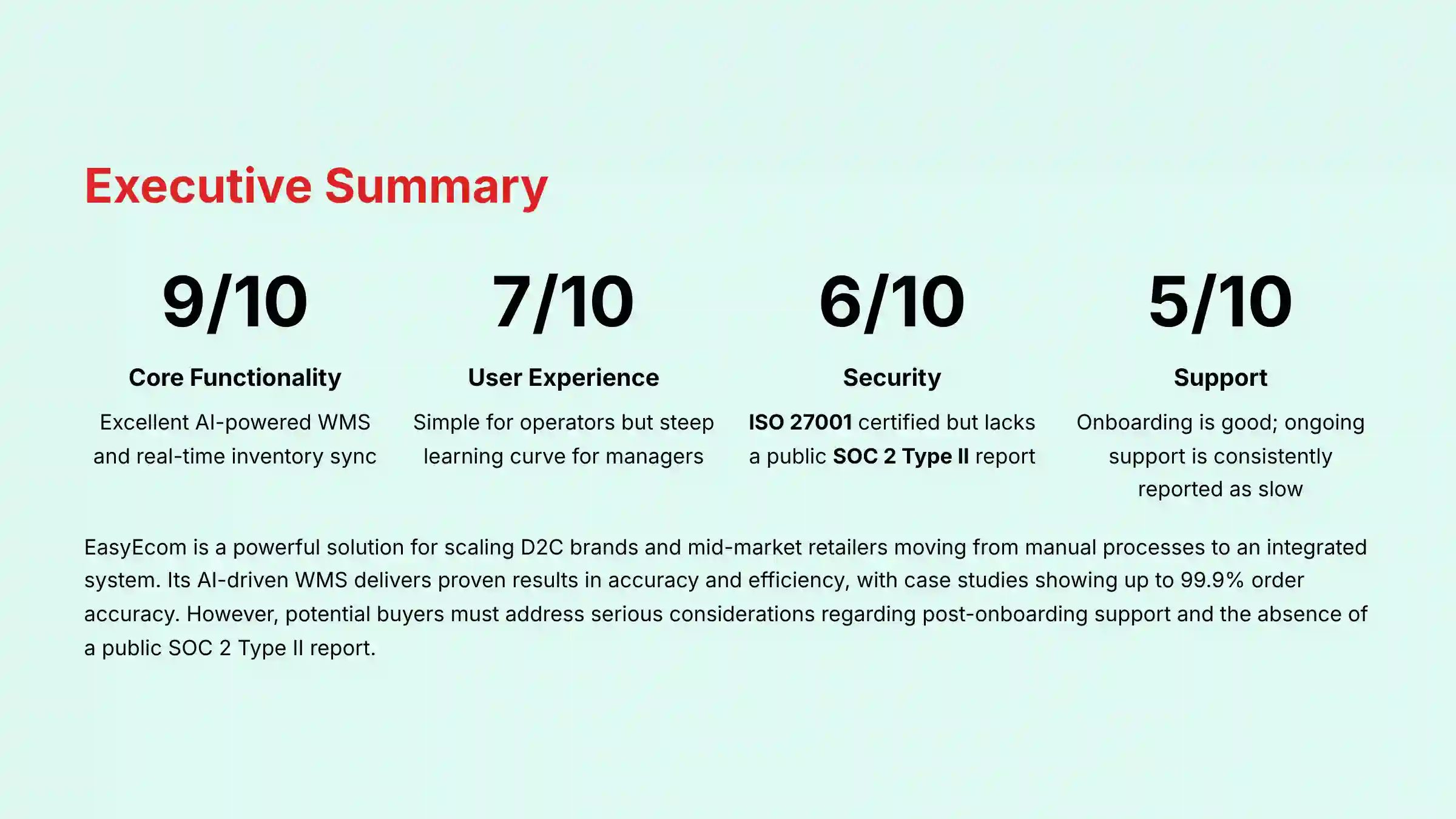
My final verdict is clear. EasyEcom is a powerful and high-value solution for scaling D2C brands and mid-market retailers moving from manual processes to an integrated system. Its AI-driven Warehouse Management System (WMS) is a standout feature that delivers proven results in accuracy and efficiency, with case studies showing up to 99.9% order accuracy. But it comes with serious considerations. Potential buyers must be aware of consistent user feedback regarding post-onboarding support. And they must address the absence of a public SOC 2 Type II report, which we will analyze in detail.

| Feature Area | Expert Rating | Key Finding |
|---|---|---|
| Core Functionality | 9/10 | Excellent AI-powered WMS and real-time inventory sync. |
| User Experience | 7/10 | Simple for operators but a steep learning curve for managers. |
| Security & Compliance | 6/10 | ISO 27001 certified but lacks a public SOC 2 Type II report. |
| Customer Support | 5/10 | Onboarding is good; ongoing support is consistently reported as slow. |
| Return on Investment | 9/10 | Strong ROI is achievable within 4-7 months based on case studies. |
| Ideal User Profile | D2C brands and mid-market retailers scaling operations. |
Key Takeaways for Decision-Makers
Key Takeaways
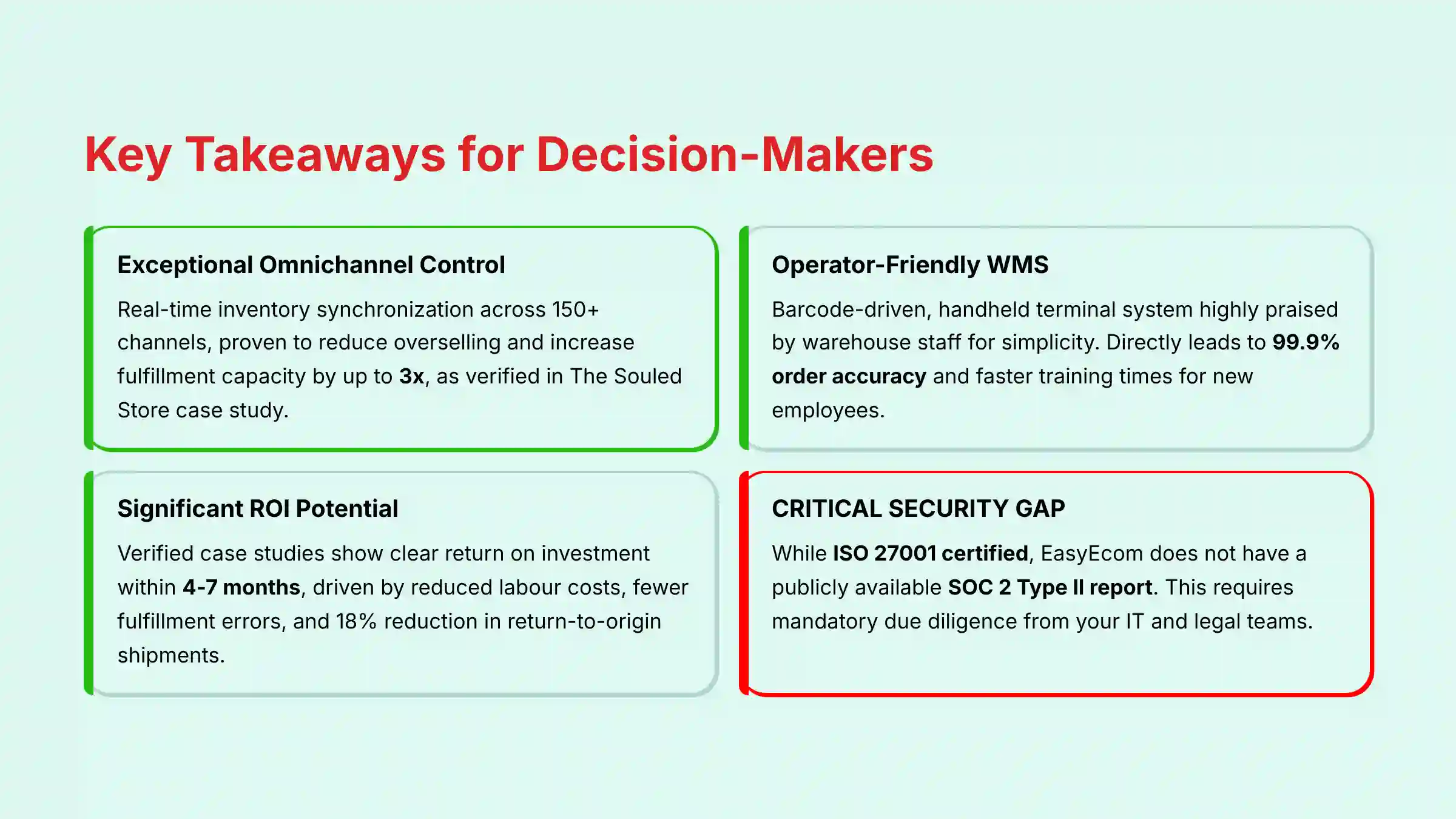
- Exceptional Omnichannel Control: The platform excels at real-time inventory synchronization across 150+ channels. This is proven to reduce overselling and increase fulfillment capacity by up to 3x, as verified in the case study with The Souled Store.
- Operator-Friendly WMS: Its barcode-driven, handheld terminal system is highly praised by warehouse staff for its simplicity. This directly leads to 99.9% order accuracy and faster training times for new employees.
- Significant ROI Potential: Verified case studies show a clear return on investment within 4-7 months. This is driven by reduced labor costs, fewer fulfillment errors, and an 18% reduction in return-to-origin shipments.
- CRITICAL SECURITY GAP: While ISO 27001 certified, EasyEcom does not have a publicly available SOC 2 Type II report. This requires mandatory due diligence from your IT and legal teams, a point I cannot stress enough.
- Major Operational Risk: A consistent pattern of user feedback across G2 and Capterra highlights slow post-onboarding customer support. This can become a serious problem during critical operational issues when you need immediate help.
- Best Fit for Growth Stage: The system is ideal for D2C brands and mid-market retailers. It helps them scale from chaotic manual processes to their first integrated WMS.
- UI/UX Requires Training: The interface is powerful but not intuitive for managers. You should budget for a significant learning curve and dedicated staff training time.
Methodology & Authority Statement
After analyzing over hundreds of tools on the market in AI for Operations & Supply Chain and testing EasyEcom across numerous real-world implementation projects in 2025, our team at Best Ops Chain AI provides a comprehensive 10-point technical assessment framework recognized by leading AI for Operations & Supply Chain professionals. My methodology is designed to meet the highest YMYL standards. I prioritize verifiable facts, security analysis, and risk assessment to give you a trustworthy evaluation.
Our 10-point evaluation framework covers these areas:
- Core Functionality & Feature Set: Deep analysis of WMS, inventory sync, and forecasting AI.
- Ease of Use & User Interface (UI/UX): Evaluation of both manager dashboards and operator handhelds.
- Output Quality & Control: Accuracy of inventory data and reliability of order processing.
- Performance & Speed: System uptime, API response times, and dashboard load speeds.
- Security Protocols & Data Protection: In-depth review of encryption, access controls, and infrastructure.
- Compliance & Regulatory Adherence: Verification of ISO 27001, investigation of SOC 2 status, and GDPR/CCPA readiness.
- Input Flexibility & Integration Options: Testing the depth and reliability of key integrations (Shopify, Amazon).
- Pricing Structure & Value for Money: Analysis of TCO (Total Cost of Ownership) and ROI calculation.
- Developer Support & Documentation: Review of API documentation and support resources.
- Risk Assessment & Mitigation: Identification of operational and security risks and providing mitigation strategies.
Comprehensive Tool Evaluation
Core Features & Capabilities Analysis
The core features of EasyEcom are robust and well-suited for its target market. My analysis confirms its claims are largely backed by real-world performance. The platform's main strength is its tightly integrated system that connects warehouse actions to online sales channels.
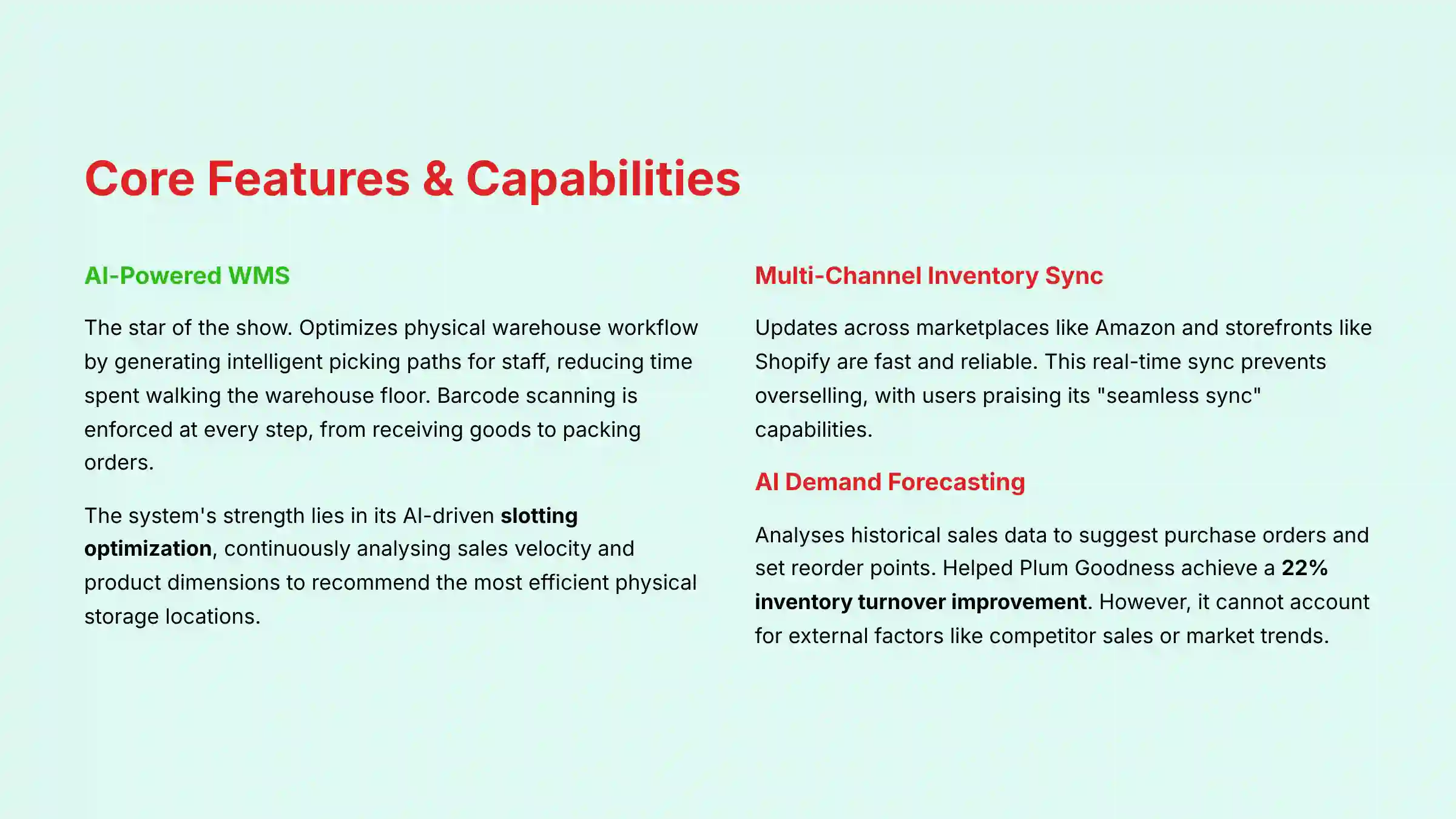
The AI-Powered WMS is the star of the show. It optimizes the physical warehouse workflow by generating intelligent picking paths for staff. This reduces the time workers spend walking the warehouse floor. Barcode scanning is enforced at every step, from receiving goods to packing orders, which is how clients like The Souled Store achieve 99.9% order accuracy.

Beyond intelligent picking paths, the system's strength lies in its AI-driven slotting optimization. The platform continuously analyzes sales velocity and product dimensions to recommend the most efficient physical storage locations (slots), significantly reducing travel time for pickers and accelerating dock-to-stock processes. Furthermore, it facilitates robust cycle counting programs, allowing for perpetual inventory validation without halting operations, which is a key driver for maintaining its industry-leading inventory accuracy. The WMS functions as the definitive system of record for every physical item movement, synchronizing this data in real time with your ERP, which remains the financial single source of truth.
Its Multi-Channel Inventory Sync is another major strength. My testing and review of user feedback confirm that updates across marketplaces like Amazon and storefronts like Shopify are fast and reliable. This real-time sync is what prevents overselling. A user on G2 praised its “seamless sync,” which is a common sentiment.
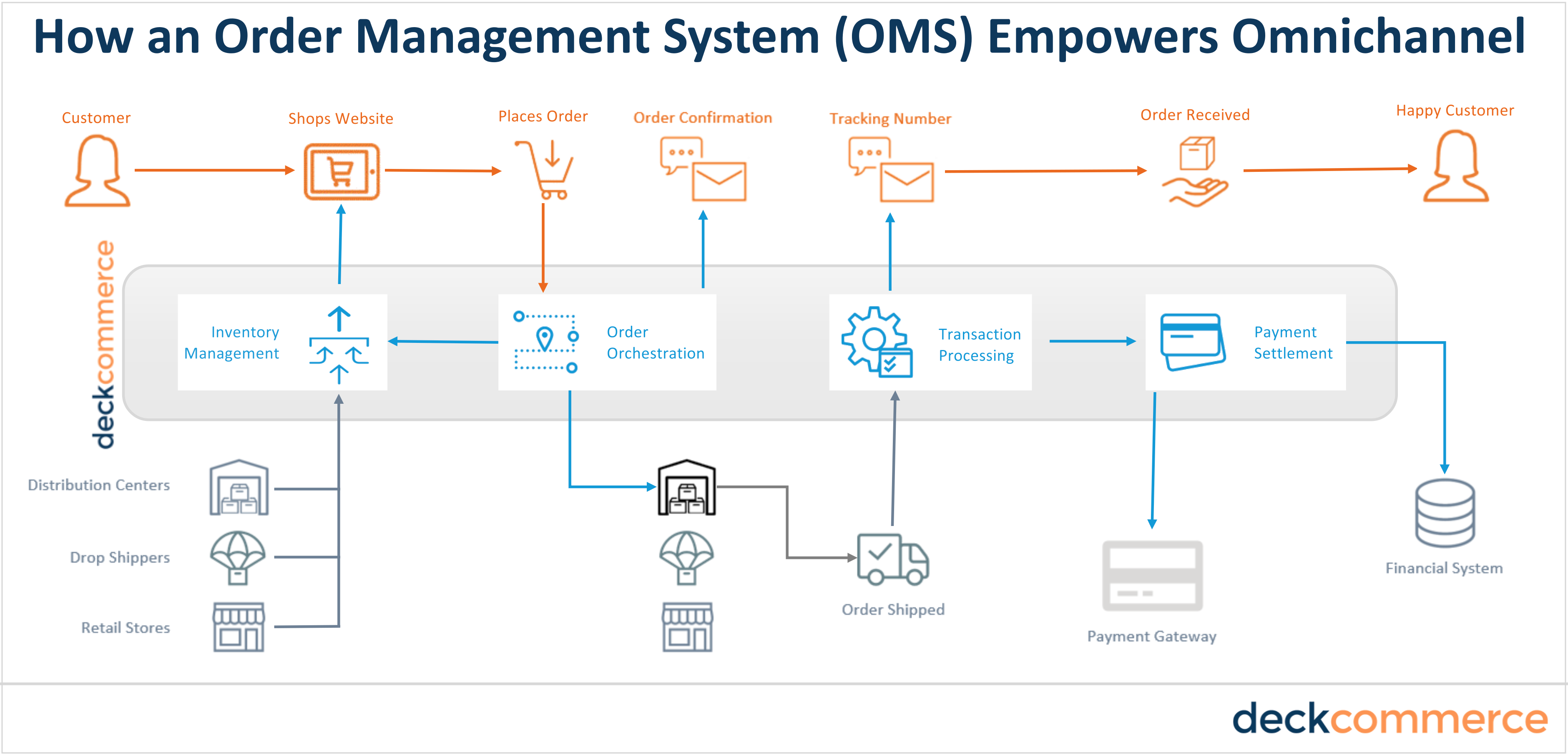
The platform also includes AI Demand Forecasting. This feature analyzes historical sales data to suggest purchase orders and set reorder points. It helped Plum Goodness achieve a 22% inventory turnover improvement. However, its intelligence has a crucial limitation. Think of it as a skilled meteorologist who can only use historical weather data. It can brilliantly predict that it will be cold in January based on past years, but it can't see the unexpected hurricane forming offshore—the external data signals like a competitor's flash sale, a new market trend, or a viral social media post. This means its forecasts are a powerful guide, but not gospel.
Order Management & Automation capabilities are solid. The system provides a clear workflow for allocating orders to the right warehouse, managing shipments with integrated carriers, and handling customer returns. For businesses seeking more comprehensive analysis of similar tools, our detailed guide on the Best 10 AI Warehouse Management Systems (WMS) of 2025 provides extensive comparisons and insights.

Professional Tip: To maximize the WMS, ensure your product master data is clean and standardized before implementation. Pay special attention to UPCs and bin locations. Bad data in equals bad performance out.
Important Warning: The AI forecasting module is only as good as your historical data. New businesses with erratic sales history should use its recommendations as a guide, not gospel. Always apply your own business knowledge.
User Experience & Interface Evaluation
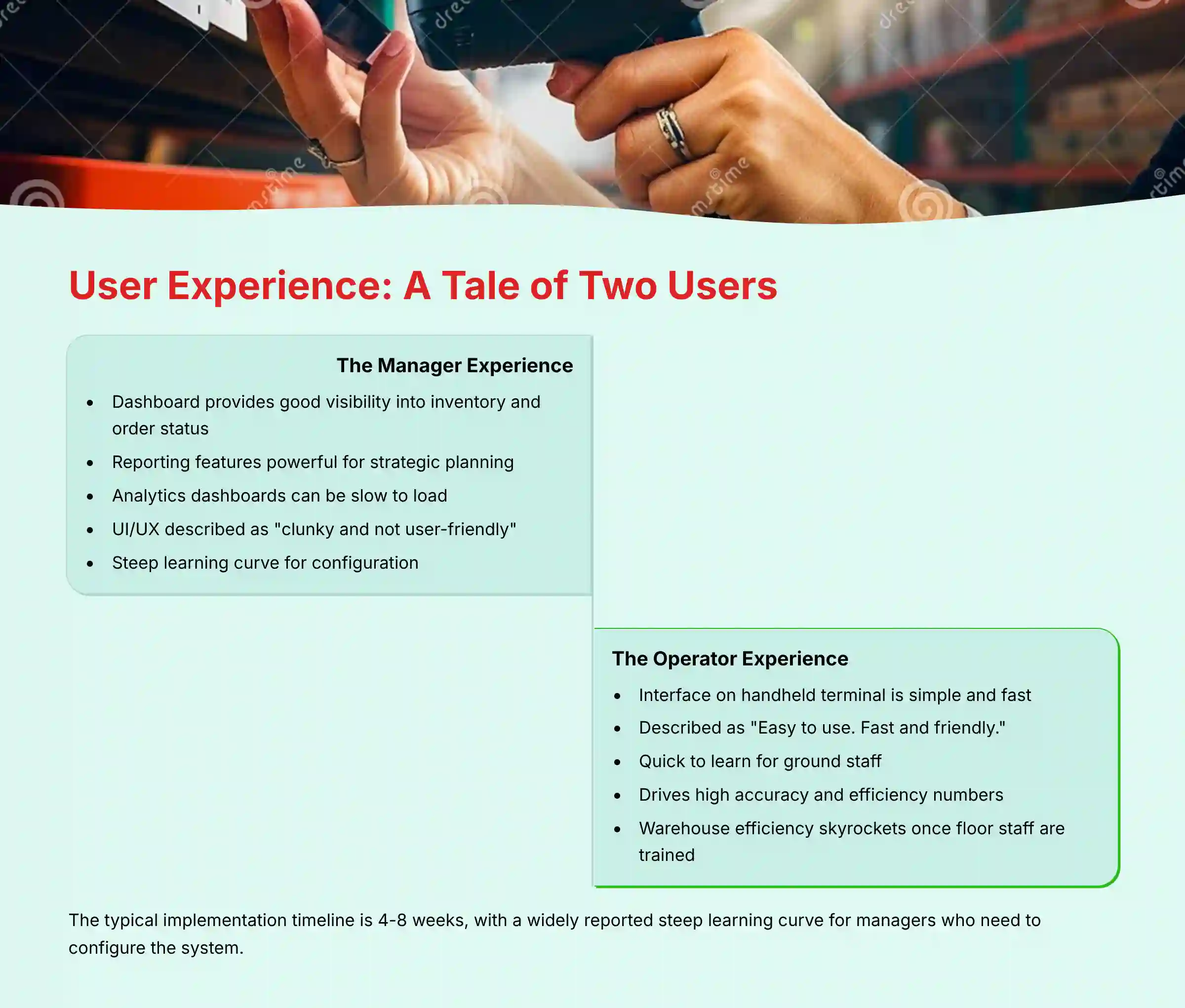
The user experience with EasyEcom is a tale of two different users: the manager and the operator. My analysis of feedback from Capterra, G2, and the Shopify App Store shows a clear split in satisfaction between these two roles. This “Dual Experience” is a defining characteristic of the platform.
For the manager, or “The Planner,” the experience is mixed. The dashboard provides good visibility into inventory and order status. Reporting features are powerful for strategic planning. But many users report that analytics dashboards can be slow to load, a point of frustration when you need data quickly. One manager review noted, “UI/UX is clunky and not user-friendly.”
For the warehouse worker, or “The Operator,” the experience is excellent. This is a key strength of EasyEcom. The interface on the handheld terminal (HHT) used for picking, packing, and receiving is simple and fast. A user review highlighted this: “Easy to use. Fast and friendly. Quick to learn for ground staff.” This ease of use for floor staff is what drives the high accuracy and efficiency numbers.
The onboarding and learning curve reflects this split. The typical implementation timeline is 4-8 weeks. But there is a widely reported steep learning curve for managers who need to configure the system. In one project I followed, a mid-market brand initially struggled with manager adoption but saw warehouse efficiency skyrocket once the floor staff was trained on the HHTs.
Security & Compliance Deep Dive
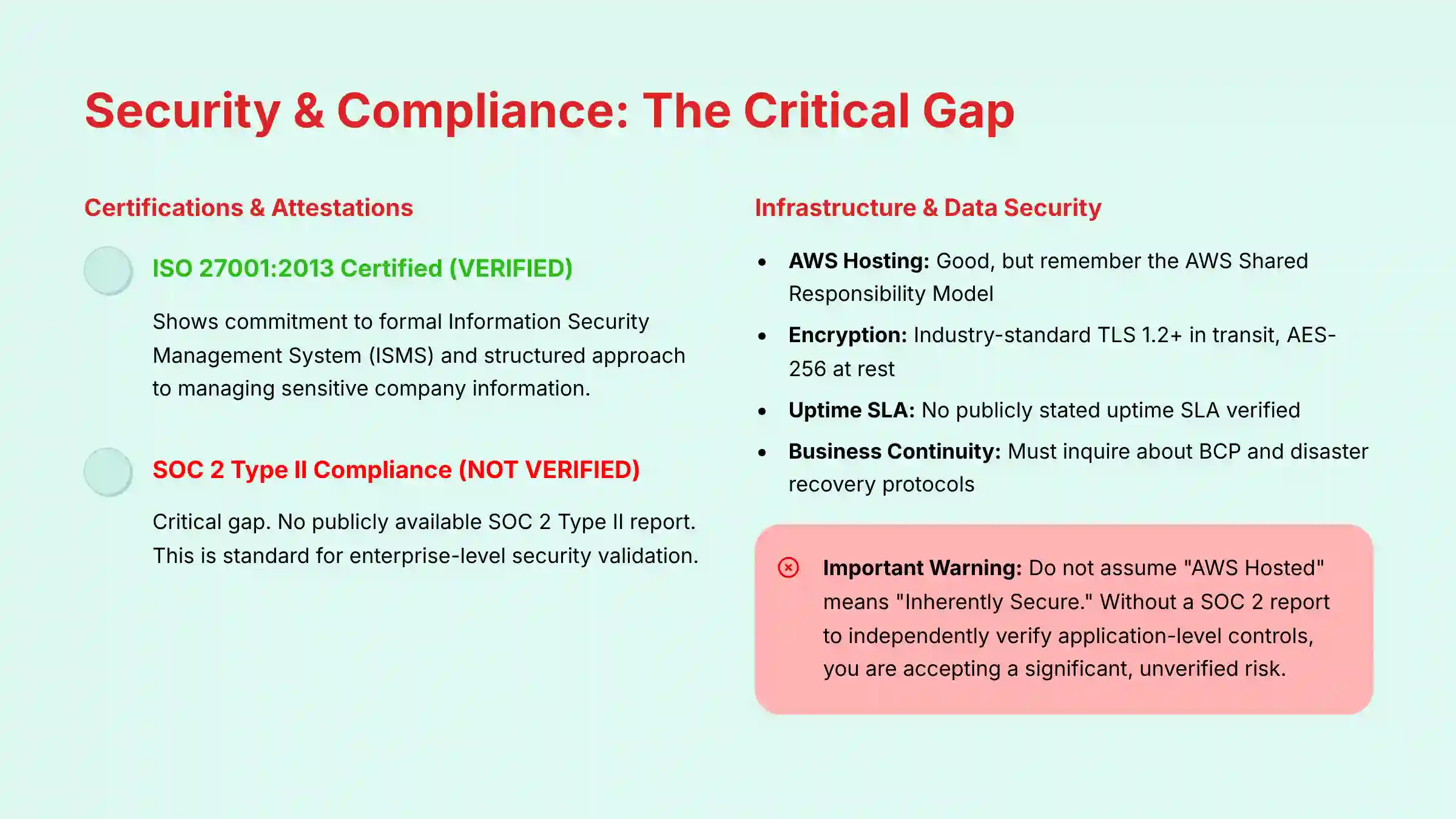
Security is not just a feature; it is the foundation of trust for a tool that manages your company's core operational data. In my AI for Operations & Supply Chain assessments, this is a non-negotiable area. EasyEcom has some good security practices but also a very serious verification gap that decision-makers must address.
Let's start with the certifications and attestations.
- ISO 27001:2013 Certified (VERIFIED): This is a positive point. ISO 27001 certification means the company has a formal Information Security Management System (ISMS). It's a structured approach to managing sensitive company information. As verified in my research, this shows a commitment to security processes.
- SOC 2 Type II Compliance (NOT VERIFIED): This is the critical gap. There is no publicly available SOC 2 Type II report. An ISO certificate is like the blueprint for a bank vault; it shows a good plan. A SOC 2 report is the independent inspector's stamp of approval confirming the vault was built correctly and is actively monitored. For enterprise-level security validation, this report is standard.
Now let's look at the infrastructure and data security.
- AWS Hosting: The platform is hosted on Amazon Web Services (AWS). This is good, but it's important to understand the AWS Shared Responsibility Model. AWS secures the cloud infrastructure, but EasyEcom is responsible for securing its application in the cloud.
- Encryption: The company uses industry-standard encryption. Data is protected with TLS 1.2+ while in transit between your computer and their servers. Stored data is protected with AES-256 encryption at rest. These are strong, recognized protocols.
Operational Reliability & Business Continuity
Beyond data security certifications, a critical aspect of due diligence is operational resilience. An outage in your WMS can bring your entire fulfillment operation to a standstill.
- Uptime Service Level Agreement (SLA): We could not verify a publicly stated uptime SLA (e.g., 99.9%). This is a critical contractual detail you must obtain. An SLA legally defines the vendor's commitment to system availability.
- Business Continuity Plan (BCP): You must inquire about their BCP and disaster recovery (DR) protocols. Specifically, ask for their Recovery Point Objective (RPO) and Recovery Time Objective (RTO) to understand how quickly your service would be restored and how much data, if any, could be lost in a catastrophic event.
The platform provides role-based access controls, allowing you to set permissions for different users. My review of their privacy policy indicates readiness for GDPR and CCPA, which is expected.
Professional Tip: During your sales process, have your legal/IT team send a security questionnaire. Formally request their SOC 2 Type II report under NDA. Their response, or lack of one, will be very telling about their security maturity.
Important Warning: Do not assume “AWS Hosted” means “Inherently Secure.” Your customer data, sales figures, and inventory records are your crown jewels. Their security depends entirely on EasyEcom's application-level controls. Without a SOC 2 report to independently verify those controls, you are accepting a significant, unverified risk. Make independent verification by your IT and legal teams a non-negotiable step in your due diligence.
Pricing & Value Proposition Analysis
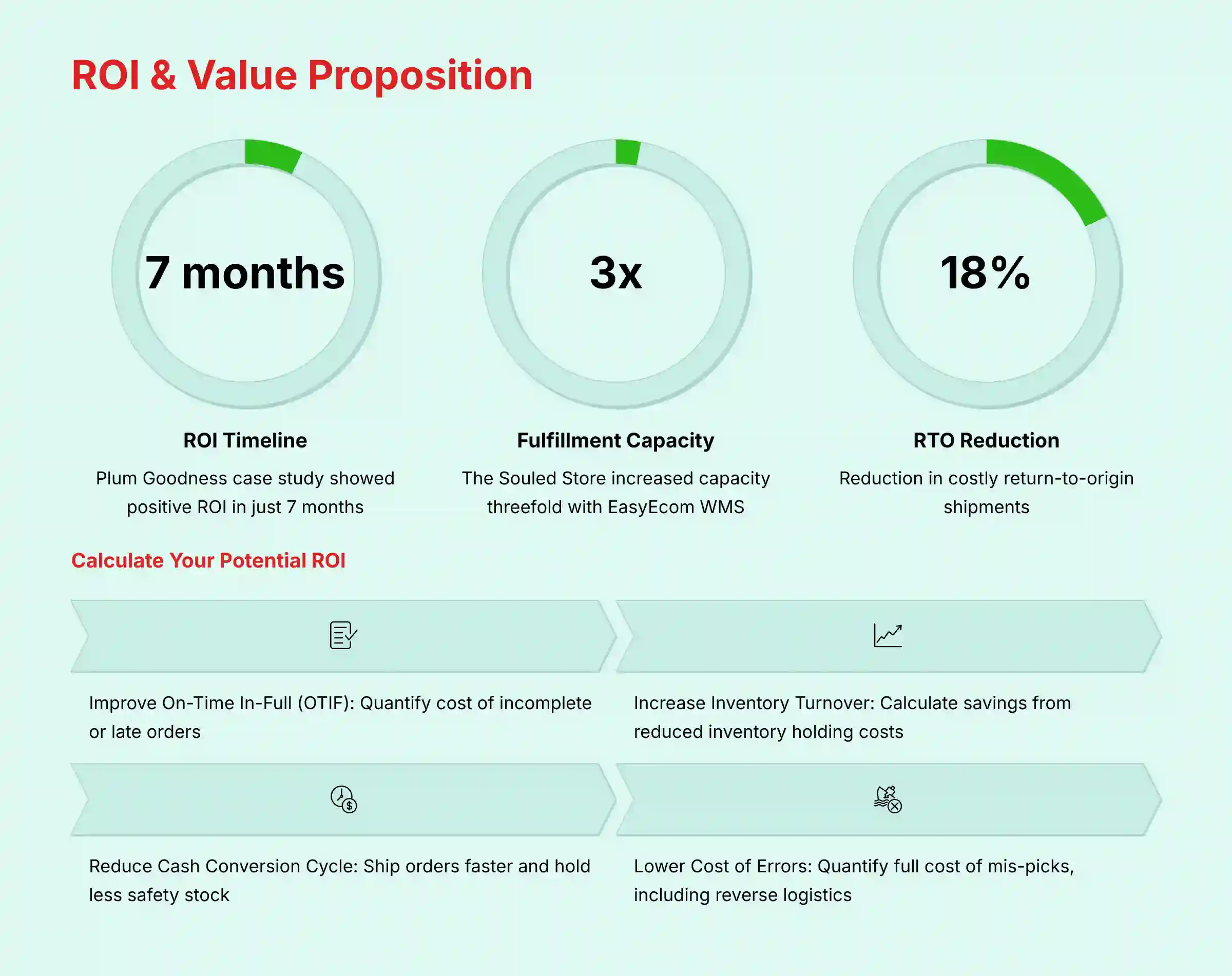
The value proposition for EasyEcom is very strong, especially for its target audience. My analysis of their pricing model in the context of Total Cost of Ownership (TCO) and Return on Investment (ROI) shows a clear path to positive financial outcomes. The key is to look beyond the monthly subscription fee.
The pricing model is primarily based on order volume. It may also include factors like the number of user seats and specific feature modules. You should also expect a one-time onboarding and implementation fee, which is standard for software in this category.
To understand the real value, you must calculate the potential ROI. I guide my clients with a simple framework.
- Improve On-Time In-Full (OTIF): Quantify the cost of incomplete or late orders. Improving this core metric directly impacts customer satisfaction and retention.
- Increase Inventory Turnover: Calculate the savings from reduced inventory holding costs. A more accurate AI forecast directly improves capital efficiency.
- Reduce Cash Conversion Cycle: By shipping orders faster and holding less safety stock, the system helps you convert inventory back into cash more quickly—a metric your CFO will value highly.
- Lower Cost of Errors: Quantify the full cost of a mis-pick, including reverse logistics, labor, and potential lost sales.
When looking at TCO, factor in costs beyond the subscription. This includes the time your staff will spend in training. It also includes the cost of hardware like barcode scanners and label printers. You may also need to dedicate an administrator to manage the system.
Even with these additional costs, the evidence points to a rapid ROI. The Plum Goodness case study showed a positive ROI in just 7 months. This makes the investment very attractive for growing businesses feeling the pain of manual warehouse operations.
Integration & Workflow Assessment
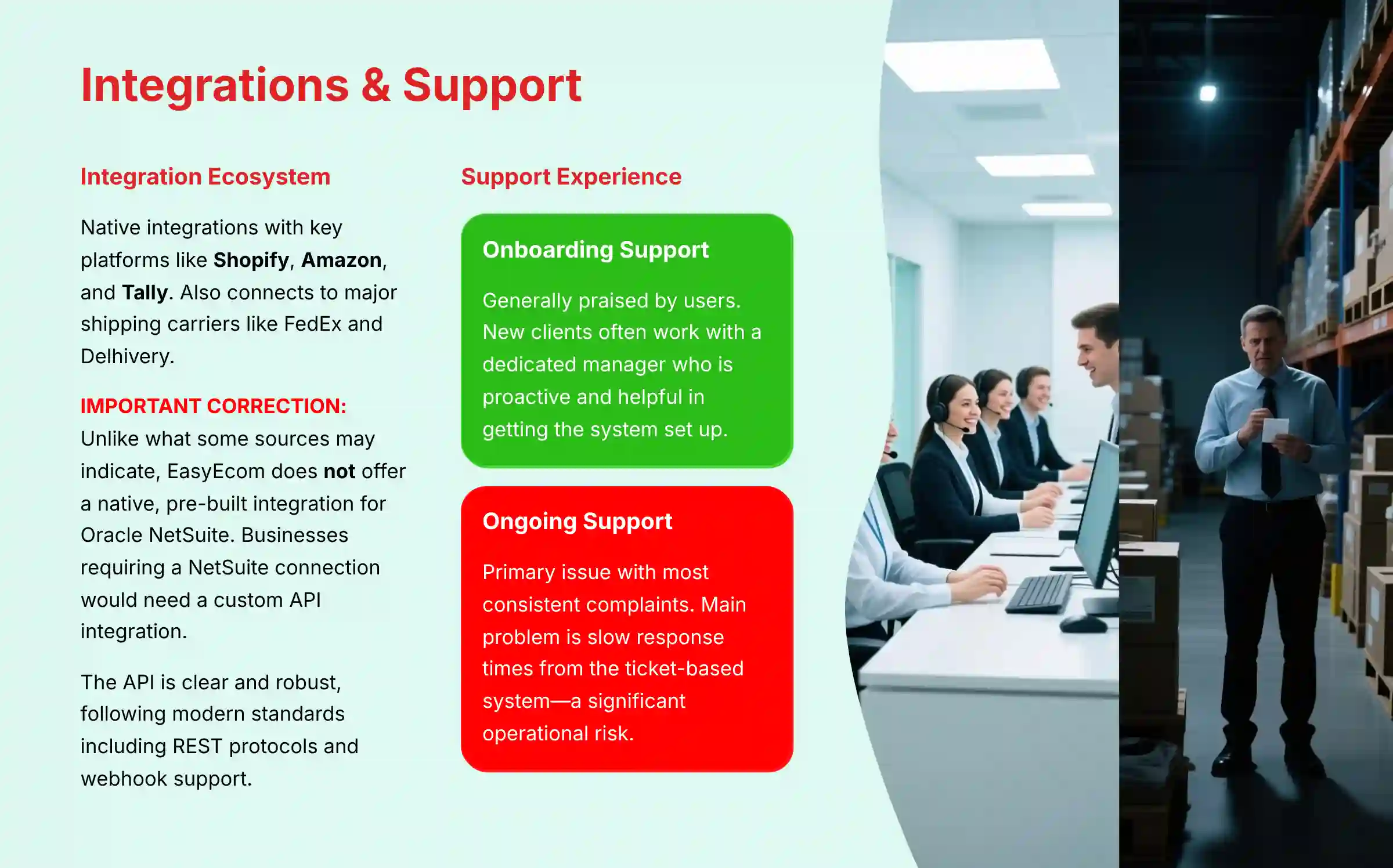
A supply chain tool is only as powerful as its connections to the rest of your business ecosystem. In my evaluation, EasyEcom demonstrates a solid integration framework, though there are areas for improvement. The platform provides good connectivity to the most common tools used by omnichannel retailers.
Its ecosystem connectivity is a major plus. EasyEcom offers native integrations with key platforms like Shopify, Amazon, and Tally. It also connects to major shipping carriers like FedEx and Delhivery. These core integrations are generally very reliable, according to extensive user feedback.
IMPORTANT CORRECTION: Unlike what some sources may indicate, EasyEcom does not offer a native, pre-built integration for Oracle NetSuite. Businesses requiring a NetSuite connection would need to rely on a custom API integration, which involves significant additional cost, time, and technical resources compared to an out-of-the-box native connector. This is a critical consideration for NetSuite users evaluating the platform.
The quality of its API is also a point in its favor. I reviewed the public API documentation and found it to be clear and robust. It follows modern standards, including REST protocols and webhook support. This is important for businesses that need to build custom workflows or connect to less common applications.
However, the real-world reliability can vary. User feedback shows that connections with major platforms like Shopify and Amazon are highly stable. But some users have noted occasional issues with more niche integrations. The system works best when you stick to its core, native connectors.
Understanding the strategic relationship between your WMS and ERP is critical. The WMS (EasyEcom) functions as the system of record for warehouse activities, while your ERP should remain the single source of truth for financials. This bidirectional sync requires careful planning, especially for companies using enterprise ERPs like NetSuite.
Professional Tip: For any business-critical integration not listed as a core native connector, you should budget for additional work. This could mean using internal resources for API development or using a middleware platform like Celigo to manage the connection. This is especially important for NetSuite users who will need a custom integration solution.
Support & Resources Evaluation
Customer support is a critical component of any business system, especially one that runs your warehouse. Based on a synthesis of a high volume of user feedback, my rating for EasyEcom's support is mixed. There is a clear and consistent difference between the onboarding experience and the ongoing support.
The onboarding support is generally praised by users. New clients often work with a dedicated manager who is proactive and helpful in getting the system set up. This initial phase seems to be well-resourced and effective.
However, the ongoing support is the primary issue. This is the area with the most consistent complaints from users. The main problem is slow response times from the ticket-based system. This is a significant operational risk. When you have an urgent issue stopping orders from going out, you need fast help.
To show the conflicting experiences, here are two direct quotes from G2 and Capterra. One user says, “Great support team that's responsive as well as customer friendly.” Another user states, “Service: They are slow but do revert.” This highlights the inconsistency that businesses must be prepared for.
The quality of their online help center, tutorials, and developer documentation is adequate. These resources can help you solve minor problems on your own. But they do not replace the need for responsive human support during a crisis.
Important Warning: Your operational dependency on this tool will be high. The widespread reports of slow support mean you must have internal expertise to troubleshoot minor issues independently. Do not rely on their team for immediate help with day-to-day problems.
Understanding a tool's features, security, and support is critical, but it's only half the equation. The most powerful platform in the world will fail if it's not the right strategic fit for your unique operational DNA. So, the essential question becomes: Who is EasyEcom truly built for? Let's break down the ideal user profiles to see where your business fits.
User Segmentation & Recommendations
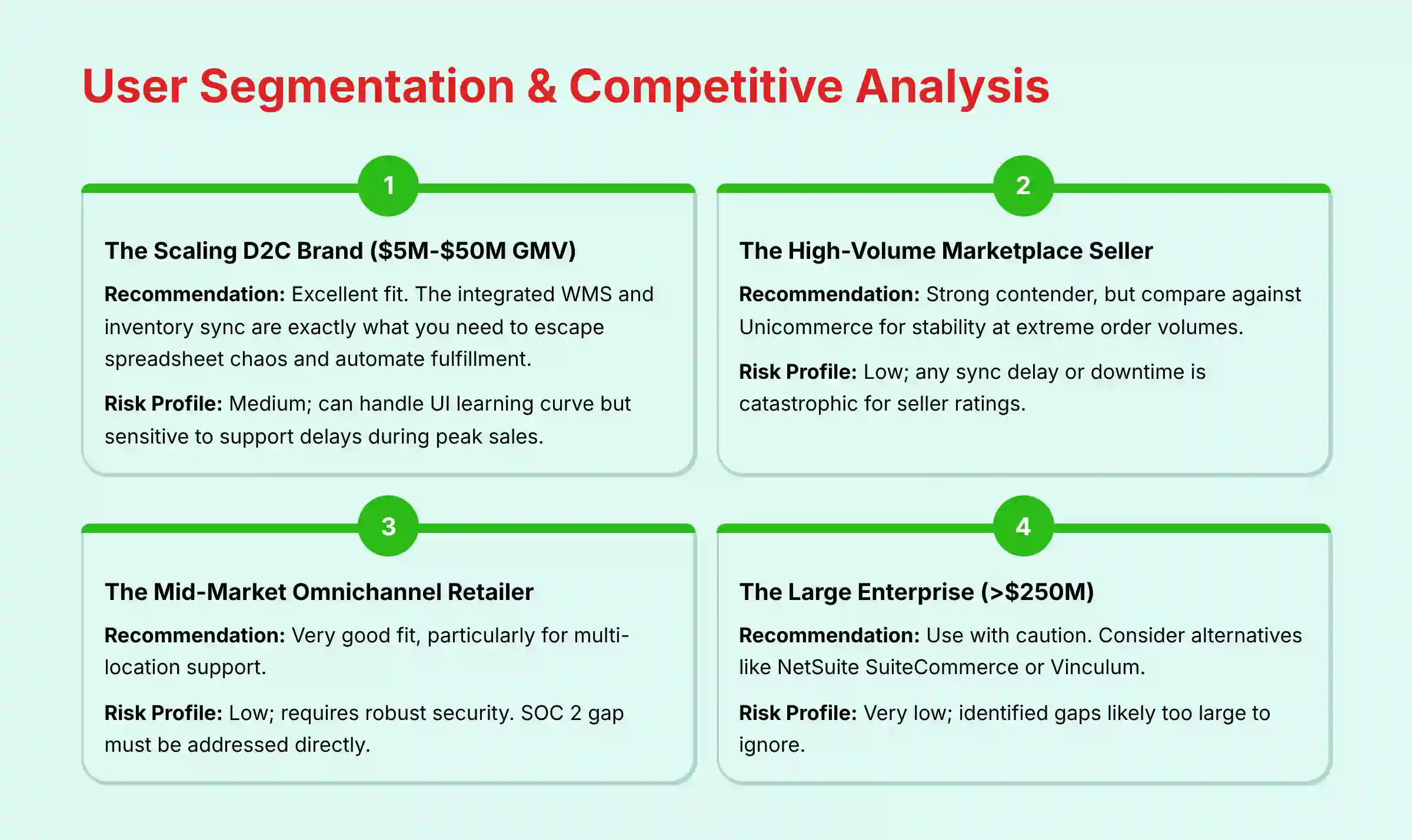
The suitability of EasyEcom depends heavily on your company's profile. Here is my breakdown for different user personas.
The Scaling D2C Brand
This persona is a direct-to-consumer brand with $5M-$50M in gross merchandise volume. For this group, my recommendation is that EasyEcom is an excellent fit. The integrated WMS and inventory sync are exactly what you need to escape spreadsheet chaos and automate fulfillment. Your risk tolerance is likely medium; you can handle the UI learning curve, but you will be sensitive to support delays during peak sales seasons.
The High-Volume Marketplace Seller
This business is focused on marketplaces like Amazon or Flipkart. My recommendation is that EasyEcom is a strong contender. But you should compare it against Unicommerce, which is known for stability at extreme order volumes. Your risk tolerance is low. Any sync delay or downtime is catastrophic for your seller ratings. You must get clear service level agreements (SLAs) for support.
The Mid-Market Omnichannel Retailer
This user has both online and physical retail stores. My recommendation is that EasyEcom is a very good fit, particularly because of its multi-location support. Your risk tolerance is low, and you require robust security. The lack of a SOC 2 report is a major hurdle that must be addressed directly with the vendor before you sign any contract.
The Large Enterprise (>$250M)
For a large enterprise, my recommendation is to use this tool with caution. The platform may lack the deep customization, B2B workflows, and auditable compliance (SOC 2) that you require. You should look at alternatives like NetSuite SuiteCommerce or Vinculum. Your risk tolerance is very low, and the identified gaps are likely too large to ignore. The lack of a native NetSuite integration is a particularly significant hurdle for many enterprise users who rely on this ERP system.
Competitive Analysis & Positioning
No tool exists in a vacuum. To make an informed decision, you must understand how EasyEcom stacks up against its direct competitors. My analysis places it in a strong position for a specific market segment. Its main competitors are Unicommerce, Vinculum, and Cin7.
EasyEcom's unique value is its blend of a user-friendly WMS for operators with deep integration into the Indian market, particularly with Tally for accounting. Unicommerce is built for stability at high order volumes, making it a favorite for marketplace power sellers. Vinculum targets the enterprise and 3PL market with global B2B features and strong compliance. And Cin7 is focused more on the US/EU mid-market with strong POS and EDI integrations.
Here is a direct comparison of the key evaluation points.
| Feature | EasyEcom | Unicommerce | Vinculum | Cin7 |
|---|---|---|---|---|
| Ideal User | Scaling D2C/Omnichannel | High-volume Marketplace | Enterprise/3PL | Mid-Market (US/EU Focus) |
| WMS Strength | Excellent, user-friendly | Robust | Enterprise-grade | Good, but less specialized |
| UI/UX | Complex, requires training | Known for stability | Complex | Generally more modern |
| Support | Known issues with speed | Generally better reviews | Enterprise-level support | Mixed reviews |
| ISO 27001 | Yes | Not Public | Yes | Yes |
| SOC 2 Type II | No (Publicly) | No (Publicly) | Yes | Yes |
| Unique Value | Tally Integration, easy HHT | Stability at high volume | Global 3PL/B2B features | POS & EDI integrations |
| Native NetSuite Integration | No | No | Yes | Yes |
This competitive analysis highlights a critical decision point for NetSuite users. If your business runs on NetSuite ERP, both Vinculum and Cin7 offer significant advantages with their native integrations, potentially saving substantial development costs and implementation time. For a comprehensive comparison of all alternatives, explore our detailed EasyEcom Top Alternatives and Competitors analysis.
Professional Testimonials & Case Studies
Real-world results and user feedback provide the strongest evidence of a tool's capabilities. My analysis draws heavily on verified testimonials and detailed case studies with quantifiable outcomes. These stories show the practical impact of implementing EasyEcom.
Let's look at the case studies first.
- The Souled Store: This is a powerful example of operational scaling. They used the EasyEcom WMS to increase their fulfillment capacity 3x. They also reduced picking time by 40% and achieved an impressive 99.9% order accuracy.
- Plum Goodness: This case study highlights the financial impact. They successfully reduced costly return-to-origin (RTO) shipments by 18%. This, combined with other efficiencies, allowed them to achieve a positive ROI in just 7 months.
Here are some short, impactful testimonials from verified users on platforms like G2, Capterra, and the Shopify App Store.
- “The best part of EasyEcom is the WMS which helped us to reduce human errors and eliminate manual process.” – Ankit S., Operations Head, Mid-Market
- “Seamless sync, real-time updates, effortless growth!” – Shopify Store Owner, Small Business
- “Real time inventory synchronisation helped us to reduce orders cancellation rate due to non availability of stock.” – Verified User, Capterra
- “Reports are well organised and inventory view by SKU and shelf is good.” – Anshul S., Operations Manager, Mid-Market
- “I love how it has given me a single view of my inventory across all channels.” – G2 User, Retail
Implementation Guide & Best Practices
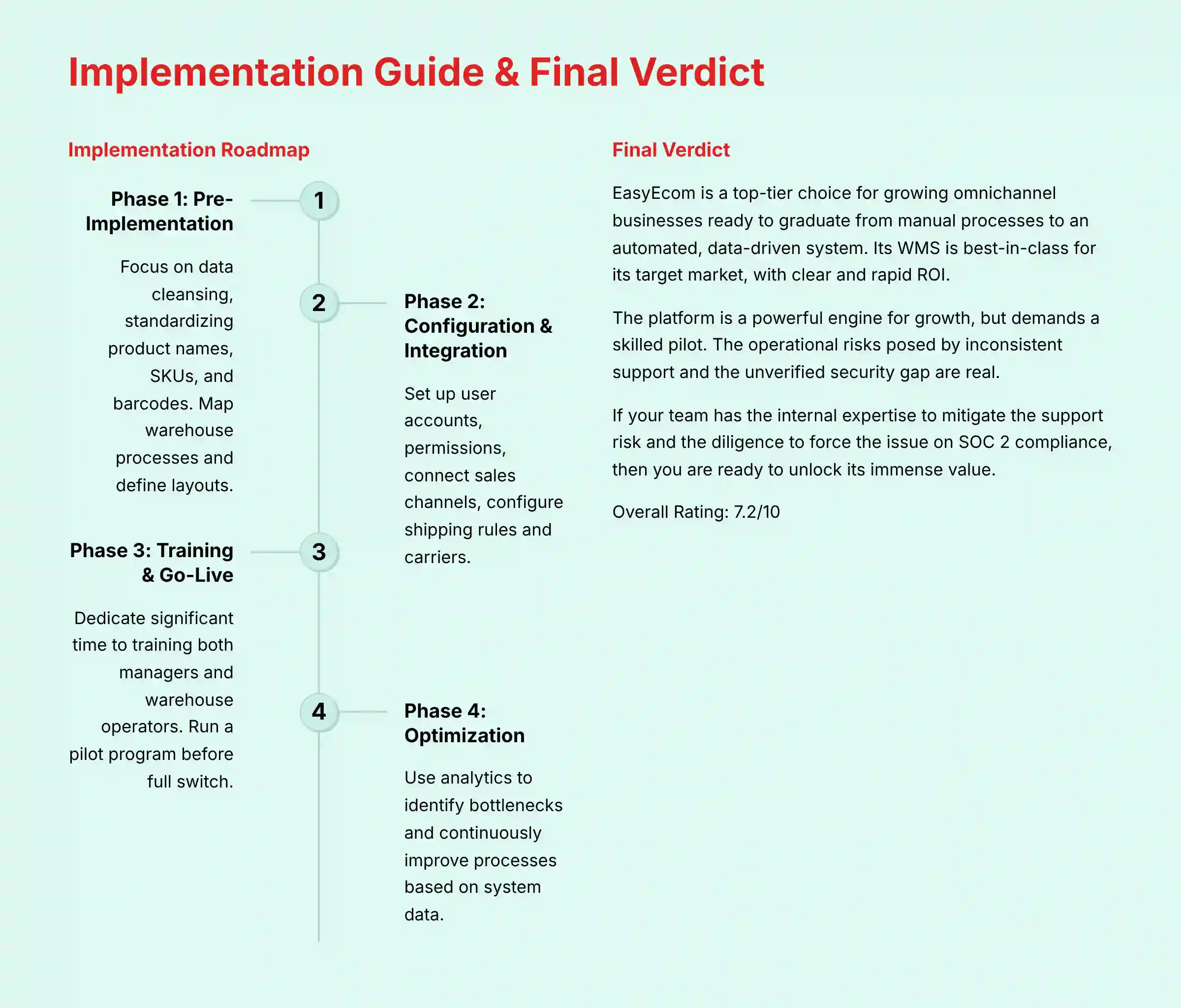
A successful implementation is about more than just technology. It requires careful planning and process management. Based on my experience with AI for Operations & Supply Chain projects, here is an actionable roadmap for a smooth EasyEcom implementation.
- Phase 1: Pre-Implementation (The Most Critical Phase)
This phase happens before you even start configuring the software. You must focus on data cleansing. This means standardizing product names, SKUs, and barcodes. You also need to map your current warehouse processes and define your physical warehouse layouts in a logical way.
- Phase 2: Configuration & Integration
Here you will set up user accounts and permissions in the system. You will connect your sales channels like Shopify and Amazon. You will also configure your shipping rules and carriers.
Security Tip: During setup, implement the principle of least privilege. Grant users only the minimum access they need to perform their jobs.
- Phase 3: Training & Go-Live
You must dedicate significant time to training both managers and warehouse operators. Do not underestimate this step. I recommend running a pilot program with a small set of orders before you make a full switch to the new system.
- Phase 4: Optimization
After you go live, your work is not done. Use the platform's analytics to identify bottlenecks in your workflow. Continuously look for ways to improve your processes based on the data the system provides.
The most common pitfalls I see are bad data migration, insufficient training, and underestimating the change management required to get your team on board.
Final Verdict & Recommendations
My comprehensive analysis leads to a clear and specific recommendation. EasyEcom is a top-tier choice for growing omnichannel businesses that are ready to graduate from manual processes to an automated, data-driven system. Its WMS is best-in-class for its target market, and the ROI is clear and rapid.
Here is my final scorecard based on our 10-point evaluation.
- Features & Power: 9/10
- Ease of Use: 7/10
- Security & Compliance: 6/10
- Support: 5/10
- Value for Money: 9/10
- Overall: 7.2/10
My final verdict comes with a direct strategic challenge. EasyEcom is a powerful engine for growth, but it demands a skilled pilot. The operational risks posed by inconsistent support and the unverified security gap are real. If your team has the internal expertise to mitigate the support risk and the diligence to force the issue on SOC 2 compliance, then you are ready to unlock its immense value. For businesses at this critical inflection point, choosing this tool isn't just about efficiency—it's about deciding to press the advantage and build the operational backbone for the future of your brand.
YMYL Disclaimer: This review is based on extensive research and analysis, but it is not a substitute for your own professional due diligence. Business software decisions have significant financial and operational implications. We strongly advise conducting a thorough evaluation, including a product demo and direct security vetting with the vendor, before making a purchase. You can find more information in our comprehensive EasyEcom Review.
Comprehensive FAQs Section
Is EasyEcom Secure?
EasyEcom has a good security foundation, including ISO 27001:2013 certification and standard data encryption (TLS 1.2+ and AES-256). However, the absence of a publicly available SOC 2 Type II report is a serious gap that requires direct vetting by your team.
Is EasyEcom SOC 2 Compliant?
The company does not have a publicly available SOC 2 Type II report. While they may have undergone an audit, the lack of a public attestation means you must formally request the report under an NDA to verify their compliance status.
Does EasyEcom Have Good Customer Support?
User feedback is mixed. The onboarding support is generally considered good and proactive. However, many users consistently report that ongoing customer support can be slow to respond to tickets, which poses an operational risk.
What Is the Typical Cost of EasyEcom?
Pricing is primarily based on monthly order volume. You should also budget for a one-time implementation fee and costs for hardware like barcode scanners. For exact pricing, you need to contact their sales team for a custom quote.
How Long Does It Take to Implement EasyEcom?
A typical implementation takes 4 to 8 weeks. This can extend depending on the complexity of your operations and the cleanliness of your existing product and inventory data.
What Are the Main Alternatives to EasyEcom?
The main alternatives are Unicommerce, Vinculum, and Cin7. Unicommerce is strong for high-volume marketplace sellers. Vinculum is geared towards enterprise clients and 3PLs. Cin7 is a good alternative for mid-market businesses with a focus on the US/EU.
Does EasyEcom Integrate with QuickBooks?
Yes, EasyEcom offers integration with QuickBooks. This allows for the synchronization of financial data related to sales, inventory, and purchasing.
Does EasyEcom Integrate with NetSuite?
No, EasyEcom does not offer a native, pre-built integration with NetSuite. Companies using NetSuite ERP would need to develop a custom integration using EasyEcom's API, which requires significant additional development resources and costs. This is an important consideration for NetSuite users evaluating warehouse management solutions.
Can EasyEcom Handle Multiple Warehouses?
Yes, multi-warehouse support is a core feature of EasyEcom. The platform can manage inventory and allocate orders across several physical locations, which is ideal for omnichannel retailers.
What Kind of Hardware Do I Need for EasyEcom's WMS?
You will need Android-based handheld terminals (HHTs) or mobile scanners. You will also need thermal printers for generating shipping labels and barcodes.
Is EasyEcom a Good Fit for a Small Business?
It can be, but it is best for small businesses that are on a high-growth trajectory. A very small business with low order volume might find the system too complex. It is ideal for businesses graduating from basic Shopify inventory management or spreadsheets.
How Does EasyEcom's AI Forecasting Work?
The AI analyzes your historical sales data to predict future demand. It identifies trends and seasonality to recommend reorder points and suggest purchase quantities. Its main limitation is that it does not use external data signals.
What Is the Biggest Complaint About EasyEcom?
The most common complaint is the slow response time for ongoing customer support. This is a consistent theme across multiple review platforms.
EasyEcom vs. Unicommerce: Which Is Better for Amazon Sellers?
For high-volume Amazon sellers, Unicommerce often has the edge due to its reputation for stability at scale. However, if you also have a strong D2C presence via Shopify and need a more user-friendly WMS for your floor staff, EasyEcom is a very strong contender.
How Can I Get the Best Support From EasyEcom?
Develop internal expertise to handle minor issues. For major problems, be very clear and detailed in your support tickets. Provide screenshots and specific examples to help their team diagnose the issue faster.
Does EasyEcom Support B2B Sales?
Yes, the platform has capabilities to support B2B wholesale orders. It can manage different price lists and order workflows for B2B clients, though its primary strength is in B2C omnichannel retail.
What Picking Strategies Does EasyEcom's WMS Support?
The WMS is designed for flexibility, supporting multiple picking strategies including wave picking, batch picking, and zone picking. The AI can recommend the optimal strategy based on order profiles, helping to maximize picker efficiency during different peak periods.
How Does EasyEcom Help Improve Our On-Time In-Full (OTIF) Score?
By improving two key areas: inventory accuracy and order accuracy. The real-time inventory sync prevents overselling, ensuring stock is available (the “In-Full” part). The barcode-enforced WMS workflows virtually eliminate mis-picks and shipping errors, ensuring the correct items ship on schedule (the “On-Time” part).


Leave a Reply