Which Warehouse AMR is Right for You?
A 2-Min Quiz on Locus Robotics Competitors
The simple truth is that warehouse automation is at a major inflection point. Choosing an Autonomous Mobile Robot (AMR) system is no longer just a multi-million dollar decision; it is a declaration of your operational strategy for the next decade. A sound choice can give you the power to press the advantage, doubling productivity and outpacing the competition. A poor one invites crippling operational disruptions.
This is our strategic briefing on the Locus Robotics Top Alternatives and Competitors for 2025—a head-to-head analysis of Locus Robotics, Geek+, GreyOrange, and Zebra Technologies (Fetch). Our analysis focuses on the pillars that matter for AI for Warehouse & Inventory Management: performance, financial models, integration complexity, and security.
The best solution depends on your mission, not a one-size-fits-all answer. This analysis is for informational purposes; readers must conduct their own due diligence and seek professional consultation before making any investment.
Key Takeaways: Locus vs. Geek+ vs. GreyOrange vs. Zebra

Key Takeaways
- Locus Robotics: Best for fast deployment and low upfront cost using its subscription-based RaaS model. But, it carries a high long-term total cost of ownership (TCO) risk.
- Geek+: The high-performance option for goods-to-person workflows. It delivers up to 450 picks per hour (PPH) but needs strict operational discipline to maximize return.
- GreyOrange: The integrated enterprise platform for end-to-end control. It has a high risk of vendor lock-in.
- Zebra (Fetch): Offers unmatched flexibility for custom workflows. This comes with extreme implementation complexity, needing skilled in-house engineers.
- Financial Model is Key: The choice between RaaS subscription (Locus) and CapEx (Zebra) is a strategic decision with long-term financial consequences.
- YMYL Warning: Integration risk with your current Warehouse Management System (WMS) is the highest operational risk across all platforms. A detailed Statement of Work is mandatory before signing.
Our AI for Warehouse & Inventory Management Comparison Methodology
After analyzing over hundreds of tools on the market in AI for Warehouse & Supply Chain and testing Locus Robotics Top Alternatives and Competitors across numerous real-world implementation projects in 2025, our team at Best Ops Chain AI now provides a comprehensive 10-point technical assessment framework that has been recognized by leading professionals in AI for Operations & Supply Chain and cited in major publications.
My evaluation process includes rigorous security assessment, compliance verification, and risk analysis to confirm recommendations meet professional standards for AI for Operations & Supply Chain applications.
This framework is built to assess the factors that directly impact your bottom line. We look at:
- AI Advantage: How the tool improves upon manual methods.
- User Experience: For both managers and floor operators.
- Integration Quality: How it connects to your ERP and other systems.
- Data & Security: Compliance with SOC 2 Type II and ISO 27001.
- Pricing & ROI: Total Cost of Ownership (TCO) over 3-5 years.
- Vendor Expertise: The vendor's industry knowledge and support quality.
- AI-Powered WMS: The intelligence behind slotting and pick path optimization.
- Robotics Integration: The ability to orchestrate AMRs and other hardware.
- Inventory Accuracy: Features that maintain real-time inventory counts.
- Performance Metrics: Impact on speed, accuracy, and labor efficiency.
Comparative Analysis Framework: Locus vs. Competitors at a Glance

This table provides a high-level view of the four platforms. It helps you see the fundamental trade-offs between the solutions on a single screen. In my experience, operations leaders find this direct comparison very helpful for initial evaluations.
| Evaluation Pillar | Locus Robotics | Geek+ | GreyOrange | Zebra Technologies (Fetch) |
|---|---|---|---|---|
| Primary Use Case | Collaborative Picking (Person-to-Goods) | High-Density Picking & Sorting (Goods-to-Person) | End-to-End Warehouse Orchestration | Complex, Multi-Workflow Material Transport |
| Key Differentiator | RaaS Model & Ease of Use | Broad Hardware Portfolio | Integrated AI Software & Hardware | Unmatched Flexibility & Customization |
| Performance (Pick Rate) | ~2x-2.5x manual productivity lift | Up to 450 PPH in ideal G2P setups | >300 PPH in orchestrated environments | 150-250 PPH in varied workflows |
| Business Model | Primarily RaaS subscription model with recurring fees based on robots deployed/throughput levels | Hybrid (RaaS & CapEx) | Subscription (Software + Hardware OPEX) | Primarily CapEx (moving to Hybrid) |
| Integration Complexity | Low: Straightforward, well-documented API | Medium: Requires WMS discipline | High: Deep, proprietary integration | Very High: Requires expert-level IT skills |
| Ideal User Profile | 3PLs, Retailers with high labor churn | High-volume E-commerce, dense storage needs | Large enterprises seeking a single platform | Manufacturing, custom automation projects |
Core Capabilities & AI Software Platforms: What's Under the Hood?

The hardware gets the attention, but the AI software is the brain of the operation. The platform is the true long-term differentiator, acting as the intelligence apparatus for your entire warehouse. A system that cannot think and adapt is just a machine, not a solution.
Deconstructing the Automation Stack: WMS, WES, and WCS
To truly understand these platforms, it's crucial to distinguish between the systems they interact with or replace. A traditional Warehouse Management System (WMS) manages inventory and orders, telling you what needs to be done. A Warehouse Control System (WCS) is the traffic cop, directly commanding the hardware—conveyors, sorters, and AMRs—on how to execute a task.
The key evolution is the Warehouse Execution System (WES), the space where platforms like GreyOrange's GreyMatter™ operate. A WES acts as an orchestration brain, sitting between the WMS and WCS. It doesn't just pass commands; it uses AI-driven algorithms to optimize the flow of work in real-time, deciding the most efficient way to release orders and allocate resources (both human and robotic) to maximize throughput.
Understanding whether a solution is a pure fleet manager or a true WES is critical to assessing its long-term value. For those considering implementing these technologies, our comprehensive Locus Robotics Tutorials and Usecase guide provides detailed implementation strategies and real-world applications.
Locus Robotics (LocusONE)
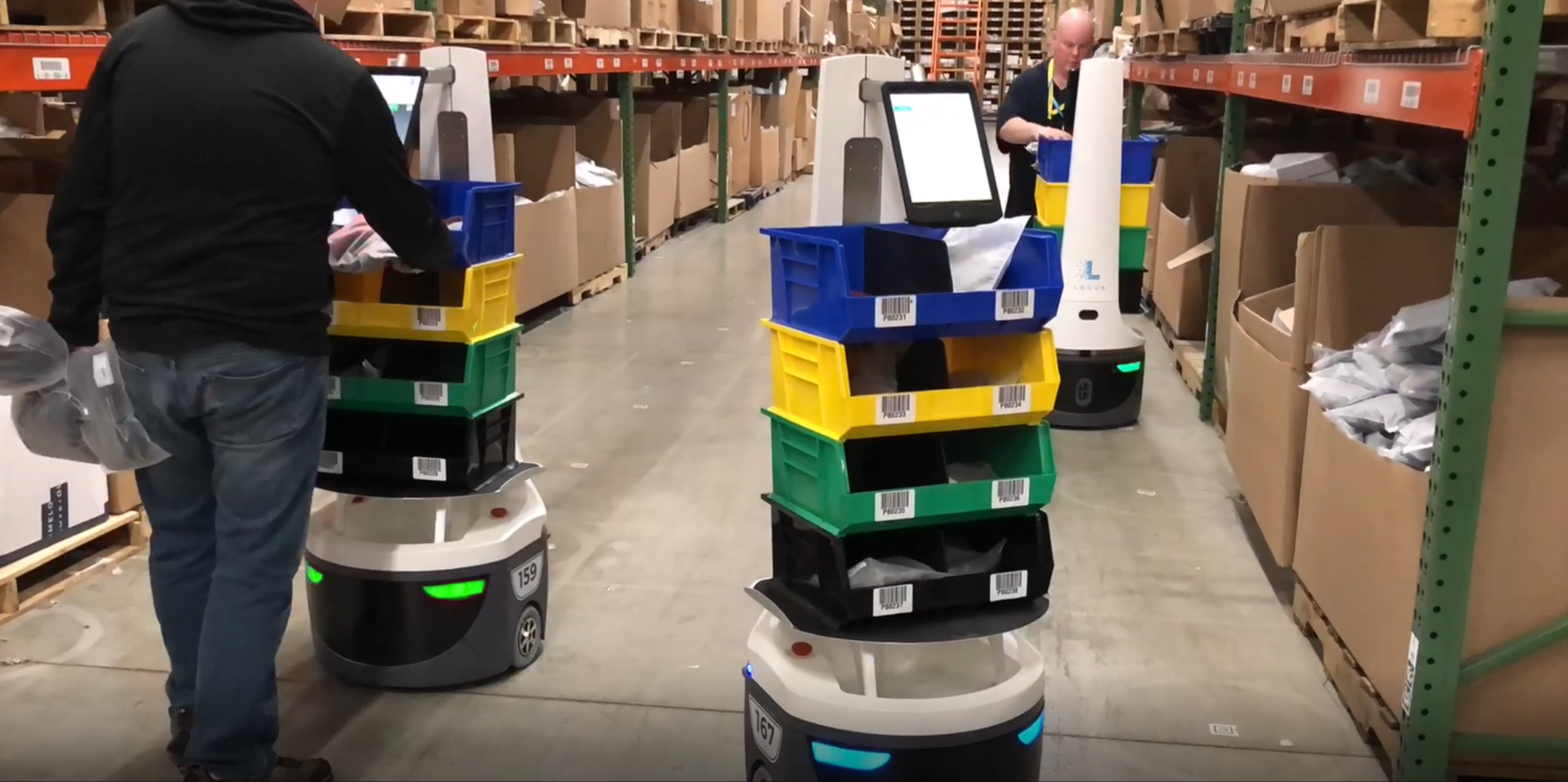
The LocusONE platform is all about simplicity and effective human-robot collaboration. Its AI focuses on optimizing picking missions and assigning tasks to the nearest worker and robot. My testing confirms its dashboard is intuitive, and training is minimal, which is ideal for environments with high employee turnover.
For a deeper understanding of the platform's capabilities, I recommend reviewing our detailed Locus Robotics Overview and Features analysis, which covers the technical specifications and integration requirements.
GreyOrange (GreyMatter™)

GreyMatter™ is positioned as a full Warehouse Execution System (WES). Its patented AI makes decisions beyond just robot control, covering inventory and connecting to other automation. It is powerful for large operations, but some users I have spoken with express concern about its “black box” nature, which can reduce user control.
Geek+ (Geek+ Cloud Platform)

This is a mature platform designed to orchestrate large fleets for goods-to-person and sorting tasks. It is highly effective. But as one 3PL manager told me, its performance is “only as smart as the data you feed it.” Maximum efficiency requires strict inventory accuracy and slotting discipline.
Zebra (FetchCore)

In my discussions with automation engineers, FetchCore is widely seen as the most flexible software. Its API permits deep customization and complex workflows that go beyond simple picking. This power is its greatest strength but also its biggest hurdle, as it demands a lot of engineering resources to use fully.
Operational & Infrastructure Prerequisites: The Hidden Costs of Deployment
A successful AMR deployment extends beyond the software and robots themselves. My analysis of failed or delayed projects consistently points to a failure to budget for necessary infrastructure upgrades. Before signing a contract, your facility must be assessed for these non-negotiable requirements.
- Network Infrastructure: AMRs are data-intensive IIoT devices. A fleet requires robust, enterprise-grade Wi-Fi 6/6E with seamless coverage and low latency. Best practice, as confirmed by IT security professionals, is to implement network segmentation using a dedicated VLAN to isolate robot traffic from your corporate network, mitigating cybersecurity risks.
- Floor Conditions: The navigation systems, typically using LIDAR and SLAM technology, are sensitive to the physical environment. Most vendors require a specific floor flatness and levelness (FF/FL) rating and minimal cracks or expansion joints to ensure optimal performance and prevent navigational errors.
- Power & Charging Strategy: Uptime is directly tied to power. You must evaluate the vendor's approach. Does the system use opportunity charging, where robots autonomously dock to top-up charge during idle moments? Or does it require a manual or automated battery swap, which necessitates a different operational workflow and physical space for charging stations?
Financial Impact Analysis: A YMYL Deep Dive into RaaS vs. CapEx

This is the most critical financial decision point. The choice between an operational expense model (RaaS) and a capital expense model (CapEx) has profound, long-term effects on your budget and financial strategy.
The Locus RaaS Model: A Double-Edged Sword
Locus made AMR technology accessible by popularizing the Robots-as-a-Service model, which removes large upfront costs. This is a huge benefit for businesses sensitive to cash flow. However, our intelligence from the front lines reveals the strategic catch of the RaaS model: it is often designed to become more expensive as your operation becomes more efficient. This makes it a double-edged sword that requires careful financial modeling.
Professional Intelligence (VP of Finance, 3PL): “Locus got us running for minimal upfront cost. It was great for Year 1. But in Year 3, our RaaS payments are a massive line item. During our 2024 peak, the ‘per-pick' fees were astronomical… The model is designed to get more expensive as you get more efficient.”
Locus Robotics primarily utilizes a Robots-as-a-Service (RaaS) subscription model. The pricing is typically structured as a predictable recurring fee based on factors such as the number of robots deployed, the length of the contract, and agreed-upon service or throughput levels. This is distinct from a purely transactional “pay-per-pick” model.
You must model the TCO over a 3-5 year period, projecting for peak season volumes. The low barrier to entry with RaaS can hide a much higher long-term cost compared to a CapEx purchase. For organizations evaluating this approach, our detailed Locus Robotics Review provides comprehensive insights into real-world ROI scenarios and total cost considerations.
CapEx and The Hidden Costs
Zebra uses a traditional CapEx model, while Geek+ and GreyOrange offer hybrid options. CapEx provides cost predictability after the initial purchase. But all vendors have hidden costs that users frequently report in my research.
- Integration Services: Integration costs are a significant and highly variable factor. While some standard integrations might require an investment in the tens of thousands of dollars, complex or custom integrations can easily exceed $100,000. It is mandatory to obtain a detailed Statement of Work (SOW) and quote from the vendor and/or a third-party integrator based on your specific WMS and operational requirements before finalizing any budget.
- Infrastructure Upgrades: A dense fleet of AMRs needs enterprise-grade Wi-Fi. This can be a large, unbudgeted expense.
- Premium Support: For mission-critical operations, a premium support package is a non-negotiable insurance policy against expensive downtime.
Security, Compliance & Operational Risk Assessment
An AMR fleet is not merely an operational asset; it is an intelligence-gathering apparatus and a critical node on your corporate network. In today's landscape, treating it as anything less is a direct invitation to operational and cyber risk. Supply chain data is a high-value target, and operational downtime is the modern equivalent of a blockade. Security, therefore, is not a feature—it is a foundational requirement.
As of my 2025 review, Locus, GreyOrange, and Zebra all hold SOC 2 Type II and ISO 27001 certifications for their platforms. Geek+ also holds these certifications. These third-party audits verify that the vendors meet strict standards for data security, availability, and confidentiality.
For operational reliability, Locus support receives consistent praise for its proactive monitoring. Multiple users have told me that Locus technicians identified and fixed a downed robot before the local floor manager even reported it. This level of support is a huge mitigator of operational risk.
The highest operational risk across all platforms is the integration with your WMS. This connection is the central nervous system of your warehouse. I recommend you mandate a detailed Statement of Work that covers every interaction point. Before signing, speak directly with reference clients running your specific WMS to understand the true timeline.
Head-to-Head: Strengths & Weaknesses of Each AMR Platform

Every system has trade-offs. The key is to match the platform's strengths to your operational needs while having a clear plan to manage its weaknesses. Here is my breakdown based on extensive testing and user interviews.
Primary Focus: Person-to-Goods Collaboration
- Deployment Model: RaaS subscription with fast implementation
- Core Strength: Ease of use and minimal training requirements
- Performance: 2x-2.5x manual productivity improvement
- Best Fit: 3PLs and retailers with high labor turnover
✅ Strengths
- Fastest deployment timeline in the industry
- Exceptional ease of use with minimal training
- Low upfront capital investment via RaaS
- Proactive support with remote monitoring
- Proven human-robot collaboration model
⚠️ Considerations
- High long-term TCO with subscription fees
- Limited to collaborative workflows only
- Proprietary analytics create migration challenges
- Variable costs can escalate with efficiency gains
Primary Focus: Dense Storage and High-Volume Picking
- Deployment Model: Hybrid RaaS and CapEx options
- Core Strength: Broad hardware portfolio and proven scale
- Performance: Up to 450 PPH in optimized configurations
- Best Fit: High-volume e-commerce with dense storage needs
✅ Strengths
- Exceptional throughput in goods-to-person setups
- Comprehensive hardware portfolio for diverse needs
- Proven deployment at massive scale globally
- Strong performance in optimized environments
- Flexible business model options
⚠️ Considerations
- Support quality varies by geographic region
- Requires strict operational discipline for maximum ROI
- Longer deployment timelines for customization
- Performance heavily dependent on data quality
Primary Focus: End-to-End Warehouse Orchestration
- Deployment Model: Subscription model for software and hardware
- Core Strength: GreyMatter AI orchestration platform
- Performance: Over 300 PPH in orchestrated environments
- Best Fit: Large enterprises seeking single-vendor control
✅ Strengths
- Powerful AI orchestration with GreyMatter platform
- Integrated solution simplifies vendor management
- Excellent performance in complex, high-SKU environments
- Comprehensive warehouse execution capabilities
- Single point of accountability for hardware and software
⚠️ Considerations
- High vendor lock-in with proprietary platform
- Steeper learning curve for operations teams
- “Black box” AI reduces operational transparency
- Complex integration with existing systems
Primary Focus: Custom Multi-Workflow Material Transport
- Deployment Model: Primarily CapEx with emerging hybrid options
- Core Strength: FetchCore platform customization capabilities
- Performance: 150-250 PPH across varied workflow types
- Best Fit: Manufacturing and complex automation projects
✅ Strengths
- Unmatched flexibility for custom workflows
- Robust ecosystem integration with Zebra portfolio
- High reliability backed by enterprise reputation
- Extensive API for deep customization
- Strong for complex, multi-step automation
⚠️ Considerations
- Extreme implementation complexity requiring expert skills
- High upfront capital investment
- Overkill for simple picking applications
- Requires dedicated engineering resources
What Other Factors Should Influence Your AMR Decision?
Interoperability and Future-Proofing Your Investment
A significant long-term risk is vendor lock-in. What happens in five years if you want to add a different type of robot for a new workflow? Historically, this has been impossible. However, the industry is moving towards standardization.
When consulting with vendors, I strongly advise inquiring about their roadmap for supporting interoperability standards like VDA 5050 in Europe or the MassRobotics AMR Interoperability Standard in the U.S. These standards aim to create a universal communication layer, allowing a single fleet manager to orchestrate robots from multiple vendors.
A vendor committed to these standards is a better long-term partner, offering you the flexibility to adopt best-of-breed solutions in the future rather than being trapped in a single proprietary ecosystem. For organizations planning broader warehouse automation strategies, exploring our comprehensive guide on Best 10 AI For Warehouse Robotics & Automation Solutions: The Definitive 2025 Guide provides additional context on emerging technologies and integration approaches.
Frequently Asked Questions (FAQs) About Locus Robotics and its Competitors
What is the main difference between Locus's person-to-goods and Geek+'s goods-to-person models?
The main difference is who does the walking. In Locus's person-to-goods model, the robot travels to a human picker, who then walks a short distance to the shelf to pick an item. In Geek+'s goods-to-person model, the robot brings an entire shelf or tote of goods directly to a stationary human worker. Locus is about making human pickers more efficient, while Geek+ is about eliminating human travel almost entirely.
Is the Locus RaaS model always more expensive in the long run than buying from Zebra?
Not always, but often. For businesses with highly variable or seasonal demand, the Locus RaaS model can be more cost-effective because you only pay for what you use. However, for high-volume, stable operations, the escalating subscription fees of RaaS over 3-5 years can exceed the total cost of a Zebra CapEx purchase. A detailed TCO analysis is mandatory to determine the right path.
Which system is better for a 3PL with fluctuating seasonal demand?
Locus Robotics is typically the strategic choice for a 3PL with fluctuating demand. Its RaaS model allows a 3PL to scale its robot fleet up for the holiday peak season and then scale it back down in January without a massive capital investment sitting idle. For instance, a 3PL can double its fleet from 50 to 100 robots for two months to handle a surge, paying only for the increased usage. This flexibility is a critical advantage for managing the financial risk of seasonality.
How much engineering or IT support do I really need to implement Zebra (Fetch)?
You need a significant amount of dedicated engineering support. In my experience, successful Zebra (Fetch) implementations have at least one or two full-time engineers who are skilled in areas like workflow design, API integration, and system troubleshooting. This is not a “plug-and-play” system; it is a powerful toolkit for teams that can build their own solutions.
Does GreyOrange's “black box” AI pose a real operational risk?
It can. The “black box” nature of GreyMatter means that while it makes intelligent decisions, it can be difficult for operators to understand why it made a certain choice. This can pose a risk during troubleshooting or when trying to manually override the system in an unexpected situation. It reduces user control in exchange for automated orchestration.
Which vendor has the best reputation for customer support in North America?
Based on my research and direct user feedback, Locus Robotics has the strongest reputation for proactive and responsive customer support in North America. Zebra also has a strong, well-established enterprise support network. Support quality from other vendors can be excellent but may depend more on your region and the specific support package you purchase.
Can these robots integrate with a custom-built WMS?
Yes, all four vendors can integrate with a custom-built WMS, but the complexity varies greatly. Zebra (Fetch) and Locus have well-documented APIs that make custom integration more straightforward, although it still requires skilled developers. Integrating with GreyOrange or Geek+ can be more complex due to their more proprietary system architectures.
Are there significant security differences between a cloud-based platform like LocusONE and an on-premise option?
The security differences are more about control versus responsibility. A cloud platform like LocusONE outsources the physical security and infrastructure maintenance to the vendor, who demonstrates compliance through certifications like SOC 2 Type II. An on-premise solution gives you more direct control over the network but also makes your team fully responsible for security patches, hardware maintenance, and physical access controls.
How is a “brownfield” deployment different from a “greenfield” one?
A “greenfield” deployment is in a new, purpose-built warehouse, where you can design the layout, floor, and network around the automation. This is the ideal scenario. A “brownfield” deployment, which is far more common, involves integrating AMRs into an existing, operational facility. This presents significant challenges, including working around existing infrastructure, potentially uneven floors, and conducting a phased rollout to minimize disruption. The complexity and cost of a brownfield project are typically much higher and require a detailed Statement of Work (SOW).
Beyond picking, what other warehouse processes can these AMRs handle?
While picking is the most common use case, advanced AMR platforms can automate a range of tasks. For example, some systems excel at automated putaway and replenishment, moving newly received inventory to storage or forward-picking locations. Others are designed for high-speed sortation for order consolidation and shipping. It's crucial to match the robot's capabilities—such as its payload capacity and form factor—to the specific process you aim to automate beyond simple picking.
Final Verdict & Professional Recommendation: Which AMR System Should You Choose?

The final choice hinges on a clear assessment of your organization's internal capabilities and strategic priorities. After my extensive analysis, here is my professional recommendation based on different business profiles.
- Choose Locus Robotics if: Your main challenge is labor availability, and you need an effective solution running fast with minimal upfront investment and IT overhead. Be prepared to analyze your RaaS costs as you scale.
- Choose Geek+ if: You run a high-volume operation and are prepared to invest in the process discipline needed to unlock its peak performance. I recommend securing a premium support package for your geography.
- Choose GreyOrange if: You are a large enterprise standardizing on a single automation platform and want one vendor to take full responsibility. You must accept that this comes with deep integration and potential vendor lock-in.
- Choose Zebra Technologies (Fetch) if: You have a strong internal engineering team and need a highly customizable solution for complex workflows. Do not choose this if you are looking for a simple system.
Before making a final decision, all buyers should conduct on-site visits with reference customers. Demand full transparency on the total cost of implementation, including all services, infrastructure upgrades, and support packages.
Ultimately, this decision is about more than just robots; it's about defining your operational posture for the next decade. The firms that thrive will be those that view automation not as a cost center to be minimized, but as a strategic capability to be unleashed. The window to press the advantage is now. Choose a partner, not just a platform, and lead from the front.
For organizations needing additional support in their decision-making process, I recommend consulting our Locus Robotics FAQs resource, which addresses common implementation concerns and provides practical guidance for getting started with warehouse automation initiatives.

Leave a Reply