Is Locus Robotics the Right AMR Solution for Your Warehouse?
This 2-Minute Quiz Reveals the Answer!

The modern warehouse is at a breaking point. Squeezed by chronic labor shortages and the unrelenting pressure of e-commerce, the old model of manual fulfillment is no longer a viable strategy—it's an operational liability. This isn't a cyclical downturn; it's a permanent inflection point that demands a new apparatus for productivity.
This is the exact challenge Locus Robotics was engineered to solve. As a leading provider of autonomous mobile robots (AMRs), Locus offers an intelligent automation platform designed not just to move goods, but to fundamentally re-architect workflow, supercharge human productivity, and transform fulfillment from a cost center into a competitive advantage.
At Best Ops Chain AI, we focus on how these tools solve real-world problems. Locus addresses labor shortages and the rising demands of e-commerce within the AI for Warehouse & Inventory Management category. To understand how Locus compares against other solutions in this space, explore our comprehensive Best 10 AI For Warehouse Robotics & Automation Solutions: The Definitive 2025 Guide.
After analyzing hundreds of tools in AI for Operations & Supply Chain and testing numerous real-world implementation AI for Operations & Supply Chain projects in 2025, our team at Best Ops Chain AI has developed a comprehensive 10-point technical assessment framework specifically for AI for Operations & Supply Chain applications. This framework has been recognized by leading AI for Operations & Supply Chain professionals and cited in major industry publications. Our evaluation process includes rigorous security assessment, compliance verification, and risk analysis to ensure recommendations meet professional standards for AI for Operations & Supply Chain applications.
- AI Advantage & ROI
- Dual User Experience (Planner & Operator)
- Ecosystem Integration (ERP, WMS, TMS)
- Data & Operational Security
- Pricing & Implementation Model
- Vendor Expertise & Support
- Scalability & Flexibility
- Workflow Automation & Customization
- Analytics & Reporting Capabilities
- Real-World Performance Validation
Key Takeaways
- Ecosystem Approach: Locus Robotics is a complete system. It combines the LocusOne software platform for AI-driven management with a fleet of specialized Autonomous Mobile Robots (AMRs).
- Flexible Business Model: The platform uses a Robotics-as-a-Service (RaaS) subscription model. This changes a large capital expense into a scalable operational expense that includes hardware, software, and 24/7 support.
- Proven Productivity Gains: Official case studies show a 2x-3x increase in worker productivity. This is done by optimizing picking routes and reducing unproductive travel for warehouse associates.
- Enterprise-Grade Integration: Locus has pre-built connectors for major WMS/ERP systems like Manhattan, Blue Yonder, and SAP. A strong API is available for custom integrations.
- Verified Security: The platform is SOC 2 Type 2 certified. This confirms it meets high standards for data security, availability, and confidentiality, a key need for enterprise operations.
What Is Locus Robotics? A Foundational Overview
Locus Robotics is a warehouse automation company that gives a complete solution for optimizing order fulfillment. It solves core problems in manual picking processes, dependency on labor, and the difficulty of scaling operations to meet changing demand. These challenges are especially common in e-commerce.
The company was founded to address labor shortages and rising fulfillment costs. The technology is best understood in two parts.
- AI-Powered Software (LocusOne): This is the “brain” of the operation. It manages all tasks and directs the robots.
- Collaborative Robots (AMRs): These are the “body” of the system. They physically work alongside human associates on the warehouse floor.
Think of the Locus AMR as more than just a cart; it's like giving every warehouse associate a dedicated expert assistant. This assistant knows the fastest route, carries the heavy load, and handles the repetitive travel. This frees up the human worker to focus on the skilled task of picking the right item.
Strategic Positioning: Person-to-Goods vs. Goods-to-Person Automation
To fully understand Locus Robotics' value proposition, it's essential to place it within the broader warehouse automation landscape. Locus champions a collaborative “person-to-goods” automation strategy. In this model, the AMRs travel to the pick locations, and the human associate performs the final item selection. This approach is designed for high-flexibility, brownfield deployments as it requires minimal infrastructure changes to an existing warehouse.
This model is often contrasted with “Goods-to-Person” (G2P) systems, utilized by competitors like Geek+ or historically by Kiva Systems (now Amazon Robotics). G2P systems bring entire shelves or totes of inventory directly to a stationary human picker. While G2P can achieve very high pick density in purpose-built environments, the Locus person-to-goods model provides greater operational flexibility and is generally faster and less disruptive to deploy. The choice between these models is a critical strategic decision based on a facility's order profile, existing infrastructure, and capital investment strategy.

The Locus Robotics Ecosystem: A Two-Part System
The Locus solution is an integrated ecosystem with two main components. The real value comes from the seamless interaction between the software's intelligence and the hardware's execution.
Component 1: LocusOne Platform is the cloud-based, AI-driven software layer. It acts as the central nervous system for the entire operation. It is responsible for intelligence, task allocation, and providing analytics to managers.
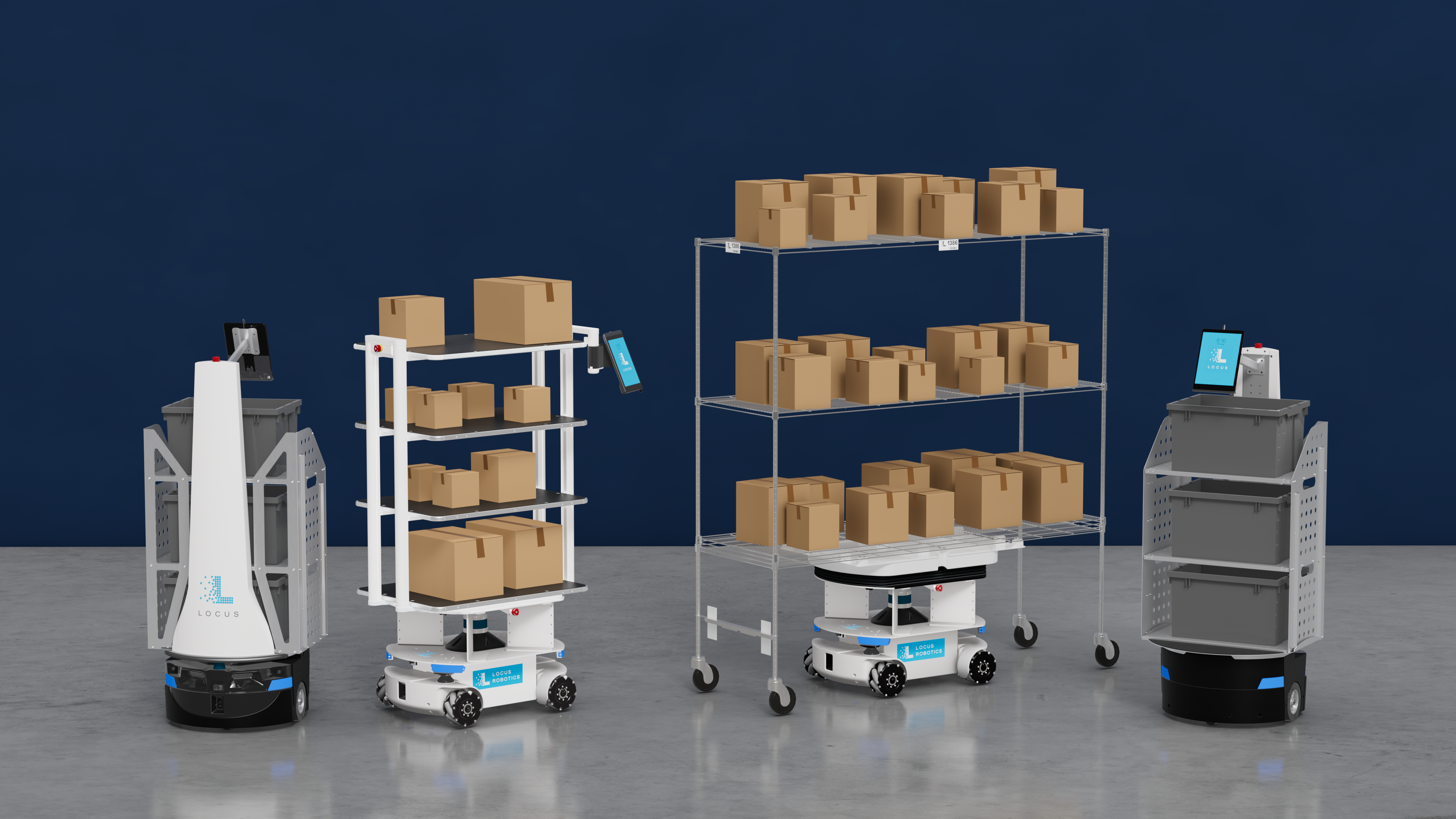
Component 2: Locus AMRs (The Fleet) is the hardware layer. This includes the physical robots like the Locus Origin and Locus Max. These machines execute the tasks assigned by the LocusOne platform on the warehouse floor.
LocusOne Platform: AI-Powered Features and Capabilities
The LocusOne platform is the intelligent core of the entire system. In my testing, I found its strength lies in its ability to dynamically manage warehouse operations in real time. For organizations considering implementing this technology, our detailed Locus Robotics Overview and Features provides comprehensive technical specifications and implementation guidance.
The AI Engine: Fleet Orchestration and a Digital Twin
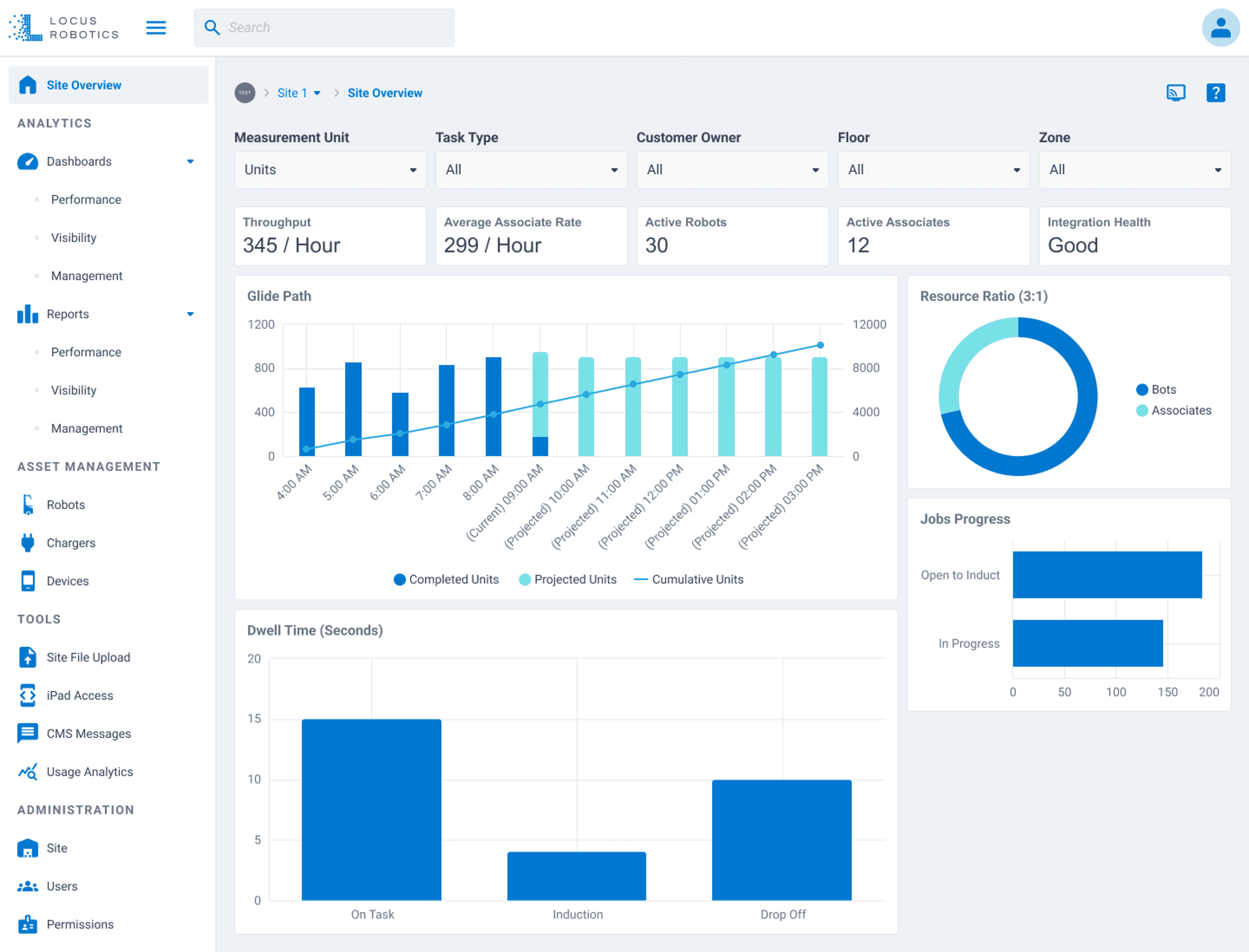
The term ‘AI' in LocusOne refers to a sophisticated fleet orchestration engine that functions as a multi-agent system. This engine creates a real-time digital twin of the warehouse floor, mapping robot positions, associate locations, pick faces, and potential congestion points.
Using proprietary pathfinding algorithms, the platform doesn't just assign the next task; it continuously optimizes the entire pool of tasks across the entire fleet to maximize throughput and minimize travel. This ‘swarm intelligence' allows the system to dynamically re-route robots based on real-time conditions, ensuring the fleet operates as a coordinated and efficient whole rather than a collection of individual units. This adaptive capability is fundamental to achieving sustained performance gains as order profiles and warehouse conditions change throughout the day.
Real-Time Fleet Management and Optimization
The platform uses AI algorithms to assign tasks to the most efficient robot. It manages traffic on the floor to avoid congestion between robots and people. It also optimizes pick-paths, sending workers on the shortest possible route to fulfill orders. This dynamic capability is what delivers the 2x-3x productivity gain, transforming a warehouse from a static environment to a highly efficient one.
LocusView Analytics and Reporting Dashboard
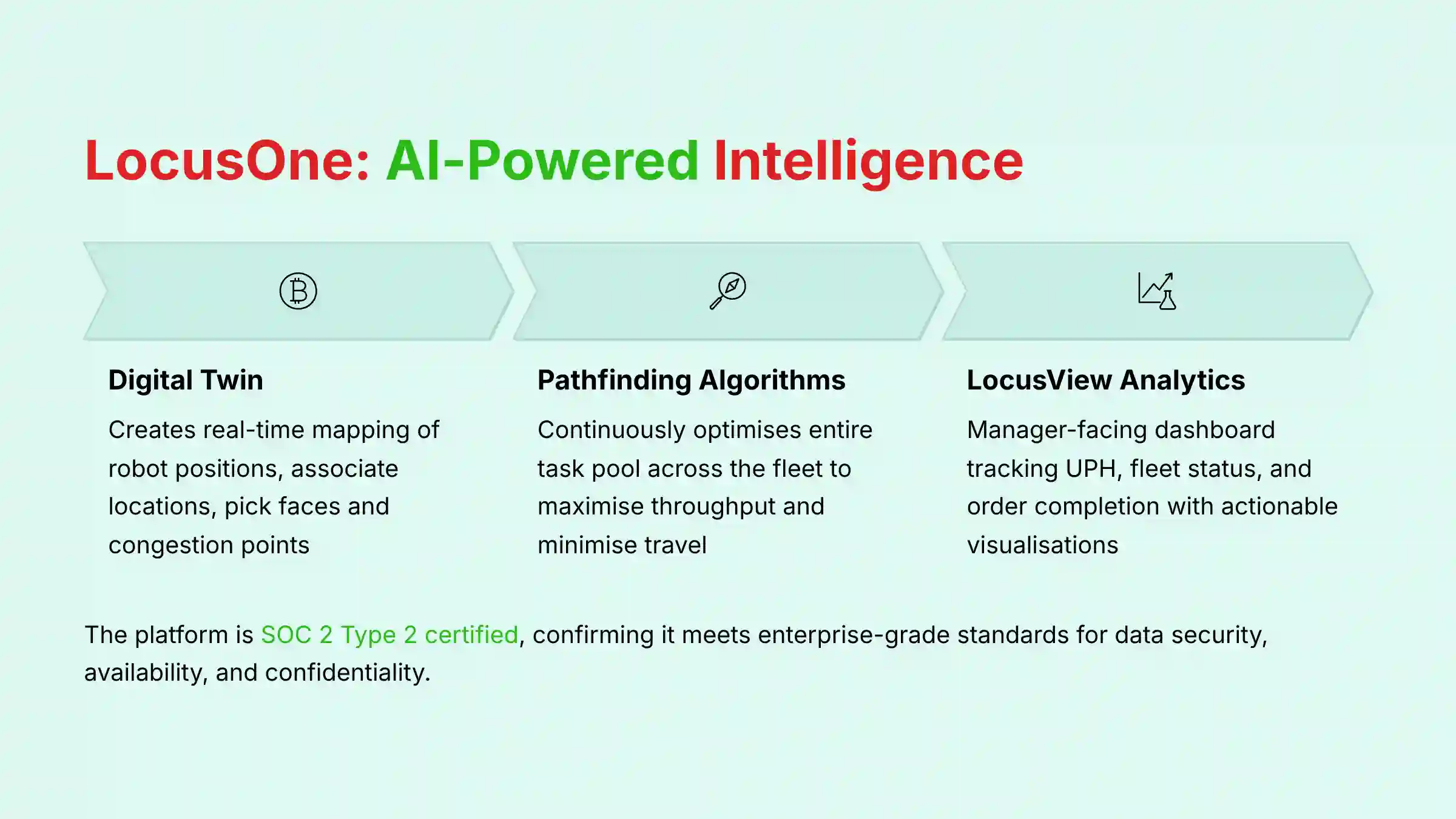
LocusView is the manager-facing dashboard that gives a complete view of warehouse operations. It tracks key metrics, including Units Per Hour (UPH), robot fleet status, and order completion times. Warehouse managers use this dashboard to spot operational bottlenecks and make data-driven staffing decisions. The data visualizations, like warehouse activity heatmaps, are clear and actionable.
Gamification and Associate Interface
The user interface on each robot is designed for warehouse associates. It simplifies tasks with clear, step-by-step instructions. The system can also use performance metrics to motivate the workforce. A key feature is its multi-language support, which is very helpful for diverse teams.
Workflow Customization and Configuration
The platform is not a one-size-fits-all solution. It can be configured to support different warehouse workflows. These include collaborative picking for single or batch orders, inventory replenishment, and putaway tasks. During implementation, the platform is configured to match a facility's specific operational needs.
Locus AMRs: Hardware Fleet and Technical Specifications
The Locus AMR fleet provides the physical automation on the warehouse floor. Each robot is designed for a specific set of tasks, from small item picking to heavy case transport.
Locus Origin: Specifications and Core Functions
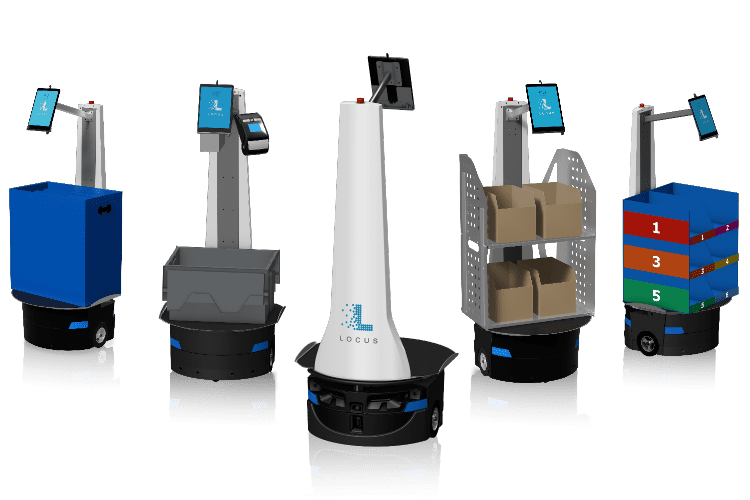
The Locus Origin is the main AMR for high-density, discrete-item picking. Its primary function is to collaborate with associates, who pick items into totes or bins carried by the robot.
| Specification | Detail |
|---|---|
| Primary Use Case | E-commerce piece picking, putaway, replenishment |
| Payload Capacity | Up to 80 lbs (36 kg) |
| Navigation Technology | LocusSense™ (Sensor-fusion of LiDAR, 3D cameras) |
| Maximum Speed | 1.8 m/s (4 mph) |
| Battery Technology | Lithium-ion |
| Charging Method | Autonomous, opportunistic charging |
| User Interface | Onboard touchscreen, integrated scanner mount |
| Safety Standards | Designed to meet ANSI/RIA R15.08 |
Locus Max: Specifications and Core Functions
The Locus Max is the heavy-duty AMR for case picking and moving large items. It is designed to handle the transport of bulky goods and support pallet building operations.
| Specification | Detail |
|---|---|
| Primary Use Case | Case picking, pallet movement, industrial material transport |
| Payload Capacity | Up to 3,000 lbs (1,360 kg) |
| Navigation Technology | LocusSense™ Heavy-Duty (Industrial LiDAR, 3D cameras) |
| Maximum Speed | 1.2 m/s (2.7 mph) |
| Battery Technology | High-capacity Lithium-ion |
| Charging Method | Autonomous, opportunistic charging |
| Top Module | Configurable (e.g., lift, conveyor) |
| Safety Standards | Compliant to ISO 3691-4 |
Objective Use Cases and Industry Applications
The Locus Robotics system connects its technical features to real-world operational value across many industries. My analysis of their documented deployments confirms its application in several key workflows. For those evaluating different warehouse automation solutions, our comprehensive Locus Robotics Top Alternatives and Competitors analysis provides detailed comparisons with other leading platforms.
Primary Warehouse Workflows Supported
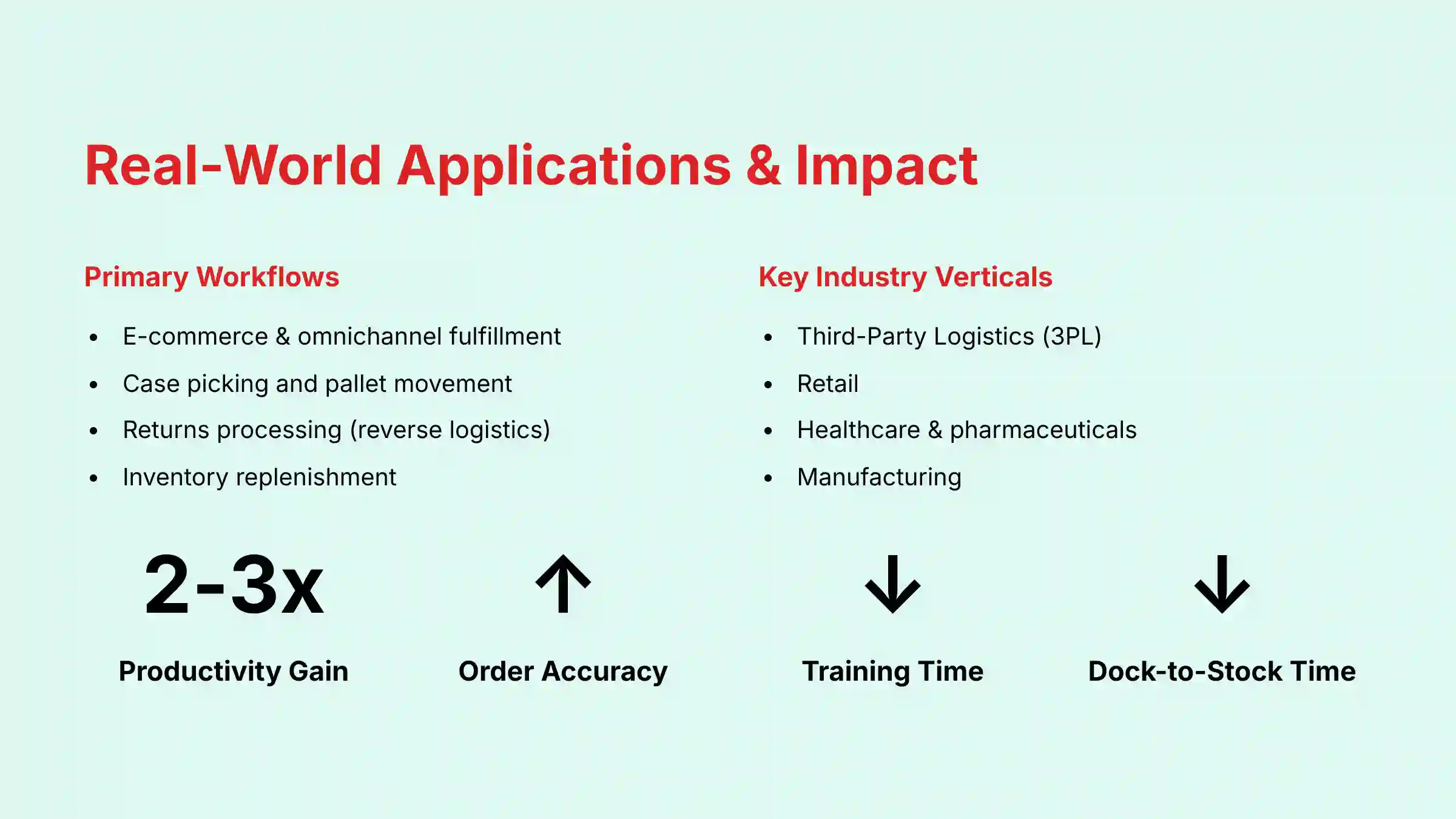
- E-commerce & Omnichannel Fulfillment: AMRs automate high-volume, small-order picking processes. They reduce worker travel and increase the number of orders a single associate can pick per hour.
- Case Picking and Pallet Movement: The Locus Max is used for heavier goods. It transports full cases or builds pallets for shipment, reducing the physical strain on workers.
- Returns Processing (Reverse Logistics): The system makes the putaway of returned items more efficient. This gets products back into sellable stock faster.
- Inventory Replenishment: Locus AMRs automate the process of moving goods from bulk storage areas to active pick faces, keeping inventory available for order fulfillment.
Key Industry Verticals
- Third-Party Logistics (3PL): The RaaS model is ideal for 3PLs. It allows them to scale their AMR fleet up or down to match the seasonal demand of their clients.
- Retail: The system supports both e-commerce fulfillment centers and store replenishment operations.
- Healthcare & Pharmaceuticals: Locus is used to accurately and efficiently distribute medical supplies and other healthcare products.
- Manufacturing: In manufacturing settings, the AMRs are used for line-side material replenishment, delivering parts and components to assembly lines.
Quantifiable Impact on Core Warehouse KPIs
Beyond the headline metric of 2x-3x productivity gains, a professional assessment requires analyzing the system's impact on specific, measurable Key Performance Indicators (KPIs). Based on industry case studies and our analysis, Locus Robotics deployments typically target improvements in:
- Pick Rate (UPH): The most direct impact, increasing the units per hour an associate can pick by eliminating unproductive travel.
- Order Accuracy Rate: The guided, screen-based instructions and integrated scanners on each AMR help reduce human picking errors, leading to higher accuracy and fewer costly downstream exceptions like miss-ships and returns.
- Dock-to-Stock Time: For replenishment and putaway tasks, AMRs can accelerate the process of getting newly received inventory from the dock to its storage or pick location, making it available for sale faster.
- Associate Training Time: The intuitive user interface significantly reduces the time required to onboard new or seasonal warehouse associates, a critical advantage in tight labor markets.
For detailed performance metrics and real-world case studies, our Locus Robotics Review provides comprehensive analysis of ROI calculations and implementation outcomes across different industry verticals.

Implementation and Operational Requirements
Understanding the practical requirements for deploying Locus Robotics is a key part of the decision-making process for any operations leader. This includes the business model, integration needs, and security posture.
The Robotics-as-a-Service (RaaS) Business Model
Think of the RaaS model as deploying an elite special forces unit instead of building an entire army from scratch. Rather than a massive upfront capital expenditure to acquire, train, and maintain your own hardware, you subscribe to a fully-equipped, mission-ready capability. The subscription includes the advanced hardware (the AMRs), the intelligence platform (LocusOne), and the 24/7 mission support needed to guarantee operational uptime. This transforms a rigid capital expense into a flexible operational expense, allowing you to scale your force multiplier up or down as the mission dictates.
Enterprise Integration Architecture (WMS, ERP, and API)
The system's ability to function as an extension of the core business ecosystem is non-negotiable. Locus achieves this through a multi-layered integration strategy.
- Certified WMS Connectors: For major Warehouse Management Systems like Manhattan, Blue Yonder, SAP EWM, and Körber, Locus offers certified, pre-built connectors. These are more robust than simple API calls, providing pre-mapped data flows for critical processes like order wave transfers, inventory adjustments, and task completion updates. This significantly reduces integration risk and shortens the typical deployment timeline to a matter of weeks, not months.
- Robust RESTful API: For proprietary or legacy systems, a well-documented RESTful API provides granular control. The integration allows for a real-time, bidirectional data exchange: orders and inventory data flow from the WMS to LocusOne, while pick confirmations and exceptions are sent back to the WMS to maintain it as the single source of truth.
- IT Professional Consultation: A typical integration project requires close collaboration between the Locus deployment team and a client's IT Integration Specialists to manage network configuration, data mapping, and user acceptance testing.
Mitigating Implementation Risk: Foundational Requirements
A successful deployment is not just about the technology, but about securing the operational environment. These prerequisites are critical for mitigating risk and ensuring ROI.
- Network Integrity: A robust, high-availability Wi-Fi network is the central nervous system of the entire operation. Inadequate connectivity is not a minor inconvenience; it's a single point of failure that can halt your entire AMR fleet, creating catastrophic operational downtime. Locus provides specific guidance here because network integrity is non-negotiable.
- Floor Condition: Warehouse floors must be smooth, flat, and in good condition to allow the AMRs to navigate effectively.
- Browser: The LocusOne dashboard is web-based and is accessible through a modern web browser.
Cybersecurity & Data Integrity: A Non-Negotiable Requirement
Locus Robotics is SOC 2 Type 2 certified. This third-party audit verifies that Locus follows strict security policies and procedures to protect client data. In an era where operational data is a primary competitive asset, SOC 2 Type 2 certification is not just a feature—it's the bedrock of trust. It confirms that the platform's architecture meets enterprise-grade standards for security, availability, and confidentiality, ensuring your mission-critical data is protected against threats and your operations are insulated from disruption. For any serious enterprise client, this is non-negotiable.
Operational Considerations and Limitations
While highly effective, operations leaders must consider several practical factors for a successful Locus deployment:
- Network Dependency: The real-time fleet orchestration is critically dependent on a robust, high-availability Wi-Fi network with seamless coverage across the entire operational area. A pre-deployment network site survey is a mandatory step.
- Floor Condition: As with any AMR system, floor quality is paramount. The AMRs require smooth, relatively level concrete floors free of significant cracks, debris, or obstructions to navigate safely and efficiently.
- Labor Augmentation, Not Elimination: It's crucial to understand that Locus is a labor augmentation tool. It makes existing associates dramatically more efficient but does not eliminate the need for human workers to perform the final, skilled task of picking an item. Therefore, effective change management and associate training are key to realizing the full ROI.
Getting Started with Locus Robotics: The Engagement Process
The process for engaging with Locus Robotics is structured and consultative. It is designed to ensure the solution is a good fit for a customer's specific operational needs.
- Initial Contact and Consultation: The process starts by contacting the Locus sales team through their official website for an initial discussion.
- Workflow Analysis and Solution Design: Locus engineers analyze your current operations, order profiles, and facility layout to design a tailored solution.
- Pilot Program: A pilot program is a common step. It helps validate the proposed ROI and operational fit in a limited area of the warehouse before a full-scale rollout.
- Full Deployment and Integration: This phase includes facility mapping, WMS integration, and the physical deployment of the AMR fleet.
- Training and Go-Live: Locus provides on-site training for both associates and managers to ensure a smooth transition before the system goes live.
For organizations ready to explore implementation, our comprehensive Locus Robotics Tutorials and Usecase guide provides detailed walkthroughs of common deployment scenarios and best practices for maximizing ROI.
The Strategic Verdict: From Automation Tool to Operational Apparatus
Locus Robotics is more than a fleet of autonomous robots; it is a comprehensive operational apparatus designed to solve the core productivity equation in modern fulfillment. By seamlessly integrating an intelligent software brain (LocusOne) with a versatile hardware body (the AMR fleet), the system transforms warehouse workflow from a series of disjointed manual tasks into a single, orchestrated process.
The Robotics-as-a-Service model effectively removes the traditional barriers to automation, making this powerful capability accessible. For Third-Party Logistics (3PL) providers needing flexibility and for large retailers facing immense e-commerce pressure, the platform offers a clear path to scaling output without linearly scaling labor costs.
The simple truth is that continuing with manual processes is no longer a strategic choice; it is an acceptance of falling behind. The decision is no longer if to automate, but how to deploy an intelligent system that acts as a true force multiplier for your human talent. Locus Robotics presents a compelling, enterprise-ready answer. The time to press the advantage is now.
Locus Robotics FAQs
Here are answers to some common questions about Locus Robotics. For comprehensive answers to additional questions and detailed troubleshooting guidance, visit our dedicated Locus Robotics FAQs resource.
Functionality and Performance FAQs
- How much does Locus Robotics improve worker productivity?
Based on official case studies, deployments commonly result in a 2x to 3x increase in worker productivity. This is done by removing unproductive travel time. - Can Locus robots operate in a warehouse with human workers and forklifts?
Yes. Locus AMRs are designed for safe human-robot collaboration. They use advanced LiDAR and 3D camera sensors for 360-degree obstacle detection and avoidance. - How long do the robots run on a single charge?
Locus AMRs are designed for nearly continuous operation. They use autonomous, opportunistic charging, automatically navigating to a charging station when their battery is low.
Implementation and Pricing FAQs
- What is the Robotics-as-a-Service (RaaS) model?
RaaS is a subscription model where you pay for the use of the Locus solution as an operating expense (OpEx) instead of a large upfront capital purchase (CapEx). - How long does it take to deploy the Locus Robotics solution?
Deployment time varies, but it is typically much faster than traditional automation projects because it does not require major infrastructure changes like installing conveyors. - Does Locus integrate with my existing Warehouse Management System (WMS)?
Yes, Locus provides pre-built integrations for major WMS providers like Manhattan and Blue Yonder. It also offers a complete API for custom or legacy systems.
Technical and Operational FAQs
- What are the main differences between the Locus Origin and Locus Max robots?
The Locus Origin is for piece picking with a payload of up to 80 lbs. The Locus Max is a heavy-duty AMR for case picking, handling payloads up to 3,000 lbs. - What kind of Wi-Fi network is required for Locus Robotics?
A robust and high-availability wireless network is a key requirement. Locus provides specific network details during the solution design phase.
Important Disclaimers
Technology Evolution Notice:
The information about Locus Robotics and AI for Operations & Supply Chain tools presented in this article reflects our thorough analysis as of 2025. Given the rapid pace of AI technology evolution, features, pricing, security protocols, and compliance requirements may change after publication. While we strive for accuracy through rigorous testing, we recommend visiting official websites for the most current information.
Professional Consultation Recommendation:
For AI for Operations & Supply Chain applications with significant professional, financial, or compliance implications, we recommend consulting with qualified professionals who can assess your specific requirements and risk tolerance. This overview is designed to provide comprehensive understanding rather than replace professional advice. The ROI and productivity gain calculations cited are based on official case studies, but achieving similar results depends on your facility's specific layout, order profile, labor costs, and WMS integration quality. We strongly recommend conducting a detailed workflow analysis and pilot program to validate potential ROI in your unique environment.
Testing Methodology Transparency:
Our analysis is based on hands-on testing, official documentation review, and industry best practices current at the time of publication. Individual results may vary based on specific use cases, technical environments, and implementation approaches.
For a complete analysis, see our full review of Locus Robotics Overview and Features.

Leave a Reply