Is Geek+ the Right AI Warehouse Automation Solution for You?
Take This 2-Minute Quiz to Find Out!
Key Takeaways
- Revolutionary Automation: Geek+ transforms manual “person-to-goods” warehouses into AI-powered “goods-to-person” systems, reducing walking time by up to 70% and dramatically increasing productivity
- AI-Driven Intelligence: Advanced algorithms optimize task allocation, path planning, inventory placement, and predictive maintenance across entire robot fleets for maximum efficiency
- Flexible AMR Technology: Unlike fixed AGVs, Geek+ AMRs use LiDAR and SLAM for autonomous navigation, adapting to obstacles and changes without infrastructure modifications
- Scalable RaaS Model: Robotics-as-a-Service provides financial flexibility with seasonal scaling capabilities and predictable OpEx instead of large CapEx investments
- Proven ROI Performance: Case studies demonstrate 2-3 year ROI through labor efficiency gains, increased throughput, improved accuracy (99.9%+), and optimized space utilization
What is Geek+ and what core problem does it solve in warehouses?
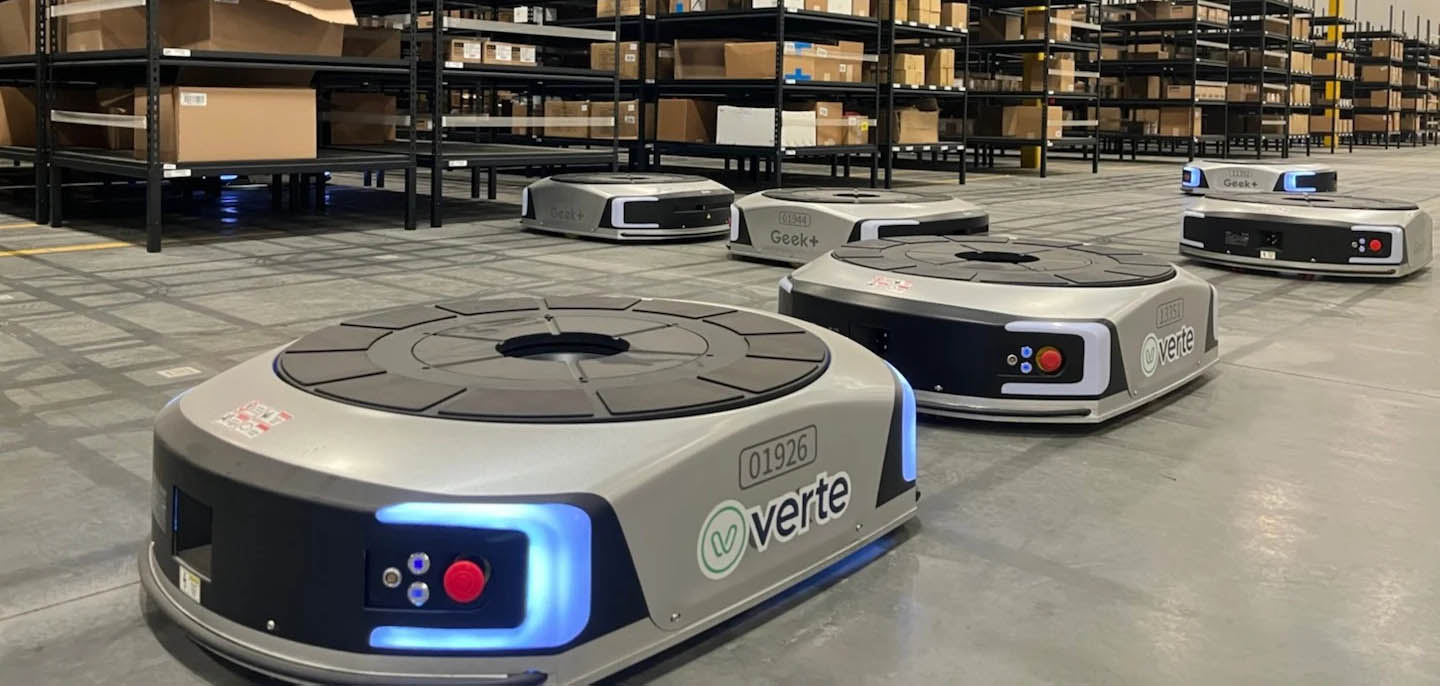
Geek+ is a global technology company specializing in smart logistics and warehouse automation through AI-powered Autonomous Mobile Robots (AMRs).
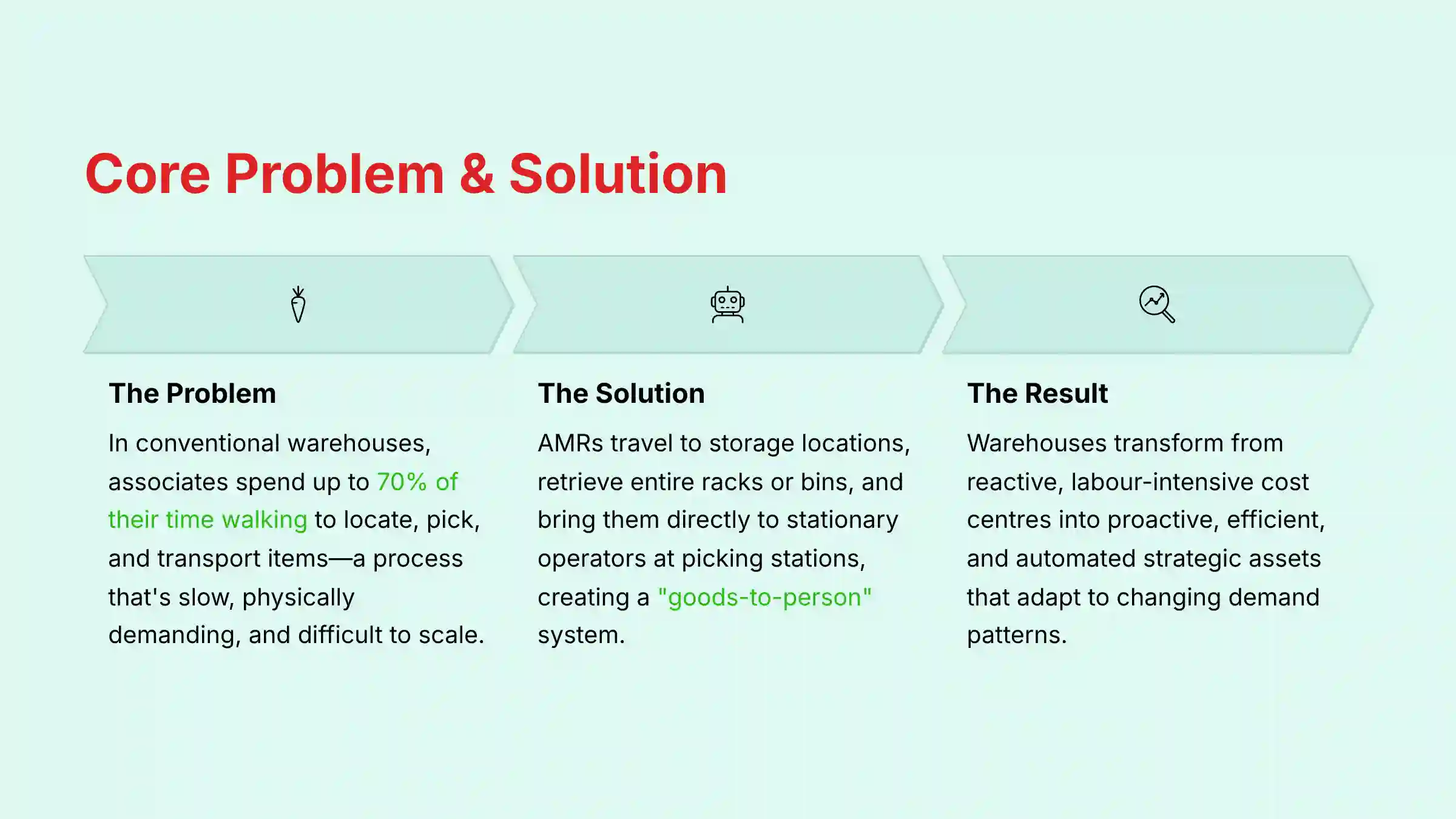
The core problem Geek+ solves is the inherent inefficiency, high labor dependency, and error susceptibility of traditional manual warehouse operations. In conventional warehouses, associates spend up to 70% of their time walking to locate, pick, and transport items—a “person-to-goods” model that's slow, physically demanding, and difficult to scale during peak periods.
Geek+ revolutionizes this approach with a “goods-to-person” system where AMRs travel to storage locations, retrieve entire racks or individual bins, and bring them directly to stationary operators at picking stations. This dramatically reduces unproductive walking time, increases picking speed and accuracy, and improves overall warehouse throughput.
By leveraging artificial intelligence to optimize robot task allocation, pathing, and inventory slotting, Geek+ transforms warehouses from reactive, labor-intensive cost centers into proactive, efficient, and automated strategic assets that can adapt to changing demand patterns and business requirements. For businesses seeking to implement advanced AI-powered warehouse automation solutions, Geek+ represents the cutting edge of intelligent logistics technology.
How does Geek+ use AI in its warehouse robotics solutions?
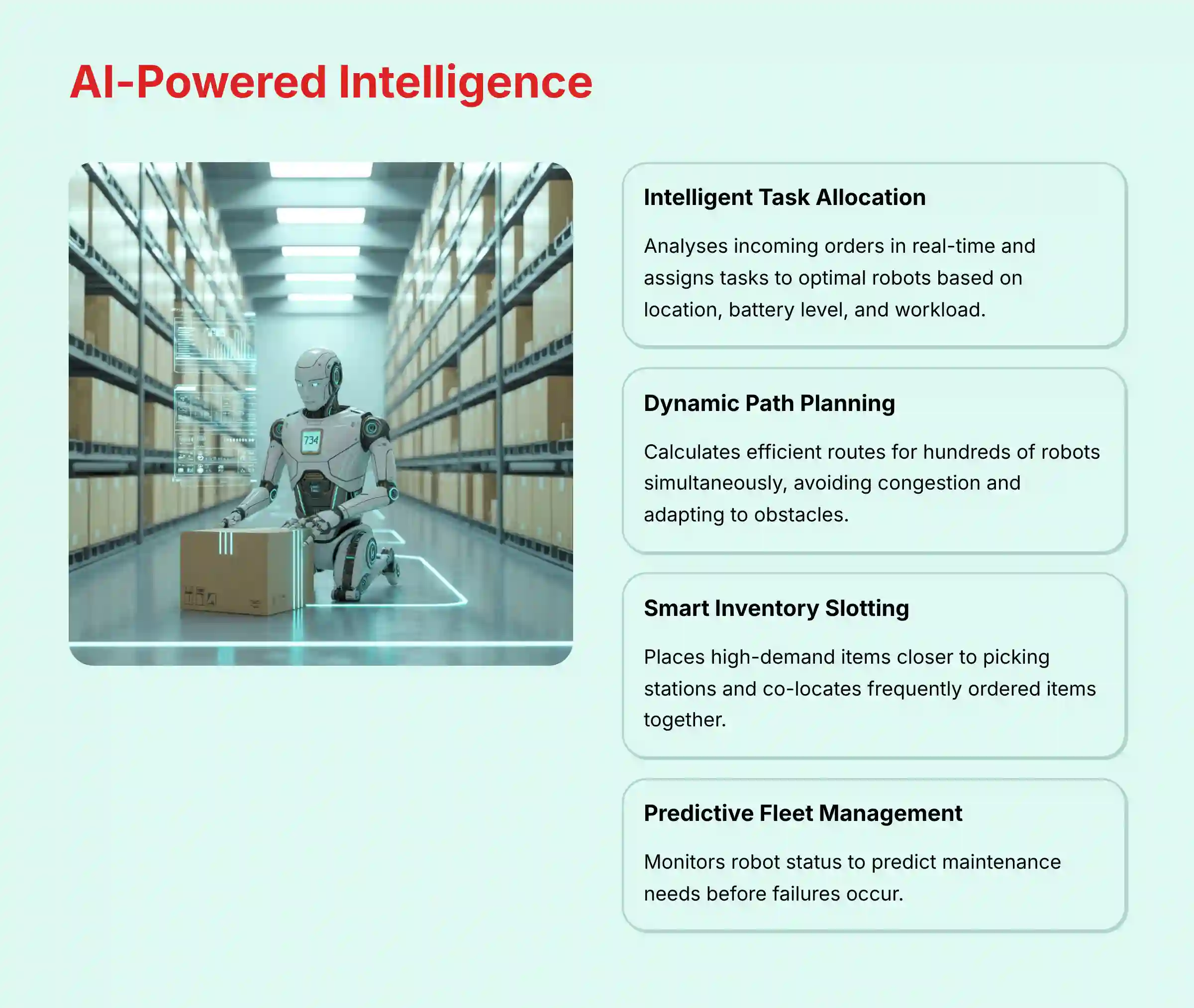
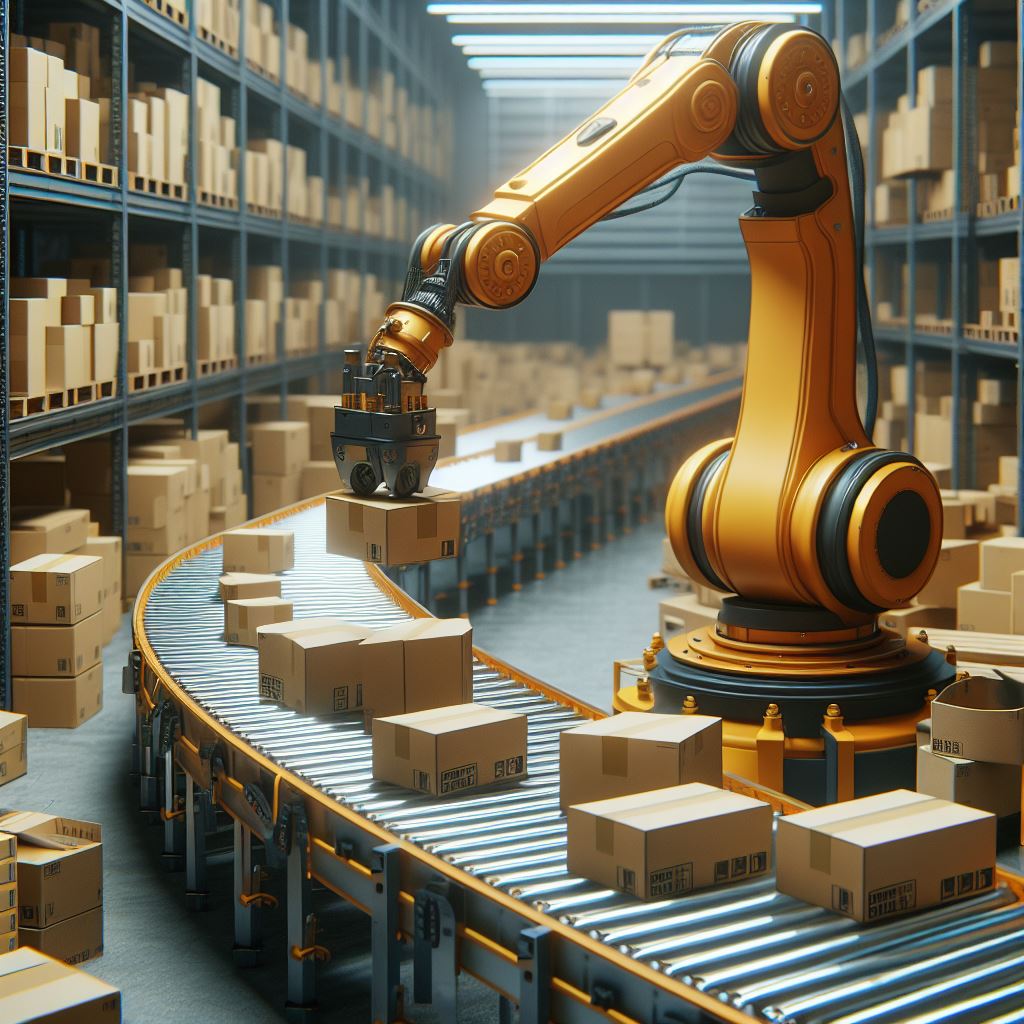
Geek+ employs a sophisticated AI software layer as the brain of its entire robotics operation, transforming hardware into an intelligent, self-optimizing system. This AI orchestration is critical in several operational areas:
Intelligent Task Allocation: The AI system analyzes incoming orders from the Warehouse Management System (WMS) in real-time and assigns tasks to the optimal robot based on location, battery level, and current workload. This ensures maximum efficiency and prevents any single robot from becoming a bottleneck.
Dynamic Path Planning & Traffic Management: The AI constantly calculates the most efficient routes for hundreds of robots simultaneously, navigating the warehouse floor while avoiding congestion and deadlocks. It adapts in real-time to obstacles or changes in the warehouse environment, creating a fluid traffic system that minimizes travel time.
Smart Inventory Slotting: The AI analyzes historical order data to optimize inventory placement. It directs robots to place high-demand items closer to picking stations (a strategy known as “hotspotting”) and co-locates items that are frequently ordered together. This minimizes robot travel time and accelerates order fulfillment.
Predictive Fleet Health Management: The system monitors the operational status of every robot, using AI to predict potential maintenance needs before failures occur. This proactive approach maximizes uptime and ensures consistent productivity across the fleet.
This AI-driven orchestration enables decision-making at a scale and speed that human operators couldn't possibly manage, leading to significant gains in warehouse efficiency and throughput. For a comprehensive analysis of how Geek+ compares to other solutions, explore our detailed Geek+ Review covering performance benchmarks and real-world implementations.
What's the main difference between Geek+ AMRs and traditional AGVs?
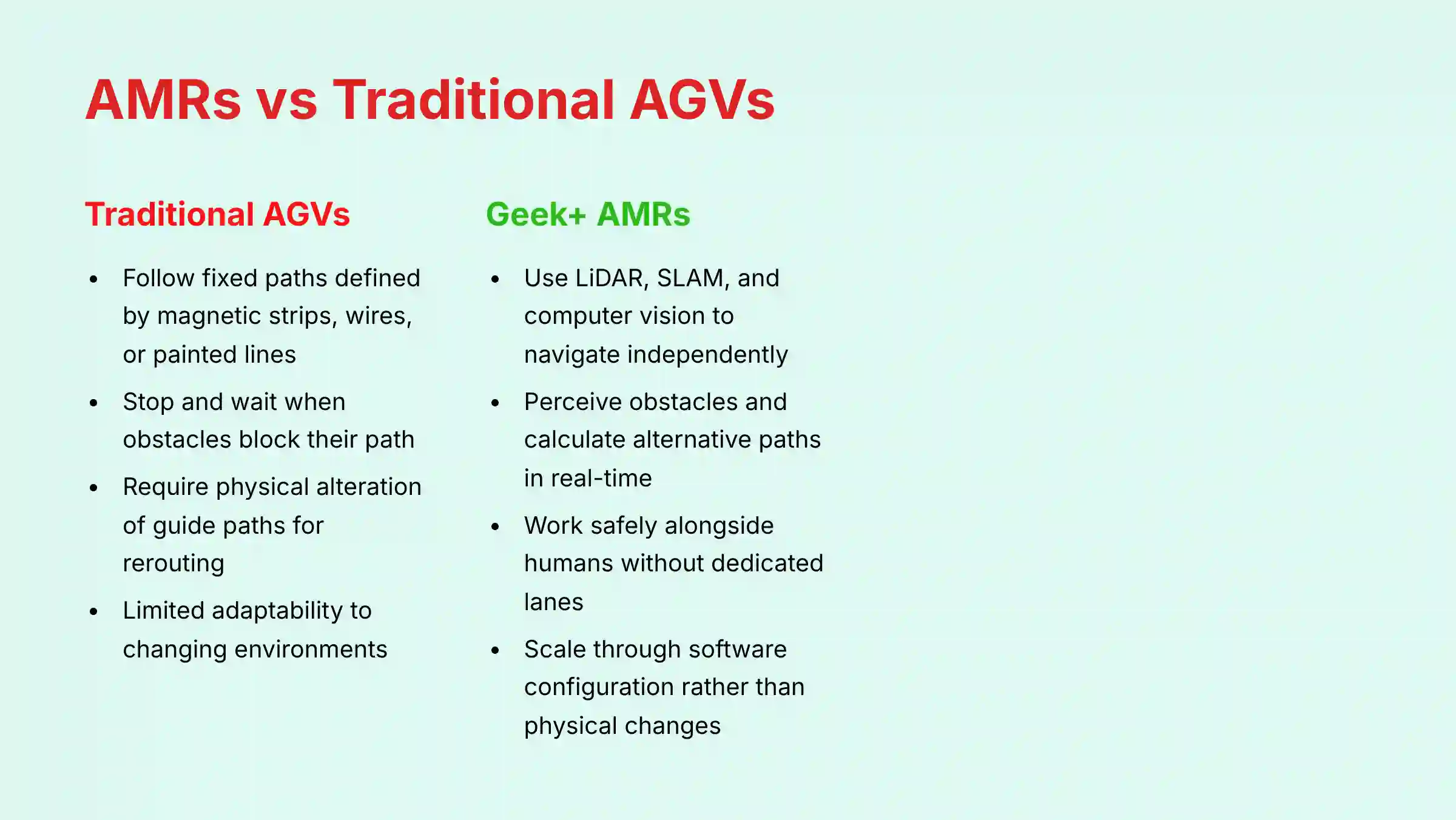
The primary difference between Geek+ Autonomous Mobile Robots (AMRs) and traditional Automated Guided Vehicles (AGVs) lies in their navigation intelligence and operational flexibility.
AGVs function like trains on predetermined tracks—they typically follow fixed paths defined by magnetic strips, wires, or painted lines on the warehouse floor. While reliable for repetitive, point-to-point material transport, they lack adaptability. If an obstacle blocks their path, AGVs usually stop and wait for it to be cleared. Rerouting an AGV system requires physically altering the guide paths, which can be costly and disruptive to operations.
In contrast, Geek+ AMRs operate like autonomous vehicles. They employ advanced technologies including LiDAR (Light Detection and Ranging), SLAM (Simultaneous Localization and Mapping), and computer vision to build dynamic maps of the warehouse and navigate independently. This environmental awareness allows AMRs to perceive obstacles and make real-time decisions—if one route is blocked, the AI-powered navigation system instantly calculates an alternative path.
This intelligence and flexibility make AMRs significantly more suitable for complex, dynamic environments like modern fulfillment centers. They can work safely alongside humans and other equipment without requiring dedicated lanes or infrastructure. Scaling or modifying AMR workflows is primarily a matter of software configuration rather than physical infrastructure changes, providing greater operational agility and future-proofing.
For businesses evaluating different automation options, it's worth exploring Geek+ alternatives and competitors to understand the full spectrum of available solutions and make informed decisions based on specific operational requirements.
How does the Geek+ system integrate with an existing Warehouse Management System (WMS) or ERP?
Seamless integration with a company's core business systems is fundamental to a successful Geek+ deployment. The system connects deeply with existing Warehouse Management Systems (WMS) and Enterprise Resource Planning (ERP) platforms like SAP, Oracle, or NetSuite through a series of robust APIs (Application Programming Interfaces).
The integration workflow typically follows this process:
- Order Ingestion: The client's WMS, which holds all order information, sends new picking tasks to the Geek+ Robot Management System (RMS). This includes order details, item locations, and quantities.
- Execution & Orchestration: The Geek+ RMS takes over, using its AI to orchestrate the robot fleet to fulfill tasks. It manages the picking process, directs robots to stations, and tracks progress in real-time.
- Real-Time Updates: As tasks are completed, the Geek+ RMS sends immediate updates back to the WMS, including information like “order picked,” “inventory updated,” and “task complete.”
- Inventory Synchronization: This bidirectional communication ensures the WMS remains the single source of truth for inventory levels across the facility. When an item is picked, the inventory count is immediately updated in the WMS, which then synchronizes with the ERP for financial and planning purposes.
Geek+ provides pre-built integration connectors for major WMS providers and dedicated implementation teams work closely with clients to configure and test these connections, ensuring a smooth flow of data and operational commands. This integration approach maintains the WMS as the master system while allowing the Geek+ solution to handle the complex orchestration of robotic assets.
For practical implementation guidance and step-by-step processes, our comprehensive Geek+ tutorials and use cases provide detailed workflows and best practices for successful system integration.
What are the potential limitations or challenges when implementing Geek+ robots?
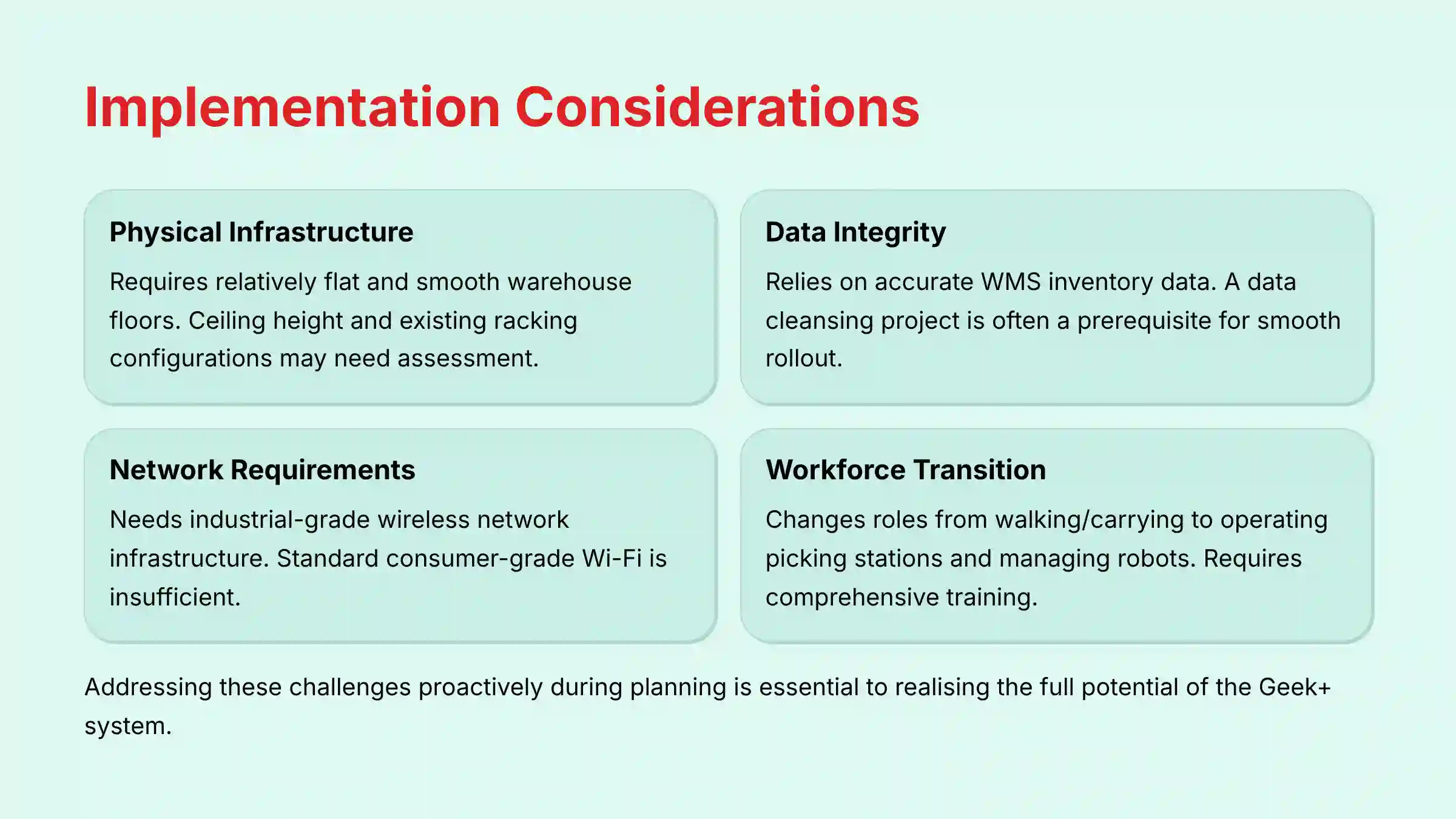
While Geek+ offers significant operational advantages, businesses should consider several potential limitations and challenges to ensure a successful implementation. The most critical factors include infrastructure readiness, data quality, and change management.
Physical Infrastructure Requirements: The warehouse floor must be relatively flat and smooth for AMRs to operate efficiently and safely. While more flexible than fixed automation, significant floor imperfections like cracks, steep ramps, or persistent debris can impact robot performance and may require remediation. Additionally, ceiling height and existing racking configurations may need assessment to optimize the robotic workflow.
Data Integrity Dependencies: The Geek+ AI relies on accurate data from the WMS regarding inventory locations and quantities. If existing inventory data is inaccurate or inconsistently maintained, it will lead to picking errors and operational inefficiency. A data cleansing project is often a prerequisite for a smooth rollout, adding time and effort to the implementation process.
Wireless Network Infrastructure: A large fleet of AMRs creates a high-density environment of connected devices communicating in real-time. Standard consumer-grade Wi-Fi is insufficient for this purpose. A thorough wireless site survey conducted by networking professionals is essential to identify and eliminate any dead zones or areas of weak signal strength. Investing in an industrial-grade wireless network is crucial for system reliability.
Workforce Transition: Introducing robots fundamentally changes the roles of warehouse associates. They transition from walking and carrying to more skilled positions like operating picking stations, managing the robot fleet, or handling exceptions. This requires comprehensive training and a thoughtful change management strategy to help the workforce adapt to a new, collaborative “human-robot” operational model.
Addressing these challenges proactively during the planning phase is essential to realizing the full potential of the Geek+ system. For detailed answers to common concerns and implementation challenges, consult our comprehensive Geek+ FAQs covering technical specifications, operational considerations, and troubleshooting guidance.
How scalable is the Geek+ system for handling peak seasons like Black Friday?
The scalability of the Geek+ system is one of its most significant advantages over fixed automation and manual operations, making it particularly well-suited for handling demand volatility during peak seasons like Black Friday or holiday shopping periods.
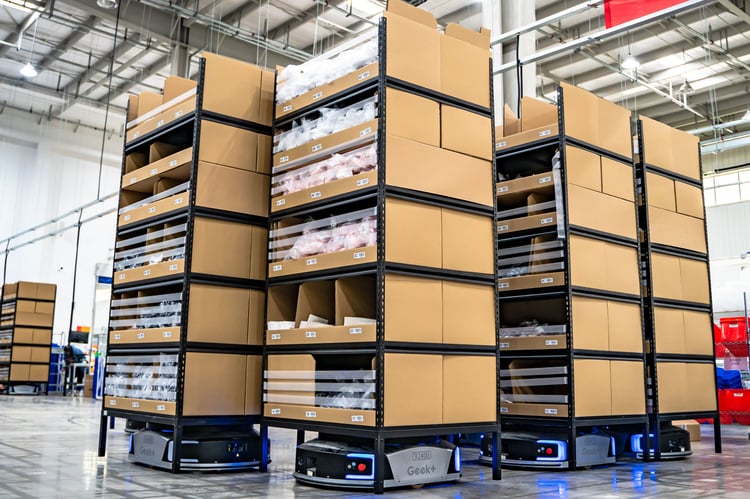
This scalability is achieved through two primary mechanisms: software flexibility and the Robotics-as-a-Service (RaaS) model. Because the robots aren't tethered to fixed infrastructure like conveyors or sorters, scaling up is as simple as adding more robots to the fleet. The AI-powered Robot Management System is designed to handle fleets of various sizes and will automatically integrate new robots, optimizing task allocation across the expanded fleet.
For temporary peaks, the RaaS model offers exceptional operational agility. Geek+ allows customers to lease additional robots for short periods (typically a few months) to handle seasonal surges. This provides both operational and financial flexibility. A company can operate with a baseline fleet of robots for most of the year and temporarily deploy additional units during peak periods. When demand normalizes, the rental units are returned.
This “elastic capacity” approach delivers three key benefits:
- It eliminates capital expenditure on equipment that would sit idle for much of the year
- It aligns operational capacity with real-time demand fluctuations
- It provides predictable costs during peak periods when labor would otherwise be scarce and expensive
However, effective scalability requires planning beyond just the picking process. Organizations must ensure downstream processes like packing stations, shipping docks, and labor schedules can handle the increased throughput enabled by the additional robots to prevent new bottlenecks from forming.
What is the typical ROI for a Geek+ solution and how is it calculated?
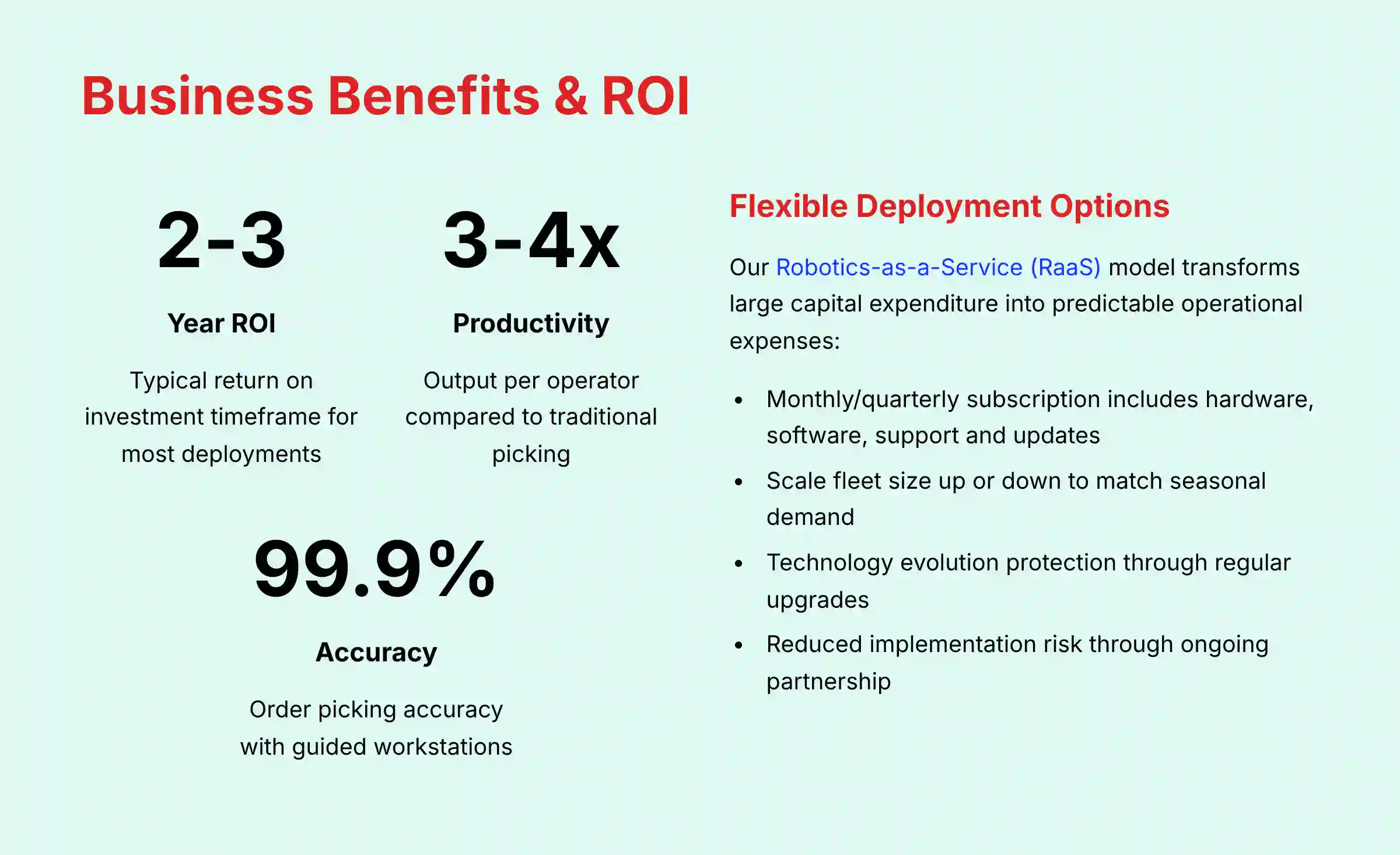
Return on Investment (ROI) for a Geek+ solution is dependent on a customer's specific operational parameters. Case studies have demonstrated ROI within a 2 to 3-year timeframe for some clients, but the actual timeline is calculated by analyzing cost savings and productivity gains unique to each deployment. Key factors influencing ROI include local labor costs, order throughput, improvements in storage density, and gains in order accuracy.
The ROI calculation typically includes these primary components:
Labor Efficiency Improvements: By automating the travel-intensive parts of picking, a single operator at a goods-to-person station can achieve the output of 3-4 associates in a traditional manual environment. This allows businesses to reallocate labor to more value-added tasks or handle significantly more volume without proportional headcount increases.
Increased Throughput & Revenue Capacity: Faster picking directly translates to higher order fulfillment capacity. This enables a business to ship more orders per day, particularly during peak periods, potentially capturing revenue that might have been lost due to capacity constraints.
Improved Order Accuracy: The system's guided picking process at workstations dramatically reduces human error, leading to accuracy rates often exceeding 99.9%. This lowers the significant costs associated with mis-picks, including returns processing, customer service inquiries, and re-shipping expenses.
Space Utilization Optimization: Goods-to-person systems enable denser storage configurations compared to traditional racking that requires wide aisles for human and forklift access. This allows businesses to store more inventory in the same footprint, potentially delaying or avoiding costly facility expansions.
Risk Disclaimer: Any ROI figures, including those cited in case studies, should be considered illustrative examples and not a guarantee of financial performance. The total cost of ownership (TCO) and potential ROI can only be determined after a thorough operational analysis of your specific environment and requirements.
For detailed performance metrics and comprehensive feature analysis, our Geek+ overview and features guide provides in-depth technical specifications and operational benefits that directly impact ROI calculations.
How does the Robotics-as-a-Service (RaaS) model from Geek+ work?
The Robotics-as-a-Service (RaaS) model from Geek+ is a flexible financing and operational approach that lowers the barrier to entry for warehouse automation by transforming a large, one-time capital expenditure (CapEx) into a predictable, recurring operational expense (OpEx).
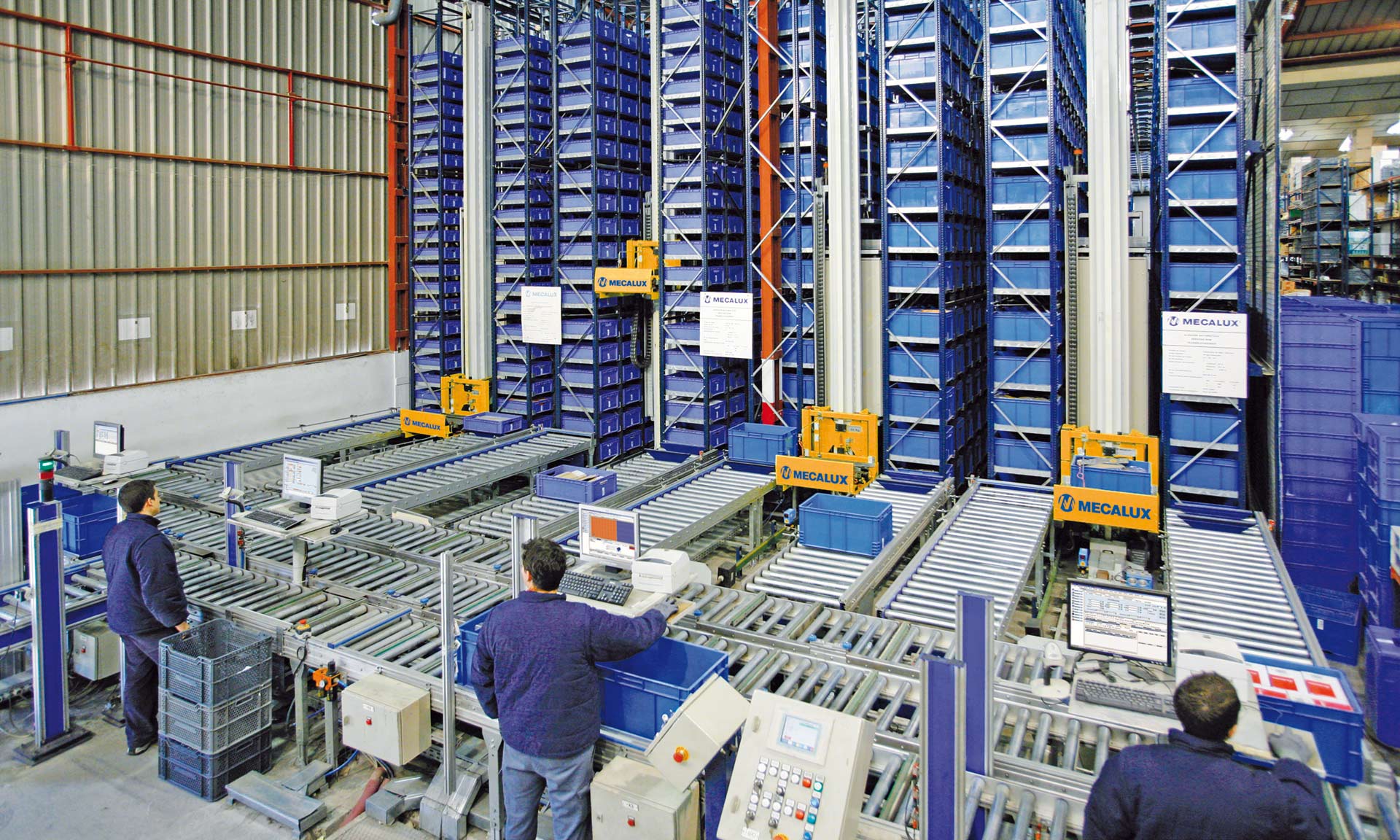
Instead of purchasing robots outright, companies pay a monthly or quarterly subscription fee that typically includes:
- Use of the robotic hardware
- Access to the core software and AI orchestration platform
- Ongoing technical support
- Regular maintenance and updates
- Performance monitoring and optimization
This subscription model delivers several strategic advantages for operations and supply chain leaders:
Financial Flexibility: It preserves capital for other core business investments and makes cutting-edge automation accessible without massive upfront costs. This can be particularly valuable for companies with seasonal business patterns or those seeking to test automation in specific areas before a broader rollout.
Operational Elasticity: As discussed under scalability, RaaS allows businesses to easily adjust their robot fleet size to match seasonal demand fluctuations. This creates a variable-cost model that aligns automation capacity with actual business needs throughout the year.
Technology Evolution Protection: The model typically includes technology upgrades, ensuring that the customer's fleet stays current with the latest hardware and software innovations from Geek+ without requiring a new purchase cycle. This future-proofs the investment and ensures the system continues to deliver peak performance over time.
Risk Mitigation: RaaS reduces implementation risk by transforming the relationship from a one-time equipment sale into an ongoing partnership focused on delivering results. Since the vendor's revenue depends on continued performance, there's strong alignment around system reliability and effectiveness.
For operations considering automation but concerned about capital constraints or uncertain about long-term needs, the RaaS model provides a lower-risk path to implementing advanced robotics while maintaining financial flexibility.
What kind of ongoing support and maintenance is required for a Geek+ robot fleet?
Geek+ provides a comprehensive support and maintenance framework designed to ensure maximum uptime and operational longevity for their robot fleets. This multi-tiered approach combines proactive monitoring, on-site support, and remote assistance.
The foundation of this framework is the AI-powered predictive health management system built into the Geek+ platform. This system continuously monitors the status of each robot—tracking battery health, motor performance, sensor functionality, and other critical components—to identify potential issues before they cause operational failures. These predictive capabilities allow for scheduled maintenance during non-peak hours, minimizing disruption to warehouse operations.
For day-to-day operations, Geek+ provides clear maintenance schedules and protocols for routine tasks such as battery health checks, wheel inspections, and sensor cleaning. The implementation team typically trains the client's on-site technical staff to perform these basic maintenance procedures, creating a first line of support within the operation.
For more complex technical issues, the support structure includes:
Remote Technical Support: A 24/7 support team can securely access the system to diagnose software issues, analyze performance data, and troubleshoot problems in real-time. Many software-related issues can be resolved without on-site intervention.
On-site Field Service Engineers: For hardware issues that cannot be resolved remotely or by the client's team, Geek+ dispatches certified field service engineers. These technicians handle component replacements, complex repairs, and system health audits.
Service Level Agreements (SLAs): Support contracts are governed by SLAs that define guaranteed response times and resolution targets based on the severity of the issue. This ensures that any operational disruption is addressed promptly to minimize impact on warehouse productivity.
Software Updates and Optimization: Geek+ regularly provides software updates that improve system performance, add new features, and enhance security. These updates are typically deployed remotely during scheduled maintenance windows.
This layered support approach ensures the robotic fleet remains a reliable and high-performing asset throughout its operational lifecycle, minimizing downtime and maximizing return on investment.

Leave a Reply