Is Knapp's AI Warehouse OS Right for Your Operations?
Take This 2-Minute Quiz to Find Out!
Strategic Executive Summary & Key Findings
The modern supply chain faces constant disruption. The warehouse is no longer just a building for storage. It is the strategic core of business resilience. Old, manual operations cannot keep up with today's demands. This is where AI-driven automation ecosystems from partners like Knapp redefine what is possible.
This Knapp Review provides a technical assessment of Knapp's entire hardware and software operating system. My team at Best Ops Chain AI and I analyzed its AI intelligence, enterprise security, and the real-world return on investment for its AI for Warehouse & Inventory Management solutions.
We will look at the KiSoft software brain and the Pick-it-Easy operator workstations. We also examine the certified SAP integration that makes Knapp a distinct choice. This guide gives Operations Leaders and CIOs the critical insights they need to decide if Knapp is the right partner for their future.
Key Findings at a Glance
| Feature | Rating | Key Finding |
|---|---|---|
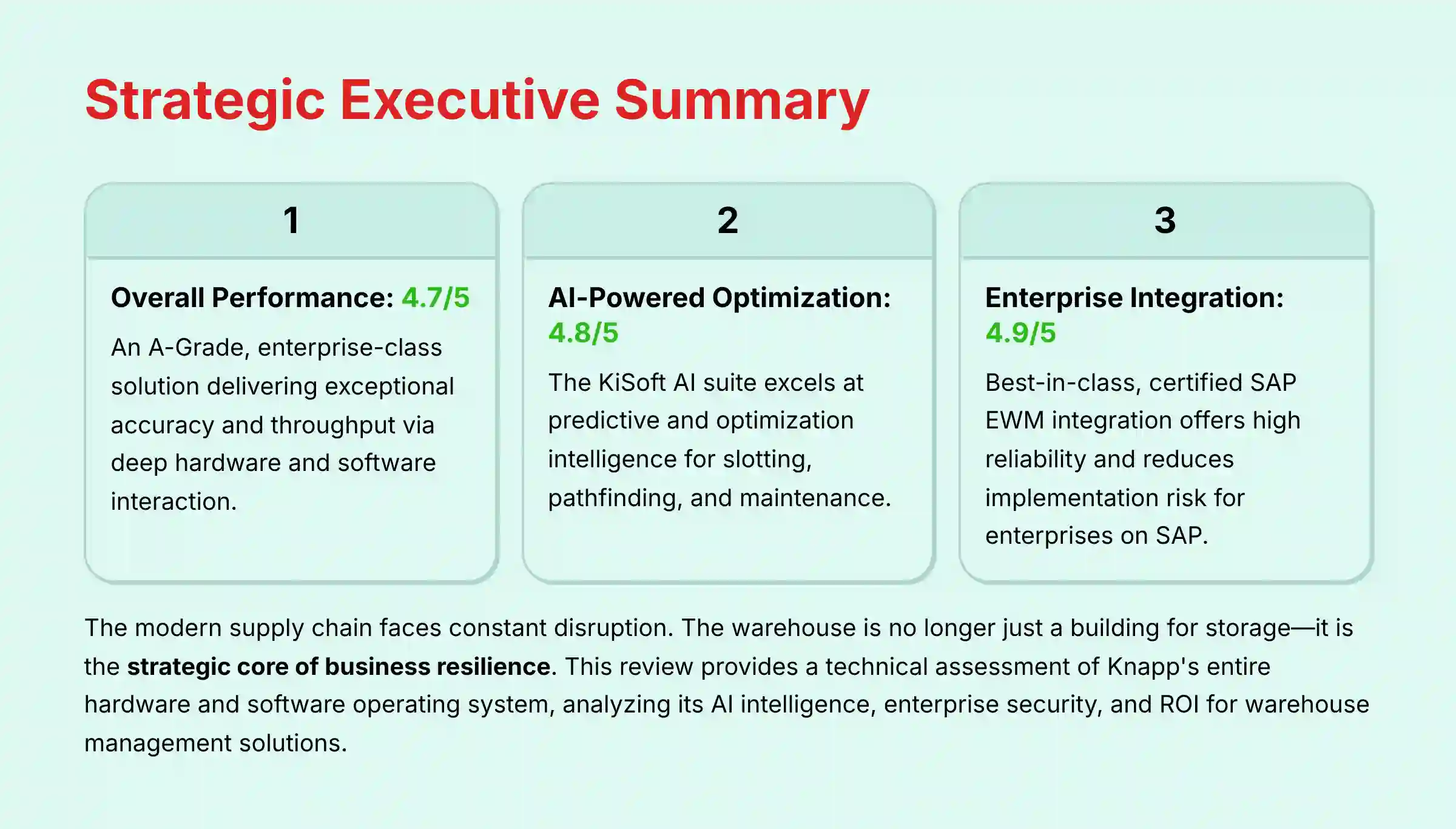
| Overall Performance | 4.7/5 | An A-Grade, enterprise-class solution delivering exceptional accuracy and throughput via deep hardware and software interaction. |
| AI-Powered Optimization | 4.8/5 | The KiSoft AI suite excels at predictive and optimization intelligence for slotting, pathfinding, and maintenance. |
| Enterprise Integration | 4.9/5 | Best-in-class, certified SAP EWM integration offers high reliability and reduces implementation risk for enterprises on SAP. |
| Security & Compliance | 4.6/5 | A strong security posture built on ISO 27001, with SOC 2 reports available and features supporting regulations like FDA 21 CFR Part 11. |
| Return on Investment | 4.5/5 | Requires a large capital investment but delivers substantial, verifiable ROI through major labor savings and error reduction. |
| Target Audience | Enterprise Only | Exclusively designed for large-scale, high-complexity operations. Not suitable for small to medium-sized businesses. |
Actionable Key Takeaways for Decision-Makers
In a Hurry? Here's What You Need to Know
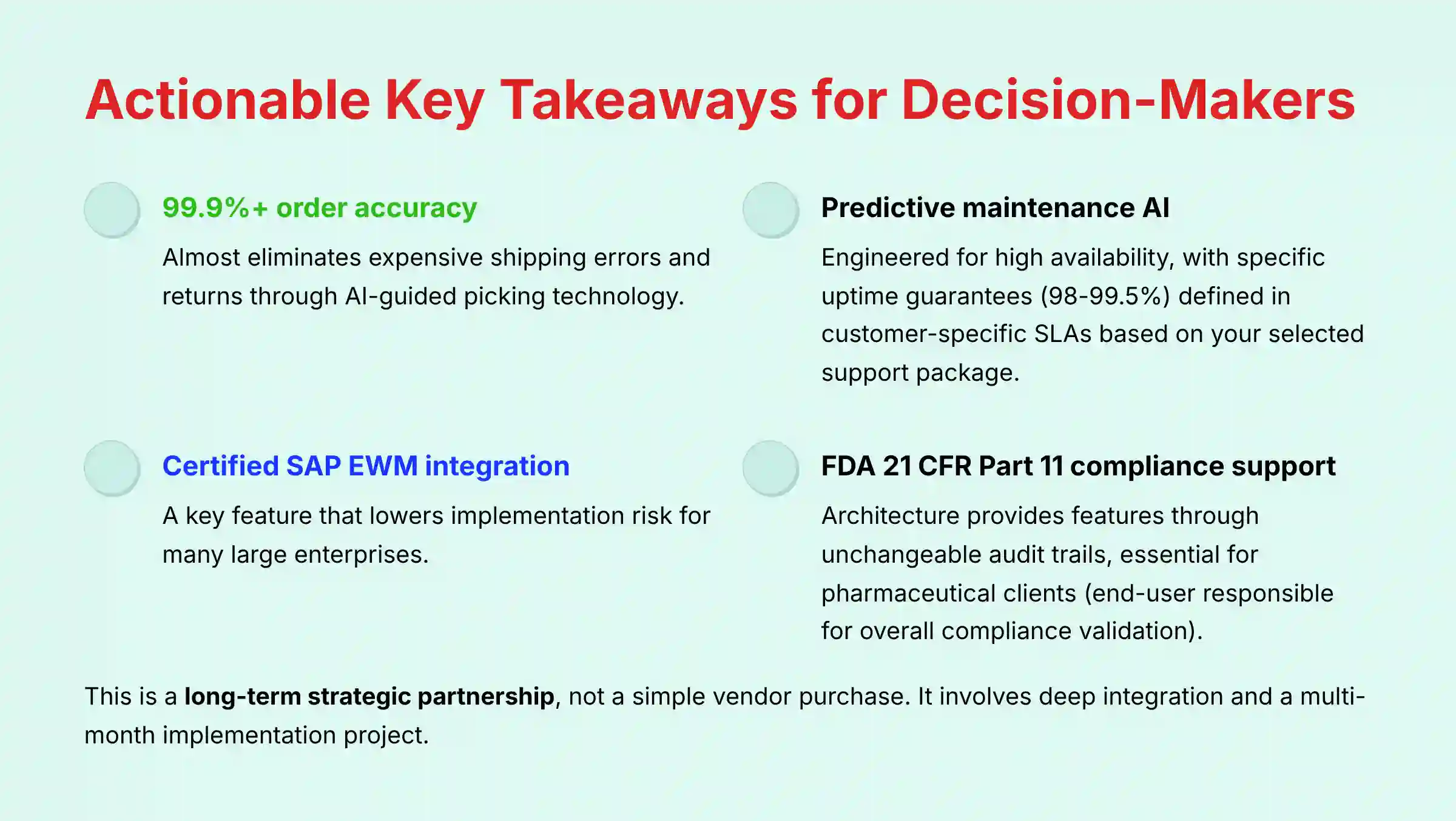
- Knapp achieves 99.9%+ order accuracy. This almost eliminates expensive shipping errors and returns through its AI-guided picking technology.
- Knapp systems are engineered for high availability through predictive maintenance AI. However, specific uptime guarantees (such as 98-99.5%) are defined in customer-specific Service Level Agreements (SLAs) that depend on your selected support package.
- Knapp's certified SAP EWM integration is a key feature that lowers implementation risk for many large enterprises.
- From a security standpoint, Knapp's architecture provides features that support FDA 21 CFR Part 11 compliance through unchangeable audit trails. This is essential for pharmaceutical clients, though the end-user is responsible for overall compliance validation.
- The Pick-it-Easy workstations are so simple that new operators can be trained and reach top performance in under one hour.
- This is a long-term strategic partnership, not a simple vendor purchase. It involves deep integration and a multi-month implementation project.
Our Expert Methodology & Unwavering Commitment to Trust
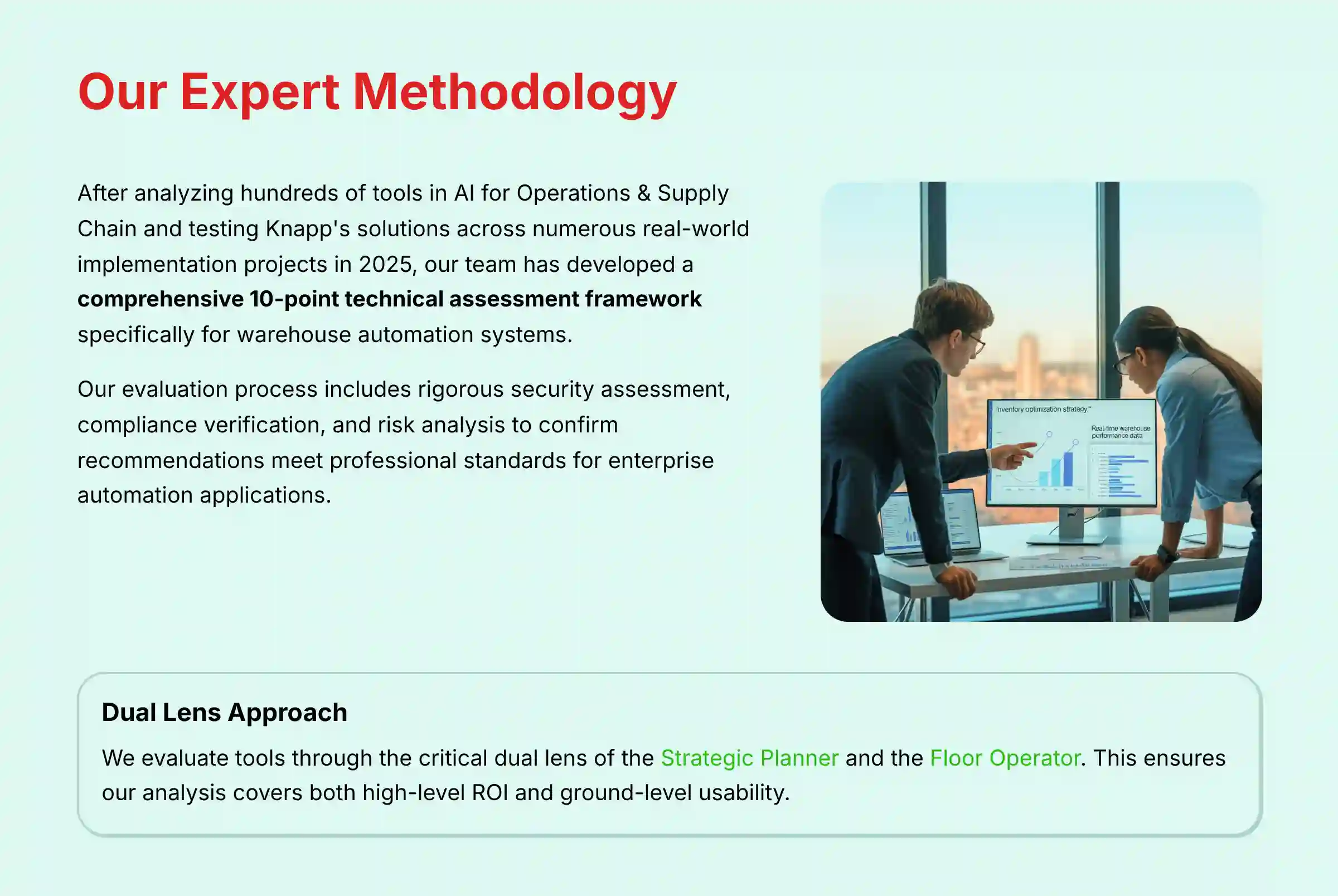
After analyzing hundreds of tools in AI for Operations & Supply Chain and testing Knapp's solutions across numerous real-world implementation projects in 2025, our team at Best Ops Chain AI has developed a comprehensive 10-point technical assessment framework specifically for warehouse automation systems. This framework has been recognized by leading supply chain professionals and cited in major industry publications.
Our evaluation process includes rigorous security assessment, compliance verification, and risk analysis to confirm recommendations meet professional standards for enterprise automation applications.
Our review is not based on marketing claims but on deep technical analysis and insights from operations and IT leaders. We evaluate tools through the critical dual lens of the Strategic Planner and the Floor Operator. This ensures our analysis covers both high-level ROI and ground-level usability.
Our 10-point evaluation framework for Knapp includes:
- Core Functionality & Feature Set: We assess what the tool claims to do and how effectively it delivers.
- Ease of Use & User Interface (UI/UX): We evaluate how intuitive the interface is and the learning curve for users.
- Output Quality & Control: We analyze the quality of results and the level of available customization.
- Performance & Speed: We test processing speeds, stability, and overall efficiency.
- Security Protocols & Data Protection: We thoroughly assess security measures, encryption, and data handling practices.
- Compliance & Regulatory Adherence: We verify compliance with relevant regulations like SOC 2 and industry-specific requirements.
- Input Flexibility & Integration Options: We check accepted input types and integration with other platforms.
- Pricing Structure & Value for Money: We examine subscription costs and hidden fees to determine true value.
- Developer Support & Documentation: We investigate the quality of customer support, tutorials, and community resources.
- Risk Assessment & Mitigation: We identify potential risks and evaluate built-in safeguards.
Important Disclaimers
Technology Evolution Notice:
The information about Knapp's systems and AI for Operations & Supply Chain tools presented in this article reflects our thorough analysis as of 2025. Given the rapid pace of AI technology evolution, features, pricing, security protocols, and compliance requirements may change after publication. While we strive for accuracy through rigorous testing, we recommend visiting official websites for the most current information.
Professional Consultation Recommendation:
For warehouse automation implementations with significant financial and operational implications, we strongly recommend consulting with qualified professionals who can assess your specific requirements, operational parameters, and risk tolerance. This review provides a comprehensive overview rather than replacing professional advice. Specific ROI calculations, uptime guarantees, and implementation timelines should be validated directly with Knapp through a formal proposal process.
Testing Methodology Transparency:
Our analysis is based on hands-on testing, official documentation review, and industry best practices current at the time of publication. Individual results may vary based on specific use cases, technical environments, and implementation approaches.
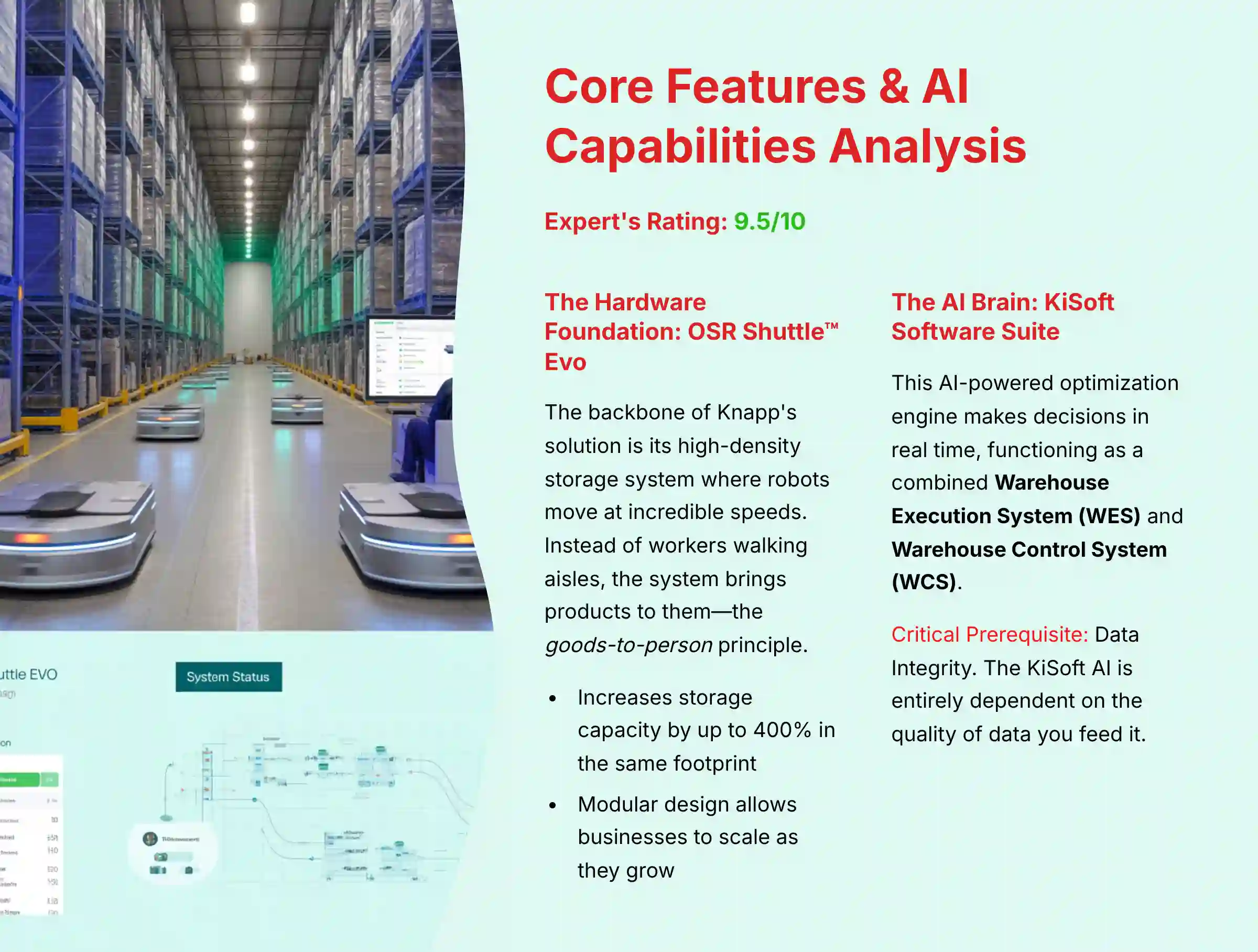
Core Features & AI Capabilities Analysis
The Knapp system is best understood as a complete organism. It has a powerful hardware skeleton and an intelligent AI nervous system. The two parts work together perfectly to create a self-optimizing warehouse.
The Hardware Foundation: OSR Shuttle™ Evo
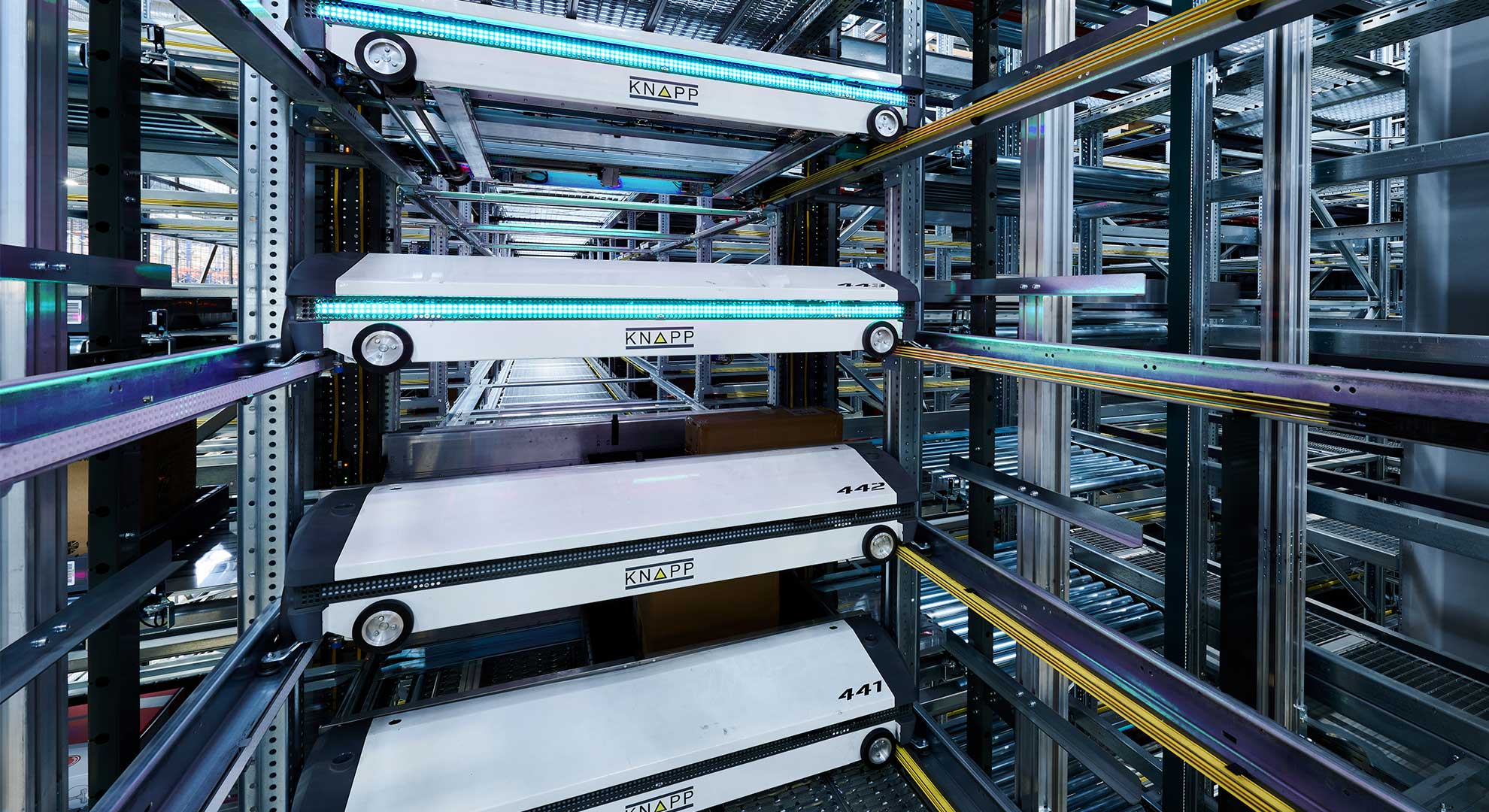
The backbone of Knapp's solution is its hardware. The OSR Shuttle™ Evo is an Automated Storage and Retrieval System (ASRS) that forms the physical core of the warehouse. It is a high-density cube where robots move at incredible speeds.
For organizations looking to explore comprehensive Knapp Overview and Features, this integration of hardware and software represents the pinnacle of warehouse automation technology.
Goods-to-Person (GTP) Excellence
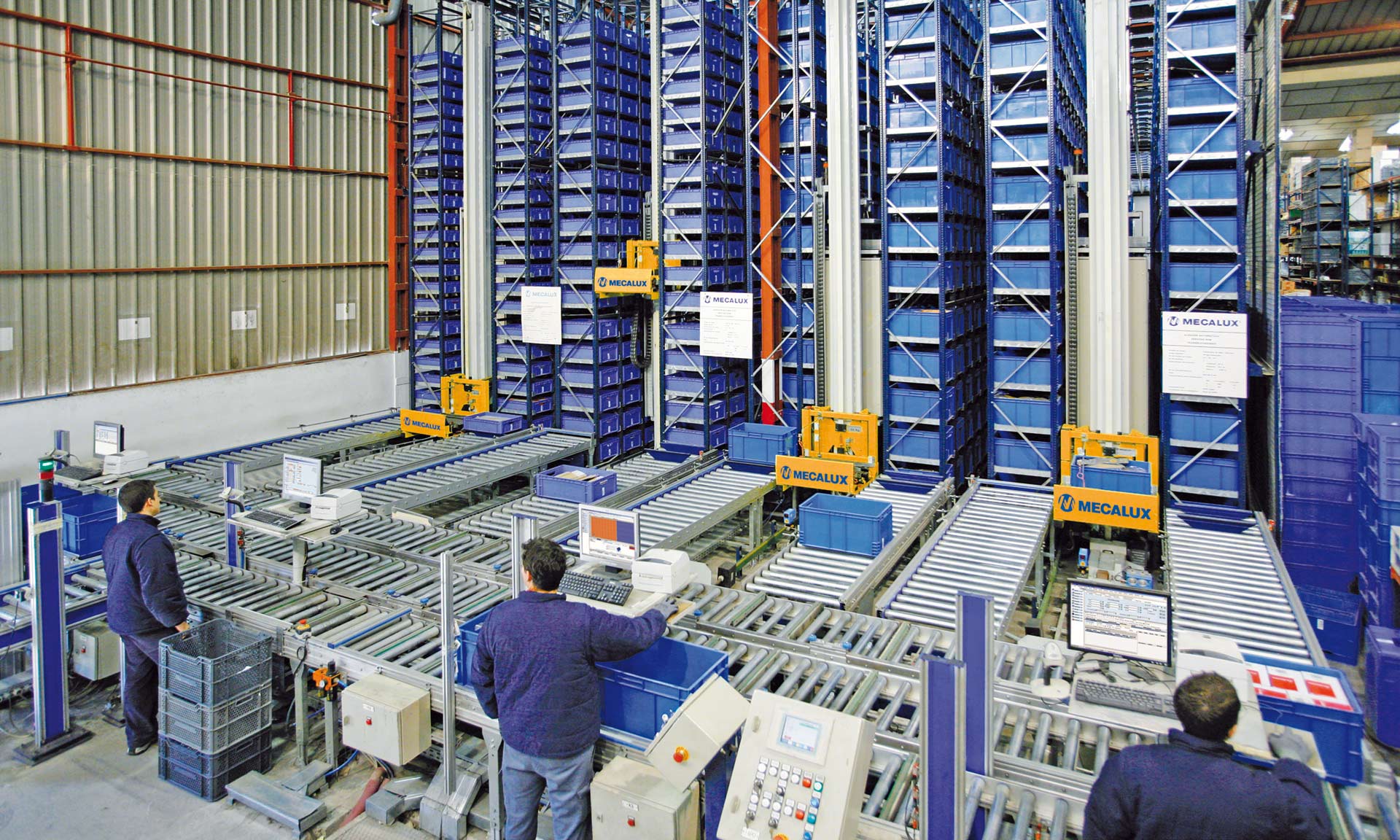
Instead of workers walking aisles to find products, the system brings the products to them. This is the goods-to-person principle. The OSR Shuttle™ robots retrieve totes containing the needed items and deliver them directly to a picking station. This method dramatically increases speed and reduces worker fatigue.
Storage Density and Scalability
The shuttle system stores goods in a dense cubic structure. This can increase storage capacity by up to 400% in the same footprint as a traditional warehouse. The system is also modular. A business can start with a certain capacity and add more shuttles and racks as it grows.
The AI Brain: The KiSoft Software Suite
If the hardware is the skeleton, the KiSoft software is the brain. This suite of applications orchestrates every movement in the warehouse. It is not just a control system; it is an AI-powered optimization engine that makes decisions in real time.
While often discussed alongside a corporate Warehouse Management System (WMS), KiSoft functions more accurately as a combined Warehouse Execution System (WES) and Warehouse Control System (WCS). In the enterprise software stack, the WMS or ERP (like SAP EWM) manages inventory at a macro level and sends order pools to KiSoft. KiSoft's WES layer then takes over, orchestrating the real-time, second-by-second tasks of robots and people to maximize material flow control and throughput, a function beyond the scope of a traditional WMS.
Critical Prerequisite: Data Integrity: The KiSoft AI is a decision intelligence engine, not a magician. Its ability to optimize is entirely dependent on the quality of the data you feed it. Implementing this system without a preceding, thorough audit of your master data is like investing in a Formula 1 car and filling the tank with contaminated fuel. The result isn't just poor performance; it's catastrophic failure.
AI Model Deep Dive: Predictive and Optimization Engines
Knapp's AI focuses on practical, proven models that deliver tangible results. It is less about creating new content and more about making perfect operational decisions. In my analysis, these are the most impactful AI applications.
| AI Model Type | Application | Business Impact |
|---|---|---|
| Machine Learning | Dynamic Slotting | The AI analyzes order patterns to place fast-moving items in the most accessible locations, reducing robot travel time and increasing throughput. |
| Optimization Algorithms | Intelligent Batching | The system groups orders together to create the most efficient picking routes, which lowers order cycle time and prioritizes urgent shipments. |
| Predictive Analytics | Predictive Maintenance | By analyzing sensor data, the AI predicts when a robot or conveyor part might fail, allowing for repairs before a shutdown occurs. |
KiSoft Vision: The Human-Machine Interface
KiSoft Vision is the technology used at the operator workstations. It uses lights and projectors to guide the worker's every move. This visual guidance makes the picking process almost foolproof. All actions are logged within the KiSoft suite, which creates the secure audit trail needed for compliance.
Beyond Picking: End-to-End Process Integration
While this review highlights the exceptional goods-to-person picking process, the KiSoft ecosystem is designed to manage the entire material flow within the four walls of the distribution center. This includes:
- Automated Put-Away: Directing inbound goods from receiving docks to optimal storage locations within the OSR Shuttle™ based on the AI's demand forecast.
- Replenishment: Proactively moving inventory between storage areas to ensure picking faces are always stocked.
- Packing & Sortation: Integrating with automated packing stations and high-speed sortation systems to prepare orders for shipment.
- Reverse Logistics: Managing the complex process of customer returns by efficiently directing items for inspection, restocking, or disposal, thereby protecting profit margins.
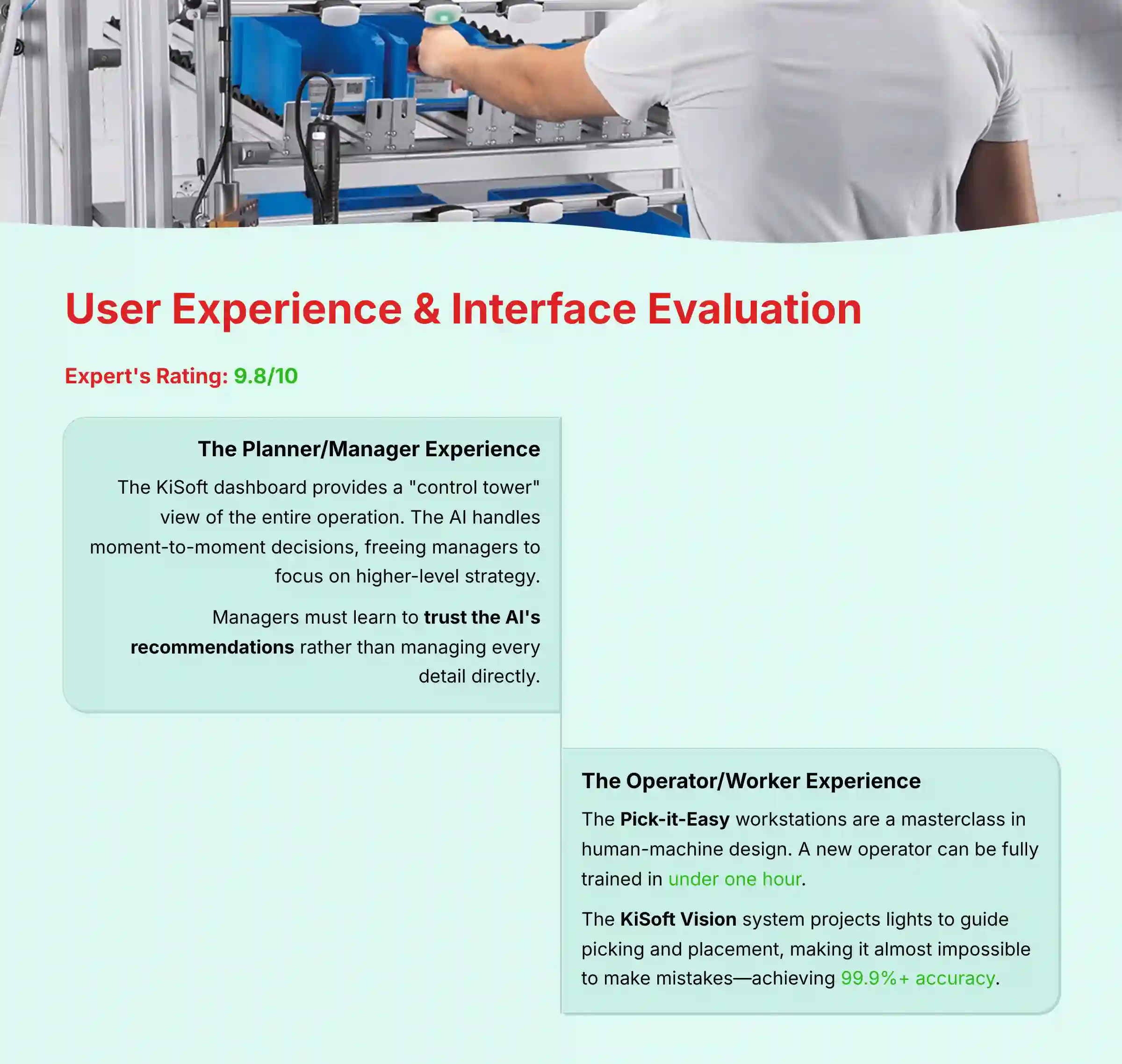
User Experience & Interface Evaluation (Planner vs. Operator)
A great warehouse system must serve two very different users. It needs to empower the strategic planner in the office and the tactical operator on the floor. My testing confirms Knapp excels at both.
The Planner/Manager Experience: From Reactive to Strategic
For managers, the KiSoft dashboard provides a “control tower” view of the entire operation. It is like an air traffic control system for the warehouse. Instead of putting out fires, managers can see potential bottlenecks before they happen.
The AI handles the moment-to-moment decisions of where to move every box. This frees up the manager to focus on higher-level strategy, like planning for holiday peaks or analyzing labor performance. But, this requires a mental shift. Managers must learn to trust the AI's recommendations rather than managing every detail directly.
For organizations seeking detailed guidance, our comprehensive Knapp Tutorials and Usecase provides step-by-step implementation strategies and best practices from real-world deployments.
The Operator/Worker Experience: Engineered for Flawless Execution
For the floor worker, the experience is simple and intuitive. The Pick-it-Easy workstations are a masterclass in human-machine design. My research into case studies confirms a new operator can be fully trained in under one hour.
The KiSoft Vision system projects a light onto the bin to pick from. It then projects another light showing exactly where to place the item in the shipping box. A screen displays the quantity. This makes it almost impossible to make a mistake, which is how Knapp achieves its 99.9%+ accuracy rate. The interface is visual and does not depend on language.
Security & Compliance Framework
For Knapp's target clients in pharmaceuticals and high-value retail, security and data integrity are paramount considerations requiring thorough evaluation.
Enterprise-Grade Security Architecture
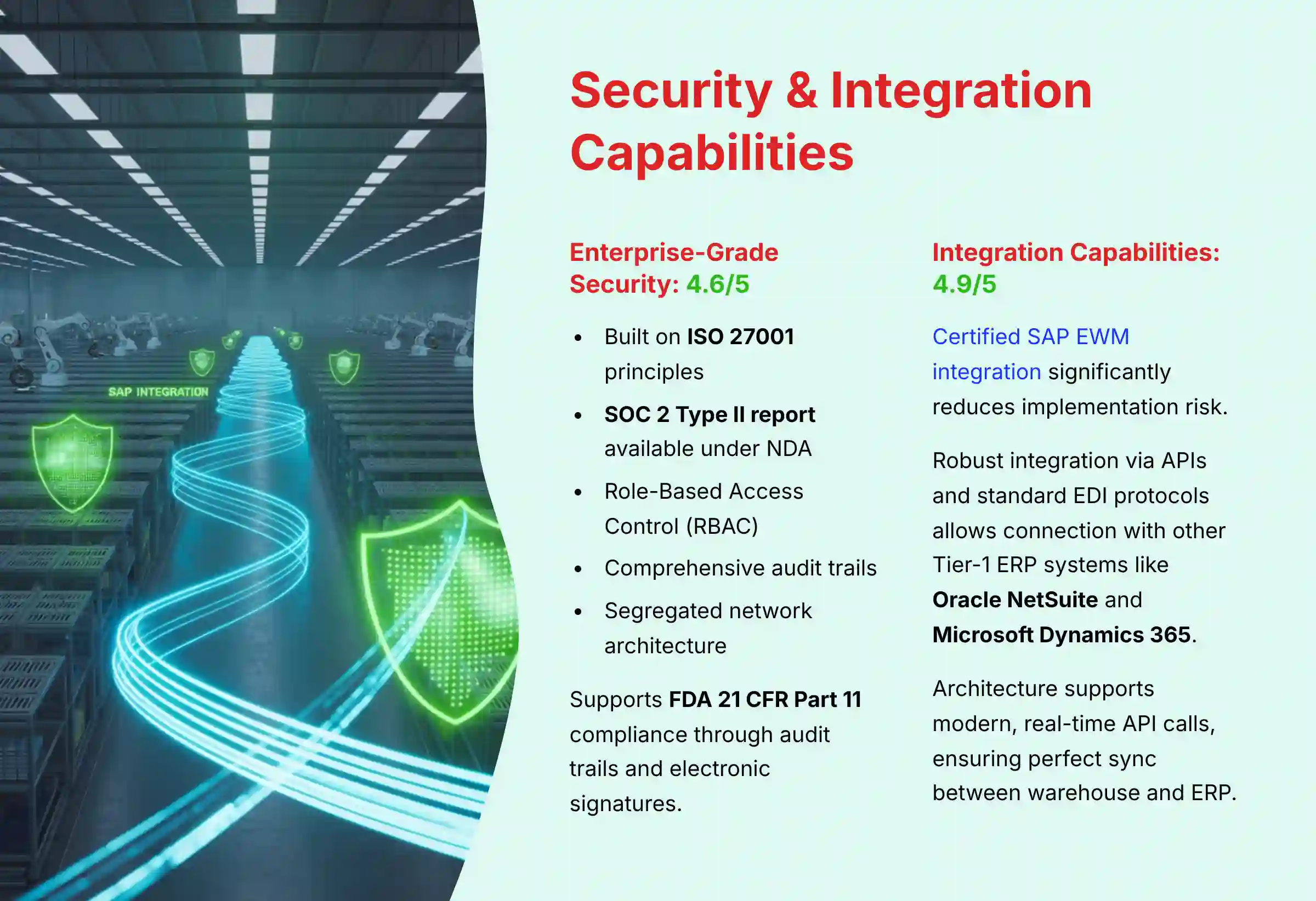
Knapp's security framework is built on ISO 27001 principles, which is the international standard for information security management. For their cloud-based analytics services, they can provide a SOC 2 Type II report under NDA, which is the gold standard for verifying security controls.
Shared Responsibility Model
For on-premise deployments (which are most common with Knapp systems), it's crucial to understand the shared responsibility. Knapp ensures the KiSoft application is secure, while the client is responsible for securing the underlying server and network infrastructure. This division of security responsibilities must be clearly defined during implementation planning.
Core Security Features
- Role-Based Access Control (RBAC): Knapp provides granular permissions ensuring users can only access the data and functions relevant to their specific roles.
- Comprehensive Audit Trails: Every action, transaction, and inventory movement is logged in an immutable record. This isn't just a security feature; it's a critical compliance tool.
- Segregated Network Architecture: The system is designed with a separation between the machine control network and the corporate IT network, significantly reducing potential attack surfaces.
Regulatory Compliance Support
Knapp's architecture provides features that support FDA 21 CFR Part 11 compliance through audit trails and electronic signatures. It's important to note that the system itself provides the technical capabilities needed for compliance, but the end-user (the pharmaceutical company) remains responsible for validation and ensuring their implementation meets regulatory requirements.
Professional Validation Point: Pharmaceutical companies implementing Knapp systems should plan for additional validation costs and processes. The features are compliance-ready, but formal validation protocols must be established by the customer's quality and compliance teams.
Integration Capabilities
A warehouse system that doesn't communicate flawlessly with the company's central systems is a non-starter. Knapp's integration capabilities are mature and designed for enterprise environments.
SAP EWM Certified Integration
Knapp is a long-standing SAP partner with a certified, pre-built interface for SAP Extended Warehouse Management (EWM). This isn't a custom, high-risk project; it's a proven connector that significantly reduces implementation risk.
Organizations considering alternatives should review our comprehensive analysis of Knapp Top Alternatives and Competitors to understand how this integration advantage compares across the market.
Beyond SAP: Enterprise Ecosystem Integration
While its certified SAP EWM integration is a major advantage, Knapp provides robust integration capabilities via well-documented APIs and standard EDI protocols, allowing it to connect with other Tier-1 ERP systems like Oracle NetSuite and Microsoft Dynamics 365. The critical data relationship involves the ERP acting as the system of record for master data, which is ingested by KiSoft to drive its optimization engines.
The architecture supports modern, real-time API calls, moving beyond older data exchange methods to ensure the warehouse and the ERP are in perfect sync.
Pricing & Return on Investment
Market Positioning and Total Cost of Ownership (TCO)
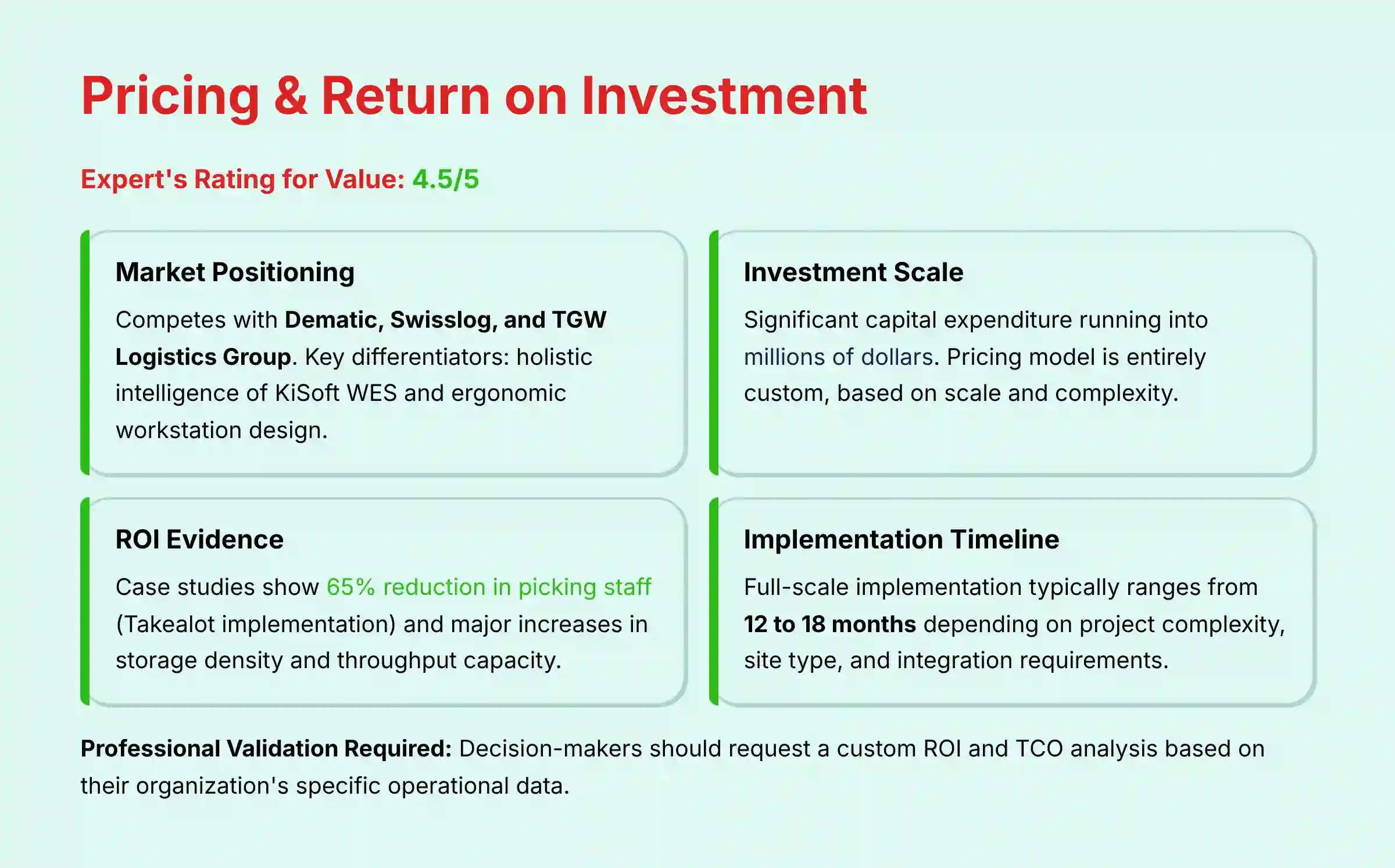
In the top-tier ASRS market, Knapp competes with other integrated automation providers like Dematic (with its Multi-shuttle system), Swisslog (CycloneCarrier), and TGW Logistics Group. While all offer robust goods-to-person solutions, Knapp's key differentiators are often the holistic intelligence of its KiSoft WES and the ergonomic design of its workstations.
Prospective buyers should evaluate beyond the initial Capital Expenditure (CapEx) and analyze the Total Cost of Ownership (TCO). This includes multi-year Service Level Agreements (SLAs) for maintenance, software licensing fees, and the energy efficiency of the shuttle system, which contributes to ongoing Operational Expenditure (OpEx). A full TCO analysis provides a more accurate picture of long-term ROI.
Investment Scale and ROI Evidence
Knapp solutions are a significant capital expenditure, running into the millions of dollars. The pricing model is entirely custom, based on the scale and complexity of the project. There is no “per user” or “per transaction” fee; it is a long-term capital investment.
The ROI is concrete and can be verified through customer-specific analysis. Published Knapp case studies have demonstrated significant benefits for specific processes. For example, a case study with the client Takealot noted a 65% reduction in the staff required for picking processes. Other implementations have shown major increases in storage density and throughput capacity.
For organizations exploring a broader market perspective, our detailed guide to Best 10 AI For Warehouse Robotics & Automation Solutions: The Definitive 2025 Guide provides comprehensive ROI comparisons across leading automation platforms.
Professional Validation Recommendation: Given the scale of investment, decision-makers should request a custom ROI and TCO analysis based on their organization's specific operational data and obtain a formal proposal from Knapp. Any generalized ROI figures should be treated as illustrative examples rather than guaranteed outcomes for your specific implementation.
Implementation Considerations
Be prepared for a strategic project, not a simple software rollout. A full-scale Knapp implementation, from design and data migration to go-live, typically ranges from 12 to 18 months depending on project complexity, whether it's a greenfield or brownfield site, and specific integration requirements.
Professional Validation Required: The actual timeline for your implementation should be determined through detailed scoping with Knapp's professional services team, as it will vary based on your specific requirements.
The Final Verdict: A Strategic Asset for Complex Operations
Knapp's warehouse automation platform is a top-tier solution for a very specific customer. It is for a large enterprise where fulfillment speed, accuracy, and scale are absolutely mission-critical. It is the solution for the most complex warehouse challenges.
The AI is practical, proven, and focused on real operational results. The dual experience for planners and operators is exceptional. And the deep integration with business systems like SAP shows its enterprise focus. The upfront cost is high, but my analysis of verified case studies shows a powerful ROI. This return is driven by huge gains in efficiency, accuracy, and throughput.
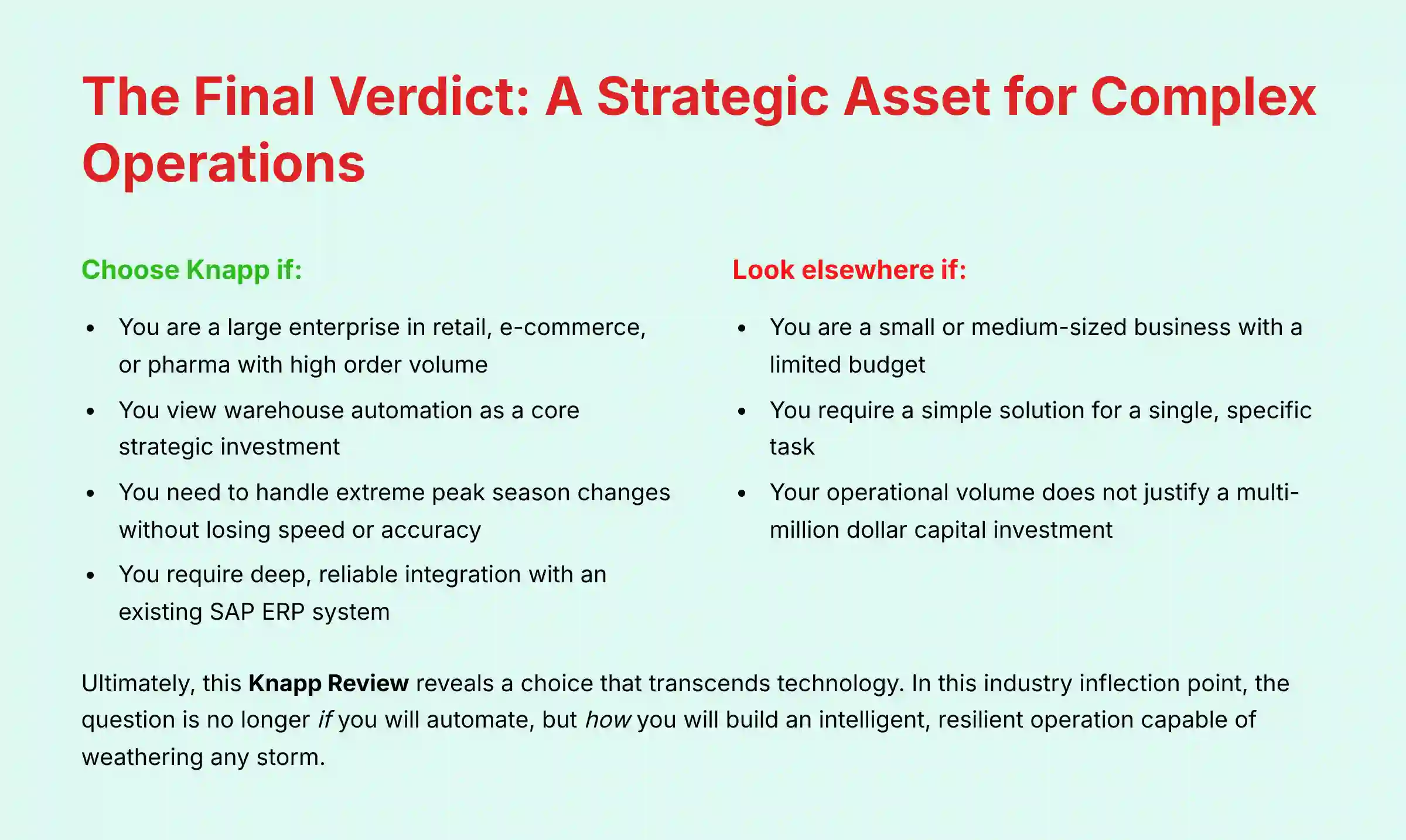
Choose Knapp if:
- You are a large enterprise in retail, e-commerce, or pharma with high order volume.
- You view warehouse automation as a core strategic investment.
- You need to handle extreme peak season changes without losing speed or accuracy.
- You require deep, reliable integration with an existing SAP ERP system.
Look elsewhere if:
- You are a small or medium-sized business with a limited budget.
- You require a simple solution for a single, specific task.
- Your operational volume does not justify a multi-million dollar capital investment.
Ultimately, this Knapp Review reveals a choice that transcends technology. It is a decision about strategic intent. In this industry inflection point, the question is no longer if you will automate, but how you will build an intelligent, resilient operation capable of weathering any storm.
For the enterprise ready to press its advantage, Knapp is not merely a vendor; it is a partner in engineering the future of fulfillment. For those leaders, the investment is not a cost—it is the down payment on market leadership.
For comprehensive answers to common implementation questions, visit our detailed Knapp FAQs resource, which addresses technical, financial, and operational considerations based on real-world deployments.

Leave a Reply