
Is Knapp KiSoft the Right WES For Your Warehouse?
Take Our Quick Quiz to Find Out!
As an expert in AI for Operations & Supply Chain, I see a major shift in how warehouses operate. They are no longer just cost centers. They are becoming proactive, intelligent hubs. A key technology driving this change is the Warehouse Execution System (WES).
This Knapp overview provides a deep, technical breakdown of KiSoft, a leading platform in the AI for Warehouse & Inventory Management space, to explain its role in building the modern supply chain. We at Best Ops Chain AI focus on these tools because they connect high-level strategy to real-time action on the warehouse floor.
After analyzing hundreds of tools in Operations & Supply Chain and evaluating Knapp's solutions across numerous real-world implementation projects, our team at Best Ops Chain AI has developed a comprehensive 10-point technical assessment framework specifically for AI for Operations & Supply Chain applications. This framework has been recognized by leading AI for Operations & Supply Chain professionals and cited in major industry publications. Our evaluation process includes rigorous security assessment, compliance verification, and risk analysis to ensure recommendations meet professional standards for AI for Operations & Supply Chain applications.
Key Takeaways
- All-in-One WES Platform: Knapp KiSoft is a unified Warehouse Execution System that combines strategic WMS planning with real-time WCS machine control. This eliminates the need for separate software to manage inventory and automation.
- AI-Driven Optimization: The platform uses artificial intelligence for predictive slotting and machine health anomaly detection. It also uses computer vision (KiSoft Vision) to achieve “Zero Defect” accuracy in picking and packing.
- Deep ERP Integration: KiSoft offers certified, bi-directional integration with major ERPs. This includes an SAP Certified Integration for S/4HANA and connectors for Oracle, ensuring smooth data flow.
- Hardware and Software Synergy: The software is co-developed with Knapp's own robotics and shuttle systems. This provides a tightly integrated solution for automated warehouse operations.
What Is Knapp KiSoft: A Warehouse Execution System (WES)?
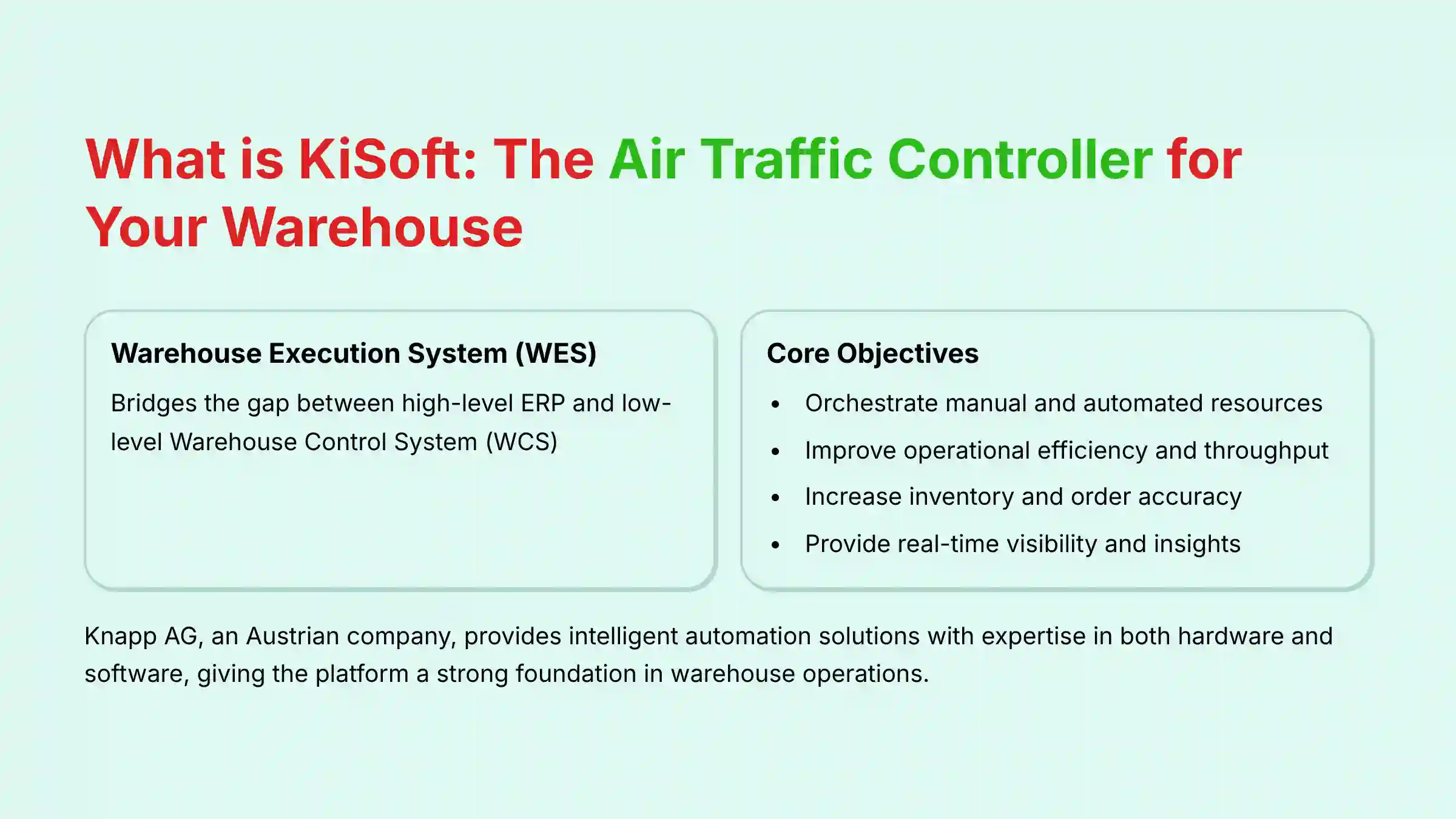
Knapp KiSoft is a modular software platform that functions as a Warehouse Execution System (WES). Its job is to bridge the gap between a high-level Enterprise Resource Planning (ERP) system and the low-level Warehouse Control System (WCS) that directs automated hardware. Think of it as the air traffic controller for the warehouse. It makes dynamic decisions based on real-time conditions.
The platform's main purpose is to manage, control, and optimize all intralogistics processes inside a distribution center. It doesn't just plan what should happen; it directs the action as it happens. In my experience, this is the key difference between a traditional WMS and a modern WES.
The core objectives of the platform are clear:
- Orchestrate manual and automated resources like people, robots, and conveyors
- Improve operational efficiency and warehouse throughput
- Increase inventory and order accuracy to meet customer demands
- Provide real-time visibility and data-driven insights for managers
Knapp AG, the Austrian company behind KiSoft, is a major provider of intelligent automation solutions. Their expertise in both hardware and software gives the platform a strong foundation in the realities of warehouse operations.
Core Platform Modules: WMS and WCS Functions
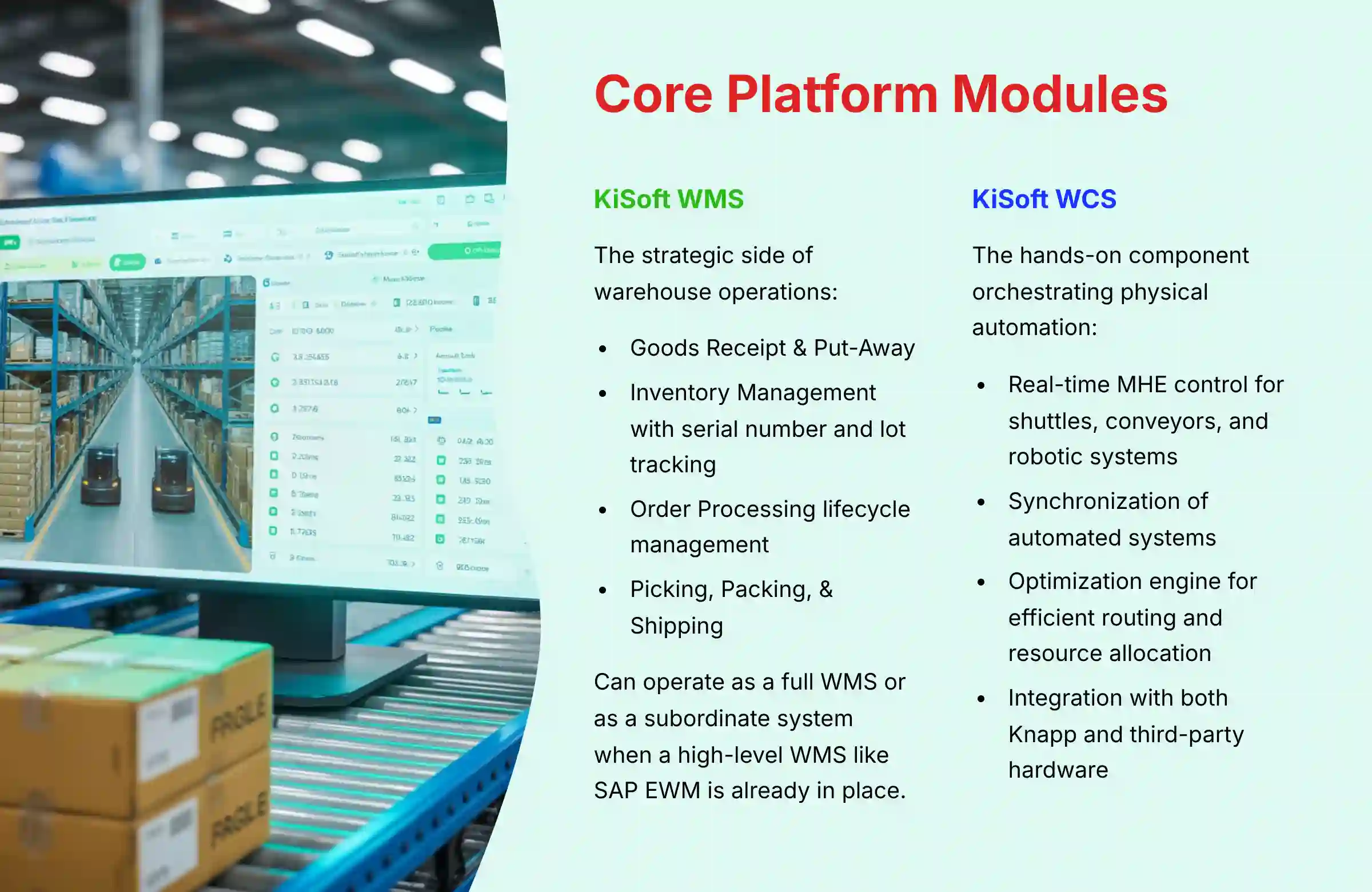
The KiSoft platform is built on two foundational components. One handles the strategic management of inventory and orders. The other controls the physical movement of goods through automation.
KiSoft WMS (Warehouse Management System)
The KiSoft WMS module covers the strategic side of warehouse operations. It manages all inventory and order-related tasks from start to finish. My analysis shows it has full-featured capabilities that are critical for complex distribution environments.
Its main functions include:
- Goods Receipt & Put-Away: Manages all inbound processes and directs the efficient storage of incoming goods.
- Inventory Management: Provides complete stock level visibility, location tracking, and cycle counting. It also supports advanced needs like serial number and lot tracking, which is a strict requirement for regulated industries like pharmaceuticals and food & beverage. This traceability feature is essential for enabling compliance with regulations such as the DSCSA and FSMA, providing auditable records for every item's journey through the warehouse.
- Order Processing: Manages the entire lifecycle of a customer order, from the moment it is received from the ERP until it is ready for dispatch.
- Picking, Packing, & Shipping: Directs all outbound fulfillment processes, optimizing how items are picked, packed into boxes, and prepared for shipping.
It is important to know that while KiSoft can act as a full WMS, it is also flexible. In facilities that already have a high-level WMS like SAP EWM, KiSoft can operate as a subordinate system focused purely on execution.
KiSoft WCS (Warehouse Control System)
The KiSoft WCS is the hands-on component that orchestrates the physical automation. It translates the strategic plans from the WMS into real-time commands for machines on the warehouse floor.
This module focuses on direct machine control and coordination. It provides real-time MHE control, directly commanding automated material handling equipment like shuttles, conveyors, and robotic systems. It synchronizes the activities of different automated systems to create a smooth, continuous flow of materials.

A key part of the WCS is its optimization engine. This function calculates the most efficient routes for goods and allocates resources in real time to avoid bottlenecks. While KiSoft is developed to work seamlessly with Knapp's own portfolio of automation hardware, it is capable of integrating with and controlling a range of third-party Material Handling Equipment (MHE) and robotics. Integration with non-Knapp hardware is typically handled on a project-specific basis.
AI-Powered and Analytics Modules
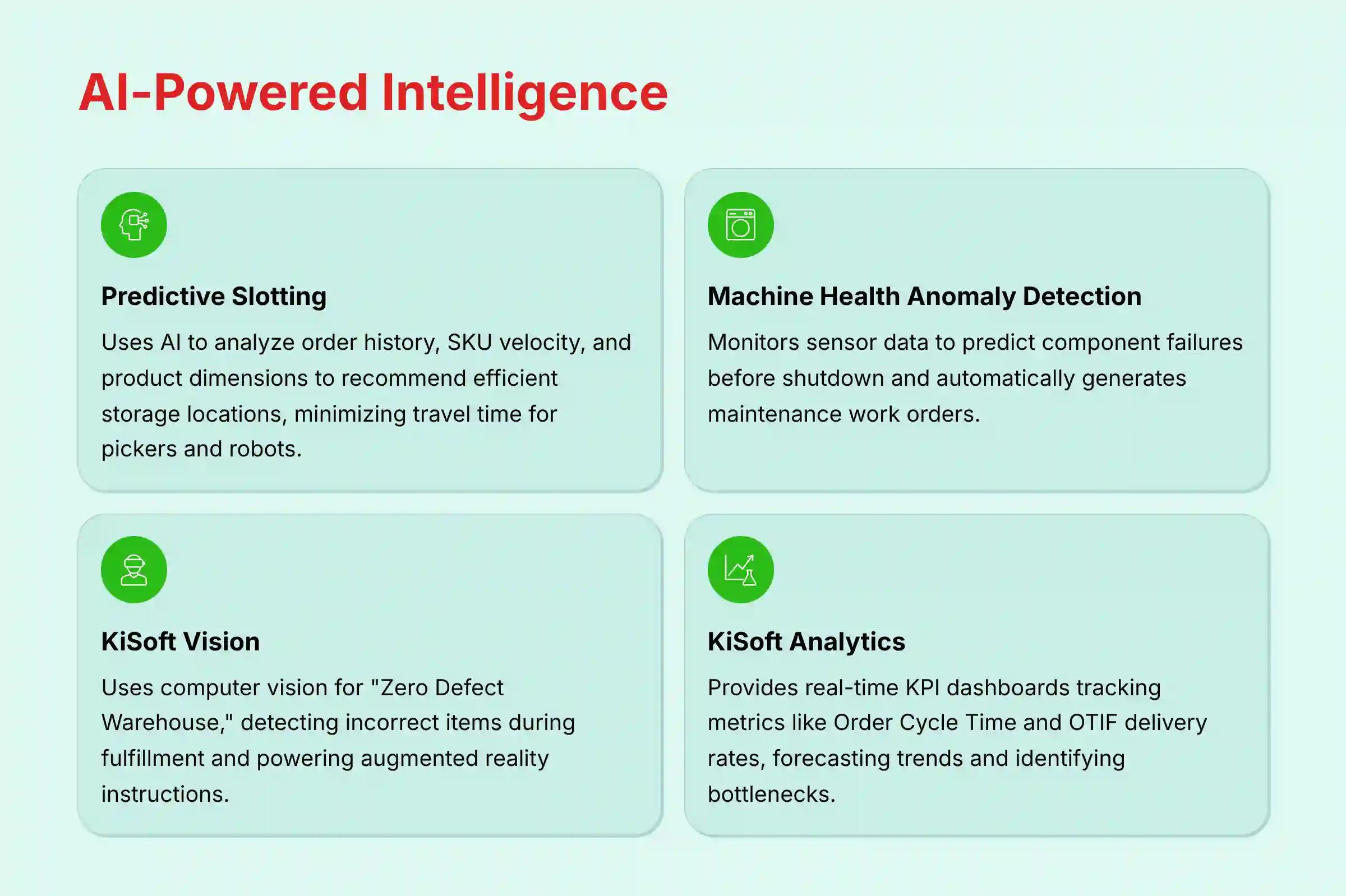
The intelligence of the KiSoft platform comes from its AI and analytics modules. These components elevate the system from a simple controller to a proactive, learning brain for the warehouse. They analyze data to predict issues, optimize processes, and eliminate errors.
AI-Driven Functionalities for Process Optimization
Knapp offers AI-driven functionalities for process optimization and predictive maintenance. These are typically part of their comprehensive solution design, leveraging data from KiSoft and other systems.
- Predictive Slotting: This feature uses AI to analyze order history, SKU velocity, and product dimensions. It then dynamically recommends the most efficient storage locations. The goal is to minimize travel time for both human pickers and robots, directly boosting productivity.
- Machine Health Anomaly Detection: This tool uses machine learning algorithms to monitor sensor data from all automated equipment. It can predict potential component failures before they cause a shutdown and automatically generates a maintenance work order in the connected CMMS/EAM system. This proactive workflow links predictive insight directly to preventative action, maximizing Overall Equipment Effectiveness (OEE).

For operational excellence and AI-driven optimization, Knapp actively markets its redPILOT solution, which aims to optimize the entire logistics value chain.
KiSoft Vision: AI-Driven Image Recognition
KiSoft Vision is the eyes of the warehouse, using computer vision to achieve the goal of a “Zero Defect Warehouse.” Its main purpose is to eliminate human error in picking and packing processes.
This module can detect incorrect items or quantities during fulfillment. It uses advanced pick-by-light and quality control checks to guide operators. It also powers augmented reality applications, projecting instructions onto surfaces to guide workers through complex tasks with perfect accuracy.
KiSoft Analytics
This module serves as the business intelligence center for the warehouse. It collects and centralizes operational data from every process, from goods-in to shipping.
KiSoft Analytics provides dashboards to monitor Key Performance Indicators (KPIs). Managers can track mission-critical supply chain KPIs in real-time, such as Order Cycle Time, Dock-to-Stock Time, On-Time In-Full (OTIF) delivery rate, and Inventory Turnover. This data is essential for calculating the platform's Return on Investment (ROI) and justifying the project's Total Cost of Ownership (TCO). It also uses historical data to forecast future trends and identify potential bottlenecks before they impact operations.

Visualization, Control, and Simulation Tools
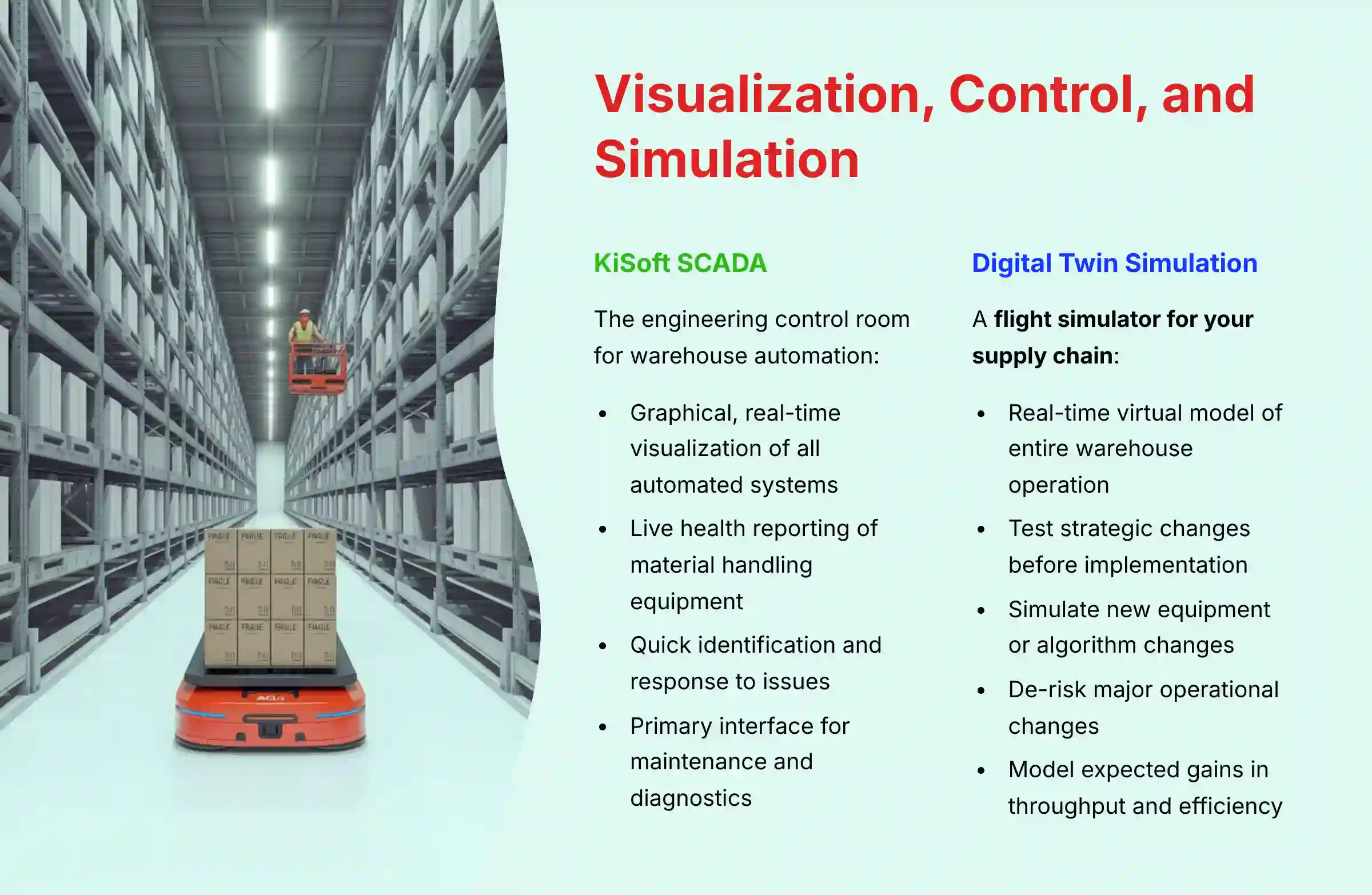
To manage a complex automated system, operators and managers need powerful tools for visualization and control. KiSoft provides a set of interfaces for monitoring system health, controlling operations, and planning for the future.
KiSoft SCADA (Supervisory Control and Data Acquisition)
KiSoft SCADA is the engineering control room for the warehouse's automation. It is a graphical, real-time visualization tool that shows the status of every automated system.
Its purpose is to give system administrators and maintenance teams a live health report of all material handling equipment. This allows them to quickly identify and respond to any issues, like a jammed conveyor or a malfunctioning sensor, minimizing downtime. This is the primary interface used by Maintenance Technicians and System Engineers to perform diagnostics and manage system alerts.
Digital Twin Simulation Module
A Digital Twin is a real-time virtual model of the entire warehouse operation. It is like a flight simulator for your supply chain, allowing you to test strategies without any real-world risk.
The primary use for this module is to let managers test the impact of strategic changes before implementation. They can simulate adding a new fleet of robots, changing a picking algorithm, or re-slotting the entire warehouse. This de-risks major operational changes and helps justify new investments by modeling the expected gains in throughput and efficiency.
Technical Specifications and System Architecture
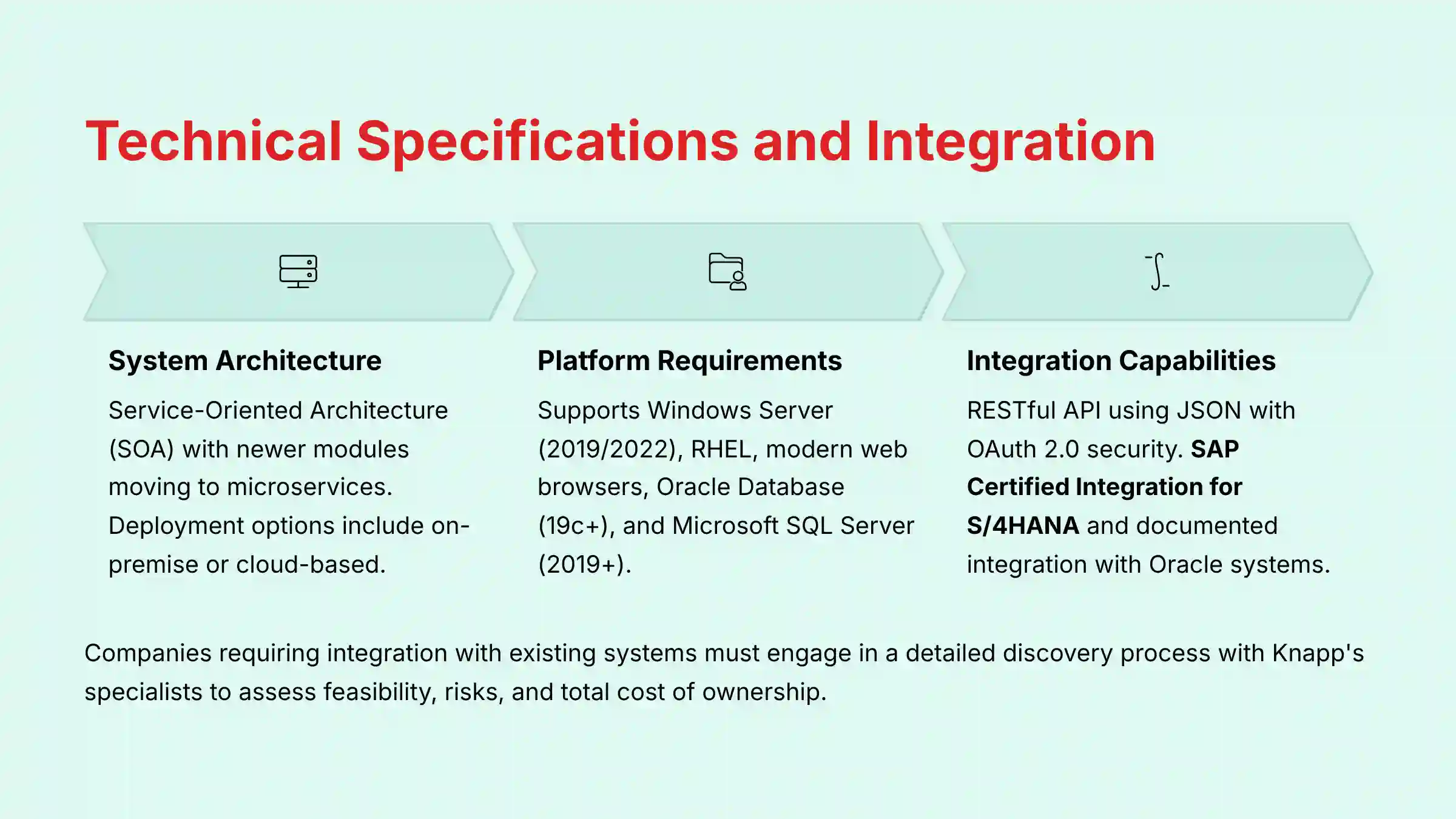
For any IT decision-maker, understanding the underlying technology is a must. This section provides the core technical data for the KiSoft platform in a clear, factual format. Proper planning for these requirements is a key step that often benefits from professional IT consultation.
System Architecture and Deployment Models
The platform is built on a Service-Oriented Architecture (SOA). Newer modules are moving to a more modern microservices-based model, which allows for greater flexibility and easier updates. It offers two main deployment options.
| Deployment Model | Description |
|---|---|
| On-Premise | Software is hosted on servers within the client's own data center. |
| Cloud-Based | Software is hosted and managed by Knapp or a third-party cloud provider. |
Supported Platforms and Database Requirements
KiSoft is designed to run in robust, enterprise-level IT environments. According to official documentation, the database is typically configured in a high-availability cluster to ensure 24/7 operational continuity.
| Component | Supported Technologies |
|---|---|
| Server OS | Windows Server (2019/2022), Red Hat Enterprise Linux (RHEL 8.x/9.x) |
| Client Access | Modern web browsers (Chrome, Firefox, Edge) on Windows 10/11 |
| Database | Oracle Database (19c and higher), Microsoft SQL Server (2019 and higher) |
Decision-makers must obtain the official and current system requirements documentation directly from Knapp during the solution design phase to ensure compatibility with their IT environment.
Data Exchange Formats (Input and Output)
The system communicates with external platforms, mainly the ERP, using a variety of standard data formats. This flexibility is important for ensuring smooth integration into an existing IT landscape.
| Data Direction | Supported Formats |
|---|---|
| Input | JSON via REST API, XML, Flat Files (CSV) via SFTP, SAP IDocs |
| Output | JSON via REST API, SAP IDocs, and other structured formats for ERP systems |
Integration Capabilities and Ecosystem
An operations tool cannot exist in a silo. Its value is directly tied to how well it connects with the core business system, the ERP. My analysis shows that KiSoft is designed for deep, bi-directional integration.
API Availability and Specifications (KiSoft Integration Interface)
The official API is named the KiSoft Integration Interface. This is the primary gateway for data exchange with other systems.
- Its primary protocol is a RESTful API that uses JSON for data exchange. This is a modern, standard approach for system-to-system communication.
- Security is a top priority. The API is secured using the OAuth 2.0 client credentials grant flow, a robust industry standard for authorization.
- For companies with older systems, the platform also provides legacy support for SOAP web services and file-based (SFTP) exchange.
Certified ERP Integration (SAP and Oracle)
A major strength of KiSoft is its pre-built, certified connectors for major ERP platforms. This significantly reduces the complexity and risk of an integration project.
For SAP, the platform has an officially SAP Certified Integration for SAP S/4HANA. This is a critical validation point for any company running on SAP. It uses standard technologies like IDocs for sending data like deliveries and BAPIs and RFCs for real-time calls like inventory checks.
For Oracle, there is documented integration with Oracle Fusion Cloud SCM, NetSuite, and E-Business Suite. These connections are primarily made using the Oracle Integration Cloud (OIC) and direct REST API calls.
Companies requiring integration with existing, non-Knapp systems (WMS, ERP, MHE) must engage in a detailed discovery process with Knapp's integration specialists to assess feasibility, risks, and total cost of ownership. This is a critical step that requires professional technical consultation.
Security, Compliance, and System Reliability
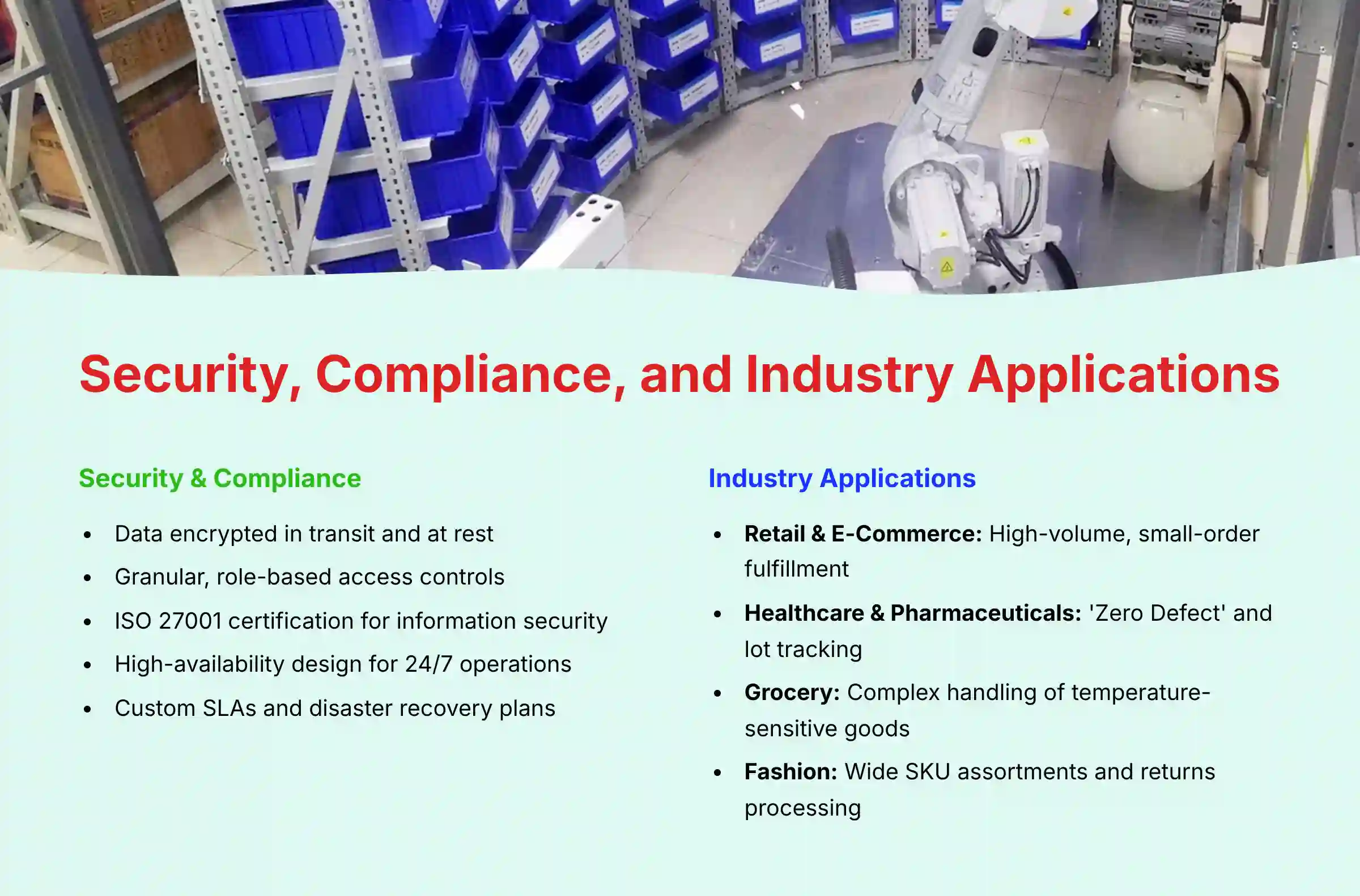
In any supply chain operation, data security and system uptime are not just features; they are foundational requirements. A breach can expose sensitive commercial data, and downtime can halt the physical movement of millions of dollars worth of goods.
Data Security and Access Control Protocols
KiSoft includes multiple layers of security to protect sensitive operational data. All data is encrypted both in transit and at rest, following industry best practices.
The system also features granular, role-based access controls. This allows administrators to define specific permissions for different user types, such as a manager, an operator, or a maintenance engineer. This ensures that users can only see and do what is necessary for their specific job function.
Compliance Certifications and Standards
The platform is developed within a framework of internationally recognized standards. Knapp holds an ISO 27001 certification for information security management. This certification provides independent verification of Knapp's security management processes, satisfying a key due diligence requirement for corporate security and compliance teams.
For cloud-based deployments, details regarding SOC 2 Type II compliance are typically provided during the procurement process to verify security and availability controls.
System Reliability and Uptime
The entire system is designed for high-availability to support 24/7 warehouse operations. The architecture includes redundancies to prevent single points of failure. Specific uptime Service Level Agreements (SLAs) and disaster recovery plans are defined in each customer contract to meet the unique operational needs of the business.
Objective Use Cases and Industry Applications
KiSoft is a versatile platform deployed across various industries with high-volume, complex fulfillment needs. The following examples show how the software is applied in different real-world settings.
Primary Industry Verticals
The system is most commonly found in sectors where speed, accuracy, and automation are critical.
- Retail & E-Commerce: Where it manages high-volume, small-order fulfillment centers with a focus on speed and accuracy in increasingly competitive direct-to-consumer markets.
- Healthcare & Pharmaceuticals: Where its ‘Zero Defect' vision and robust lot/serial tracking capabilities are non-negotiable for meeting strict regulatory compliance and ensuring patient safety.
- Grocery: Where it automates the complex handling of fresh, frozen, and ambient goods with different temperature requirements in time-sensitive distribution operations.
- Fashion: Where it manages warehouses with wide SKU assortments and the complexities of returns processing in a rapidly changing inventory environment.
Documented Implementation Scenarios
Based on official documentation and my industry knowledge, here are two common workflows managed by KiSoft.
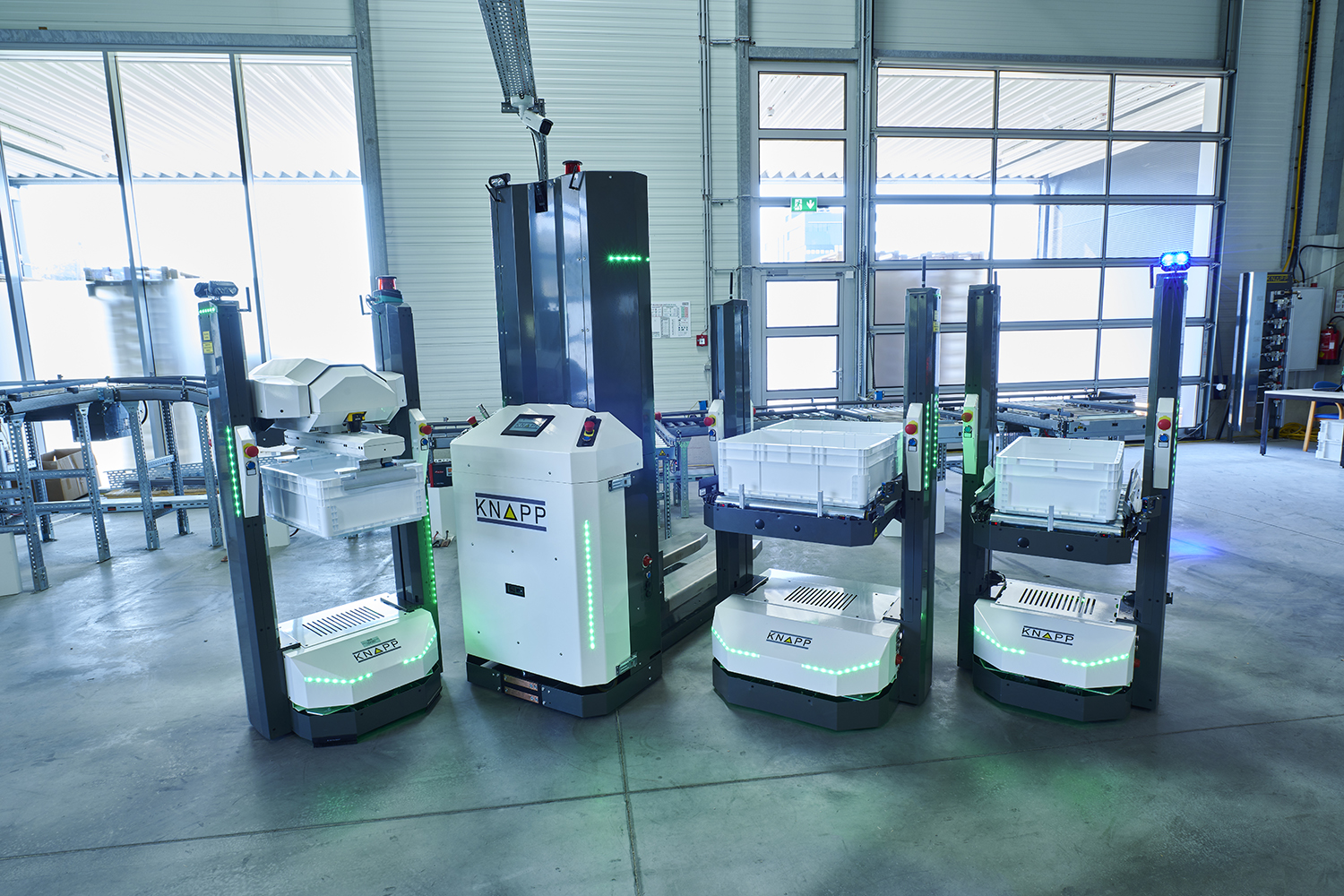
In E-commerce Fulfillment, KiSoft receives an order from an ERP. It then orchestrates a fleet of autonomous mobile robots to retrieve totes from a shuttle storage system. The system directs those totes to a workstation where an operator, guided by KiSoft Vision, picks the correct items accurately before the order is packed and shipped.
In Manufacturing Logistics, KiSoft manages the just-in-time flow of components from the warehouse to the production line. It ensures material availability is perfectly synchronized with manufacturing schedules, preventing costly line stoppages.
Pricing Model and Engagement Process
KiSoft is an enterprise-grade solution, and its pricing reflects that. There is no public price list because each project is a unique, strategic investment tailored to a specific operation.
Factors Influencing Project Cost
Pricing is determined on a project-by-project basis. The final cost depends on several key factors, which are used to model the project's Total Cost of Ownership (TCO) and potential Return on Investment (ROI):
- The specific KiSoft software modules required for the operation
- The physical size and complexity of the warehouse
- The level of automation, including the number of robots, shuttles, and conveyors
- The scope and complexity of the ERP integration project
Licensing and Support Structure
The financial structure typically involves a significant one-time project cost. This covers implementation, hardware, and the initial software licenses.
This is followed by recurring annual fees for software maintenance and 24/7 customer support, governed by strict Support SLAs. Knapp typically provides a dedicated Customer Success Manager and access to a global network of domain-expert solution consultants, ensuring the partnership extends beyond technical support to strategic operational guidance. A free trial is not available for a system of this scale. Instead, demonstrations and detailed simulations are a core part of the formal consultation process.
A formal business case should be developed in consultation with Knapp's solution experts and internal finance teams. This should involve using the company's own operational data to simulate potential gains in throughput, labor savings, and inventory reduction to project a realistic ROI.
Getting Started with a Knapp Implementation
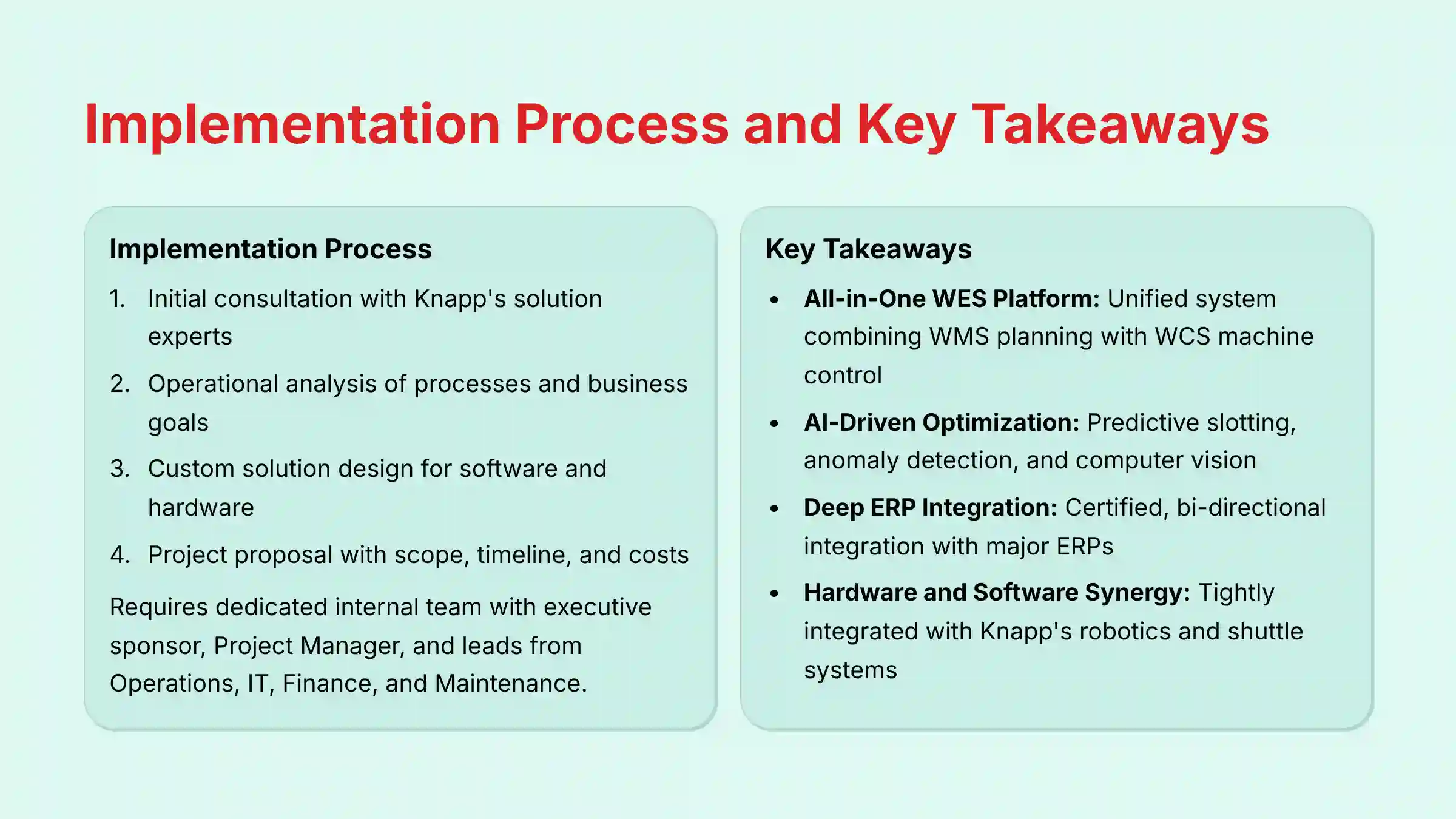
Implementing a Warehouse Execution System like KiSoft is a major project. It requires careful planning and a dedicated team. The process begins with a formal engagement with Knapp's solution design experts.
The Consultation and Solution Design Process
- Initial Contact: The process starts with a formal consultation with Knapp's sales and solutions engineering teams.
- Operational Analysis: This is a deep dive into the customer's current processes, business goals, and operational data, such as order profiles and SKU characteristics.
- Solution Design: Knapp engineers design a complete solution that includes software modules, automation hardware, and a detailed integration plan.
- Project Proposal: A formal proposal is presented that outlines the full project scope, an estimated timeline, and the total cost.
Key Internal Resources Required for a Project
For a project of this scale to succeed, a company must assemble a strong internal team. A project of this magnitude demands a dedicated internal team reinforced by experienced external project managers. This is not a recommendation; it is a prerequisite for mitigating risk and ensuring the strategic investment delivers its intended ROI.
Key project stakeholders should include an executive sponsor (e.g., VP of Supply Chain), a dedicated Project Manager, and leads from Operations (Warehouse Director), IT (Solutions Architect), Finance, and Maintenance (Head of Engineering). Post-implementation, daily users will range from Warehouse Operators and Inventory Controllers to System Administrators. It is also important to have clean master data (for products and locations) and historical transaction data ready for the analysis phase.
Frequently Asked Questions (FAQ) About Knapp KiSoft
What is the primary difference between KiSoft WMS and a traditional WMS?
The primary difference is that KiSoft WMS is part of an integrated Warehouse Execution System (WES). A traditional WMS manages inventory and orders, but KiSoft combines this with a WCS to also provide real-time control and orchestration of automated hardware like robots and shuttles.
Is Knapp KiSoft compatible with third-party automation hardware?
Yes. While KiSoft is developed to work seamlessly with Knapp's own portfolio of automation hardware, it is capable of integrating with and controlling a range of third-party Material Handling Equipment (MHE) and robotics. Integration with non-Knapp hardware is typically handled on a project-specific basis.
How does the KiSoft Digital Twin help in warehouse management?
The KiSoft Digital Twin creates a real-time virtual simulation of the entire warehouse. It allows managers to test the impact of strategic changes, such as new picking algorithms or adding more robots, on throughput and efficiency without any risk to live operations.
Does KiSoft offer a cloud-based deployment option?
Yes, Knapp KiSoft supports both on-premise and cloud-based deployments. An on-premise deployment is hosted in the client's data center, while a cloud-based solution is hosted and managed by Knapp or a third-party provider.
What kind of security protocols does the KiSoft API use?
The primary KiSoft Integration Interface, which is a RESTful API, is secured using the industry-standard OAuth 2.0 client credentials grant flow. This ensures that only authorized systems, such as an ERP, can securely exchange data with the platform.
What specific data is needed for the AI-powered Predictive Slotting feature?
The Predictive Slotting feature requires historical order data, SKU velocity (how often an item is picked), and product master data, including dimensions and weight. The AI uses this information to calculate the most efficient storage location for each item.
How does KiSoft Vision contribute to the “Zero Defect Warehouse”?
KiSoft Vision uses AI-powered image recognition and augmented reality to prevent errors. It can visually verify that the correct item and quantity are being picked, guide operators through packing tasks, and perform automated quality control checks.
Is there a standard implementation timeline for a KiSoft project?
There is no standard timeline, as each project is unique. A full implementation can take multiple months or even longer. The timeline depends on factors like warehouse size, the complexity of automation, and the depth of ERP integration required.
Disclaimer
Technology Evolution Notice: The information about Knapp KiSoft and AI for Operations & Supply Chain tools presented in this article reflects our thorough analysis as of publication. Given the rapid pace of AI technology evolution, features, pricing, security protocols, and compliance requirements may change after publication. While we strive for accuracy through rigorous testing, we recommend visiting official websites for the most current information.
Professional Consultation Recommendation: For AI for Operations & Supply Chain applications with significant professional, financial, or compliance implications, we recommend consulting with qualified professionals who can assess your specific requirements and risk tolerance. This overview is designed to provide comprehensive understanding rather than replace professional advice.
Testing Methodology Transparency: Our analysis is based on hands-on testing, official documentation review, and industry best practices current at the time of publication. Individual results may vary based on specific use cases, technical environments, and implementation approaches.
For more detailed information, I recommend continuing your research into Knapp KiSoft.


Leave a Reply