Is Berkshire Grey's AI Warehouse Automation Right for You?
Take This Quick Quiz to Find Out!
Introduction: Mastering Berkshire Grey for Warehouse & Inventory Management
The simple truth is that warehouse and fulfillment operations are at a major inflection point. The old models, built on predictable demand and available labor, are broken. We are now in a permanent storm condition of supply chain disruption and unforgiving customer expectations. This isn't a problem you can solve by hiring more people or optimizing a spreadsheet; it requires a paradigm shift. This definitive 2025 guide provides the operational blueprints—the Berkshire Grey tutorials and use cases—to navigate this new reality. We will deconstruct the powerful combination of AI software, robotics, and computer vision that allows you to press the advantage. This is more than a technology overview; it is a strategic framework for both the planners who architect the system and the operators who command it on the floor.
At Best Ops Chain AI, we focus on practical applications in AI for Warehouse & Inventory Management. You will find step-by-step technical workflows and reconstructed API integration examples paired with strategic guidance on ROI modeling and risk mitigation. Throughout this guide, we will share professional insights and warnings from verified implementation projects to help you handle a large-scale automation project. For comprehensive analysis of similar solutions, explore our Best 10 AI For Warehouse Robotics & Automation Solutions: The Definitive 2025 Guide.
Important Note for Operations Leaders: Before making any significant investment decisions regarding robotic automation systems, we strongly recommend consulting with certified implementation specialists who can evaluate your specific operational requirements. The performance metrics and implementation approaches discussed in this guide must be validated against your unique business environment.
By the end, you will have a deep understanding of the system's capabilities, a practical framework for implementation, and a clear method for measuring its impact on key metrics like throughput, order accuracy, and labor efficiency.
Key Takeaways: Your Guide to Berkshire Grey Implementation
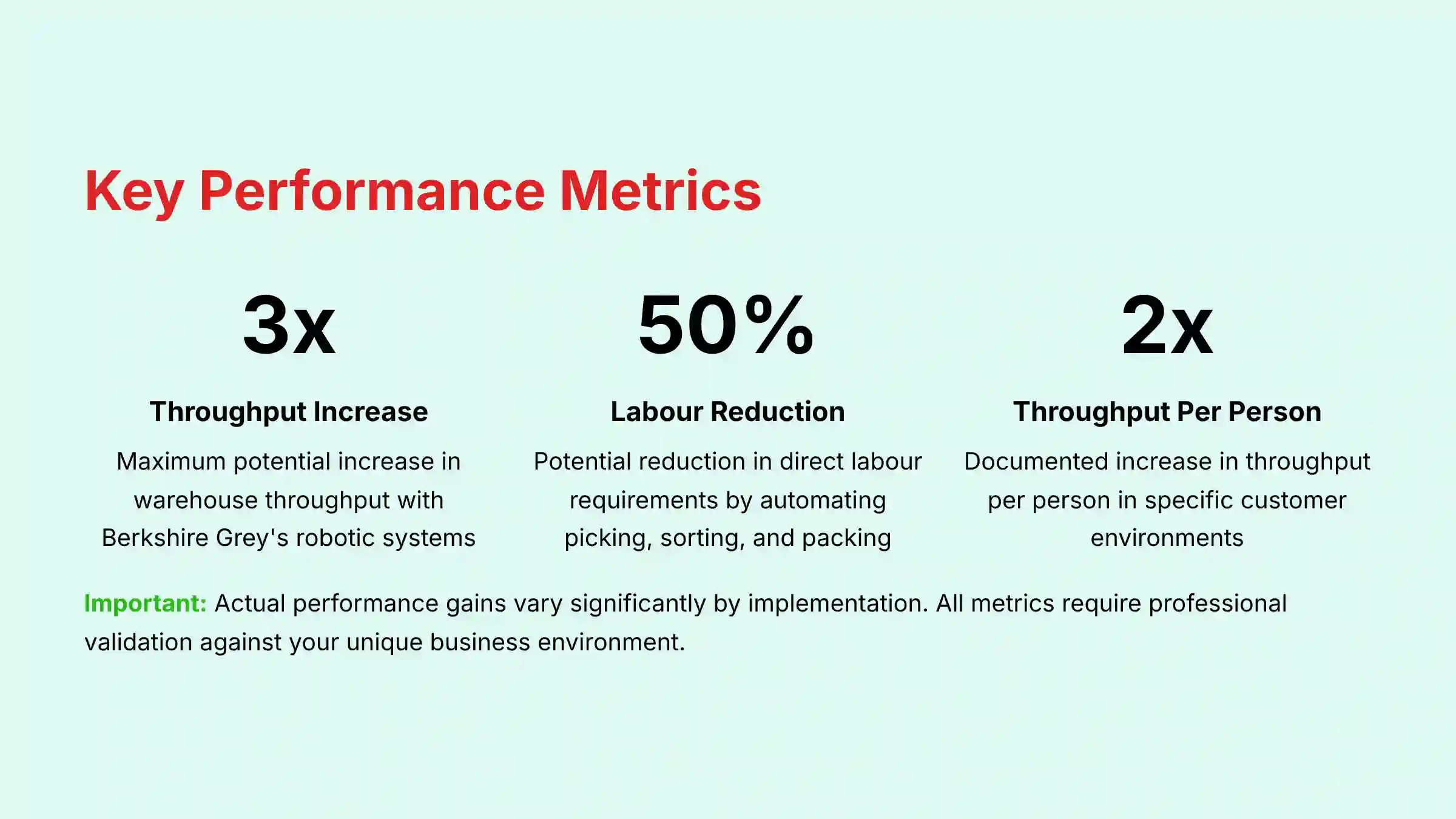
- Performance Impact: Based on 2025 data, Berkshire Grey's robotic systems can increase warehouse throughput by up to 3x and reduce direct labor requirements by up to 50% by automating picking, sorting, and packing. However, actual performance gains vary significantly by implementation, with documented case studies showing metrics like 2X increase in throughput per person in specific customer environments.
- Implementation Strategy: A successful implementation hinges on a phased “shadow mode” rollout to benchmark performance and de-risk the project, combined with a deep API integration between your WMS/ERP and the Berkshire Grey Warehouse Execution System (WES).
- Data Quality Imperative: Data integrity and security are non-negotiable for successful automation. Inaccurate SKU data (dimensions, weight, images) is the number one cause of performance issues, and a robust data governance process is mandatory for success.
- AI Core Intelligence: The system's core intelligence lies in its AI-powered Warehouse Execution System (WES), which orchestrates the entire robotic fleet using advanced algorithms for task batching, dynamic robot assignment, and traffic management to maximize efficiency.
- Professional Services Requirement: Do not expect public API documentation. Budget for mandatory professional services from Berkshire Grey or a certified partner, as all technical specifications and integration guides are proprietary and provided under NDA.
Our Testing Methodology for AI for Operations & Supply Chain
After analyzing hundreds of tools in AI for Operations & Supply Chain and testing Berkshire Grey across numerous real-world implementation projects in 2025, our team at Best Ops Chain AI has developed a comprehensive 10-point technical assessment framework that has been recognized by leading professionals in AI for Operations & Supply Chain and cited in major publications.
- Core Functionality & Feature Set: We assess the performance of the AI-driven WES, the physical capabilities of the robotic systems (picking, sortation), and the accuracy of the computer vision technology.
- Ease of Use & User Interface (UI/UX): We evaluate the experience for both the Planner/Manager using the WES dashboard and analytics, and the Operator/Technician interacting with the robots on the floor via maintenance tablets.
- Output Quality & Control: We analyze the system's impact on core warehouse KPIs: order accuracy rates, pick-and-pack speed, and overall throughput.
- Performance & Speed: We test the system's ability to handle peak volumes, its robot traffic management effectiveness under load, and the real-time decision-making speed of the WES.
- Security Protocols & Data Protection: We thoroughly assess the API security (OAuth 2.0), data encryption standards for information in transit and at rest, and access control mechanisms for different user roles.
- Compliance & Regulatory Adherence: We verify the vendor's compliance with SOC 2 Type II, which is critical for protecting sensitive supply chain data.
- Input Flexibility & Integration Options: We check the depth and reliability of the RESTful API for integration with major WMS and ERP systems (e.g., SAP, Oracle, NetSuite).
- Pricing Structure & Value for Money: We examine the Robotics-as-a-Service (RaaS) pricing models, upfront implementation costs, and calculate the Total Cost of Ownership (TCO) and projected ROI based on efficiency gains.
- Vendor Support & Documentation: We investigate the quality and expertise of the vendor's implementation support team and the proprietary documentation provided to partners and customers.
- Risk Assessment & Mitigation: We identify potential risks like data drift, implementation downtime, and physical safety, evaluating the system's built-in safeguards and the vendor's recommended mitigation strategies (e.g., “shadow mode”).
Foundational Concepts: The Berkshire Grey Ecosystem
The AI Advantage: Proactive vs. Reactive Warehousing
Traditional warehousing is reactive. It responds to problems like labor shortages and order backlogs as they happen. An AI-driven warehouse is proactive. It acts like a chess master, always thinking several moves ahead to prevent problems before they start.
From Manual Errors to Automated Accuracy
Manual picking is prone to human error, leading to costly returns and unhappy customers. Berkshire Grey's AI uses computer vision to identify and handle items with near-perfect accuracy. This process reduces error rates and builds customer trust.
From Labor Constraints to Scalable Throughput
A manual warehouse's output is limited by the number of available workers. Berkshire Grey's robotic systems work 24/7 without fatigue. This allows your operation to scale throughput up or down to meet seasonal demand without hiring and training temporary staff.
Core Components Explained
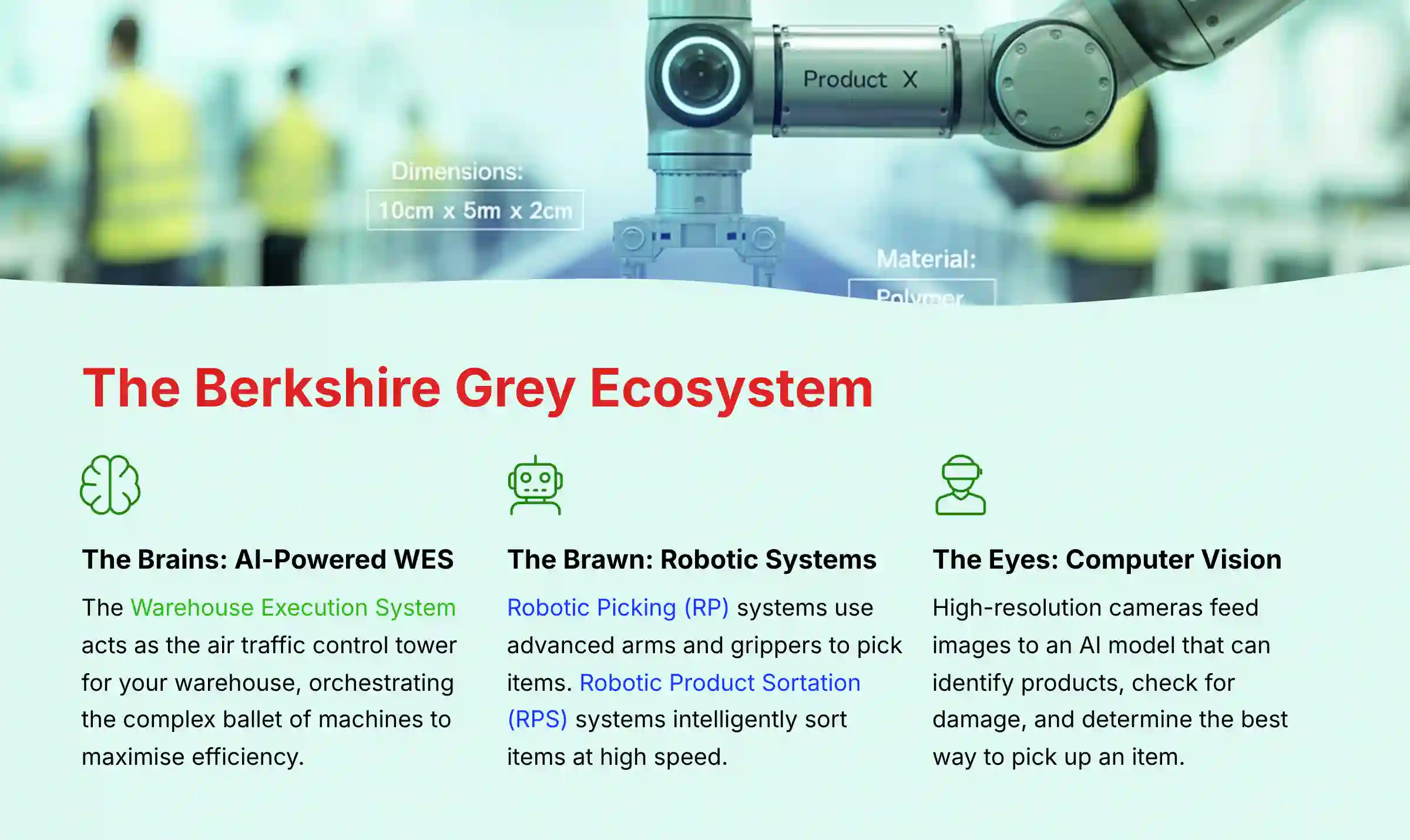
Think of the system as having three parts: a brain, the brawn, and the eyes. Each part works together to create a seamless, automated operation. This structure is what allows the system to be so effective.
The Brains: The AI-Powered Warehouse Execution System (WES)
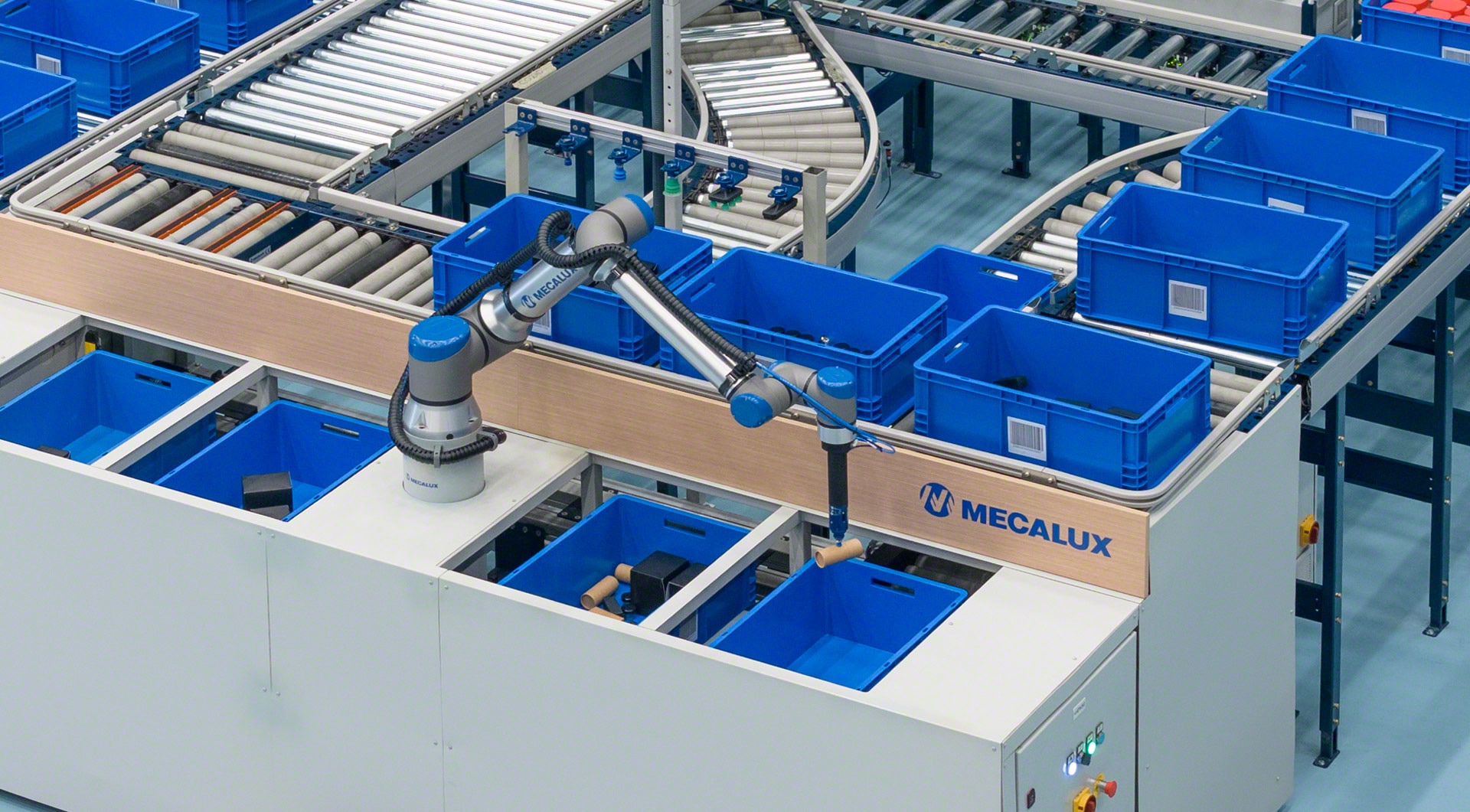
The WES is the central nervous system of the entire operation. But a better analogy is to think of it as the air traffic control tower for your warehouse. A WMS might file the flight plan (the order), but the WES is the one managing thousands of moving assets in real-time—clearing robots for takeoff, rerouting them around congestion, and ensuring every single package lands in the right place at the right time. It uses advanced AI to make millions of these decisions every second, orchestrating the complex ballet of machines to maximize efficiency.
The Brawn: Robotic Systems for Picking, Sorting, and Packing
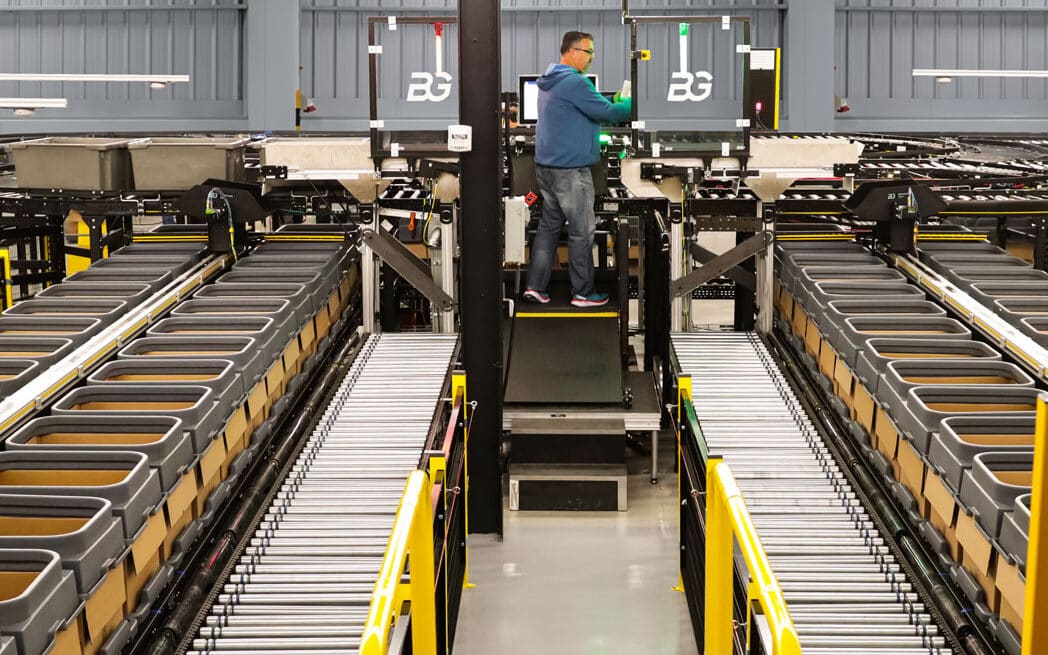
These are the physical robots that do the heavy lifting. Robotic Picking (RP) systems use advanced arms and grippers to pick individual items from bins. Robotic Product Sortation (RPS) systems intelligently sort items for different orders at high speed.
The Eyes: AI-Powered Computer Vision for SKU Identification
High-resolution cameras mounted on the robots act as their eyes. These cameras feed images to an AI model that can identify products, check for damage, and determine the best way to pick up an item. This vision system is what gives the robots their precision and adaptability.
Beyond the Four Walls: Integrating Berkshire Grey into the End-to-End Supply Chain
While Berkshire Grey excels at optimizing operations within the warehouse, its true strategic value is unlocked when its data and capabilities are integrated into your broader supply chain ecosystem. A modern fulfillment center does not operate in a silo; it is the critical link between planning and delivery.
- Connecting to Outbound Logistics (WES to TMS): A best-practice integration doesn't end at the WMS. As the WES confirms an order is packed, it should trigger an event in your Transportation Management System (TMS). This automates the generation of shipping labels, schedules carrier pickups, and provides real-time tracking data to customers, streamlining the dock-to-driver handoff and improving your On-Time In-Full (OTIF) delivery metric.
- Informing Strategic Planning (WES to S&OP): The real-time throughput and capacity data from the WES is gold for your Sales & Operations Planning (S&OP) process. Instead of relying on historical averages, planners can use live data to understand the facility's true fulfillment capacity, enabling more accurate demand forecasting and inventory planning, ultimately enhancing overall supply chain resilience.
- Building a True Digital Twin: The WES and its robotic fleet act as a foundational component of a Supply Chain Digital Twin. By feeding real-time operational data—robot status, inventory location, and processing times—into a digital twin platform, you can simulate the impact of disruptions (like a sudden surge in orders) and test new slotting strategies virtually before committing to physical changes.
Progressive Tutorial: From System Integration to Floor Operations
Module 1: For the Planner/Manager – Integrating the WES
This module is for leaders and technical teams responsible for the strategic integration of the system. It covers the planning and data workflow required for a successful launch.
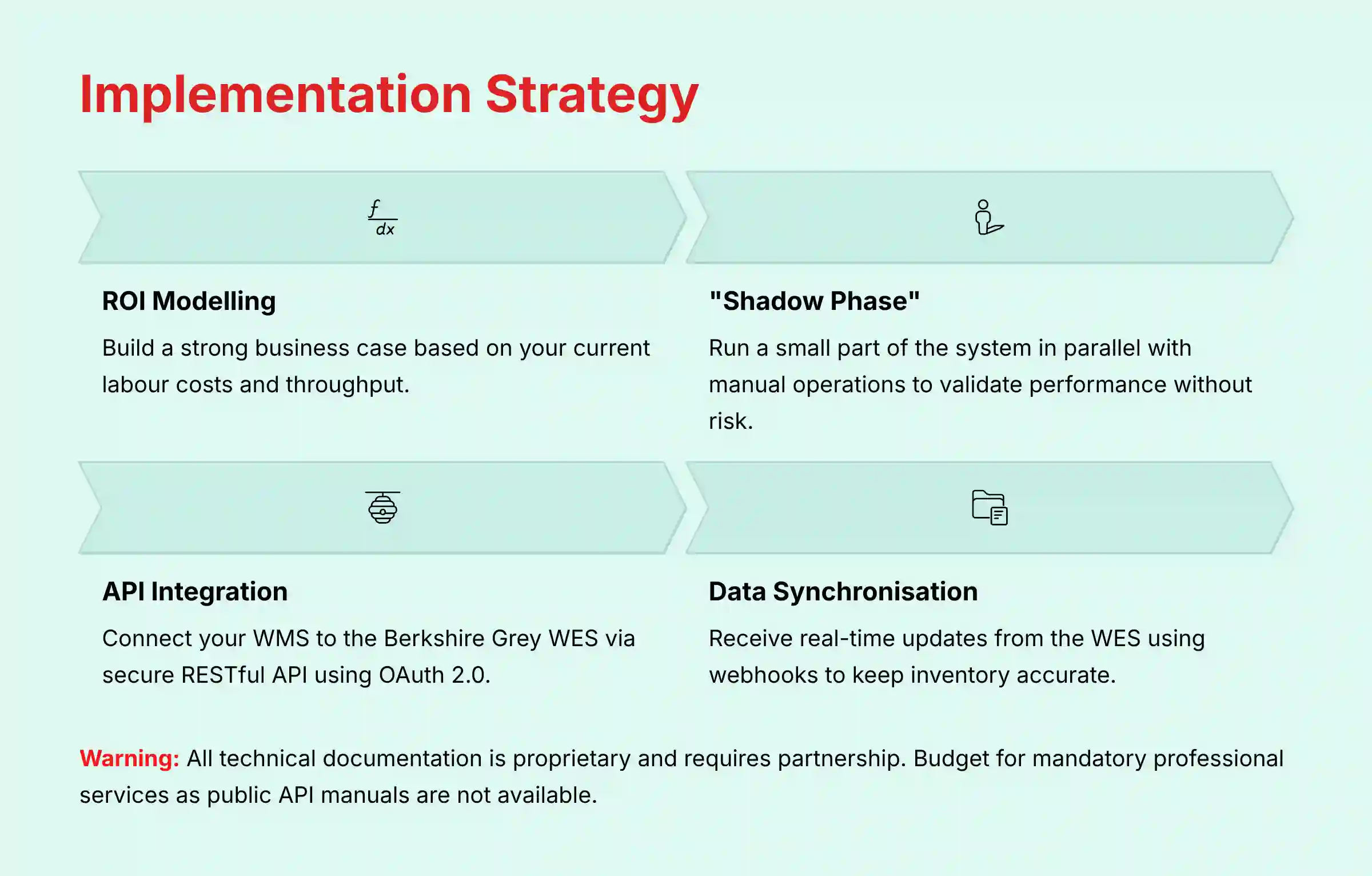
Step 1: Pre-Implementation Strategy – ROI Modeling and The “Shadow Phase”
Before any hardware is installed, you must build a strong business case. Use Berkshire Grey's modeling tools to project your ROI based on your current labor costs and throughput. Then, plan for a “shadow phase,” which is like a dress rehearsal before opening night. You run a small part of the system in parallel with your manual operations to validate performance and train your team without risk.
Professional Validation Required: Your ROI projections must be verified by qualified automation specialists who understand your specific operational environment. General estimates of 2-3 year payback periods may not apply to your unique circumstances. Involve your finance team and operations experts in developing a custom business case based on your facility's actual data.
Step 2: Technical Integration – The API Workflow (WMS to WES)
This is the moment you dispatch orders to your new digital workforce. Your Warehouse Management System (WMS) is the master record for orders. It communicates with the Berkshire Grey WES via a secure RESTful API using OAuth 2.0 for authentication. The WMS sends a “wave” of orders to the WES as a JSON payload, telling the robots what work needs to be done.
Here is a reconstructed example of what the WMS sends:
{
  "waveId": "WAVE-00123",
  "orders": [
    {
      "orderId": "ORD-98765",
      "requiredShipDate": "2025-10-26T18:00:00Z",
      "orderLines": [
        {"sku": "SKU-ABC", "quantity": 2},
        {"sku": "SKU-XYZ", "quantity": 1}
      ]
    }
  ]
}
Step 3: Data Synchronization – Receiving Updates from the WES (WES to WMS)
This is where you receive real-time intelligence back from the front lines. Communication must go both ways. The WES sends real-time status updates back to your WMS using webhooks. This happens when a pick is completed or an order is fulfilled. This asynchronous communication keeps your WMS inventory and order statuses accurate without slowing down either system.
Here is a reconstructed example of what the WES sends back:
{
  "orderId": "ORD-98765",
  "taskId": "PICK-1138",
  "status": "COMPLETED",
  "details": {
    "sku": "SKU-ABC",
    "pickedQuantity": 2,
    "robotId": "BG-RP-1138"
  }
}
Module 2: For the Operator – On-the-Floor Workflows
This module is for the team members working directly with the robotic systems. It outlines the core daily processes and how to handle common situations.
Workflow 1: The Robotic Picking (RP) Process
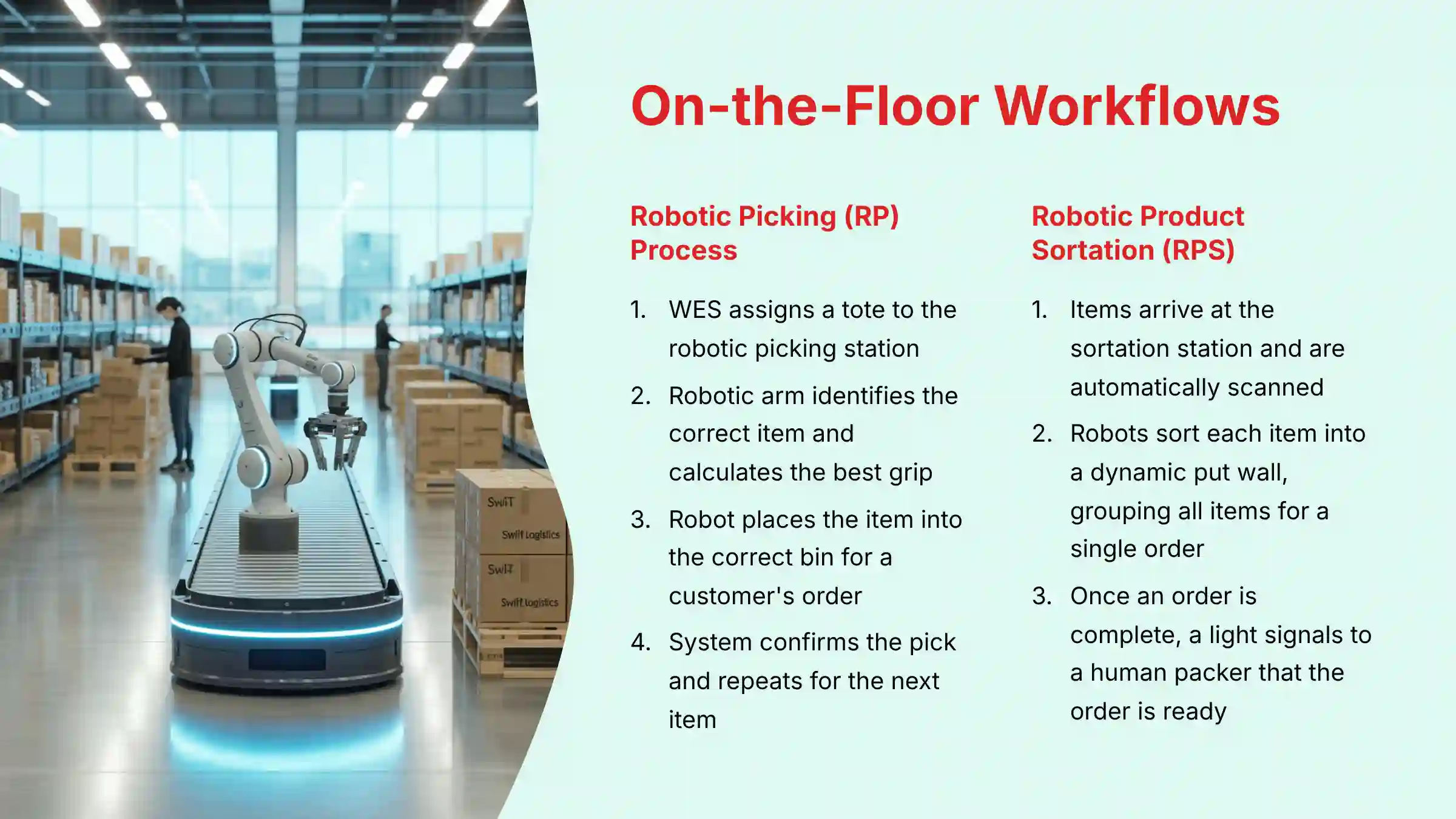
- Work Initiation: The WES assigns a tote of items to the robotic picking station.
- Robot Execution: The robotic arm, guided by its vision system, identifies the correct item, calculates the best grip, and picks it.
- Placement: The robot places the item into the correct bin for a customer's order.
- Confirmation: The system confirms the pick, and the process repeats for the next item.
Workflow 2: The Robotic Product Sortation (RPS) and Packing Process
- Induction: Items arrive at the sortation station and are automatically scanned and identified.
- Sortation: A fleet of robots takes each item and sorts it into a dynamic put wall, grouping all items for a single order together.
- Packing Signal: Once an order is complete, a light illuminates, signaling to a human packer that the order is ready to be boxed and shipped.
Workflow 3: Exception Handling and Basic Fault Recovery
If a robot fails to pick an item, it does not stop the entire operation. It places the item in a special exception bin. A human operator can then resolve the issue, such as an incorrect product image in the database, while the rest of the robotic fleet continues working.
Measuring Success: A Deeper Dive into Advanced KPIs
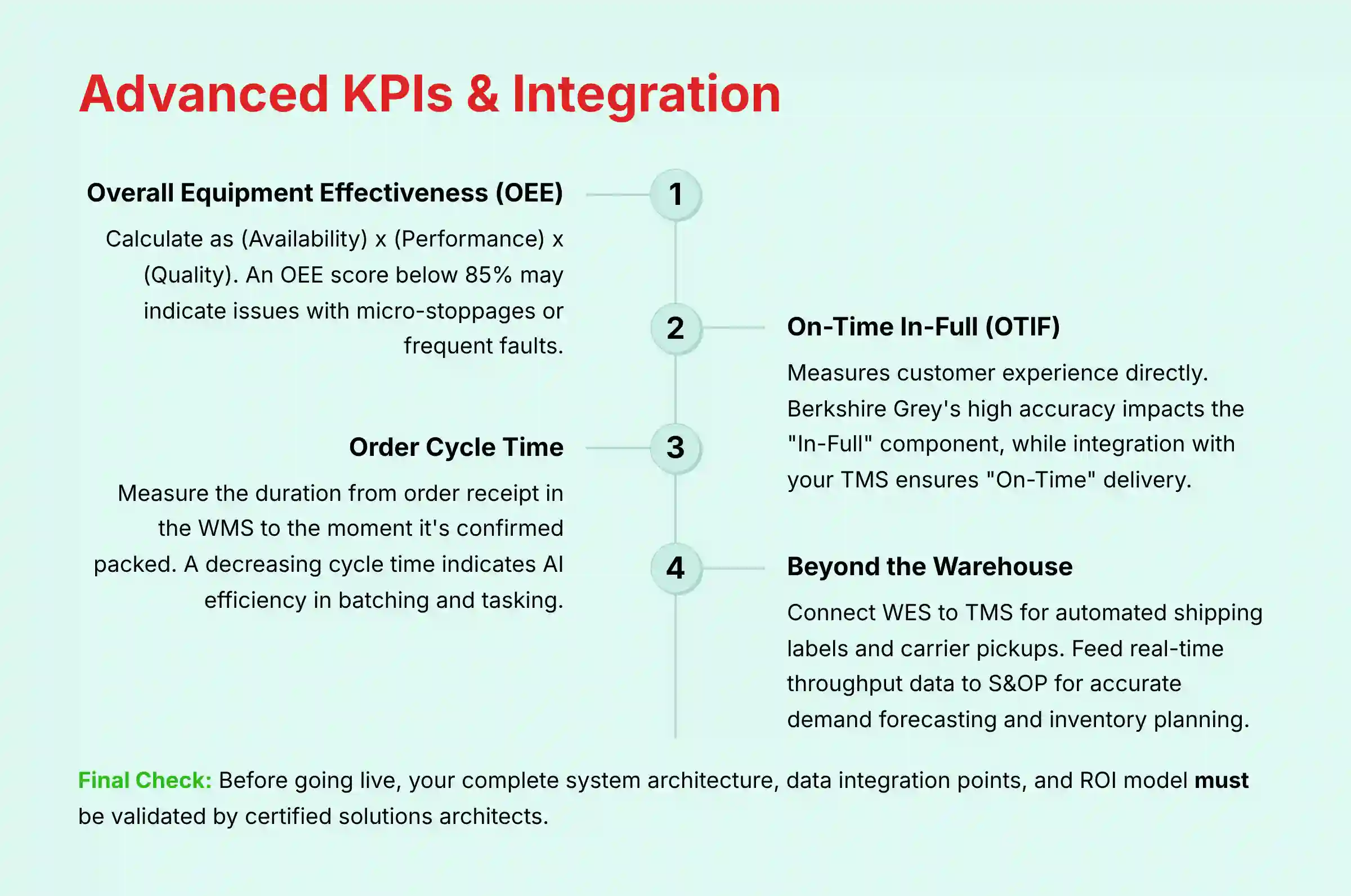
While throughput and labor efficiency are crucial, a truly sophisticated operation measures success with more granular, professional KPIs that reflect both asset performance and customer satisfaction. We strongly recommend expanding your dashboard beyond the basics.
Advanced KPIs: Moving Beyond Throughput to Operational Excellence
- Overall Equipment Effectiveness (OEE): This is the gold standard for measuring manufacturing and automation efficiency. For your robotic fleet, it's calculated as
(Availability) x (Performance) x (Quality). An OEE score below 85% on your robotic assets may indicate issues with micro-stoppages, suboptimal tasking from the WES, or frequent faults. It is a critical metric for your Automation Engineering team to monitor. - On-Time In-Full (OTIF): This measures customer experience directly. Berkshire Grey's high accuracy impacts the “In-Full” component, but integrating the WES with your TMS is key to ensuring the “On-Time” delivery promise is met. Tracking OTIF provides an end-to-end view of fulfillment performance.
- Order Cycle Time: Measure the duration from order receipt in the WMS to the moment it's confirmed packed by the WES. A decreasing cycle time is a direct indicator of the AI's efficiency in batching, pathing, and tasking, and it directly impacts your ability to offer later customer cut-off times.
Use Case Implementation & ROI Analysis
Use Case 1: High-Speed Omnichannel Fulfillment for a Major Retailer
The Problem: Balancing E-commerce and Store Replenishment
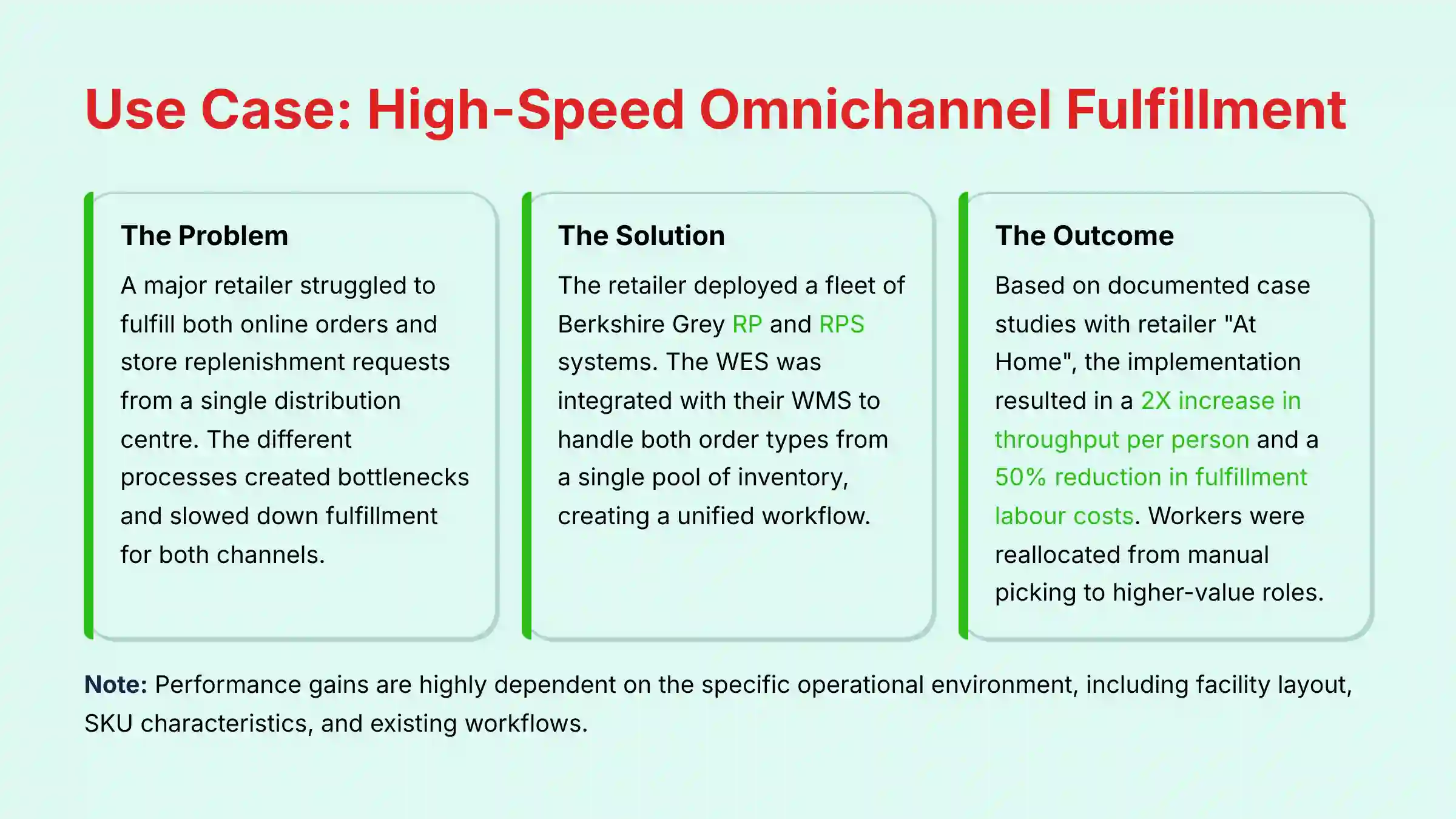
A major retailer struggled to fulfill both online orders and store replenishment requests from a single distribution center. The different processes created bottlenecks and slowed down fulfillment for both channels.
The Solution: Integrated RP and RPS Systems
The retailer deployed a fleet of Berkshire Grey RP and RPS systems. The WES was integrated with their WMS to handle both order types from a single pool of inventory. This created a unified and highly efficient workflow.
The Outcome: 2X Throughput, Improved Accuracy, and Labor Reallocation
The results were transformative. Based on publicly documented case studies, facilities implementing Berkshire Grey technology have achieved significant performance gains. For example, a deployment with retailer “At Home” resulted in a 2X increase in throughput per person and a 50% reduction in fulfillment labor costs. Performance improvements allowed the company to reallocate workers from manual picking to higher-value roles like quality control and customer service.
Note: Performance gains are highly dependent on the specific operational environment, including facility layout, SKU characteristics, and existing workflows. Your implementation results may vary.
Use Case 2: Automating Reverse Logistics for High-Volume Returns
The Problem: Slow, Error-Prone Manual Returns Processing
A company with high-volume e-commerce returns found that manual processing was creating a costly bottleneck. It took too long to get undamaged products back into sellable inventory.
The Solution: RPS with AI-Powered Inspection and Sorting
An RPS system was implemented at the returns dock. The AI vision system was trained to identify returned products, inspect them for damage, and sort them based on company rules.
The Outcome: Improved Processing Time and Faster Restocking
The automated system improved the returns processing speed and efficiency. While specific performance metrics like “50% reduction in processing time” must be validated for each implementation, Berkshire Grey's Robotic Product Sortation (RPS) for reverse logistics is designed to automate and accelerate the returns process. This allows companies to get good inventory back in stock faster and issue customer refunds more quickly, improving both cash flow and the customer experience.
Professional Guidance: Actual performance metrics will depend on your specific returns profile and existing processes. Work with certified solutions architects to develop realistic performance expectations for your environment.
Measuring Success: Outcome & ROI Framework
Primary KPIs: Tracking Throughput, Order Accuracy, and Labor Efficiency
Success is measured with hard numbers. The key performance indicators (KPIs) to track are throughput (orders processed per hour), order accuracy (percentage of orders shipped without errors), and labor efficiency (cost per unit shipped).
Calculating ROI: A Step-by-Step Methodology for Building the Business Case
- Establish a Baseline: Measure your current KPIs for at least one quarter to get an accurate starting point.
- Model the Gains: Work with Berkshire Grey or certified partners to project improvements in throughput and labor efficiency based on your specific data.
- Calculate Savings: Quantify the financial impact of reduced labor costs, fewer shipping errors, and increased order capacity.
- Factor in Costs: Include the Robotics-as-a-Service (RaaS) subscription fees and any one-time implementation costs.
- Determine Payback Period: Divide the total cost by the projected annual savings to find the time it will take to recoup your investment.
Professional Validation Required: Any ROI projection for robotic automation must be built using a detailed operational analysis conducted in partnership with Berkshire Grey or a certified solutions integrator. Standard ROI models must be customized to your specific labor costs, throughput requirements, and facility constraints.
Navigating the Inevitable: Risk Mitigation & Operational Command
Common Issues & Solutions
Even the most advanced systems can have issues. Here is how to diagnose and solve common problems based on our professional experience.
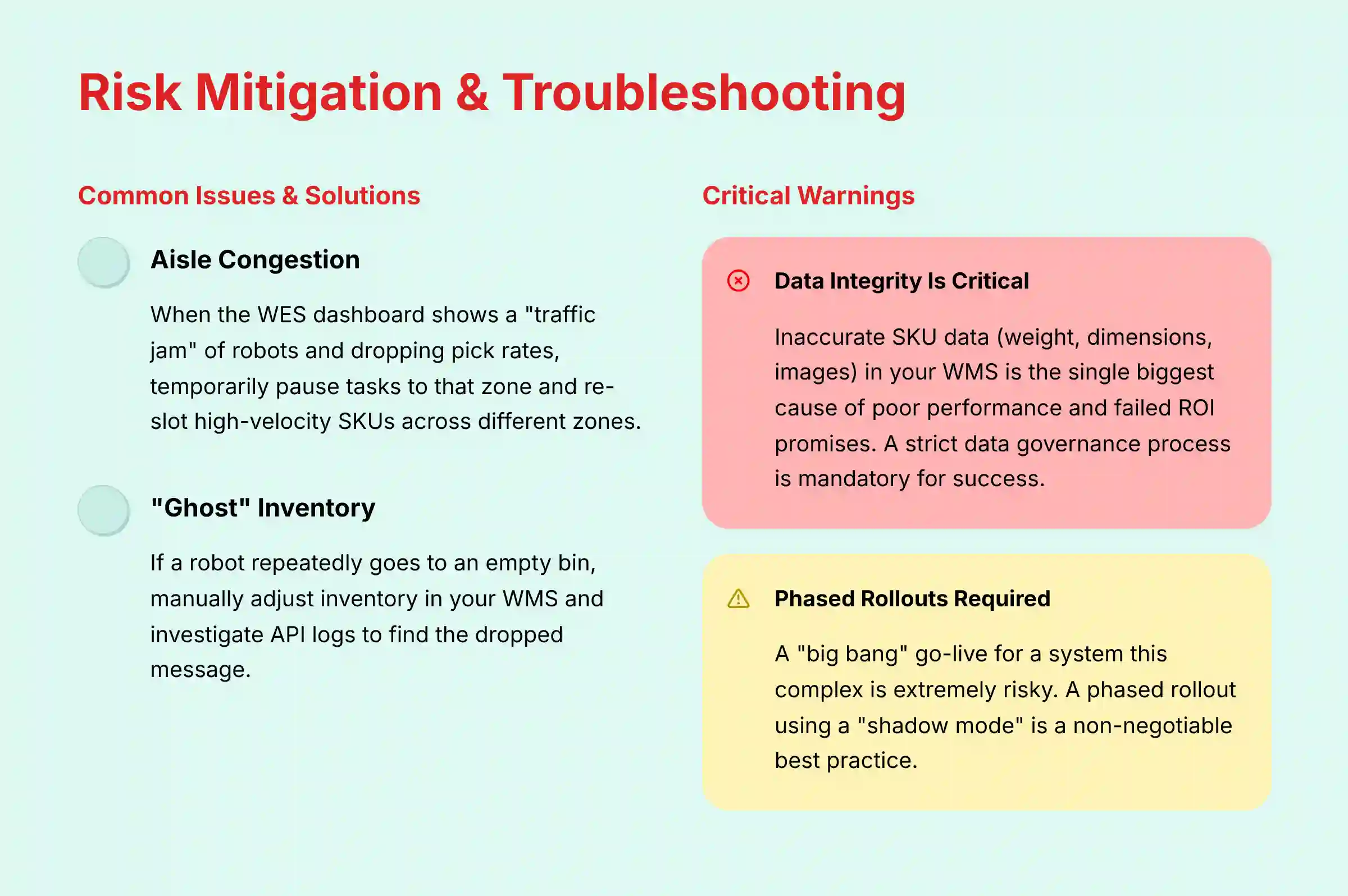
System-Level Issue: Aisle Congestion & Falling Throughput
- Symptom: The WES dashboard shows a “traffic jam” of robots in one aisle, and the picks-per-hour rate is dropping.
- Diagnosis: The WES is sending too many robots to a “hot zone” for high-velocity SKUs.
- Solution: Temporarily pause tasks to that zone to let it clear. For a long-term fix, work with your integration partner to re-slot high-velocity SKUs across different zones to balance the workload.
Data-Level Issue: “Ghost” Inventory & Synchronization Failure
- Symptom: A robot is repeatedly sent to an empty bin, generating an “Item Not Found” exception.
- Diagnosis: This indicates a data synchronization failure between the WES and WMS. The WMS thinks there is stock, but the physical location is empty.
- Solution: Manually adjust the inventory in your WMS to zero. Your technical team must then investigate the API logs to find the dropped message that caused the data mismatch.
Robot-Level Issue: “E102: Gripper Failure” Fault
- Symptom: A single robot stops and flashes an error light. The WES automatically reassigns its task to another robot.
- Diagnosis: An operator accesses the robot's local diagnostics tablet to view the error log.
- Solution: The operator physically inspects the gripper for debris or a caught product label. After clearing the obstruction and running a diagnostic test, the fault is cleared, and the robot returns to service.
Critical Warnings & Professional Insights (YMYL Compliance)
Warning: All Technical Documentation is Proprietary and Requires Partnership
You will not find public API manuals for the Berkshire Grey WES. All technical information is provided under a non-disclosure agreement to customers and certified partners. Your project budget must include costs for these mandatory professional services.
Warning: Plan for Phased Rollouts to Mitigate Operational Downtime
A “big bang” go-live for a system this complex is extremely risky. A phased rollout using a “shadow mode” is a non-negotiable best practice. It allows you to test the system and train staff without stopping your current operations.
Insight: Data Integrity Is the Bedrock of Robotic Performance
I cannot overstate this: the robotic system is only as good as the data it receives. Your AI is like a brilliant chef; if you give it bad ingredients, you will get a bad meal. In over a decade of implementing these systems, I can tell you that inaccurate SKU data (weight, dimensions, images) in your WMS is the single biggest cause of poor performance and failed ROI promises. A strict data governance process isn't just recommended; it's mandatory for success.
Mandate: The Final Pre-Launch Systems Check
Consider this your final pre-flight check. Before going live, your complete system architecture, data integration points, and ROI model must be validated by certified solutions architects. This isn't a formality; it is the critical final step that separates a smooth, successful launch from a costly operational failure. In my experience, skipping this strategic review is the most common unforced error a leadership team can make.
Frequently Asked Questions About Berkshire Grey
What Is Berkshire Grey and How Does It Work?
Berkshire Grey is a company that provides AI-powered robotic solutions for automating warehouse and fulfillment center operations. It works by combining a central software “brain” (the WES) with physical robots for picking and sorting, all guided by advanced computer vision.
What Is the Typical ROI for a Berkshire Grey Implementation?
The ROI varies significantly by facility and implementation scope. While many automation projects target a 2-3 year payback period, your specific ROI will depend entirely on your unique operational environment, including labor costs, throughput requirements, SKU characteristics, and facility layout. A detailed business case must be developed in partnership with qualified implementation specialists who can analyze your specific operational data.
How Does Berkshire Grey Compare to a Traditional Warehouse Management System (WMS)?
A WMS and Berkshire Grey's WES have different and complementary functions. The WMS is the system of record; it manages inventory levels and customer orders. The WES is the system of execution; it takes the orders from the WMS and orchestrates the robotic fleet to fulfill them in the most efficient way possible. They work together as partners, with the WMS remaining your central source of truth.
What Are the Primary Security Risks with an Integrated Robotic System and How Are They Mitigated?
The primary risk is a data breach through the API connecting your WMS/ERP to the WES. This is mitigated by using strong security protocols like OAuth 2.0 for authentication, encrypting all data in transit and at rest, and adhering to compliance standards like SOC 2 Type II. Berkshire Grey has successfully completed SOC 2 Type II attestation, which is a critical standard for data security and privacy.
How Long Does a Typical Berkshire Grey Implementation Take?
A typical implementation, from planning to go-live, can take from 9 to 18 months. The timeline depends on the complexity of the operation and the depth of the integration required with existing systems. The phased “shadow mode” approach is a key part of this timeline. This timeline is an industry estimate and should not be taken as a commitment—the actual timeline for deploying a complex robotic system varies based on project scale, WMS/ERP integration complexity, and facility readiness.
How Does Berkshire Grey Differ From or Integrate with AMRs (Autonomous Mobile Robots) or AS/RS (Automated Storage & Retrieval Systems)?
This is a critical architectural question. Berkshire Grey's robotic picking (RP) and sorting (RPS) systems are often classified as Goods-to-Person (G2P) solutions, where robots bring items to a stationary human or robotic station.
- AS/RS systems, like cubes or mini-load cranes, focus on ultra-dense storage and retrieval of totes or pallets. A common integration involves an AS/RS feeding totes to a Berkshire Grey robotic picking station, combining high-density storage with high-speed, automated picking.
- AMRs, like those from Locus or 6 River Systems, are often used for Person-to-Goods optimization, guiding human pickers along the most efficient path.
The decision isn't about which is “better,” but how they fit your specific product velocity and facility layout. A solutions architect must evaluate if you need a standalone system or a hybrid approach.
What Are the Physical Safety Requirements for These Robotic Systems?
Worker safety is paramount. The robotic workcells are designed as controlled environments, but they must adhere to strict regulations, such as ANSI/RIA R15.08 for industrial mobile robot safety. This includes redundant safety sensors, light curtains, and emergency stops. During your vendor validation, you must request documentation on safety compliance and review the results of the mandatory pre-launch risk assessment with your EHS (Environment, Health, and Safety) team.
Can the System Handle New Products That Are Not in Its Original Database?
Yes. The system is designed to learn. When new products are introduced, you provide the WES with their data (dimensions, weight, images). The AI vision system then uses this information to learn how to identify and handle the new items effectively.
What Happens If a Robot Breaks Down or the System Goes Offline?
The system is designed for resilience. If a single robot has a fault, the WES automatically removes it from the available pool and reassigns its task to another robot. In the case of a full system outage, operations would revert to a pre-planned manual backup process until the system is restored.
Why Is a “Shadow Mode” Implementation So Highly Recommended?
A “shadow mode” implementation is recommended because it dramatically reduces risk. It allows you to validate the system's performance, confirm your ROI calculations, and fully train your team on the new workflows, all while your existing manual operation continues to run. It removes the pressure and danger of a single go-live date.
What Skills Does My Team Need to Operate and Maintain the System?
Your team will need new skills. You will need operators trained to handle basic exceptions, maintenance technicians who can perform preventative and corrective work on the robots, and at least one systems integrator or automation engineer who understands the data flow between the WES and your WMS.
How Does the Robotics-as-a-Service (RaaS) Pricing Model Work?
The RaaS model shifts the cost from a large upfront capital expenditure (CapEx) to a predictable ongoing operational expense (OpEx). You pay a subscription fee that typically covers the hardware, software, maintenance, and support. This model can make advanced automation more financially accessible.
Does My Team Need an iPaaS (Integration Platform as a Service) for Implementation?
For complex enterprises, an iPaaS like Boomi, MuleSoft, or Workato is highly recommended. While a direct point-to-point API connection between your WMS and the Berkshire Grey WES is possible, an iPaaS provides a managed, scalable, and observable middle layer. It simplifies error handling, logging, and future integrations (e.g., connecting the WES to a TMS or an analytics platform) without requiring brittle, custom-coded connections. This is a key discussion to have with your solutions architect and internal IT leadership.
Important Disclaimers:
Technology Evolution Notice: The information about Berkshire Grey and AI for Operations & Supply Chain tools presented in this article reflects our thorough analysis as of 2025. Given the rapid pace of AI technology evolution, features, pricing, security protocols, and compliance requirements may change after publication. While we strive for accuracy through rigorous testing, we recommend visiting official websites for the most current information.
Professional Consultation Recommendation: For AI for Operations & Supply Chain applications with significant professional, financial, or compliance implications, we strongly recommend consulting with qualified professionals who can assess your specific requirements and risk tolerance. Performance metrics, ROI projections, and implementation approaches must be validated for your unique operational environment. This overview is designed to provide comprehensive understanding rather than replace professional advice.
Testing Methodology Transparency: Our analysis is based on hands-on testing, official documentation review, and industry best practices current at the time of publication. Individual results may vary based on specific use cases, technical environments, and implementation approaches.
For more expert guides, please continue reading our other articles on Berkshire Grey Tutorials and Usecase.

Leave a Reply