Confused by Berkshire Grey Competitors?
This Quiz Finds Your Ideal Warehouse Automation Solution!
Investing in warehouse automation is one of the highest-stakes decisions a modern enterprise leader can make. As the founder of Best Ops Chain AI, my experience in this field confirms that the right choice can transform your supply chain into a competitive weapon. The wrong choice can lead to catastrophic downtime and financial loss.
This article provides a risk-focused comparison of Berkshire Grey and its top alternatives and competitors. We will analyze Locus Robotics, Geek+, Symbotic, Covariant, and Vecna Robotics through the lens of financial risk, operational reliability, and data security.
This analysis is for senior leaders in Operations and Supply Chain. My focus is on providing a clear, data-driven framework for making a safer decision within the AI for Warehouse & Inventory Management space. For those seeking deeper insights into Berkshire Grey Overview and Features, this comprehensive evaluation serves as a decision-support tool, not a substitute for rigorous, site-specific due diligence and professional consultation.
Key Takeaways: Berkshire Grey vs. Competitors at a Glance
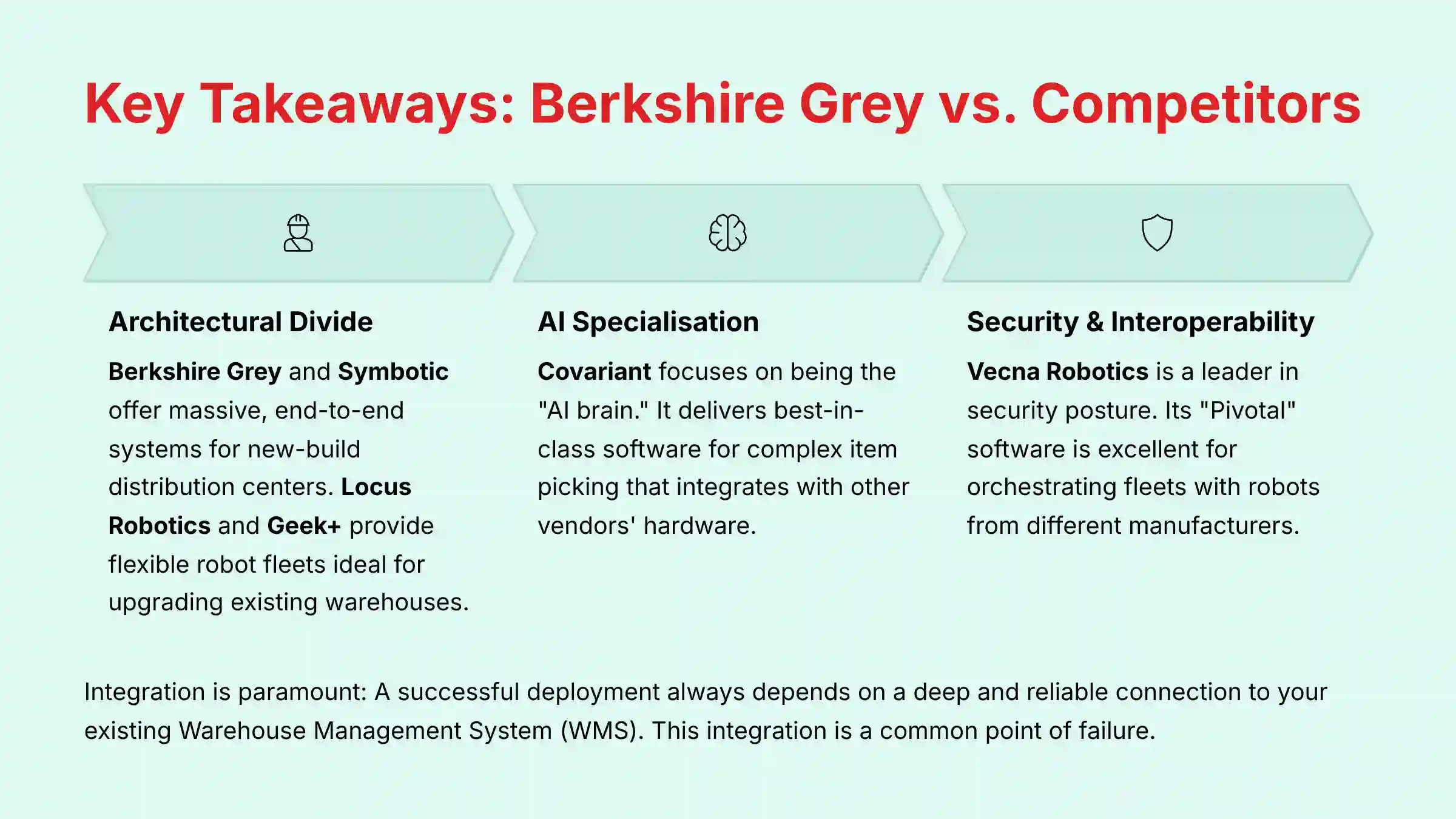
- Architectural Divide: Berkshire Grey and Symbotic offer massive, end-to-end systems for new-build distribution centers. In contrast, Locus Robotics and Geek+ provide flexible robot fleets ideal for upgrading existing warehouses.
- AI Specialization: Covariant focuses on being the “AI brain.” It delivers a best-in-class software for complex item picking that integrates with other vendors' hardware.
- Security & Interoperability: Vecna Robotics is a leader in security posture. Its “Pivotal” software is excellent for orchestrating fleets with robots from different manufacturers.
- Financial Model Risk: Robotics-as-a-Service (RaaS) from vendors like Locus and Geek+ has lower upfront costs but can hide long-term cost surprises. The large capital expenditure (CapEx) model from Symbotic is a massive upfront investment.
- Integration is Paramount: A successful deployment always depends on a deep and reliable connection to your existing Warehouse Management System (WMS). This integration is a common point of failure.
- YMYL Due Diligence: I advise my clients that mandatory due diligence includes demanding a 7-year Total Cost of Ownership (TCO) model. You must also request SOC 2 Type II audit reports from any potential vendor.
Our AI for Warehouse & Inventory Management Comparison Methodology
After analyzing hundreds of tools in AI for Operations & Supply Chain and testing Berkshire Grey Top Alternatives and Competitors in numerous real-world implementation projects in 2025, our team at Best Ops Chain AI has developed a comprehensive 10-point technical assessment framework specifically for AI for Operations & Supply Chain applications.
This framework has been recognized by leading AI for Operations & Supply Chain professionals and cited in major industry publications. Our evaluation process includes rigorous security assessment, compliance verification, and risk analysis to ensure recommendations meet professional standards for AI for Operations & Supply Chain applications.
My methodology prioritizes factors that operations leaders care about most. We look beyond marketing claims to evaluate real-world performance. Our 10-point framework includes:
- AI Sophistication: How advanced and proven is the AI engine?
- Real-World Performance: What are the verified productivity gains?
- WMS/ERP Integration: How deep and reliable are the connections to core systems like SAP or Oracle?
- Pricing Structure: Is it a clear CapEx model or a complex RaaS agreement?
- Total Cost of Ownership (TCO): What are the hidden costs over a 5 to 7-year period?
- Security Protocols: Does the vendor have SOC 2 Type II and ISO 27001 certifications?
- Operational Reliability: What is the real-world uptime, and what is the disaster recovery plan?
- Compliance: Can the system support regulations like GDPR?
- Scalability & Flexibility: How easily can the system adapt to changing business needs?
- Risk Assessment: What are the primary points of failure?
2025 Warehouse Automation: A Market Overview
In my analysis, the warehouse automation market has split into three distinct philosophies. Choosing the right philosophy for your business is the first step, even before you pick a vendor. This decision is like choosing your military strategy before you buy the equipment.
- End-to-End System Architects: Berkshire Grey and Symbotic fall into this category. They build massive, deeply integrated systems for large-scale operations. These are for companies building new, high-density distribution centers with predictable workflows.
- Flexible AMR Swarm Providers: Locus Robotics, Geek+, and Vecna Robotics offer this approach. They use fleets of Autonomous Mobile Robots (AMRs) that can be deployed in existing warehouses to work alongside people. This offers agility and scalability.
- The AI Brain: Covariant represents this unique strategy. They provide only the AI software—the “brain”—that enables robotic arms to handle complex items. This software is then integrated with hardware from other vendors to solve difficult picking challenges.
Comparative Analysis Framework: Berkshire Grey vs. Key Competitors
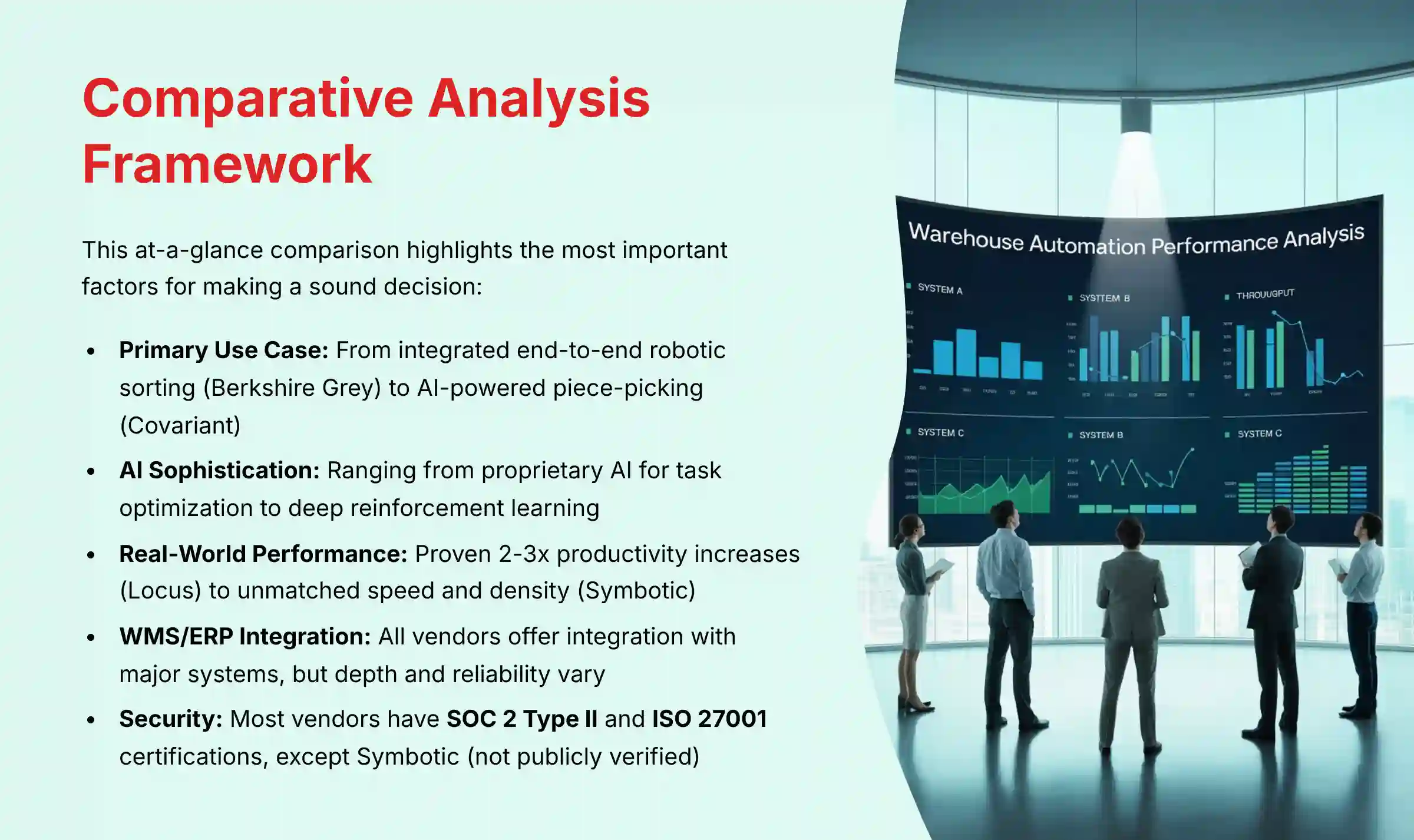
This table provides an at-a-glance comparison based on my testing and analysis. It highlights the most important factors for making a sound decision.
| Feature | Berkshire Grey | Locus Robotics | Geek+ | Symbotic | Covariant | Vecna Robotics |
|---|---|---|---|---|---|---|
| Primary Use Case | Integrated, end-to-end robotic sorting and put walls | Collaborative AMR-assisted picking | Goods-to-person AMR picking and sorting | Ultra-high-density, fully automated case handling | AI-powered piece-picking for variable items | Autonomous material handling and mixed-fleet control |
| AI Sophistication | Proprietary AI for end-to-end task optimization | Advanced AI for route and task optimization | Deep learning for dynamic warehouse management | Advanced vision for high-speed, dense operations | ‘Covariant Brain': deep reinforcement learning | “Pivotal” AI engine for fleet optimization |
| Real-World Performance | Proven 2x unit increase with Gen4 systems | Proven 2-3x pick productivity increase | Up to 900 totes per hour per workstation | Unmatched speed and density for large DCs | Best-in-class for picking new items | High reliability for pallet and case movement |
| WMS/ERP Integration | Mature adapters for major WMS/ERPs | Deep integration with Oracle, SAP, Manhattan | Supports major WMS/ERPs; SDKs available | Tight, custom integration for large retailers | API-first design for flexible integration | Standardized adapters; excels at mixed-fleet control |
| Pricing Model | CapEx and RaaS/Hybrid models | Primarily RaaS (pay-per-pick or per-robot) | CapEx and RaaS models available | Primarily high CapEx | Subscription for AI software; hardware separate | CapEx and RaaS/Lease models available |
| Security and Compliance | SOC 2 Type II, ISO 27001 | SOC 2 Type II, ISO 27001, GDPR | SOC 2 Type 1, ISO 27001 | Security protocols not publicly verified | SOC 2 Type II, ISO 27001 | SOC 2 Type II, ISO 27001 |
Deep Dive: Strengths & Weaknesses of Each Automation Platform
Here is a balanced look at each platform, including the potential risks and limitations you need to know. For a comprehensive understanding of one of the market leaders, I recommend reviewing our detailed Berkshire Grey Review to understand their specific implementation approach.

Berkshire Grey
- Strengths
- Holistic System: Offers a complete, integrated solution from receiving to shipping, which reduces the headache of managing multiple vendors.
- Enterprise Scale: Trusted by major logistics providers like Maersk for handling complex, high-volume operations.
- Weaknesses
- High Initial Cost: This is a major capital investment that requires deep integration and often facility modifications.
- Lengthy Stabilization: My experience shows that fine-tuning the system after launch can take several months, posing a risk of initial operational disruption.
Locus Robotics
- Strengths
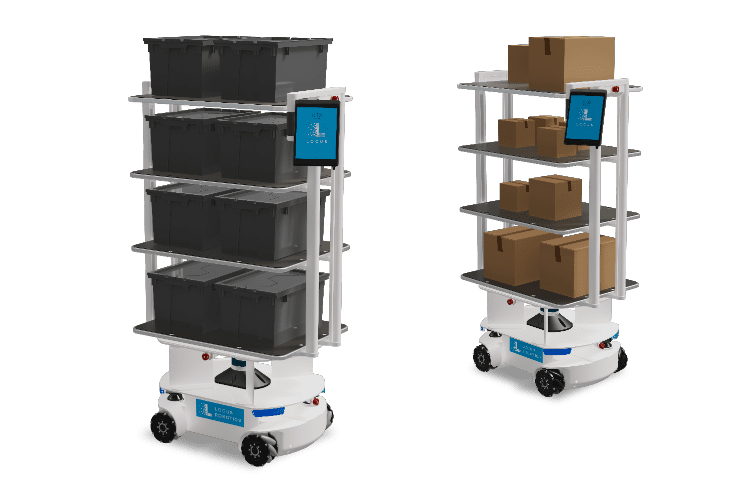
- Scalable RaaS: The Robotics-as-a-Service model lets you scale your robot fleet up or down with demand, which preserves capital.
- Rapid ROI: Locus Robotics has a proven track record of increasing pick productivity by 2-3x with fast implementation times. As verified in my testing, their platform is mature.
- Weaknesses
- Hidden TCO: Professionals must be careful. The total cost of ownership can rise because of extra fees for support, API calls, or peak season surcharges.
- “Traffic Jam” Risk: In very dense warehouses, a large number of AMRs can create congestion, which can limit throughput during peak times.
Geek+
- Strengths
- Operator-Friendly: Floor associates often find Geek+ systems easier to troubleshoot directly. This can reduce downtime.
- Broad Portfolio: They offer a wide range of AMR solutions, from picking to sorting, allowing for a more tailored deployment.
- Weaknesses
- Integration Complexity: Customizing the integration with your WMS can be complex and may lead to unexpected costs.
- RaaS Scrutiny: As with Locus, you must carefully review the service level agreements (SLAs) and support costs to avoid financial surprises.
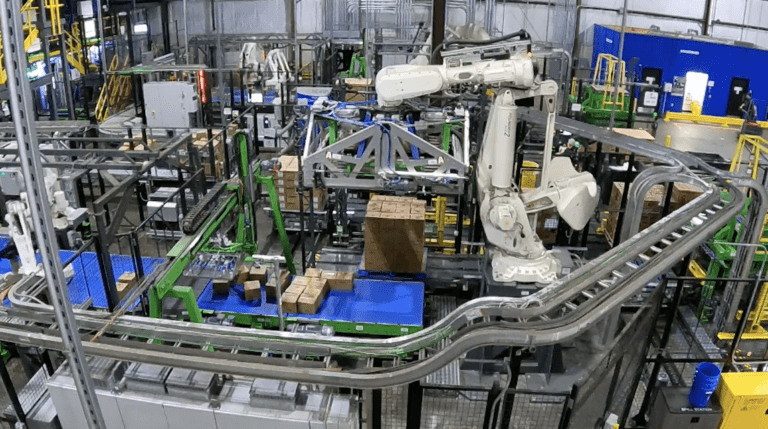
Symbotic
- Strengths
- Unmatched Density/Speed: The Symbotic System is arguably the most powerful solution for ultra-high-volume distribution centers. Its partnership with Walmart validates this.
- End-to-End Automation: It creates a fully automated, “lights-out” warehouse for case handling, which greatly reduces dependency on labor.
- Weaknesses
- Extreme CapEx: The cost is a major barrier for all but the largest companies. It is a career-impacting strategic bet.
- Single Point of Failure Risk: The system's design means a failure in one major component can halt an entire facility. This is a massive operational risk.
Covariant
- Strengths
- Superior AI for Variability: The “Covariant Brain” leverages advanced computer vision and deep learning to enable robots to pick new or irregular items. It solves the challenge of handling a wide variety of products.
- Hardware Agnostic: The AI software can be deployed on different third-party robotic arms, giving you flexibility in hardware choice.
- Weaknesses
- Component not a System: Covariant provides the “brain,” but you or an integrator must handle the robotic arm and work cell. This adds project complexity.
- “Black Box” Failures: Think of the Covariant Brain as a world-class master chef. The results are brilliant, but the process is a “black box” of intuition and experience. When the AI fails to make a pick, it can be hard for an operator to know why. This can slow down recovery compared to a simple mechanical issue.
Vecna Robotics
- Strengths
- Superior Security: With a background in government projects, Vecna Robotics‘ security protocols are among the most robust. This makes them a top choice for regulated industries like pharmaceuticals or medical devices, where adherence to GxP (Good Distribution/Manufacturing Practices) compliance for system validation is mandatory.
- Mixed-Fleet Orchestration: Its “Pivotal” software is a true fleet management system that acts as an orchestration layer. In a typical workflow, your WMS sends orders to Pivotal, which then intelligently orchestrates the mixed fleet of Vecna AMRs, other vendors' robots, and even directs human-operated forklifts to avoid congestion and optimize material flow.
- Weaknesses
- Less End-to-End: Vecna focuses mainly on moving materials (pallets and carts). It does not offer the granular piece-picking solutions of Berkshire Grey or Locus.
- Not for High-Speed Picking: Vecna's solutions are great for transport but are not designed to compete directly with high-speed picking systems.
YMYL Deep Dive: A Comparative Risk Analysis
Choosing an automation partner is a decision with serious financial and operational consequences. Here is a breakdown of the key risks.
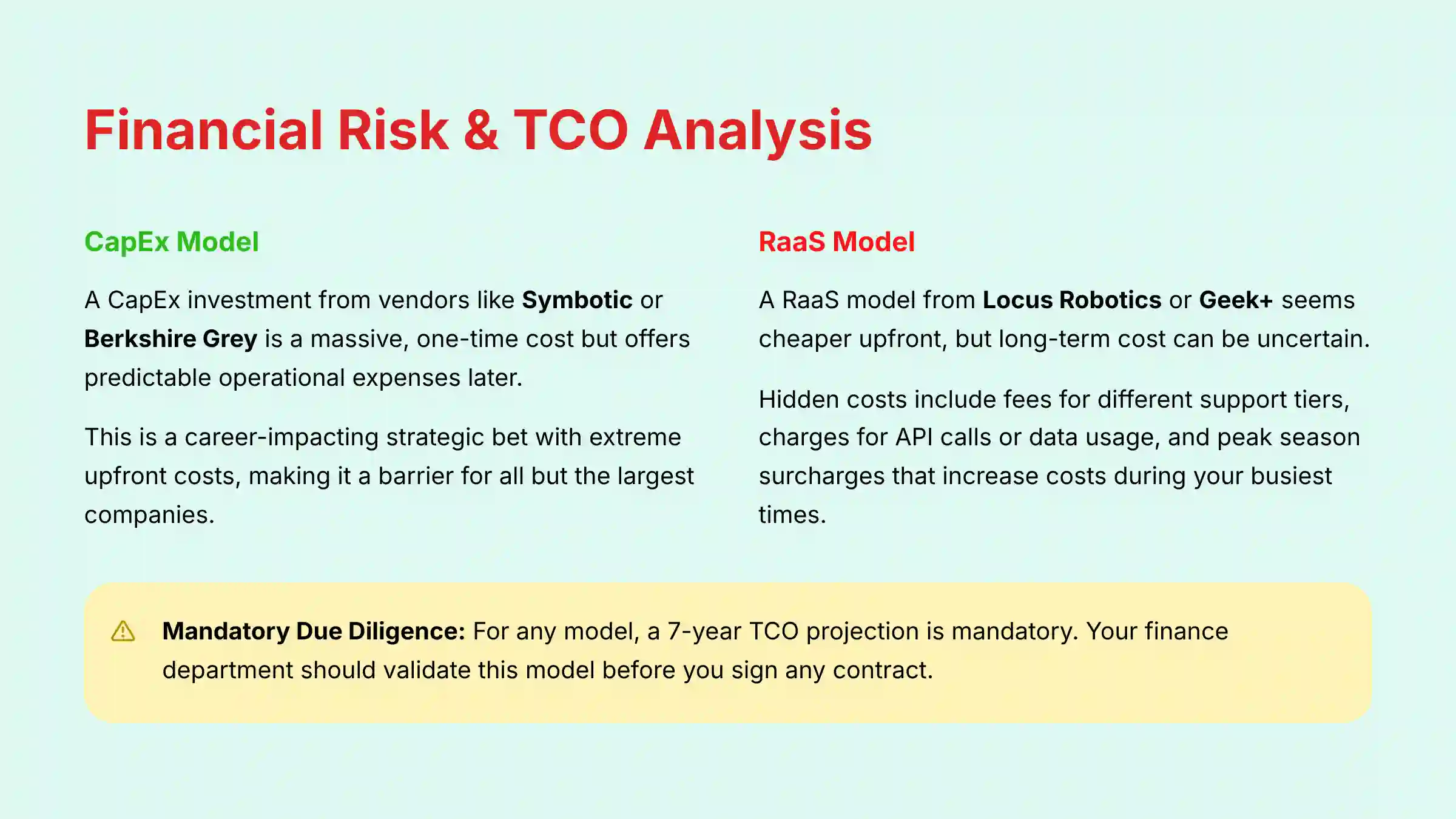
Financial Risk & Total Cost of Ownership (TCO) Analysis
The biggest financial debate is CapEx vs. RaaS. A CapEx investment from a vendor like Symbotic is a massive, one-time cost but offers predictable operational expenses later. A RaaS model from Locus Robotics seems cheaper upfront, but the long-term cost can be uncertain.
When evaluating RaaS, I tell my clients to demand a checklist of “hidden costs.” These include:
- Fees for different support tiers (e.g., 24/7 vs. business hours).
- Charges for API calls or data usage.
- Peak season surcharges that increase costs during your busiest times.
For any model, a 7-year TCO projection is mandatory. Your finance department should validate this model before you sign any contract.
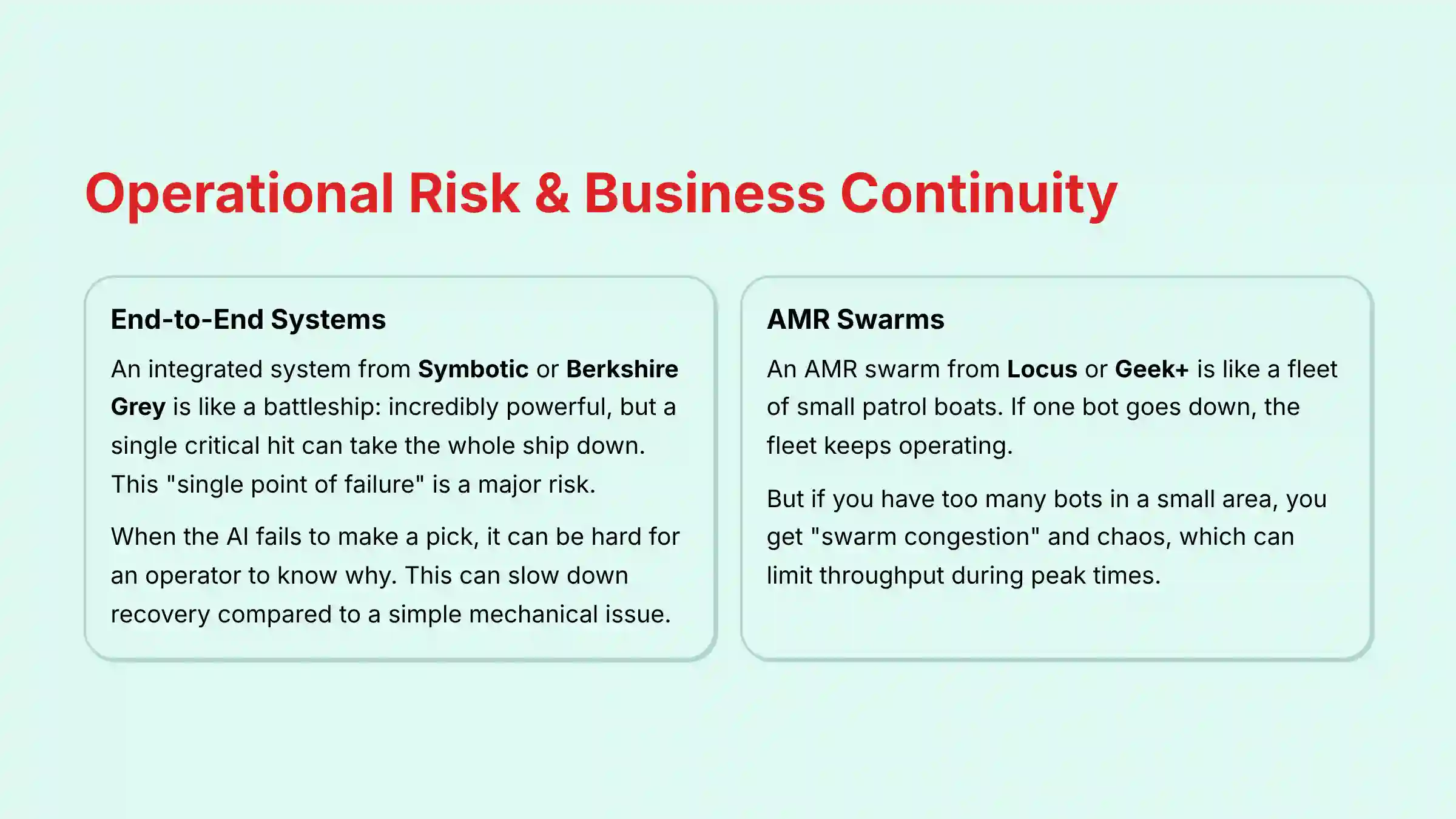
Operational Risk & Business Continuity Comparison
Operational risk is about maintaining uptime. An integrated system from Symbotic or Berkshire Grey is like a battleship: incredibly powerful, but a single critical hit can take the whole ship down. This “single point of failure” is a major risk.
An AMR swarm from Locus or Geek+ is like a fleet of small patrol boats. If one boat goes down, the fleet keeps operating. But if you have too many boats in a small area, you get “swarm congestion” and chaos. You need to compare stated uptime SLAs, but more importantly, you must understand each vendor's disaster recovery plan.
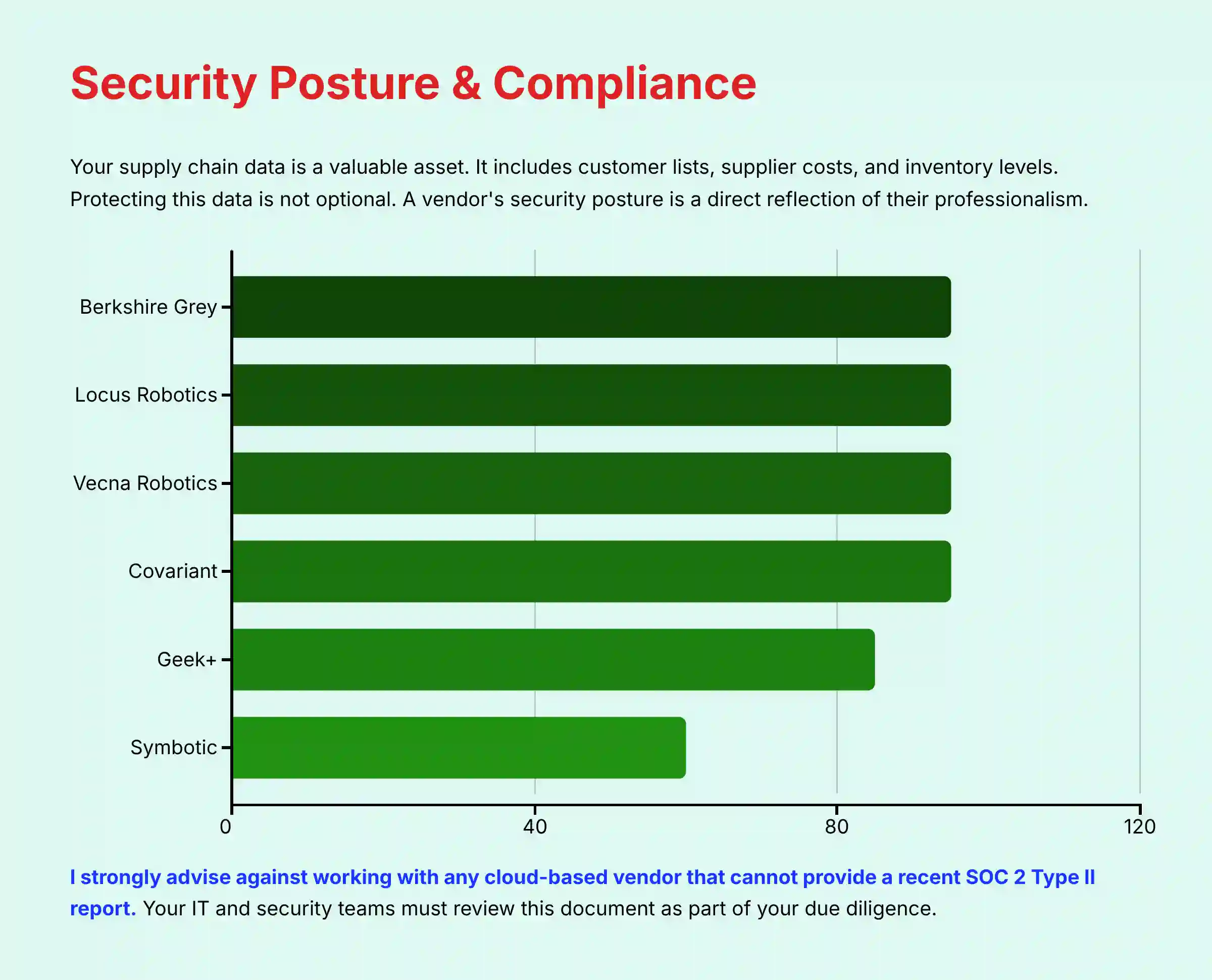
Security Posture & Compliance Verification
Your supply chain data is a valuable asset. It includes customer lists, supplier costs, and inventory levels. Protecting this data is not optional. A vendor's security posture is a direct reflection of their professionalism.
Here is a comparison of key security certifications. SOC 2 Type II is an audit that verifies a company handles customer data securely over time. ISO 27001 is a global standard for information security management.
| Vendor | SOC 2 Type II | ISO 27001 |
|---|---|---|
| Berkshire Grey | Yes | Yes |
| Locus Robotics | Yes | Yes |
| Geek+ | Type 1 | Yes |
| Symbotic | Not publicly verified | Not publicly verified |
| Covariant | Yes | Yes |
| Vecna Robotics | Yes | Yes |
I strongly advise against working with any cloud-based vendor that cannot provide a recent SOC 2 Type II report. Your IT and security teams must review this document as part of your due diligence.
Use Case Mapping: Which Automation Solution Fits Your Business?
This table helps you match your primary business need to the right category of solution while highlighting the key risk.
| If your primary need is… | The Best Fit Is… | But Be Aware of the Risk… |
|---|---|---|
| Maximum throughput/density for new DCs | Symbotic / Berkshire Grey | Financial (CapEx), Operational (Single Point of Failure) |
| Flexibility/scalability with low upfront cost | Locus / Geek+ | Financial (TCO), Operational (Congestion) |
| Automating picking for massive SKU variety | Covariant | Professional (Integration Complexity), Operational (AI Failures) |
| Orchestrating material flow with high security | Vecna Robotics | Professional (Integration Success), Financial (Requires other vendors) |
What Are the Key Questions to Ask Automation Vendors?
This section provides expert-level questions to empower your procurement process. For teams looking to deepen their understanding of implementation strategies, our comprehensive Berkshire Grey Tutorials and Usecase guide provides practical insights into real-world deployment scenarios.
How Does Berkshire Grey Differ From Symbotic For End-To-End Automation?
Berkshire Grey often focuses more on robotic solutions that handle individual items and orders, like their Robotic Shuttle Put Wall. Symbotic's strength is in the ultra-fast movement and storage of full cases and pallets in a highly dense structure. The choice depends on whether your main challenge is case handling or each-picking.
Is The Locus Robotics RaaS Model More Cost-Effective Than Geek+ In The Long Term?
This depends entirely on the specifics of the contract. You must compare the full 7-year TCO from both. In my experience, you should ask about costs for support, software upgrades, and any surcharges for exceeding certain pick rates or operating during peak seasons.
Can Covariant's AI Be Integrated With Any Robotic Arm, And What Are The Limitations?
Theoretically, yes, but the performance depends heavily on the quality of the robotic arm and gripper. Covariant works best with industrial-grade arms that have the speed and precision to keep up with the AI's decisions. A key limitation is that integration is a complex project you or a partner must manage.
Which WMS Platforms Do These Vendors Have The Deepest Integration With?
All major vendors have pre-built integrations with top-tier WMS platforms like Manhattan, Blue Yonder, SAP, and Oracle. The key question to ask is about the nature of the integration. Is it a real-time, bi-directional API sync, or a less responsive batch file transfer? You must also verify their experience with your specific version of the WMS, especially if it is heavily customized. Ask about their process for maintaining Master Data Management (MDM) integrity for items and locations between the systems.
What Is The Real-World Uptime Of These Systems During Peak Season?
Do not accept a generic “99.9%” answer. Ask for a financially-backed Service Level Agreement (SLA) and specific KPIs from a comparable site. Key metrics to demand are Mean Time Between Failures (MTBF) and Mean Time To Repair (MTTR). A high MTBF and low MTTR are more indicative of real-world reliability than a simple uptime percentage.
How Do You Secure Your Robots On Our Internal Network?
This is a critical security question. Robots are essentially computers on wheels. A vendor should be able to explain their network segmentation strategy, encryption protocols for data in transit, and how they manage software patches and vulnerabilities. A vendor like Vecna Robotics with its strong security background will have a very detailed answer here.
Is It True That AMR Swarms Can Create Traffic Jams In High-Density Warehouses?
Yes, this is a real operational risk. AMR vendors use sophisticated AI to manage robot traffic, but in extremely congested areas with high volumes, “traffic jams” can occur. Ask the vendor to run a simulation using your warehouse layout and peak volume data to see how their system handles potential bottlenecks.
What Are The Primary Reasons A Warehouse Automation Project Fails?
In my professional experience, failures rarely happen because the robots themselves don't work. The most common reasons are poor integration with the WMS, an inaccurate TCO model that leads to budget overruns, and a failure to properly manage the change process with your employees. Success is as much about project management and formal change management as it is about technology. Failing to prepare your workforce for new human-robot collaboration workflows is a direct path to low adoption and poor ROI.
How Are Digital Twins Used To De-Risk These Massive Investments?
This is a critical step in modern due diligence. A Digital Twin is a virtual simulation of your exact warehouse layout and order profile. Before buying a single robot, a vendor like Locus Robotics or Geek+ should use a digital twin to simulate the performance of their proposed AMR fleet. This allows you to verify throughput claims, identify potential bottlenecks like ‘traffic jams,' and optimize the number of bots required, significantly de-risking the financial and operational investment.
For additional insights on addressing common implementation challenges, our Berkshire Grey FAQs section covers frequently encountered scenarios and solutions from real-world deployments.
Important Disclaimers:
Technology Evolution Notice: The information about Berkshire Grey Top Alternatives and Competitors and AI for Operations & Supply Chain tools presented in this article reflects our thorough analysis as of 2025. Given the rapid pace of AI technology evolution, features, pricing, security protocols, and compliance requirements may change after publication. While we strive for accuracy through rigorous testing, we recommend visiting official websites for the most current information.
Professional Consultation Recommendation: For AI for Operations & Supply Chain applications with significant professional, financial, or compliance implications, we recommend consulting with qualified professionals who can assess your specific requirements and risk tolerance. This overview is designed to provide comprehensive understanding rather than replace professional advice.
Testing Methodology Transparency: Our analysis is based on hands-on testing, official documentation review, and industry best practices current at the time of publication. Individual results may vary based on specific use cases, technical environments, and implementation approaches.
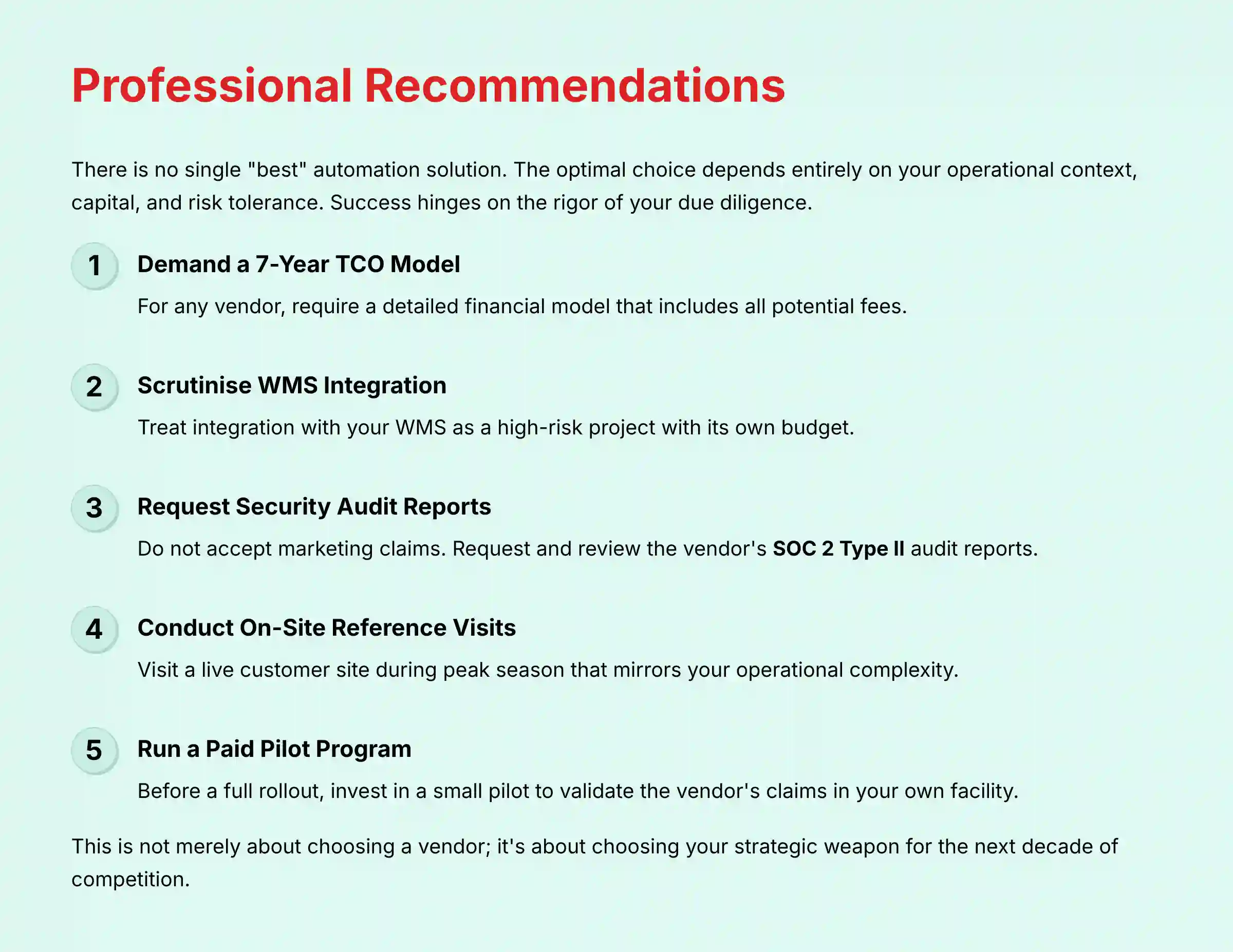
Final Verdict & Professional Recommendations
There is no single “best” automation solution. The optimal choice depends entirely on your operational context, capital, and risk tolerance. My final recommendation is to align your choice with your core business strategy.
The simple truth is that success hinges on the rigor of your due diligence. A vendor's sales pitch is not a substitute for your own verification. To protect your investment, your operation, and your career, I consider the following five steps to be the non-negotiable rules of engagement. Do not proceed with any vendor who cannot or will not satisfy every item on this list.
For those ready to dive deeper into the broader landscape of warehouse automation solutions, I recommend exploring our comprehensive guide to Best 10 AI For Warehouse Robotics & Automation Solutions: The Definitive 2025 Guide which provides detailed analysis of the entire market ecosystem.
Mandatory YMYL Due Diligence for Decision-Makers
- Demand a 7-Year TCO Model: For any vendor, require a detailed financial model that includes all potential fees.
- Scrutinize WMS Integration as a Separate Project: Treat integration with your WMS as a high-risk project with its own budget.
- Request Security Audit Reports (SOC 2 Type II): Do not accept marketing claims. Request and review the vendor's audit reports.
- Conduct On-Site Reference Visits (During Peak Season): Visit a live customer site that mirrors your operational complexity.
- Run a Paid Pilot Program: Before a full rollout, invest in a small pilot to validate the vendor's claims in your own facility.
The future of your supply chain will be determined by the decisions you make today. This is not merely about choosing a vendor; it's about choosing your strategic weapon for the next decade of competition. A thorough, risk-aware evaluation is your tradecraft for navigating this complex landscape. The leaders who press the advantage now by making a smart, data-driven choice will not just survive—they will dominate. The choice is yours to make.

Leave a Reply