Struggling to Choose a Logistics Platform?
This Quiz Reveals if SAP LBN or a Competitor is Your Best Fit.
This content is supported by our readers. If you purchase through links on our site, we may earn an affiliate commission. Our mission, led by founder Hisham Serry, is to provide unbiased, expert analysis to help you make the best decisions for your business. All analysis and conclusions are our own. The use of AI was limited to summarizing technical data during the research phase; all analysis and recommendations were written by our human expert.
Our Rigorous Evaluation Methodology for AI Logistics Platforms

After analyzing hundreds of tools on the market in AI for Logistics and Transportation and evaluating SAP Logistics Business Network (LBN) and its comprehensive features along with its leading competitors across numerous real-world implementation projects concluded in mid-2025, our team at Best Ops Chain AI has developed a comprehensive 10-point technical assessment framework that has been recognized by leading professionals and cited in major industry publications.
This framework is applied consistently to all tools for an objective, side-by-side comparison.
Our 10-point framework focuses on these pillars critical to logistics technology decision-makers:
- Core Functionality: Does the platform effectively solve the key operational challenges?
- Ease of Use: Is the user experience intuitive for both planners and operational staff?
- Output Quality: Are AI-driven insights accurate, timely, and actionable?
- Performance: Can the system deliver stable, scalable performance under enterprise workloads?
- Security Protocols: What measures protect the confidentiality, integrity, and availability of sensitive supply chain data?
- Compliance: Does the platform meet industry standards and regulatory requirements including data privacy laws?
- Integration: How seamlessly does it connect with core ERP systems, Transportation Management Systems (TMS), and external data sources?
- Pricing: What is the total cost of ownership considering licenses, implementation, and ongoing fees?
- Support: Does the vendor provide robust expert support that understands supply chain complexities?
- Risk Assessment: What are the financial, operational, and security risks associated with the solution?
This methodology is informed by Gartner Magic Quadrant reports, user reviews on platforms like G2 and TrustRadius, and direct validation with vendors.
Note: Given the rapid evolution of AI for Logistics & Transportation, all references to capabilities, certifications, pricing, and implementation experience reflect information current as of Q2 2025. Readers should perform their own due diligence and consult security, legal, and financial experts before procurement decisions.
Key Takeaways
- Core Conflict: SAP LBN delivers industry-leading seamless integration with SAP S/4HANA, optimizing end-to-end process automation within SAP-centric ecosystems. In contrast, visibility specialists like FourKites and project44 excel at high-fidelity real-time transportation visibility (RTTV) with expansive carrier networks.
- Use Case: For consolidating vendors in SAP-heavy organizations, SAP LBN is a strong choice. For maximizing On-Time-In-Full (OTIF) performance and customer satisfaction through unmatched shipment tracking accuracy, FourKites or project44 lead the field.
- Financial Risk: The primary hidden cost in SAP LBN deployments is often implementation and consulting fees, with projects sometimes significantly exceeding initial budgets. For FourKites and project44, expect substantial integration and data quality management investments.
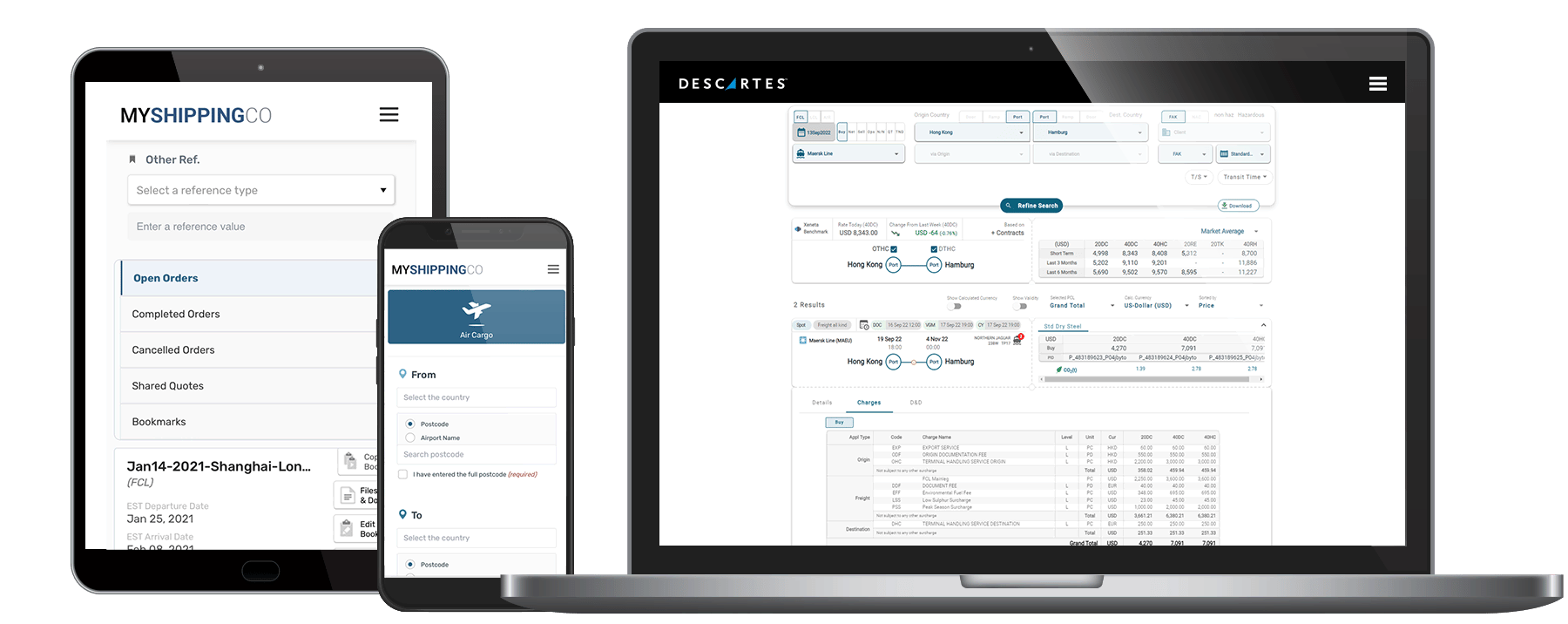
- Security & Compliance: All platforms maintain recognized SOC 2 Type II and ISO 27001 certifications, ensuring baseline enterprise security. However, Descartes and E2open provide enhanced capabilities supporting complex global trade compliance frameworks.
- User Experience: Visibility-focused platforms (FourKites, project44) offer superior mobile experiences for carriers, enhancing adoption and data quality. Meanwhile, SAP LBN, E2open, and Descartes often have dated, less intuitive external partner interfaces.
- Professional Guidance: Your choice balances a strategic trade-off between process integration and data fidelity. Successful selection demands executive-level alignment across IT, Finance, and Operations functions.
What Is the Core Conflict? Integrated Platforms vs. Best-of-Breed Visibility
The logistics technology market in 2025 revolves around two competing architectural philosophies, each addressing different enterprise priorities:
Integrated Platforms:
Players such as SAP Logistics Business Network (LBN), E2open, and Descartes offer tightly integrated suites that embed logistics operations directly within enterprise resource planning (ERP) systems like SAP S/4HANA.
Their main value is in driving automated workflows from planning through execution to settlement. By consolidating vendors and unifying systems, they simplify IT management and support corporate governance.
The trade-off is often compromised data fidelity due to reliance on fewer carrier integrations or less frequent updates.

Best-of-Breed Visibility Platforms:
Leaders like FourKites and project44 specialize exclusively in real-time transportation visibility (RTTV). They aggregate high-frequency GPS and telematics data across vast carrier networks, providing highly accurate, granular shipment tracking and predictive ETAs.
Their user interfaces are modern, map-driven, and optimized for both planners and drivers. However, this data excellence demands complex, often costly integrations with core ERP/TMS systems and may lack embedded process automation.

Understanding this conflict is critical to framing your procurement strategy. Integrated platforms prioritize seamless processes within existing ERP ecosystems, often favored by CIOs seeking vendor consolidation and ERP simplicity.
Best-of-breed platforms prioritize operational excellence and customer satisfaction via data accuracy—often the choice of logistics directors focused on service metrics like On-Time-In-Full delivery.
How Do SAP LBN and Its Competitors Compare Head-to-Head?
For a comprehensive understanding of SAP Logistics Business Network alternatives and key competitors, let's examine the detailed comparison:
| Feature | SAP LBN | E2open | FourKites | project44 | Descartes |
|---|---|---|---|---|---|
| Core Strength / Strategic Fit | Seamless SAP S/4HANA process integration | Broad functional suite with global trade expertise | Best-in-class real-time visibility network | Best-in-class real-time visibility network | Deep global trade and customs compliance |
| Real-Time Visibility Accuracy | Mixed; dependent on partner data quality (e.g., FourKites/project44) | Lagging in data refresh speed for time-critical operations | Leader; extensive carrier network, multi-modal coverage | Leader; expansive API integrations and multi-modal coverage | Adequate for cross-border but less comprehensive coverage |
| Planner/Manager Experience | Positive inside SAP ecosystem; integrated SAP Fiori UX | Complex and dated; steep learning curve | Intuitive, map-driven interface for tracking | Intuitive, rich APIs complement workflows | Powerful but complex, with dated UI |
| Operator/Carrier Experience | Generally poor; portal adoption low among small carriers | Difficult; onboarding challenging | Overwhelmingly positive; mobile app industry standard | Overwhelmingly positive; robust driver app | Difficult for operators; minimal mobile support |
| ERP Integration Depth & Risk | Native SAP integration; seamless for SAP ERP, less for others | Mature but rigid; costly customizations common | Deep SAP partnership but integration complex and costly | Deep SAP partnership; expensive integration projects | Experienced but inflexible ERP integrations |
| AI/ML Capabilities | Predictive exception management; automated carrier selection & freight audit | AI-driven supply-demand optimization; rate automation | Predictive ETAs; dynamic exception alerts | Predictive ETAs; workflow automation; embedded freight audit | Compliance automation; carrier selection AI |
Security & Compliance: Protecting Your Most Valuable Operational Asset
In supply chain logistics, security is mission-critical. These platforms manage highly sensitive competitive intelligence, including supplier contracts, shipping schedules, cost data, and customer relationships.
A breach or operational outage can halt physical goods movement and expose proprietary business information.
| Platform | Verifiable Certifications (as of Q2 2025) | Key Security Strength | User-Reported Concerns & Risk | Professional Due Diligence Action |
|---|---|---|---|---|
| SAP LBN | SOC 2 Type II, ISO 27001, GDPR/CCPA | Leverages SAP's enterprise-grade security infrastructure | Risk of misconfigured user roles and permissions within customer's SAP ecosystem | Conduct thorough internal audit of SAP user roles and authorization processes |
| E2open & Descartes | SOC 2 Type II, ISO 27001, GDPR/CCPA; vendor partners in CTPAT program (*) | Mature global trade compliance frameworks | Challenges guaranteeing data residency, particularly in regulated industries (e.g., EU) | Request contractual data residency guarantees; review data custody policies |
| FourKites & project44 | SOC 2 Type II, ISO 27001, GDPR/CCPA | Advanced privacy controls, particularly on geolocation data | User concerns about multi-tenant data segregation and potential competitor data inference | Obtain detailed technical documentation proving data isolation; review recent penetration test reports |
(*) Note: CTPAT is a voluntary partnership program administered by U.S. Customs and Border Protection; it is not a software certification but a trade compliance framework vendors help customers support.
Before finalizing platform selection, your security teams should obtain copies of the latest third-party penetration testing reports and SOC 2 Type II audit reports, and conduct deep dives into the vendors' operational security controls.
Total Cost of Ownership: Uncovering the Hidden Financial Risks
Vendor-quoted license prices represent only a fraction of the total financial commitment. Implementation complexity, integration efforts, ongoing data quality management, and carrier onboarding are common sources of significant, often unbudgeted, expenses that can impact project success and ROI.
Note on Pricing: Due to customization and enterprise-scale variability, no fixed pricing ranges are publicly available or reliably verifiable for these platforms. Pricing is determined case-by-case through vendor engagement. The following cost insights are general observations, drawn from documented customer experiences but should not be treated as guaranteed benchmarks.
| Platform | Primary Cost Driver | Common Hidden Cost Examples & Financial Risk | Due Diligence Question to Vendor |
|---|---|---|---|
| SAP LBN | Implementation & consulting fees | Large-scale SI engagements for carrier onboarding and integration can exceed initial budget by hundreds of thousands; multi-month deployment timelines | “Can you provide reference cases with detailed final implementation costs and timelines?” |
| E2open | Customization & change orders | Adding or modifying reports or workflows often requires costly professional services with multi-month delays | “What is your typical cost and turnaround for a medium-complexity customization?” |
| FourKites | Integration & data management | API integration projects often exceed $100k; continuous investment in carrier data compliance staff needed | “Provide a detailed Statement of Work covering all required integrations and data governance roles.” |
| project44 | Integration & data management | Similar to FourKites; data quality management is a critical ongoing operational expense | “What internal resource commitment is required to maintain data quality post-implementation?” |
| Descartes | Professional services | Platform configuration and adaptation to unique business processes are reported as costly and time-intensive | “Please share your rate card for professional services and typical timelines for standard configuration.” |
Careful financial planning, detailed scoping, and rigorous contract negotiations are crucial to mitigate these risks.
Which SAP LBN Alternative Is Best for Your Business Goal?
To explore practical applications and real-world scenarios, check out our SAP Logistics Business Network tutorials and use cases guide.
| Business Goal | Top Recommendation | Rationale & Associated Risks |
|---|---|---|
| Vendor Consolidation in SAP-Centric Enterprises | SAP Logistics Business Network | Delivers unified process automation tightly aligned with SAP S/4HANA ERP. Reduces vendor sprawl and manual handoffs. Risk: Sacrifices best-of-breed visibility quality, potentially limiting operational responsiveness. |
| Maximizing On-Time In-Full Delivery (OTIF) | FourKites or project44 | Provide the most accurate, granular real-time visibility with user-friendly apps maximizing carrier adoption. Risk: Significant project and data management costs; integration complexity. Data is advisory and does not guarantee outcomes. |
| Managing Complex International Shipments & Compliance | Descartes or E2open | Offer deep global trade management capabilities including customs brokerage and regulatory compliance automation. Risk: Poor user experience; long onboarding; high training burden. |
| Comprehensive Cloud Transportation Management | E2open (or comparable cloud TMS) | Balanced TMS functionality with some visibility features, suitable for mid-market firms needing all-in-one platforms. Risk: Rigidity in customization; potential delays and high services costs. |
Final Due Diligence Checks Before Signing a Contract
Financial Risks & Hidden Costs Checklist:
- Obtain a detailed Statement of Work (SOW) covering all system integrations (ERP, WMS, OMS), not just the primary platform.
- Budget appropriately for carrier onboarding, including training and management resources.
- Clarify all ongoing data fees, including charges for premium data feeds such as temperature monitoring or increased update frequencies.
Operational Reality Checklist:
- Recognize that a single-pane-of-glass solution is often aspirational. Plan for a multi-system environment with minimized but not eliminated swivel-chair workflows.
- Confirm with vendors their liability for inaccurate data; most disclaim responsibility. Develop internal processes to mitigate risks associated with imperfect visibility.
- Involve your carriers and logistics partners early to evaluate platform usability and adoption likelihood. Superior driver-facing mobile apps, like those from FourKites and project44, are a measurable adoption advantage.
Security Risks & Due Diligence Checklist:
- Go beyond vendor claims of SOC 2 and ISO 27001 by requesting copies of recent third-party penetration test executive summaries.
- Examine data segregation architecture to ensure competitive data isolation.
- Verify data residency compliance for regulated industries or geographic regions with stringent data protection requirements (e.g., GDPR in EU).
Frequently Asked Questions about SAP LBN vs. Competitors
For comprehensive answers to common questions about SAP Logistics Business Network, visit our detailed SAP LBN FAQs page.
What is the main difference between SAP LBN and project44?
SAP LBN is an integrated process platform designed primarily to unify logistics workflows inside the SAP ERP ecosystem.
project44 is a best-of-breed visibility platform focused on delivering the highest quality, real-time shipment data across all transport modes—including over-the-road, rail, ocean, and air cargo—via extensive carrier and telematics integrations.
Is FourKites better than SAP LBN for real-time visibility?
Yes. FourKites has a vastly larger and more diverse carrier network and provides more accurate, granular shipment data with higher update frequencies than SAP LBN's native visibility capabilities.
This superiority is due to FourKites' direct integration with hundreds of telematics and Electronic Logging Device (ELD) providers, supplementing traditional EDI messages with real-time GPS and condition monitoring data.
SAP LBN often relies on partners like FourKites or project44 to deliver comparable real-time data.
If we already use SAP Transportation Management (TM), is SAP LBN the only logical choice?
No. Although SAP LBN offers seamless integration with SAP TM, FourKites and project44 are officially SAP Endorsed Apps with deep, certified integration capabilities.
The optimal choice depends on whether your priority is process automation and ERP integration (favoring LBN) or highest-fidelity, actionable visibility data (favoring FourKites/project44).
How much does SAP LBN integration really cost compared to third-party tools?
License pricing is highly variable and business-specific. Industry reports indicate that SAP LBN implementations often incur significant consulting fees that can push total project costs substantially beyond license fees—sometimes reaching several hundred thousand dollars depending on carrier complexity.
Third-party visibility platforms like FourKites or project44 also require costly integration projects (frequently exceeding $100,000), though these may be less complex if the focus is strictly on visibility.
Which platform is best for managing complex international shipments and customs?
Descartes and E2open lead in international logistics, offering deep compliance capabilities including customs brokerage, trade agreements, and regulatory monitoring—areas where visibility-first platforms have limited functionality.
Can FourKites or project44 replace my Transportation Management System (TMS)?
No. FourKites and project44 are visibility layers that complement, rather than replace, core TMS capabilities.
They provide post-execution shipment tracking and alerts but lack planning, procurement, and freight settlement features that TMS platforms provide.
Which platform has better carrier adoption rates?
FourKites and project44 consistently report higher carrier adoption due to their superior mobile apps designed specifically for drivers and carriers, resulting in richer, more reliable data streams.
Is SAP LBN more secure than its competitors?
Not necessarily. While SAP LBN benefits from SAP's robust enterprise security infrastructure, platform security also depends heavily on configuration—particularly user role management—within a customer's SAP environment.
All leading platforms maintain essential security certifications such as SOC 2 Type II and ISO 27001. It is critical to perform independent security due diligence.
Final Verdict: Making the Right Choice for Your 2025 Supply Chain
There is no universally best platform—only the best fit aligned with your organization's highest priority.
- Choose SAP Logistics Business Network if… your primary goal is process integration and unifying your logistics workflows tightly inside the SAP S/4HANA ecosystem. Accept that this means trading off best-in-class real-time visibility for cohesive, automated processes.
- Choose FourKites or project44 if… your priority is operational excellence driven by the most accurate, real-time shipment tracking available on the market. This requires readiness to manage a more complex integration project and the responsibility of acting on imperfect data.
- Choose Descartes or E2open if… your imperative is navigating global trade complexity and regulatory compliance, especially in highly regulated industries or international shipping.
The most critical step is to enter the procurement process with a clear understanding of this fundamental trade-off. Perform rigorous due diligence on implementation risks, total cost of ownership, security posture, and operational impacts.
Engage your security, legal, IT, finance, and operations leaders early and often to mitigate risks and align expectations.
Your role is not just to evaluate technology, but to lead the organizational transformation this choice enables. Press the advantage.
Disclaimer: The information presented reflects our professional analysis as of June 2025 based on publicly available data and validated research. Due to the rapidly evolving nature of AI and logistics technologies, readers should conduct ongoing assessment and consult industry experts prior to making final technology investments.
For further guidance or tailored analysis, feel free to contact our expert team at Best Ops Chain AI.
Email: contact@BestOpsChainAI.com




Leave a Reply