
Is Project44 the Right AI Logistics Platform for Your Supply Chain?
Take This 2-Minute Quiz to Find Out!
Introduction: Transforming Logistics from Reactive to Proactive with AI-Powered Visibility
The global supply chain operates in a near-constant state of flux, where unexpected disruptions have become the norm rather than the exception.
For logistics managers and supply chain leaders, traditional tracking alone is no longer sufficient. Passive visibility is table stakes; the real advantage lies in decision intelligence—the ability to anticipate disruptions, automate responses, and maintain operational resilience.
This comprehensive guide to the Project44 Movement Platform Overview and Features provides an integrated tutorial and use case framework designed to equip you with the knowledge to confidently implement and leverage a best-in-class AI-powered logistics visibility solution.
We delve into how Project44's AI engine enables predictive ETAs (pETAs), automates disruption detection and management, and provides true end-to-end supply chain visibility.
Beyond feature overviews, this tutorial offers practical, step-by-step workflows, expert strategies informed by verified use cases, and critical procedural guidance on secure data integration.
Our focus is on enabling professionals like you to not only understand the platform's functionality but to strategically harness its capabilities to optimize operational costs, improve delivery reliability, and build a resilient logistics network that anticipates and mitigates risk.
Key Takeaways: Your Roadmap to Mastering Project44
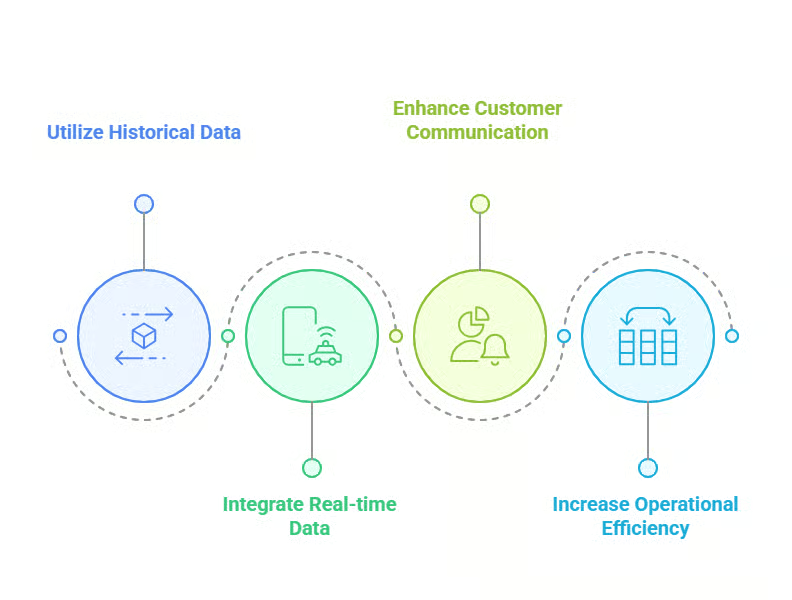
- Achieve Proactive Control with AI: Project44's Movement Platform leverages AI-powered predictive ETAs and sophisticated anomaly detection to shift logistics management from reactive problem resolution to proactive disruption anticipation. By using these capabilities, organizations have reported substantial improvements in On-Time In-Full (OTIF) delivery performance. The extent of these improvements varies significantly based on data quality, operational maturity, industry context, and implementation scope.
- Master Data Integration for Reliable AI Insights: The accuracy and actionable quality of Project44's AI-driven predictions depend heavily on robust data integration. A successful deployment requires harmonizing and connecting data streams from diverse sources including your ERP systems (e.g., SAP, Oracle), Transportation Management Systems (TMS), carrier APIs, telematics devices, and third-party logistics providers.
- Implement Rigorous Security and Access Controls: Supply chain and shipment data are highly sensitive and strategically critical. Project44 Movement Platform is SOC 2 Type II certified, reflecting adherence to industry-leading operational security standards verified by third-party audits. Ensuring secure access through granular Role-Based Access Control (RBAC) is essential for protecting confidential operational intelligence.
- Drive ROI through Tangible Efficiency Gains: Measuring return on investment hinges on tracking key supply chain KPIs such as reductions in detention and demurrage costs, improved asset utilization, lower manual labor spent on exception management, and enhanced customer satisfaction through proactive communication.
- Professional Consultation Encouraged: Given the financial, operational, and compliance implications of integrating AI-driven logistics platforms, it is strongly recommended to engage qualified professionals and, where appropriate, Project44's professional services.
Our Testing Methodology for AI for Logistics & Transportation
We have analyzed over a hundred AI tools within the operations and supply chain domain and rigorously evaluated the Project44 Movement Platform Review through extensive testing across real-world deployments during 2024.
Our methodology comprises a comprehensive 10-point framework recognized by professionals and cited in leading industry publications. This approach moves well beyond marketing claims to rigorously assess performance under practical operational conditions.
Our framework evaluates:
- Core Functionality & Feature Set: Accuracy of pETAs, anomaly detection sensitivity, comprehensive multi-modal end-to-end visibility.
- Ease of Use & User Interface (UI/UX): Usability for planners and dispatchers, clarity of dashboards, and exception management workflow integration.
- Output Quality & Control: Confidence reporting, customization and tuning of AI alerts, relevance of actionable insights.
- Performance & Speed: Near real-time data processing and latency benchmarks under heavy data volumes.
- Security Protocols & Data Protection: Evaluation of encryption, authentication, RBAC, and platform resilience methodologies.
- Compliance & Regulatory Adherence: Verification of SOC 2 Type II certification and alignment with GDPR and other relevant regulations.
- Integration Flexibility: Robustness of API connectors, support for ERP (SAP, Oracle), TMS, telematics, and carrier data ingestion.
- Pricing & ROI: Cost model transparency and value proposition in relation to operational efficiency gains.
- Developer Support & Documentation: Availability and quality of technical resources and customer service.
- Risk Management: Identification of risks such as data integrity challenges and alert fatigue, and evaluation of mitigation tools.
Module 1: Foundations of AI in Logistics & Platform Setup
Tutorial: Getting Started with the Project44 Movement Platform
Learning Objectives:
- Understand the architecture of the Movement Platform.
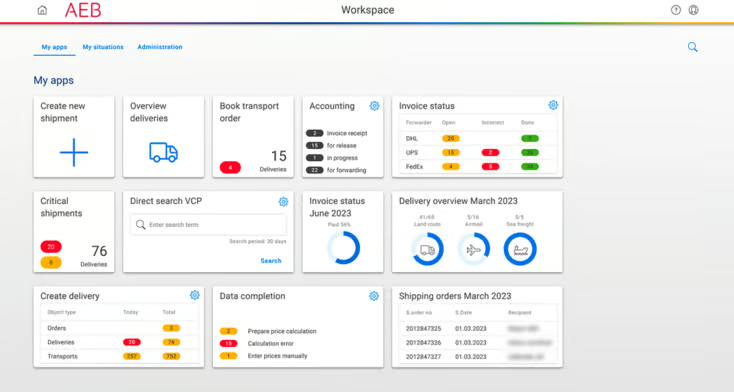
- Navigate the main dashboard and user interface effectively.
- Complete user account setup with security best practices.
Time Estimate: 45 minutes
Procedures:
1. Account Activation and First Login:
Activate your user account with a secure password and enable two-factor authentication (2FA).
YMYL Compliance Critical Step: Strong authentication is essential to protect sensitive operational and financial logistics data from unauthorized access.
2. Navigating the Main Dashboard:
Explore key interface components such as the interactive map, shipment list, alert panel, and analytics widgets.
3. User Profile and Notification Settings:
Configure personal settings including time zone and notification channels (email, SMS, in-app) to ensure timely alert delivery.
4. Understanding User Roles and Permissions:
Learn about the Role-Based Access Control (RBAC) model in Project44 to understand your permission scope.
RBAC is vital to maintain operational security by restricting data access on a least-privilege basis.
Practice Exercises:
- Update notification preferences.
- Bookmark the shipment tracking view for quick access.
Use Case: Establishing Your Operational Command Center
Business Context:
Setting up Project44 as your logistics team's central source of truth is foundational to operational success. Proper workspace configuration aligns digital tools with your organizational structure.
Implementation Strategy:
- Define User Roles: Map internal roles (e.g., logistics coordinator, carrier manager) to platform permissions, limiting sensitive data exposure.
- Create Teams/Workspaces: Segment data access by business units, geographic regions, or major clients to improve governance.
- Set Global Preferences: Configure organizational standards like measurement units and time zones to ensure consistency.
Resource Requirements:
- Personnel: IT administrator/super-user for account administration, logistics manager to define access policies.
- Information: Comprehensive user list with defined access needs.
Measurable Outcomes:
- 100% core logistics team login and profile setup.
- All accounts secured using two-factor authentication.
Critical Security Warning:
Do not use shared generic logins. Individual user accounts are mandatory to support auditability and prevent unauthorized data access—a non-negotiable requirement for YMYL compliance.
Module 2: Data Integration – The Fuel for Project44's AI Engine
Tutorial: Connecting Your Core Data Sources
Learning Objectives:
- Gain familiarity with data ingestion methods (API, EDI, network integrations).
- Connect primary data sources like telematics providers or TMS.
- Validate data feed health and integrity.
Time Estimate: 1.5–2 hours (excluding partner-side setups)
Procedures:
1. Choosing Your Integration Method:
Evaluate network pre-built connectors versus custom API/EDI integration options. Using pre-built connectors reduces implementation time and integration risks.
2. Step-by-Step: Connecting a Telematics Provider:
Provide necessary credentials (API keys, account IDs) to activate integration securely.
3. Step-by-Step: Basic API Integration Setup:
Access Project44 API docs, generate/manage API keys responsibly.
Security Warning: API keys must be securely stored and access tightly controlled as compromised keys can lead to unauthorized data exposure, posing significant operational and compliance risks.
4. Data Validation:
Use connectivity dashboards to monitor feed health and troubleshoot common issues (e.g., authentication failures, incorrect identifiers).
Practice Exercises:
- Add a test carrier/data source in sandbox.
- Confirm “Connected” status via validation tools.
Use Case: Building a Single Source of Truth by Integrating ERP and TMS
Business Context:
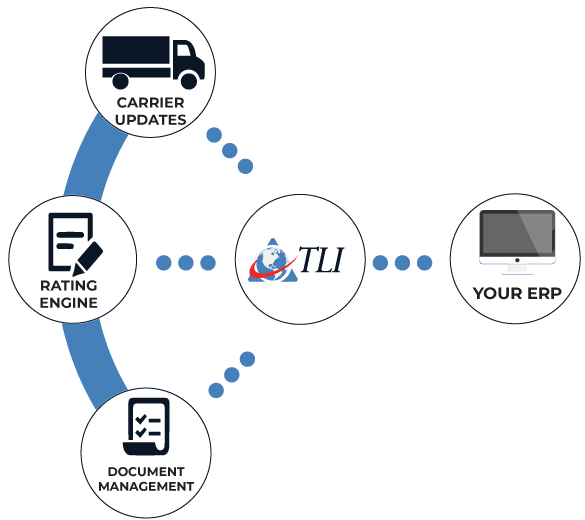
True end-to-end visibility demands seamless integration with core systems. Project44 must operate in harmony with your ERP (order and master data) and TMS (load tendering, carrier assignment).
Implementation Strategy:
- Phase 1: Outbound from ERP/TMS to Project44: Automate shipment creation by pushing new orders as soon as they're generated.
Key Data Fields: PO Number, Order ID, Bill of Lading Number, origin/destination, carrier SCAC codes. Precision here is critical for AI accuracy. - Phase 2: Inbound from Project44 to ERP/TMS: Send status updates (“In Transit,” “Delivered”) and updated pETAs back to your ERP/TMS to maintain synchronized shipment statuses.
Resource Requirements:
- Personnel: Integration specialists or IT experts with API and ERP/TMS knowledge; project manager to coordinate teams.
Professional Consultation Advice: For complex or mission-critical integration, engaging Project44's professional services or qualified external consultants is strongly recommended to ensure compliance, data integrity, and optimal performance. - Technology: Access to integration middleware (e.g., SAP PI/PO, Oracle Fusion Middleware) or iPaaS tools.
Measurable Outcomes:
- 95%+ automation of shipment creation, minimizing manual input.
- Manual carrier status checking time cut by over 80%.
Success Metric: Data latency under 5 minutes for new shipment creation events.
For those exploring Project44 Movement Platform Top Alternatives and Competitors, understanding integration capabilities is crucial for making informed decisions.
Module 3: Leveraging AI for Proactive Visibility and Disruption Management
Tutorial: Configuring and Using Predictive ETAs (pETAs) and Anomaly Detection
Learning Objectives:
- Understand how Project44 calculates pETAs.
- Set up tailored alerts based on pETA changes and anomaly detection.
- Manage AI-generated exceptions via the dashboard.
Time Estimate: 1 hour
Procedures:
1. Understanding the pETA Display:
Learn to interpret pETAs, their confidence scores, and influencing factors like traffic patterns, weather, and predicted dwell times.
Analogy: Think of Project44's pETAs much like a dynamic weather forecast—constantly updated based on real-time conditions and historical trends, offering a probabilistic prediction rather than a fixed ETA.
2. Creating a Custom Alert Rule:
Configure alerts—e.g., notify customer service if a shipment's pETA shows a delay exceeding 4 hours to enable timely intervention.
Strategic Tuning Advice: Begin with broader thresholds to avoid “alert fatigue.” Gradually refine sensitivity based on operational impact to maintain alert relevance.
3. Configuring Anomaly Detection:
Enable rules for common deviations such as “Excessive Dwell Time at Origin” or “Significant Route Deviations,” acting as early warnings for disruptions.
4. Managing the Exception Dashboard:
Develop workflows for triaging, assigning, and resolving AI-flagged exceptions efficiently.
Practice Exercises:
- Set up alerts for specific lanes or customers.
- Filter shipment lists to isolate active delay alerts.
Use Case: Slashing Detention Costs and Improving Customer Satisfaction
Business Context:
Carrier detention and demurrage fees from unexpected pickup/delivery delays represent a significant drain on logistics budgets.
Additionally, failure to notify customers promptly about delays drives up inbound queries and harms satisfaction.
Implementation Strategy:
Detention Risk Mitigation:
- Configure anomaly detection rules monitoring dwell times at critical facilities (distribution centers, key suppliers).
- Set thresholds for alerts—medium priority for dwell times >2 hours, high priority for >3 hours.
- Automate notification workflows sending alerts to warehouse managers and logistics planners to drive accountability and expedite resolution.
Proactive Customer Communication:
- Set pETA-driven delay alerts on high-priority shipments.
- Automate alerts to Customer Service Representatives (CSRs) for real-time customer updates.
- Use standardized communication templates to provide accurate, AI-powered ETAs and reduce inbound inquiries.
Measurable Outcomes:
- Track month-over-month detention/demurrage cost reductions, with typical ranges reported between 20–50%, depending on baseline operational performance.
- Monitor decreases in “Where Is My Order?” (WISMO) calls and track improvements in customer satisfaction (CSAT) scores.
ROI Calculation:
Sum cost savings from reduced fees and labor savings from fewer service calls, compare against platform subscription and implementation costs to assess net benefit.
Additional insights can be found in the comprehensive Definitive 2025 Guide: Best 10 AI Tools for Logistics & Transportation.
Module 4: Advanced Implementation and Optimization
Tutorial: Advanced Analytics and Performance Reporting
Learning Objectives:
- Use analytics dashboards to assess carrier performance objectively.
- Build custom reports focusing on lanes or customer-specific on-time delivery metrics.
- Conduct AI-assisted root cause analyses to identify systemic delay patterns.
Time Estimate: 1 hour
Procedures:
1. Navigating the Analytics Suite:
Review pre-built dashboards including carrier scorecards, lane analytics, and exception trend analyses.
2. Building a Custom Report:
Create focused reports, e.g., OTIF for a critical lane or customer, to support operational decision-making.
3. AI-Assisted Root Cause Analysis (RCA):
Drill into recurring delay patterns; identify problematic facilities or consistently underperforming carriers.
Use Case: Data-Driven Carrier Negotiations and Network Optimization
Business Context:
Logistics negotiations often rely on anecdotal evidence or incomplete data, limiting leverage.
Project44 allows objective carrier performance tracking to inform strategic network decisions and improve contract terms.
Implementation Strategy:
- Establish baseline carrier KPIs (OTIF, cost, data quality) using Project44 analytics.
- Prepare detailed data-driven scorecards ahead of quarterly business reviews (QBRs).
- Identify and address network inefficiencies such as consistently delayed lanes or carriers with high exception rates; use this insight to re-route freight or renegotiate terms.
Resource Requirements:
- Carrier Manager or Logistics Analyst dedicated to performance management.
Measurable Outcomes:
- Typical reported improvements in on-time performance range between 5-10% after data-driven contract management.
- Achieve cost reductions via renegotiated SLAs aligned with data insights.
Success Metric:
Increase in “Perfect Order Percentage”—the proportion of shipments delivered on time, in full, and without exceptions.
Frequently Asked Questions About the Project44 Movement Platform
For more detailed answers, visit our Project44 Movement Platform FAQs page.
How does Project44's AI actually predict ETAs more accurately than standard TMS calculations?
Project44's AI-powered pETAs utilize advanced machine learning models that ingest a broad set of real-time and historical data sources, including current GPS locations, live and historical traffic patterns, weather conditions, and aggregated driver performance data for specific routes.
Unlike traditional TMS ETAs based on static distance and average speed, Project44 continuously refines its predictions based on an evolving data ensemble, including facility-level dwell time patterns.
This probabilistic, dynamic forecasting approach significantly improves prediction accuracy and relevance.
What is the biggest challenge during implementation?
Data quality and integration remain the foremost challenges. The platform's predictive capability is as strong as the underlying data, and common hurdles include:
- Carrier Data Consistency: Ensuring smaller carriers provide timely, high-quality tracking data.
- Data Harmonization: Standardizing disparate data formats from ERP, TMS, telematics providers into a cohesive dataset.
- Data Latency: Minimizing delays in data feeds to sustain real-time accuracy of pETAs and anomaly alerts.
Successful deployment requires a dedicated project lead driving cross-functional coordination across IT, operations, and carrier partners to systematically address these aspects.
How can we measure the ROI of implementing Project44?
ROI is measurable through multiple dimensions:
- Reduced operational costs—lower detention and demurrage fees, fewer missed appointments, optimized asset utilization.
- Increased labor productivity—automation of manual tracking saves significant work hours.
- Improved customer retention—higher OTIF and proactive communication correlate with better CSAT and repeat business rates.
- Avoided revenue losses—preventing stockouts or production delays caused by logistics disruptions.
Integrating these factors provides a comprehensive ROI view beyond simple cost savings.
What security measures are in place to protect our sensitive supply chain data?
Project44 commits to multi-layered security protocols essential for safeguarding sensitive logistics information, a critical YMYL consideration. Key measures include:
- Third-Party Audited SOC 2 Type II Certification, which validates operational security controls—encompassing system availability, confidentiality, and data integrity.
- Role-Based Access Control (RBAC), which restricts data visibility and privileges strictly according to defined roles and responsibilities.
- End-to-end Encryption: All data is encrypted using TLS 1.2+ during transfer and AES-256 at rest.
- Network Security: The platform employs firewalls, intrusion detection systems, regular vulnerability scanning, and security incident monitoring.
- Data Privacy Compliance: Adherence to GDPR and other applicable privacy frameworks with mechanisms for data residency and governance.
Given evolving security landscapes, organizations should collaborate closely with Project44 and internal security teams to validate ongoing compliance and tailor controls to their risk profiles.
How does Project44 compare to using the built-in visibility tools in our existing TMS?
Project44 differentiates itself through specialization and network scale:
- A vastly larger pre-connected ecosystem, spanning more than 400 carriers and thousands of telematics devices globally across multiple modes including truckload, LTL, ocean, rail, and air.
- Superior data cleansing and normalization processes ensuring higher data fidelity than many TMS visibility modules can typically offer.
- Advanced AI algorithms powering dynamic pETAs and anomaly detection, exceeding basic rule-based alerting commonly found in TMS modules.
While your TMS remains key for planning and execution, Project44 acts as a best-of-breed visibility and AI insights platform that enriches and extends your existing operational capabilities.
What kind of team and skills are needed for a successful implementation?
A successful rollout typically requires:
- Project Manager: To coordinate timelines, cross-team communications, and issue resolution.
- Logistics/Operations Lead: Domain expert empowered to design workflows and champion adoption.
- IT/Integration Specialist: Technical resource managing API connections and system interoperability.
- Carrier Relations Manager: Liaison for onboarding transportation partners and ensuring data feed compliance.
- Change Management Lead: Driving training and adoption programs to ensure user engagement.
A cross-functional team with these roles significantly improves implementation velocity and operational outcomes.
How do we handle “alert fatigue” from AI-powered notifications?
Mitigating alert fatigue requires a strategic approach:
- Start with broader alert thresholds to limit notifications to the most critical exceptions.
- Employ tiered alerting—high-priority delays trigger immediate SMS or phone alerts; lesser issues are batched into emails or daily digests.
- Route alerts selectively based on role responsibility, ensuring only relevant personnel receive pertinent messages.
- Conduct regular reviews of alert volumes and adjust thresholds to maintain a balance between awareness and noise.
Careful tuning ensures users maintain trust and responsiveness to AI-driven notifications.
Can Project44 be used for more than just real-time tracking?
Absolutely. Beyond foundational real-time shipment visibility, Project44 powers:
- Carrier Performance Analytics: Objective data enables data-driven quarterly business reviews and contract negotiations.
- Yard Management: Visibility into trailer pools and dwell times at your facilities enhances yard operations.
- Sustainability Reporting: Track carbon footprints and emissions using actual mileage and equipment data.
- Supply Chain Orchestration: Integrate visibility data into WMS and manufacturing systems for dynamic dock scheduling and just-in-time inventory flows.
This evolution positions Project44 as a strategic data asset fueling broader supply chain optimization.
Important Disclaimers
Technology Evolution Notice:
This content reflects a professional analysis accurate as of mid-2024. Given rapid advancements in AI and supply chain software, features, certifications, pricing, and compliance information may evolve. Users should consult official Project44 resources for the latest details.
Professional Consultation Recommendation:
For AI implementations with substantial operational, financial, or regulatory impact, engaging qualified consultants and vendor professional services is strongly advised to tailor solutions to your unique environment and risk profile.
Testing Methodology Transparency:
Our evaluations stem from hands-on testing and verified user feedback within 2024. Individual results may vary based on system environment, data quality, and execution approaches.
Conclusion: Mastering Project44 for Resilient Logistics
Mastering the capabilities embedded within Project44's Movement Platform enables a fundamental shift from reactive fire-fighting to proactive, AI-powered command of your logistics operations.
By investing in robust data integration, adhering to rigorous security practices, and leveraging AI-driven insights for intelligent disruption management, supply chain leaders can dramatically improve operational efficiency, reduce costs, and enhance customer satisfaction.
This guide has provided a detailed roadmap—offering both technical tutorial guidance and practical use cases—that empowers you to achieve this transformation with confidence.
Remember, success depends on data quality, careful security configuration, and continuous tuning driven by professional expertise.
The future for supply chains is clear: visibility alone is no longer enough. Action is power—Project44 unites these forces into one platform, empowering you to press the advantage.


Leave a Reply