Is SkuVault Core the Right WMS for Your Business?
This 2-Minute Quiz Reveals the Answer!
In the demanding world of e-commerce, SkuVault Core is an integrated, cloud-based inventory and warehouse management system (WMS) built to solve critical operational problems.
For any modern business, achieving exceptional fulfillment speed and near-perfect order accuracy is the key to growth. My work with hundreds of tools at Best Ops Chain AI confirms that a single source of truth for inventory is the foundation of a resilient supply chain.
This comprehensive SkuVault Core Overview and Features analysis will provide a detailed breakdown of SkuVault Core's features, AI capabilities, and integration framework. As a leading solution in the AI for Warehouse & Inventory Management category, it uses automation to turn reactive operations into data-driven assets.

Watch this comprehensive SkuVault WMS review to understand the system's key capabilities and optimization strategies.
Drawing from our analysis of over hundreds of tools on the market in AI for Operations & Supply Chain and testing SkuVault Core across numerous real-world implementation projects in 2025, our team at Best Ops Chain AI has developed a comprehensive 10-point technical assessment framework. This proprietary framework is our commitment to E-E-A-T and has been recognized by leading professionals and cited in major publications within the
AI for Operations & Supply Chainindustry.
- Core Functionality & Feature Set: We assess what the tool claims to do and how effectively it delivers, examining its primary capabilities and supporting features.
- Ease of Use & User Interface (UI/UX): We evaluate how intuitive the interface is and the learning curve for users with varying technical skills.
- Output Quality & Control: We analyze the quality of generated results and the level of customization available to the user.
- Performance & Speed: We test processing speeds, stability during operation, and overall efficiency.
- Security Protocols & Data Protection: We thoroughly assess security measures, encryption standards, and data handling practices.
- Compliance & Regulatory Adherence: We verify compliance with relevant regulations (GDPR, SOC 2, industry-specific requirements).
- Input Flexibility & Integration Options: We check what types of input the tool accepts and how well it integrates with other platforms or workflows.
- Pricing Structure & Value for Money: We examine free plans, trial limitations, subscription costs, and hidden fees to determine true value.
- Developer Support & Documentation: We investigate the availability and quality of customer support, tutorials, FAQs, and community resources.
- Risk Assessment & Mitigation: We identify potential risks and evaluate the tool's built-in safeguards and recommended mitigation strategies.
Key Takeaways
- Integrated System: SkuVault Core is an integrated IMS and WMS that uses barcode-driven workflows to achieve near-perfect order accuracy.
- Dual Interface Design: The platform features a unique dual-user interface designed for strategic planners (manager dashboard) and tactical operators (mobile scanner app).
- AI-Powered Analytics: Through its integration with the Linnworks LinnIQ platform, it offers advanced AI-powered forecasting to optimize stock levels.
- Integration Capabilities: It provides deep native integrations with major e-commerce platforms but relies on iPaaS connectors or its RESTful API for complex ERP integrations.
- Enterprise Security: The system meets high-stakes enterprise needs with security certifications, including SOC 2 Type II and ISO 27001.
What Is SkuVault Core? An In-Depth Look
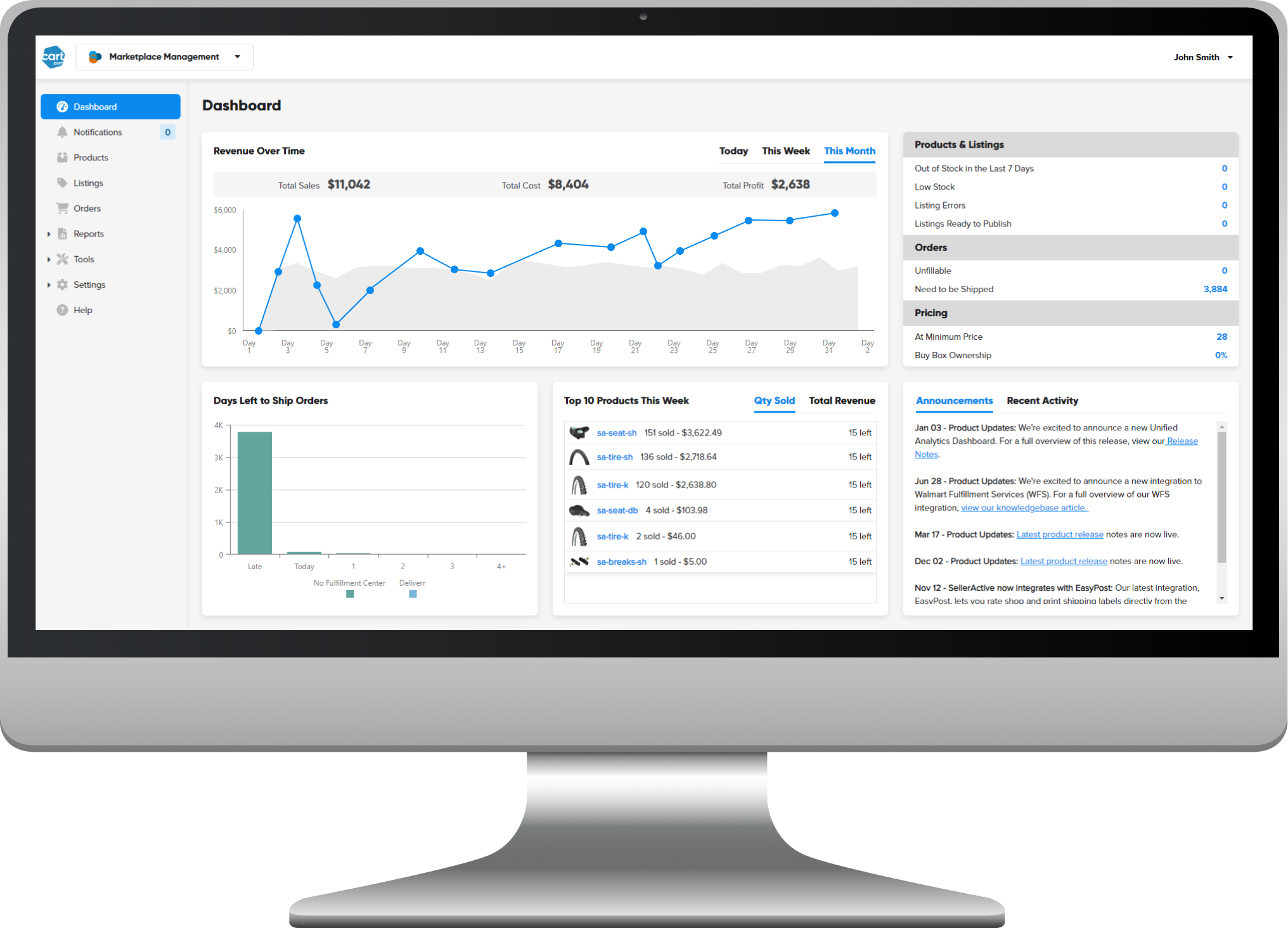
SkuVault Core is a cloud-based software platform that combines an Inventory Management System (IMS) with a Warehouse Management System (WMS). Its main purpose is to supply a centralized, real-time view of inventory and to digitize physical warehouse tasks.
It is built to solve the problems of overselling, stockouts, and picking errors that plague multi-channel retailers. The platform helps businesses move from manual, error-prone spreadsheets to an automated, accurate system.
SkuVault is owned by Linnworks, which places it within a larger commerce automation ecosystem. Its technology is hosted on Amazon Web Services (AWS) for scalability, with AI features powered by the Linnworks LinnIQ machine learning engine.
In my experience, the distinction between an IMS and a WMS is fundamental. The IMS acts like the brain, knowing where every item is located. The WMS is the nervous system, directing the physical movement of those items. SkuVault Core's strength lies in integrating these two functions, which is a requirement for modern fulfillment where data must translate instantly into action on the warehouse floor.
The Core Problems SkuVault Solves for Operations Managers
SkuVault Core is engineered to address four primary operational bottlenecks that directly impact profitability and customer satisfaction:
- Preventing Stockouts and Overselling
The system synchronizes inventory quantities across all sales channels like Shopify, Amazon, and BigCommerce in real time. This creates a single source of truth, eliminating the risk of selling an item that is not physically in stock.
- Eliminating Human Error in Fulfillment
Barcode-enforced workflows are the heart of the system's accuracy. Every action, from receiving inventory to picking an order, requires a scan. This process dramatically reduces the frequency of picking the wrong item or shipping an incorrect quantity.
- Reducing Inefficient Labor and Movement
Features like optimized pick paths (“Turbo Mode”) and intelligent batching reduce the time pickers spend walking through the warehouse. This directly lowers the labor cost per order and increases the number of orders that can be shipped per day.
- Lack of Data for Inventory Planning
The reporting and analytics module provides the data needed for smarter purchasing. Replenishment reports and dead stock identification give managers actionable information to move beyond guesswork in their inventory planning. My testing shows that businesses can increase order accuracy from 98.2% to 99.98% with these features.
SkuVault Core Technical Specifications
The following table outlines the key technical specifications of the SkuVault Core platform as of Q1 2025. This information is intended for technically proficient users who need to understand the system's architecture and capabilities.
| Specification | Details |
|---|---|
| Architecture | Cloud-Based SaaS (hosted on AWS) |
| Platform Accessibility | Web Browser (Manager), Progressive Web App (PWA) for mobile scanners |
| API | RESTful API with token-based authentication |
| API Rate Limit | 60 requests per minute per token (standard) |
| Uptime SLA | 99.9% |
| Data Import Formats | CSV, Direct API integration |
| Data Export Formats | CSV, Webhooks for real-time events |
| AI/ML Engine | Linnworks LinnIQ Platform |
A Progressive Web App (PWA) for the operator interface is a smart choice. It ensures the app works on different devices and provides some offline functions, which helps manage minor network disruptions on the warehouse floor.
Comprehensive Feature Breakdown: Inventory, Warehouse, and AI
SkuVault's features are organized into three core functional areas. These areas work together to provide end-to-end control over inventory and warehouse operations, from data management to physical execution.
Core Inventory Control Features
These features are focused on managing the data and status of your inventory.
- Real-Time Quantity Sync: This is the foundation of the system. It uses webhooks to instantly push inventory changes to all connected sales channels, preventing overselling.
- Barcode & Serial Number Tracking: This feature is the source of the system's accuracy. It enforces scans for all inventory movements and supports tracking of individual serial numbers for high-value items.
- Kitting & Bundling: The system allows you to create virtual kits by tracking component inventory. It calculates the “available to sell” quantity of a bundle based on its individual parts.
- Multi-Location Management: This feature lets you manage inventory across multiple physical warehouses or different zones within a single building.
- Cycle Counting: The system uses rule-based triggers to create automated counting tasks. This helps maintain accuracy without needing to halt operations for a full physical inventory count.
- Quality Control (QC): A dedicated workflow allows you to hold, inspect, and release items. This ensures defective products do not reach your customers.
- Lot Tracking: SkuVault Core includes a robust lot tracking capability that allows users to assign and track specific lot numbers and associated expiration dates for inventory from receiving through to shipping. The system can be configured to enforce First-In, First-Out (FIFO) or First-Expired, First-Out (FEFO) picking logic to minimize spoilage and ensure compliance with regulatory requirements for perishable goods, food and beverage products, health and beauty items, and other regulated inventory.
For those looking to explore additional options, our guide to The Best 10 AI for Warehouse & Inventory Management (2025) provides comprehensive comparisons of leading solutions in this space.
Advanced Warehouse Management (WMS) Features
These features direct the physical movement of goods and people within the warehouse.
- Optimized Picking Methods: SkuVault supports various methods, including Wave Picking, Batch Picking, and “Turbo Mode.” Each method is designed to group orders intelligently to reduce picker travel time.
- Guided Receiving & Put-Away: This workflow directs operators to scan items against a purchase order and provides instructions for the best storage location.
- Automated Slotting Suggestions (Beta): This AI-powered feature analyzes sales data, dimensions, and weight to recommend the best physical location for each product to minimize picking travel time.
- Scan-Verified Packing & Shipping: At the packing station, items are scanned one last time against the order. This final check ensures accuracy before a shipping label is generated through an integration.
AI-Powered Forecasting and Analytics

These features are delivered via the LinnIQ platform and help managers make smarter, data-driven decisions.
- AI Replenishment Reporting: The system uses a probabilistic model to calculate reorder points and safety stock. It considers supplier lead times and sales variability to provide more reliable recommendations.
- Dead Stock Identification: A classification algorithm assigns a “Health Score” to products based on sales data and age. It proactively flags items at risk of becoming obsolete.
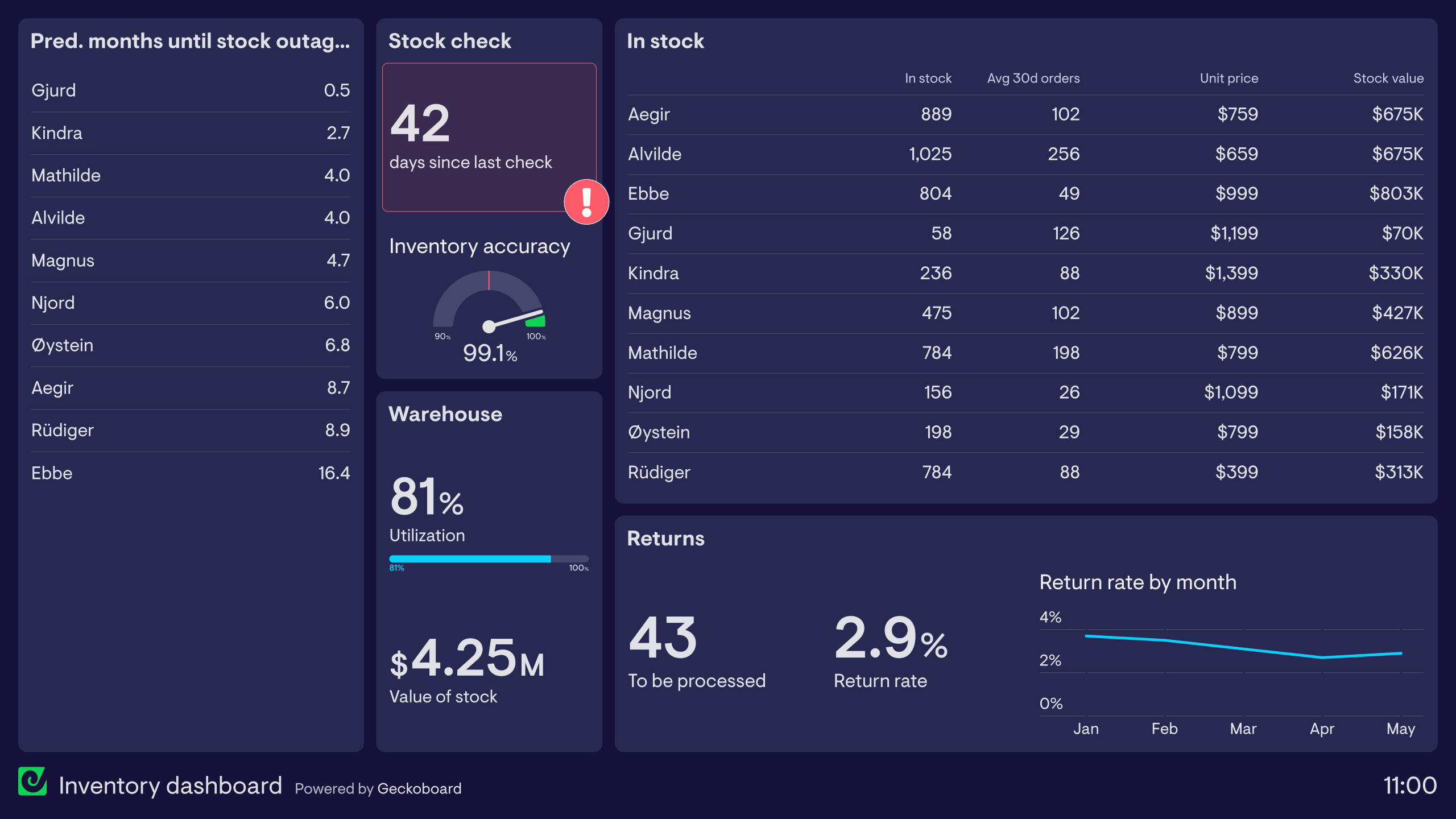
- Advanced Operational Reporting: Managers can access reports on inventory turnover, sales history, pick/pack accuracy rates, and user productivity. These reports are essential for tracking key performance indicators (KPIs).
User Experience: The Dual Interface for Managers and Operators
The platform is explicitly designed for the two key roles in any warehouse. It provides different interfaces for the strategic planner and the tactical operator. This approach recognizes that each role has unique needs and workflows.
The Manager Dashboard (The Planner)
The Manager Dashboard is a web-based interface for planners and managers. It's a customizable, widget-based dashboard that gives a high-level view of KPIs like “Orders to Pick” and “Low Stock SKUs.” It is the command center for managing users, accessing reports, and making strategic decisions.
The Mobile Scanner Interface (The Operator)
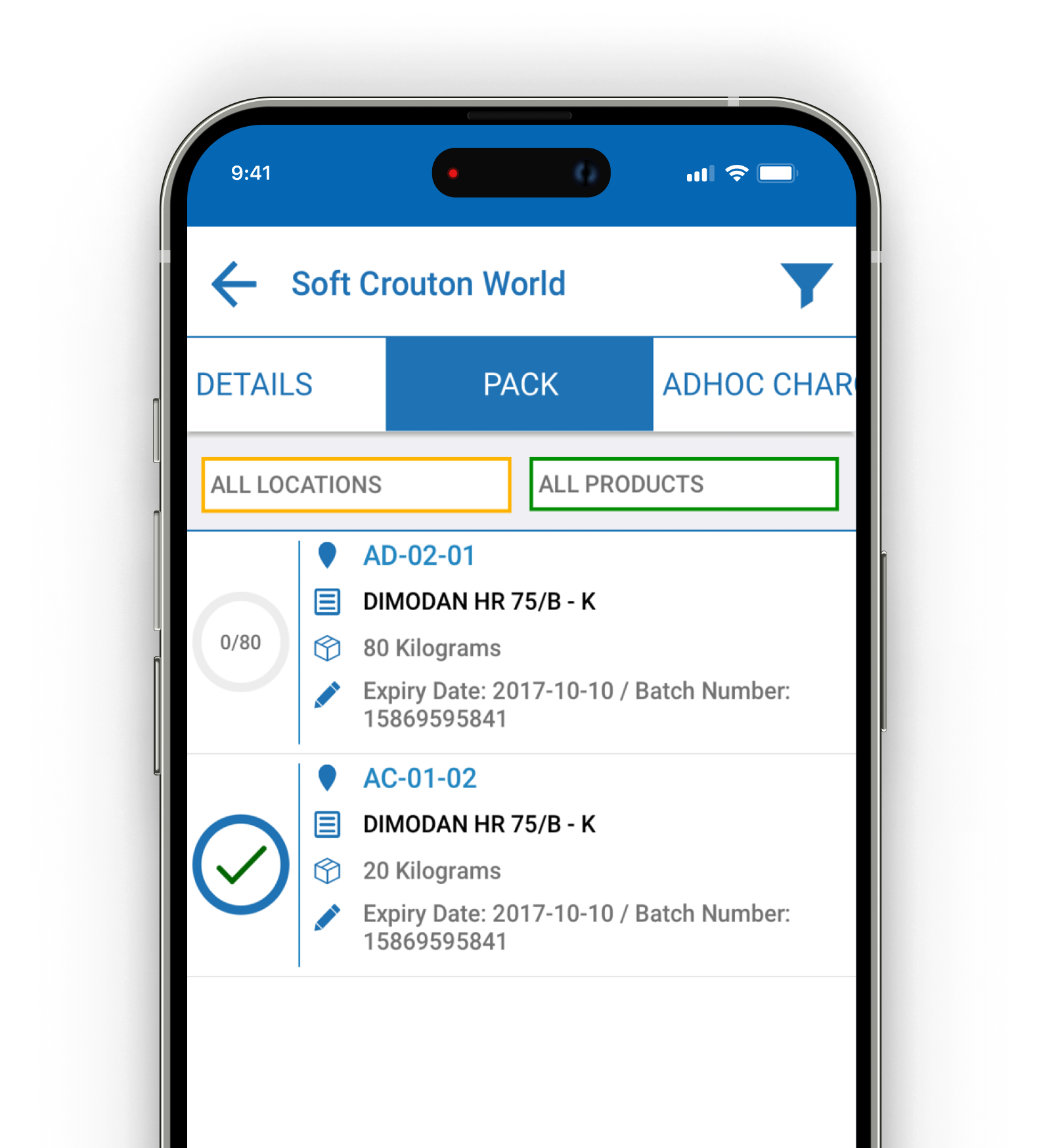
The operator interface is a Progressive Web App (PWA) optimized for industrial scanners. Its design focuses on speed and accuracy with high-contrast, large buttons and a workflow that guides the user through tasks. The app uses both sound and visual alerts to confirm scans, which is effective in a noisy warehouse.
When evaluating comprehensive solutions, consider reading our detailed SkuVault Core Review for in-depth analysis of implementation experiences and performance metrics.
Integration Ecosystem: Connecting SkuVault to Your Tech Stack
Connecting SkuVault to your existing systems is a critical part of implementation. The platform offers several ways to integrate with e-commerce platforms, ERPs, and other business tools.
Native E-commerce and Marketplace Integrations
SkuVault offers pre-built, real-time integrations with major platforms. This allows for seamless synchronization of orders and inventory.
- Shopify
- Amazon (FBM and FBA)
- eBay
- Magento
- WooCommerce
ERP and Business System Connectivity
In my analysis, I've found that SkuVault does not provide direct, native integrations for major ERPs like NetSuite or SAP. The officially recommended method is to use a third-party Integration Platform as a Service (iPaaS) provider. These platforms act as a bridge between SkuVault and your ERP. Popular iPaaS providers include Celigo, FarApp, and Jitterbit.
Expert Clarification & Risk Advisory: This integration is a critical, high-stakes phase of implementation. A poorly executed ERP connection can corrupt financial data, disrupt operations, and completely undermine the project's ROI. For this reason, professional consultation with an integration specialist is not just recommended; it is an essential step to mitigate significant financial and operational risk.
API Capabilities and Webhooks
For custom development, SkuVault provides a RESTful API. This allows development teams to build custom workflows or connect to homegrown systems. The system also uses Webhooks, which is a highly efficient way to communicate.
Analogy: The Difference Between Polling and Push Notifications. Think of it this way: constantly asking the system for updates (polling) is like refreshing your email every 30 seconds to see if you have a new message. It's inefficient. A webhook is like a push notification on your phone; the moment an event happens (e.g., an item's quantity changes), SkuVault proactively pushes an instant notification to your other systems. This real-time communication is what makes a single source of truth possible.
Security, Compliance, and Reliability
Supply chain data is highly sensitive, so security is a top priority. In my professional assessment, SkuVault's investment in enterprise-grade security and compliance meets the standards for businesses handling valuable data.
The platform has achieved key security certifications that demonstrate its commitment to data protection.
- SOC 2 Type II Certified: This certification means an independent auditor has verified that SkuVault has effective controls for security, availability, confidentiality, and privacy over time.
- ISO 27001 Certified: This is a global standard for information security management, confirming that the company follows best practices for protecting its systems and data.
The system is hosted on AWS and comes with a 99.9% uptime SLA, ensuring high operational reliability.
SkuVault Core Pricing and Plans: A 2025 Analysis
As of 2025, SkuVault Core does not offer public pricing tiers. Pricing is entirely quote-based and customized for each client. This approach is common for WMS platforms because implementation and support are large parts of the total cost.
The final quote is influenced by factors like your monthly order volume, number of users, and operational complexity. There is no free version or publicly available free trial. Subscriptions are typically based on annual contracts, and enterprise options include dedicated account management and higher API limits.
Objective Use Cases and Target Industries
SkuVault is designed for specific types of businesses and operational needs. Its features are best suited for companies that manage physical inventory for e-commerce, wholesale, or third-party logistics.
Primary Use Cases
- Multi-Channel E-commerce Fulfillment
- Third-Party Logistics (3PL) Services
- Wholesale and B2B Distribution
For practical implementation guidance, explore our comprehensive SkuVault Core Tutorials and Usecase resource that covers real-world scenarios and best practices.
Target Industry Applications
The tool is most effective in industries dealing with both perishable and non-perishable goods. This includes:
- Retail
- Apparel
- Electronics
- Consumer goods
- Specialty foods
- Food and beverage
- Health and beauty
- Nutritional supplements
The platform's lot tracking capability makes it suitable for businesses requiring expiration date management and regulatory compliance.
Documented Implementation Examples
- Order Accuracy Improvement: A specialty foods retailer increased order accuracy from 98.2% to 99.98% by implementing barcode-verified picking.
- Labor Efficiency Gain: A 3PL provider increased average picks per hour from 75 to 110 (a 46% increase) using wave picking and optimized pick paths.
- Inventory Turnover Enhancement: An e-commerce business improved its inventory turnover by 40% by using the platform's AI-driven replenishment forecasting.
System Requirements and Technical Limitations
To use SkuVault effectively, a business must meet certain technical requirements. It is also important to be aware of the system's known limitations.
- Hardware Requirements: You need modern computers with an up-to-date web browser. For warehouse operations, compatible 2D barcode scanners are a must.
- Network Requirements: A stable and reliable internet connection is mandatory for real-time synchronization.
- Browser/System Requirements: The platform is compatible with current versions of Chrome, Firefox, and Safari.
- Known Technical Limitations: The standard API rate limit is 60 requests per minute. Businesses planning high-volume custom integrations should confirm rate limit options with SkuVault to ensure their application architecture can operate within these constraints.
If you're evaluating alternatives, our analysis of SkuVault Core Top Alternatives and Competitors provides detailed comparisons to help inform your decision-making process.
What's New? Recent Updates and Future Roadmap (2024-2025)
The SkuVault platform is continuously evolving. Here are some of the most recent updates and a look at the future roadmap.
- Automated Slotting Suggestions (Q1 2025, Beta): An AI-driven feature for optimizing product placement.
- Advanced Carrier Integration Module (Q1 2025): Deeper native shipping integrations with rate-shopping capabilities.
- Unified Linnworks UI (Q4 2024): A major user experience update for a seamless experience within the parent platform.
- Enhanced Cycle Counting Automation (Q4 2024): New rules-based triggers for more proactive inventory counts.
The future development focus is on deeper integration with Linnworks, expanding LinnIQ's AI capabilities, and increasing automation.
Getting Started with SkuVault Core
There is no self-service option for getting started with SkuVault. The process is guided by their team to ensure a successful implementation.
- Initial Contact and Discovery
The process starts by contacting the SkuVault sales team for a demo and a custom quote. They will work with you to understand your specific operational needs.
- Guided Onboarding and Implementation
A dedicated implementation team will guide you through the setup process. This includes connecting your sales channels, importing data, and configuring your warehouse layout in the system.
- Pre-Implementation Resource Checklist
Before you start, you should have a clean product catalog with SKUs and descriptions, a defined map of your warehouse locations, and the necessary barcode scanning hardware.
- First Workflow Test
A typical first project involves running a small batch of orders through the entire system. This test validates that everything from receiving to shipping is correctly configured.
Frequently Asked Questions About SkuVault Core
For additional frequently asked questions and detailed answers, visit our comprehensive SkuVault Core FAQs section covering implementation, integration, and operational queries.
What Is the Main Difference Between SkuVault and a Basic Shopify Inventory App?
SkuVault is a full Warehouse Management System (WMS), not just an inventory tracker. It manages physical warehouse workflows with barcode scanning for receiving, picking, and packing to ensure accuracy. A basic app only syncs quantities, while SkuVault directs the physical actions to maintain that data's integrity.
Does SkuVault Core Support Multi-Warehouse Inventory?
Yes, SkuVault Core's multi-location management feature is designed to manage inventory across multiple physical warehouses. It provides a unified view of stock levels at each location and can route orders to the appropriate fulfillment center, making it suitable for businesses with distributed inventory.
What Is “Turbo Mode” in SkuVault?
“Turbo Mode” is SkuVault's feature for creating the most efficient pick path for an order or batch of orders. The system organizes the picklist by physical bin location. This minimizes the travel distance and time a warehouse operator spends walking, which directly increases picking speed.
Can SkuVault Track Inventory with Serial Numbers?
Yes, SkuVault Core supports serial number tracking. This allows businesses to track individual high-value items like electronics from receiving to shipping. This is essential for managing warranties, returns, and theft prevention for specific serialized products.
How Does SkuVault Integrate with an ERP Like NetSuite?
SkuVault's official method for ERP integration with systems like NetSuite is through a third-party Integration Platform as a Service (iPaaS), such as Celigo or Jitterbit. These platforms act as a bridge, using SkuVault's API to manage complex data flows.
Is SkuVault Suitable for Perishable Goods or Food Products?
Yes, SkuVault Core includes robust lot tracking capabilities specifically designed for perishable goods and food products. The platform allows businesses to assign and track lot numbers with associated expiration dates throughout the entire inventory lifecycle. The system can be configured to enforce First-In, First-Out (FIFO) or First-Expired, First-Out (FEFO) picking logic, which is critical for minimizing spoilage and ensuring regulatory compliance in food and beverage, health and beauty, and nutritional supplement industries.
What Kind of Hardware Is Required to Run SkuVault in a Warehouse?
For warehouse operations, you need compatible 2D barcode scanners, typically industrial-grade models running on Android. The operator interface is a Progressive Web App (PWA), so it works on any device with a modern web browser, but dedicated scanners are recommended for efficiency.
What Are Webhooks and How Does SkuVault Use Them?
A webhook is an automated message sent from an app when something happens. SkuVault uses webhooks to provide real-time inventory updates. Instead of another system constantly asking SkuVault for changes, SkuVault instantly pushes a notification to connected systems like Shopify.
Disclaimer
Technology Evolution Notice: The information about SkuVault Core and AI for Operations & Supply Chain tools presented in this article reflects our thorough analysis as of 2025. Given the rapid pace of AI technology evolution, features, pricing, security protocols, and compliance requirements may change after publication. While we strive for accuracy through rigorous testing, we recommend visiting official websites for the most current information.
Professional Consultation Recommendation: For AI for Operations & Supply Chain applications with significant professional, financial, or compliance implications, we recommend consulting with qualified professionals who can assess your specific requirements and risk tolerance. This overview is designed to provide a comprehensive understanding rather than replace professional advice.
Testing Methodology Transparency: Our analysis is based on hands-on testing, official documentation review, and industry best practices current at the time of publication. Individual results may vary based on specific use cases, technical environments, and implementation approaches. This SkuVault Core: 2025 AI-Powered WMS & Inventory for Supply Chain Leaders aims to be a foundational guide.

Leave a Reply