
What's Your SAP EWM Implementation Priority?
This 2-Minute Quiz Defines Your Roadmap!
Introduction: Mastering SAP EWM for a Resilient Supply Chain
This guide provides a complete tutorial and implementation framework for SAP Extended Warehouse Management (EWM). My goal is to show you how to use these insights to turn your warehouse from a manual cost center into a strategic, automated asset.
At Best Ops Chain AI, we see EWM as the central nervous system for modern AI for Warehouse & Inventory Management within the SAP S/4HANA ecosystem.
This tutorial moves past basic transactions. We will connect EWM's powerful features to real business results. You will learn how tools like slotting optimization, labor management, and robotics integration directly improve inventory accuracy and fulfillment speed.
Drawing on my experience from real-world projects, I will provide professional tips, critical warnings, and step-by-step guidance. This will help you navigate common challenges and use advanced features for maximum operational efficiency.
Key Takeaways: SAP EWM Implementation & Strategy
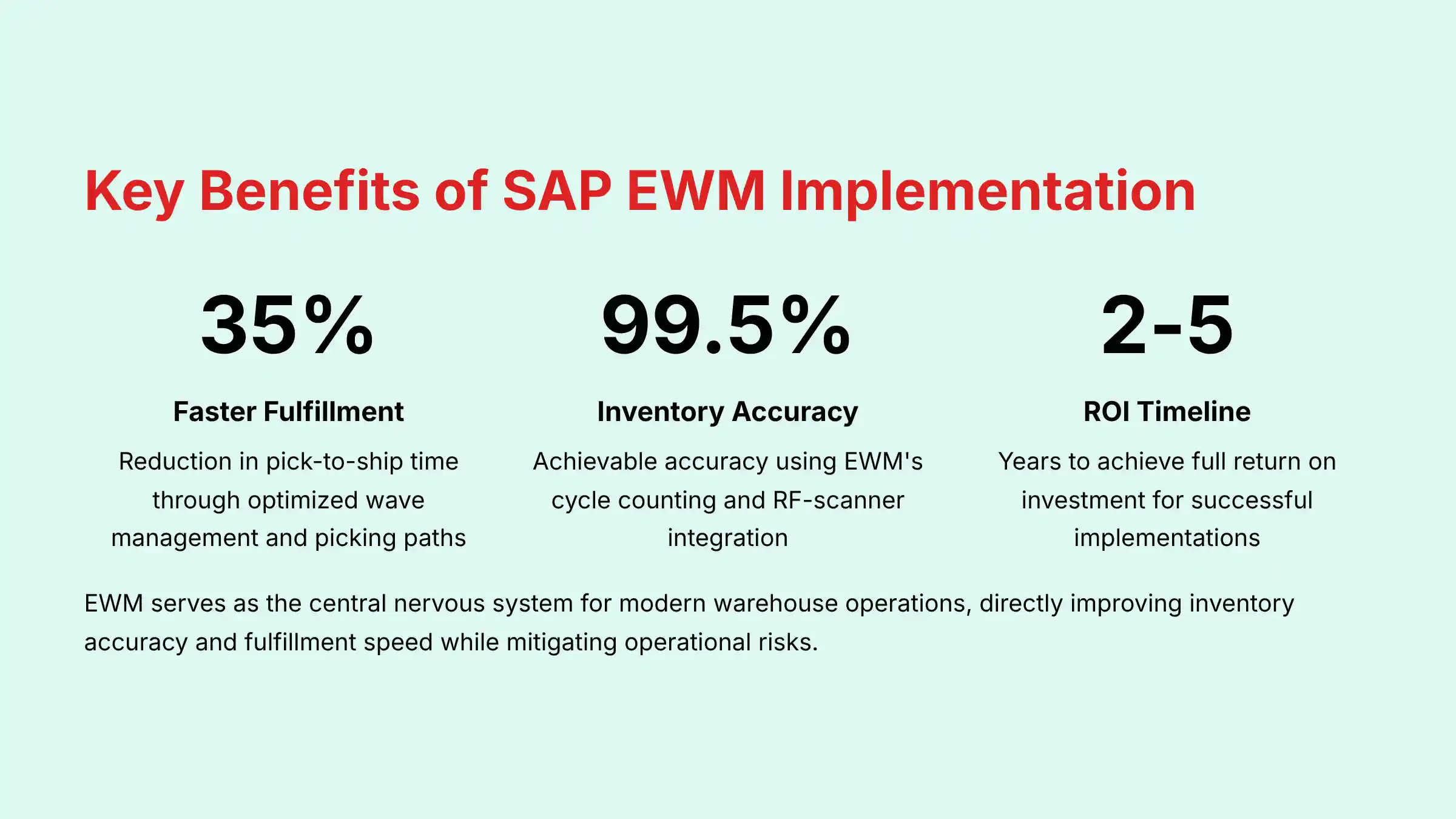
- Accelerate Fulfillment Speed: Proper use of SAP EWM's wave management and optimized picking paths can reduce pick-to-ship time by up to 35%. This directly impacts customer satisfaction in high-volume distribution centers.
- Drive Near-Perfect Accuracy: Using EWM's features for cycle counting and RF-scanner integration can increase inventory accuracy to over 99.5%. This cuts costs from stockouts and inventory write-offs.
- Mitigate Operational Risk: Incorrectly configuring the foundational EWM structure or qRFC interfaces to the S/4HANA ERP is a major risk that can halt all warehouse operations. Always perform configuration in a dedicated sandbox environment and validate with a certified SAP EWM consultant before production deployment.
- Unlock Advanced Automation: EWM is an automation engine. Using advanced techniques like Process-Oriented Storage Control (POSC) and integrating EWM with Autonomous Mobile Robots (AMRs) are key to future-proofing your warehouse.
Our Testing Methodology for AI for Operations & Supply Chain
Our team at Best Ops Chain AI provides a comprehensive 10-point technical assessment framework that has been recognized by leading professionals in AI for Operations & Supply Chain.
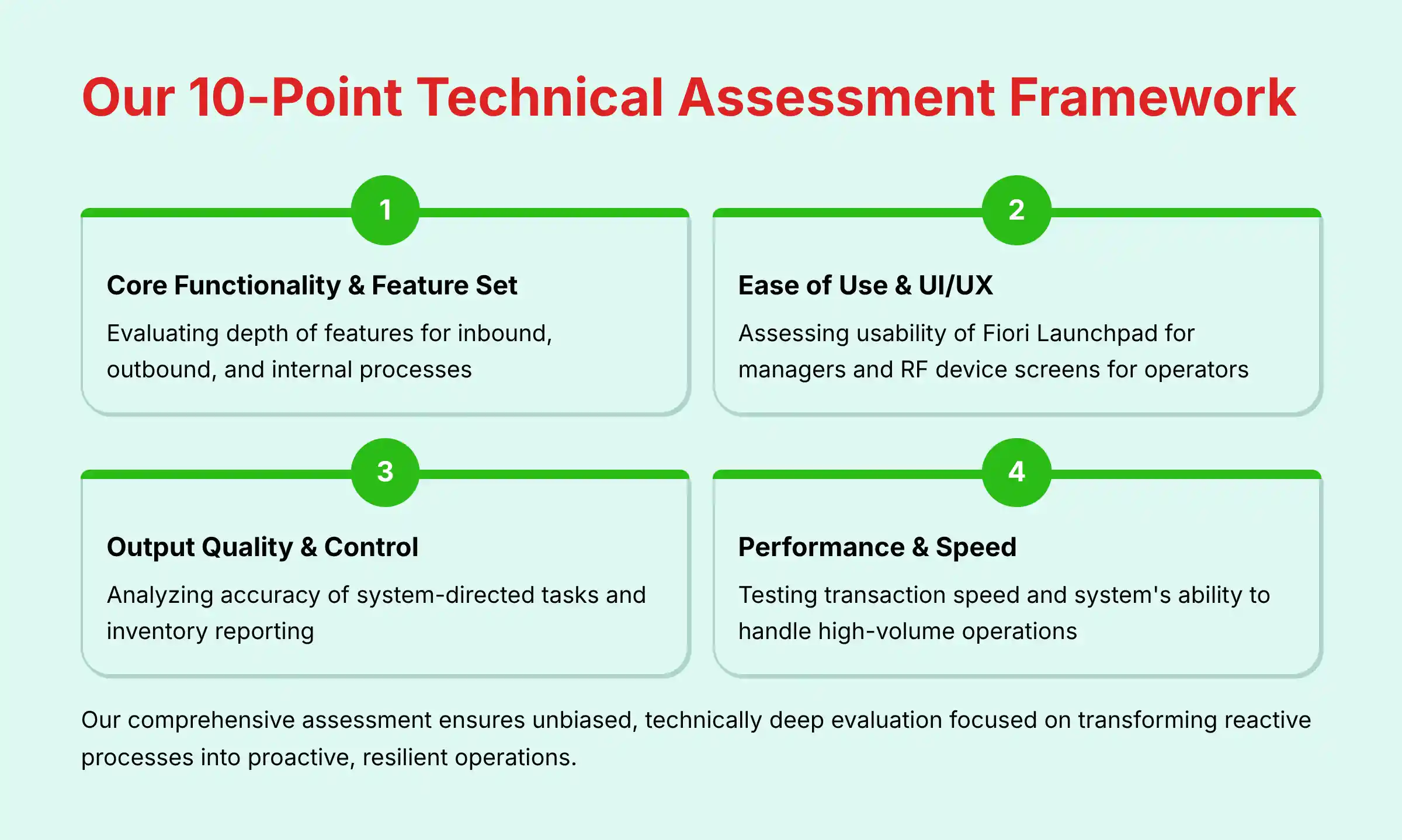
This methodology confirms our review is unbiased, technically deep, and focused on the real-world challenges of supply chain leaders. We assess each tool, including EWM, on its ability to transform reactive processes into proactive, resilient operations, focusing on the dual experience of both the strategic planner and the on-the-floor operator.
Our evaluation prioritizes deep integration with core ERP systems, robust data security, and a clear, quantifiable return on investment. For those interested in exploring comprehensive Best 10 AI Warehouse Management Systems (WMS), our framework provides the foundation for making informed decisions.
Our 10-point framework includes:
- Core Functionality & Feature Set: Evaluating the depth of features for inbound, outbound, and internal processes.
- Ease of Use & User Interface (UI/UX): Assessing the usability of both the Fiori Launchpad for managers and the RF device screens for operators.
- Output Quality & Control: Analyzing the accuracy of system-directed tasks and inventory reporting.
- Performance & Speed: Testing transaction speed and the system's ability to handle high-volume operations.
- Security Protocols & Data Protection: Verifying access controls, data encryption, and segregation of duties.
- Compliance & Regulatory Adherence: Assessing features for batch traceability and audit trails (e.g., for pharmaceuticals).
- Input Flexibility & Integration Options: Testing the qRFC interface with SAP S/4HANA and integration points for robotics/automation.
- Pricing Structure & Value for Money: Analyzing licensing costs against measurable ROI in efficiency and accuracy gains.
- Developer Support & Documentation: Evaluating the quality of SAP's official documentation and implementation partner support.
- Risk Assessment & Mitigation: Identifying potential failure points in configuration and providing clear mitigation strategies.
Part 1: EWM Fundamentals – From Manual Chaos to Automated Precision

The Strategic Role of SAP EWM in Modern Warehousing
SAP EWM is a strategic tool for gaining a competitive advantage. It replaces traditional, paper-based warehouse methods with a data-driven approach. Think of it as upgrading from a paper map to a live GPS that not only shows you where you are but also suggests the fastest route based on real-time traffic.
This system introduces core concepts like storage bins for precise locations, stock types for inventory status, and handling units for tracking pallets or boxes.
In my experience, a strong business case for EWM implementation starts by identifying current pain points like picking errors or slow fulfillment. EWM is designed to solve these problems directly by providing real-time data and process automation, which improves end-to-end supply chain visibility.
Getting Started: Foundational EWM Configuration & Environment Setup
The initial setup of EWM is the foundation upon which your entire warehouse operation will be built. This is not a DIY task. A phased approach starting with a pilot area is the best way to manage risk.
First, you must define the core EWM organizational structure, including a Warehouse Number, Storage Types, and Storage Bins. Next, you extend your Product Master data using transaction /SCWM/MAT1, which gives products their EWM-specific attributes.
Finally, you must verify the qRFC interfaces to confirm that EWM and your S/4HANA ERP system are communicating correctly.
Expert Validation Required: Foundational EWM configuration is not a DIY task. An incorrect setup can halt all warehouse operations. Always work with a certified SAP EWM consultant.
A simple practice exercise is to create a small warehouse structure in a sandbox environment. Define one storage type with two sections and ten bins. This helps you understand the relationships between the organizational units without risking your live operations.
Always confirm proper user roles are assigned to mitigate security risks.
Strategic Decision Point: Embedded vs. Decentralized EWM
Before any configuration, a critical strategic decision is the deployment model: Embedded EWM or Decentralized EWM.
Embedded EWM runs on the same S/4HANA instance, which dramatically simplifies the technical landscape and master data integration, creating a single source of truth. This is the preferred approach for most businesses running S/4HANA.
In contrast, Decentralized EWM runs on its own server, allowing it to connect to multiple ERP systems (including non-SAP) and providing higher resilience, as a core ERP outage won't halt warehouse operations.
This choice impacts everything from system performance to integration complexity and must be validated with a solution architect early in the project. For comprehensive insights into all available options, explore our detailed SAP Extended Warehouse Management (EWM) Overview and Features guide.
Part 2: Core Workflows – A Step-by-Step Tutorial
Workflow 1: The Standard Inbound Process (Goods Receipt & Putaway)
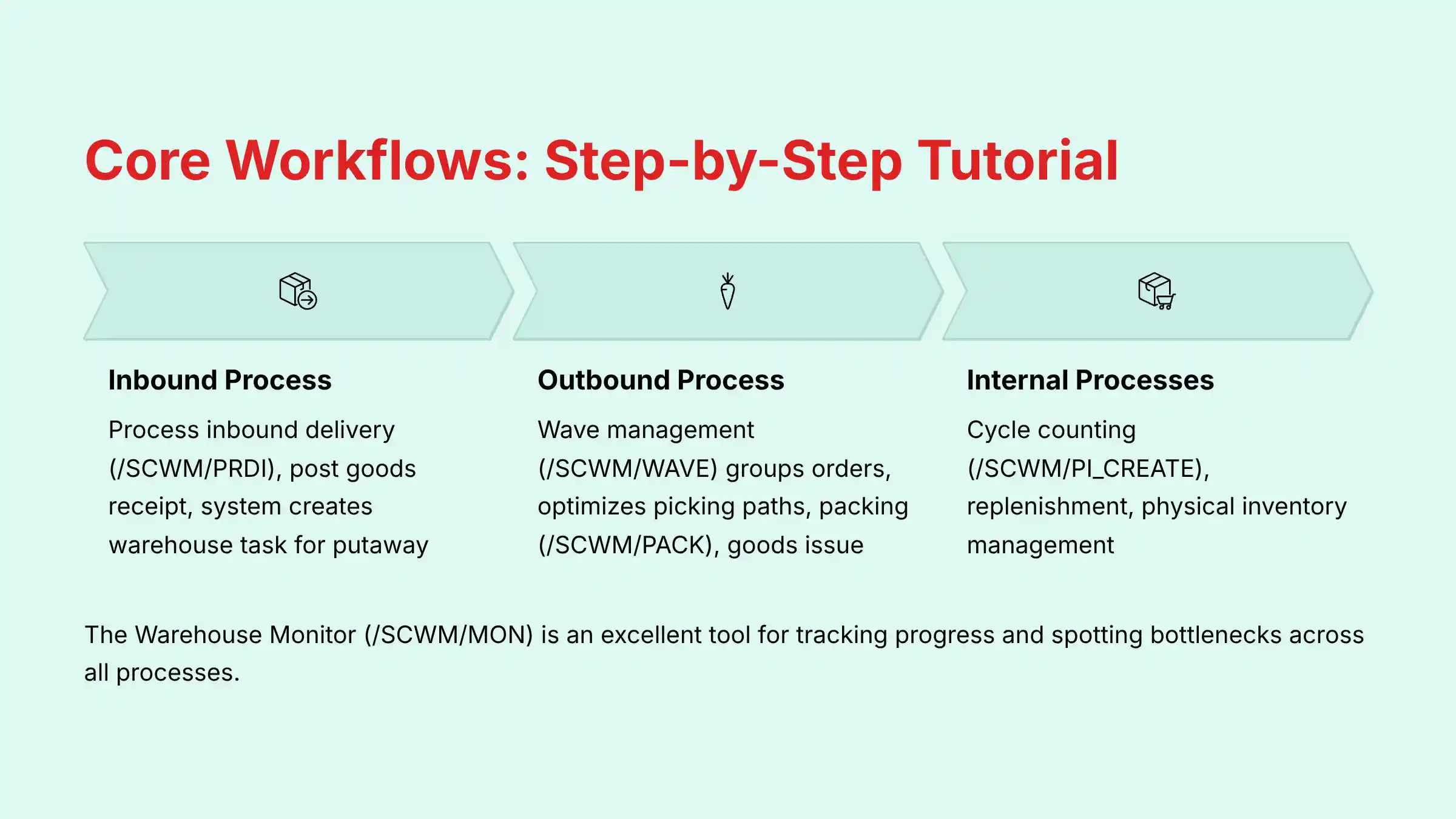
The standard inbound process begins when an inbound delivery is sent from S/4HANA to EWM. Upon arrival, a warehouse clerk processes the inbound delivery using transaction /SCWM/PRDI (Process Inbound Delivery), or the equivalent function on an RF device.
Within this transaction, they post the goods receipt, which confirms the quantity received and is a key step for maintaining data integrity across the entire system.
Upon posting, EWM automatically creates a Warehouse Task (WT) to move the goods to a storage bin. The system uses pre-configured putaway strategies to determine the best location, like placing fast-moving items in easily accessible bins.
An operator receives this task on their RF device, moves the goods, and scans the bin to confirm the putaway, instantly making the inventory available for sales orders.
Workflow 2: The Standard Outbound Process (Picking, Packing, & Goods Issue)
The outbound process starts with a sales order in S/4HANA, which creates an Outbound Delivery Order in EWM. To improve efficiency, I recommend using wave management (/SCWM/WAVE) to group orders by factors like carrier or destination.
Releasing a wave generates optimized picking tasks for operators.
An operator follows RF-guided instructions along the most efficient path to pick items. After picking, goods are moved to a packing station, where they are packed into handling units using transaction /SCWM/PACK.
The final step is posting the Goods Issue, which updates inventory and triggers the customer billing process in S/4HANA. The Warehouse Monitor (/SCWM/MON) is an excellent tool for tracking wave progress and spotting bottlenecks.
Workflow 3: Internal Processes (Physical Inventory & Replenishment)
Maintaining inventory accuracy is managed through physical inventory processes. EWM supports a robust cycle counting program, which replaces disruptive annual counts. This allows you to prioritize counting high-value items more frequently.
You create a cycle counting document using /SCWM/PI_CREATE, and an operator performs the count using an RF device. Any differences are reviewed in /SCWM/PI_PROCESS.
Posting a large inventory difference can have a direct financial impact, so investigating the root cause of discrepancies is a sound practice. For security, the person who counts should not be the same person who approves the differences to prevent potential fraud.
Part 3: Real-World Implementation & Use Case Deep Dive

Use Case 1: High-Volume Retail & E-commerce Distribution Center
Business Context
A common business problem in retail is managing thousands of small, multi-line orders with intense pressure on pick-to-ship times. My team implemented EWM for a client facing this challenge.
Implementation Strategy
The strategy was a phased rollout, starting with standard outbound processes and wave management. Phase 1 implements standard outbound processes with wave management. Phase 2 introduces slotting optimization and pick-by-voice integration.
Resource Requirements
The project required a dedicated project team including an EWM consultant, a warehouse operations lead, and IT support for integrating voice systems. Budget allocation was necessary for RF hardware and voice-directed picking licenses.
Measurable Outcomes
The primary success metric was Order Fulfillment Cycle Time. The goal was a 35% reduction. A secondary metric was Labor Productivity, measured in lines picked per hour.
By leveraging wave management and optimizing picking paths, the client achieved their time reduction goal and increased labor productivity, showing a clear return on investment.
Use Case 2: Pharmaceutical & Life Sciences Manufacturing Warehouse
Business Context
The driving need is not speed but strict compliance with regulatory requirements like FDA 21 CFR Part 11 and GxP (Good x Practice) guidelines.
Implementation Strategy
In the pharmaceutical industry, the focus is on leveraging EWM's features to achieve and maintain compliance with regulations like FDA 21 CFR Part 11. This requires configuring and validating EWM's capabilities for strict batch traceability, electronic records, and audit trails as part of a comprehensive, validated GxP process.
Resource Requirements
The project involved specialists in both EWM and regulatory compliance. Significant time was allocated for creating and executing validation scripts (IQ/OQ/PQ validation) and training users on the importance of scanning every batch number.
Measurable Outcomes
The key metric was Audit Trail Compliance, with a goal of 100% success in audits. By enforcing the scanning of every batch number at every step, EWM helped the client achieve perfect audit results and reduced the risk of quality exceptions to zero.
Challenge & Solution Catalog for EWM Implementation
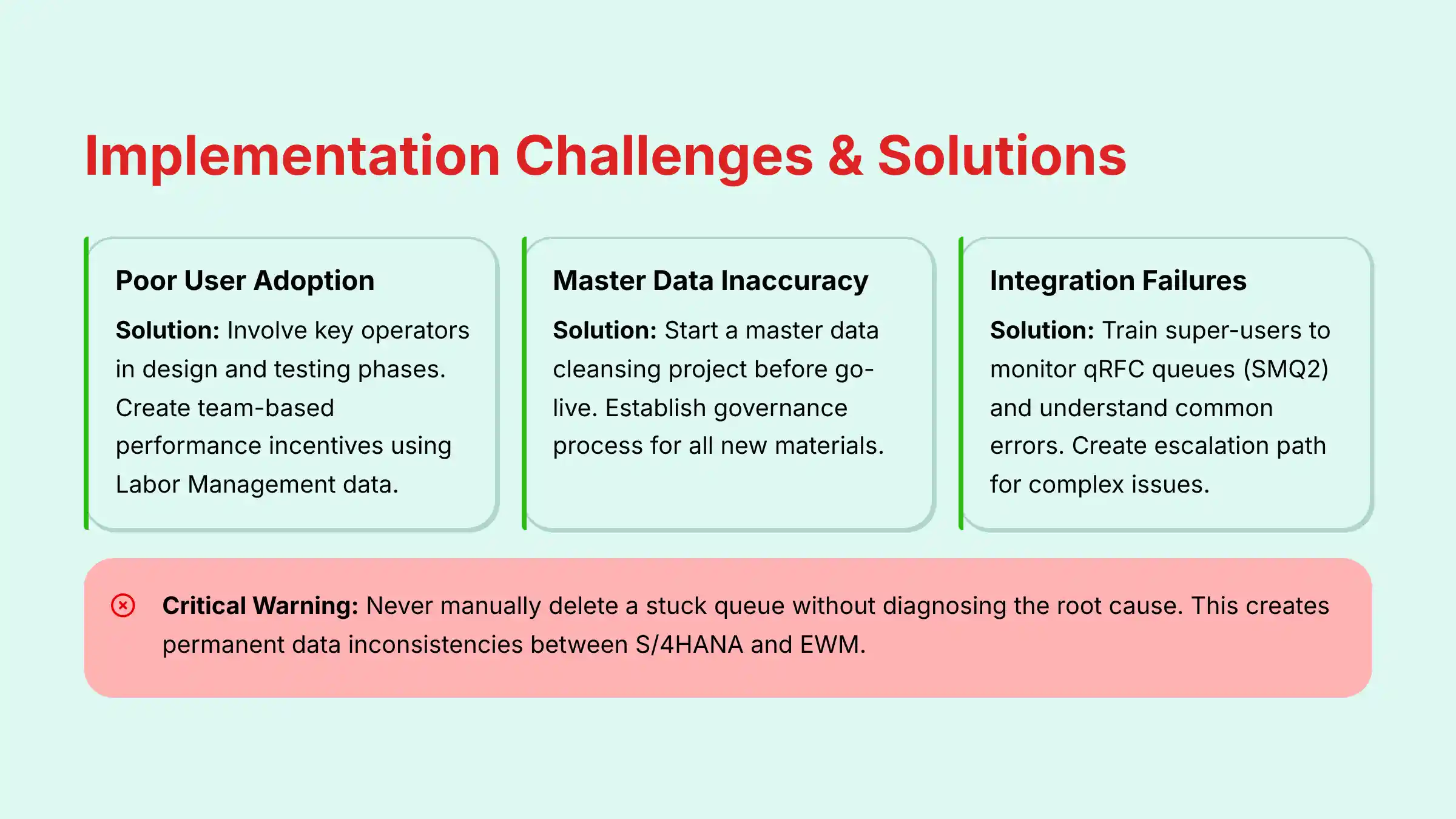
Challenge 1: Poor User Adoption. Operators are sometimes resistant to new RF devices and processes.
- Solution: Involve key operators in the design and testing phases. This creates a sense of ownership. Using data from the Labor Management module to create team-based performance incentives can also boost adoption.
Challenge 2: Master Data Inaccuracy. Incorrect product dimensions or putaway indicators lead to failed tasks.
- Solution: Start a master data cleansing project before go-live. Establish a governance process to confirm all new materials are created with accurate EWM-specific data.
Challenge 3: Integration Failures. Deliveries get stuck in the queue between S/4HANA and EWM.
- Solution: Train a super-user to monitor the qRFC queues (
SMQ2) and understand common errors. Create an escalation path for complex issues that require an expert.
For organizations considering alternatives to SAP EWM, our comprehensive analysis of SAP Extended Warehouse Management (EWM) Top Alternatives and Competitors provides valuable insights into other market-leading solutions.
Part 4: Advanced Techniques & Professional Optimization

Professional Tips: The EWM Power User's Toolkit
Moving beyond basic transactions is about fostering a culture of continuous improvement. The Warehouse Monitor (/SCWM/MON) is a power user's best friend; setting up custom alerts for exceptions helps you solve problems proactively.
Using Two-Step Picking can drastically reduce travel time for multi-line orders by picking items for a whole wave at once and then sorting them. The Post Processing Framework (PPF) can automate actions like label printing.
And empowering operators to handle issues on the floor with Exception Handling (/SCWM/EXCP) keeps operations moving smoothly.
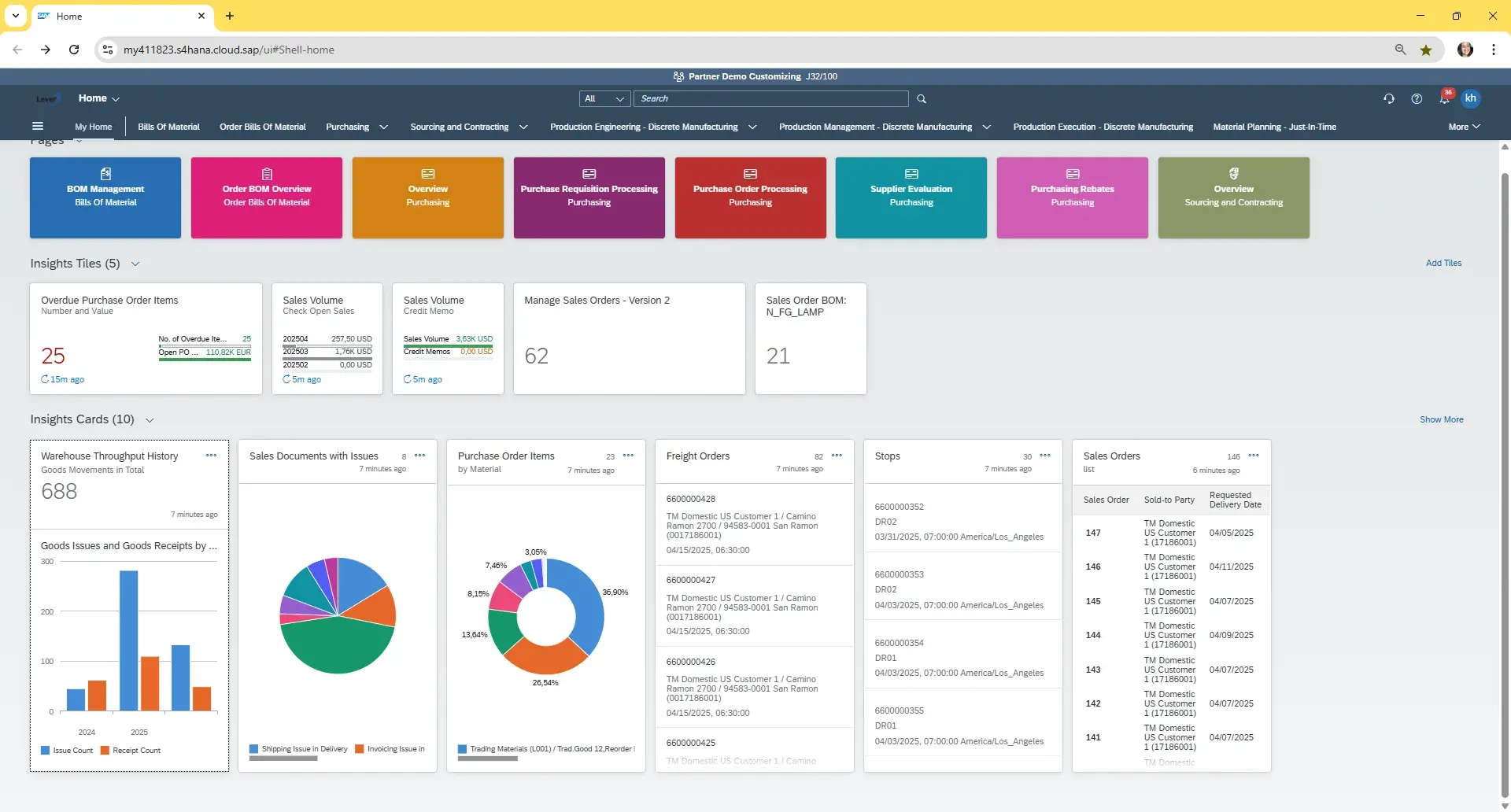
Advanced Technique 1: Process-Oriented Storage Control (POSC)
POSC is like creating a multi-stop assembly line for your warehouse processes. Instead of a simple move from A to B, you can define a complex path like Unload → Deconsolidate → Quality Inspect → Putaway. Each step is a system-guided task.
In my experience, this is extremely valuable for operations that include Value-Added Services (VAS) like kitting or quality inspection. It allows you to track and even bill for these services, turning a cost center into a potential revenue stream.
It is a key tool for modeling the physical reality of your warehouse in the system.
To orchestrate physical automation like conveyors, sorters, or an Automated Storage and Retrieval System (AS/RS), POSC works in conjunction with SAP's Material Flow System (MFS). MFS acts as the bridge between EWM's logic and the low-level Warehouse Control System (WCS) or PLCs, translating warehouse tasks into direct commands for the machinery.
This creates a seamlessly integrated, automated process from receiving to shipping.
Advanced Technique 2: Labor Management (LM) & Gamification
The Labor Management module measures and helps improve workforce performance. It uses engineered standards to calculate the expected time for tasks and compares it to actual performance. This allows managers to set realistic targets and track progress.
A creative way I have seen this used is to “gamify” the warehouse. By integrating LM data with dashboards, you can display team-based leaderboards for picking accuracy and efficiency. This can boost morale and productivity.
When implementing performance monitoring, it is important to respect data privacy and consider using anonymized or team-based data for public displays.
Advanced Technique 3: The Warehouse Digital Twin
The ultimate application of AI in the warehouse is the creation of a Warehouse Digital Twin. This is a dynamic, virtual replica of your physical warehouse, fed by real-time data from SAP EWM, IoT sensors, and automation systems.
EWM provides the foundational data—inventory locations, labor performance, and process times—that gives the digital twin its operational intelligence.
With this model, supply chain leaders can perform powerful what-if scenario analysis without disrupting live operations. You can simulate the impact of new slotting strategies, test the ROI of adding a new fleet of AMRs, or predict how a surge in e-commerce orders will create bottlenecks.
This moves beyond historical reporting to prescriptive analytics, allowing you to proactively optimize layouts and resource plans, ensuring operational resilience against future disruptions.
Part 5: Troubleshooting Common EWM Issues
Empowering a local super-user with basic troubleshooting skills can reduce reliance on IT support. Two common issues are stuck queues and task creation failures.
For stuck queues, a super-user can use transaction SMQ2 to diagnose the block. The error is often related to missing master data. After fixing the root cause, the queue can be re-activated.
For task creation failures, the Warehouse Monitor is the place to start. Check for stock availability and verify that the system's stock determination strategy is configured correctly. A product or bin might be blocked, preventing movement.
Important Warning: A critical warning for anyone managing the system: Manually deleting a stuck queue without diagnosing the root cause is like tearing a page out of a financial ledger. You don't just lose the transaction; you corrupt the integrity of the entire book. This action creates permanent data inconsistencies between S/4HANA and EWM—a severe issue that can halt operations and requires costly expert intervention to fix.
Part 6: Measuring Success – Calculating ROI for Your EWM Implementation
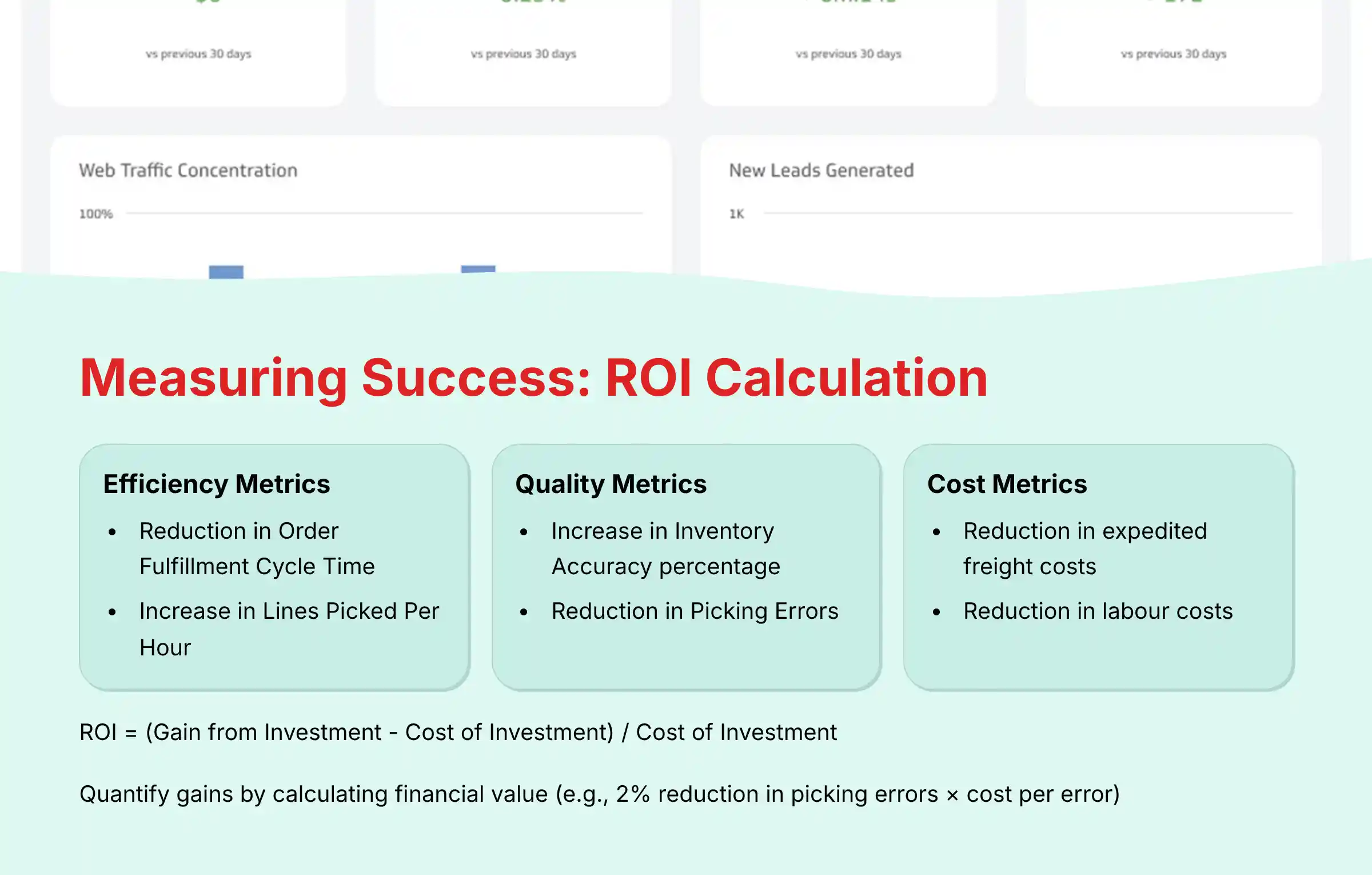
Building a business case for EWM requires moving the conversation from technical features to financial impact. Success should be measured with clear, quantifiable metrics.
Implementation Success Metrics
- Efficiency Gains: Reduction in Order Fulfillment Cycle Time; Increase in Lines Picked Per Hour.
- Quality Improvements: Increase in Inventory Accuracy percentage; Reduction in Picking Errors (measured by customer short-ship claims).
- Cost Reduction: Reduction in expedited freight costs (due to fewer late orders); Reduction in labor costs (or increased throughput with the same headcount).
ROI Calculation Methodologies
The ROI calculation formula is: ROI = (Gain from Investment – Cost of Investment) / Cost of Investment. It's essential to quantify gains, such as calculating the financial value of a 2% reduction in picking errors based on the cost of resolving each error.
Performance Monitoring
Using SAP EWM Warehouse Cockpit or integrating EWM data into a BI tool to create dashboards can help track key performance indicators (KPIs) in real time.
While highly dependent on project scope and starting efficiency, case studies from SAP and its implementation partners often report a full return on investment within a multi-year timeframe, sometimes between 2 to 5 years for successful projects.
However, a detailed business case is required to project a realistic ROI for any specific organization. Quantifying the financial value of a 2% reduction in picking errors, for instance, makes the business case compelling for executive stakeholders.
Important Disclaimers:
Technology Evolution Notice: The information about SAP Extended Warehouse Management (EWM) Tutorials and Usecase and AI for Operations & Supply Chain tools presented in this article reflects our thorough analysis as of publication.
Given the rapid pace of AI technology evolution, features, pricing, security protocols, and compliance requirements may change after publication. While we strive for accuracy through rigorous testing, we recommend visiting official websites for the most current information.
Professional Consultation Recommendation: For AI for Operations & Supply Chain applications with significant professional, financial, or compliance implications, we recommend consulting with qualified professionals who can assess your specific requirements and risk tolerance.
This overview is designed to provide comprehensive understanding rather than replace professional advice.
Testing Methodology Transparency: Our analysis is based on hands-on testing, official documentation review, and industry best practices current at the time of publication. Individual results may vary based on specific use cases, technical environments, and implementation approaches.
Frequently Asked Questions About SAP Extended Warehouse Management (EWM)
For detailed answers to common questions and implementation concerns, explore our comprehensive SAP Extended Warehouse Management (EWM) FAQs resource.
What Is the Main Difference Between SAP WM and SAP EWM?
SAP Warehouse Management (WM) is the older module from SAP ECC, while SAP Extended Warehouse Management (EWM) is the modern solution for S/4HANA. EWM offers far more flexibility and advanced features like POSC, Labor Management, and slotting optimization. EWM is designed to orchestrate complex, high-volume distribution centers and is the strategic product from SAP.
How Much Does an SAP EWM Implementation Typically Cost?
The total cost of an SAP EWM implementation is highly variable. Key cost drivers include software licensing (which depends on the number of users and specific features), implementation partner consulting fees (which can range from the low six-figures to over seven figures depending on scope), hardware investments (RF devices, servers), and the cost of internal resources.
A comprehensive budget should account for the full Total Cost of Ownership (TCO).
Can SAP EWM Integrate with Non-SAP ERP Systems?
Yes, EWM can be deployed as a decentralized system that integrates with non-SAP ERPs like Oracle or NetSuite. This is done via APIs and middleware. This approach, however, requires much more complex integration work to achieve the seamless data flow that exists natively between EWM and S/4HANA.
What Is the Typical ROI for an SAP EWM Project?
While highly dependent on project scope and starting efficiency, case studies from SAP and its implementation partners often report a full return on investment within a multi-year timeframe, sometimes between 2 to 5 years for successful projects.
However, a detailed business case is required to project a realistic ROI for any specific organization.
How Does EWM Use AI and Automation in the Warehouse?
EWM is the platform for AI and automation. Its algorithms for slotting automatically place products in the optimal bin based on demand forecasts. It orchestrates automation by integrating with Material Flow System (MFS) to control conveyors and AS/RS, provides standard integration for Autonomous Mobile Robots (AMRs), and connects with a Transportation Management System (TMS) for optimizing dock appointments and outbound logistics.
EWM transforms the warehouse into a data-rich environment for AI-driven execution and end-to-end process automation.
What Are the Biggest Security Risks with SAP EWM?
The primary security risk is improper access control. A strict Role-Based Access Control (RBAC) concept, defined in a Segregation of Duties (SoD) matrix, is a primary requirement to prevent fraud and operational errors.
For cloud-hosted solutions, verifying the provider's SOC 2 Type II and ISO 27001 certifications is essential for data protection. Securing the qRFC interface is also vital to ensure data integrity between EWM and S/4HANA.
How Long Does It Take to Learn SAP EWM?
For a warehouse operator, learning the RF transactions for their role takes a few days. For a power user or manager, expect a learning curve of several weeks. Becoming an expert implementation consultant requires years of hands-on project experience due to the system's depth and complexity.
What Happens If We Can't Create a Picking Task?
This is a common issue. First, check stock availability in the Warehouse Monitor (/SCWM/MON); the stock might be reserved or not in an unrestricted status. Second, verify the stock determination strategy in your configuration. Finally, check for any blocks on the product or storage bin.
Conclusion: Your Roadmap to Warehouse Excellence
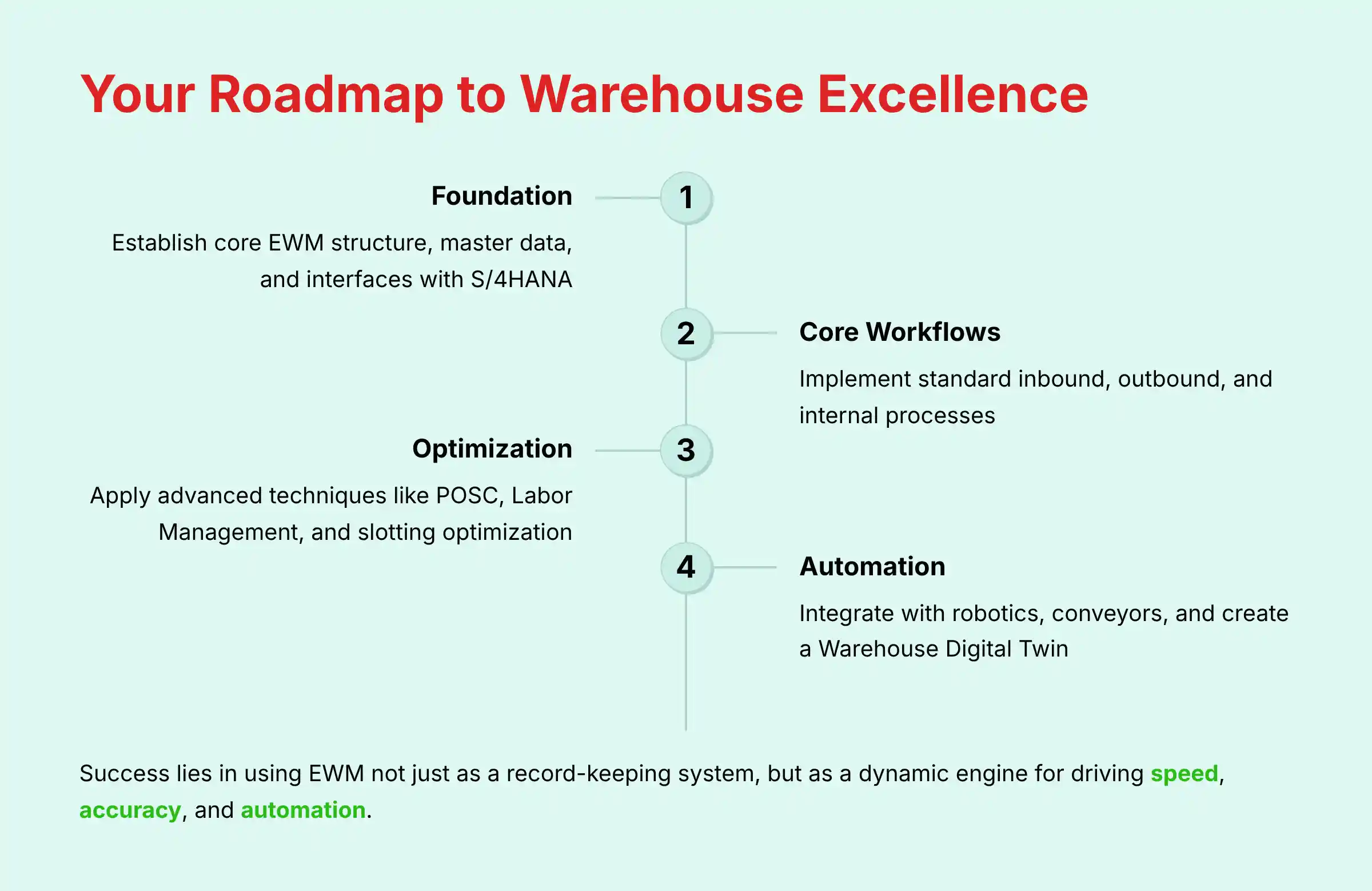
This guide has provided a complete roadmap for mastering SAP Extended Warehouse Management (EWM). We have moved from foundational setup and core workflows to advanced optimization and real-world use cases.
By understanding both the system's procedures and the strategy behind its implementation, you can transform your warehouse operations.
Success lies in using EWM not just as a record-keeping system, but as a dynamic engine for driving speed, accuracy, and automation.
By applying these insights from our comprehensive SAP Extended Warehouse Management (EWM) Tutorials and Usecase guide, you can unlock verifiable improvements in your supply chain, reduce operational costs, and build a more resilient and competitive logistics network.
For expert evaluation and comparison insights, don't miss our detailed SAP Extended Warehouse Management (EWM) Review that provides in-depth analysis of the platform's capabilities and performance in real-world scenarios.


Leave a Reply