Is Oracle WMS Cloud the Right WMS for Your Enterprise?
This 2-Minute Quiz Reveals the Answer!
The simple truth is that modern supply chains are operating in a permanent storm of disruption. Warehousing, once viewed as a simple cost center, has become the strategic frontline for either winning or losing customers.
In this new reality, Oracle's Warehouse Management Cloud (WMS Cloud) emerges as a critical piece of operational apparatus. This enterprise-grade, cloud-native SaaS platform is designed not just to manage, but to orchestrate the entire fulfillment lifecycle—from inbound logistics and inventory control to complex outbound fulfillment.
As a key solution in the AI for Warehouse & Inventory Management category, it leverages AI to bring order to chaos. This comprehensive Oracle Warehouse Management Cloud (WMS Cloud) Overview and Features provides a definitive technical breakdown of its core features, technical specifications, and integration capabilities for professionals ready to press their advantage.
To cut through the noise, our team at Best Ops Chain AI utilizes a proprietary 10-point technical assessment framework, honed by analyzing hundreds of tools and leading real-world implementations. This framework is our commitment to E-E-A-T and professional rigor, ensuring every recommendation meets the high stakes of AI for Operations & Supply Chain. Our process includes deep analysis of security, compliance, and operational risk.
- Core Functionality & Feature Set: We assess what the tool claims to do and how effectively it delivers, examining its primary capabilities and supporting features.
- Ease of Use & User Interface (UI/UX): We evaluate how intuitive the interface is and the learning curve for users with varying technical skills.
- Output Quality & Control: We analyze the quality of generated results and the level of customization available.
- Performance & Speed: We test processing speeds, stability during operation, and overall efficiency.
- Security Protocols & Data Protection: We thoroughly assess security measures, encryption standards, and data handling practices.
- Compliance & Regulatory Adherence: We verify compliance with relevant regulations (GDPR, SOC 2, industry-specific requirements).
- Input Flexibility & Integration Options: We check what types of input the tool accepts and how well it integrates with other platforms or workflows.
- Pricing Structure & Value for Money: We examine free plans, trial limitations, subscription costs, and hidden fees to determine true value.
- Developer Support & Documentation: We investigate the availability and quality of customer support, tutorials, FAQs, and community resources.
- Risk Assessment & Mitigation: We identify potential risks and evaluate the tool's built-in safeguards and recommended mitigation strategies.
Key Takeaways
- Cloud-Native Architecture: Its SaaS model provides automatic quarterly updates and scalability. This reduces the infrastructure burden compared to traditional on-premises systems.
- End-to-End Functionality: The platform manages all core warehouse processes. This includes everything from inbound receiving to complex omnichannel outbound fulfillment.
- AI-Driven Optimization: It uses AI for dynamic slotting and intelligent pick path optimization. This improves labor efficiency by minimizing travel time within the warehouse.
- API-First Integration: The system features a robust REST API framework. This is fundamental for deep, real-time integration with ERPs, TMS, and warehouse automation.
- Enterprise Focus: Oracle WMS Cloud is built for mid-to-large enterprises with complex, high-volume operations. Its pricing and implementation model reflect this focus.
What Is Oracle Warehouse Management Cloud? A Foundational Overview
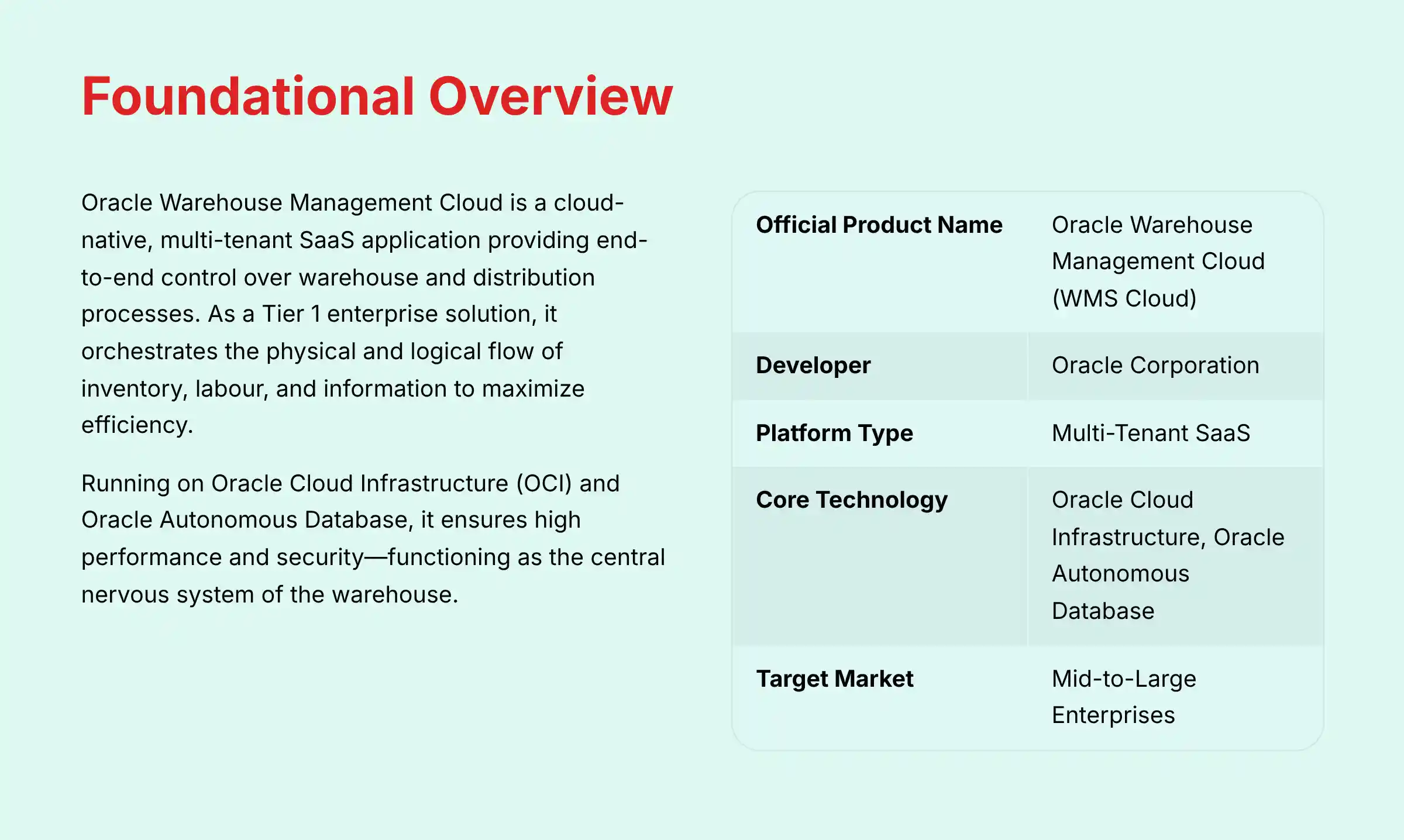
Oracle Warehouse Management Cloud is a cloud-native, multi-tenant Software-as-a-Service (SaaS) application that provides end-to-end control and visibility over all warehouse and distribution processes. It is a Tier 1 enterprise solution designed for complex fulfillment operations.
Its main purpose is to orchestrate the physical and logical flow of inventory, labor, and information within a distribution center to maximize efficiency and accuracy.
Developed by Oracle Corporation, the platform benefits from the company's deep expertise in enterprise software and cloud infrastructure. It runs on Oracle Cloud Infrastructure (OCI) and the Oracle Autonomous Database, ensuring high levels of performance and security. Think of it as the central nervous system of the warehouse, sending precise signals to workers and automation to execute tasks perfectly.
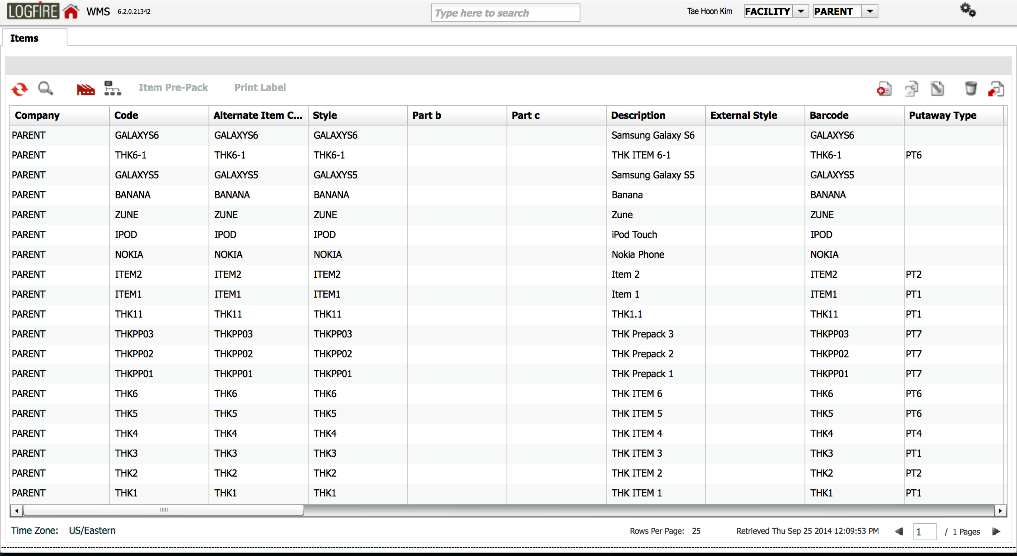
| Attribute | Detail |
|---|---|
| Official Product Name | Oracle Warehouse Management Cloud (WMS Cloud) |
| Developer | Oracle Corporation |
| Platform Type | Multi-Tenant Software-as-a-Service (SaaS) |
| Core Technology | Oracle Cloud Infrastructure (OCI), Oracle Autonomous Database |
| Primary Function | Warehouse & Distribution Center Management |
| Target Market | Mid-to-Large Enterprises |
How Oracle WMS Cloud Fits into the Enterprise Supply Chain Ecosystem
In the landscape of Tier 1 warehouse management systems, Oracle WMS Cloud is frequently evaluated against primary competitors like SAP Extended Warehouse Management (EWM), Manhattan Associates WMS Active®, and Blue Yonder WMS.
Its key differentiators are its cloud-native architecture, tight integration with the Oracle software ecosystem (including NetSuite and Oracle ERP Cloud), and the robust performance of the underlying Oracle Autonomous Database. For professionals exploring comprehensive comparisons, our detailed analysis of Oracle Warehouse Management Cloud (WMS Cloud) Top Alternatives and Competitors provides strategic insights for technology selection.
Strategically, modern WMS platforms like Oracle's are evolving beyond simple inventory tracking to become the core of a Warehouse Digital Twin. They serve as the execution engine for a broader Supply Chain Control Tower, providing the real-time, granular data on inventory and fulfillment status that is essential for end-to-end visibility and proactive disruption management.
Core Problems Solved by Oracle WMS Cloud
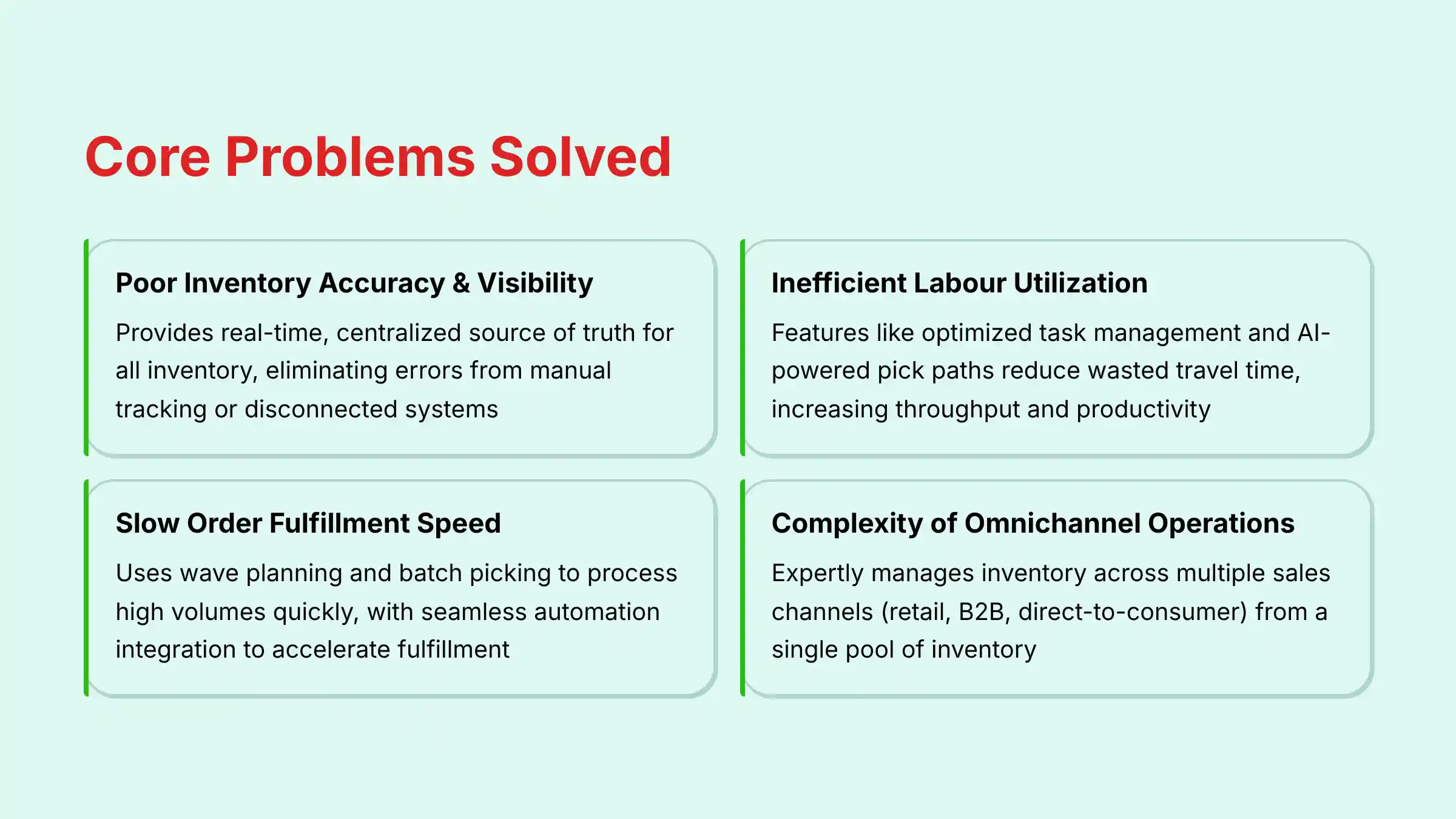
- Poor Inventory Accuracy & Visibility
A WMS provides a real-time, centralized source of truth for all inventory. This eliminates the errors and discrepancies that come from manual tracking or disconnected systems, giving managers confidence in their stock levels. - Inefficient Labor Utilization
Features like optimized task management and AI-powered pick paths reduce wasted travel time for warehouse operators. The system directs workers efficiently, increasing their throughput and overall productivity. For a Warehouse Manager, this transforms reactive problem-solving into a proactive, system-directed workflow. - Slow Order Fulfillment Speed
The system uses wave planning and batch picking to process high volumes of orders quickly. Its seamless integration with automation hardware further accelerates fulfillment, which is especially important for meeting demanding e-commerce delivery expectations. - Complexity of Omnichannel Operations
The system expertly manages inventory and orders across multiple sales channels, such as retail, B2B, and direct-to-consumer. This capability is fundamental for executing modern retail strategies like “buy online, pick up in store” from a single pool of inventory.
Quantifiable Business Outcomes and ROI
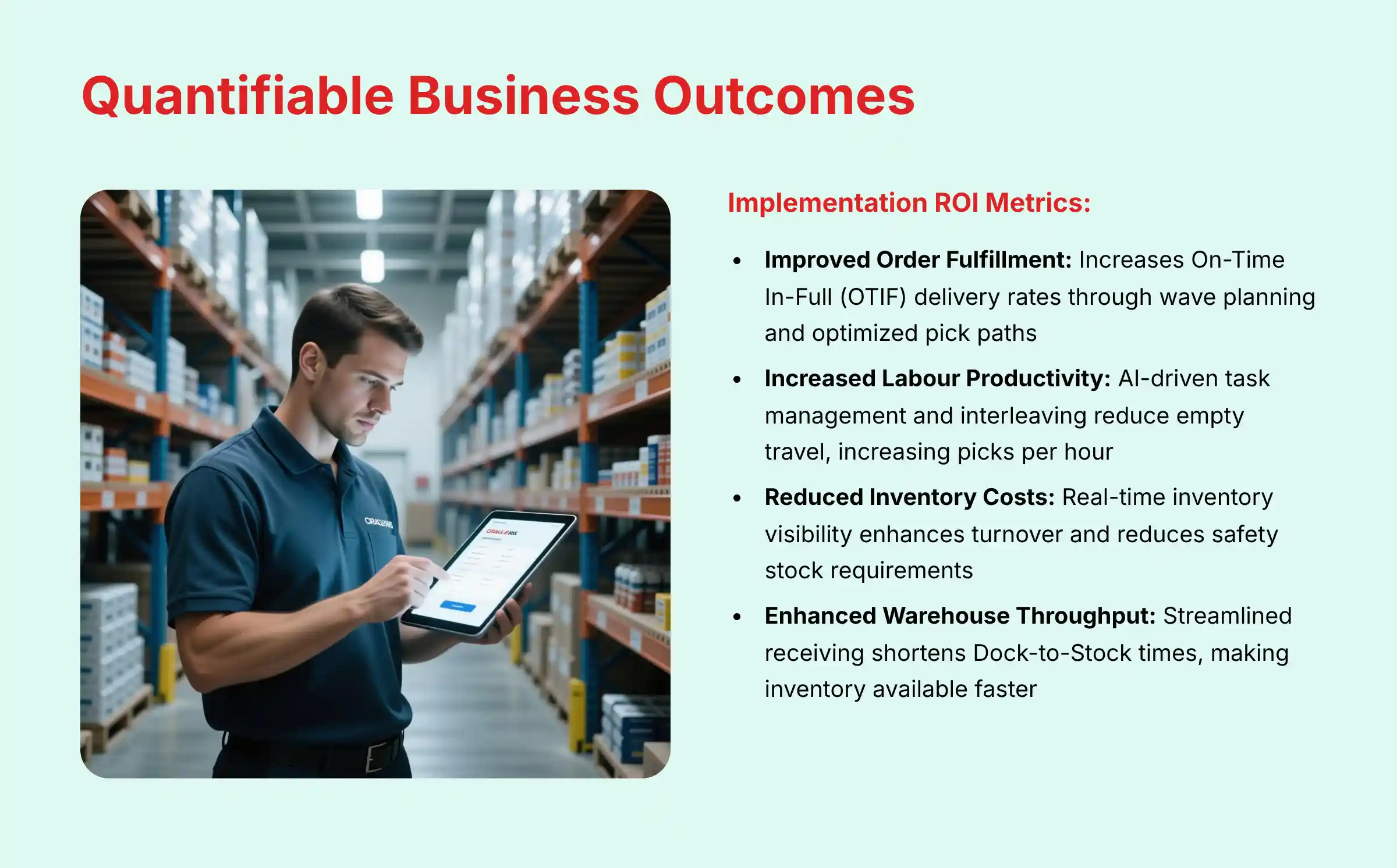
The implementation of Oracle WMS Cloud is justified by its direct impact on core supply chain KPIs. Operations leaders should expect to measure returns in these key areas:
- Improved Order Fulfillment Metrics: The combination of wave planning, optimized pick paths, and automation integration directly improves the On-Time In-Full (OTIF) delivery rate by increasing both speed and order accuracy.
- Increased Labor Productivity: AI-driven features like dynamic task management and task interleaving (combining a putaway task with a nearby pick) reduce empty travel, increasing picks per hour and overall labor efficiency without adding headcount.
- Reduced Inventory Holding Costs: By providing a real-time, single source of truth for inventory, the system enhances Inventory Turnover and reduces the need for safety stock. Enforcing FEFO logic also minimizes spoilage and obsolescence, positively impacting the Cash Conversion Cycle.
- Enhanced Warehouse Throughput: Streamlined receiving processes shorten Dock-to-Stock times, making inventory available for sale faster. This, combined with efficient outbound processing, increases the total volume a facility can handle.
Comprehensive Feature Set of Oracle WMS Cloud
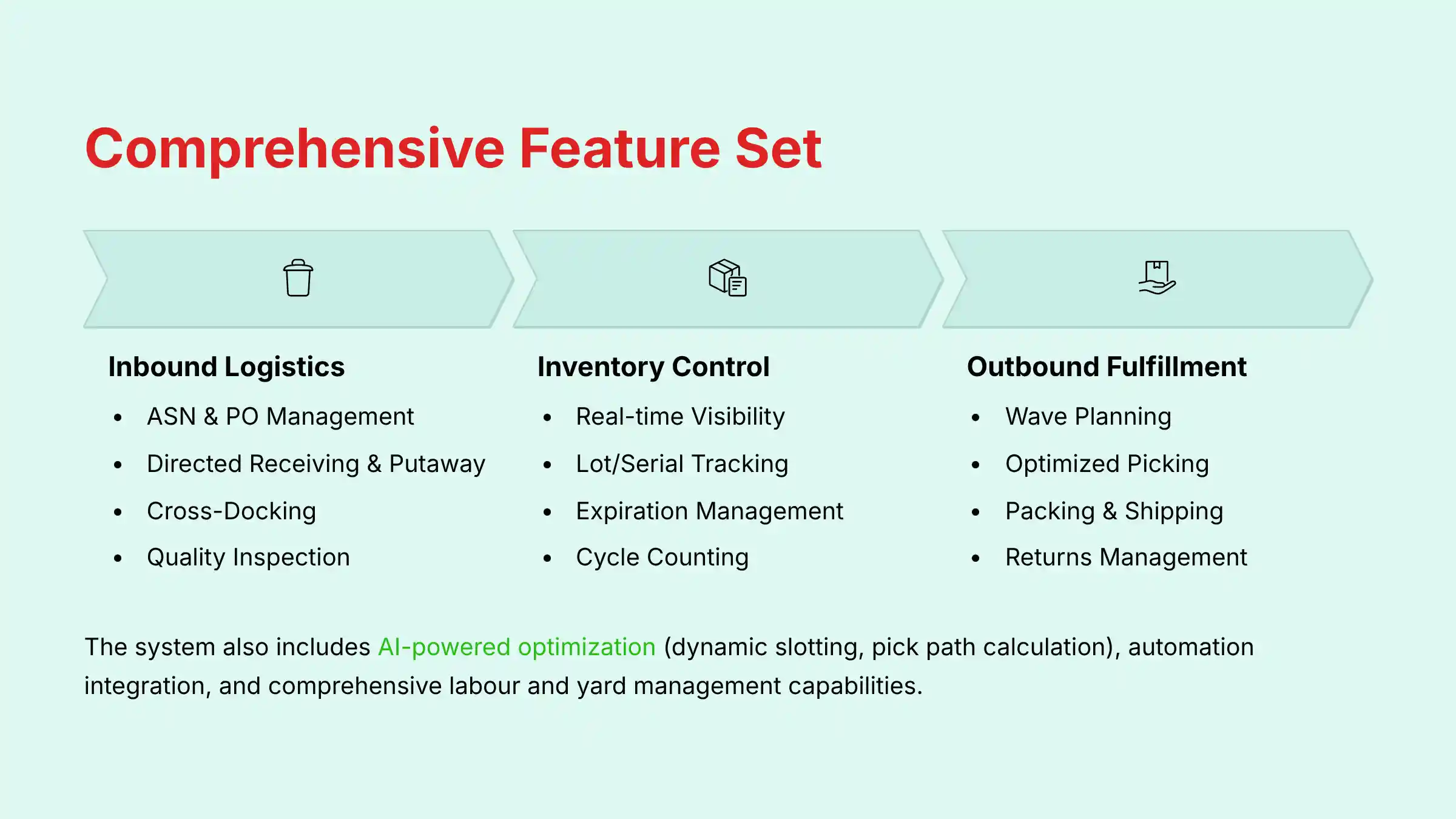
Inbound Logistics and Receiving Management
The inbound process sets the stage for all subsequent warehouse activities. Oracle WMS Cloud provides tools to manage this flow with precision.
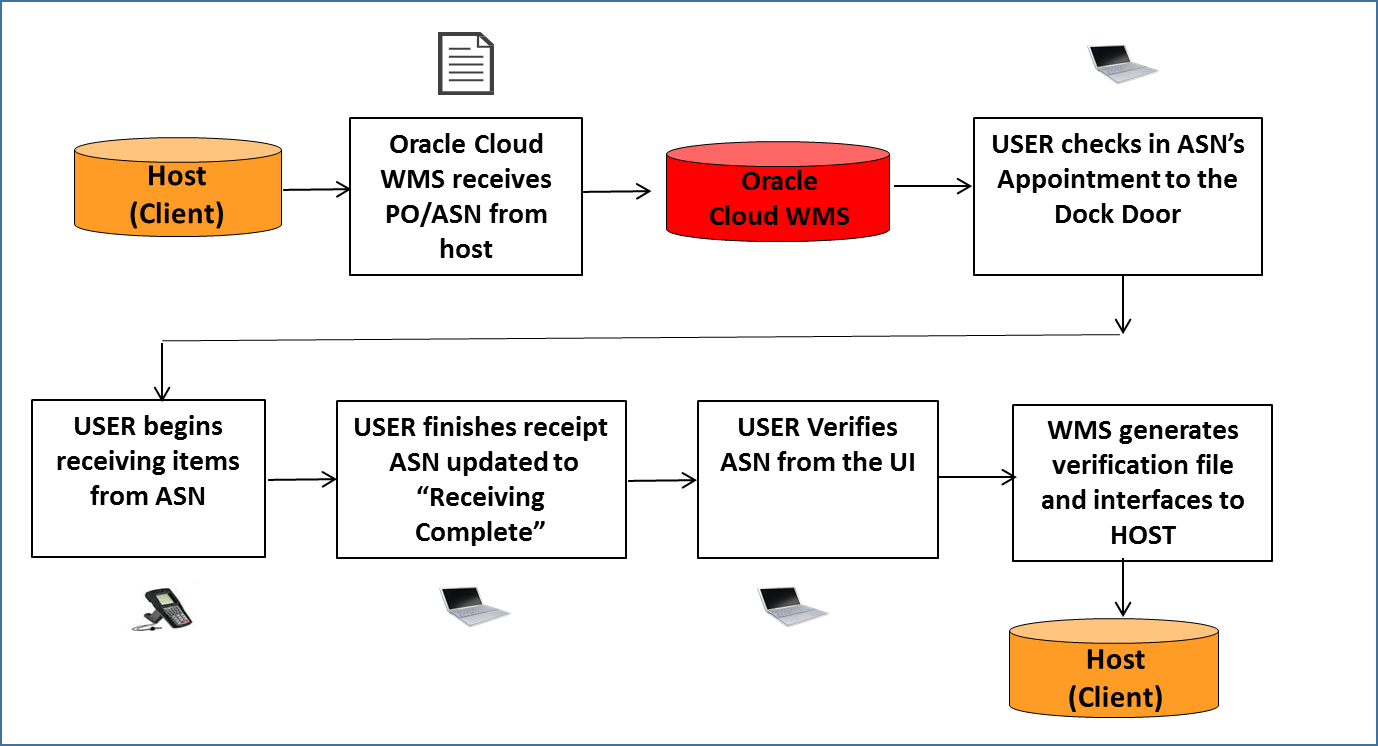
- Advanced Shipment Notice (ASN) & Purchase Order Management: The system receives inbound shipment data from an ERP. This allows managers to pre-plan labor and assign dock doors before a truck arrives.
- Directed Receiving & Putaway: The system guides operators to receive goods against a purchase order. It then directs them to the optimal storage location based on pre-set rules like item velocity or storage type.
- Cross-Docking Functionality: This feature allows incoming goods to be moved directly to an outbound shipping dock without being stored. It is used for just-in-time fulfillment to speed up urgent orders.
- Quality Assurance & Inspection: You can configure the system to flag certain items or suppliers for mandatory quality checks upon receipt. This ensures that only compliant inventory enters your available stock.
Core Inventory and Warehouse Control
Accurate inventory control is the foundation of any successful warehouse operation. The system offers granular tools to maintain a precise and real-time view of all stock.
It provides a live, accurate view of all inventory on hand, in transit, and at specific bin locations. The platform also includes tools for performing regular cycle counts to maintain accuracy and workflows for processing inventory adjustments. The ability to manage these specific inventory attributes is a regulatory requirement in industries like pharmaceuticals and food for traceability and recall management.
| Attribute | Description |
|---|---|
| Lot Numbers | Manages batch information for traceability, which is necessary for food and pharma. |
| Serial Numbers | Tracks individual items by their unique serial number for high-value goods. |
| Expiration Dates | Enforces FEFO (First-Expired, First-Out) logic to prevent spoilage. |
| Inventory Status | Manages statuses like ‘Available', ‘On Hold', ‘Damaged', or ‘QA'. |
Outbound Logistics and Order Fulfillment
The system orchestrates a highly efficient outbound process to ensure orders are fulfilled quickly and accurately. This workflow is broken down into several logical steps.
- Order Integration: Sales orders are received electronically from an ERP or Order Management System, creating demand in the WMS.
- Wave Planning & Allocation: Managers create “waves,” or groups of orders, that are released to the warehouse floor for picking. The system then allocates available inventory to those orders based on rules like FIFO or FEFO.
- Picking Methodologies: It supports various efficient picking methods like Batch Picking, Zone Picking, and Cluster Picking. These strategies group work together to minimize operator travel time.
- Packing & Shipping: The system directs the packing process, offering cartonization suggestions and generating all necessary shipping labels and packing slips.
- Returns Management (Reverse Logistics): It includes a complete workflow for receiving, inspecting, and processing customer returns, getting good products back into stock quickly.
For professionals seeking hands-on guidance, our comprehensive collection of Oracle Warehouse Management Cloud (WMS Cloud) Tutorials and Usecase provides step-by-step implementation strategies for these core processes.
AI-Powered Optimization and Automation
This is where the platform's intelligence truly shines. It uses AI to act like a master librarian, constantly rearranging the warehouse to ensure the most popular items are the easiest to access.
- AI-Driven Dynamic Slotting: The system analyzes historical data and item dimensions to recommend optimal storage locations. Its objective is to place fast-moving items closer to shipping docks to minimize travel.
- AI-Optimized Pick Path Calculation: For a batch of items, the system calculates the most efficient travel route for an operator to follow. This directly reduces walking distance and improves picks per hour.
- Warehouse Automation Integration Framework: This is a standardized set of APIs that allows the WMS to act as the brain for physical automation. According to Oracle's documentation, it can send a pick task to a robotics fleet manager, orchestrating the movement of goods to a human operator.
Strategic Impact: These AI capabilities are not academic exercises; they translate directly into hard metrics. Dynamic slotting and optimized pick paths reduce labor costs per order. The automation framework increases throughput and order accuracy, directly impacting customer satisfaction and the cost of returns. This is how AI moves from a buzzword to a line item that drives profitability.
Labor, Yard, and Resource Management
Beyond inventory, the system also manages the resources needed to move it. This ensures that labor and equipment are used effectively.
- Dynamic Task Management: The system intelligently assigns tasks to workers or robots. It bases these assignments on priority, location, and user permissions.
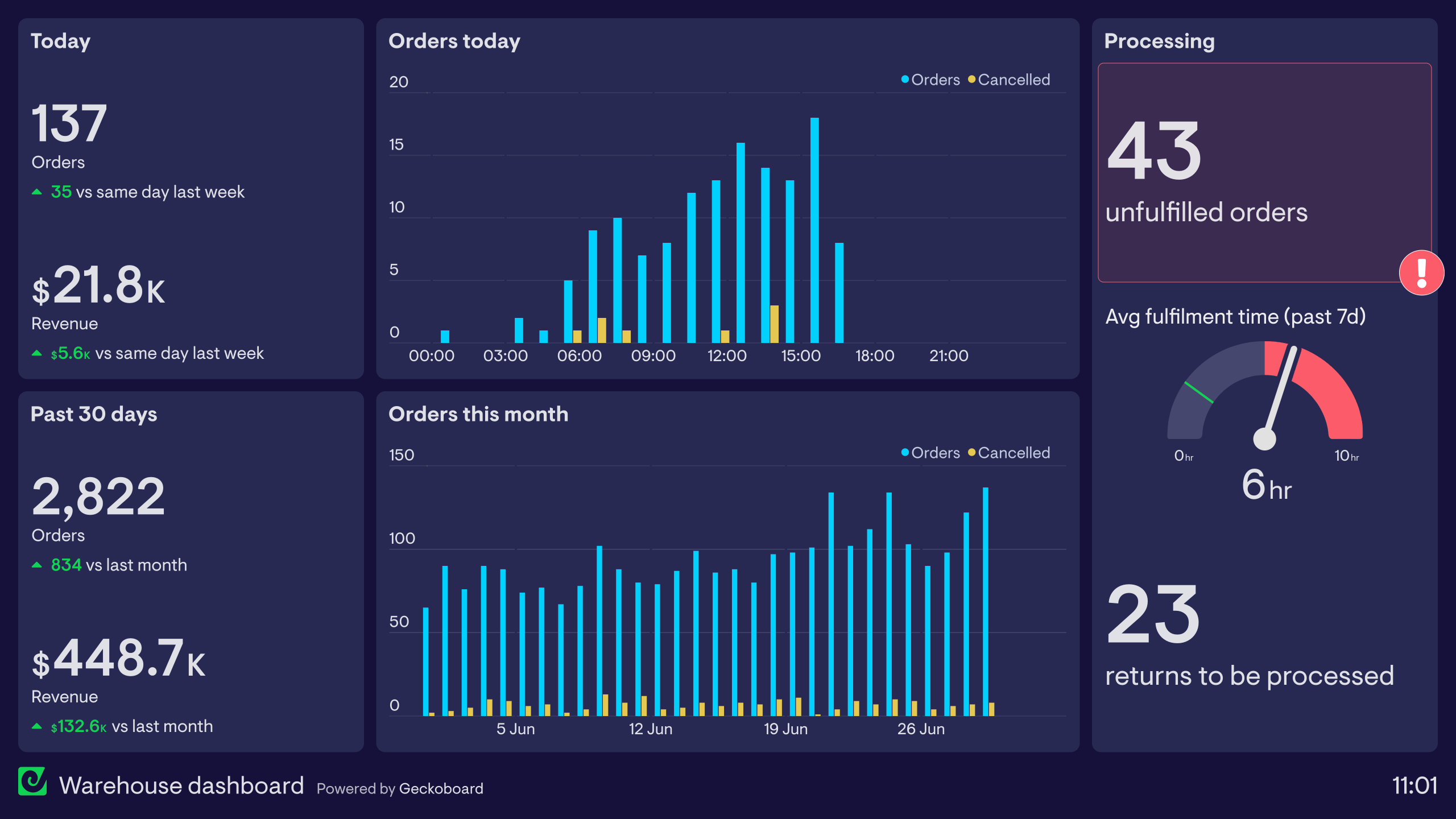
- Performance Dashboards & Analytics: Built-in reporting allows managers to monitor key performance indicators (KPIs). These include orders picked per hour, inventory accuracy, and dock-to-stock time.
- Yard Management System (YMS): This optional module manages the movement of trailers in the yard. It helps schedule dock appointments and ensures a smooth flow of inbound and outbound trucks.
Technical Specifications and System Requirements
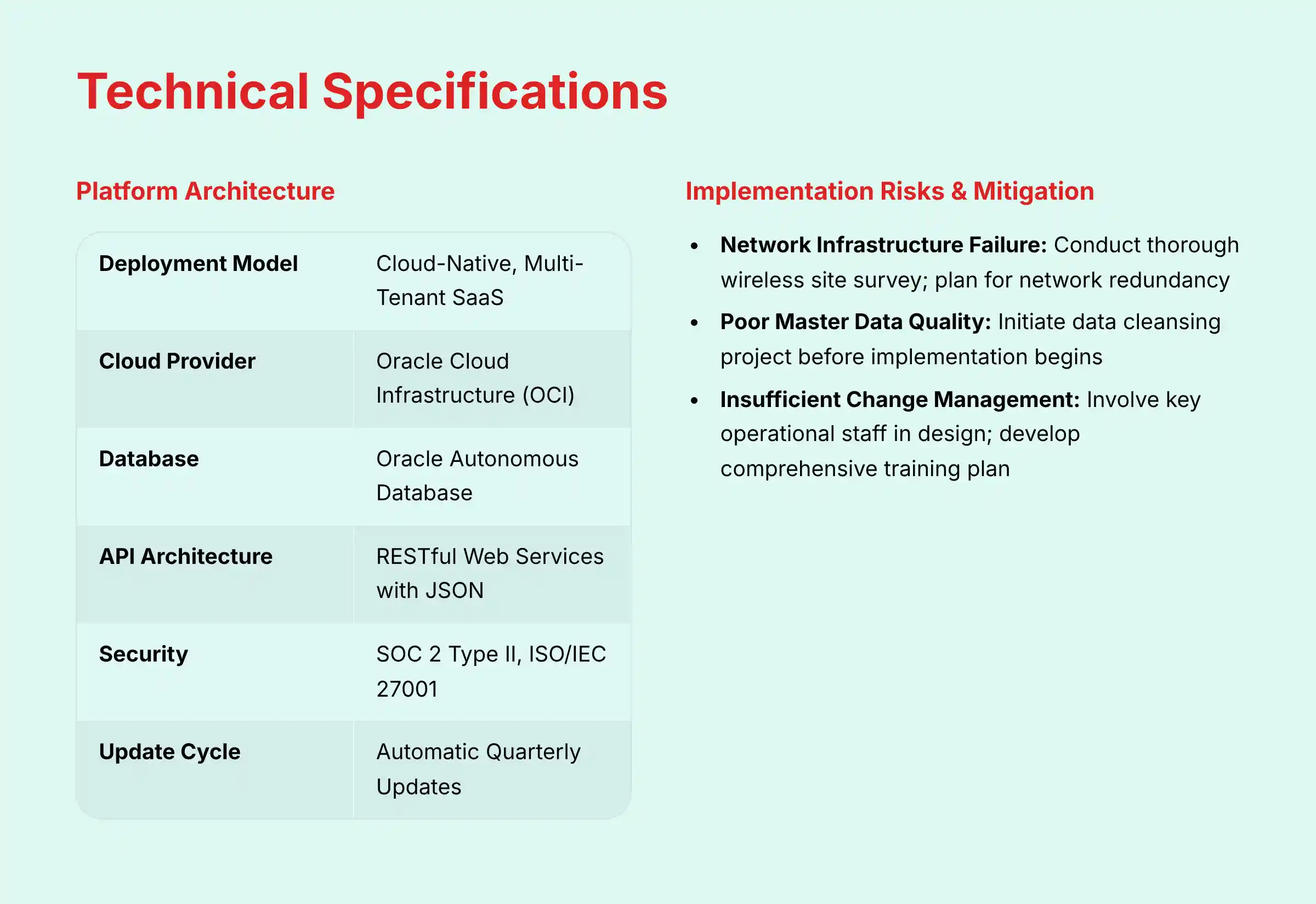
Platform and Architecture
The system is built on a modern, cloud-native foundation designed for enterprise-level performance and security. Its architecture supports continuous innovation and scalability.
| Specification | Detail |
|---|---|
| Deployment Model | Cloud-Native, Multi-Tenant SaaS |
| Cloud Provider | Oracle Cloud Infrastructure (OCI) |
| Database | Oracle Autonomous Database |
| API Architecture | RESTful Web Services with JSON Payloads |
| Authentication | HTTP Basic Authentication |
| Security Certifications | SOC 2 Type II, ISO/IEC 27001 |
| Performance & Reliability | Financially-backed Uptime SLA (typically >99.9%), comprehensive Disaster Recovery (DR) protocols |
| Industry Compliance | Capabilities to support validation for GxP and 21 CFR Part 11 (Life Sciences), supports GS1 standards for traceability |
| Update Cycle | Automatic Quarterly Updates |
System and Hardware Requirements
As a SaaS tool, the client-side requirements are straightforward. However, the operational environment within the warehouse is a key factor for success.
| User Type | Component | Requirement |
|---|---|---|
| Manager / Planner | Web Browser | Latest stable versions of Chrome, Firefox, Edge, Safari |
| Screen Resolution | Minimum 1280×800 recommended | |
| Network | Stable, low-latency broadband internet connection | |
| Operator / Worker | Operating System | Oracle WMS Cloud offers a mobile application that can be deployed as a Progressive Web App (PWA), which is compatible with any modern browser on devices running Android, iOS, or Windows. A legacy native Android application also exists. |
| Hardware | Ruggedized RF Scanners / Mobile Devices (e.g., Zebra, Honeywell) | |
| Network | Stable Wi-Fi coverage throughout the warehouse (>1.5 Mbps per user) |
Key Implementation Risks and Mitigation
Implementing an enterprise WMS is a significant undertaking with operational and financial implications. Proactive risk management is critical for success.
- Network Infrastructure Failure: As noted, the mobile application's performance is entirely dependent on robust Wi-Fi. Mitigation: Conduct a thorough pre-implementation wireless site survey to identify and eliminate all coverage gaps. Plan for network redundancy to ensure high availability.
- Poor Master Data Quality: The principle of “garbage in, garbage out” is paramount. If item, location, or customer data is inaccurate, the system's logic will be flawed, leading to costly errors. Mitigation: Initiate a dedicated data cleansing and standardization project before WMS implementation begins.
- Insufficient Change Management: Warehouse operators may resist new, system-directed workflows. Without user buy-in, efficiency gains will not be realized. Mitigation: Involve key operational staff in the design and testing phases. Develop a comprehensive training and communication plan that clearly articulates the benefits (“what's in it for me”) for frontline workers.
Integration Capabilities and Ecosystem
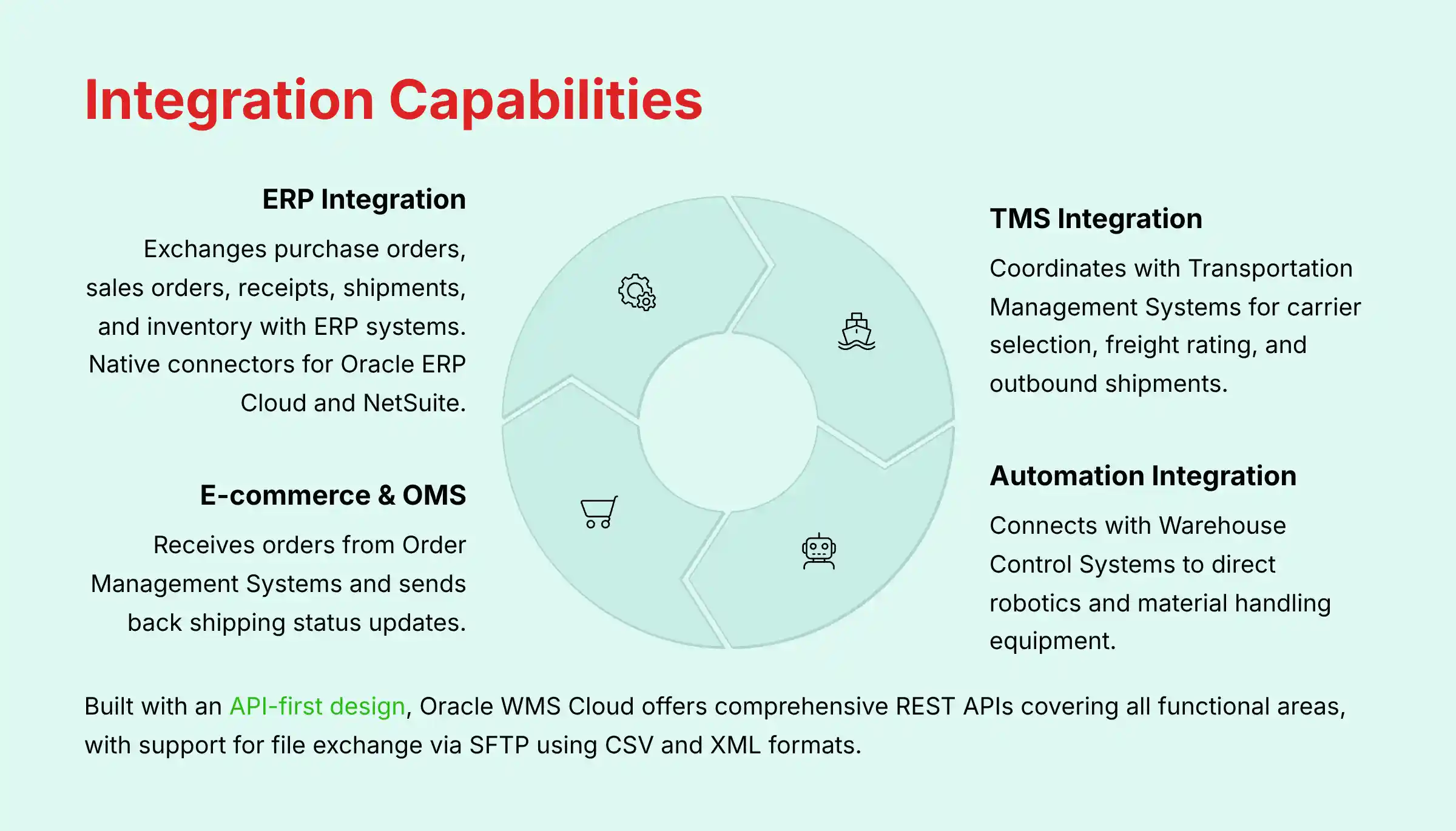
A WMS does not operate in a silo. Its ability to communicate with other core business systems is fundamental to creating a connected and efficient supply chain.
API Availability and Data Exchange
Oracle WMS Cloud is built with an API-first design. This means it has a comprehensive library of REST APIs that act as universal translators, allowing the WMS to speak fluently with any other modern software.
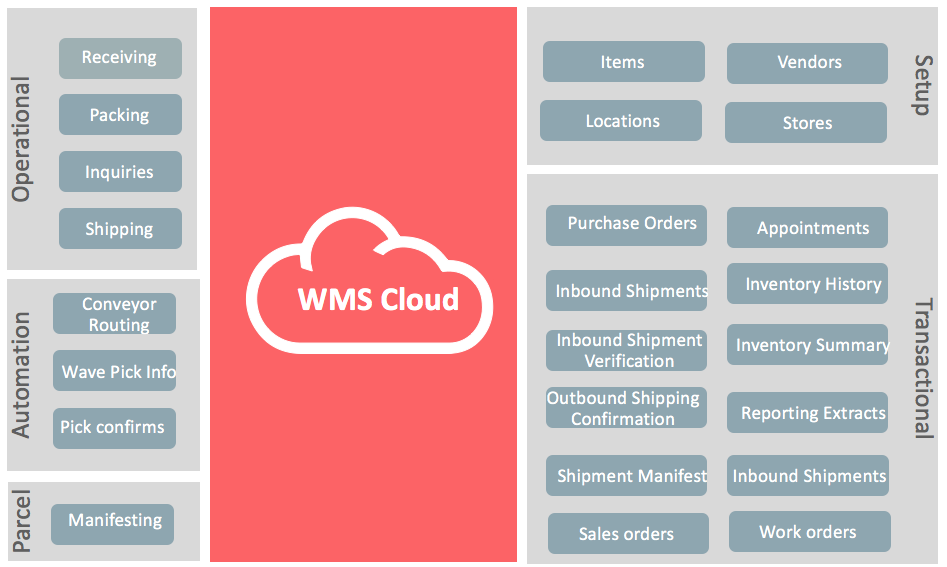
These APIs cover all key functional areas, including master data (items, suppliers), inbound shipments (ASN), outbound orders, and inventory transactions. For batch processes or connecting with legacy systems that lack modern API capabilities, the platform also supports file exchange via SFTP using formats like CSV and XML.
It's common for an integration middleware platform like MuleSoft, Boomi, or Oracle Integration Cloud to be used to orchestrate data flows and translate between the WMS and other systems, particularly for complex transformations involving legacy EDI transactions (e.g., EDI 856 for ASNs, EDI 940 for Warehouse Shipping Orders).
Core System Integrations
- Enterprise Resource Planning (ERP): This is the most important integration. The ERP sends purchase orders and sales orders to the WMS. The WMS sends receipt confirmations, shipment details, and real-time inventory adjustments back to the ERP. The system has native connectors for Oracle ERP Cloud and NetSuite and uses APIs for others like SAP.
- Transportation Management Systems (TMS): The WMS integrates with a TMS to coordinate outbound shipments. This connection helps with carrier selection and freight rating.
- Warehouse Automation (WCS/WES): It integrates with Warehouse Control Systems or Warehouse Execution Systems. This allows the WMS to manage and direct robotics and other material handling equipment.
- E-commerce & Order Management (OMS): The platform connects to an OMS to receive orders for fulfillment. It then sends back shipping status updates to keep customers informed.
Objective Use Cases and Industry Applications
- Use Case 1: High-Volume E-commerce Fulfillment: A company processing thousands of small, direct-to-consumer orders daily uses the WMS to orchestrate batch picking. It integrates with automated packing and shipping systems to meet strict delivery promises.
- Use Case 2: Multi-Client 3PL Operations: A Third-Party Logistics provider uses the WMS to manage inventory and processes for multiple distinct clients within the same building. The system ensures complete data segregation and supports client-specific billing rules.
- Use Case 3: Omnichannel Retail Distribution: A retailer uses the WMS to manage a central pool of inventory. This inventory can fulfill e-commerce orders, replenish retail stores, and support “buy online, ship from store” scenarios.
Applicable Industries:
- Retail & E-commerce
- Third-Party Logistics (3PL)
- Wholesale Distribution
- Consumer Packaged Goods (CPG)
- Manufacturing
- Pharmaceuticals & Life Sciences
Pricing and Implementation Model
Oracle does not offer public pricing tiers for its WMS Cloud. Pricing is quote-based and tailored to the specific needs of each enterprise.
The final subscription cost is typically influenced by several metrics:
- Number of warehouse facilities
- Monthly order or transaction volume
- Total number of users (both managers and mobile device operators)
- Inclusion of optional modules like Yard Management
The service is a SaaS subscription with multi-year contracts. The subscription includes software access, hosting, maintenance, and the automatic quarterly updates. Implementation is a separate, project-based engagement, usually led by Oracle Consulting or a certified partner, and involves discovery, configuration, testing, and go-live support. There is no public free trial, but prospective customers can request a tailored product demonstration.
Getting Started and Learning Resources
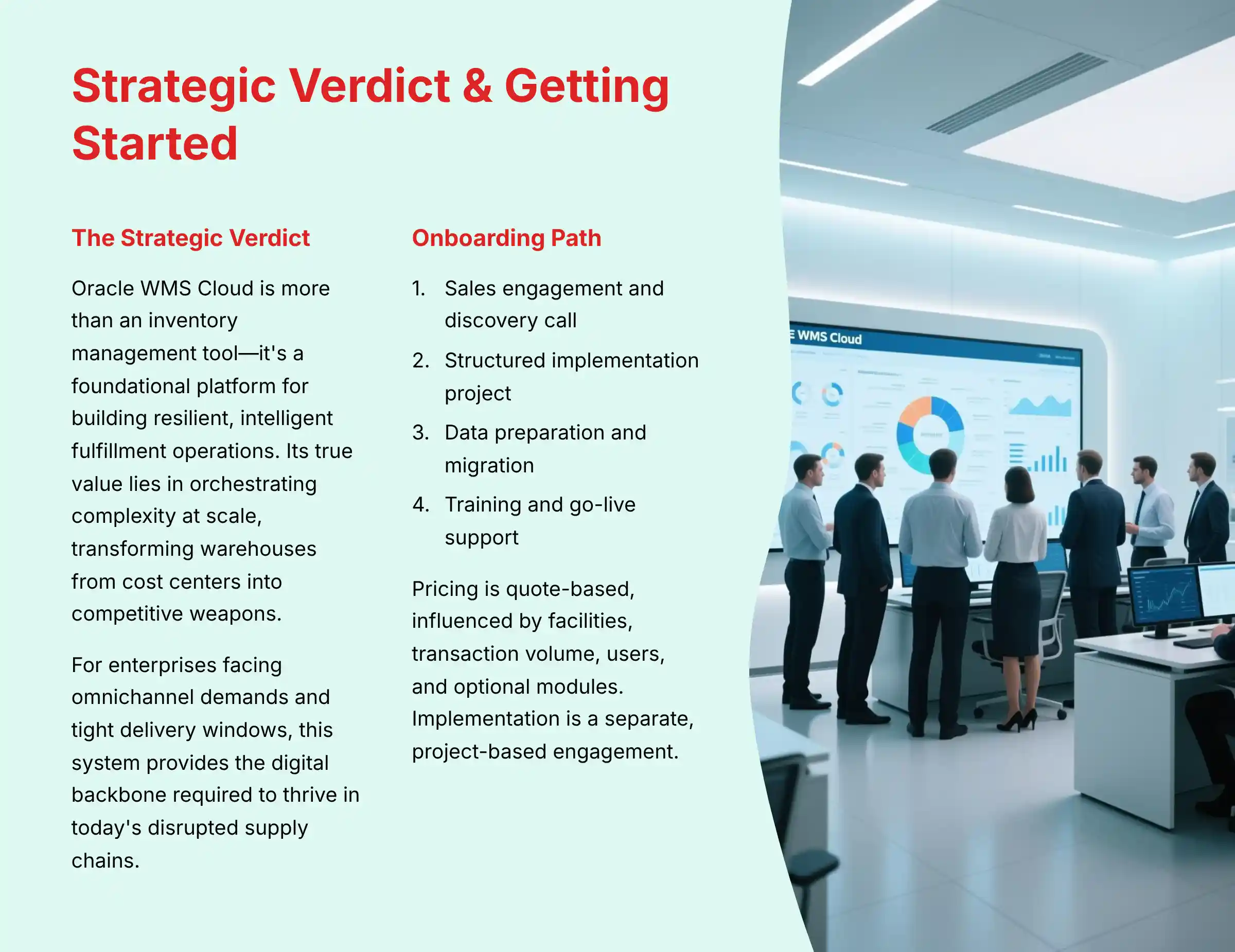
The path to adopting an enterprise system like Oracle WMS Cloud is a structured project, not a simple sign-up process. It requires careful planning and dedicated resources.
Onboarding Path:
- Sales Engagement: The first step is contacting the Oracle sales team for a discovery call to discuss your operational needs.
- Structured Implementation Project: A formal implementation project is initiated. This requires an internal project team with a Project Manager, IT resources, and operations experts.
- Data Preparation: A key prerequisite is having clean and well-structured master data, like your item and supplier lists, ready for migration.
- Training & Go-Live: The process includes formal training for all users before the system is activated for live operations.
Official Resources:
- Oracle Help Center: This is the main source for official technical documentation, configuration guides, and API specifications.
- Oracle University: It offers formal, paid training courses and certifications for administrators and implementation consultants.
- Oracle Customer Community: This is a forum for users to ask questions and share best practices with peers and Oracle experts.
Frequently Asked Questions (FAQ) about Oracle WMS Cloud
For additional insights into common questions and challenges, explore our comprehensive Oracle Warehouse Management Cloud (WMS Cloud) FAQs resource.
What is the main difference between Oracle WMS Cloud and an on-premises WMS?
The primary difference is the deployment model. Oracle WMS Cloud is a SaaS solution hosted and managed by Oracle with automatic quarterly updates. An on-premises WMS is installed on a company's own servers, requiring internal IT resources for maintenance, hardware, and manual upgrades.
Does Oracle WMS Cloud require an Oracle ERP?
No, it does not. While it has pre-built integrations with Oracle ERP Cloud and NetSuite, it is designed to integrate with any third-party ERP system, such as SAP or Microsoft Dynamics, through its comprehensive library of REST APIs.
How does Oracle WMS support warehouse automation and robotics?
It supports automation through its Warehouse Automation Integration Framework. This is a set of standardized APIs that allows the WMS to communicate with and direct tasks to warehouse control systems or robotics fleet managers, orchestrating hardware like AMRs and conveyors.
Is Oracle WMS Cloud suitable for small businesses?
This system is primarily designed for mid-to-large enterprises with complex, high-volume operations. Its feature set, implementation complexity, and pricing model are generally not a fit for most small businesses.
What kind of mobile devices are used with Oracle WMS Cloud?
The mobile application runs as a Progressive Web App (PWA) compatible with Android, iOS, and Windows devices. It is designed for use on enterprise-grade, ruggedized mobile computers and RF scanners from manufacturers like Zebra and Honeywell. A legacy native Android application is also available.
How are system updates and new features delivered?
As a multi-tenant SaaS application, updates are delivered automatically by Oracle on a quarterly basis. All customers are on the same software version, ensuring they always have access to the latest features and security enhancements without manual upgrades.
Can you customize the workflows in Oracle WMS Cloud?
Yes, the platform is highly configurable without requiring code changes. Administrators can define unique business rules for processes like putaway and picking. However, the core application code cannot be modified.
What is the typical implementation timeline for Oracle WMS Cloud?
The timeline varies based on complexity and the number of integrations. A standard, single-site implementation can range from 4 to 9 months, while more complex multi-site or highly automated projects can take longer.
The Strategic Verdict: From Cost Center to Competitive Weapon
Oracle WMS Cloud is more than an inventory management tool; it is a foundational platform for building a resilient, intelligent, and agile fulfillment operation. While the feature set is comprehensive, its true value lies in its ability to orchestrate complexity at scale—transforming the warehouse from a reactive cost center into a proactive competitive weapon.
For mid-to-large enterprises facing the pressures of omnichannel demand and tightening delivery windows, this system provides the digital backbone required to not only survive but thrive. The decision to adopt a Tier 1 WMS is significant, but in today's landscape, the cost of inaction—of operating with siloed data and inefficient processes—is far greater.
Before making your final decision, we recommend reviewing our detailed Oracle Warehouse Management Cloud (WMS Cloud) Review for additional insights from real-world implementations. Additionally, for organizations seeking to evaluate multiple solutions, our analysis of the Best 10 AI Warehouse Management Systems (WMS) provides comprehensive comparisons across the market landscape.
The inflection point is here. The time to press the advantage is now.
Disclaimer
Technology Evolution Notice:
The information about Oracle WMS Cloud and AI for Operations & Supply Chain tools presented in this article reflects our thorough analysis as of 2025. Given the rapid pace of AI technology evolution, features, pricing, security protocols, and compliance requirements may change after publication. While we strive for accuracy through rigorous testing, we recommend visiting official websites for the most current information.
Professional Consultation Recommendation:
For AI for Operations & Supply Chain applications with significant professional, financial, or compliance implications, we recommend consulting with qualified professionals who can assess your specific requirements and risk tolerance. This is particularly important for regulated industries like pharmaceuticals, where a specialized validation consultant should be engaged to ensure the WMS implementation meets specific FDA requirements like 21 CFR Part 11. Similarly, a formal value engineering assessment with supply chain experts can help quantify expected ROI for AI features like dynamic slotting in your specific environment.
Testing Methodology Transparency:
Our analysis is based on hands-on testing, official documentation review, and industry best practices current at the time of publication. Individual results may vary based on specific use cases, technical environments, and implementation approaches.
For more information, feel free to review our complete guide on Oracle Warehouse Management Cloud (WMS Cloud) Overview and Features.

Leave a Reply