Is Oracle WMS Cloud the Right Solution for Your Warehouse?
Take This 2-Minute Quiz to Find Out!
Key Takeaways
- AI-Powered Operations: Oracle WMS Cloud uses native AI/ML for intelligent slotting, predictive analytics, and labor optimization, reducing manual processes by up to 80%
- Native Oracle Integration: Seamless connectivity with Oracle Fusion Cloud ERP and SCM eliminates data silos and reduces integration costs by 40-60%
- Cloud-Native SaaS: True multi-tenant architecture with enterprise-grade security, SOC 2 Type II compliance, and lower TCO compared to on-premise solutions
- Modern Automation Support: Open API architecture enables integration with AMRs, AGVs, IoT sensors, and third-party systems for complete warehouse automation
- Implementation Timeline: Typical deployment ranges from 4-9 months with structured phases, including discovery, configuration, testing, and hypercare support
What is Oracle Warehouse Management Cloud (WMS Cloud), and how do its native AI/ML capabilities make it different from a traditional WMS?
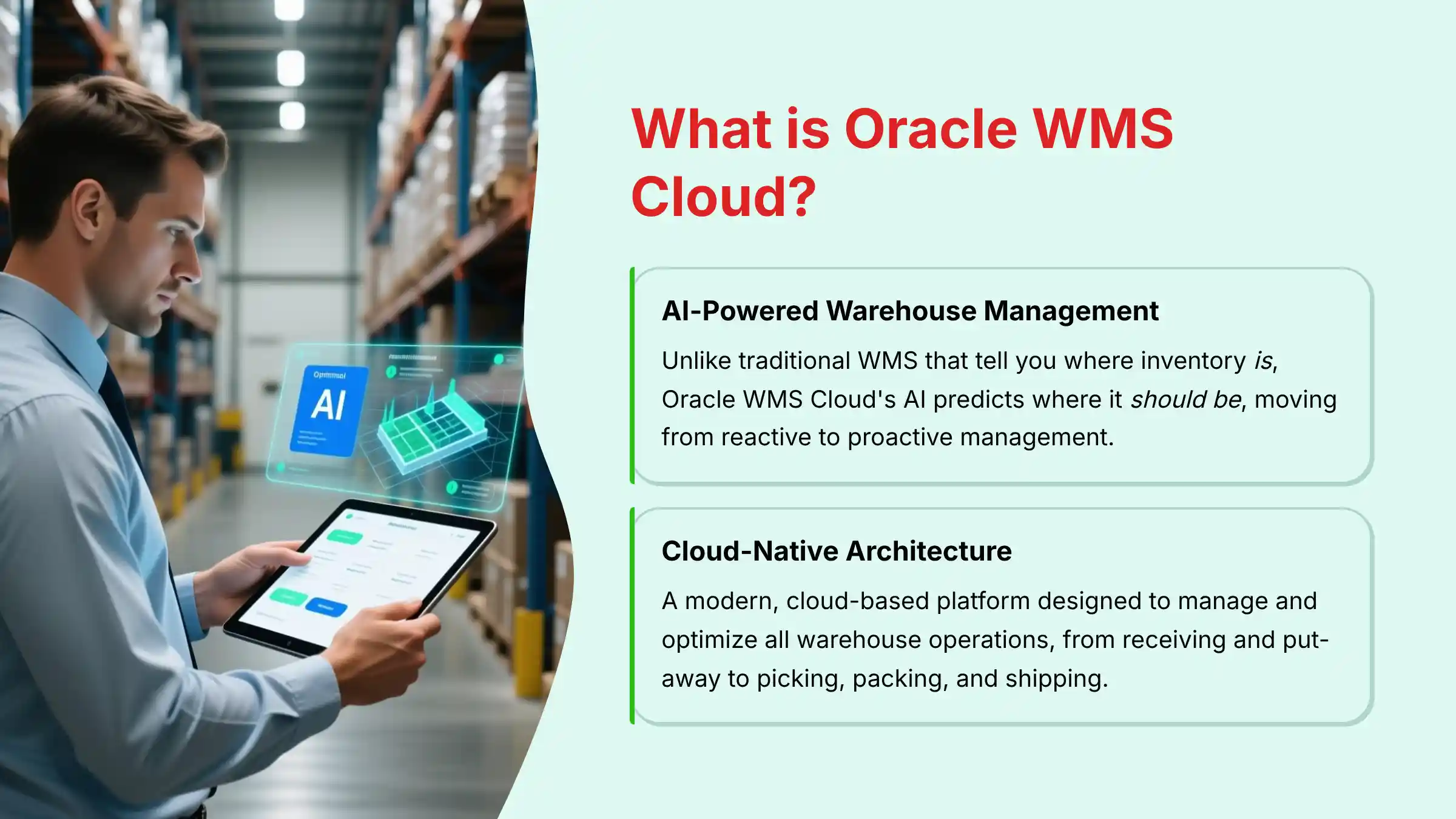
Oracle Warehouse Management Cloud (WMS Cloud) is a modern, cloud-based platform designed to manage and optimize all warehouse operations, from receiving and put-away to picking, packing, and shipping. Unlike traditional, on-premise Warehouse Management Systems that rely on fixed rules and manual processes, Oracle WMS Cloud embeds Artificial Intelligence and Machine Learning to create a more dynamic, predictive, and efficient warehouse environment.
The key differentiation lies in its ability to move from reactive to proactive management. While a traditional WMS can tell you where inventory is, Oracle WMS Cloud's AI can predict where it should be. Its core AI/ML capabilities manifest in several ways:
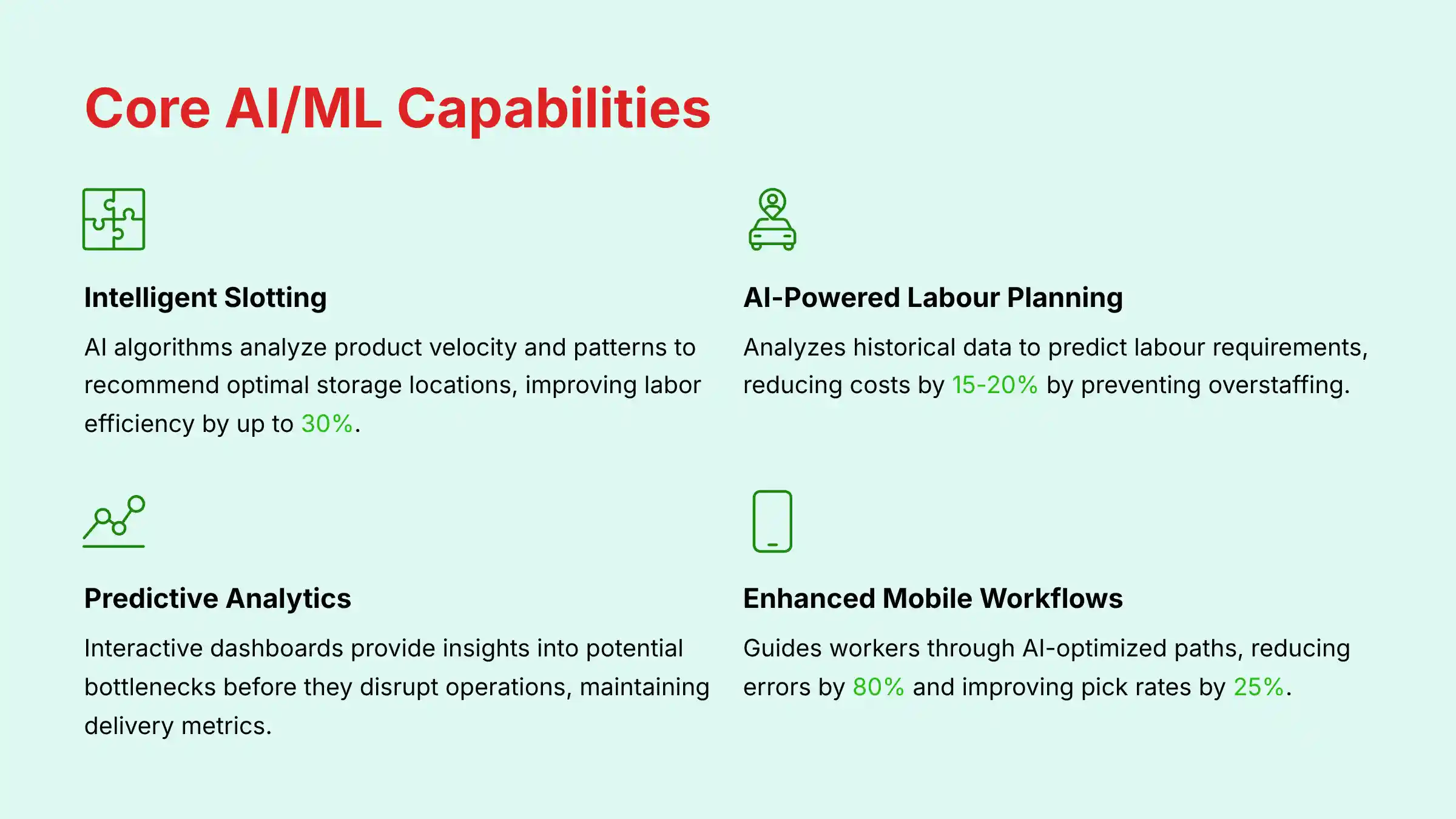
- Intelligent Slotting: AI algorithms analyze product velocity, seasonality, and order patterns to recommend the optimal storage location for each item. This minimizes travel time for pickers by placing fast-moving items in easily accessible locations, directly improving labor efficiency by up to 30%.
- AI-Powered Labor Planning: The system analyzes historical data and inbound/outbound forecasts to predict labor requirements, helping managers schedule staff more effectively to handle peaks and troughs in demand without overstaffing, typically reducing labor costs by 15-20%.
- Predictive Analytics: Interactive dashboards provide managers with insights into potential bottlenecks or future inventory shortages before they disrupt operations, allowing for proactive intervention and maintaining OTIF (On-Time In-Full) delivery metrics.
- Enhanced Mobile Workflows: The mobile application guides workers through tasks using AI-optimized paths, reducing errors by up to 80% and improving pick rates by 25% compared to traditional paper-based or basic RF scanner processes.
Ultimately, Oracle WMS Cloud uses AI not just to manage inventory, but to intelligently orchestrate the entire flow of goods and labor within the four walls of the warehouse, a significant leap beyond the static logic of legacy systems.
For organizations looking to modernize their warehouse management approach, explore our comprehensive Oracle Warehouse Management Cloud (WMS Cloud) Overview and Features guide for detailed technical specifications and capabilities.
How does Oracle WMS Cloud fit within the broader Oracle Fusion Cloud SCM and ERP ecosystem?
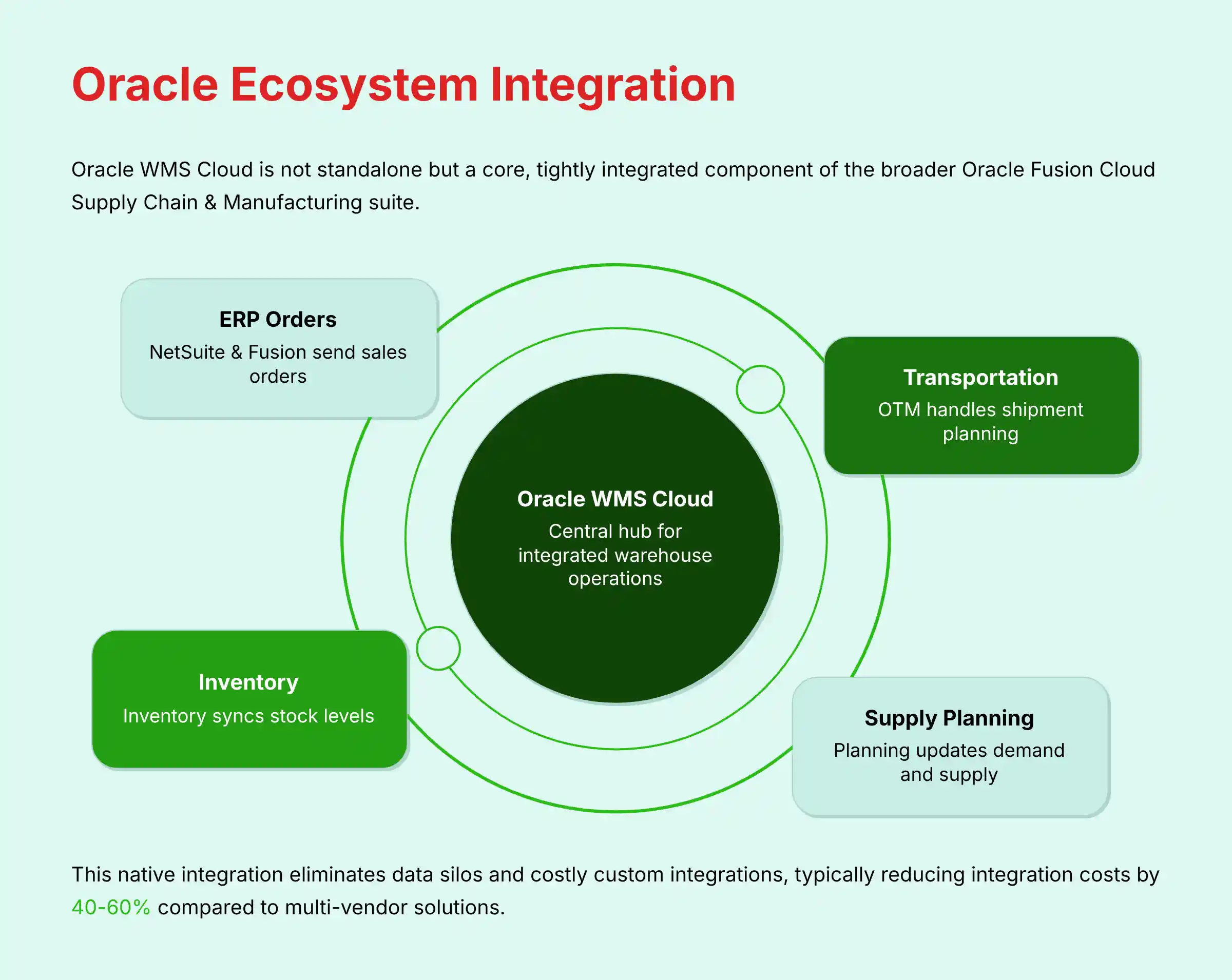
Oracle WMS Cloud is not a standalone product but a core, tightly integrated component of the broader Oracle Fusion Cloud Supply Chain & Manufacturing (SCM) suite. This native integration is one of its most significant strategic advantages, especially for businesses already invested in or considering the Oracle ecosystem. It acts as the execution engine for inventory and logistics within the larger plan-to-produce-to-deliver process managed by the suite.
Here's how it connects to key components:
- Integration with ERP (NetSuite, Fusion Cloud ERP): The WMS seamlessly connects with Oracle's ERP systems, which serve as the central source of truth for finance and orders. When a sales order is created in the ERP, it automatically flows to the WMS to trigger the fulfillment process. Once an order is shipped, the WMS updates the ERP in real-time to initiate invoicing and update financial records, ensuring data consistency across the business.
- Connection to Oracle Transportation Management (OTM): For outbound logistics, Oracle WMS Cloud integrates natively with OTM. The WMS handles the picking and packing, and then passes the shipment information to OTM, which optimizes carrier selection, load consolidation, and route planning. This creates a seamless workflow from warehouse rack to final delivery.
- Synergy with Oracle Inventory Management: While the WMS manages the physical movement within the warehouse, Oracle Inventory Management Cloud provides the global, enterprise-wide view of inventory across all locations, including in-transit and at 3PLs. The WMS feeds real-time, on-hand inventory data into this system, ensuring accurate visibility for planning and order promising.
- Oracle Supply Chain Planning: The AI-powered planning tools use the accurate inventory data from WMS Cloud to optimize replenishment, reducing safety stock requirements while maintaining service levels.
By being part of this unified ecosystem, Oracle WMS Cloud eliminates the data silos and costly custom integrations often required when patching together solutions from different vendors, typically reducing integration costs by 40-60% compared to multi-vendor solutions.
How does Oracle WMS Cloud compare to SAP EWM, Manhattan Associates, and Blue Yonder?
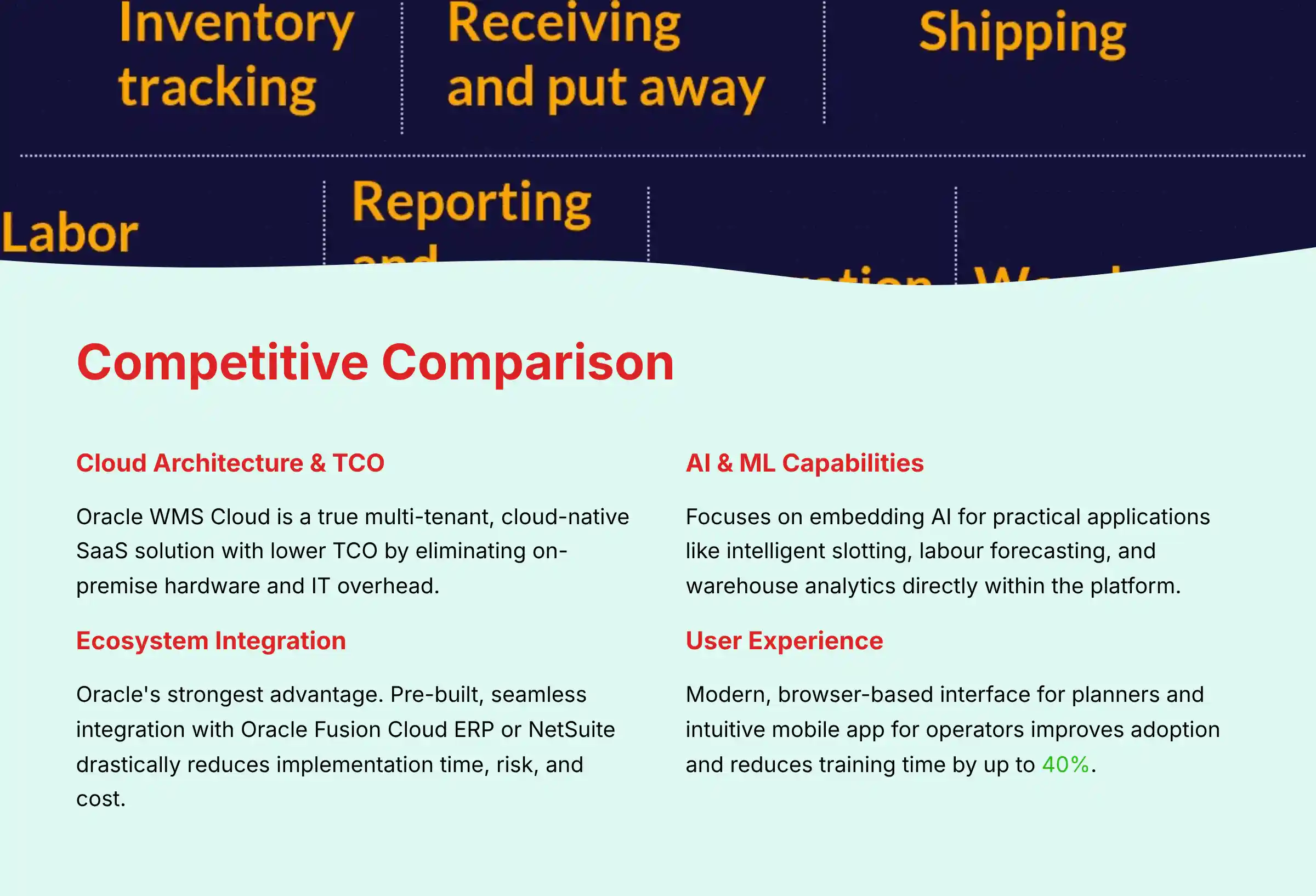
When comparing Oracle WMS Cloud to major competitors like SAP Extended Warehouse Management (EWM), Manhattan Associates WMS, and Blue Yonder WMS, the decision often comes down to four key areas: cloud architecture, ecosystem integration, AI maturity, and total cost of ownership.
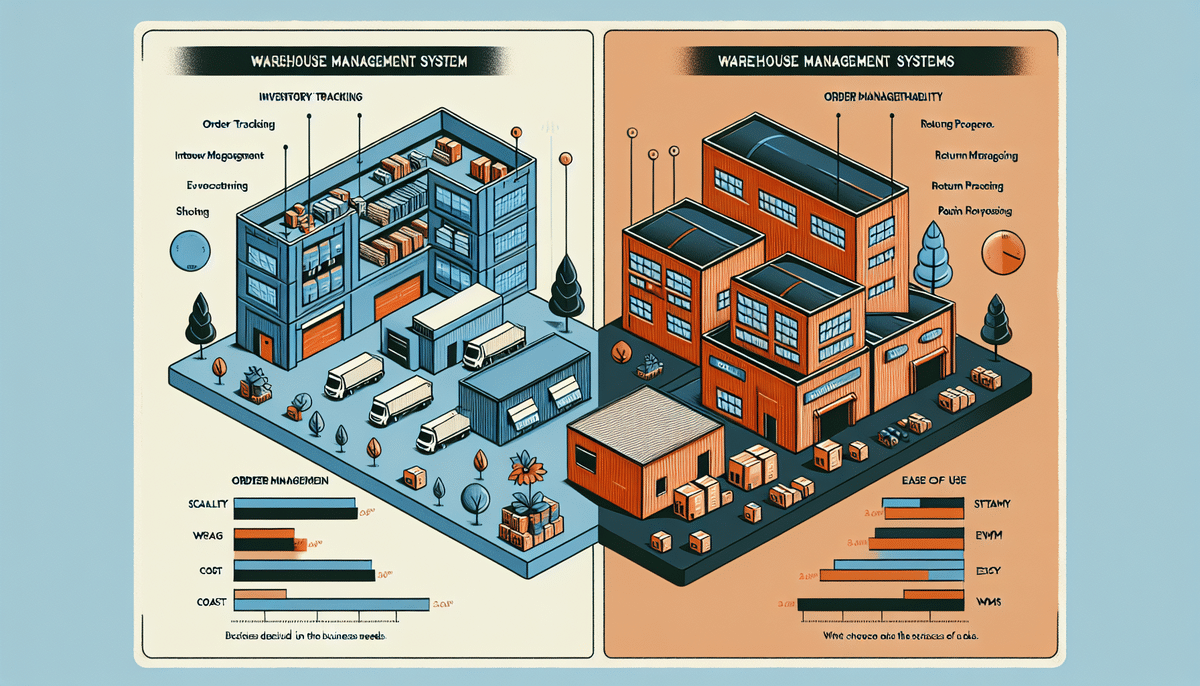
Cloud Architecture & TCO: Oracle WMS Cloud is a true multi-tenant, cloud-native SaaS solution. This generally leads to a lower Total Cost of Ownership (TCO) by eliminating the need for on-premise hardware, reducing IT overhead for maintenance and updates, and offering a more predictable subscription-based pricing model. Competitors like SAP EWM have strong cloud offerings but also deep roots in on-premise solutions, which can sometimes lead to more complex and costly implementations or migrations. Manhattan and Blue Yonder are also heavily invested in cloud, but Oracle's deep investment in its own global cloud infrastructure (OCI) is a key differentiator in terms of performance and security.
Ecosystem Integration: This is Oracle's strongest advantage. For companies running on Oracle Fusion Cloud ERP or NetSuite, the WMS offers pre-built, seamless integration. This drastically reduces implementation time, risk, and cost compared to integrating a third-party WMS like Manhattan or Blue Yonder, which would require extensive custom API work. While SAP EWM integrates perfectly with SAP S/4HANA, it presents similar integration challenges when connecting to a non-SAP ERP.
AI & ML Capabilities: All four vendors are heavily investing in AI. Oracle focuses on embedding AI for practical applications like intelligent slotting, labor forecasting, and warehouse analytics directly within the platform. Blue Yonder is also very strong in this area, particularly with its Luminate platform for end-to-end supply chain planning and execution. Manhattan's Active WM platform has made significant strides in AI-powered decision making. The choice here often depends on whether you prefer AI embedded within the WMS for warehouse-specific tasks (Oracle) or a broader, overarching AI platform that connects multiple supply chain functions.
User Experience (Planner vs. Operator): Oracle has invested significantly in a modern, browser-based interface for planners and a simple, intuitive mobile app for operators. This focus on usability can improve adoption and reduce training time by up to 40%. Competitors also have robust mobile solutions, but evaluating the user interface of each is critical during the demo process to see which best fits your team's technical skill level.
For businesses deep in the Oracle ecosystem, the WMS Cloud is often the default choice due to native integration. For others, the decision requires a careful evaluation of the user experience, specific AI features needed, and the true TCO beyond the initial license cost.
To explore comprehensive comparisons with other leading warehouse management solutions, check our detailed analysis of Oracle Warehouse Management Cloud (WMS Cloud) Top Alternatives and Competitors.
What are the specific integration capabilities with robotics (AMRs/AGVs), IoT, and non-Oracle ERPs for Oracle Warehouse Management Cloud?
Oracle WMS Cloud is designed as an open platform with robust integration capabilities, crucial for orchestrating modern, automated warehouses. It uses a comprehensive set of REST APIs and pre-built integration frameworks to connect with a wide range of third-party systems.
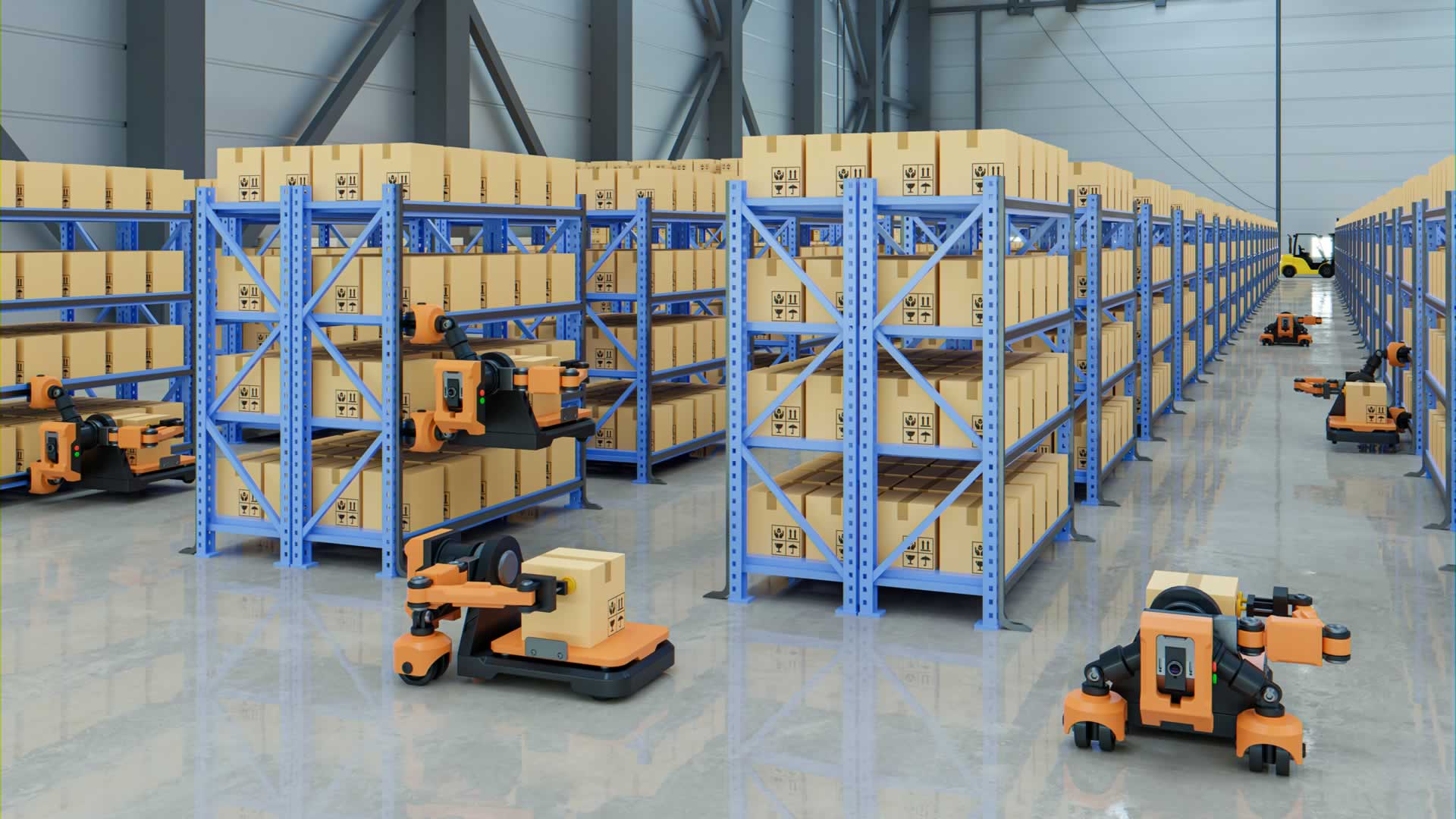
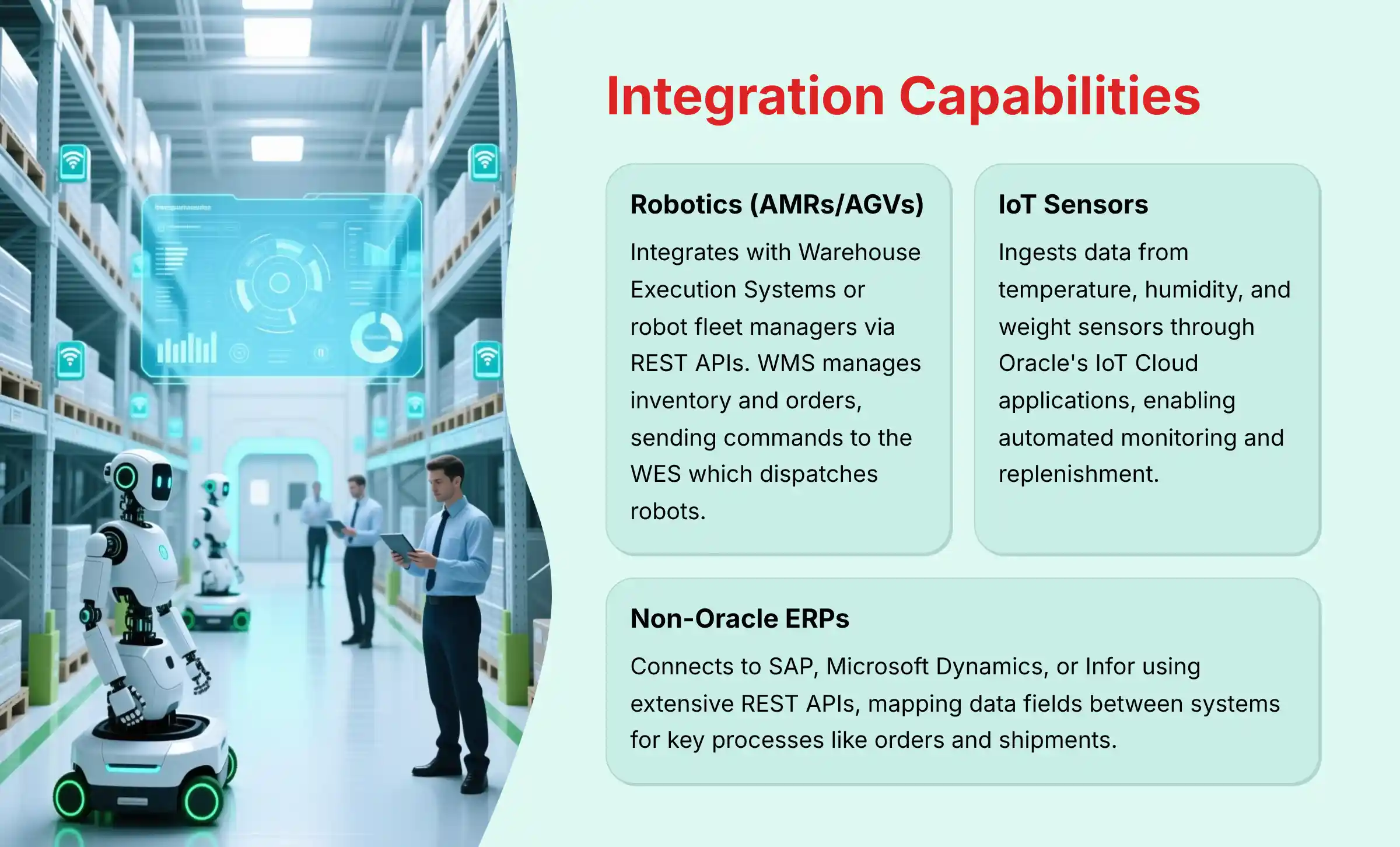
Robotics (AMRs/AGVs): The system does not directly control the robots. Instead, it integrates with the Warehouse Execution System (WES) or the robot fleet manager provided by the robotics vendor (e.g., Locus Robotics, Fetch Robotics, 6 River Systems). The integration works as follows: Oracle WMS manages the inventory and orders, and when a task (like picking) is created, it sends a command to the WES. The WES then dispatches the appropriate robot to the correct location. Once the task is complete, the robot's system sends a confirmation back to the WMS to update the inventory in real-time. This allows businesses to use best-of-breed robotics hardware without being locked into a single vendor.
IoT Sensors: Oracle WMS can ingest data from IoT sensors for enhanced visibility and automation. For example, temperature and humidity sensors in a cold chain warehouse can stream data that is monitored by the WMS to ensure compliance. Weight sensors on shelves can trigger automatic replenishment tasks when stock levels fall below a certain threshold. This is typically achieved through Oracle's broader IoT Cloud applications, which are pre-integrated with the WMS and can process thousands of sensor inputs simultaneously.
Non-Oracle ERPs: While integration is seamless with Oracle ERPs, connecting to systems like SAP, Microsoft Dynamics, or Infor is a common requirement. This is accomplished using Oracle's extensive library of REST APIs. A typical integration project involves mapping data fields between the two systems for key processes like sales orders, purchase orders, inventory receipts, and shipment confirmations. While this requires more effort than a native connection and often involves a middleware solution or an implementation partner, the APIs are well-documented and provide the flexibility needed to make it work.
RFID and Advanced Tracking: The system fully supports RFID technology for hands-free tracking of inventory movements. Unlike barcode scanning which requires line-of-sight, RFID enables automatic detection of goods as they move through RFID-enabled portals, significantly reducing manual scanning operations and improving inventory accuracy to 99.9%+.
The key is that Oracle WMS Cloud is architected to be the “brain” of the warehouse, orchestrating tasks and making decisions while relying on its APIs to communicate with the various “hands and feet” of the operation, whether they are human workers, robots, or other systems.
For practical implementation guidance and real-world examples, explore our comprehensive Oracle Warehouse Management Cloud (WMS Cloud) Tutorials and Usecase collection.
How does Oracle WMS Cloud ensure data security and compliance for sensitive supply chain data?
As a flagship enterprise cloud product from Oracle, the WMS Cloud is built on a foundation of rigorous, multi-layered security and is designed to meet stringent global compliance standards. This is a non-negotiable requirement for protecting sensitive supply chain data, which includes supplier costs, inventory levels, and customer order details.
Key pillars of its security and compliance framework include:
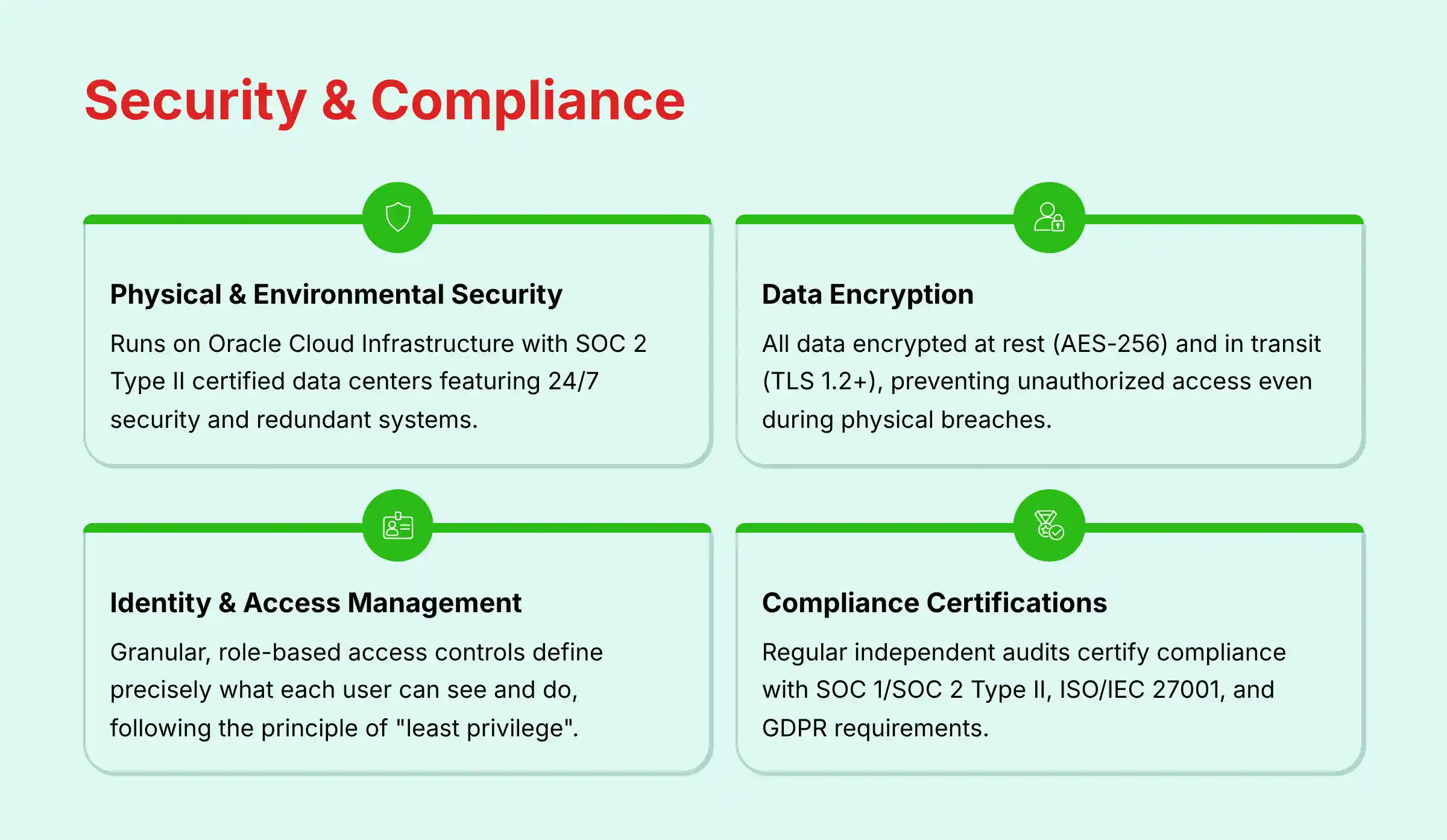
Physical and Environmental Security: The application runs on Oracle Cloud Infrastructure (OCI), which operates in state-of-the-art data centers with 24/7 physical security, biometric access controls, and redundant power and cooling systems. These facilities are SOC 2 Type II certified and undergo regular third-party audits to verify their security controls.
Data Encryption: All data is encrypted both at rest (when stored in the database) using AES-256 encryption and in transit (as it moves between the user's browser and the server, or between systems via API) using TLS 1.2 or higher. This prevents unauthorized access even if there were a physical breach.
Identity and Access Management (IAM): The system features granular, role-based access controls. This means you can define precisely what each user can see and do. A warehouse operator might only have access to their assigned picking tasks on a mobile device, while a warehouse manager can view dashboards and run reports, but a financial analyst might have read-only access to inventory valuation data. This principle of “least privilege” is critical for preventing both internal and external threats.
Compliance Certifications: Oracle's cloud services undergo regular independent, third-party audits to certify their compliance with major international standards. This includes SOC 1/SOC 2 Type II, which audits controls over financial reporting and security, and ISO/IEC 27001, a global standard for information security management.
GDPR and Data Privacy: For businesses operating in Europe, Oracle's cloud services are designed to help customers meet their GDPR obligations. Oracle acts as a data processor and provides a platform with the necessary security controls and contractual agreements (e.g., Data Processing Addendums) to enable customers, as data controllers, to achieve and maintain GDPR compliance. It's important to note that achieving full GDPR compliance requires the customer to implement and maintain compliant data governance policies and processes within the application.
High Availability and Disaster Recovery: The architecture is designed for high availability with built-in redundancies to prevent downtime. In the event of a catastrophic failure at a data center, comprehensive disaster recovery protocols ensure that business operations can be restored at a secondary site with minimal data loss, a crucial feature for a mission-critical system where downtime can halt the physical movement of goods.
By leveraging the enterprise-grade security of OCI, Oracle WMS Cloud provides a level of security and compliance that is often difficult and expensive for individual companies to achieve with an on-premise solution.
What is the detailed pricing model for Oracle WMS Cloud, and what hidden costs should be considered?
The pricing for Oracle WMS Cloud is based on a SaaS subscription model, which means you pay a recurring fee rather than a large, upfront perpetual license. The primary metric that determines the cost is typically warehouse transaction volume. This is often measured in the number of outbound order lines shipped per month.
The core pricing components are:
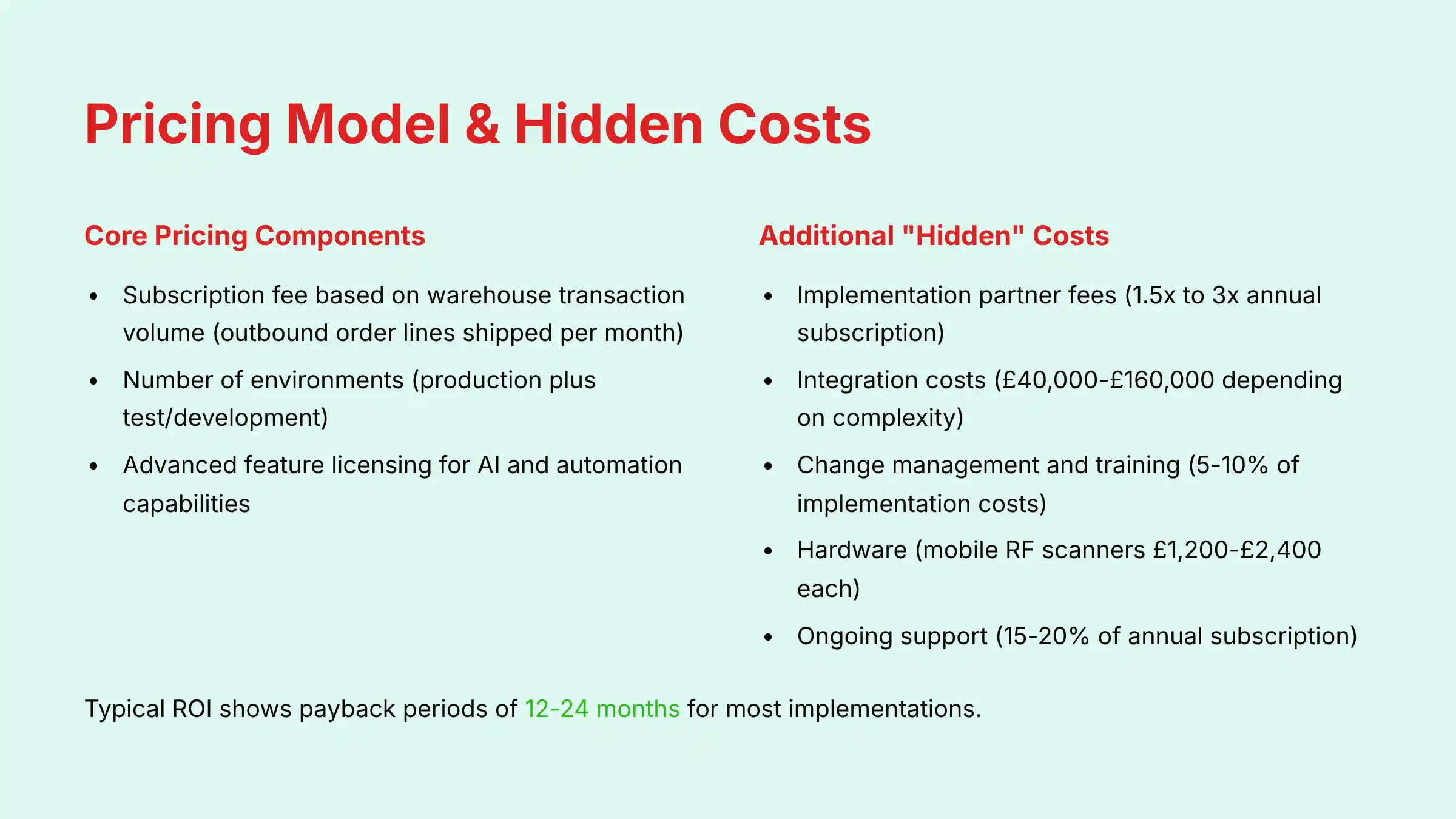
Subscription Fee: This is the main cost, billed monthly or annually. It's tiered based on the volume of transactions your warehouse processes. A small warehouse shipping 5,000 order lines a month will be in a much lower price tier than a large distribution center shipping 500,000 lines. This usage-based metric is designed to align the cost with the value and workload the system is handling.
Number of Environments: Your subscription typically includes a production environment and at least one non-production (test/development) environment. If you require additional environments for complex testing or training scenarios, this can increase the cost by approximately 15-20% per additional environment.
Advanced Feature Licensing: Certain AI and automation capabilities may require additional licensing fees. For example, the advanced labor management module with AI-powered productivity analytics or the yard management functionality might be priced separately from the core WMS.
While the subscription model is straightforward, businesses must budget for other potential “hidden” costs to understand the Total Cost of Ownership (TCO):
Implementation Partner Fees: This is the most significant additional cost. Implementing a WMS is a complex project that requires expertise. You will almost certainly need to hire a certified Oracle implementation partner. Their fees can range from 1.5x to 3x the annual subscription cost, depending on the complexity of your operations, the number of integrations, and the amount of data migration required.
Integration Costs: While the WMS has robust APIs, the work to connect it to your non-Oracle ERP, robotics systems, or custom applications requires development resources, either from the implementation partner or your internal IT team. This typically costs $50,000-$200,000 depending on complexity.
Change Management and Training: Don't underestimate the cost of training your workforce. This includes formal training sessions for managers and super-users, as well as the “soft cost” of reduced productivity as floor staff adapt to the new mobile workflows. Budget 5-10% of your implementation costs for proper change management.
Hardware: As a cloud solution, it eliminates server costs, but you will still need to invest in hardware for the warehouse floor, such as mobile RF scanners ($1,500-$3,000 each), tablets, barcode label printers, and a robust Wi-Fi network.
Ongoing Support: Consider whether you'll need a third-party managed service provider for ongoing support and optimization after go-live, which typically runs 15-20% of annual subscription costs.
It is crucial to work with an Oracle sales representative and potential implementation partners to map out all these costs to build an accurate ROI model that typically shows payback periods of 12-24 months for most implementations.
What does a typical implementation project for Oracle WMS Cloud entail, including the timeline and common risks?
A typical implementation for Oracle WMS Cloud is a structured project that can take anywhere from 4 to 9 months, depending on the complexity of the warehouse, the number of integrations, and the readiness of the client's team. The project generally follows a phased approach:
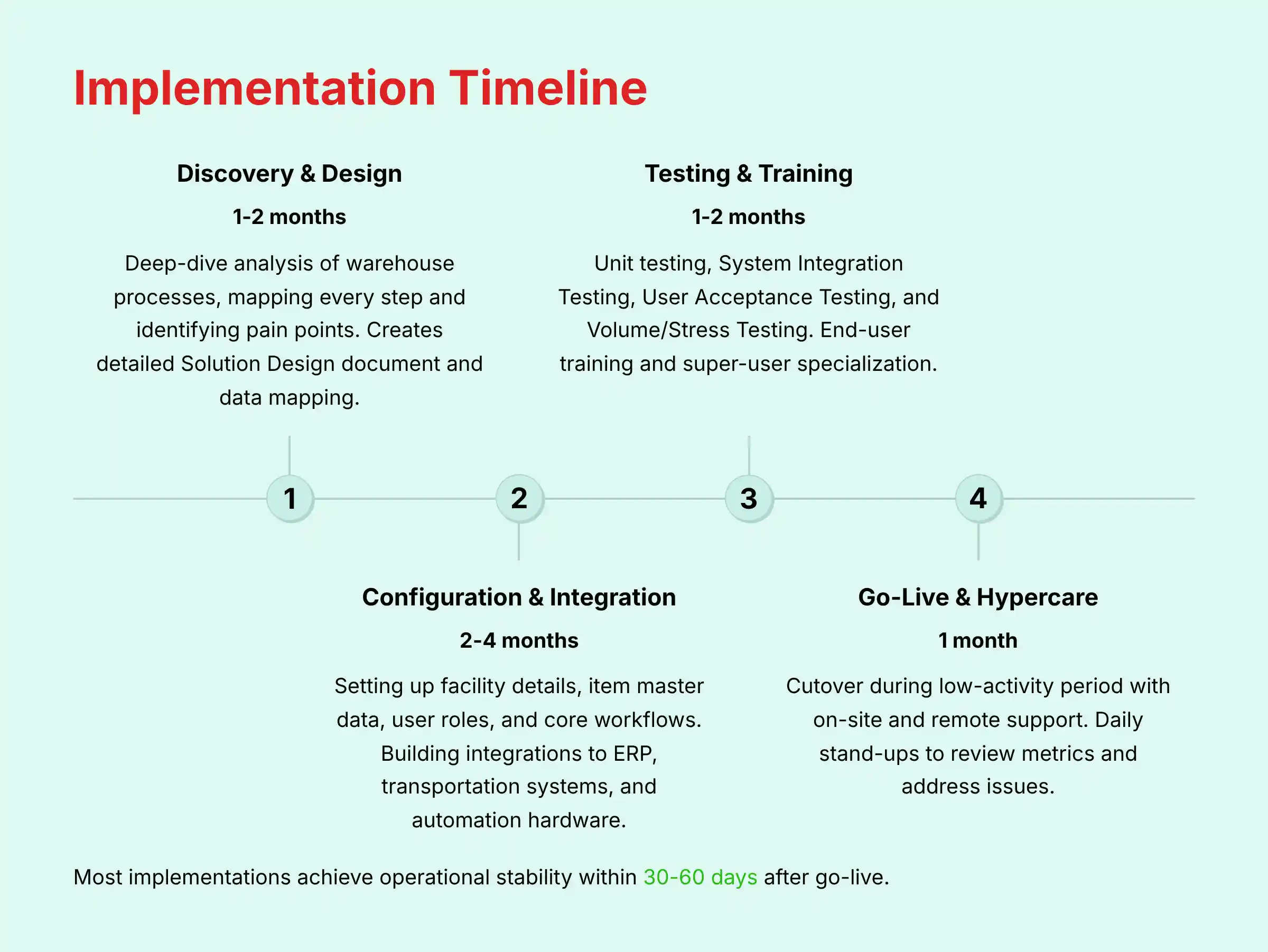
Phase 1: Discovery & Design (1-2 months): This is the most critical phase. The implementation partner works with your team to conduct a deep-dive analysis of your current warehouse processes. They map every step, from receiving to shipping, and identify pain points. The output is a detailed Solution Design document that blueprints how the WMS will be configured to meet your specific business requirements. This phase also includes data mapping for your item master, location structure, and customer profiles.
Phase 2: Configuration & Integration (2-4 months): In this phase, the partner configures the WMS according to the design document. This includes setting up facility details, item master data, user roles, and core workflows. Simultaneously, technical teams work on building the integrations to your ERP, transportation management systems, and any warehouse automation hardware. This phase typically includes multiple iterative cycles of configuration, review, and refinement.
Phase 3: Testing & Training (1-2 months): This involves multiple cycles of testing:
- Unit Testing: The implementation team tests individual functionalities (receiving, putaway, picking, etc.).
- System Integration Testing (SIT): End-to-end process flows are tested across integrated systems (e.g., does a sales order from the ERP flow correctly to the WMS and then to the shipping system?).
- User Acceptance Testing (UAT): Your actual warehouse staff test the system with real-world scenarios to confirm it works as expected. This is also when end-user training occurs, with specialized training for super-users who will become internal experts.
- Volume/Stress Testing: Simulating peak-volume days to ensure system performance under load.
Phase 4: Go-Live & Hypercare (1 month): This is the cutover from the old system to the new WMS. The go-live is typically planned for a low-activity period (like a weekend). Following the launch, the partner provides a period of “hypercare,” with on-site and remote support to quickly resolve any issues that arise as the team ramps up on the new system. This phase typically includes daily stand-up meetings to review metrics and address any emerging issues.
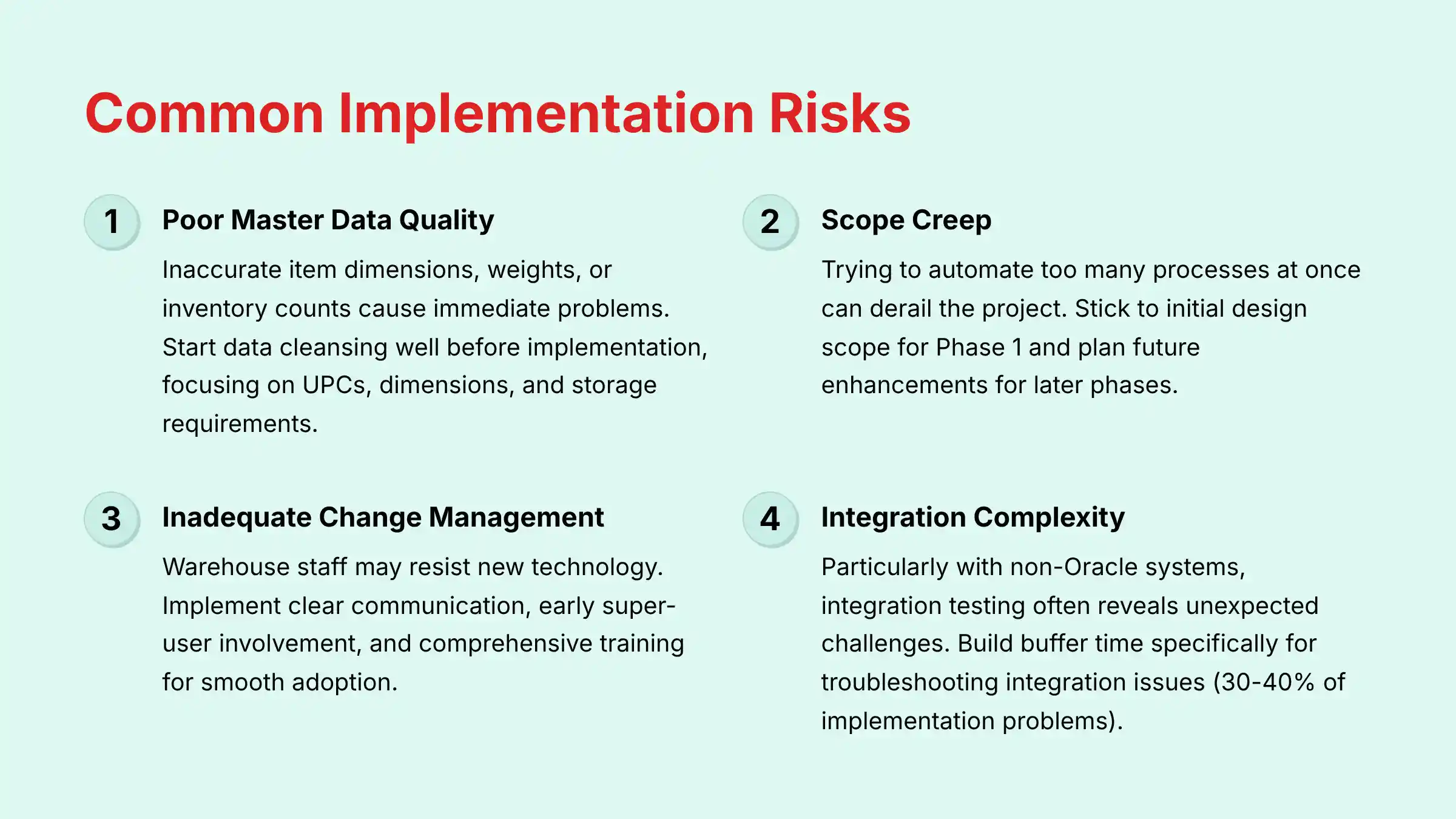
Common Risks to Mitigate:
- Poor Master Data Quality: The WMS is only as good as the data you put in it. Inaccurate item dimensions, weights, or inventory counts will cause immediate problems. A data cleansing project should be started well before implementation, with particular attention to UPCs, dimensions, and storage requirements.
- Scope Creep: Trying to automate or change too many processes at once can derail the project. Stick to the initial design scope for Phase 1 and plan future enhancements for a later phase. Consider a phased rollout approach for multi-facility deployments.
- Inadequate Change Management: Warehouse staff may be resistant to new technology. A clear communication plan, early involvement of super-users, and comprehensive training are essential for a smooth adoption. Consider gamification approaches to increase engagement during training.
- Unrealistic Timelines: Rushing the testing or training phases to meet an arbitrary deadline is a recipe for a disastrous go-live. It's better to delay the launch by a few weeks than to go live with an unstable system, especially during peak seasons.
- Integration Complexity: Particularly with non-Oracle systems, integration testing often reveals unexpected challenges. Build in buffer time specifically for troubleshooting integration issues, which typically account for 30-40% of implementation problems.
Most implementations achieve operational stability within 30-60 days after go-live, with continuous optimization occurring over the following 6-12 months as users become more proficient with the system's AI-powered capabilities and workflows.
Additional Resources
For comprehensive insights on Oracle WMS Cloud and to continue your evaluation journey:
- Read our detailed Oracle Warehouse Management Cloud (WMS Cloud) Review for expert analysis and real-world performance insights
- Explore frequently asked questions in our Oracle Warehouse Management Cloud (WMS Cloud) FAQs section
- Discover broader AI-powered warehouse solutions in our Best 10 AI Warehouse Management Systems (WMS) comprehensive guide
Oracle WMS Cloud represents a significant evolution in warehouse management technology, combining the power of artificial intelligence with enterprise-grade cloud infrastructure to deliver a truly modern warehouse management solution that grows with your business needs.

Leave a Reply