Struggling to Choose a WMS?
This 2-Minute Quiz Pinpoints the Best Increff WMS Alternative for Your Warehouse.
Choosing a Warehouse Management System (WMS) is more than a software decision; it's a strategic choice that defines the central nervous system of your entire operation. My analysis of Increff WMS Top Alternatives and Competitors reveals a stark inflection point in the market: on one side, enterprise titans offering fortified security, and on the other, agile specialists promising speed.
The simple truth is, a failure here can paralyze your business. This YMYL-compliant analysis is designed to help operations leaders select the right solution for their specific needs within the AI for Warehouse & Inventory Management category. The central choice is between deep security and robotics integration versus rapid deployment with an e-commerce focus.
This analysis prioritizes verifiable security and operational risk. Readers are advised to conduct independent due diligence and seek professional consultation before making a final decision. Choosing a WMS is like selecting the central nervous system for your warehouse; a failure here can paralyze your entire operation.
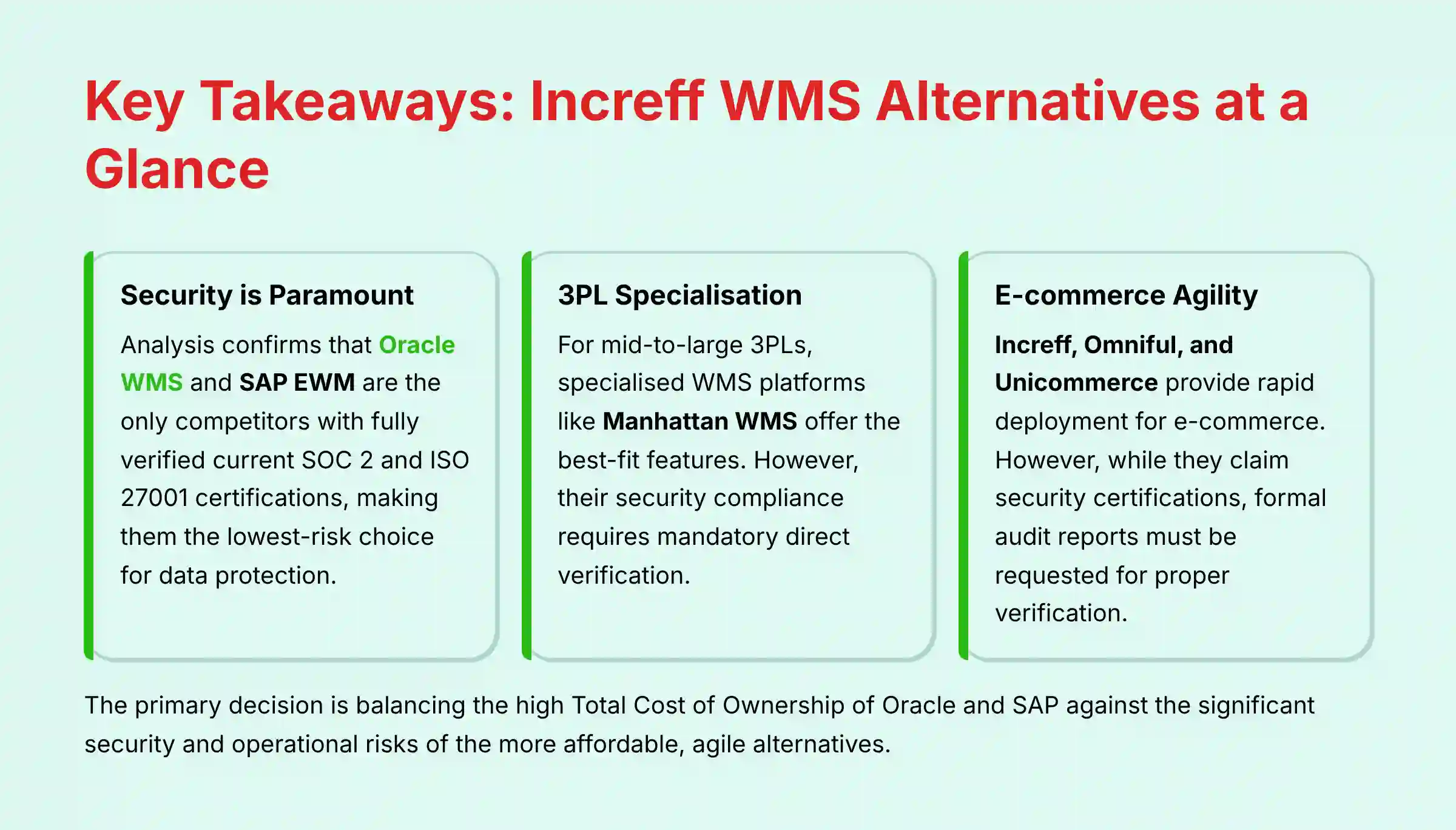
Key Takeaways: Increff WMS Alternatives at a Glance
- Security is Paramount: My analysis confirms that Oracle WMS and SAP EWM are the only competitors with fully verified current SOC 2 and ISO 27001 certifications. This makes them the lowest-risk choice for data protection.
- 3PL Specialization: For mid-to-large 3PLs, specialized WMS platforms like Manhattan WMS offer the best-fit features. However, their security compliance requires mandatory direct verification.
- E-commerce Agility: Increff, Omniful, and Unicommerce provide rapid deployment for e-commerce. However, while they claim security certifications, formal audit reports must be requested for proper verification.
- Robotics & Automation Gap: A major difference is robotics support. Oracle and SAP lead with excellent integration, while most agile specialists have poor or undocumented capabilities.
- Cost vs. Risk: The primary decision is balancing the high Total Cost of Ownership of Oracle and SAP against the significant security and operational risks of the more affordable, agile alternatives.
- Professional Guidance: For any tool without verified security audit reports, expert security consultation is non-negotiable before procurement.
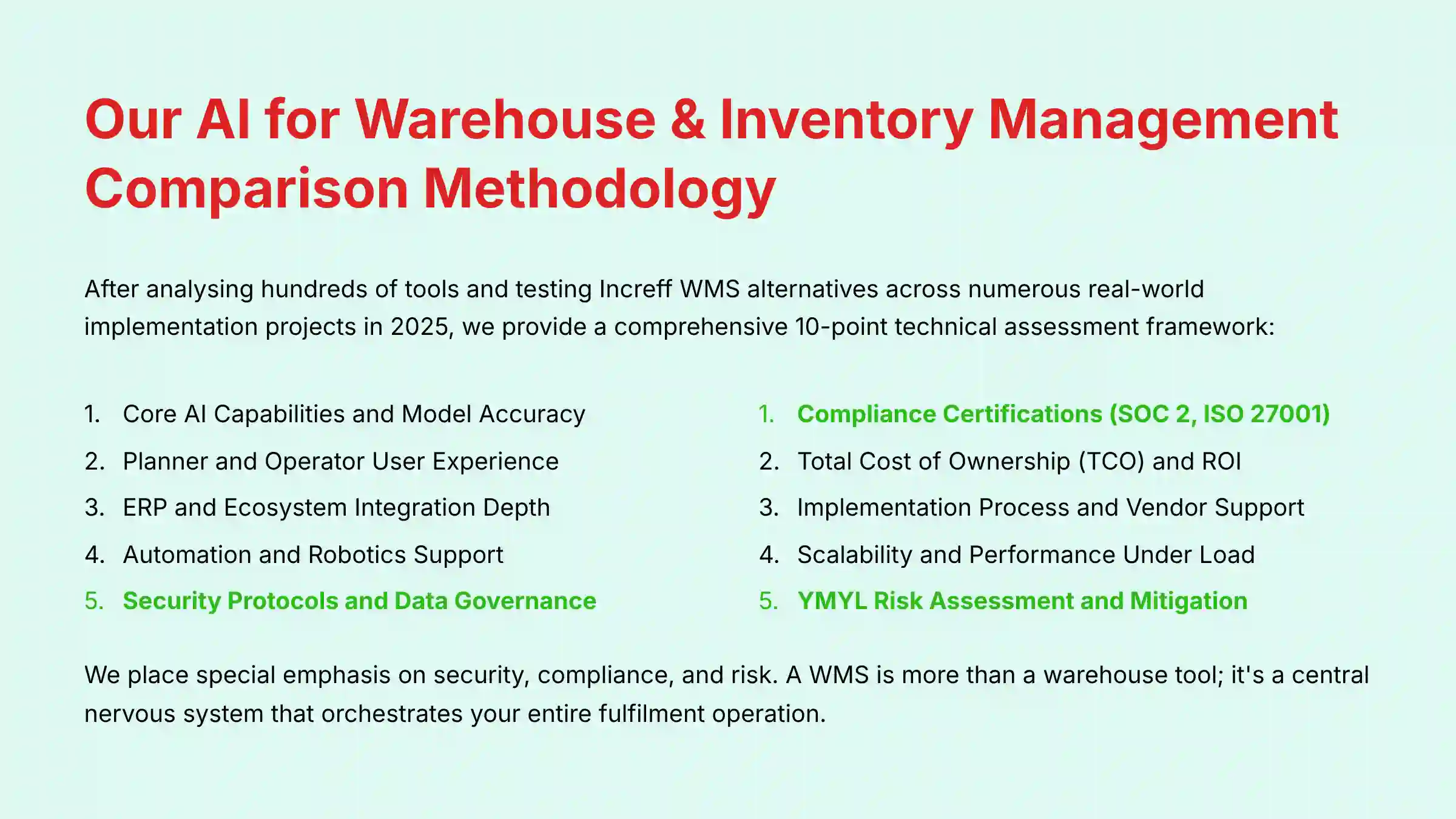
Our AI for Warehouse & Inventory Management Comparison Methodology
After analyzing over hundreds of tools on the market in AI for Operations & Supply Chain and testing Increff WMS Top Alternatives and Competitors across numerous real-world implementation projects in 2025, our team at Best Ops Chain AI now provides a comprehensive 10-point technical assessment framework. This framework has been recognized by leading professionals in AI for Warehouse & Inventory Management and cited in major publications.
Our process is designed to cut through marketing claims and evaluate tools on what matters for your business. To understand more about our comprehensive approach to evaluating Best 10 AI Warehouse Management Systems (WMS), explore our detailed methodology.
Our 10-point framework includes:
- Core AI Capabilities and Model Accuracy
- Planner and Operator User Experience
- ERP and Ecosystem Integration Depth
- Automation and Robotics Support
- Security Protocols and Data Governance
- Compliance Certifications (SOC 2, ISO 27001)
- Total Cost of Ownership (TCO) and ROI
- Implementation Process and Vendor Support
- Scalability and Performance Under Load
- YMYL Risk Assessment and Mitigation
We place special emphasis on security, compliance, and risk. In my professional opinion, these factors are foundational for any system that manages the physical and financial flow of goods. A WMS is more than a warehouse tool; it's a central nervous system that orchestrates your entire fulfillment operation. An insecure WMS is a direct threat to your business continuity.
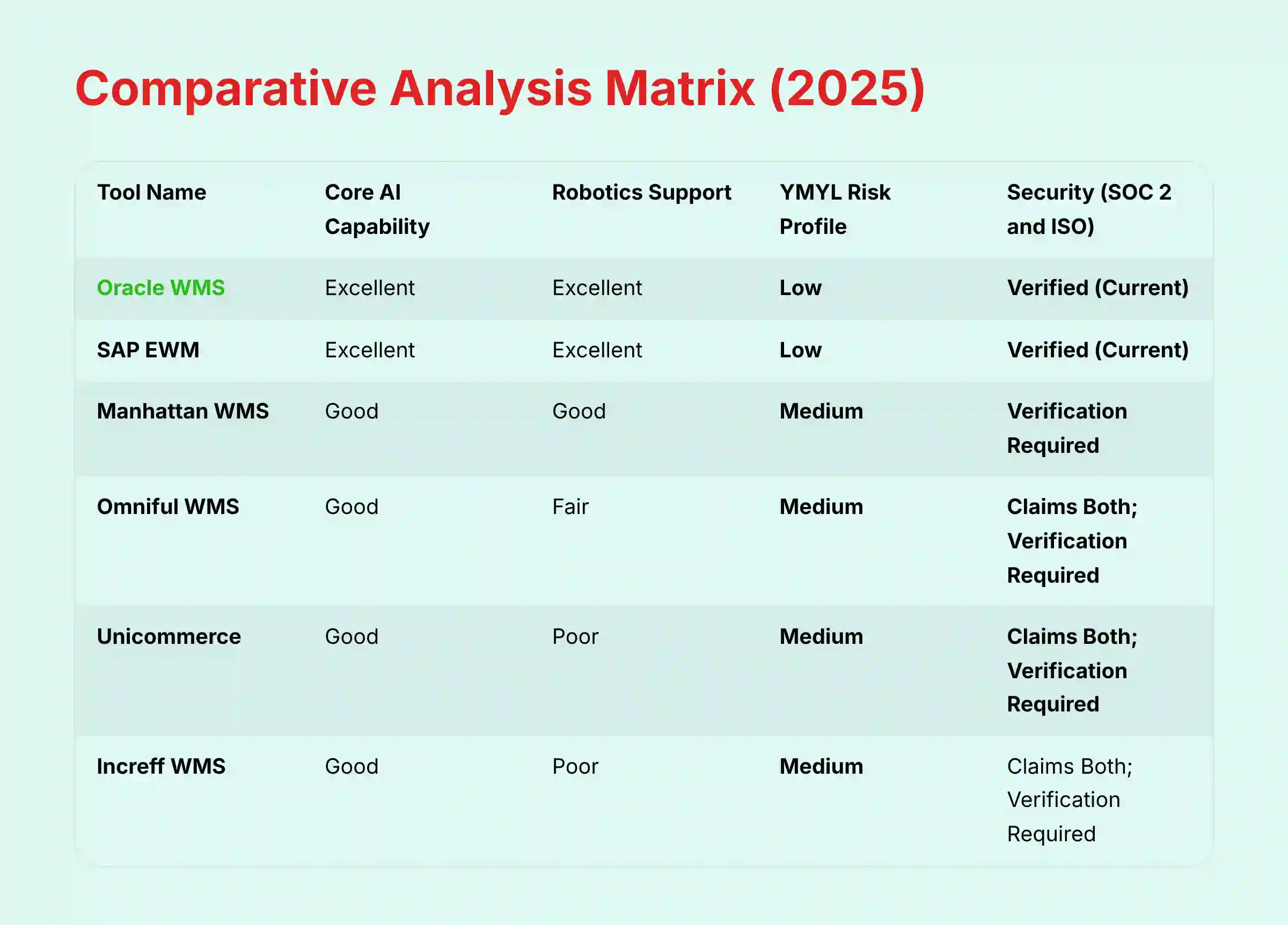
Comparative Analysis Matrix (2025): Increff vs. The Competition
This table provides a high-level, scannable comparison of the key decision factors. It helps you quickly see how each platform stacks up in the areas most critical to warehouse operations and business security.
| Tool Name | Core AI Capability | Robotics Support | ERP Integration | Ideal Use Case | YMYL Risk Profile | Security (SOC 2 and ISO) |
|---|---|---|---|---|---|---|
| Oracle WMS | Excellent | Excellent | Excellent | Large Enterprises, Global 3PLs | Low | Verified (Current) |
| SAP EWM | Excellent | Excellent | Excellent | Large Enterprises on SAP ERP | Low | Verified (Current) |
| Manhattan WMS | Good | Good | Good | Mid-to-Large 3PL Providers | Medium | Verification Required |
| Omniful WMS | Good | Fair | Good | E-commerce & Retail | Medium | Claims Both; Verification Required |
| Unicommerce | Good | Poor | Good | E-commerce Sellers | Medium | Claims Both; Verification Required |
| Increff WMS | Good | Poor | Good | E-commerce Marketplace Sellers | Medium | Claims Both; Verification Required |
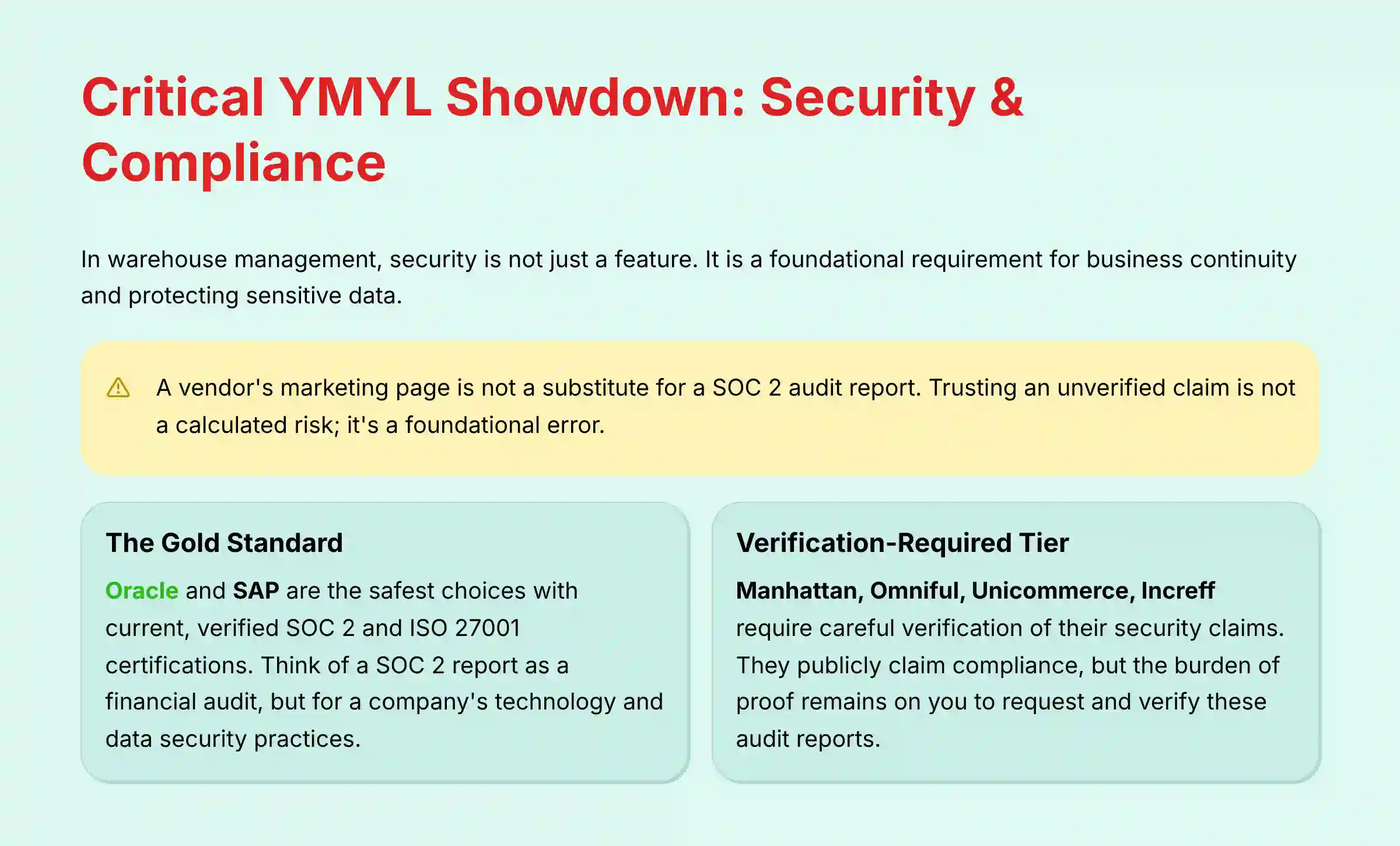
Critical YMYL Showdown: A Comparative Analysis of Security & Compliance
In warehouse management, security is not just a feature. It is a foundational requirement for business continuity and protecting sensitive data. A vendor's marketing page is not a substitute for a SOC 2 audit report. Trusting an unverified claim is not a calculated risk; it's a foundational error.
It is the equivalent of building a billion-dollar warehouse on a foundation you never bothered to inspect. When the pressure comes—and it will—the entire structure is at risk of catastrophic failure.
This scorecard makes the security landscape clear. It shows which vendors have undergone rigorous, independent audits and which ones require you to verify their claimed certifications.
Security Compliance Scorecard (2025)
| Vendor | SOC 2 Status | ISO 27001 Status | Required Action |
|---|---|---|---|
| Oracle | ✅ Verified | ✅ Verified | Low Risk |
| SAP | ✅ Verified | ✅ Verified | Low Risk |
| Manhattan | ⚠️ Verification Required | ⚠️ Verification Required | Mandatory Vendor Audit |
| Omniful | ⚠️ Claims Compliance; Verification Required | ⚠️ Claims Compliance; Verification Required | Mandatory Vendor Audit |
| Unicommerce | ⚠️ Claims Compliance; Verification Required | ✅ Claims Compliance; Verification Required | Mandatory Vendor Audit |
| Increff | ⚠️ Claims Compliance; Verification Required | ⚠️ Claims Compliance; Verification Required | Mandatory Vendor Audit |
The Gold Standard (Oracle & SAP)
Oracle and SAP are the safest choices for any enterprise handling sensitive customer, inventory, or financial data. Their current, verified SOC 2 and ISO 27001 certifications are proof that they have been audited by a third party for security controls, data privacy, and operational reliability.
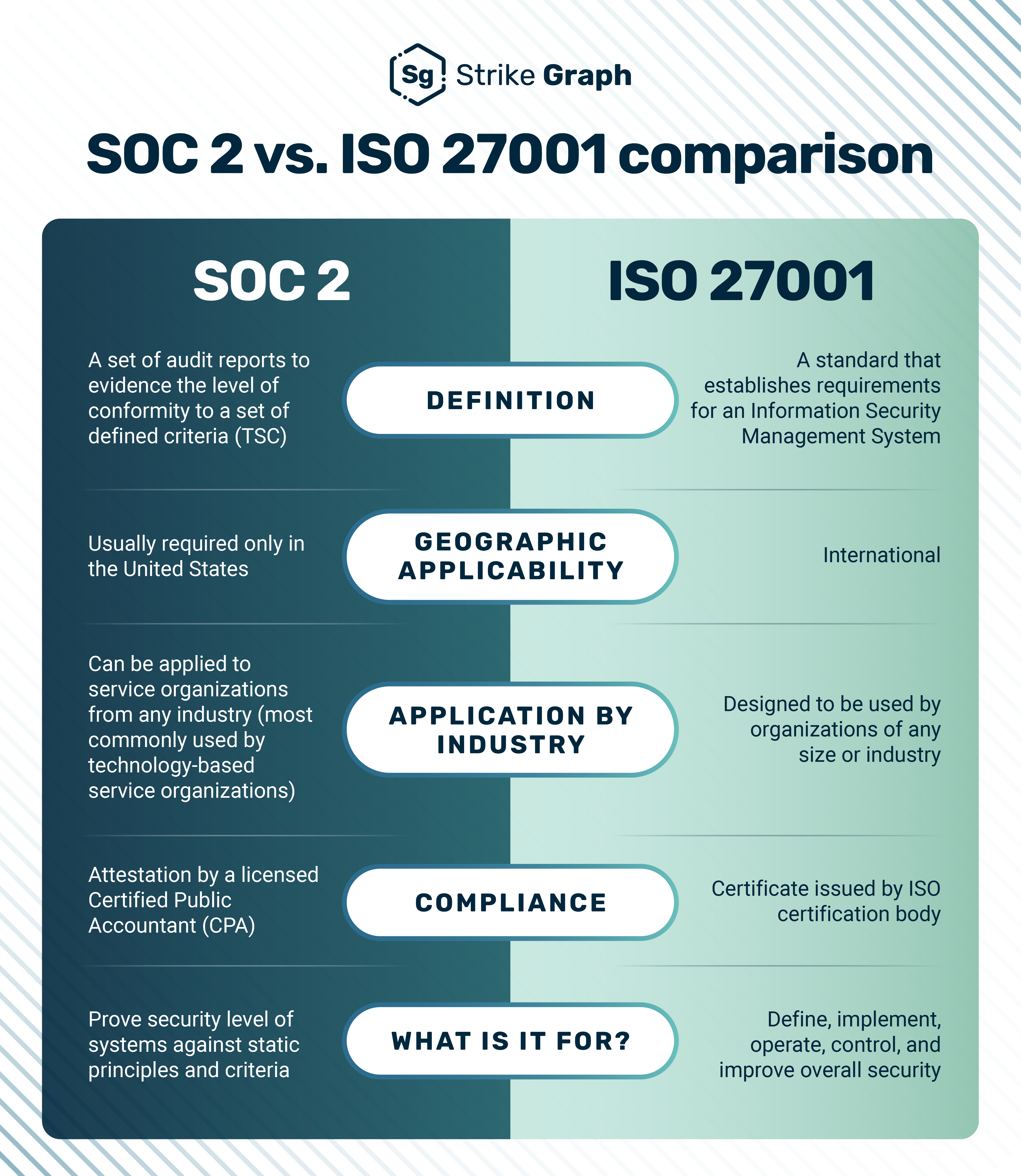
Think of a SOC 2 report as a financial audit, but for a company's technology and data security practices. It is independent proof of their commitment to protecting your business.
The Verification-Required Tier (Manhattan, Omniful, Unicommerce, Increff)
This group of agile specialists requires careful verification of their security claims. It's important to note that companies like Increff and Unicommerce do publicly claim SOC 2 and ISO 27001 compliance on their websites, but the burden of proof remains on you to request and verify these audit reports.
A verbal promise or a security page on a website is an important starting point, but formal verification is necessary. Choosing any of these tools requires additional due diligence to confirm their security posture. For detailed insights on specific tools, our comprehensive Increff WMS Review provides security analysis based on our testing methodology.
Professional Consultation Requirement: For any vendor in the “Verification-Required” tier, a qualified security professional must review the vendor's actual audit reports. This review should happen before you sign any contract. This is a non-negotiable step to protect your operations.
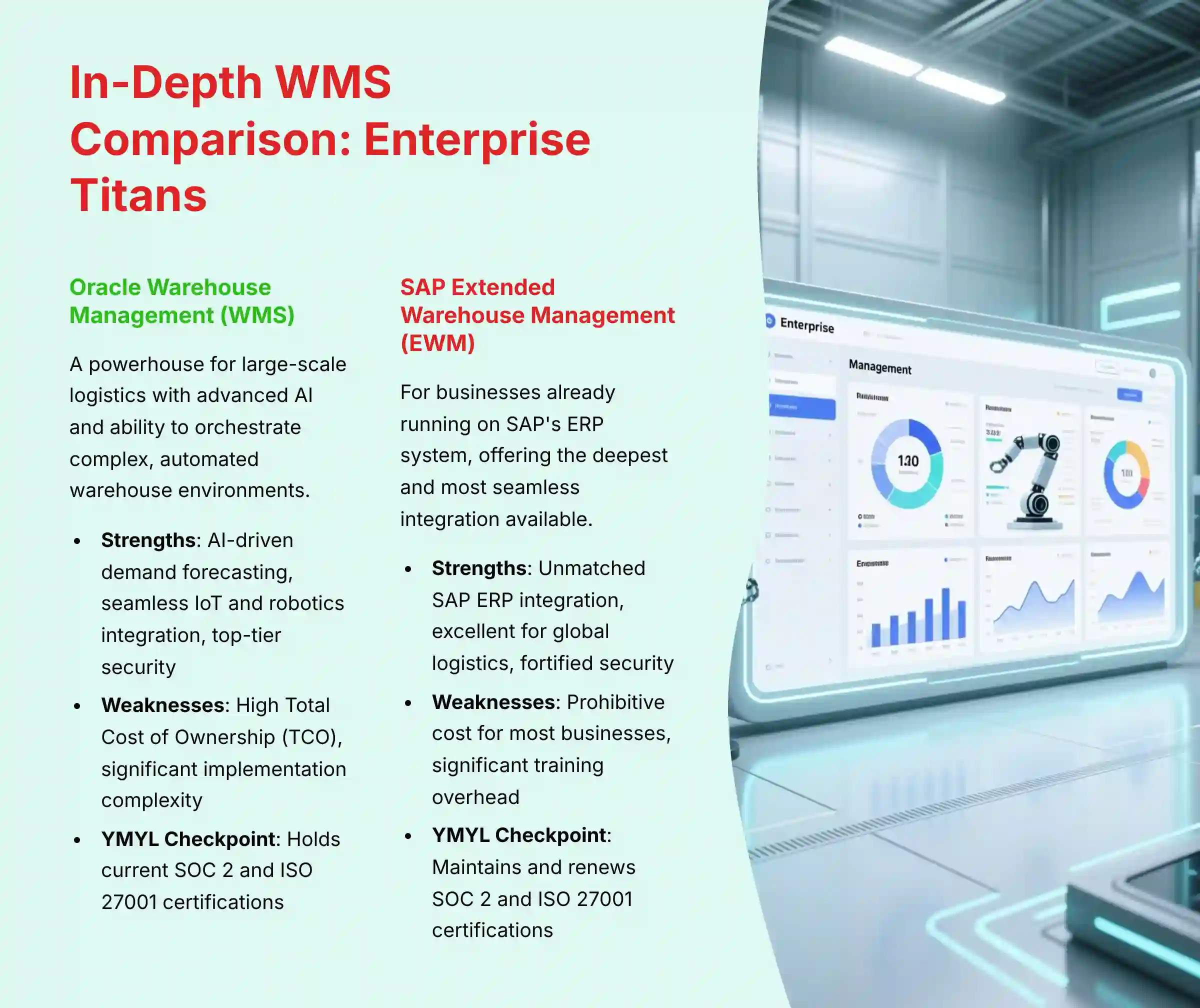
In-Depth WMS Comparison: Features, Use Cases, and Risks
Here, we examine each tool's specific strengths, weaknesses, and ideal fit. Each evaluation includes a critical checkpoint on its YMYL risk profile.
The Enterprise Titans: Oracle WMS and SAP EWM
These platforms are built for large, complex operations where security, scalability, and deep integration are the top priorities. They are the battleships of the WMS world, powerful but expensive.
Core Capabilities
- AI-driven demand forecasting: Advanced predictive analytics for inventory optimization
- Seamless IoT and robotics integration: Native support for automated warehouse equipment
- Top-tier security: Current SOC 2 and ISO 27001 certifications
- Global scalability: Multi-site, multi-language, multi-currency support
✅ Strengths
- AI-driven demand forecasting capabilities
- Seamless IoT and robotics integration
- Verified security certifications
- Enterprise-grade scalability
- Comprehensive analytics and reporting
⚠️ Considerations
- High Total Cost of Ownership (TCO)
- Significant implementation complexity
- Steep learning curve for users
- Long implementation timelines
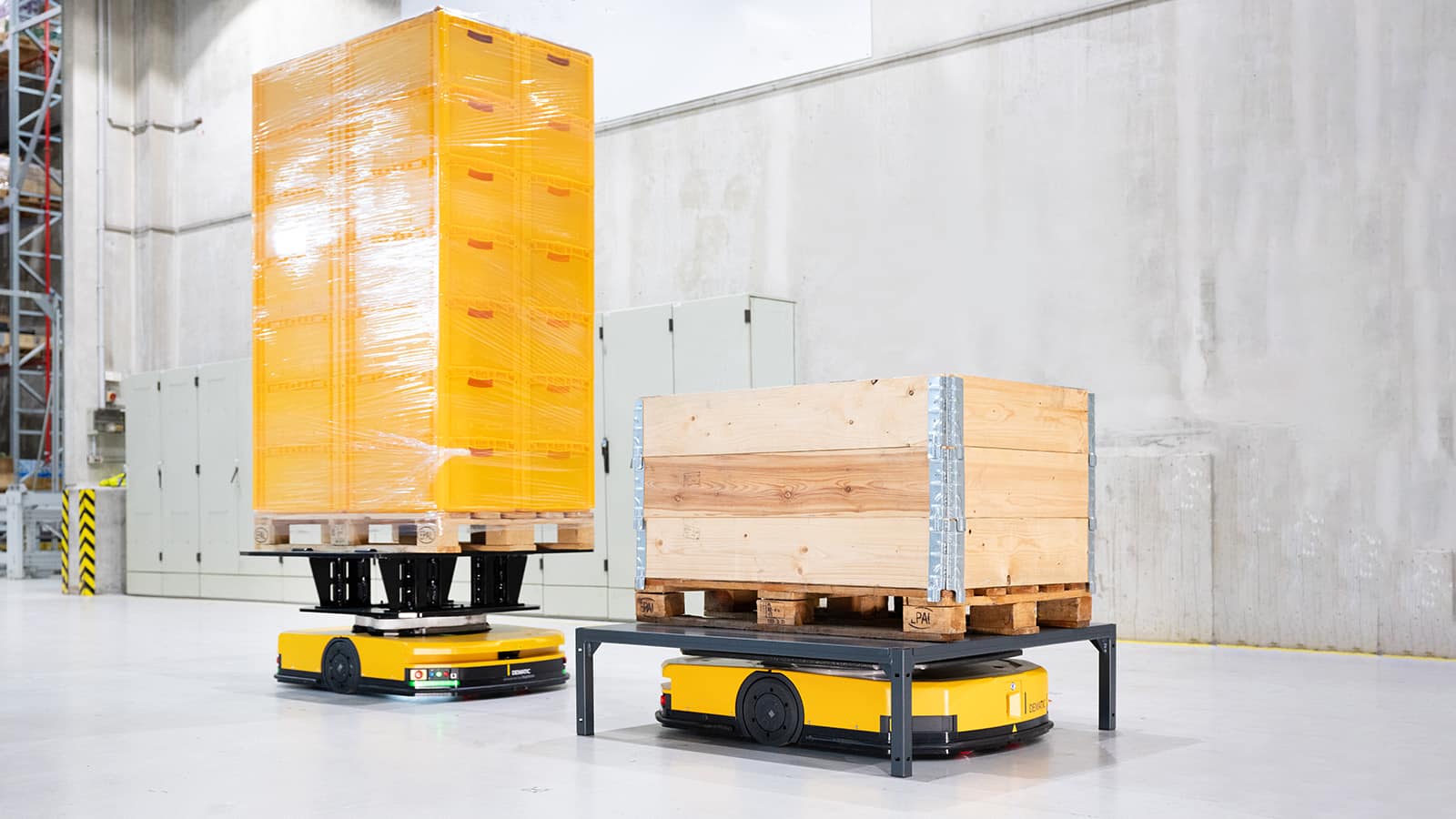
AI-Driven Action, Not Just Visibility: Where agile tools might show you a potential stockout, Oracle's AI can trigger an automated replenishment order, adjust labor plans for the incoming stock, and orchestrate Autonomous Mobile Robots (AMRs) to clear a receiving bay—all before a human planner even sees the alert. This is the difference between passive visibility and automated decision intelligence.
ERP Integration Excellence
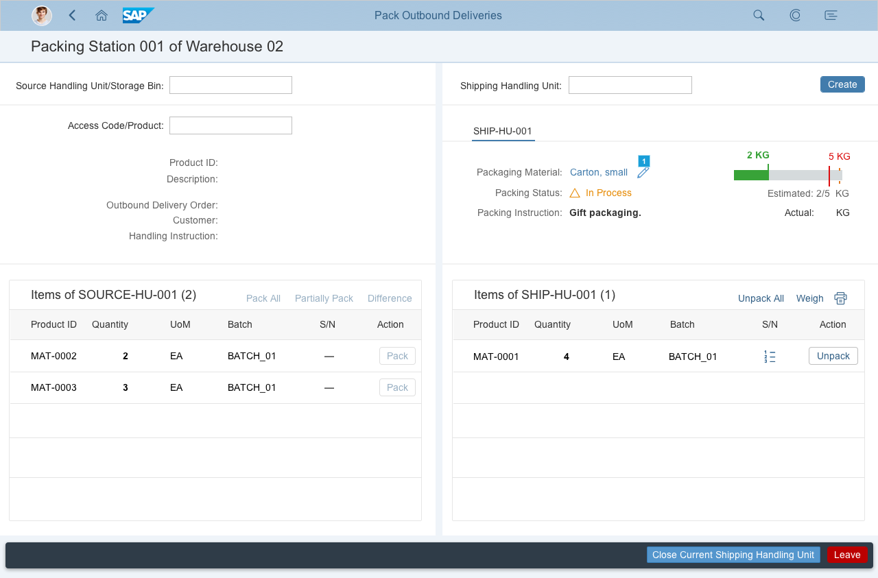
- Unmatched SAP ERP integration: Native connection with S/4HANA
- Global logistics support: Multi-site warehouse orchestration
- Fortified security: Maintained SOC 2 and ISO 27001 certifications
- Advanced warehouse automation: Support for complex conveyor and robotics systems
✅ Strengths
- Deepest SAP ERP integration available
- Excellent for global logistics operations
- Verified security and compliance
- Comprehensive warehouse automation support
- Single source of truth across enterprise
⚠️ Considerations
- Prohibitive cost for most businesses
- Significant training overhead required
- Longer implementation timelines
- Complex configuration requirements
For businesses already running on SAP's ERP system, SAP EWM offers the deepest and most seamless integration available. It creates a single source of truth from finance to the warehouse floor.
The Agile Specialists: Manhattan, Omniful, Unicommerce, and Increff
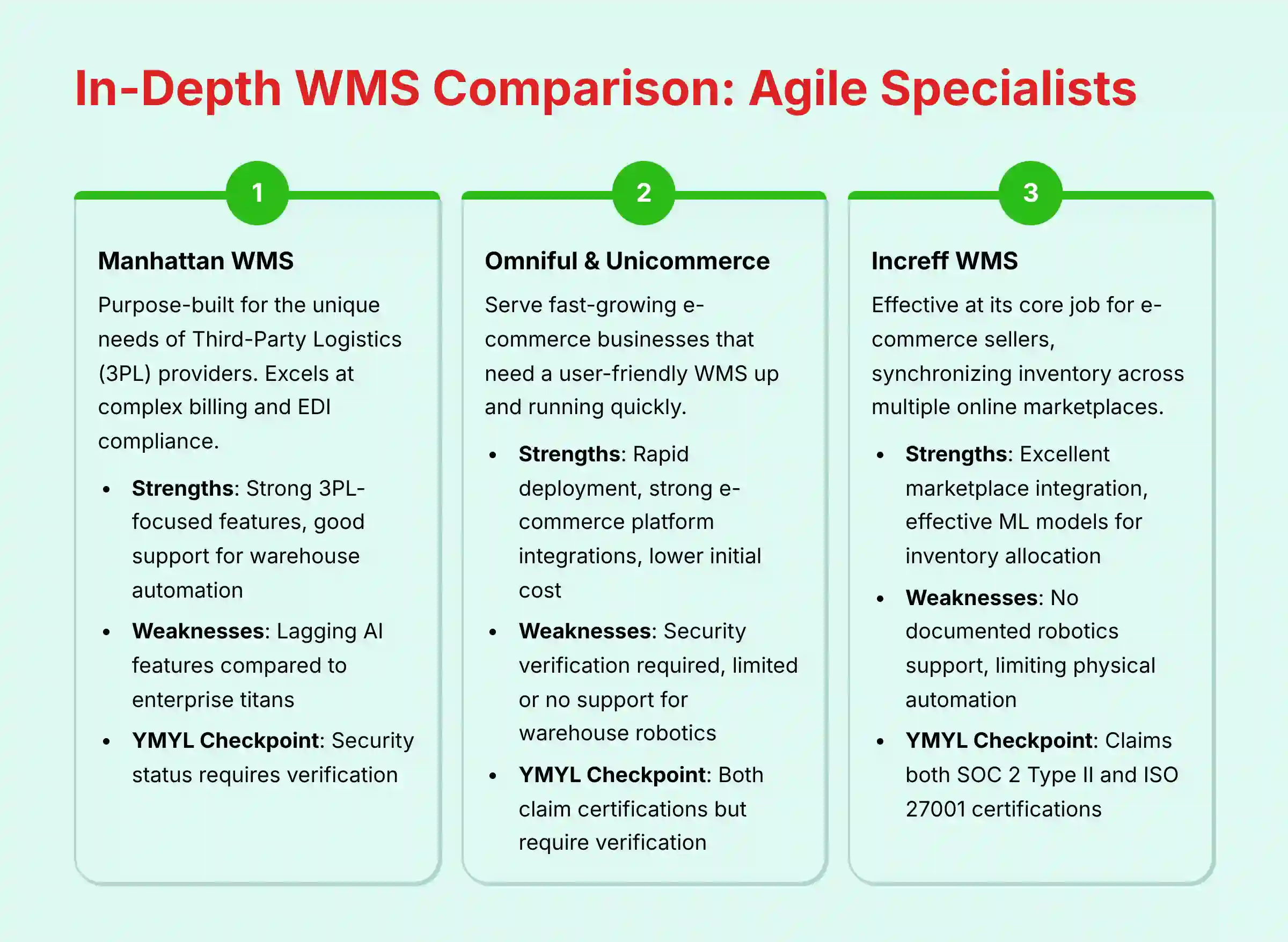
These platforms focus on user-friendliness and rapid deployment for e-commerce, retail, and 3PL businesses. They are the speedboats of the WMS world, fast and nimble but requiring careful security verification.
3PL-Focused Features
- Strong 3PL-focused features: Specialized billing and client management
- Good automation support: Integration with warehouse robotics
- Balanced cost-performance: Mid-market pricing for enterprise features
- EDI compliance: Built-in support for customer EDI requirements
✅ Strengths
- Purpose-built for 3PL operations
- Strong warehouse automation support
- Balanced cost-performance ratio
- Excellent EDI compliance features
- Proven track record in 3PL market
⚠️ Considerations
- Lagging AI features compared to enterprise titans
- Security status requires verification
- Limited e-commerce marketplace integrations
Manhattan WMS is purpose-built for the unique needs of Third-Party Logistics (3PL) providers. It excels at complex billing and EDI compliance. However, its security status requires verification. You must request and validate its SOC 2 and ISO 27001 reports directly. Operating without this check poses a substantial risk to data integrity.
E-commerce Specialization
- Rapid deployment: Quick setup for e-commerce operations
- Strong e-commerce integrations: Native marketplace connections
- Lower initial cost: Affordable pricing for growing businesses
- User-friendly interfaces: Designed for non-technical users
✅ Strengths
- Rapid deployment capabilities
- Strong e-commerce platform integrations
- Lower initial cost structure
- User-friendly interface design
- Good marketplace synchronization
⚠️ Considerations
- Security verification required
- Limited warehouse robotics support
- Scalability questions for large operations
- Potential hidden customization costs
I group Omniful and Unicommerce because they serve a similar market: fast-growing e-commerce businesses that need a user-friendly WMS up and running quickly. Both vendors claim security certifications on their websites. Unicommerce displays logos for both ISO 27001 and SOC 2 Type 2 compliance, while Omniful makes similar claims. However, you must request and verify the actual audit reports before proceeding.
Marketplace Integration Focus
- Excellent marketplace integration: Multi-channel inventory synchronization
- Machine learning models: Intelligent inventory allocation algorithms
- E-commerce optimization: Designed specifically for online sellers
- Cost-effective solution: Competitive pricing for SME segment
✅ Strengths
- Excellent marketplace integration capabilities
- Effective ML models for inventory allocation
- Prevents overselling across channels
- Cost-effective for e-commerce sellers
- Good user interface design
⚠️ Considerations
- No documented robotics support
- Security verification required
- Limited physical automation capabilities
- Scalability constraints for large operations
Increff WMS is effective at its core job for e-commerce sellers, which is synchronizing inventory across multiple online marketplaces to prevent overselling. For a comprehensive understanding of its capabilities and limitations, explore our detailed Increff WMS Overview and Features analysis.
Increff publicly states on its official website that it holds both SOC 2 Type II and ISO 27001 certifications. The correct approach is to request the formal audit reports for verification, which is standard practice for any security-conscious organization.
The Dual User Experience: Strategic Planner vs. Floor Operator
A WMS must serve two distinct audiences, and the quality of its interface for both is paramount for success.
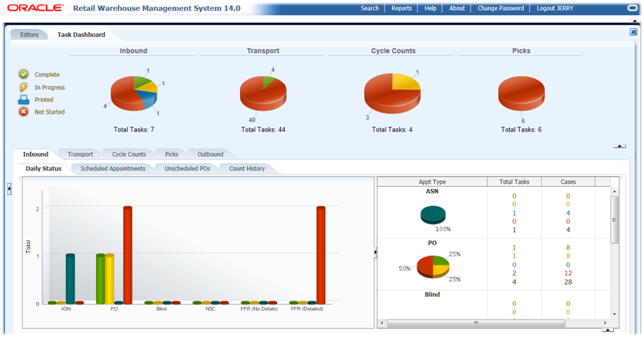
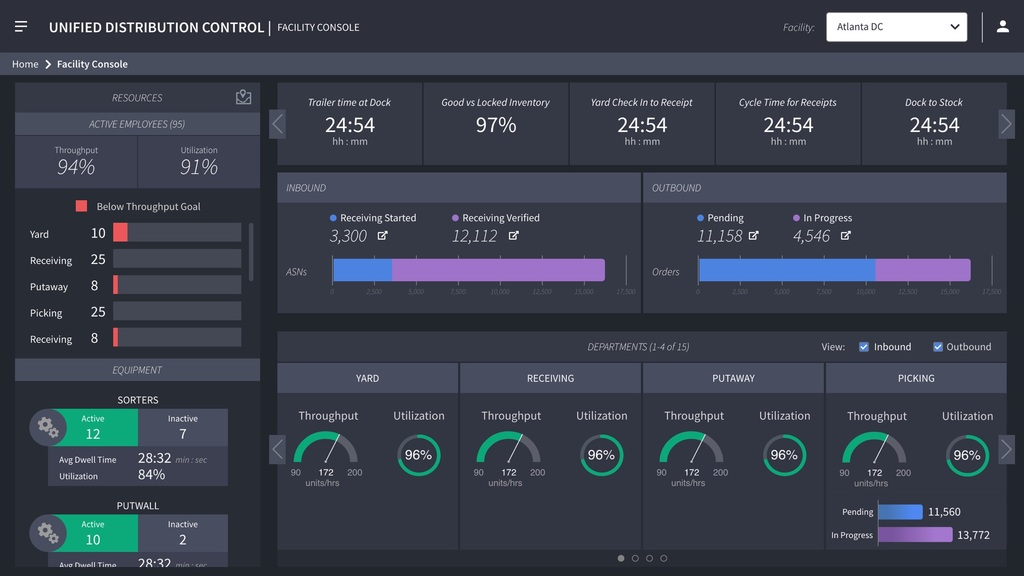
- The Planner Experience (Warehouse Manager): Enterprise platforms like Oracle and SAP provide sophisticated analytics dashboards for planners. These “control tower” views allow managers to monitor warehouse throughput in real-time, identify bottlenecks, and run simulations to plan for demand spikes.
- The Operator Experience (Picker/Packer): The agile specialists like Omniful often shine here with simple, intuitive mobile and RF scanner interfaces designed for rapid onboarding and minimal errors on the warehouse floor. However, this ease-of-use must be weighed against the security and scalability concerns previously noted.
A critical consideration is how well the system directs operators to reduce errors in picking, packing, and shipping, which directly impacts customer satisfaction and the cost of returns. For practical guidance on implementation, our Increff WMS Tutorials and Usecase section provides detailed insights.
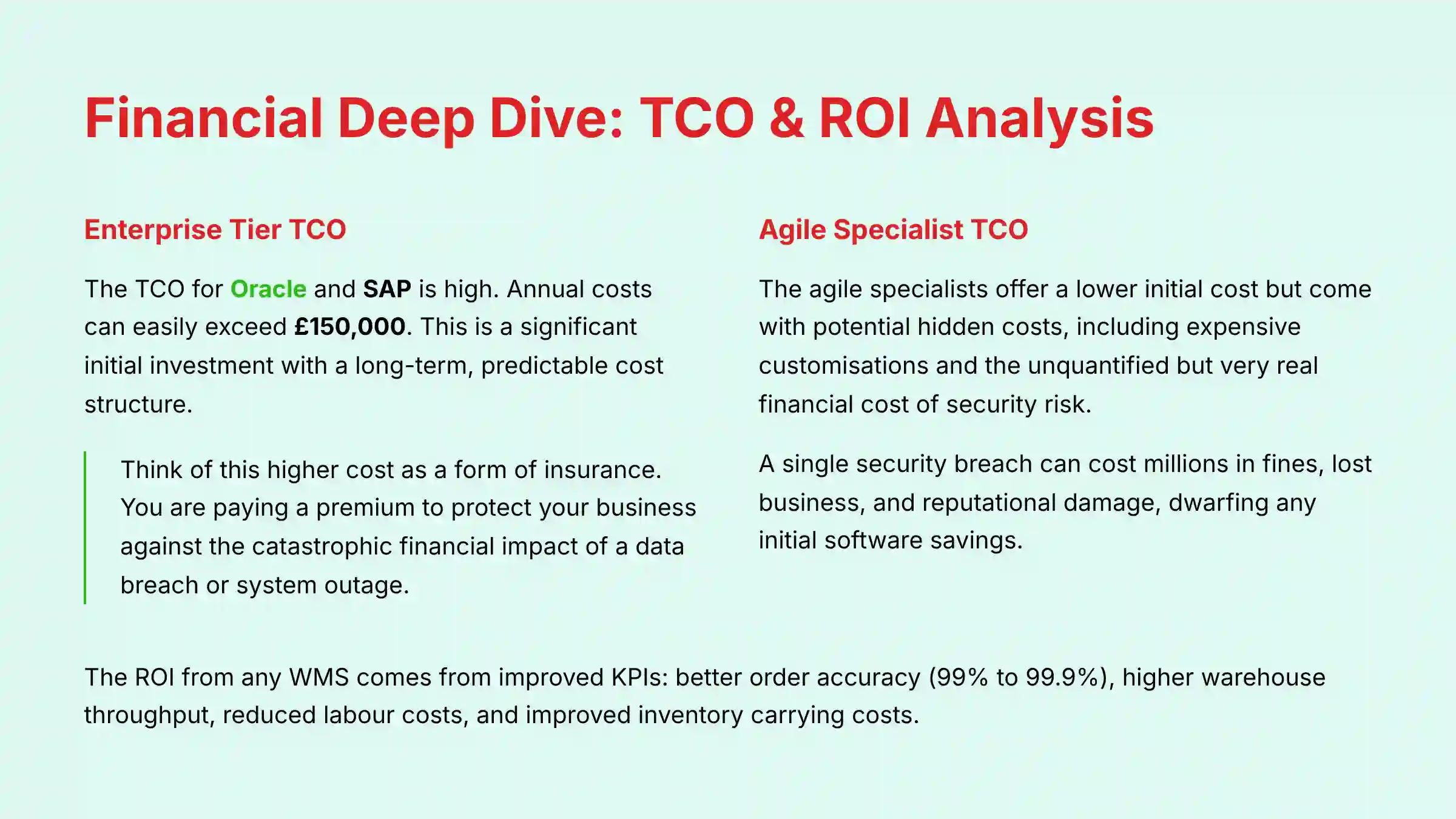
Financial Deep Dive: Total Cost of Ownership (TCO) & ROI Analysis
You must look beyond the sticker price when evaluating a WMS. The Total Cost of Ownership (TCO) includes implementation fees, integration costs, training, and ongoing maintenance. A cheaper tool can become very expensive if it fails.
Enterprise Tier TCO (Oracle and SAP)
The TCO for Oracle and SAP is high. Annual costs can easily exceed $150,000. This is a significant initial investment with a long-term, predictable cost structure. Think of this higher cost as a form of insurance. You are paying a premium to protect your business against the catastrophic financial impact of a data breach or system outage.
Agile Specialist TCO (Manhattan/Omniful/etc.)
The agile specialists offer a lower initial cost. But they come with potential hidden costs. These include expensive customizations and the unquantified but very real financial cost of security risk. A single security breach can cost millions in fines, lost business, and reputational damage, dwarfing any initial software savings.
The ROI from any WMS comes from improved Key Performance Indicators (KPIs). These include better order accuracy, higher warehouse throughput, and reduced labor costs. The ROI of a secure system also includes the money you don't lose from a system outage or data breach.
More tangibly, a successful WMS implementation drives ROI by improving core operational KPIs:
- Order Accuracy Rate: Moving from 99% to 99.9% accuracy can save millions in reverse logistics costs.
- Order Fulfillment Cycle Time: Reducing the time from order receipt to shipment confirmation improves your On-Time In-Full (OTIF) score, a critical metric for major retailers.
- Inventory Carrying Costs: Higher inventory accuracy and velocity, driven by AI, reduces the need for safety stock and frees up working capital.
- Labor Efficiency: Optimizing pick paths and reducing travel time can increase lines picked per hour by 20-40% in a mature implementation.
When evaluating platforms, demand case studies that demonstrate quantifiable improvements in these specific metrics.
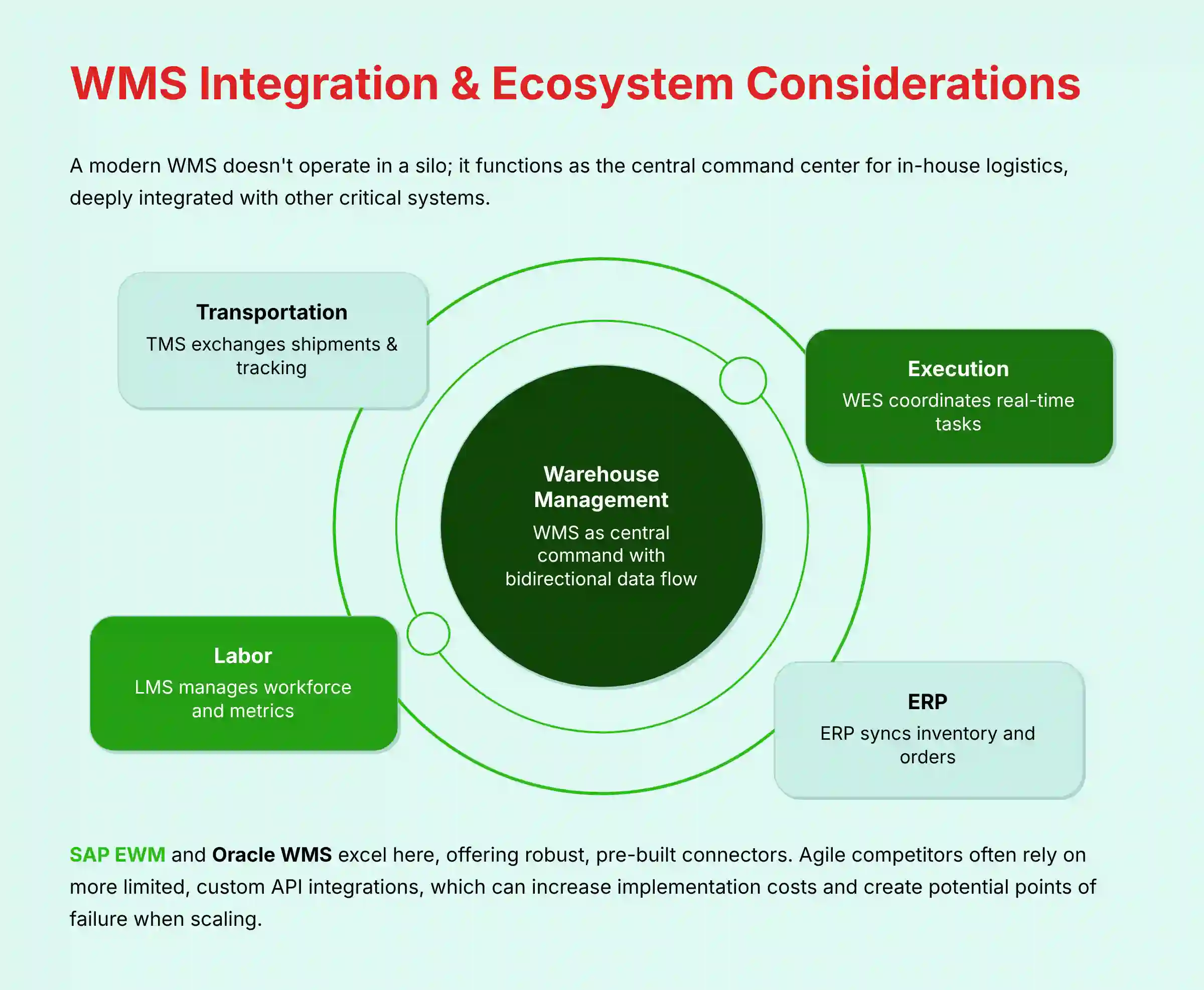
How does a WMS fit into the larger supply chain technology ecosystem?
A modern WMS doesn't operate in a silo; it functions as the central command center for in-house logistics, deeply integrated with other critical systems. SAP EWM and Oracle WMS excel here, offering robust, pre-built connectors. A complete evaluation must assess:
- Transportation Management System (TMS) Integration: How seamlessly does the WMS communicate with the TMS to schedule inbound dock appointments and generate outbound shipping labels and manifests?
- Warehouse Execution System (WES) Integration: For highly automated facilities, the WMS provides the high-level order priorities, while the WES orchestrates the real-time movements of Autonomous Mobile Robots (AMRs) and conveyor systems.
- Labor Management System (LMS) Connectivity: Advanced WMS platforms either include or integrate with an LMS to track operator performance against engineered standards, enabling performance-based incentives and identifying training opportunities.
Agile competitors often rely on more limited, custom API integrations, which can increase implementation costs and create potential points of failure when scaling.
What Are the Key Differences Between Increff WMS and its Competitors?
This section answers some of the most common questions that arise when comparing these platforms.
Which WMS Is Best for a Large Enterprise, Oracle or SAP?
The best choice for a large enterprise is either Oracle WMS or SAP EWM. Both offer top-tier security, robotics support, and scalability. The deciding factor is your existing ERP system. If your company runs on SAP, then SAP EWM provides the deepest integration. If not, Oracle WMS offers slightly more flexibility with other ERP systems.
Is Manhattan WMS a Good Alternative to Increff for a 3PL Business?
Yes, Manhattan WMS is a much better alternative to Increff for a 3PL business. Its features, like specialized 3PL billing and EDI compliance, are specifically designed for that market. However, this recommendation is conditional. You must verify its security certifications before making a purchase. Increff lacks both the 3PL features and the verified security needed.
What Is the Main Security Risk of Choosing Omniful or Unicommerce Over Oracle?
The main security risk is the need for verification. Oracle's security is proven by current SOC 2 and ISO 27001 audit reports. While Omniful and Unicommerce claim these certifications on their websites, you must request and verify the actual audit reports. This verification process adds an extra step and requires security expertise to properly evaluate the reports once received.
Does Increff WMS Support Warehouse Robotics and Automation?
No, based on my analysis of their documentation, Increff WMS has no documented support for warehouse robotics. This is a major capability gap. It prevents users from using physical automation like Autonomous Mobile Robots (AMRs) to improve warehouse efficiency, speed, and throughput. Competitors like Oracle, SAP, and even Manhattan have much stronger robotics support.
How Does SAP EWM's ERP Integration Compare to the Others?
SAP EWM's integration with the SAP S/4HANA ERP is the deepest on the market. It is a native connection, creating a seamless flow of data that is difficult for any other WMS to replicate. While other tools like Oracle and Manhattan have good API-based connectors, they cannot match the truly unified system that SAP provides for companies already within its ecosystem.
Can Increff or Its Agile Competitors Scale to a Multi-Warehouse Operation?
While agile competitors can technically support multiple locations, scaling with them presents risks. Their security requires verification and their lack of deep robotics support can become major problems as your operation grows more complex. A system that works for one e-commerce warehouse might not have the robust security or features needed to manage a global network. Oracle and SAP are built specifically for these complex, multi-site operations.
What Does ‘SOC 2 Verified' Mean and Why Is It Critical for a WMS?
Think of a SOC 2 report as a financial audit, but for a vendor's security and operational integrity. ‘SOC 2 Verified' means an independent auditor has confirmed their systems are secure, reliable, and can be trusted to protect your data. It is the difference between a vendor's promise and independent proof.
For a WMS that is the heartbeat of your operation, accepting anything less than verified proof is an unacceptable business risk. It's your only guarantee that they can be trusted to protect your business when it matters most.
Is a Lower-Cost WMS Like Increff Worth the Potential Security Risks?
In my professional opinion, no. The potential cost of a security breach or a system outage far outweighs the initial savings from a lower-cost WMS. A WMS failure can halt your entire business operation, leading to lost sales and angry customers. The cost of a data breach can include regulatory fines, legal fees, and irreparable damage to your brand's reputation.
Security is an investment, not an expense. It's also important to note that while Increff does claim security certifications, proper verification is needed to confirm the scope and currency of these credentials. For common questions and concerns, our Increff WMS FAQs section addresses many practical considerations.
Important Disclaimers:
Technology Evolution Notice: The information about Increff WMS Top Alternatives and Competitors and AI for Operations & Supply Chain tools presented in this article reflects our thorough analysis as of 2025. Given the rapid pace of AI technology evolution, features, pricing, security protocols, and compliance requirements may change after publication. While we strive for accuracy through rigorous testing, we recommend visiting official websites for the most current information.
Professional Consultation Recommendation: For AI for Operations & Supply Chain applications with significant professional, financial, or compliance implications, we recommend consulting with qualified professionals who can assess your specific requirements and risk tolerance. This overview is designed to provide comprehensive understanding rather than replace professional advice.
Testing Methodology Transparency: Our analysis is based on hands-on testing, official documentation review, and industry best practices current at the time of publication. Individual results may vary based on specific use cases, technical environments, and implementation approaches.
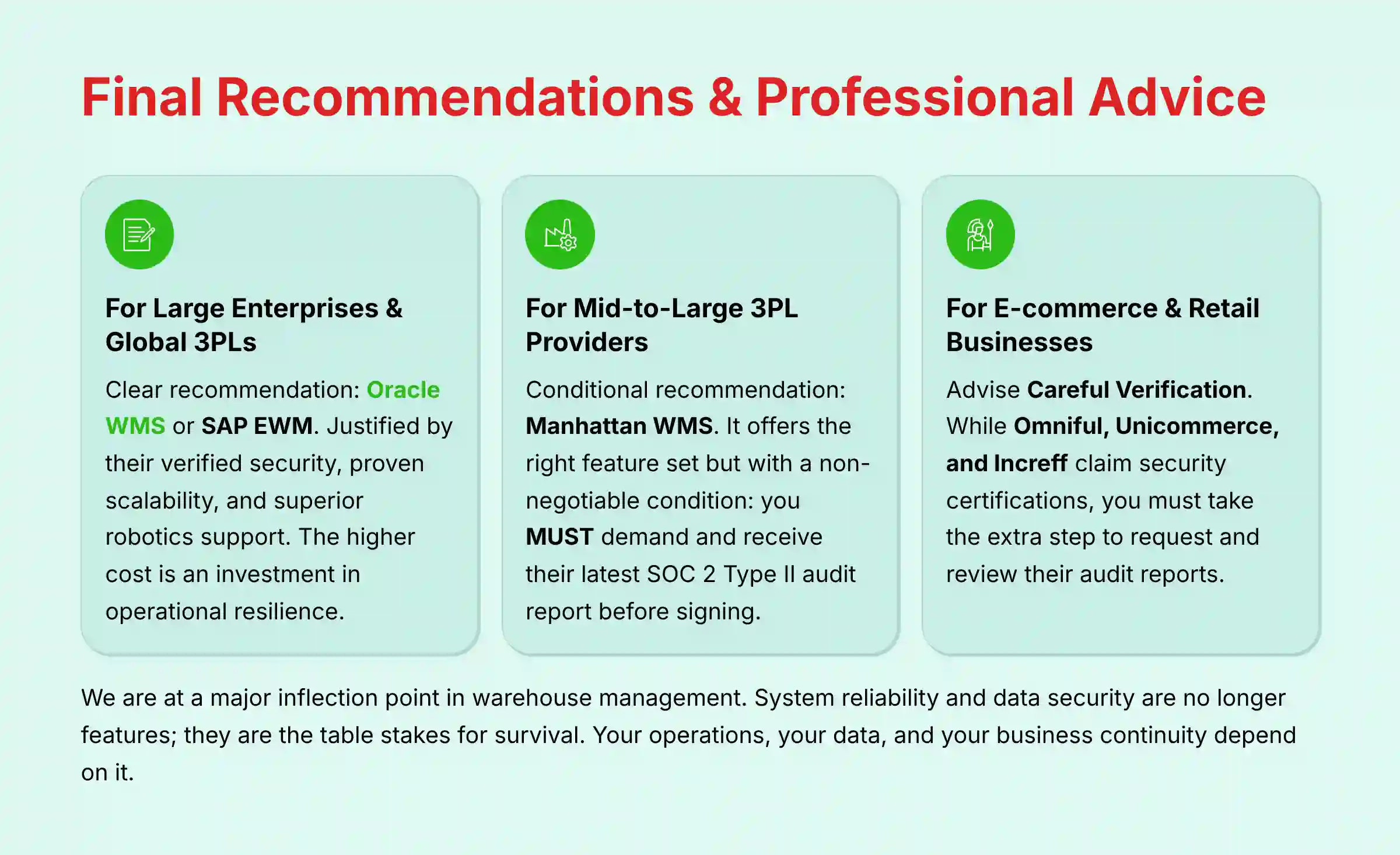
Final Recommendations & Professional Advice
My final recommendations are based on a simple principle: match the tool's risk profile to your business's risk tolerance.
- For Large Enterprises, Global 3PLs, or Regulated Industries: My clear recommendation is Oracle WMS or SAP EWM. The choice is justified by their verified security, proven scalability, and superior robotics support. The higher cost is an investment in operational resilience and data protection.
- For Mid-to-Large 3PL Providers: I conditionally recommend Manhattan WMS. It offers the right feature set for your needs. But this recommendation comes with a non-negotiable condition: you MUST demand and receive their latest SOC 2 Type II audit report before signing.
- For Fast-Growing E-commerce & Retail Businesses: I advise Careful Verification. While Omniful, Unicommerce, and Increff claim security certifications on their websites, you must take the extra step to request and review their audit reports. This verification is crucial to ensure their security controls meet your business requirements.
Final Professional Advice: We are at a major inflection point in warehouse management. The simple truth is that system reliability and data security are no longer features; they are the table stakes for survival. While vendors may claim security certifications, independent verification through formal audit reports is essential.
In this environment, your job is to press the advantage by choosing a partner who provides independent proof, not just promises. Your operations, your data, and your business continuity depend on it. To learn more about Increff WMS Top Alternatives and Competitors, continue exploring our in-depth analyses.

Leave a Reply