Is Fullex Global the Right Fulfillment Partner to Scale Your Brand?
This 2-Minute Quiz Reveals Your Answer!
This overview from Best Ops Chain AI provides a factual breakdown of Fullex Global's services, focusing on its role in the AI for Warehouse & Inventory Management space.
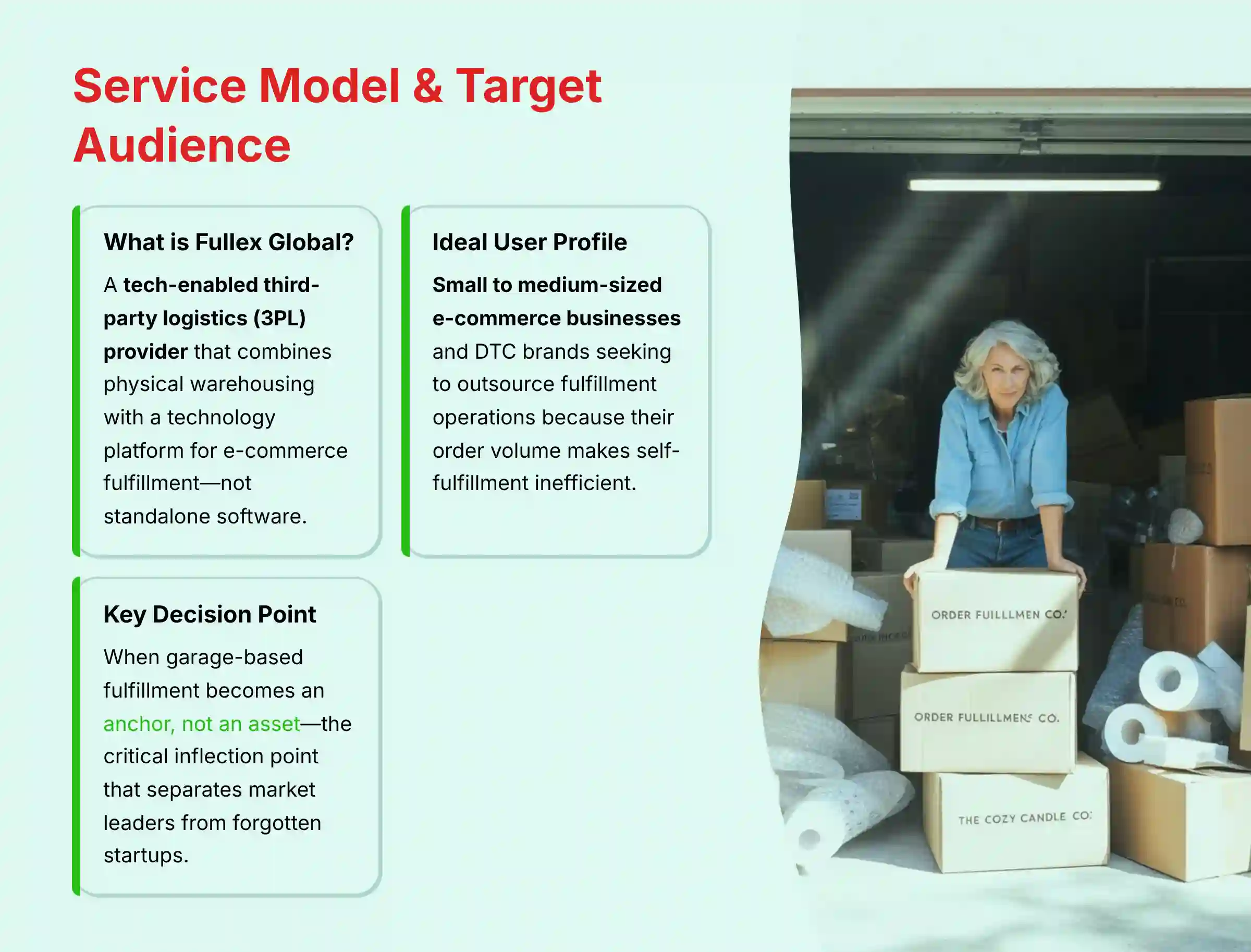
Fullex Global is a tech-enabled third-party logistics (3PL) and fulfillment service provider, not a standalone AI software tool. This article covers its e-commerce integrations, dual-warehouse infrastructure, and real-time inventory tracking, offering a clear picture of its function as an outsourced logistics partner.
Every scaling e-commerce brand eventually reaches a critical inflection point—when garage-based fulfillment becomes an anchor, not an asset. The choice made here separates market leaders from forgotten startups.
The simple truth is, you can't outpace the competition if your team is buried in packing tape and shipping labels. This is where a strategic shift from DIY logistics to a tech-enabled partnership becomes critical.
This analysis breaks down how Fullex Global's services and technology platform can function as a force multiplier for brands ready to press their advantage. For businesses seeking comprehensive Fullex Global Overview and Features, this guide provides the essential insights needed for informed decision-making.
Our analysis of Fullex Global is grounded in a proprietary 10-point technical assessment framework, developed by the Best Ops Chain AI team after testing hundreds of solutions in real-world supply chain environments. This framework, recognized by industry leaders, ensures our evaluations meet the highest professional standards for security, compliance, and operational risk.
- Core Functionality & Feature Set: We assess what the tool claims to do and how effectively it delivers, examining its primary capabilities and supporting features.
- Ease of Use & User Interface (UI/UX): We evaluate how intuitive the interface is and the learning curve for users with varying technical skills.
- Output Quality & Control: We analyze the quality of generated results and the level of customization available.
- Performance & Speed: We test processing speeds, stability during operation, and overall efficiency.
- Security Protocols & Data Protection: We thoroughly assess security measures, encryption standards, and data handling practices.
- Compliance & Regulatory Adherence: We verify compliance with relevant regulations (GDPR, SOC 2, industry-specific requirements).
- Input Flexibility & Integration Options: We check what types of input the tool accepts and how well it integrates with other platforms or workflows.
- Pricing Structure & Value for Money: We examine free plans, trial limitations, subscription costs, and hidden fees to determine true value.
- Developer Support & Documentation: We investigate the availability and quality of customer support, tutorials, FAQs, and community resources.
- Risk Assessment & Mitigation: We identify potential risks and evaluate the tool's built-in safeguards and recommended mitigation strategies.
Key Takeaways
- Service Model Definition: Fullex Global is a tech-enabled 3PL service provider, not standalone software. It combines physical warehousing with a technology platform for e-commerce.
- Strategic Warehousing: Its key feature is a dual-warehouse presence in the United States and China. This allows for flexible inventory management close to manufacturing and consumers.
- Core Technology Function: The platform's main job is automation and visibility. It gives real-time inventory tracking, order updates, and data syncing with stores like Shopify and Amazon.
- Target Audience: The service is built for small to medium-sized e-commerce businesses and DTC brands. These businesses need a scalable, outsourced solution for fulfillment.
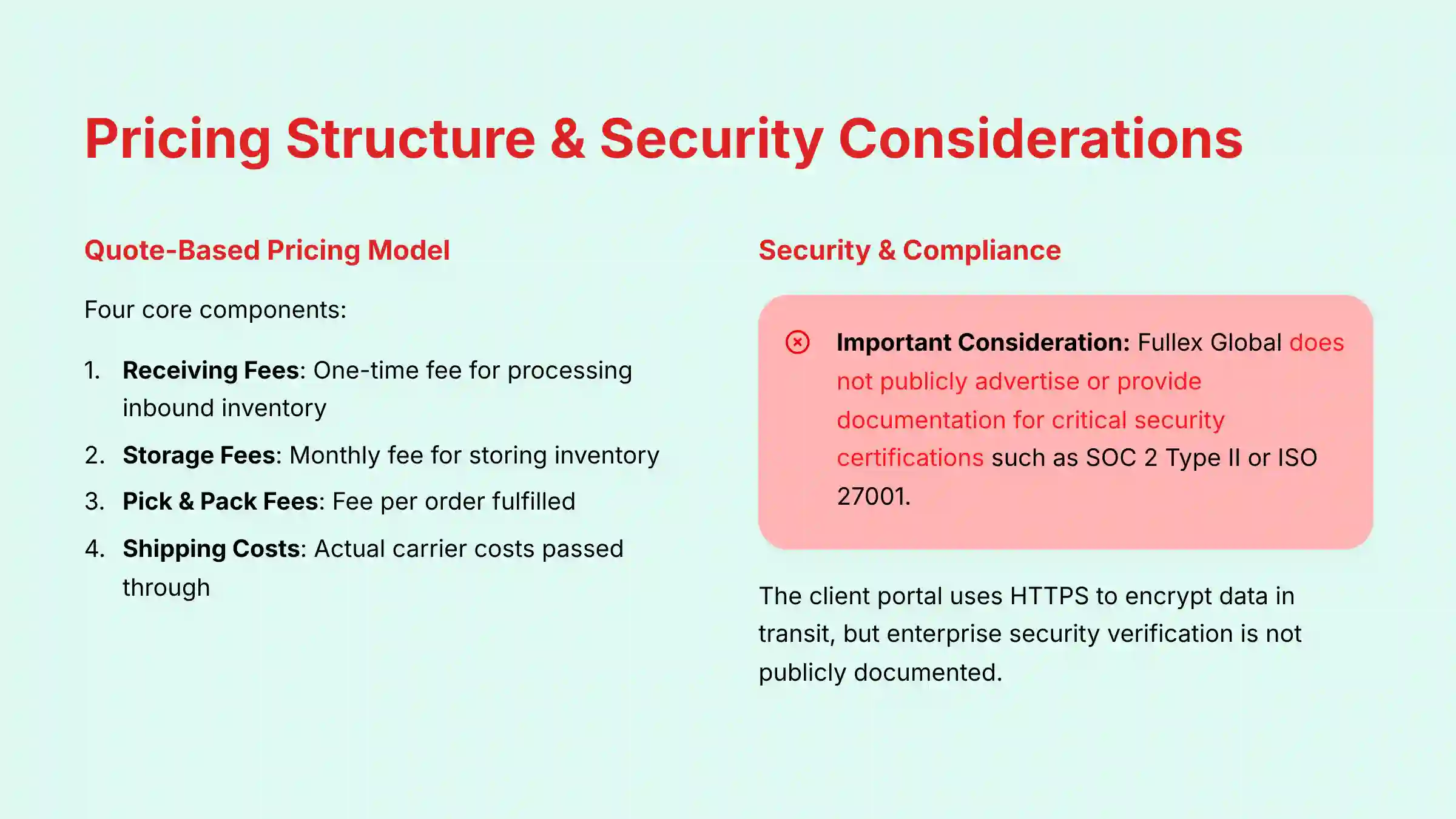
- Pricing Structure: Fullex Global uses a quote-based model. Costs are broken into four parts: receiving, storage, pick & pack, and shipping.
- Security Considerations: Fullex Global does not publicly advertise or provide documentation for critical security certifications such as SOC 2 Type II or ISO 27001. This is a significant consideration for any business evaluating it as a logistics partner.
What Is Fullex Global and Who Is It For?
Product Definition and Market Positioning
Fullex Global is a full-service third-party logistics (3PL) and product sourcing company. It is a service, not a software product you buy. Its value comes from outsourcing physical logistics operations like warehousing, picking, packing, and shipping.
The company positions itself as a strategic partner for e-commerce brands, especially those sourcing products from Asia. Its main purpose is to handle the entire fulfillment lifecycle for its clients.
This allows brands to scale without building their own logistics infrastructure. A 3PL provider like Fullex Global acts as the outsourced warehouse and shipping department for an e-commerce brand.
Their technology platform is the digital nervous system connecting the brand's online store to physical warehouse operations.
Primary Target Audience and Ideal User Profile
The ideal user for Fullex Global is a small to medium-sized e-commerce business or direct-to-consumer (DTC) brand. These users are often looking to outsource fulfillment because their order volume makes self-fulfillment inefficient and costly.
A 3PL service gives them a variable-cost model for professional logistics. For those evaluating different options, our comprehensive Fullex Global Review provides detailed insights into performance and capabilities.
The typical user profile includes:
- Businesses seeking to outsource their entire fulfillment operation
- Brands that require scalable logistics to support growth
- Companies that source products from China and need a partner with a presence there
- Roles such as Operations Managers, E-commerce Founders, and Supply Chain Coordinators would work directly with the service. For example, a Shopify store owner selling electronics sourced from a factory in Shenzhen would be a perfect fit.
Core Fulfillment & Logistics Services

Multi-Location Warehousing and Inventory Storage
Fullex Global operates warehouses in two strategic locations. This setup is a key part of their service offering.
- Strategic Locations: Warehouses are located in the United States and China.
- Key Benefit: This allows clients to store inventory near manufacturing sources in China and close to end customers in the USA. This strategy can greatly reduce shipping times and costs.
- Storage Service: The service includes receiving inbound inventory from suppliers, logging it into their system, and storing it on pallets or in bins.
Splitting inventory between a China and US warehouse is a strategy known as ‘forward stocking.' It's like setting up forward operating bases for your products.
It can reduce international shipping times by using slower, cheaper freight to move inventory in bulk to the US, then fulfilling individual orders domestically.

End-to-End Order Fulfillment Process
The fulfillment process is designed to be a complete replacement for a brand's in-house operations. It turns a manual process into an automated workflow.
- Order Ingestion: An order is received automatically from an integrated e-commerce store like Shopify.
- Picking: The system directs warehouse staff to find and retrieve the correct items (SKUs) from storage locations.
- Packing: Items are packed into the right shipping boxes with appropriate packing materials.
- Labeling & Shipping: A shipping label is created and put on the package, which is then given to a carrier like USPS, FedEx, or UPS.
The company also offers “Same-Day Processing,” which means orders received before a certain cutoff time are picked, packed, and shipped on the same day.
This speed is a critical performance indicator for modern e-commerce brands.

Value-Added Services
Beyond standard fulfillment, Fullex Global offers optional services to support its clients' broader needs. These services help brands manage their supply chain more effectively.
- Supplier Management & Sourcing: They assist clients in finding and vetting product suppliers in Asia.
- Product Inspections: They can perform quality control checks on inventory when it arrives from the factory, catching issues before products reach customers.
- Custom Branded Packaging: They support using client-designed boxes, tape, or promotional inserts. Custom packaging is a key component for DTC brands. A 3PL's ability to support this directly impacts brand perception during the unboxing experience.
Technology Platform: Features and Technical Specifications
Underlying Warehouse Management System (WMS) Capabilities
While clients interact with a user-friendly web portal, the engine driving Fullex Global's physical operations is its Warehouse Management System (WMS).
For an Operations Manager, the capabilities of this core system are more critical than the front-end dashboard. A professional evaluation should scrutinize its logic for optimizing key warehouse functions:

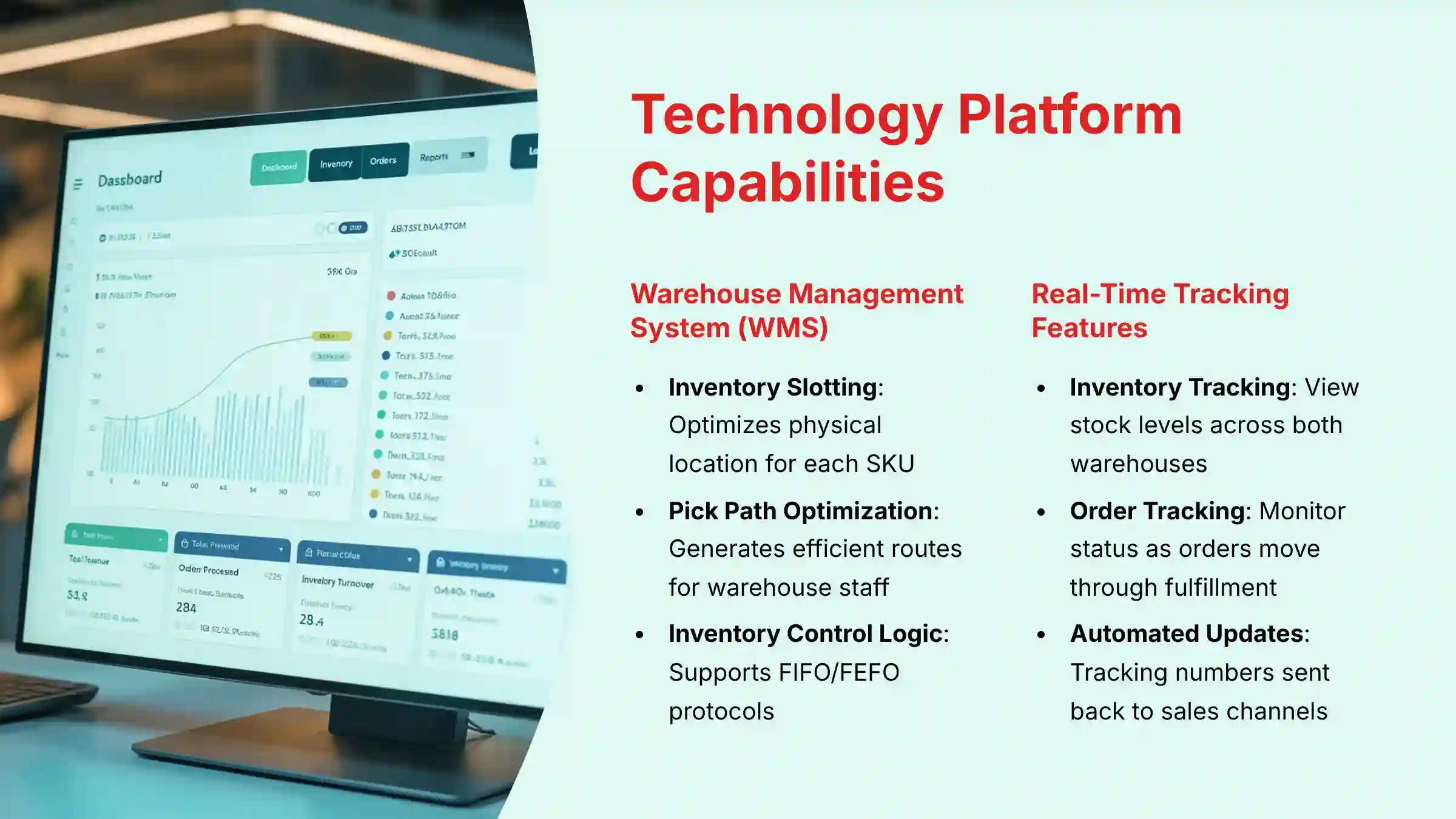
- Inventory Slotting: The WMS determines the optimal physical location for each SKU based on:
- Velocity (how fast it sells)
- Size and weight
- An effective slotting strategy directly reduces picker travel time and, therefore, labor costs
- Pick Path Optimization: The system should generate the most efficient route for warehouse staff to travel when picking items for multiple orders (a process known as batch picking or cluster picking). This is a key driver of fulfillment speed and warehouse throughput.
- Inventory Control Logic: Professionals should inquire about support for:
- FIFO (First-In-First-Out) protocols
- FEFO (First-Expired-First-Out) protocols, which are non-negotiable for businesses selling perishable goods or products with expiration dates
- Support for lot tracking (or batch control) for handling product recalls efficiently
In our assessment, the platform is designed for streamlined e-commerce workflows. Businesses with complex B2B case-picking or highly specific lot traceability requirements should validate these WMS capabilities during their consultation.
Real-Time Inventory and Order Management
The client-facing web portal is more than a dashboard; it's your brand's intelligence apparatus. In logistics, siloed data is the enemy.
This platform's primary mission is to break down those silos, transforming disconnected facts—inventory levels in China, order statuses in the US—into a single source of actionable intelligence.
This isn't just passive visibility; it's the operational awareness needed to make smart, real-time decisions.

The platform provides two core real-time tracking features:
- Real-Time Inventory Tracking: Clients can view current stock levels for every SKU across both the US and China warehouses. The dashboard shows quantities for ‘On Hand,' ‘Allocated,' and ‘Available' stock. Levels update automatically when new stock arrives or an order ships.
- Real-Time Order Tracking: Clients see the status of every order as it moves through the fulfillment process (e.g., “Pending,” “Processing,” “Shipped”). Tracking numbers are automatically added and sent back to the client's sales channel.
| Order Status | Operational Meaning |
|---|---|
| Pending | The order has been received but not yet processed. |
| Processing | The order is actively being picked and packed. |
| Shipped | The order has been packed and handed to a carrier. |
Platform Technical Specifications
The technology is designed to be accessible and compatible with standard business tools. Here are the key technical details.
| Specification | Details |
|---|---|
| Platform Access | Web-based client portal. |
| System Requirements | A modern web browser (Chrome, Firefox, Safari) and internet access. |
| Data Input Formats | Automated: API integration with e-commerce platforms. Manual: CSV file upload, manual order entry. |
| Data Output Formats | Shipping Labels (PDF, ZPL), Packing Slips (PDF), Reports (CSV, PDF). |
The support for CSV uploads is an important feature. It provides a necessary fallback for businesses using custom or uncommon e-commerce platforms, ensuring broad compatibility.
Security and Operational Reliability
For any business entrusting a partner with customer data and physical inventory, security is a top concern. This area requires particularly careful assessment:
- Data Security & Compliance: The client portal uses HTTPS to encrypt data in transit. However, for a professional supply chain partner, compliance goes deeper. Fullex Global does not publicly advertise or provide documentation for critical enterprise security and data protection certifications such as SOC 2 Type II or ISO 27001 on its website or in its public materials. The absence of these certifications is a significant factor for any business evaluating a 3PL partner, as it relates directly to data security, operational reliability, and third-party risk management.
- Professional Compliance Implications: Operations Managers and business owners rely on these certifications as a baseline for trusting a partner with:
- Sensitive business data (customer PII, sales data, supplier lists)
- Mission-critical operations
- Without SOC 2 or a similar audit, there is no independent verification of the vendor's security controls, confidentiality, or availability
An organization proceeding without this verification could face significant risks of data breaches, operational disruptions, and non-compliance with their own data governance policies (e.g., GDPR, CCPA).
- Operational Reliability & Business Continuity: For an operations leader, a 3PL's downtime is their own downtime. “Same-Day Processing” is a good marketing promise, but a professional partnership is built on contractual guarantees. Key areas to investigate are:
- Service Level Agreements (SLAs): What are the guaranteed percentages for Order Accuracy and On-Time Shipping?
- What are the financial penalties for failing to meet these SLAs?
- Uptime SLA: What is the guaranteed uptime for the technology platform itself?
- Disaster Recovery & Business Continuity Plan (DRP/BCP): What is the plan if a warehouse is rendered inoperable due to a fire, flood, or other disaster? Is there a backup facility? How quickly can operations be restored?
These are critical questions for ensuring supply chain resilience.
Integration and Ecosystem
E-commerce Platform Integrations
Native integrations are the foundation of Fullex Global's automated workflow. They eliminate manual work, which reduces errors and saves time.
The Shopify integration, for example, allows a brand to connect their store with just a few clicks. For those considering various logistics solutions, exploring Fullex Global Top Alternatives and Competitors can provide valuable comparison insights.

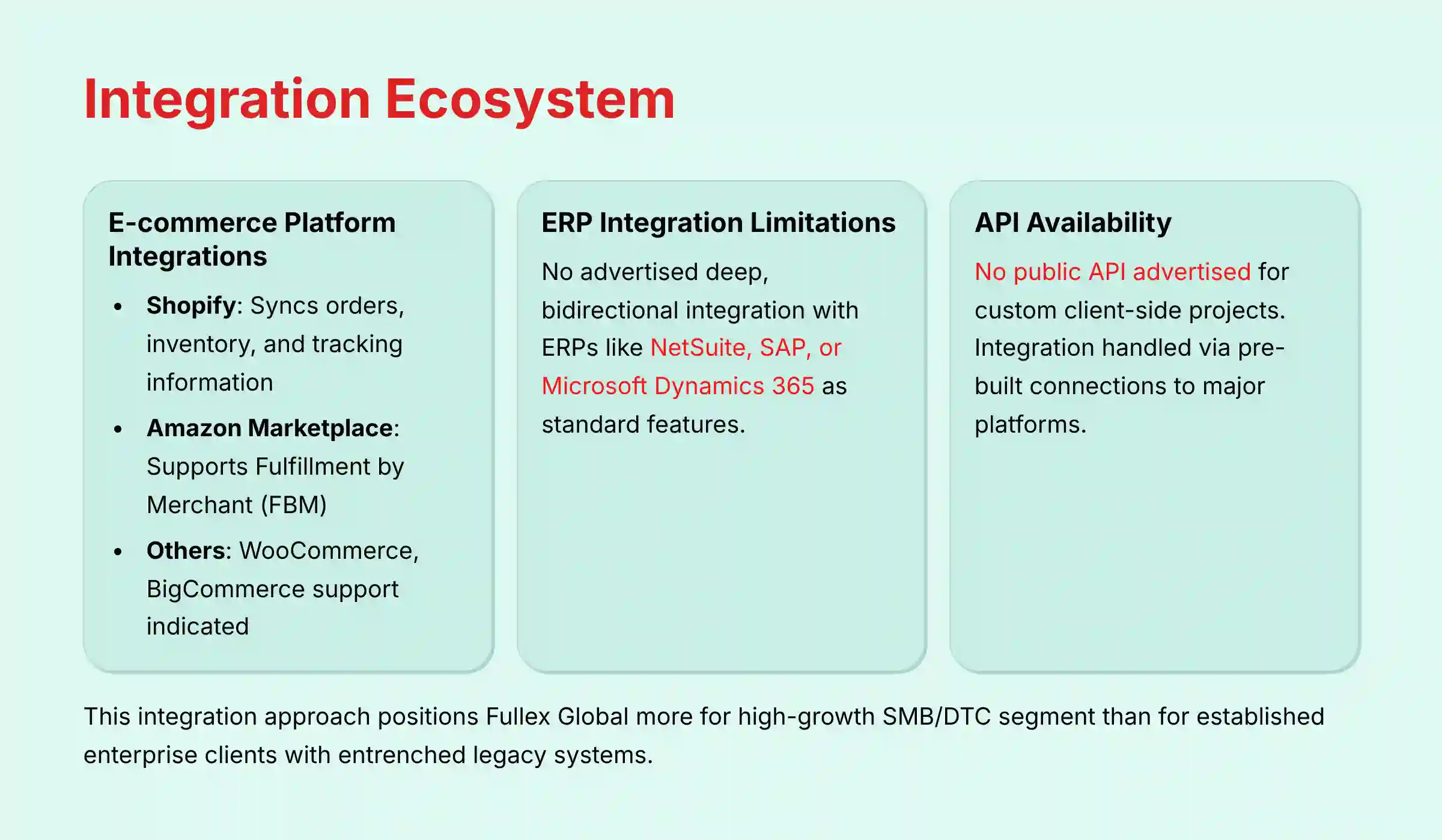
- Shopify: The integration automatically syncs orders, inventory levels, and tracking information between the Shopify store and the Fullex Global platform.
- Amazon: The platform integrates with Amazon Marketplace for Fulfillment by Merchant (FBM). This lets clients sell on Amazon while Fullex Global handles the shipping from its own warehouses.
- Other Platforms: Their documentation also indicates support for other major platforms like WooCommerce and BigCommerce.
ERP and Core Business System Integration
While native e-commerce integrations are essential for order flow, mature businesses run on an Enterprise Resource Planning (ERP) system as their single source of truth for finance, master data, and enterprise-wide inventory.
The article's focus on a missing public API suggests that deep, bidirectional integration with ERPs like NetSuite, SAP, or Microsoft Dynamics 365 is likely not a standard, out-of-the-box feature.
An Operations Director would need to clarify the following:
- Integration Method: Is connecting to an ERP handled via manual CSV file transfers, a third-party iPaaS (Integration Platform as a Service) provider like Celigo or Boomi, or a custom-quoted project?
- Data Synchronization: How are inventory adjustments, receiving reports, and shipping confirmations synced back to the ERP to ensure financial records are accurate? Real-time or near-real-time synchronization is crucial for maintaining data integrity across the business.
This lack of advertised ERP connectivity positions Fullex Global more for the high-growth SMB/DTC segment than for established mid-market or enterprise clients with entrenched legacy systems.
API Availability and Custom Integrations
Based on our review of their public materials, Fullex Global does not advertise a developer API for custom client-side projects. Integration is handled via pre-built connections to major e-commerce platforms.
The lack of a public API is common for 3PLs targeting the small and medium-sized business market. They focus on providing turn-key solutions for popular platforms.
Enterprise clients with unique needs may be able to arrange custom integrations, but this would require a specific consultation and plan.
Pricing and Service Plans
Breakdown of the Quote-Based Pricing Model
Fullex Global uses a quote-based pricing model, which is the industry standard for 3PLs. There is no public price list; costs are customized based on a client's specific profile, including product size, order volume, and storage needs.
The pricing structure is built on four core components:
- Receiving Fees: A one-time fee for accepting and processing inbound inventory, often charged per hour or per pallet.
- Storage Fees: A recurring monthly fee for storing inventory, usually charged per pallet or per bin.
- Pick & Pack Fees: A fee for each order fulfilled. This is often a base fee per order plus a small fee for each additional item.
- Shipping Costs: The actual postage cost from the carrier (e.g., USPS, FedEx), which is passed through to the client.
To properly forecast costs, businesses should request a detailed quote that separates each fee. Having a supply chain expert review this quote is a wise step before signing a contract.
Evaluating the Quote: Total Cost of Ownership (TCO) and ROI
From a supply chain leader's perspective, a 3PL quote is not just a list of fees; it's the foundation for a Total Cost of Ownership (TCO) analysis.
A professional evaluation must model how these costs compare to the expense of an in-house operation. Furthermore, the true value lies in the Return on Investment (ROI), measured through key performance indicators (KPIs). For example:
- An improvement in Order Accuracy Rate reduces the high cost of returns and appeasement shipments.
- Higher On-Time In-Full (OTIF) delivery rates improve customer satisfaction and retention.
- Outsourcing allows the business to convert the fixed costs of a warehouse (rent, labor) into a variable cost model, improving capital efficiency and freeing up cash for growth.
We recommend that Operations Managers model these scenarios and request performance data or case studies from Fullex Global to build a robust business case.
Plan Tiers and Enterprise Options
There are no distinct, publicly listed plans like “Basic” or “Pro.” The service is tailored to each client through the quoting process. This model is designed for flexibility, allowing a client's costs to scale directly with their activity.
The technology platform is included for all fulfillment clients and is not sold as a separate subscription. For high-volume enterprise clients, custom pricing, dedicated account management, and different Service Level Agreements (SLAs) are typically available upon negotiation.
Getting Started with Fullex Global
The Onboarding Process
The onboarding process is a structured sequence designed to integrate a new client's business with Fullex Global's operations. For detailed guidance on implementation, businesses can refer to comprehensive Fullex Global Tutorials and Usecase resources.

- Request a Quote: The first step is to submit business details like product types and order volume on their website.
- Consultation & Analysis: The Fullex Global team reviews the client's needs to create a custom logistics plan and price quote.
- Platform Integration: After an agreement is made, the client connects their e-commerce store to the Fullex Global platform with guidance.
- Sending Initial Inventory: The client prepares their first inventory shipment, known as an ‘inbound,' and sends it to a designated Fullex warehouse. Following the 3PL's inbound requirements is critical for a smooth start.
- Go-Live: Once inventory is received and logged, the integration is activated. Fullex then begins fulfilling live orders as they come in.
Support and Learning Resources
Fullex Global provides support to ensure clients can use their services effectively. The primary point of contact is often a dedicated account manager.
- Onboarding Support: New clients receive dedicated help during the setup and integration phase.
- Ongoing Support: Active clients have access to support through an account manager or email. This person helps resolve shipping issues or special requests.
- Documentation: Clients are provided with a knowledge base or setup guides for using the platform and preparing shipments correctly.
- Community Resources: There are no public community forums; all support is handled directly with the client.
Supplemental Information: Fullex Global FAQs
For businesses seeking immediate answers to common questions, our detailed Fullex Global FAQs resource addresses the most frequently asked questions about implementation, costs, and capabilities.
What Is the Primary Difference Between Fullex Global and a Traditional Warehouse?
The main difference is the integrated technology platform that automates order processing and gives real-time inventory and order visibility through its software.
A traditional warehouse may use manual processes like emails and spreadsheets, offering less transparency.
Can Fullex Global Handle Product Returns (Reverse Logistics)?
Yes, Fullex Global offers returns management services. They can receive returned products, inspect them, and either return them to inventory or dispose of them based on the client's rules.
This service is usually priced separately from outbound fulfillment.
How Is Shipping Billed and Which Carriers Are Used?
Shipping costs are passed through directly from the carrier to the client. Fullex Global uses its volume to negotiate discounted rates with major carriers like USPS, FedEx, UPS, and DHL, and clients benefit from these lower costs.
Is Fullex Global Suitable for B2B (Business-to-Business) Fulfillment?
While their main focus is B2C e-commerce fulfillment, they may handle some B2B logistics. Their system is optimized for small parcel, direct-to-consumer orders, not complex B2B needs like freight shipping or large case picking for retail distribution.
What Information Is Needed to Get an Accurate Price Quote?
To get an accurate quote, you need to provide:
- Your average monthly order volume
- The number of unique SKUs you sell
- The dimensions and weight of your products
- Any special handling or packaging requirements
Does Fullex Global Integrate with Marketplaces Like Etsy or Walmart?
Their public documentation highlights Shopify and Amazon integrations. For other marketplaces like Etsy or Walmart, integration would likely need a third-party connector tool or depend on manual CSV order uploads, as native integrations may not be offered.
What Are the Known Limitations of the Fullex Global Service?
The service is built for standard e-commerce products. Limitations include a lack of support for items needing special handling, such as hazardous materials, refrigerated goods, or very large items.
A public API for custom development is also not available.
How Does the China Warehouse Benefit E-commerce Sellers?
The China warehouse lets sellers store inventory directly from their manufacturer, reducing initial shipping costs. It allows them to fulfill orders to customers in the Asia-Pacific region or consolidate inventory for bulk freight shipment to their US warehouse, optimizing their logistics.
The Strategic Verdict: Is Fullex Global a Force Multiplier?

Fullex Global is not a standalone AI tool but a tech-enabled logistics service. Its value isn't in a novel algorithm but in the operational leverage it provides to scaling e-commerce brands.
By outsourcing the physical complexities of warehousing and shipping, and providing a centralized platform for visibility, it allows founders and operations managers to shift their focus from picking and packing to strategy and growth.
For the right business—a small to medium-sized DTC brand, especially one with a supply chain rooted in Asia—this kind of partnership is a clear force multiplier. Those looking for broader context can explore our analysis of the Best 10 AI for Order Fulfillment & Picking 2025 to understand how Fullex Global fits into the larger ecosystem.
The modern e-commerce landscape is a permanent storm condition of shifting customer expectations and logistical headwinds. The decision to partner with a 3PL like Fullex Global is a strategic one, aimed at building a resilient, scalable operation.
The ultimate question is not just about cost per order, but whether it empowers your business to press its advantage in a crowded market.
Important Disclaimers:
Technology Evolution Notice:
The information about Fullex Global and AI for Operations & Supply Chain tools presented in this article reflects our thorough analysis as of 2025. Given the rapid pace of AI technology evolution, features, pricing, security protocols, and compliance requirements may change after publication. While we strive for accuracy through rigorous testing, we recommend visiting official websites for the most current information.
Professional Consultation Recommendation:
For AI for Operations & Supply Chain applications with significant professional, financial, or compliance implications, we recommend consulting with qualified professionals who can assess your specific requirements and risk tolerance. This is particularly important when evaluating third-party logistics partners lacking published security certifications. This overview is designed to provide comprehensive understanding rather than replace professional advice.
Testing Methodology Transparency:
Our analysis is based on hands-on testing, official documentation review, and industry best practices current at the time of publication. Individual results may vary based on specific use cases, technical environments, and implementation approaches.

Leave a Reply