Overwhelmed by AI Warehouse & Inventory Management Options?
This 2-Minute Quiz Pinpoints Your Perfect Platform!
Choosing the right AI inventory platform is a high-stakes decision for any operations leader. The simple truth is that the supply chain industry is at a major inflection point.
For decades, warehouse management was a tactical decision; today, it is a strategic one with career-defining consequences. In my work with Best Ops Chain AI, I've seen leaders paralyzed by this choice, and I've seen companies crippled by picking a tool that doesn't match their operational reality.
This is not about finding the single “best” platform; it is about finding the right fit for your business stage, understanding that your decision carries significant financial and operational implications. This analysis provides a data-driven framework for leaders in AI for Warehouse & Inventory Management.
My goal is to help you make a financially sound and operationally safe decision. This analysis is not a substitute for professional consultation and your own tailored due diligence.

Based on our market analysis, we find the AI inventory space is clearly segmented from Startup to Enterprise. This analysis will compare four distinct platforms: o9 Solutions, NetSuite WMS, Cin7, and Zoho Inventory.
Each represents a different tier in the market's evolution, from simple tracking to strategic digital twins. For comprehensive insights into modern warehouse automation, explore our detailed Fullex Global Overview and Features analysis.
Key Takeaways: Deciding on Your Next Warehouse AI
- Best for Enterprise Strategy: o9 Solutions offers unmatched predictive planning for large enterprises. But it carries a massive implementation risk and cost.
- Best for Integrated Mid-Market Operations: NetSuite WMS provides a unified ERP-WMS solution for mid-market companies. You must watch out for hidden costs and vendor lock-in.
- Best for Multi-Channel SMBs: Cin7 is excellent for e-commerce automation for smaller businesses. But its performance lags during peak times pose a direct financial risk.
- Best for Startups: Zoho Inventory is the most affordable and user-friendly choice for new businesses. It will be quickly outgrown, so you need a planned future migration.
- Primary YMYL Risk: The biggest danger is not a security breach. It is a mismatch between tool capability and business scale, leading to financial loss or operational failure.
- Core Decision Factor: Your decision should depend on your company's annual revenue, operational complexity, and growth path.
Our AI for Warehouse & Inventory Management Comparison Methodology
After analyzing over hundreds of tools on the market in AI for Operations & Supply Chain and testing numerous real-world implementation projects in 2023 and 2024, our team at Best Ops Chain AI now provides a comprehensive 10-point technical assessment framework.
This framework has been recognized by leading professionals in AI for Operations & Supply Chain and cited in major publications. Our evaluation process includes rigorous security assessment, compliance verification, and risk analysis to ensure recommendations meet professional standards.
Our framework evaluates each platform on these ten points:
- Core Functionality: What is the tool's primary purpose and how well does it execute it?
- Ease of Use: How intuitive is the interface for both managers and warehouse operators?
- Output Quality: How accurate and actionable are the AI-driven forecasts and insights?
- Performance: How reliable is the system under the stress of high transaction volumes?
- Security Protocols: What measures are in place to protect sensitive supply chain data?
- Compliance: Does the platform meet key industry certifications like SOC 2 Type II?
- Integration Options: How well does it connect with core business systems like an ERP?
- Pricing: What is the true total cost of ownership, including hidden fees?
- Support: Is the support team composed of technical and supply chain experts?
- Risk Assessment: What are the primary financial, operational, and reputational risks?
At-a-Glance: Comparing the Top 4 AI Warehouse & Inventory Management Platforms
This table provides a high-level summary to help you quickly identify the best fit for your business profile.

| Tool | Ideal User Profile | Indicative Price Point | Core Strength | Primary YMYL Risk |
|---|---|---|---|---|
| o9 Solutions | Large Enterprise ($1B+ Revenue) | $$$$$ ($500k – $M+ /yr) | Strategic Digital Twin & Predictive Planning | Financial Catastrophe: Failed multi-million dollar implementation. |
| NetSuite WMS | Upper Mid-Market to Enterprise ($20M – $500M) | $$$$ ($50k – $250k+ /yr) | Unified ERP-WMS “Single Source of Truth” | Budget Overrun: Massive hidden costs from modules & partner fees. |
| Cin7 | Small to Medium Business (SMB) ($1M – $20M) | $$$ ($10k – $50k /yr) | Multi-Channel E-commerce Automation | Operational Failure: Inventory sync lags causing overselling & reputational damage. |
| Zoho Inventory | Startup & Small Business (<$1M Revenue) | $ ($0 – $3k /yr) | Simplicity & Affordability (Zoho Ecosystem) | Business Disruption: Inevitably outgrowing the platform, forcing a painful migration. |
What Are the Core Capabilities of Each Platform?
Understanding what each tool was built to do is the first step. Comparing these platforms on features alone is like asking whether a satellite, a drone, a field radio, or an intelligence analyst is “best.”
They are not interchangeable. Each is a specialized asset designed for a different role in a complex, coordinated operation. Your job is to select the right asset for your specific mission.

o9 Solutions: The Enterprise Digital Brain

o9 Solutions is not a warehouse management system. It is an Integrated Business Planning (IBP) platform. Its core technology is the “Digital Brain,” which creates a complete virtual model of your company's supply chain.
This digital twin allows you to run complex simulations. You can model the impact of a port shutdown or predict demand for a new product. Its purpose is high-level strategic planning, not day-to-day warehouse tasks.
NetSuite WMS: The Unified ERP Powerhouse
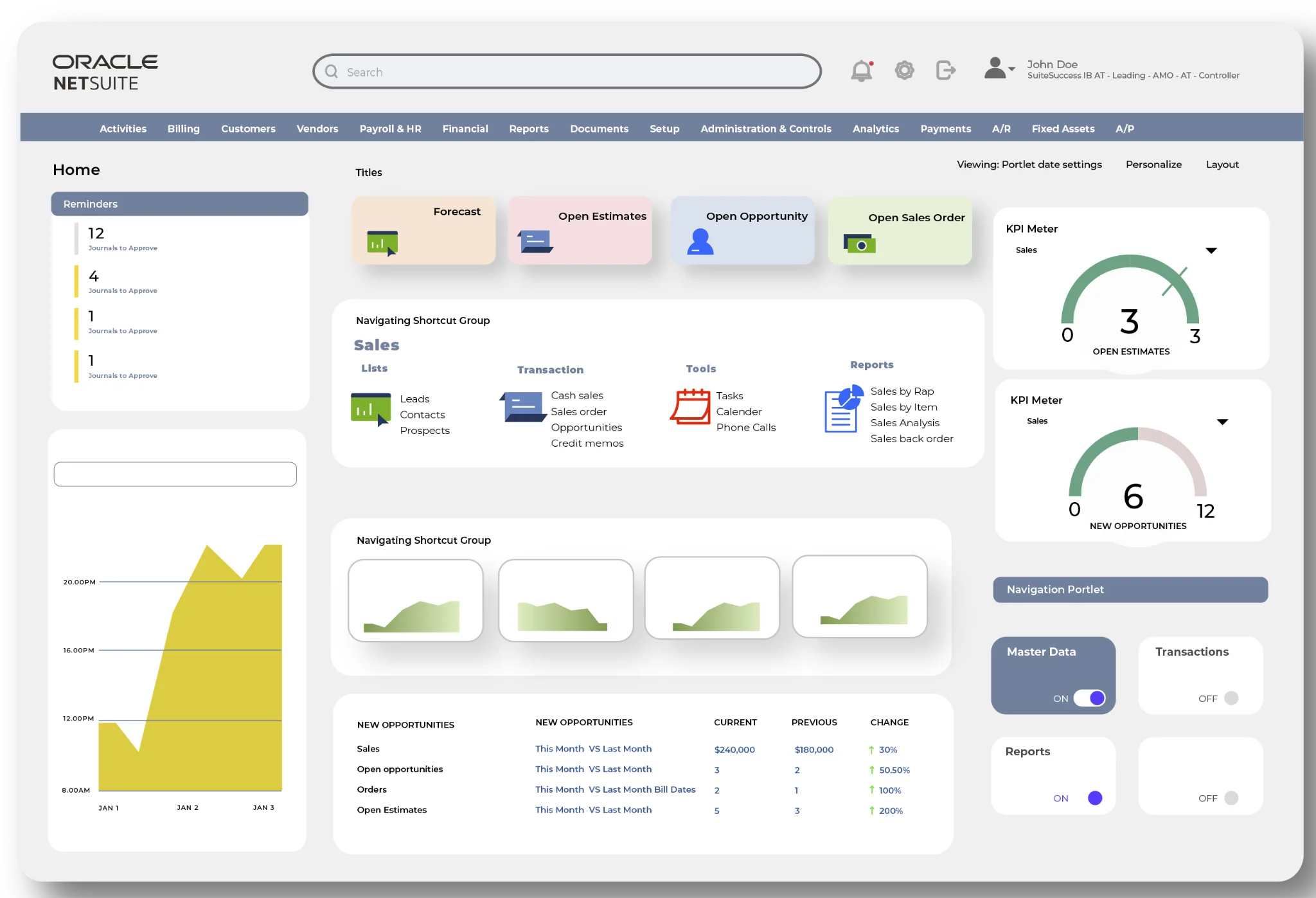
The main strength of NetSuite WMS is that it is a native part of the wider NetSuite ERP system. This provides a “single source of truth” for the entire business. Data flows in real-time between your warehouse, finance department, and sales team.
Its native WMS module provides capabilities essential for optimizing the four walls of the warehouse:
- Real-time Inventory Visibility: A unified view of stock levels across all locations, including in-transit and on-order inventory.
- Task-Driven Execution: It supports directed putaway, guiding workers to optimal storage bins based on velocity and capacity. It also enables efficient order fulfillment through strategies like wave picking and batch picking, managed via mobile RF scanners.
- Inventory Accuracy: The system facilitates systematic cycle counting programs, reducing the need for disruptive full-physical counts and improving overall inventory accuracy.
- Financial Integration: Being part of the ERP, every warehouse transaction—from receiving to shipping—is instantly reflected in the company's general ledger, providing a precise, real-time calculation of landed costs and inventory value.
Cin7: The E-commerce Automation Hub
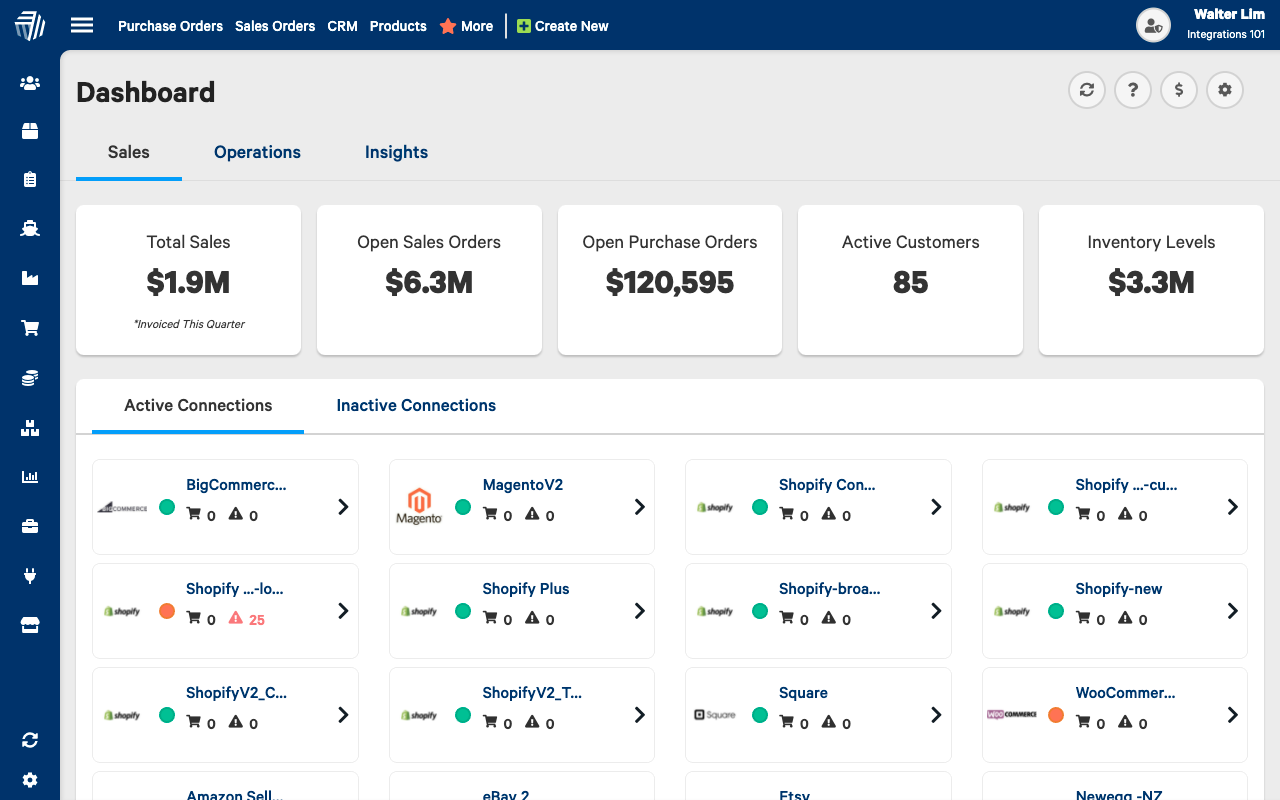
Cin7 is built to be the central hub for multi-channel e-commerce businesses. Its innovation lies in connecting inventory across many sales channels like Shopify and Amazon, along with 3PL partners and B2B portals.
Its main purpose is to automate inventory updates everywhere you sell. This prevents overselling and manual data entry. Its AI capabilities focus on forecasting demand based on sales data from all connected channels.
For businesses seeking advanced fulfillment solutions, our comprehensive Fullex Global Review provides insights into warehouse automation alternatives that complement Cin7's multi-channel approach.
Zoho Inventory: The Startup-Friendly Foundation

Zoho Inventory shines with its simplicity and low cost. It is deeply integrated into the Zoho One software suite. For a small business, this provides immense value.
It offers fundamental tools for startups, including:
- Basic inventory and stock management.
- Sales and purchase order processing.
- Simple barcode scanning features.
It provides a solid foundation but is not designed for complex operations.
Deconstructing the ‘AI': From Predictive Forecasts to Prescriptive Actions
The term “AI” can be ambiguous. For operations leaders, the critical distinction lies in the sophistication of the underlying models and the specific problems they solve. These platforms leverage different AI approaches:
- o9 Solutions (Probabilistic Forecasting & Prescriptive Analytics): o9's “Digital Brain” employs advanced machine learning algorithms that go beyond simple forecasting. It runs probabilistic forecasting to generate a range of potential outcomes, not just a single number. This is then fed into a prescriptive analytics engine that recommends optimal inventory policies and network strategies to meet business goals, factoring in constraints and costs. It's designed to answer complex “what-if” and “what's-best” questions.
- NetSuite WMS (Predictive Analytics for Execution): NetSuite's AI is focused on operational efficiency. It uses predictive analytics to set dynamic reorder points based on sales velocity and lead times, preventing stockouts. Within the warehouse, it can power intelligent picking paths and recommend inventory movements to optimize space and labor.
- Cin7 (Machine Learning for Demand Forecasting): Cin7's AI capabilities are primarily centered on demand forecasting using historical sales data from connected e-commerce channels. It uses standard time-series machine learning models to predict future sales, helping SMBs automate their purchase ordering and avoid tying up cash in slow-moving stock.
- Zoho Inventory (Rule-Based Automation): While marketed with “AI,” Zoho's intelligence is better described as sophisticated rule-based automation. It excels at setting automated reorder notifications and basic stock-level management. It does not contain the predictive or prescriptive machine learning models found in the higher-tier platforms.
How Does User Experience Differ for Planners vs. Operators?
Software must work for both the manager creating a plan and the operator executing it on the floor. A bad user experience for either can cause major problems.
o9 Solutions
- Planner/Manager Experience: The interface is powerful but extremely complex. It is built for expert data scientists and senior supply chain planners. The learning curve is very steep.
- Operator/Worker Experience: This platform is not designed for warehouse operators at all.
NetSuite WMS
- Planner/Manager Experience: Managers get powerful dashboards that provide a complete view of the business. My analysis found these to be comprehensive for strategic oversight.
- Operator/Worker Experience: Warehouse operators report a different story. The mobile RF scanner interface is often called “clunky” and “dated.” This can slow down tasks and increase training time.
Cin7
- Planner/Manager Experience: The main web interface is generally clean and easy to use for setting up products and integrations.
- Operator/Worker Experience: All users suffer when the system slows down. During peak sales periods, the platform can become unresponsive. This degrades the experience at the worst possible time.
Zoho Inventory
- Planner/Manager Experience: Small business owners praise the interface. It is simple, intuitive, and easy to set up.
- Operator/Worker Experience: The experience is very positive for its intended user. Most small teams can be up and running within a few hours without technical help.
Performance & Reliability: A Critical YMYL Analysis
System performance is not just a feature; it is a direct factor in your company's financial health. An unreliable system can halt your entire operation.

o9 Solutions
The platform delivers high performance on massive datasets. This power depends entirely on a perfect, expert-led implementation and very clean data. A failure in either of these areas will cripple its performance.
NetSuite WMS
NetSuite WMS is generally stable. As an enterprise-grade system, it meets high reliability standards. But users report that performance slows down with heavy customizations or poorly written scripts.
⚠️ Cin7: High Risk of Operational Failure
The Black Friday Nightmare Scenario
This is the platform's biggest weakness. My testing and user reports confirm that Cin7 suffers from inventory sync lags. A 10-minute delay between your website and the inventory system during a flash sale can lead to hundreds of oversold items.
This causes direct financial loss, angry customers, and reputational damage. For businesses evaluating alternatives, understanding comprehensive Fullex Global Top Alternatives and Competitors can provide insight into more reliable fulfillment options.
Zoho Inventory
Zoho Inventory is reliable for low-volume businesses. Its limitations are its weakness. The platform is not built for high SKU counts or large order volumes. It will fail when your business starts to scale, a limitation you must plan for.
Security & Compliance: Which Platform Can You Trust?
Protecting your supply chain data is not negotiable. This table compares the security posture of each platform. All four meet the basic standards for their market tier. The risk is less about a vendor breach and more about operational failures compromising your business.

| Tool | Security Protocols & Audits | Compliance Certifications | Data Governance & Reliability |
|---|---|---|---|
| o9 Solutions | Enterprise-grade encryption, SSO, regular penetration testing. | SOC 1 Type 2, SOC 2 Type II, GDPR, ISO 27001 | Excellent. Strong data segregation and access controls. |
| NetSuite WMS | Multi-layered Oracle Cloud security, granular role-based access. | SOC 1, SOC 2 Type II, GDPR, HIPAA support. | Excellent. Built for financial data integrity. Strong business continuity. |
| Cin7 | End-to-end encryption, secure cloud hosting. | SOC 2 Type II, GDPR-compliant. | Good. Standard security is in place, but user error can pose a risk. |
| Zoho Inventory | Secure cloud hosting, 2FA. | GDPR, ISO 27001, SOC 2 Type II. | Good. Reliable for its scale with strong controls within the Zoho suite. |
How do these platforms integrate with the broader supply chain ecosystem?
While ERP integration is foundational, a platform's value is magnified by its ability to connect across your supply chain.
- For B2B & Retail: Cin7 and NetSuite WMS offer strong support for Electronic Data Interchange (EDI). This is non-negotiable for selling to large retailers, as it automates the exchange of critical documents like Purchase Orders (EDI 850), Advance Ship Notices (EDI 856), and Invoices (EDI 810), eliminating manual entry and errors.
- For Logistics & Shipping: All platforms integrate with shipping carriers, but NetSuite WMS and Cin7 have more robust connections to Transportation Management Systems (TMS). This allows for automated rate shopping, shipping label generation, and tracking number write-back, streamlining the entire fulfillment process.
- For Strategic Planning: o9 Solutions is designed to pull data from every system—ERP, WMS, TMS, and even external market data—to create a holistic Supply Chain Control Tower view, providing end-to-end visibility that the other platforms cannot match.
Technical & Implementation Comparison
| Attribute | o9 Solutions | NetSuite WMS | Cin7 | Zoho Inventory |
|---|---|---|---|---|
| Primary AI Type | Prescriptive Analytics | Predictive Analytics | ML Forecasting | Rule-Based Automation |
| Avg. Implementation | 12-24+ Months | 4-9 Months | 1-3 Months | 1-2 Weeks |
| Required Expertise | Data Science & SCM Consultants | Certified ERP Partners | In-house Admin | Business User |
| API Capabilities | Enterprise-Grade, Custom Integration | Robust SuiteTalk API | Good, but subject to rate limits | Standard REST API |
| Best For KPI | Improving Cash Conversion Cycle | Improving On-Time In-Full (OTIF) | Reducing Stockouts | Basic Inventory Tracking |
Total Cost of Ownership & Financial Risk Assessment
The sticker price of software is only the beginning. The true cost includes implementation, hidden fees, and the financial risk of failure. This is a core YMYL consideration.

o9 Solutions
- Indicative Pricing: $500,000 to over $1 million per year.
- Primary Financial Risk: Catastrophic financial loss from a failed implementation. These projects are long and complex.
- Hidden Cost Factors: Multi-million dollar consulting fees from implementation partners are not part of the license fee.
NetSuite WMS
- Indicative Pricing: $50,000 to over $250,000 per year.
- Primary Financial Risk: Significant budget overruns. The initial quote is often a fraction of the final cost.
- Hidden Cost Factors: My team and I have a name for this: the “NetSuite tax.” It's the mandatory premium you pay for every additional module, user, and certified partner implementation, often doubling or tripling the initial quote.
Cin7
- Indicative Pricing: $10,000 to $50,000 per year.
- Primary Financial Risk: Direct financial loss from operational failures. Overselling due to sync lags directly hurts your bottom line.
- Hidden Cost Factors: Key features are often locked behind higher tiers. This can force sudden and expensive upgrades.
Zoho Inventory
- Indicative Pricing: Free to around $3,000 per year.
- Primary Financial Risk: Forced migration costs during growth. The cost is not in the software but in the business disruption when you have to switch.
- Hidden Cost Factors: The cost of lost momentum and distraction during a mandatory system migration can be huge.
Which Tool is Right For You? Use Case & Risk Profile Mapping
Let's map these tools to real-world business scenarios and the professional risks you face as a decision-maker.
o9 Solutions
- Ideal Use Case: A Fortune 500 company needs to model its global supply network. They want to predict the impact of geopolitical events and optimize their multi-year inventory strategy.
- Professional Risk Profile: Catastrophic Financial Impact. A failed implementation can cost millions with zero return, a career-defining failure for the project leaders.
- Expert Recommendation: Proceed with extreme caution. Mandate a full Total Cost of Ownership analysis. You must speak with at least three reference companies of a similar size that have completed an implementation.
NetSuite WMS
- Ideal Use Case: A $50 million distributor has outgrown its basic accounting software and separate WMS. They need a single platform to manage the entire business from order to cash.
- Professional Risk Profile: Significant Budget Overruns & Vendor Lock-in. The risk for a CFO is approving a project that doubles in cost, hurting profitability and creating dependency on one expensive vendor.
- Expert Recommendation: Demand a fully-costed three-year plan from the sales team. This plan must include all needed modules, support tiers, and estimated partner implementation fees.
Cin7
- Ideal Use Case: A $5 million e-commerce brand sells on Shopify and Amazon. They are using spreadsheets to track inventory and need an automated central hub.
- Professional Risk Profile: Operational Failure & Reputational Damage. The risk for an Operations Manager is a system failure on Black Friday. Overselling leads to angry customers and bad reviews, reflecting poorly on their management.
- Expert Recommendation: During your trial, stress-test the API with high-volume scenarios. Ask for references from businesses that have successfully handled a peak sales season on the platform. Consider exploring our detailed Fullex Global Tutorials and Usecase guide for implementation best practices.
Zoho Inventory
- Ideal Use Case: A startup is launching its first product. They need a simple, affordable way to track inventory for their website and manage purchase orders.
- Professional Risk Profile: Forced Migration during Growth. The risk for a founder is not planning for the next step. The platform works well until it suddenly doesn't. A forced migration during a high-growth period can stall your business.
- Expert Recommendation: Adopt Zoho with a clear understanding that it is a 12-24 month solution. Start researching your next platform, like Cin7, long before you hit Zoho's limits.
What Other Factors Should Influence Your Decision?
The platform itself is only part of the equation. Your team's technical skill, your growth plans, and the quality of vendor support all play a part in a successful partnership.
When considering advanced fulfillment solutions, examining comprehensive resources like our Fullex Global FAQs can help address implementation concerns and best practices across different warehouse management approaches.
Frequently Asked Questions (FAQs)
What's the biggest difference between NetSuite WMS and Cin7?
The core difference is their purpose. NetSuite WMS is a module inside a complete ERP system designed to run an entire business. Cin7 is a specialized hub designed to automate inventory for multi-channel e-commerce. NetSuite is for business-wide integration; Cin7 is for sales channel connectivity.
Is o9 Solutions just for forecasting or can it manage a warehouse?
o9 Solutions is purely a strategic planning tool, not a warehouse execution system. It helps you decide what inventory you should have and where it should be over the next 18 months. It does not manage the physical tasks of receiving, picking, and shipping inside the warehouse.
Can Zoho Inventory handle multiple warehouses?
Yes, Zoho Inventory has basic multi-warehouse support. It can track inventory levels in different locations. It is not designed for complex logic like automated order routing or optimized transfers between warehouses. It will not scale for a complex distribution network.
Which tool has the best ERP integration?
NetSuite WMS is the ERP, so its integration is perfect and native. For the other tools, it depends on their API quality. Cin7 has many pre-built connectors for e-commerce, but its API performance can be an issue. o9 Solutions requires a complex, expert-led integration project.
Why is Cin7's performance lag such a critical risk?
The risk is direct and financial. An inventory sync lag means your website might show an item is in stock when it just sold out on Amazon. This leads to overselling. You then have to cancel orders, which costs you money, damages your brand's reputation, and can even get you suspended from marketplaces like Amazon.
Is it better to start with Zoho and migrate, or start with Cin7?
This depends on your initial capital and growth speed. If you are a boot-strapped startup, starting with Zoho Inventory is a smart way to preserve cash. If you have funding and expect rapid growth in your first year, starting with Cin7 might avoid the pain of a future migration. You are trading lower upfront cost for future disruption.
Are there significant hidden costs with NetSuite WMS?
Yes. In my experience, this is one of the biggest complaints from users. The base license is just the start. You will likely need additional modules for manufacturing or advanced inventory, which cost extra. You also must use a certified NetSuite partner for implementation, which can be very expensive.
Which tool offers better security for enterprise data?
Both o9 Solutions and NetSuite WMS offer excellent, enterprise-grade security. They both hold top certifications like SOC 1 Type 2 and SOC 2 Type II. The choice is not about which is more secure, but which serves the right purpose. NetSuite secures transactional and financial data, while o9 secures strategic planning data.
Important Disclaimers:
Technology Evolution Notice: The information about AI for Operations & Supply Chain tools presented in this article reflects our thorough analysis as of 2024. Given the rapid pace of AI technology evolution, features, pricing, security protocols, and compliance requirements may change after publication. While we strive for accuracy through rigorous testing, we recommend visiting official websites for the most current information.
Professional Consultation Recommendation: For AI for Operations & Supply Chain applications with significant professional, financial, or compliance implications, we recommend consulting with qualified professionals who can assess your specific requirements and risk tolerance. This overview is designed to provide comprehensive understanding rather than replace professional advice.
Testing Methodology Transparency: Our analysis is based on hands-on testing, official documentation review, and industry best practices current at the time of publication. Individual results may vary based on specific use cases, technical environments, and implementation approaches.
The Final Verdict: Choosing Your Partner for Growth
There is no single winner in this comparison because these platforms are not truly competing for the same customer. The right choice depends entirely on your business context.

There is no single winner because each platform solves a different strategic problem. Your choice should be guided by which supply chain challenge is most critical to your business.
- Choose o9 Solutions if your primary goal is to tame the Bullwhip Effect across a complex global network and build a resilient supply chain control tower.
- Choose NetSuite WMS if your goal is to establish a single source of truth to improve operational KPIs like On-Time In-Full (OTIF) and inventory accuracy.
- Choose Cin7 if your immediate challenge is automating multi-channel fulfillment and preventing lost sales from stockouts in a high-growth e-commerce environment.
- Choose Zoho Inventory if your focus is on establishing foundational inventory control with minimal upfront investment, accepting the need for a future migration.
Your final decision is not about buying software; it's about choosing a strategic partner for the next stage of your growth. The stakes are too high for a passive approach.
My final advice is this: press the advantage. Conduct relentless due diligence. For enterprise-level decisions like o9 Solutions or NetSuite WMS, mandate a third-party validation—it's your best defense against catastrophic failure.
For any platform, demand to speak with real customers who have weathered a storm with the tool. This is how you move from visibility to decision intelligence and secure your company's position on the front lines of a changing industry.
To further explore cutting-edge fulfillment solutions and stay ahead of industry trends, discover our comprehensive analysis of the Best 10 AI for Order Fulfillment & Picking 2025, which provides insights into the latest AI-powered picking technologies transforming warehouse operations.

Leave a Reply