Is Dematic AI the Right Solution for Your Warehouse?
This 2-Minute Quiz Identifies Your Key Automation Needs!
Key Takeaways
- AI-Powered Optimization: Mastering AI-powered slotting optimization in Dematic iQ can reduce picker travel time by over 30%, directly increasing order fulfillment speed and labor efficiency.
- Goods-to-Person Accuracy: Successful implementation of Dematic's Goods-to-Person (GTP) AMR workflows boosts order accuracy to over 99.9% by combining robotics with integrated computer vision.
- Risk Mitigation Priority: Before deploying any configuration changes to your live environment, you must validate them in the Dematic Digital Twin and Simulation Environment to prevent operational disruptions.
- ERP Integration Essential: Deep, real-time integration between Dematic iQ and your ERP system is non-negotiable for success, with proactive middleware monitoring preventing synchronization failures.
Introduction: Mastering Dematic's AI for Warehouse & Inventory Management
Warehouses today are no longer just cost centers; they are the front lines in a permanent storm of supply chain disruption. In this environment, efficiency is table stakes. The real battle is won through resilience, speed, and a decisive operational advantage.
As the founder of Best Ops Chain AI, I've seen that this transformation from a fragile liability to a strategic asset is not just possible—it's imperative. This guide on Dematic Tutorials and Usecase provides the strategic roadmap for that transformation.
This is not just a list of features. My experience in real-world AI for Operations & Supply Chain projects shows that success comes from a data-driven mindset. I will provide actionable tips to help you avoid common pitfalls in robotics integration and WMS/ERP synchronization, based on proven methodologies.
Mastering the Dematic ecosystem is about adopting an optimization mindset. Proper planning and testing are absolutely mandatory in a live operational environment. This guide for AI for Warehouse & Inventory Management follows strict professional standards, focusing on data security, operational reliability, and verifiable ROI.
We will move from the foundational setup of Dematic iQ software to advanced topics like multi-agent orchestration and evidence-based performance tuning. For comprehensive analysis of leading solutions in this space, explore our detailed Best 10 AI For Warehouse Robotics & Automation Solutions: The Definitive 2025 Guide.
Our Testing Methodology for AI for Warehouse & Inventory Management
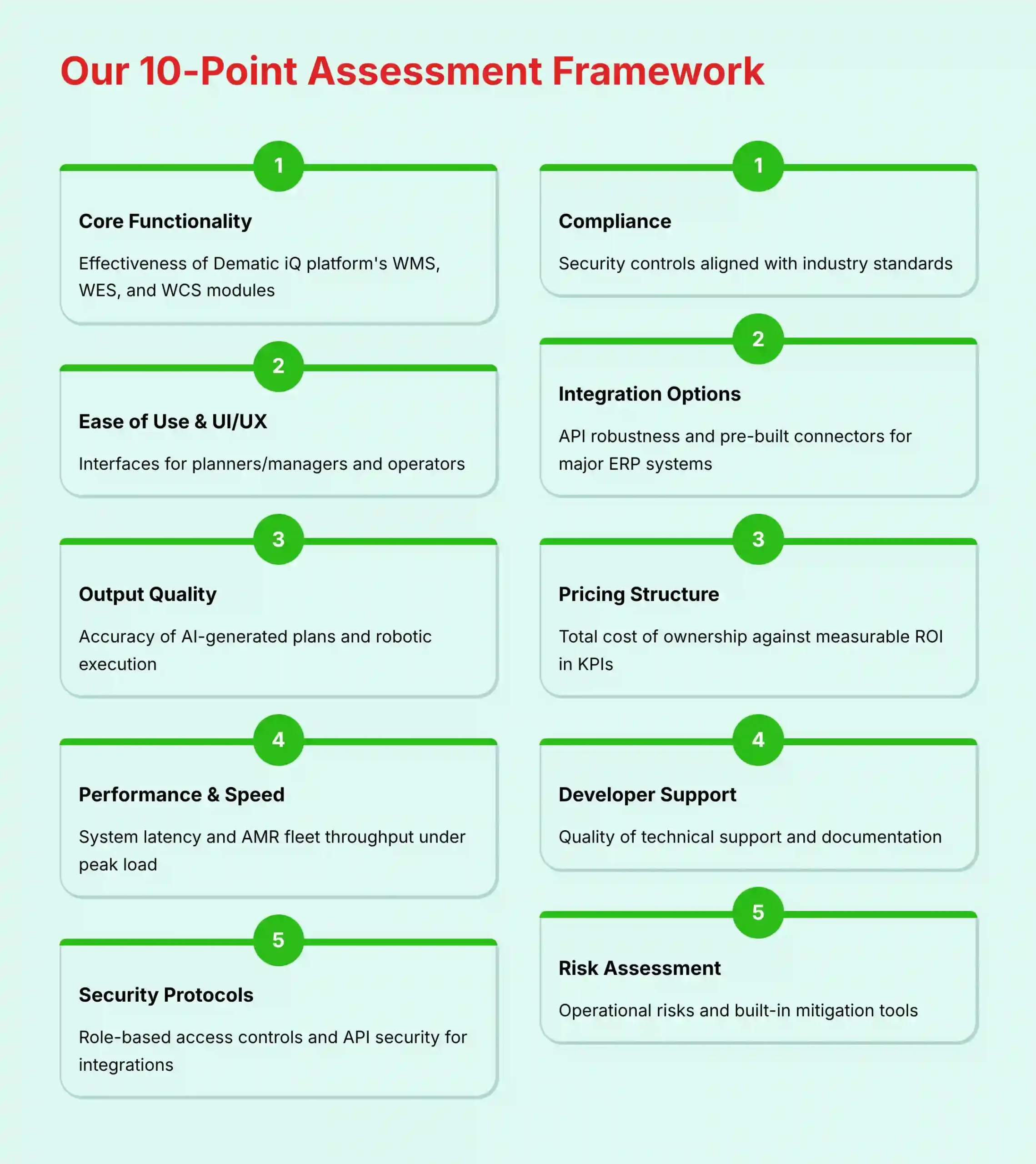
After analyzing over a hundred tools on the market in AI for Operations & Supply Chain and testing Dematic's solutions across numerous real-world implementation projects in 2025, our team at Best Ops Chain AI now provides a comprehensive 10-point technical assessment framework that has been recognized by leading professionals in AI for Operations & Supply Chain and cited in major publications.
- Core Functionality & Feature Set: We assess the effectiveness of the Dematic iQ platform's WMS, WES, and WCS modules, focusing on the AI-powered slotting, robotics orchestration, and optimization engines.
- Ease of Use & User Interface (UI/UX): We evaluate the distinct interfaces for both planners/managers (dashboards, analytics) and operators (scanner screens, HMI).
- Output Quality & Control: We analyze the accuracy of AI-generated plans (slotting, picking paths) and the precision of robotic execution.
- Performance & Speed: We test system latency, AMR fleet throughput under peak load, and the speed of optimization calculations.
- Security Protocols & Data Protection: We thoroughly assess role-based access controls, API security for integrations, and network segmentation best practices for OT environments.
- Compliance & Regulatory Adherence: We verify security controls and practices aligned with industry standards, recognizing that customers must perform their own security due diligence to validate specific certifications required for their environments.
- Input Flexibility & Integration Options: We test the robustness of the API and pre-built connectors for major ERP systems like SAP and Oracle.
- Pricing Structure & Value for Money: We analyze the total cost of ownership, including hardware, software licensing, implementation, and support, against the measurable ROI in KPIs.
- Developer Support & Documentation: We investigate the quality of Dematic's technical support, the clarity of their documentation, and the availability of expert implementation partners.
- Risk Assessment & Mitigation: We identify operational risks (e.g., network failure, gridlock) and evaluate the effectiveness of built-in mitigation tools like the digital twin and predictive condition monitoring.
For those evaluating multiple solutions, our comprehensive Dematic Overview and Features analysis provides detailed insights into how Dematic compares across these criteria.
Part 1: Foundational Setup & System Configuration (The “What”)
This first part covers the foundational steps to prepare your system for advanced AI workflows. Think of this as creating an accurate digital blueprint of your physical warehouse. If this blueprint is flawed, the entire operation built upon it will be unstable.
- Learning Objectives:
- Understand the architecture of the Dematic iQ ecosystem (WMS, WES, WCS)
- Successfully perform the initial system setup, including facility mapping and data ingestion
- Establish a secure and compliant user access structure
- Time Estimate: 2-3 hours
Tutorial: Navigating the Dematic iQ Dashboard
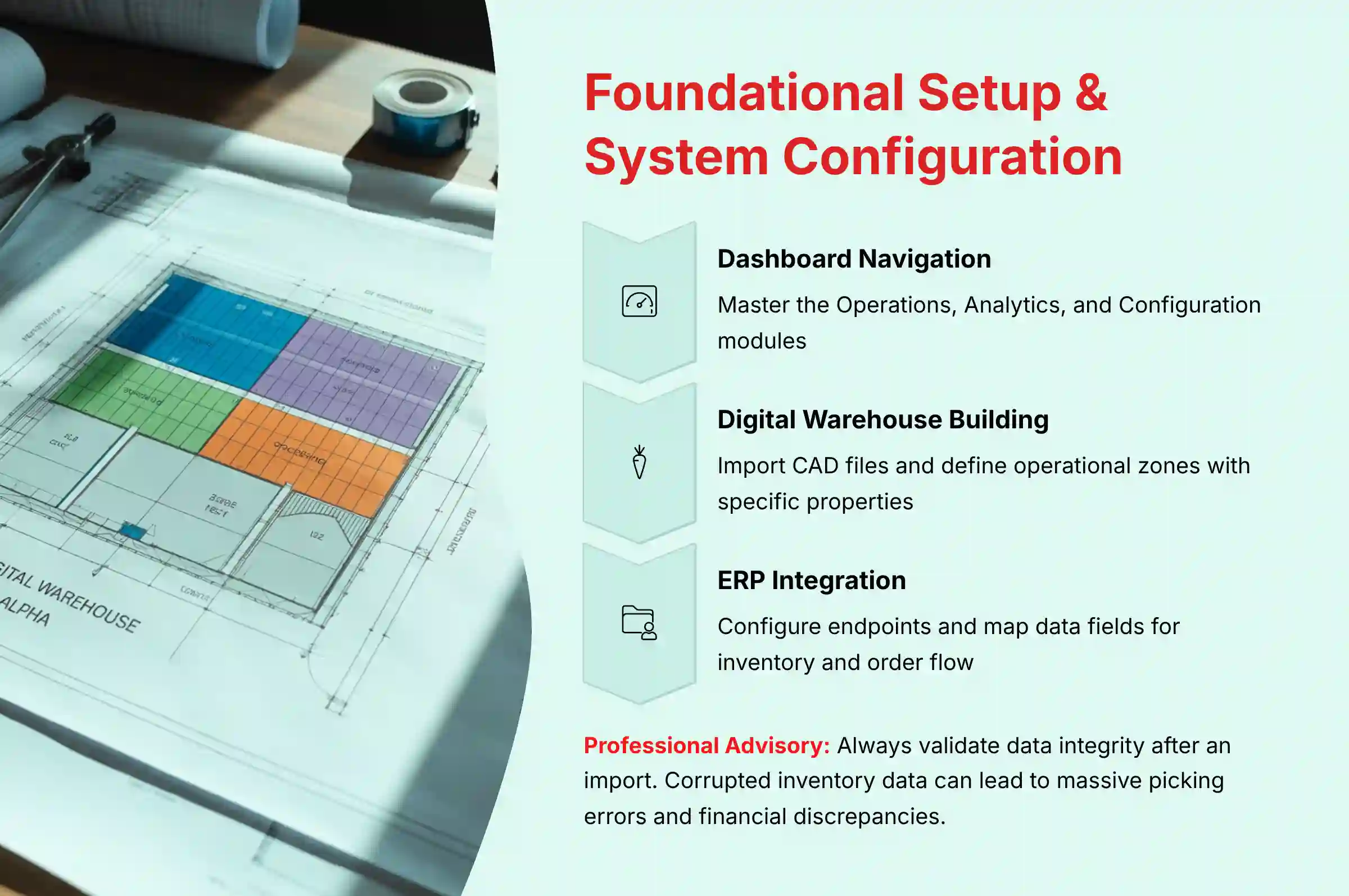
Your first step is getting comfortable with the main control panel. The dashboard provides a high-level view of your entire operation in one place.

- Log in securely and take a moment to view the main interface.
- Identify the key modules for daily work: Operations, Analytics, and Configuration. These are your primary tools for managing, measuring, and modifying your warehouse workflows.
Use Case: Building Your Digital Warehouse for a Retail DC
Now, you will translate your physical facility into a digital model. For a retail distribution center, this means defining specific zones for different types of products.
- Import your facility's CAD file and define operational zones. These include areas for bulk storage, forward picking for fast-moving items, and pack-out stations.
- Configure location properties for each zone. Set physical dimensions, weight capacities, and any special requirements like temperature control for certain products.
Accurate zone definition is mandatory for the AI slotting engine to work correctly, ensuring it places fast-movers and slow-movers in the right spots.
Tutorial: Integrating with Your ERP for Master Data Ingestion
Your warehouse system needs to speak the same language as your core business system, the ERP. This process ensures inventory and order data flow correctly between them.
- Configure the integration endpoint for your ERP system, such as SAP S/4HANA or Oracle.
- Map the data fields from your ERP to the fields in Dematic iQ. This includes SKU numbers, quantities, and units of measure.
- Perform a test data load in the sandbox environment to confirm the mapping is correct.
(Professional Advisory) Always validate data integrity after an import. Corrupted inventory data can lead to massive picking errors and financial discrepancies. A single incorrect Unit of Measure can cause operational chaos.
You have now built an accurate, validated digital blueprint of your operation—the essential foundation. But a blueprint is just a plan. The real question is: How do you use it to unleash the AI-driven workflows that generate speed, accuracy, and ROI? That brings us to the core of the Dematic iQ engine.
Part 2: Core AI-Powered Workflows (The “How”)
With a solid foundation, you can now implement the AI features that drive major efficiency gains. This section focuses on putting the AI to work to improve speed and accuracy in your core fulfillment processes.
- Learning Objectives:
- Configure and run the AI-powered slotting optimizer
- Deploy a basic but complete Goods-to-Person (GTP) AMR workflow
- Set up dashboards to monitor the performance of these new workflows
- Time Estimate: 4-6 hours
Tutorial: Implementing AI-Powered Slotting Optimization
AI-powered slotting acts like a master librarian, constantly reorganizing the warehouse so the most frequently picked items are in the easiest-to-reach locations. This dramatically reduces the time pickers spend traveling.
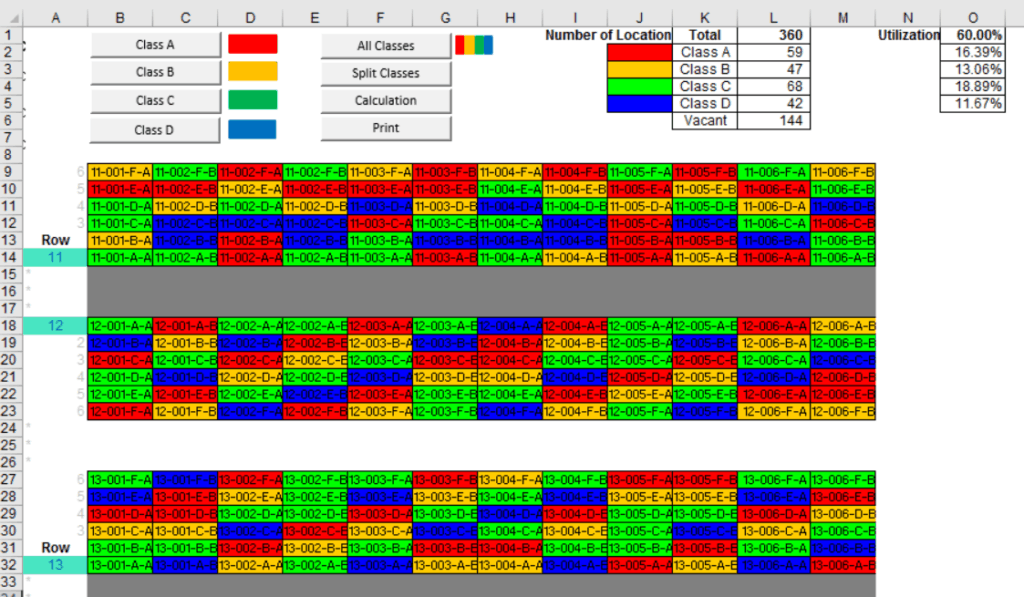
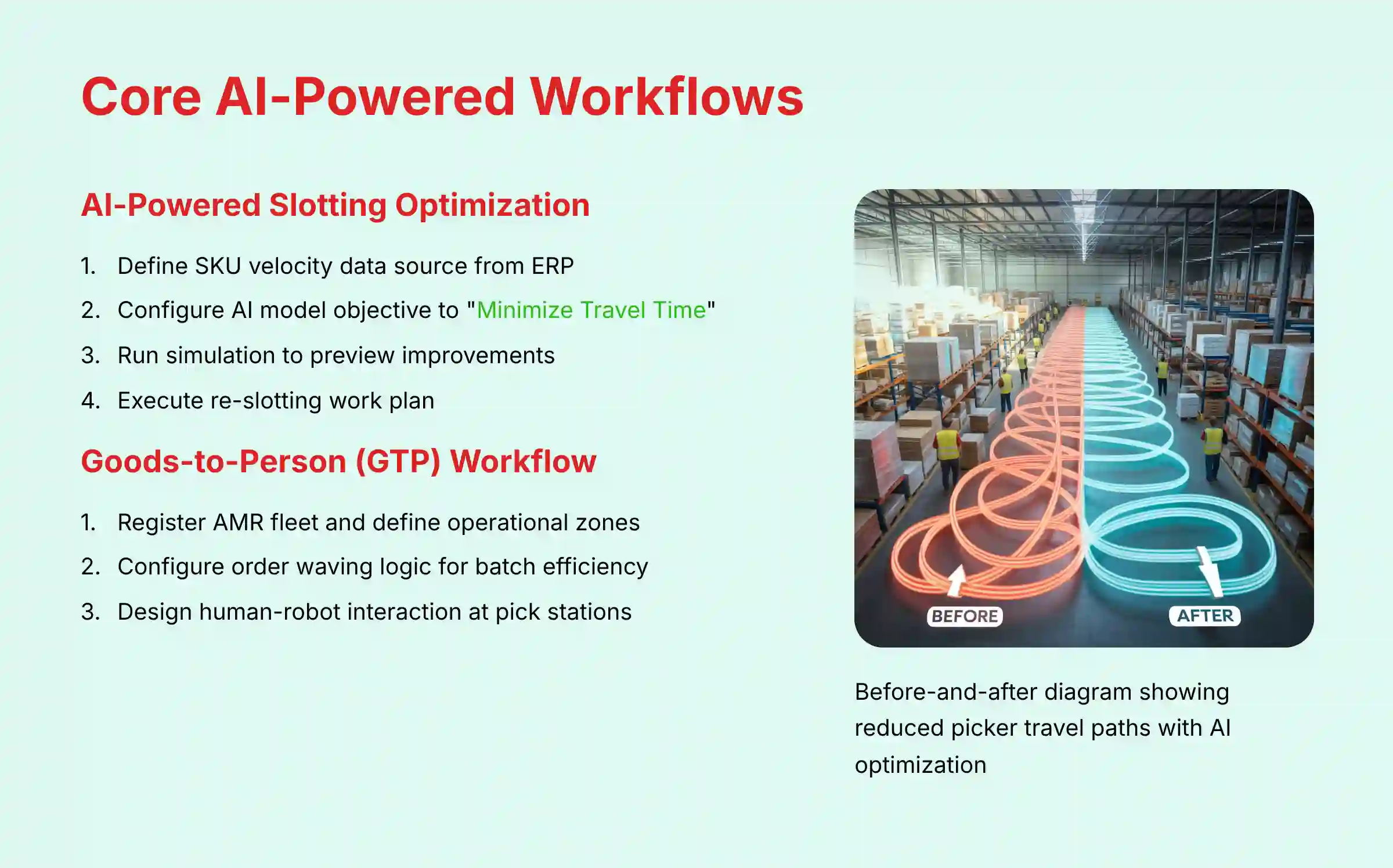
- Define the data source for SKU velocity. This is typically historical order data pulled from your ERP.
- Configure the AI model's objective. For most operations, the goal is to “Minimize Travel Time”.
- Run a simulation to preview the expected improvements. The system will often show you a “spaghetti diagram” visually demonstrating the reduction in picker travel paths.
- Execute the re-slotting work plan. This automatically generates tasks for operators to move inventory to its new, optimized locations.
For best results, enable “Dynamic Slotting” to allow the AI to make continuous small adjustments based on seasonality.
Use Case: Deploying a GTP Workflow for E-commerce Fulfillment
The goal here is to dramatically increase the number of lines picked per hour for high-volume e-commerce orders. Goods-to-Person automation brings the inventory directly to the picker, eliminating travel time.
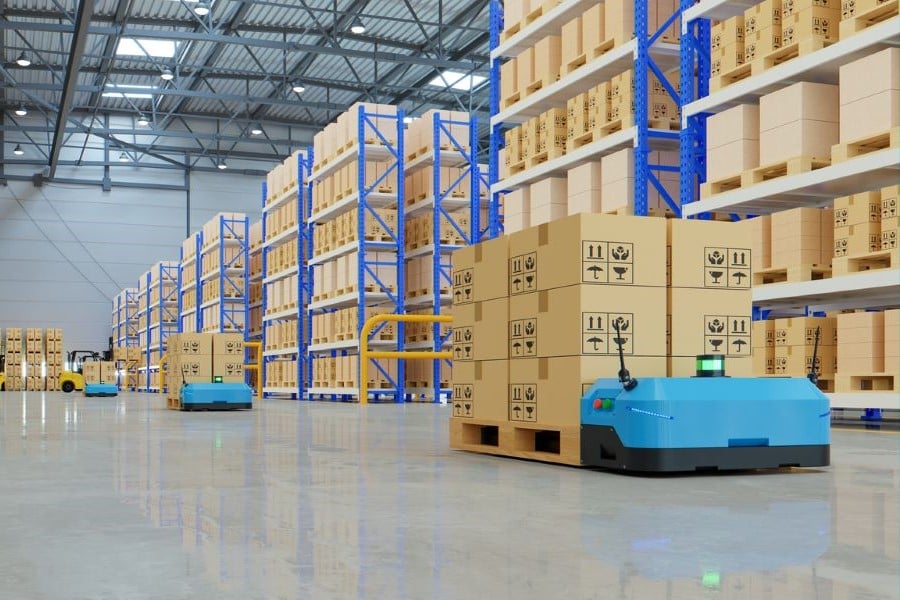
- Register your AMR fleet and define their operational zones within the warehouse.
- Configure the order waving logic in Dematic iQ. This allows you to batch single-line and multi-line orders separately for maximum efficiency.
- Design the interaction between the human and the robot at the pick station. This includes scanner confirmations and clear error-handling procedures.
In my experience, the biggest adoption challenge is often perfecting the human-robot handoff. I recommend starting the rollout in a single, contained zone to get this process right before scaling it across the entire facility.
Use Case: AI-Assisted Receiving and Putaway for Reduced Dock-to-Stock Time
The efficiency of your outbound operations depends heavily on the speed and accuracy of your inbound processes. An AI-powered putaway strategy ensures that incoming inventory is stored in the optimal location from the moment it arrives.
- Configure System-Directed Putaway: Upon scanning a received pallet, the Dematic iQ WES instantly determines the best storage location.
- Define Putaway Logic: The AI's decision is based on multiple factors:
- Current slotting optimization rules
- Available capacity
- Proximity to other items from the same supplier or product family to enable efficient replenishment
- Task Orchestration: The system automatically dispatches an operator or AMR to transport the pallet to the assigned location, confirming the putaway with a final scan.
By automating this decision-making process, warehouses can significantly reduce their Dock-to-Stock Time, a key KPI that measures the time from receiving goods to when they are available for sale. This not only improves inventory availability but also reduces congestion in the receiving area.
For organizations considering their options, our in-depth Dematic Review provides detailed analysis of implementation considerations and potential challenges.
Part 3: Advanced Integrations & Orchestration (The “Scale”)
This section is for scaling your automation into a fully orchestrated ecosystem. Here, the Warehouse Execution System (WES) acts as an air traffic controller, managing different types of automation to work together as a single, cohesive unit.
- Learning Objectives:
- Understand and configure the multi-agent orchestration engine
- Integrate third-party systems like AI-powered computer vision for quality control
- Begin tuning advanced AI engine parameters for global optimization
- Time Estimate: 6-8 hours
Tutorial: Multi-Agent Robotics Orchestration
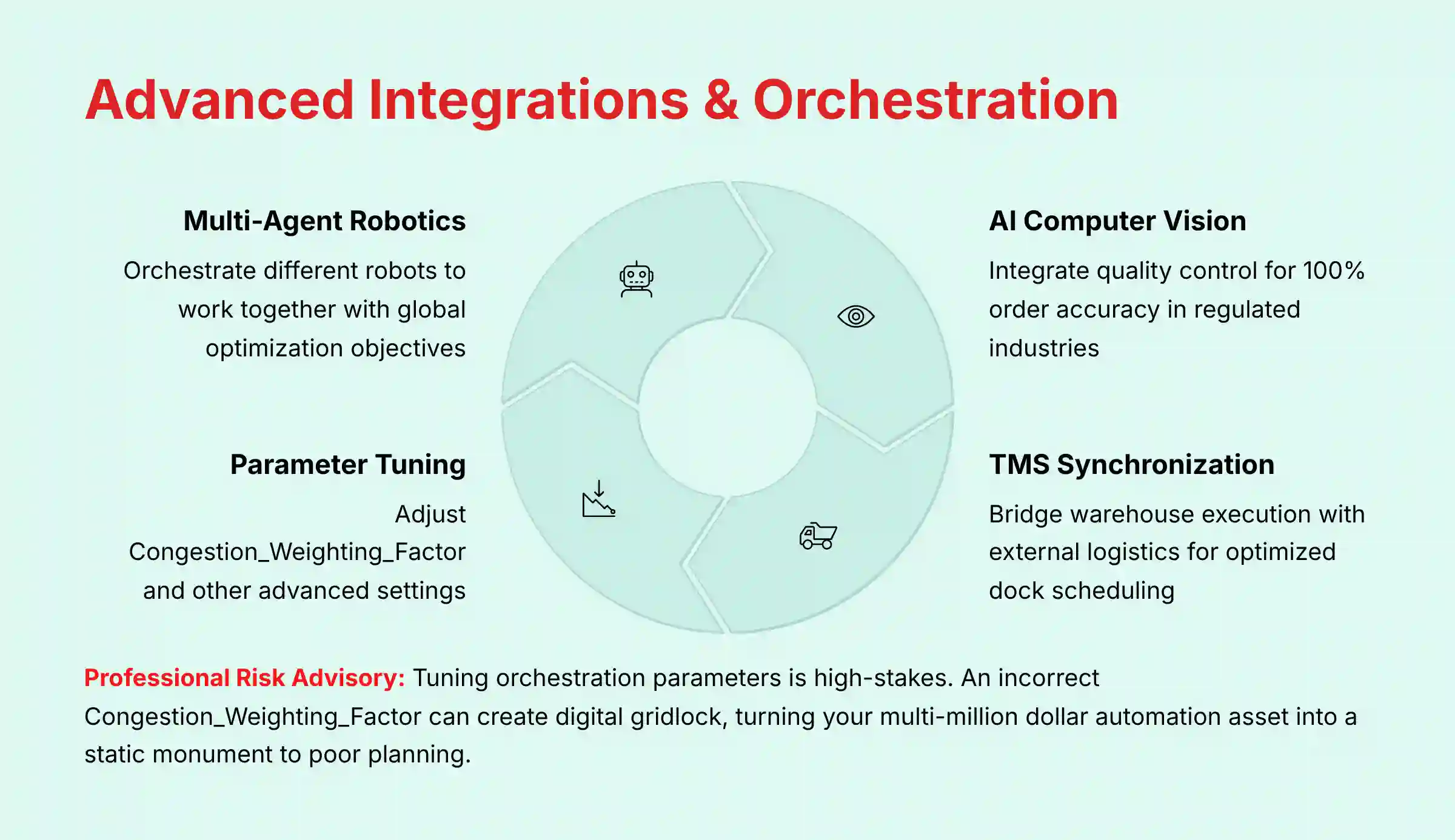
Here, you elevate the WES from a traffic cop to the commander of a combined-arms operation. It's not enough to tell AMRs (ground transport) and robotic arms (artillery) where to go; the system must orchestrate their movements in real-time to achieve a global objective.

This is the critical shift from simple deconfliction to true strategic orchestration, ensuring all assets work in concert to press the advantage during peak hours.
- Define the global optimization objective, such as
Throughput_Maximizationduring peak season orLead_Time_Minimizationfor rush orders. - Tune advanced parameters like the
Congestion_Weighting_Factorto manage robot traffic in high-density areas like aisle intersections. - Create rules for heterogeneous fleets. For example, an AMR can be programmed to deliver a tote to a stationary robotic arm, which then performs the individual item pick.
(Professional Risk Advisory) Tuning orchestration parameters is a high-stakes decision. An incorrect Congestion_Weighting_Factor, deployed live, doesn't just slow things down—it creates digital gridlock, turning your multi-million dollar automation asset into a static monument to poor planning.
It is a non-negotiable professional standard that all parameter changes must be stress-tested in the digital twin using a peak-load simulation before any live deployment.
Use Case: Integrating AI Computer Vision for Automated Quality Control in Pharma
In the pharmaceutical industry, 100% order accuracy is a matter of safety and regulatory compliance. This use case automates the final quality check, ensuring end-to-end lot traceability and adherence to stringent regulations.
- Configure the API endpoint for your external vision system within Dematic iQ.
- Modify the conveyor workflow to trigger an API call to the vision system whenever a tote arrives at the QC station.
- Create the conditional logic. If the vision system API returns “PASS” (correct drug, count, and lot number), the tote proceeds to packing. If it returns “FAIL,” the tote is automatically diverted to a quarantine lane and an alert is generated for a human operator to review.
(Compliance & Security Note) For GxP-regulated environments, this entire process must be validated. The Dematic iQ software must support compliance with FDA 21 CFR Part 11, which includes features like secure electronic signatures, comprehensive audit trails for every action, and role-based access to prevent unauthorized changes.
All API communication must use secure, encrypted protocols to protect sensitive product data. Consult with your compliance team to ensure the specific security controls meet your regulatory requirements.
Use Case: Synchronizing with a Transportation Management System (TMS) for Optimized Dock Scheduling
A highly efficient warehouse becomes a bottleneck if outbound trucks are not managed effectively. This use case bridges the gap between in-warehouse execution and external logistics by creating a seamless data flow between the Dematic WES and your Transportation Management System (TMS).
- Establish API Connectivity: Configure the Dematic iQ middleware to communicate with your TMS, enabling the exchange of critical data like expected arrival times, carrier information, and trailer details.
- Automate Dock Door Assignment: Create rules within the WES to automatically assign outbound orders to specific dock doors based on carrier and destination. This information is then pushed in real-time to the TMS and to yard management personnel.
- Synchronize Load Sequencing: The WES can sequence the picking of pallets or totes to match the required trailer loading order (e.g., Last-In, First-Out). This synchronization minimizes staging congestion at the dock and dramatically reduces truck loading times and carrier demurrage charges.
Professional Validation: A fully integrated WES-TMS workflow is critical for achieving a high On-Time In-Full (OTIF) performance metric, as it ensures that order fulfillment is perfectly timed with carrier availability.
Organizations exploring alternatives should also review our comprehensive Dematic Top Alternatives and Competitors analysis to understand the competitive landscape.
Part 4: Professional Optimization & Troubleshooting (The “Mastery”)
The simple truth is that system mastery isn't achieved at go-live; it's earned in the weeks and months that follow. It's about shifting from a “set it and forget it” mindset to one of continuous, evidence-based optimization.
This is where you transform your operation from merely automated to truly intelligent and resilient. This final section provides the professional tradecraft to maintain and enhance performance, using data to solve problems before they occur and to prove the value of your investment.
- Learning Objectives:
- Apply a data-driven A/B testing methodology to prove ROI and optimize performance
- Diagnose and resolve common, complex integration and network issues
- Utilize the predictive maintenance features to maximize system uptime
- Time Estimate: Ongoing
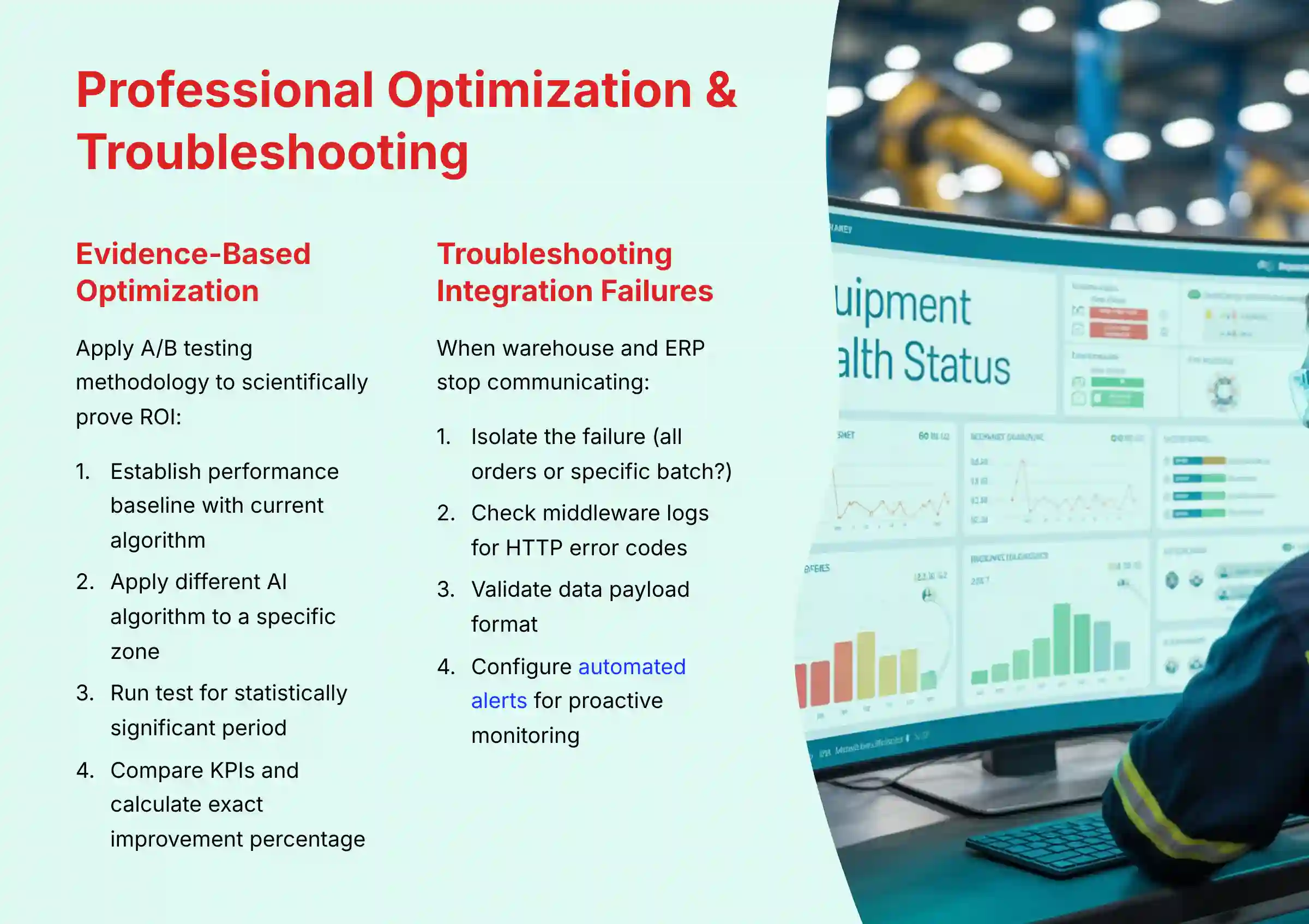
Tutorial: Evidence-Based Optimization with A/B Testing
This process provides the hard data needed to justify your investment and prove the value of AI to stakeholders. You will scientifically test one optimization strategy against another.
- Establish a performance baseline for a specific picking zone using the current WES pathing algorithm (e.g., “S-Shape”).
- Apply a different AI algorithm (e.g., “Clustering”) to that zone only in a controlled test.
- Run this test for a statistically significant period, such as two weeks, to gather enough data.
- Use the Dematic iQ analytics module to compare KPIs like travel time per pick and lines per hour. This allows you to quantify the exact percentage of improvement and calculate the ROI.
Tutorial: Troubleshooting ERP Data Synchronization Failures
When the warehouse system and the ERP stop talking, orders stop flowing. The first step is to quickly diagnose the root cause.
- Isolate the failure. Is it affecting all orders or only a specific batch?
- Check the integration middleware logs for specific HTTP error codes like
401 Unauthorizedor503 Service Unavailable. This is your primary diagnostic tool. - Validate the data payload of a failing message against the required format. A small formatting error can cause the entire message to be rejected.
I recommend configuring automated alerts in your monitoring system to flag these error codes proactively, so you can fix issues before they impact operations.
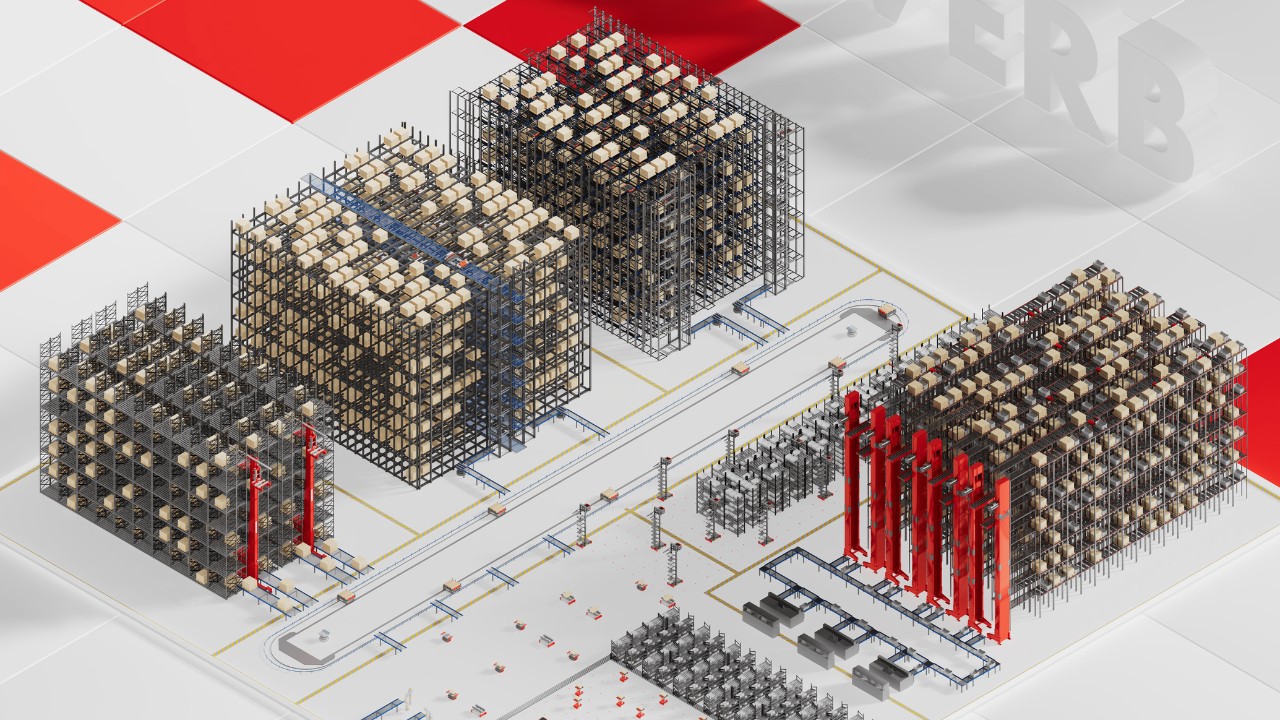
Use Case: Proactive Maintenance with the Condition Monitoring System
Unplanned downtime during peak hours can be disastrous. This system helps you prevent equipment failures before they happen.
- Navigate to the Condition Monitoring dashboard to view the health status of all material handling equipment.
- Review predictive alerts. An example might be: “Motor A7 on Conveyor B3 showing elevated vibration signature. Predicted failure in 72 hours.”
- The system can then automatically generate a work order in your maintenance system. A technician can perform the repair during a scheduled quiet period, preventing a catastrophic failure during peak operations.
Frequently Asked Questions About Dematic AI Solutions
How does Dematic's AI differ from a traditional Warehouse Management System (WMS)?
A traditional WMS is a system of record that manages inventory and directs tasks based on fixed rules. Dematic iQ acts as a real-time optimization brain. It uses AI and machine learning to dynamically make decisions, like re-slotting inventory based on changing demand or orchestrating robot fleets to avoid congestion.
What is the typical ROI for a Dematic automation project?
ROI for Dematic automation projects varies significantly based on the specific application and customer environment. Case studies show a wide range of benefits. For instance, Dematic reported that retailer H&M saw a significant productivity increase with a pouch sorter system, and food distributor Havi Logistics improved efficiency and ergonomics.
The actual ROI must be calculated on a case-by-case basis using a detailed business case analysis.
Professional Guidance: For an accurate assessment, we recommend working with financial analysts and operations experts to develop a comprehensive ROI model. This should include not only direct labor savings but also improvements in Perfect Order Percentage, reduced inventory carrying costs through higher accuracy, and the ability to scale operations without proportional labor increases.
The A/B testing methodology outlined in Part 4 provides a framework for gathering the data needed for this analysis.
What are the biggest security risks with an integrated warehouse system and how are they mitigated?
The primary risks are unauthorized data access and network-based disruptions to physical operations. Dematic mitigates these with a defense-in-depth strategy, including Role-Based Access Control (RBAC), network segmentation to isolate robots from the main IT network, and encrypted communication for all data transfers.
Security Implementation Note: While Dematic provides robust security features, it is essential for your organization's IT security team to thoroughly assess how these capabilities align with your specific security requirements and compliance needs. Security implementations should be verified against your organization's standards and regulatory obligations.
How does Dematic handle integration with existing ERP systems like SAP or Oracle?
Dematic provides a flexible middleware layer with pre-built connectors for major ERPs and a well-documented API. The key to success is establishing clear data governance. The ERP remains the master for financial data, while Dematic iQ is the master for real-time inventory location and operational status.
Can Dematic's software orchestrate robots from different manufacturers?
Dematic iQ's Warehouse Execution System (WES) is designed to orchestrate Dematic's extensive portfolio of proprietary automation systems and AMRs. Dematic supports industry standards for interoperability, which can facilitate integration with some third-party systems, but this typically requires a specific integration effort.
It should not be assumed to be a universal, plug-and-play orchestrator for robots from any manufacturer.
Integration Consideration: For environments with multiple vendors' robotics, consult with a Dematic integration specialist to assess compatibility with third-party systems. In many cases, successful multi-vendor orchestration requires a dedicated integration project with custom development work.
What is a “Digital Twin” and why is it important for warehouse automation?
A Digital Twin is a complete virtual model of your entire warehouse. Its primary purpose is risk mitigation. Before deploying a new software update or operational strategy, you can test it in the digital twin to predict its impact and identify potential bottlenecks without disrupting your live operations.
What is the most common cause of implementation failure?
The most common cause is a failure in change management. If employees are not trained effectively and shown how the technology makes their jobs safer and more efficient, they may resist the change. Successful projects always pair technical implementation with a strong human-centered communication plan.
How does the system's AI adapt to sudden demand spikes, like Black Friday?
The system adapts in several ways. The AI-powered slotting will have already moved promotional items to the most accessible locations. The WES waving algorithm can be switched to a “peak profile” to maximize immediate throughput. The multi-agent orchestration engine balances the workload across the robotics fleet in real-time to prevent bottlenecks.
For additional context and comparisons, explore our detailed Dematic FAQs resource which addresses more technical implementation questions.

Final Verdict: Transforming Your Warehouse with Dematic AI
The simple truth is that mastering Dematic's AI solutions is about more than learning software. It is about fundamentally changing your operational philosophy from being reactive to proactive. By following a structured approach—from building a solid digital foundation to leveraging advanced AI for orchestration and optimization—you can achieve verifiable improvements in speed, accuracy, and efficiency.
The tools and use cases outlined here provide a clear path. However, success depends on a commitment to methodical implementation, rigorous testing in a simulated environment, and a focus on continuous, data-driven improvement.
When executed correctly, you can transform your warehouse into a true strategic asset that drives business growth and resilience. The tools are here. The path is clear. The only remaining question is whether you will press the advantage or be outpaced by those who do.
For more guidance on this topic, please refer to our full guide on Dematic Tutorials and Usecase.
Technology Evolution Notice: The information about Dematic Tutorials and Usecase and AI for Operations & Supply Chain tools presented in this article reflects our thorough analysis as of 2025. Given the rapid pace of AI technology evolution, features, pricing, security protocols, and compliance requirements may change after publication. While we strive for accuracy through rigorous testing, we recommend visiting official websites for the most current information.
Professional Consultation Recommendation: For AI for Operations & Supply Chain applications with significant professional, financial, or compliance implications, we recommend consulting with qualified professionals who can assess your specific requirements and risk tolerance. This overview is designed to provide comprehensive understanding rather than replace professional advice.
Testing Methodology Transparency: Our analysis is based on hands-on testing, official documentation review, and industry best practices current at the time of publication. Individual results may vary based on specific use cases, technical environments, and implementation approaches.

Leave a Reply