Is AutoStore the Right ASRS for Your Warehouse?
This 2-Minute Quiz Reveals Your Perfect Fit!
Key Takeaways
- AutoStore System Architecture: A 3D grid-based automation system using intelligent robots, standardized bins, and goods-to-person workflow that can increase storage density by up to 400%
- Investment Range: Total system costs typically range from $1-3M for small implementations to $25M+ for large-scale operations, with 2-5 year payback periods
- Performance Benefits: Labor efficiency increases of 60-80%, order accuracy of 99.9%+, and pick rates of 350-650 picks per hour per operator
- Implementation Timeline: Full deployment typically takes 9-18 months from contract signing to go-live, with critical success factors including executive sponsorship and comprehensive change management
- Best Fit Applications: E-commerce, 3PL, pharmaceuticals, and micro-fulfillment operations with 10,000+ SKUs handling small to medium-sized products
What is AutoStore and how does it work in modern warehouse operations?
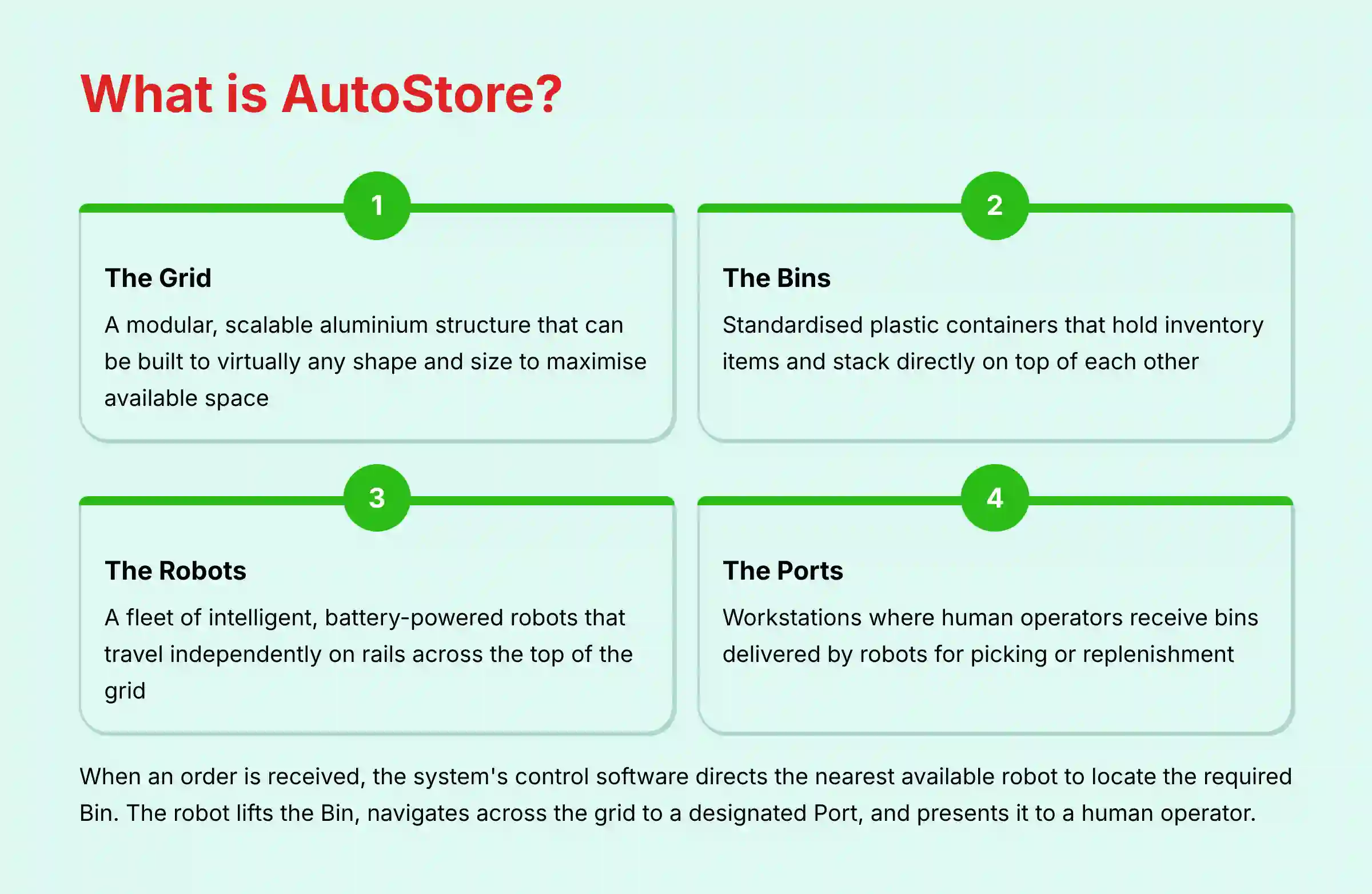
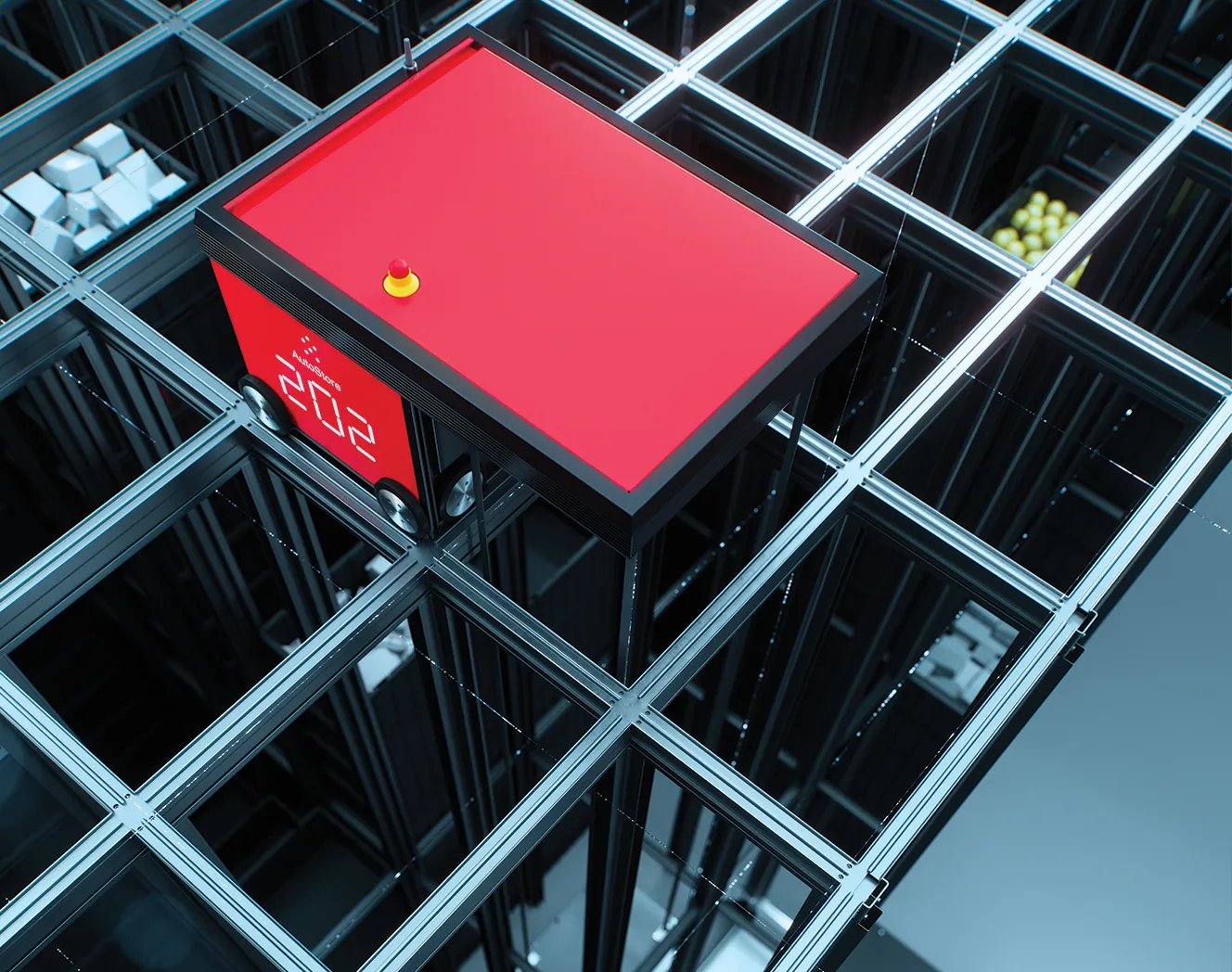
AutoStore is an automated storage and retrieval system (ASRS) that uses a “goods-to-person” model to dramatically increase warehouse storage density and order fulfillment efficiency. At its core, the system consists of a three-dimensional aluminum grid filled with stacked plastic containers, called Bins.

The key components and workflow of an AutoStore system include:
- The Grid: A modular, scalable aluminum structure that can be built to virtually any shape and size to maximize available space
- The Bins: Standardized plastic containers that hold inventory items and stack directly on top of each other
- The Robots: A fleet of intelligent, battery-powered robots that travel independently on rails across the top of the grid
- The Ports: Workstations where human operators receive bins delivered by robots for picking or replenishment
- The Controller: The central software that orchestrates all robot movements and bin retrievals
When an order is received, the system's control software directs the nearest available robot to locate the required Bin. The robot lifts the Bin, navigates across the grid to a designated Port, and presents it to a human operator. If the target Bin is buried, collaborating robots will first rearrange the overlying Bins, placing them in nearby empty spaces on the grid.
This process of continuous self-organization means that frequently requested items naturally migrate to the top of the grid over time, optimizing retrieval speed. The cube-based storage approach can increase storage capacity by up to 400% compared to traditional shelving by eliminating aisles and utilizing the entire cubic space of a building, making AutoStore particularly valuable in operations where space is at a premium or real estate costs are high.
Is AutoStore's control software considered “AI” for warehouse management?
AutoStore's native control software is more accurately described as a highly advanced automation and optimization system rather than true Artificial Intelligence or machine learning. The system's core element, the AutoStore Controller, uses sophisticated proprietary algorithms to manage robot traffic, optimize Bin retrieval paths, and handle the constant self-organization of the grid.
While highly intelligent, the Controller primarily operates on rule-based logic with these key capabilities:
- Robot traffic management: Preventing collisions while maximizing movement efficiency
- Bin prioritization: Determining which robot should retrieve which bin based on proximity and urgency
- Task sequencing: Organizing multiple retrieval requests for optimal throughput
- Dynamic grid management: Continuously reorganizing the grid based on item velocity
The true AI opportunity with AutoStore comes from leveraging the vast operational data it generates. Operations teams can export this data—including SKU velocity, pick times, inventory levels, and robot performance metrics—to external AI and machine learning platforms. These platforms can then:
- Perform predictive analytics for demand forecasting
- Recommend strategic re-slotting of inventory for seasonal peaks
- Enable predictive maintenance alerts for the robots
- Identify patterns in order profiles to optimize bin organization
- Create digital twins for simulation and scenario planning
This integration with external AI tools transforms the warehouse from a reactive to a proactive operation. While AutoStore itself is primarily an execution system, its rich data outputs make it an invaluable component in the broader AI-powered supply chain ecosystem, particularly when connected to advanced analytics platforms and machine learning models. For organizations seeking to maximize the AI potential of their warehouse operations, our comprehensive Best 10 AI For Warehouse Robotics & Automation Solutions guide provides detailed insights into complementary AI technologies that enhance AutoStore implementations.
What are the primary, measurable benefits of AutoStore for warehouse operations?
AutoStore delivers quantifiable improvements across multiple warehouse performance dimensions, providing both immediate operational benefits and long-term strategic advantages for supply chain operations.
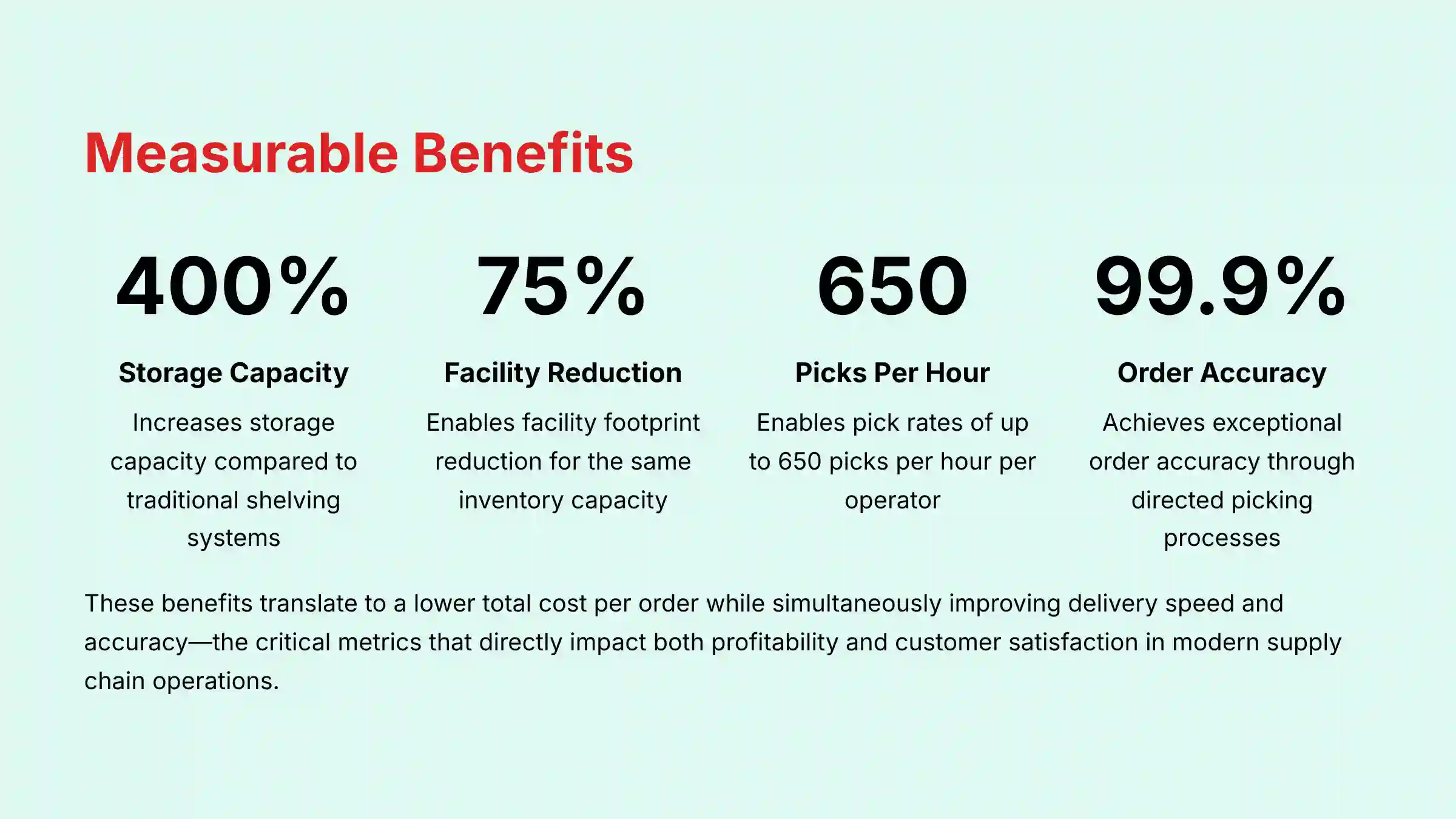
Storage Density Optimization:- Increases storage capacity by 300-400% compared to traditional shelving systems
- Utilizes vertical space up to the ceiling height, maximizing cubic storage efficiency
- Enables facility footprint reduction of up to 75% for the same inventory capacity
- Measurable KPI: Storage locations per square foot (can reach 20+ bins per square meter)
- Eliminates unproductive walking time that typically consumes 50-70% of picker hours
- Enables pick rates of 350-650 picks per hour per operator (vs. 100-150 for traditional methods)
- Reduces labor requirements by 60-80% for the same throughput levels
- Measurable KPI: Units picked per labor hour (UPH)
- Achieves 99.9%+ order accuracy through directed picking processes
- Reduces error-related costs including returns processing, shipping expenses, and customer service
- Eliminates inventory shrinkage related to misplacement within the warehouse
- Measurable KPI: Perfect Order Rate and Returns Due to Error percentage
- Lowers energy costs by 75-90% compared to traditional AS/RS systems
- Reduces labor costs per order by 50-70% through productivity improvements
- Decreases facility costs through smaller footprint requirements
- Measurable KPI: Cost per order (CPO)
- Enables rapid scaling without proportional increases in labor or space
- Provides resilience against labor market fluctuations and wage inflation
- Supports omnichannel fulfillment through flexible configuration
- Measurable KPI: Year-over-year growth capacity without additional facility investment
The combination of these benefits translates to a lower total cost per order while simultaneously improving delivery speed and accuracy—the critical metrics that directly impact both profitability and customer satisfaction in modern supply chain operations. For deeper insights into AutoStore's performance advantages, explore our detailed AutoStore Review which includes comprehensive benchmarking data.
What industries and products are best suited for an AutoStore system?
AutoStore's unique architecture makes it exceptionally well-suited for specific operational profiles and product types, with varying benefits across industries. The system performs optimally with operations handling numerous SKUs of small to medium-sized products that fit within its standardized bins (maximum dimensions approximately 650 × 450 × 330 mm).
 E-commerce & Retail:
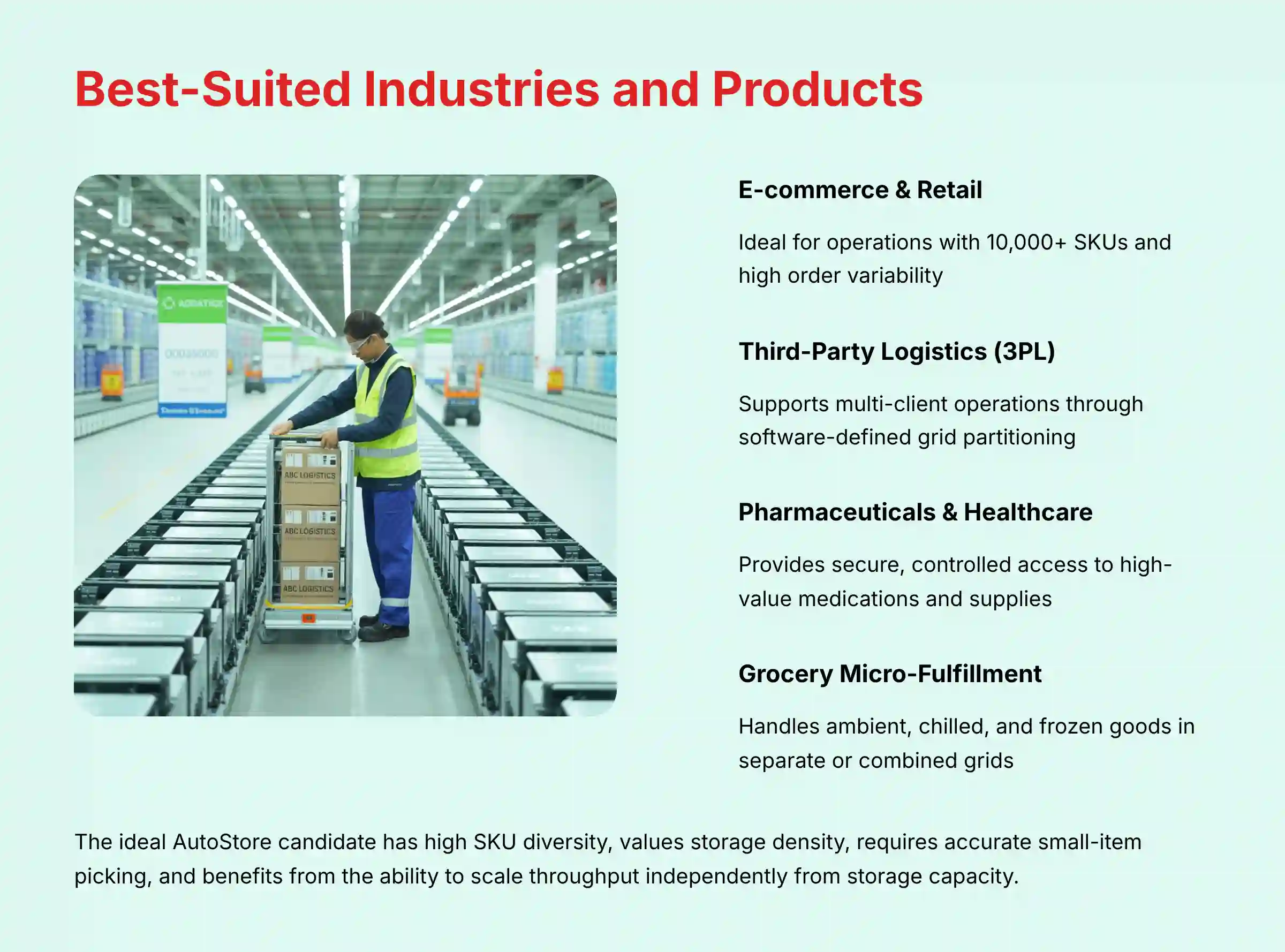
- Ideal for operations with 10,000+ SKUs and high order variability
- Perfect for fulfilling multi-line orders with small to medium items (apparel, cosmetics, electronics)
- Enables single-piece picking for direct-to-consumer fulfillment
- Example benefit: Zara deployed AutoStore to enable same-day delivery from stores with minimal backroom footprint
- Supports multi-client operations through software-defined grid partitioning
- Accommodates seasonal fluctuations without fixed infrastructure changes
- Enables scalable growth by adding robots rather than expanding facilities
- Example benefit: GEODIS implemented AutoStore to handle multiple client inventories in a shared facility while maintaining complete inventory segregation
- Provides secure, controlled access to high-value medications and supplies
- Supports lot tracking and expiration date management
- Maintains inventory in a clean, contained environment
- Example benefit: McKesson uses AutoStore for pharmaceutical distribution with 99.99% accuracy and full lot traceability
- Handles ambient, chilled, and frozen goods in separate or combined grids
- Supports rapid fulfillment for online grocery orders (30-60 minute completion)
- Fits in urban locations or store backrooms where space is premium
- Example benefit: Kroger partnered with Ocado to deploy AutoStore technology in regional fulfillment centers, reducing order assembly time by 67%
- Manages thousands of small parts in ESD-safe environment
- Supports just-in-time line-side delivery for manufacturing operations
- Enables precise inventory control for high-value components
- Example benefit: A major electronics manufacturer reduced component retrieval time from 15 minutes to under 2 minutes while increasing inventory accuracy to 99.98%
- Operations handling primarily pallet-in/pallet-out movements
- Products exceeding bin dimensions (large furniture, appliances)
- Very low SKU count operations with high volume per SKU
- Extremely temperature-sensitive environments (deep freeze below -30°C)
The ideal AutoStore candidate has high SKU diversity, values storage density, requires accurate small-item picking, and benefits from the ability to scale throughput independently from storage capacity by simply adding robots. If you're evaluating whether AutoStore is right for your specific industry application, consider exploring the various AutoStore Top Alternatives and Competitors to ensure you're selecting the optimal solution for your operational requirements.
How does AutoStore compare to other ASRS solutions like Exotec or shuttle systems?
When evaluating AutoStore against other leading Automated Storage and Retrieval Systems (ASRS), several key architectural and performance differences emerge that impact suitability for specific warehouse requirements.
AutoStore vs. Shuttle Systems (Dematic, Knapp, etc.):| Factor | AutoStore | Shuttle Systems |
|---|---|---|
| Storage Density | Superior (up to 400% more efficient than traditional shelving) | Good, but requires dedicated aisles at each level |
| Throughput Capacity | Moderate to high (scales with robot count) | Very high (parallel operations at every level) |
| Scalability | Highly flexible (add robots without stopping operations) | More complex (requires structural modifications) |
| Height Utilization | Limited (typically 5-6 meters maximum) | Excellent (can reach building ceiling height) |
| Fault Tolerance | High (single robot failure has minimal impact) | Moderate (shuttle or lift failure can affect entire section) |
| Energy Efficiency | Very high (lightweight robots, gravity-assisted retrieval) | Moderate (continuous power to shuttles and lifts) |
| Factor | AutoStore | Exotec |
|---|---|---|
| Robot Movement | Horizontal only (across top of grid) | Both vertical and horizontal (climbing capability) |
| Maximum Height | 5-6 meters | Up to 12 meters |
| Storage Density | Maximum ground-level density | Good vertical utilization but less dense per floor area |
| Bin Size Flexibility | Fixed bin sizes | More flexible container options |
| Implementation Complexity | Moderate (simpler robot paths) | Higher (complex 3D movement patterns) |
| Throughput Characteristics | Consistent across the entire grid | Can prioritize fast-moving items in lower levels |
Choose AutoStore when:
- Maximum storage density in limited floor space is the primary concern
- Building has height restrictions or low ceilings
- You need the flexibility to scale incrementally with business growth
- Energy efficiency and operating costs are significant factors
Choose Shuttle Systems when:
- Extremely high throughput is the absolute priority
- The building has significant height available for vertical storage
- Order profiles include very high volumes of a smaller number of SKUs
- You have the capital and space for a more fixed infrastructure
Choose Exotec when:
- Utilizing building height is essential (above 6 meters)
- You need more flexibility in container sizes
- A hybrid approach balancing density and height utilization is desired
- Future-proofing for very tall buildings is part of the strategy
The optimal system depends on your specific combination of space constraints, throughput requirements, SKU profile, and budget considerations. Many operations are now implementing hybrid solutions with AutoStore handling medium and slow-moving SKUs while using complementary systems for high-velocity items.
How does AutoStore integrate with a Warehouse Management System (WMS) or ERP?
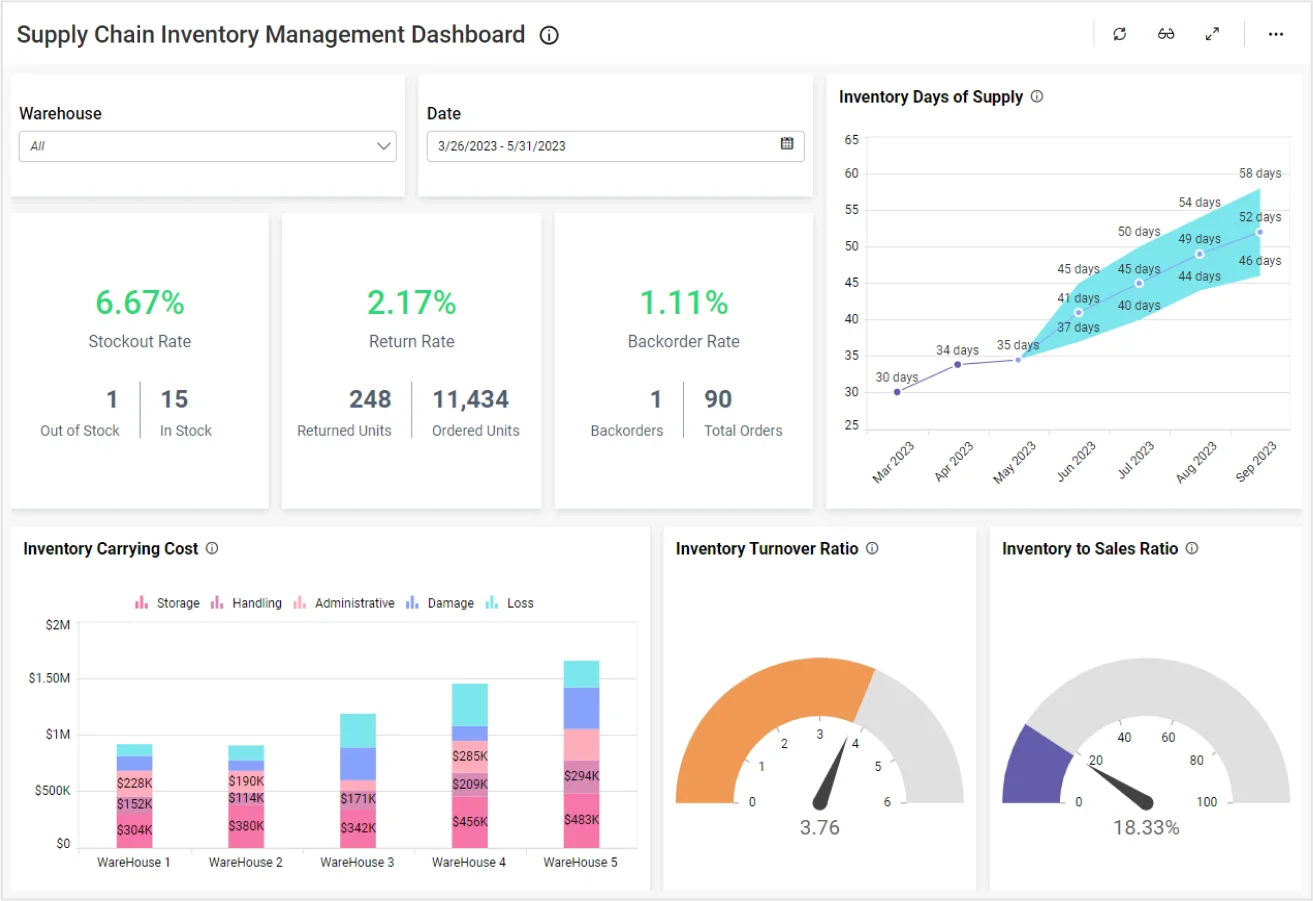
AutoStore functions as the execution engine of a warehouse—handling the physical movement of goods—while relying on a higher-level system to manage inventory and orchestrate order fulfillment. This integration architecture is fundamental to successful implementation and operation.
 Integration Architecture:
The typical integration stack consists of:
- ERP System (e.g., SAP, Oracle, Microsoft Dynamics) – Top level, manages enterprise resources
- WMS (e.g., Manhattan Associates, Blue Yonder) – Middle level, manages warehouse operations
- AutoStore Controller – Bottom level, executes physical movements
- The WMS remains the system of record for all inventory data, order management, and business logic
- Communication occurs via a standardized API (Application Programming Interface)
- When an order requires fulfillment, the WMS sends commands to AutoStore such as “retrieve Bin #12345 to Port 3”
- AutoStore handles all robot traffic management and grid operations to execute the command
- Upon completion of tasks, AutoStore sends confirmation back to the WMS
- All inventory adjustments, order statuses, and business decisions remain in the WMS
Integration is managed by certified AutoStore distribution partners (such as Körber, Swisslog, Dematic) who have developed middleware or integration adapters to connect AutoStore with various WMS platforms. The distribution partner—not the WMS vendor—is typically responsible for providing and supporting this critical integration layer.
Risk & Compliance Disclaimer: When investing in an AutoStore system, the software integration with your WMS/ERP is a critical point of failure. It is essential to conduct due diligence on the integration partner's specific experience and pre-built solutions for your exact WMS platform and version. The contract must clearly define which party is responsible for the adapter's performance, maintenance, and future upgrades. Misunderstanding ownership of this middleware can lead to significant project delays, budget overruns, and long-term support gaps.
Integration Considerations:- Data Synchronization: Ensure inventory counts remain consistent between systems
- Exception Handling: Define protocols for handling errors or discrepancies
- Performance Requirements: Establish SLAs for transaction response times
- Testing Procedures: Develop comprehensive test cases covering normal and edge-case scenarios
- Change Management: Define processes for handling software updates to any component
- Security & Compliance: Ensure data transmission meets security standards and audit requirements
The most successful implementations treat the AutoStore system as one component in an integrated technology stack, with careful planning of both the technical interfaces and the operational business processes that span multiple systems. For practical guidance on navigating integration challenges, refer to our comprehensive AutoStore Tutorials and Usecase resource.
What are the real-world throughput limitations of an AutoStore system?
AutoStore's throughput capabilities are governed by a complex interplay of system design factors, operational variables, and physical constraints. Understanding these limitations is critical for realistic capacity planning and performance expectations.
System Throughput Determinants: Robot-to-Port Ratio:- Industry standard: 8-12 robots per picking port for balanced throughput
- Fewer than 8 robots per port typically creates port starvation (ports waiting for bins)
- More than 12 robots per port often yields diminishing returns due to grid congestion
- Measurable impact: Each additional robot typically adds 40-60 bin presentations per hour to system capacity until congestion threshold is reached
- Grid shape impacts throughput (square grids are more efficient than long rectangles)
- Robot traffic patterns become more complex as robot count increases
- Traffic management algorithms become the limiting factor at high robot densities (>0.3 robots per square meter)
- Critical threshold: Beyond 25-30% robot coverage of the grid surface, traffic congestion creates diminishing returns
- Top-layer bins can be retrieved in 15-20 seconds
- Deep-buried bins (5+ layers down) may require 90-120 seconds
- SKU slotting strategy dramatically impacts average retrieval time
- Observed pattern: Systems with poor slotting can see up to 70% reduction in theoretical throughput
- CarouselPort: 650 picks/hour theoretical maximum, 450-550 practical maximum
- ConveyorPort: 500 picks/hour theoretical maximum, 350-450 practical maximum
- RelayPort: 450 picks/hour theoretical maximum, 300-400 practical maximum
- Human factor: Operator fatigue creates ~15% throughput degradation in shifts longer than 6 hours
Based on aggregated data from operational systems:
- Small systems (50-100 robots, 4-8 ports): 1,500-3,000 bins/hour
- Medium systems (100-250 robots, 8-15 ports): 3,000-6,000 bins/hour
- Large systems (250+ robots, 15+ ports): 6,000-12,000+ bins/hour
- Dynamic Slotting: Implementing ABC analysis to position fast-moving items at the top
- Workload Balancing: Distributing order volume evenly across ports
- Batch Optimization: Grouping similar orders to minimize unique bin retrievals
- Grid Zoning: Creating virtual zones within the grid for high-velocity SKUs
- Peak Planning: Designing the system for 120-130% of average throughput requirements
To establish realistic throughput expectations, certified AutoStore partners use simulation software with your actual order data to model performance under various scenarios. This simulation is the single most reliable predictor of real-world system performance and should be required before finalizing system design.
How much does an AutoStore system cost, and what is the pricing model?
AutoStore systems represent a significant capital investment with a highly customized pricing structure based on the specific components and scale of implementation. While there is no standard “list price,” understanding the cost drivers and typical investment ranges is essential for budgeting and financial planning.
Primary Cost Components: Hardware Components:- Grid Infrastructure: $400-600 per bin location (aluminum framework and support components)
- Bins: $25-40 per bin (varies by configuration and divider requirements)
- Robots: $30,000-50,000 per robot (B1 standard model)
- Ports (Workstations): $50,000-120,000 each (varies by type: ConveyorPort, CarouselPort, RelayPort)
- Controller Software License: Typically 8-12% of total hardware cost
- Middleware/Integration: $75,000-250,000 depending on WMS complexity
- Software Maintenance: Annual fee of 12-18% of software license cost
- Design & Engineering: 7-12% of total hardware cost
- Installation & Commissioning: 15-25% of total hardware cost
- Project Management: 5-8% of total project cost
- Training: $15,000-50,000 depending on system size and team size
- Small System (1,000-5,000 bin locations, 10-20 robots, 2-3 ports):
- $1-3 million total investment
- Suitable for small distribution operations or proof-of-concept implementations
- Medium System (5,000-20,000 bin locations, 20-60 robots, 4-10 ports):
- $3-8 million total investment
- Appropriate for mid-sized distribution centers or large retail backroom operations
- Large System (20,000-100,000+ bin locations, 60-300+ robots, 10-30+ ports):
- $8-25+ million total investment
- Designed for major distribution centers or e-commerce fulfillment operations
- Maintenance Contract: 8-12% of hardware value annually
- Electricity: $25-50 per robot annually (extremely energy efficient)
- Spare Parts: 2-4% of hardware value annually
- Software Updates: Included in maintenance contract
Many certified AutoStore partners offer flexible financing arrangements:
- Capital purchase with 3-5 year depreciation schedule
- Leasing options (typically 3-7 year terms)
- Robotics-as-a-Service (RaaS) models with minimal upfront investment
- Performance-based contracts with payment tied to throughput achievements
To obtain an accurate cost estimate, you must engage directly with a certified AutoStore distribution partner who will analyze your specific requirements, conduct a simulation, and provide a detailed quote based on your operation's unique needs and performance expectations.
What is the typical ROI and payback period for an AutoStore implementation?
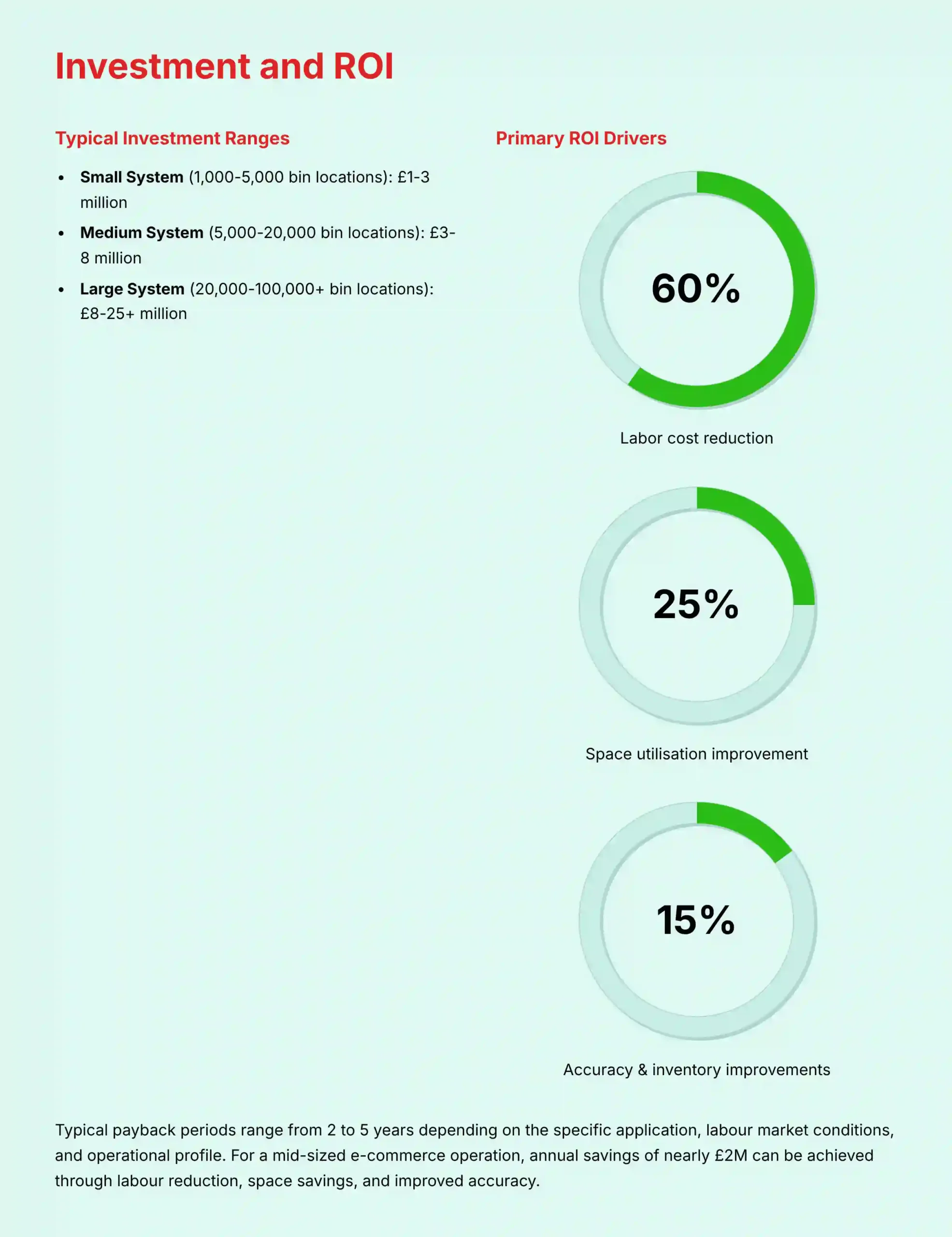
AutoStore implementations typically deliver strong financial returns, with payback periods ranging from 2 to 5 years depending on the specific application, labor market conditions, and operational profile. Understanding the ROI components helps build a comprehensive business case that captures both direct cost savings and strategic advantages.
Primary ROI Drivers: Labor Cost Reduction (40-60% of total ROI):- Picking labor reduction: 60-80% fewer labor hours for the same throughput
- Walking elimination: Removal of non-value-added travel time (typically 60-70% of picker time)
- Management overhead reduction: Fewer staff requiring less supervision
- Quantifiable metric: Annual labor savings of $30,000-60,000 per eliminated position (including benefits, training, and turnover costs)
- Facility footprint reduction: 60-75% less space required for the same inventory
- Lease/ownership cost avoidance: Delaying or eliminating facility expansion
- Facility consolidation: Combining multiple locations into one
- Quantifiable metric: $15-50 per square foot annually in avoided real estate costs
- Error reduction: Improvement from industry average 98% to 99.9%+ accuracy
- Returns processing reduction: Lower labor and shipping costs for returns
- Customer satisfaction improvement: Higher retention and lifetime value
- Quantifiable metric: $15-50 cost per error avoided (varies by industry and product value)
- Shrinkage reduction: Elimination of lost/misplaced inventory
- Inventory visibility improvement: Real-time stock knowledge
- Expiration/obsolescence reduction: Better inventory rotation
- Quantifiable metric: 2-5% reduction in overall inventory carrying costs
For a mid-sized e-commerce operation:
- Current operation: 10,000 orders/day, 50 pickers, 100,000 sq ft warehouse
- AutoStore investment: $6 million total (hardware, software, implementation)
- Annual savings:
- Labor: $1.2M (reduction of 30 positions at $40K/year)
- Space: $400K (reduction of 50,000 sq ft at $8/sq ft)
- Accuracy: $200K (reduction in returns and customer service costs)
- Inventory: $150K (improved inventory management)
- Total annual savings: $1.95M
- Simple payback period: 3.1 years
- 5-year ROI: 63% (($9.75M – $6M) / $6M)
- Scalability: Ability to handle 2-3x growth without proportional increases in labor or space
- Labor Market Insulation: Reduced exposure to labor shortages and wage inflation
- Speed to Customer: Faster order fulfillment driving competitive advantage
- Operational Resilience: Consistent performance during demand spikes or labor disruptions
- Environmental Impact: Reduced energy consumption and carbon footprint
- Phased Implementation: Start with a core system and expand incrementally
- Multi-Shift Operation: Maximize robot utilization across multiple shifts
- Targeted Application: Focus initially on high-labor or high-value inventory areas
- Continuous Improvement: Regularly optimize slotting and picking processes
A thorough ROI analysis requires detailed assessment of your specific operation, ideally conducted with a certified AutoStore partner who can provide benchmarks from similar implementations and industry-specific performance metrics.
What is the full implementation process and timeline for AutoStore from design to go-live?
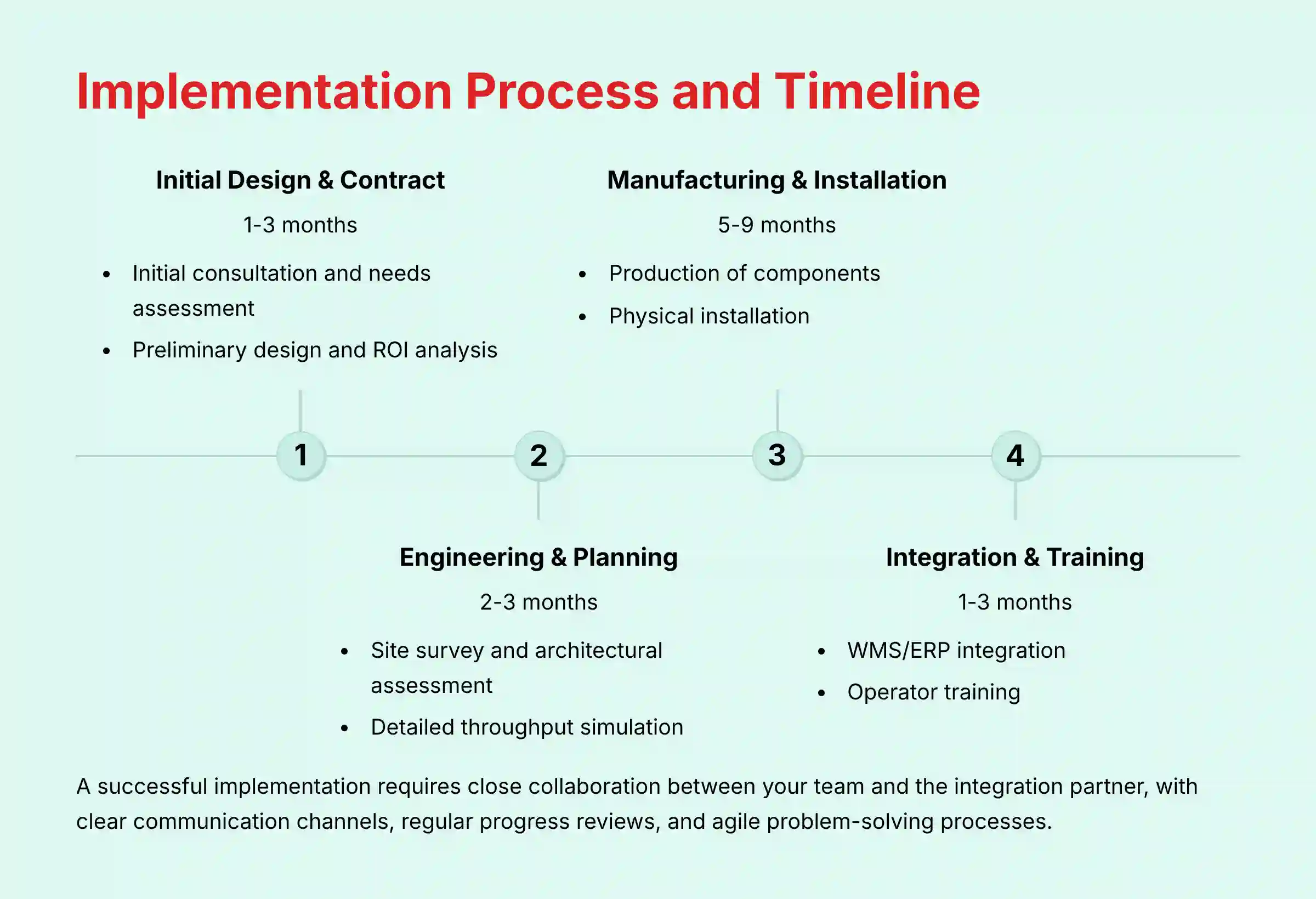
Implementing an AutoStore system is a structured, multi-phase project requiring careful planning and coordination. While timelines vary based on system size and complexity, most implementations follow a consistent process spanning 9-18 months from contract signing to full operation.
Phase 1: Initial Design & Contract (Pre-Implementation)Timeline: 1-3 months
- Initial consultation and needs assessment
- Preliminary design and simulation based on order data
- ROI analysis and business case development
- Contract negotiation and signing
- Formation of joint implementation team (client and integrator)
Timeline: 2-3 months
- Site survey and architectural assessment
- Finalization of grid layout and port positioning
- Detailed throughput simulation with actual order data
- WMS/ERP integration planning and API mapping
- Development of project schedule with critical path analysis
- Manufacturing slot reservation and component ordering
Timeline: 1-3 months
- Floor preparation (leveling, reinforcement if needed)
- Power infrastructure upgrades
- Network infrastructure installation
- Fire protection system modifications (if required)
- Building modifications (if needed)
Timeline: 4-6 months
- Production of grid components, bins, ports, and robots
- Quality assurance testing at manufacturing facilities
- International shipping and customs clearance (if applicable)
- Delivery scheduling and coordination
Timeline: 1-3 months (varies by system size)
- Grid assembly and structural installation
- Port installation and connection
- Controller hardware setup
- Robot commissioning and testing
- System power-up and basic functionality verification
Timeline: 1-3 months
- Controller software installation and configuration
- WMS/ERP integration implementation
- Interface testing between systems
- Error handling and exception process development
- End-to-end workflow validation
- Performance testing and optimization
Timeline: 2-4 weeks
- Initial inventory loading strategy implementation
- Operator training for picking and replenishment
- Supervisor training for system management
- Maintenance team training
- Standard operating procedure (SOP) documentation
Timeline: 1-2 months
- Phased operational launch (typically 10-25% volume initially)
- Performance monitoring and adjustment
- Gradual volume increase with continuous assessment
- Full-volume testing and stress testing
- Final acceptance testing against performance metrics
- Official handover and transition to operational support
- Executive Sponsorship: Dedicated leadership support throughout the project
- Clear Ownership: Defined project roles and responsibilities on both sides
- Change Management: Comprehensive plan for operational transition
- Data Quality: Clean, accurate inventory and order data for integration
- Testing Discipline: Rigorous testing at each project milestone
- Training Investment: Comprehensive training for all users and support staff
After go-live, the certified partner typically provides:
- 30-90 days of on-site support during initial operations
- Transition to regular maintenance and support agreement
- Quarterly performance reviews
- Continuous improvement recommendations
- Software updates and enhancements
A successful implementation requires close collaboration between your team and the integration partner, with clear communication channels, regular progress reviews, and agile problem-solving processes to address inevitable challenges during such a complex project.
What maintenance and ongoing support does AutoStore require?
AutoStore systems are designed for high reliability and minimal maintenance, but like any sophisticated automation technology, they require structured care and support to maintain optimal performance. Establishing a comprehensive maintenance program is essential for maximizing system uptime and longevity.
Preventive Maintenance Requirements: Robots (Most Maintenance-Intensive Component):- Weekly visual inspections (wheels, lifting mechanism, antennas)
- Monthly cleaning of wheels and sensors
- Quarterly battery health assessments
- Semi-annual replacement of wheels (depends on usage)
- Annual replacement of lifting belts
- 18-24 month battery replacement (typical lifecycle)
- Quarterly inspection of rail joints and top panels
- Semi-annual cleaning of dust accumulation
- Annual structural integrity verification
- Minimal repairs typically needed (static component)
- Monthly calibration check
- Quarterly sensor cleaning and inspection
- Semi-annual mechanical component lubrication
- Annual conveyor belt inspection/replacement (if applicable)
- Monthly software backup
- Quarterly security updates
- Semi-annual UPS testing
- Annual hardware inspection
Most implementations use one of these models:
- Internal Team: Dedicated maintenance technicians (typically 1 per shift for medium-large systems)
- Hybrid Model: Internal first-level support with partner escalation
- Full-Service Contract: Complete maintenance outsourcing to the integration partner
Standard support agreements typically include:
- Tier 1 (Critical): System down/severe degradation – 2-4 hour response, 24/7 availability
- Tier 2 (Major): Partial functionality loss – 4-8 hour response
- Tier 3 (Minor): Non-critical issues – Next business day response
- Planned Support: Scheduled maintenance and upgrades
- Critical spares (robots, port components) should be kept on-site
- Recommended spares inventory: 5-8% of robot count as complete units
- Typical annual parts consumption: 2-4% of system value
- Most partners offer spare parts management programs
- Controller software updates: 2-4 times annually
- Firmware updates for robots: 1-2 times annually
- Integration adapter updates: As needed with WMS changes
- Performance optimization: Quarterly review and tuning recommended
AutoStore systems are designed to evolve over time:
- Hardware Upgrades: New robot models can be introduced gradually
- Grid Expansion: Additional sections can be added with minimal disruption
- Port Upgrades: New port models can replace older versions
- Software Evolution: Performance improvements and new features are backward compatible
Annual maintenance costs typically range from 8-12% of the initial hardware investment:
- Spare parts: 2-4%
- Service agreements: 3-5%
- Internal labor: 2-3%
- Software maintenance: 1-2%
- Robot availability: 98-99.5% (individual units)
- System availability: 99.7-99.9% (overall solution)
- Mean Time Between Failures (MTBF) for robots: 3,500-5,000 operating hours
- Mean Time To Repair (MTTR): 15-40 minutes for robot swap-out
A well-executed maintenance program not only ensures system reliability but also extends equipment lifespan, optimizes performance, and protects your automation investment. Most certified AutoStore partners offer tailored maintenance programs based on system size, operational criticality, and internal capabilities. For additional frequently asked questions about maintenance and operational issues, consult our comprehensive AutoStore FAQs resource.
How does AutoStore handle system failures and ensure business continuity?
AutoStore's architecture incorporates multiple redundancy and fault-tolerance features that create inherent resilience against system failures. This distributed design approach ensures business continuity even during component malfunctions, making it significantly more robust than many alternative automation technologies.
System Architecture Redundancies: Robot Fleet Redundancy:- Distributed task execution with no single robot acting as a critical point of failure
- Automatic reallocation of tasks when a robot malfunctions
- System continues operating at reduced capacity rather than complete stoppage
- Rule of thumb: Loss of 5% of robots typically reduces throughput by only 3-4%
- Multiple possible routes to any bin location
- Traffic management software automatically reroutes around blocked grid sections
- No single grid cell failure can isolate inventory
- Primary and backup controller servers with automatic failover
- Distributed processing architecture
- UPS (Uninterruptible Power Supply) protection for control systems
- Redundant network infrastructure
- System automatically detects malfunctioning robot
- Failed robot is flagged for maintenance
- Tasks are reallocated to other robots
- Technician removes failed robot and replaces with spare (15-30 minute procedure)
- Failed robot is repaired offline
- System continues operating throughout process
- System automatically routes bins to alternate ports
- Workflow can be reconfigured to maintain operations
- Modular design allows quick component replacement
- Robots automatically enter safe mode during power loss
- All system state information is preserved
- Controlled shutdown prevents inventory access issues
- Rapid recovery after power restoration (typically 10-15 minutes)
- Optional: Generator backup for critical operations
- Complete system configuration backed up daily
- Bin location data continuously saved
- Robot mapping and calibration data preserved
- Minor robot issues: No measurable downtime
- Major robot failure: 15-30 minutes
- Port failure: 30-120 minutes (depending on replacement needs)
- Controller failure with failover: 5-15 minutes
- Complete system restart: 15-45 minutes
- Catastrophic failure (fire, flood): 1-4 days (depending on spare parts availability)
- Developing manual picking procedures for critical orders during extended outages
- Creating “break-glass” access protocols to retrieve high-priority inventory
- Establishing throughput prioritization rules for degraded operation
- Implementing predictive maintenance using performance data
- Maintaining adequate spare robot inventory (5-8% of fleet)
- Conducting regular recovery procedure drills
- Performing preventive maintenance during off-peak periods
Standard AutoStore SLAs typically guarantee:
- 99.7-99.9% system availability (excluding scheduled maintenance)
- 2-4 hour on-site response for critical issues
- 24/7/365 remote support availability
- Parts availability commitments
- Scheduled preventive maintenance
The distributed nature of AutoStore makes it inherently more resistant to catastrophic failure than centralized automation systems. While individual components may fail, the system is designed to degrade gracefully rather than experience complete outages, providing operational resilience and predictable recovery times that protect business continuity.
What innovations and future developments are planned for AutoStore technology?
AutoStore continues to advance its technology through a strategic innovation roadmap focused on enhancing performance, flexibility, and intelligence. These developments aim to address evolving supply chain challenges while maintaining the core benefits of the AutoStore grid architecture.
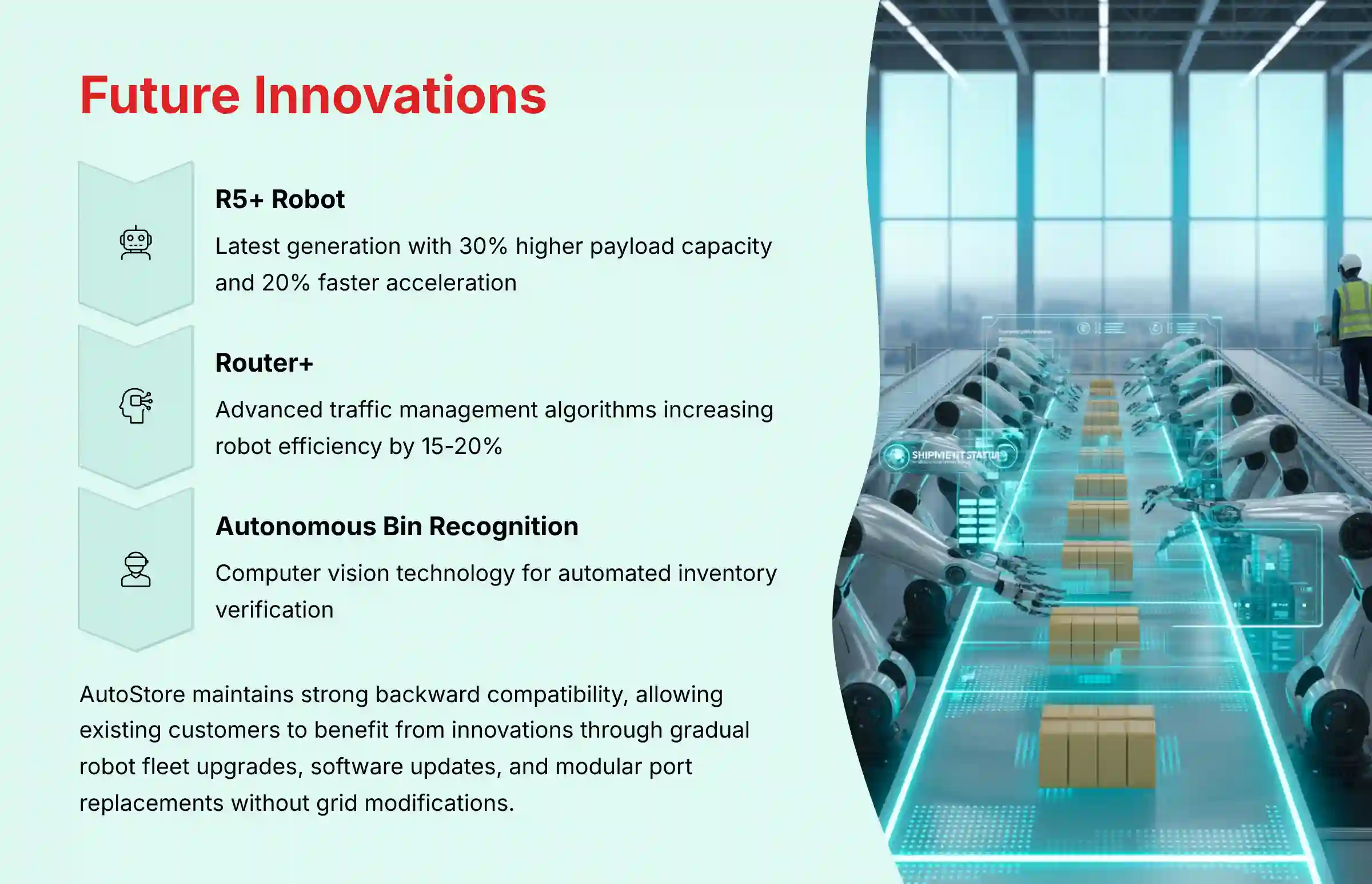
Recent Technology Innovations (2023-2025): Hardware Advancements:- R5+ Robot: Latest generation robot with 30% higher payload capacity and 20% faster acceleration
- RelayPort: New workstation design that enables faster bin exchanges and reduces operator movement
- PickUpPort: Compact, cost-effective port for smaller operations and micro-fulfillment
- Bin Variants: Introduction of specialized bins for temperature-controlled items and odd-shaped products
- Double-Deep Storage: Enhanced grid architecture allowing two bins per cell for certain applications
- Router+: Advanced traffic management algorithms that increase robot efficiency by 15-20%
- Dynamic Prioritization: Real-time order sequencing based on delivery deadlines and operational constraints
- Predictive Analytics: Built-in tools for analyzing system performance and predicting maintenance needs
- Enhanced WMS Integration: Expanded API capabilities for deeper integration with leading platforms
- Remote Monitoring Portal: Cloud-based system for real-time performance monitoring and benchmarking
 Near-Future Roadmap (2025-2027):
Confirmed Developments:
Near-Future Roadmap (2025-2027):
Confirmed Developments:
- Autonomous Bin Recognition: Computer vision technology for automated inventory verification
- Machine Learning Optimization: Self-improving algorithms for bin positioning and robot routing
- Advanced Energy Management: Further reduction in power consumption through intelligent charging
- Expanded Temperature Range: Solutions for frozen goods (-30°C) without compromising performance
- Enhanced User Interfaces: AR/VR support for maintenance and training
- Integration with external robotic arms for fully automated picking
- Hybrid systems combining AutoStore with AMRs (Autonomous Mobile Robots) for comprehensive warehouse automation
- Cloud-based multi-site orchestration for enterprises with multiple AutoStore installations
- Predictive demand positioning using external data signals (weather, events, promotions)
- Subscription-based “Robotics as a Service” business models with reduced capital requirements
The future development of AutoStore is being shaped by several key trends:
- Micro-Fulfillment Expansion: Continued focus on smaller, urban-located systems supporting rapid delivery models
- Sustainability Emphasis: Further reducing energy consumption and supporting circular economy initiatives
- Labor Augmentation: Technologies that enhance human worker productivity rather than complete replacement
- Flexible Automation: Systems that can adapt to changing product mixes and seasonal variations
- Data Integration: Deeper connections with supply chain planning and execution systems
AutoStore maintains strong backward compatibility, allowing existing customers to benefit from innovations through:
- Gradual robot fleet upgrades (new models can work alongside older versions)
- Software updates delivering performance improvements to existing hardware
- Modular port replacements without grid modifications
- Grid expansions that seamlessly connect to existing installations
The continued evolution of AutoStore technology reflects the company's focus on incremental innovation rather than disruptive changes, ensuring that existing investments remain protected while enabling customers to adopt new capabilities at their own pace aligned with business requirements and ROI expectations.

Leave a Reply