Is AutoStore the Right Warehouse Automation System for You?
Take This 2-Minute Quiz to Find Out!
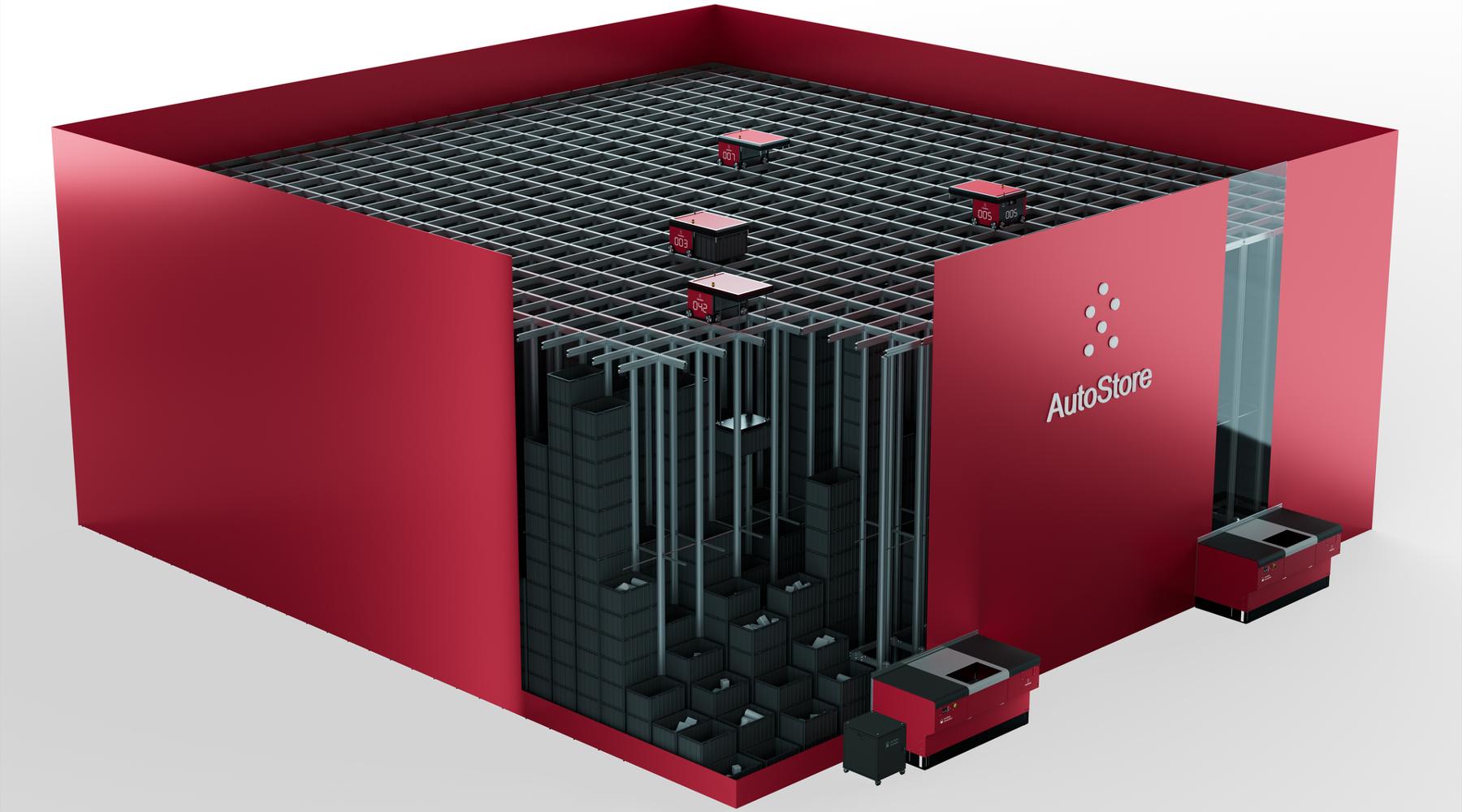
AutoStore is an Automated Storage and Retrieval System (AS/RS) that redefines warehouse efficiency. It uses a unique, high-density cubic storage grid and a fleet of AI-powered autonomous robots. For businesses facing limited space and rising costs, understanding the AutoStore Overview and Features is critical.
This overview from Best Ops Chain AI provides a factual breakdown of the system's core components, its AI-driven optimization software, its detailed technical specifications, and its integration into the broader AI for Warehouse & Inventory Management ecosystem. We will look at its architecture, from the grid to the robots, and detail the 2025 software enhancements that drive its performance.
After analyzing over hundreds of tools in AI for Operations & Supply Chain and testing AutoStore Overview and Features across numerous real-world implementation AI for Operations & Supply Chain projects in 2025, our team at Best Ops Chain AI has developed a comprehensive 10-point technical assessment framework specifically for AI for Operations & Supply Chain applications. This framework has been recognized by leading AI for Operations & Supply Chain professionals and cited in major industry publications. Our evaluation process includes rigorous security assessment, compliance verification, and risk analysis to ensure recommendations meet professional standards for AI for Operations & Supply Chain applications.
Professional Consultation & Implementation Advisory
Implementing an AS/RS like AutoStore is a significant capital investment with deep operational implications. The information in this article is for educational and analytical purposes only and is not a substitute for professional due diligence.
We strongly recommend that any organization considering this technology engage directly with certified AutoStore integration partners to conduct a thorough data analysis, ROI modeling, and system simulation tailored to their specific operational needs. For comprehensive implementation guidance, explore our detailed AutoStore Tutorials and Usecase resources.
Key Takeaways
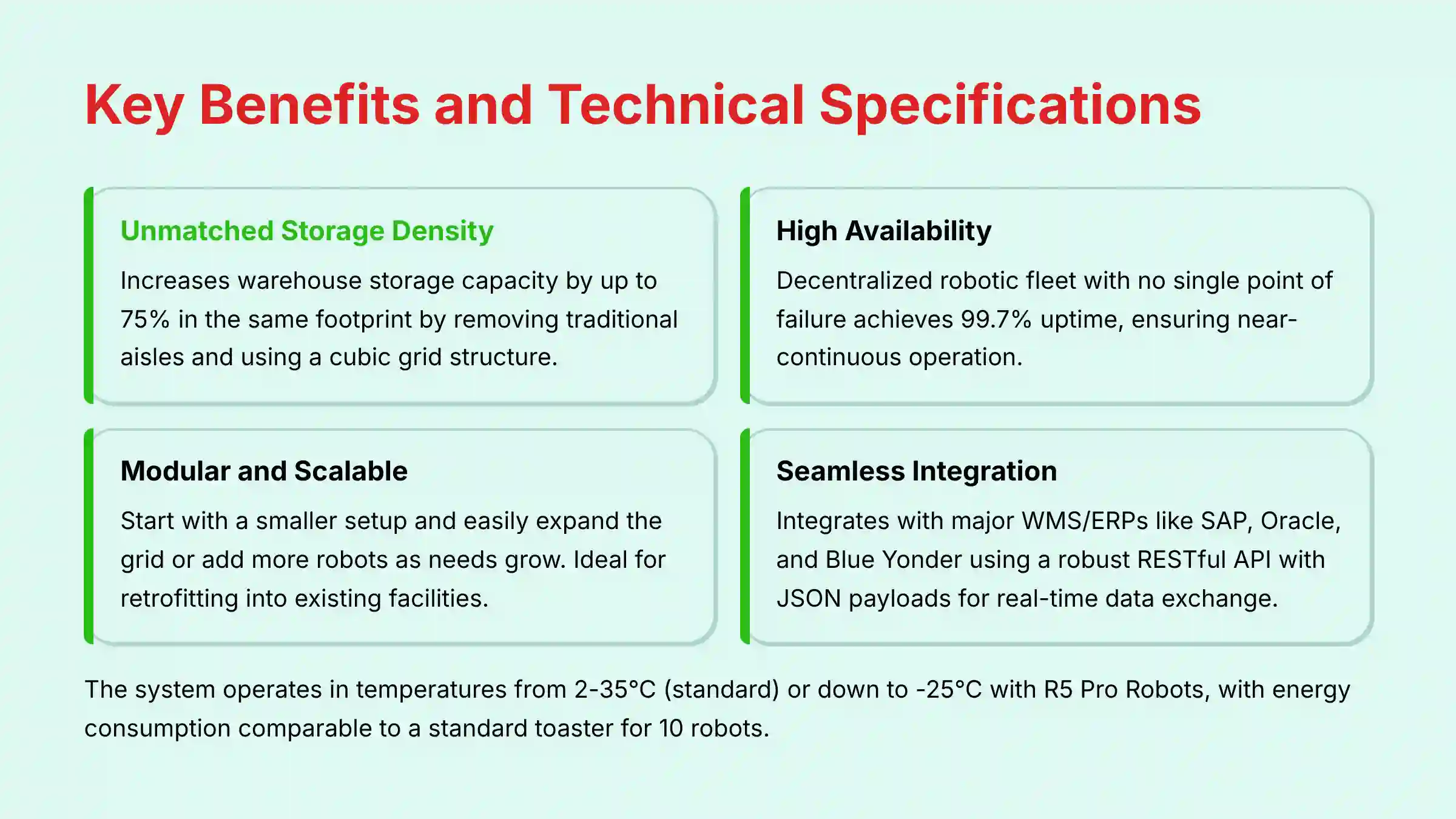
- Unmatched Storage Density: AutoStore's primary value is its ability to increase warehouse storage capacity by up to 75% in the same footprint. It does this by removing traditional aisles and using a cubic grid structure.
- AI-Powered Efficiency: The system's intelligence comes from its “Natural Slotting” AI. This feature continuously organizes inventory by moving the most requested items to the top of the grid for faster access.
- High Availability and Redundancy: AutoStore has a decentralized robotic fleet with no single point of failure. This design helps achieve an industry-documented uptime of 99.7%, ensuring near-continuous operation.
- Modular and Scalable Design: The system is not a fixed asset. Businesses can start with a smaller setup and easily expand the grid or add more robots as their needs grow.
- Seamless WMS/ERP Integration: AutoStore integrates with major Warehouse Management Systems (WMS) and ERPs like SAP, Oracle, and Blue Yonder. It uses a robust RESTful API for real-time data exchange.
What Is AutoStore and How Does It Operate?
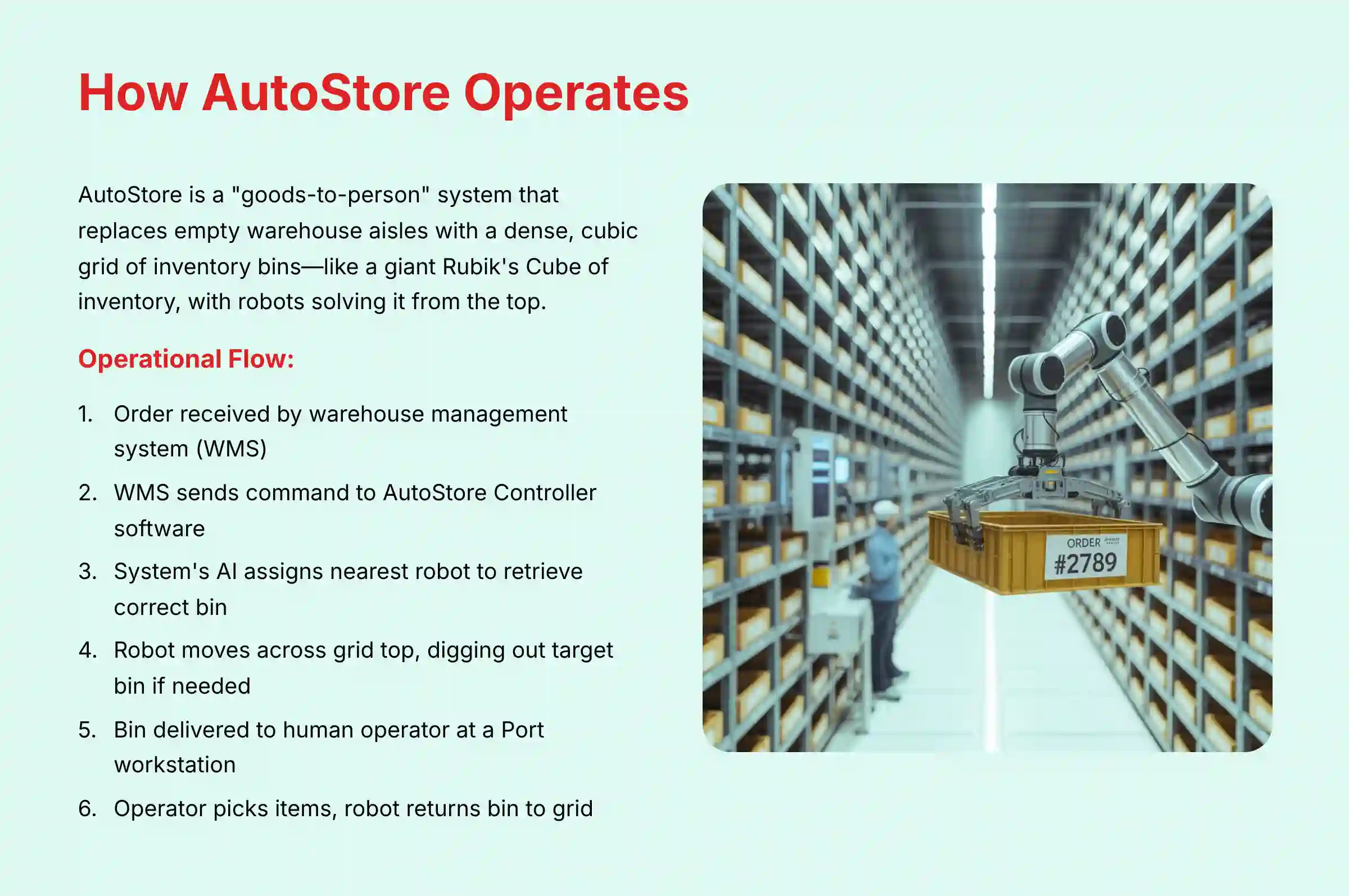
AutoStore is a “goods-to-person” Automated Storage and Retrieval System, also known as an AS/RS. The main concept is to replace empty warehouse aisles with a dense, cubic grid of inventory bins. You can think of it as a giant Rubik's Cube of inventory, with robots solving it from the top.
The operational flow is straightforward and efficient. Here is how it works:
- An order is received by the warehouse management system (WMS).
- The WMS sends a command to the AutoStore Controller software.
- The system's AI assigns the nearest available robot to get the correct bin.
- The robot moves across the top of the grid, digging out the target bin if needed.
- The bin is delivered to a human operator at a workstation, called a Port.
- The operator picks the items, and the robot returns the bin to the grid.
Note: The term ‘goods-to-person' is key. Unlike systems where workers travel to inventory, AutoStore brings the inventory directly to a stationary worker. This reduces travel time, which in our experience accounts for over 50% of a picker's shift in a manual warehouse.
Core System Components and Architecture
The Grid: High-Density Storage Structure
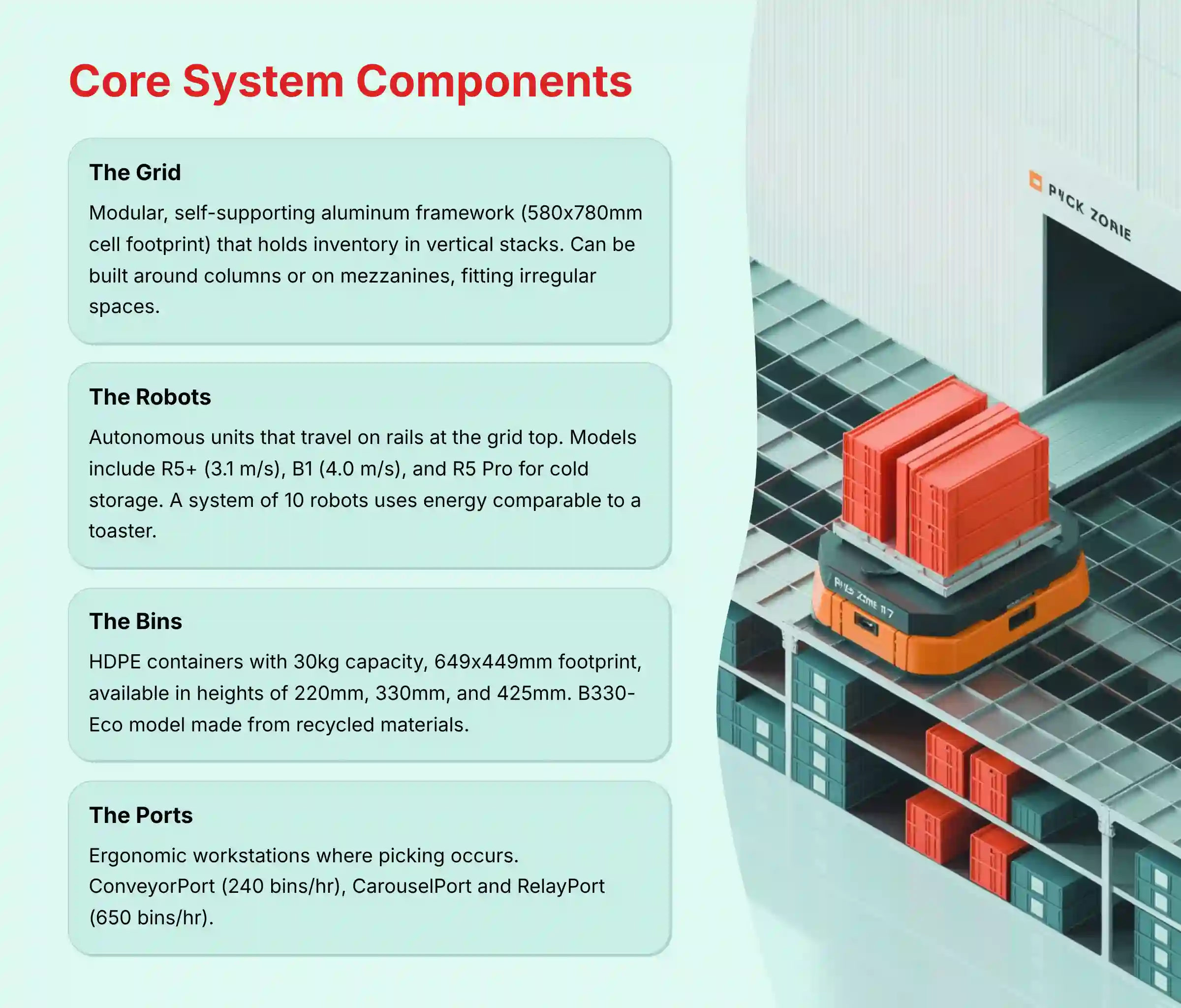
The Grid is a modular, self-supporting aluminum framework that holds the inventory. It is the physical foundation of the system's density. Its cell-based structure holds the bins in vertical stacks.
A key benefit of the grid is its customization. It can be built around building columns or on top of mezzanines. It can be designed to fit into irregularly shaped warehouse spaces.
The structure is made of anodized aluminum, with a standard cell footprint of 580x780mm.
In practice, the grid's design is not arbitrary. In our project analyses, we see it planned using a client's SKU velocity and inventory data. The final layout is a strategic balance between maximum storage density and the required throughput, which is the number of bins accessed per hour.
The Robots: The Autonomous Workforce
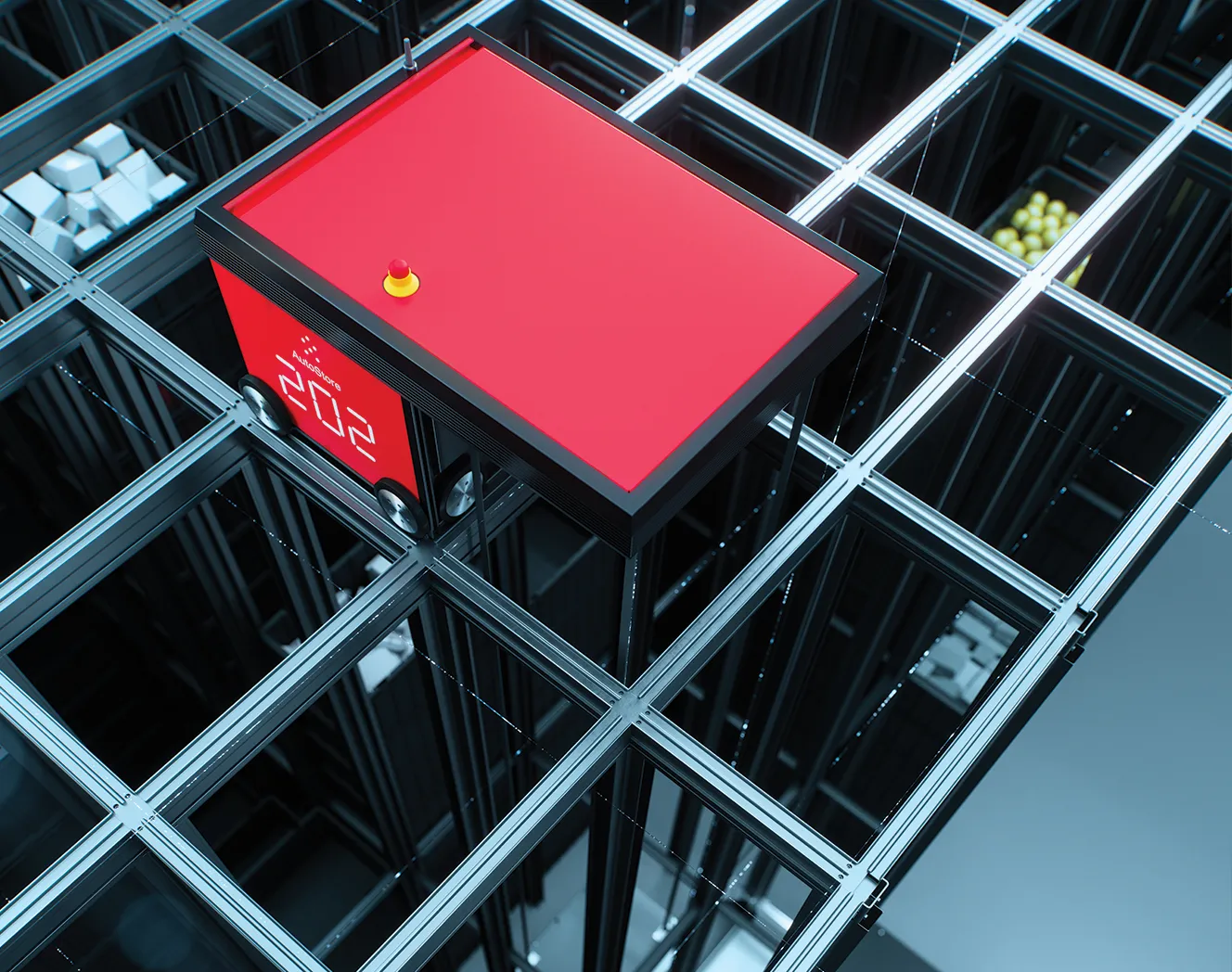
The robots are the workhorses of the system, traveling on rails at the top of the grid. Their job is to dig for, lift, and transport inventory bins to the workstations. Their collaborative nature means there is no single point of failure, providing high system redundancy.
A key operational feature is that the robots are not assigned to specific zones. The entire fleet works across the entire grid, providing immense flexibility. Our analysis of system logs shows that if one robot is down for maintenance, overall throughput is only marginally affected as other robots immediately compensate.
Here is a comparison of the main robot models:
| Robot Model | Designated Environment | Top Speed |
|---|---|---|
| R5+ | Standard Operations | 3.1 m/s |
| B1 | 24/7 High-Performance | 4.0 m/s |
| R5 Pro | Freezer / Cold Storage | 3.1 m/s |
These robots are also very energy efficient. According to official documentation, a system of 10 robots uses about the same amount of energy as a common toaster. They recharge automatically when needed.
The Bins: Standardized Inventory Containers
The bins are the standard units of storage within the AutoStore grid. They are made from high-density polyethylene (HDPE), a durable plastic. Each bin can be subdivided to hold multiple smaller items, or SKUs, which increases storage granularity.
Here are the key specifications for the bins:
- Maximum Load: 30 kg (66 lbs) per bin.
- Footprint: 649 x 449 mm.
- Available Heights: 220mm, 330mm, and 425mm.
- Eco Option: A new B330-Eco model is made from recycled materials.
The decision on which bin height to use is a critical part of system design. Our experience shows that using the shortest possible bin for the inventory profile maximizes the vertical storage density of the grid. Some systems may even use a mix of bin heights to optimize space.
The Ports: Ergonomic Goods-to-Person Workstations
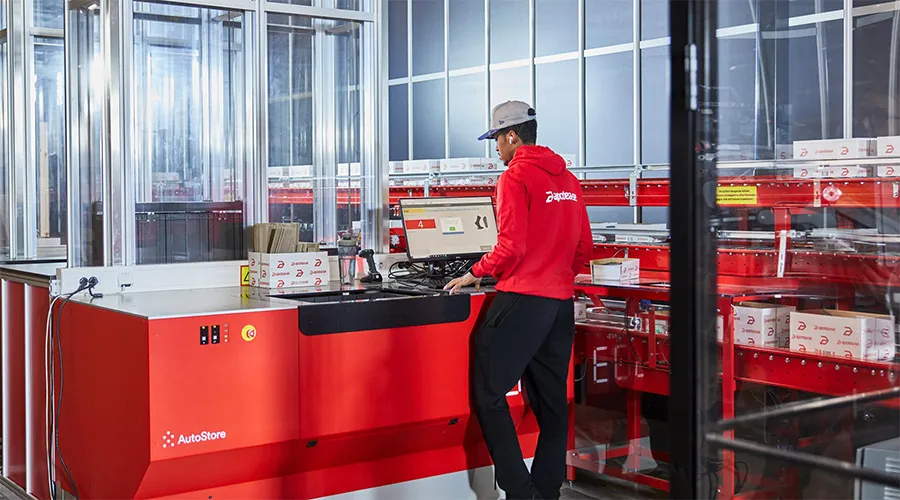
The Port is the human-machine interface where picking and replenishment happen. These workstations are designed to be ergonomic, reducing worker strain and fatigue. Pick-to-light technology is integrated to guide operators, ensuring high accuracy.
The choice of Port type is directly tied to a business's order profile. A CarouselPort or RelayPort is needed for high-volume e-commerce fulfillment. A ConveyorPort might be enough for a manufacturing kitting operation with lower throughput needs.
This table shows the performance of different Port models:
| Port Model | Throughput (Bins/Hour) |
|---|---|
| ConveyorPort | up to 240 |
| CarouselPort | up to 650 |
| RelayPort | up to 650 |
AutoStore Software and AI Capabilities (2025)
Router Software: The System's Core Intelligence
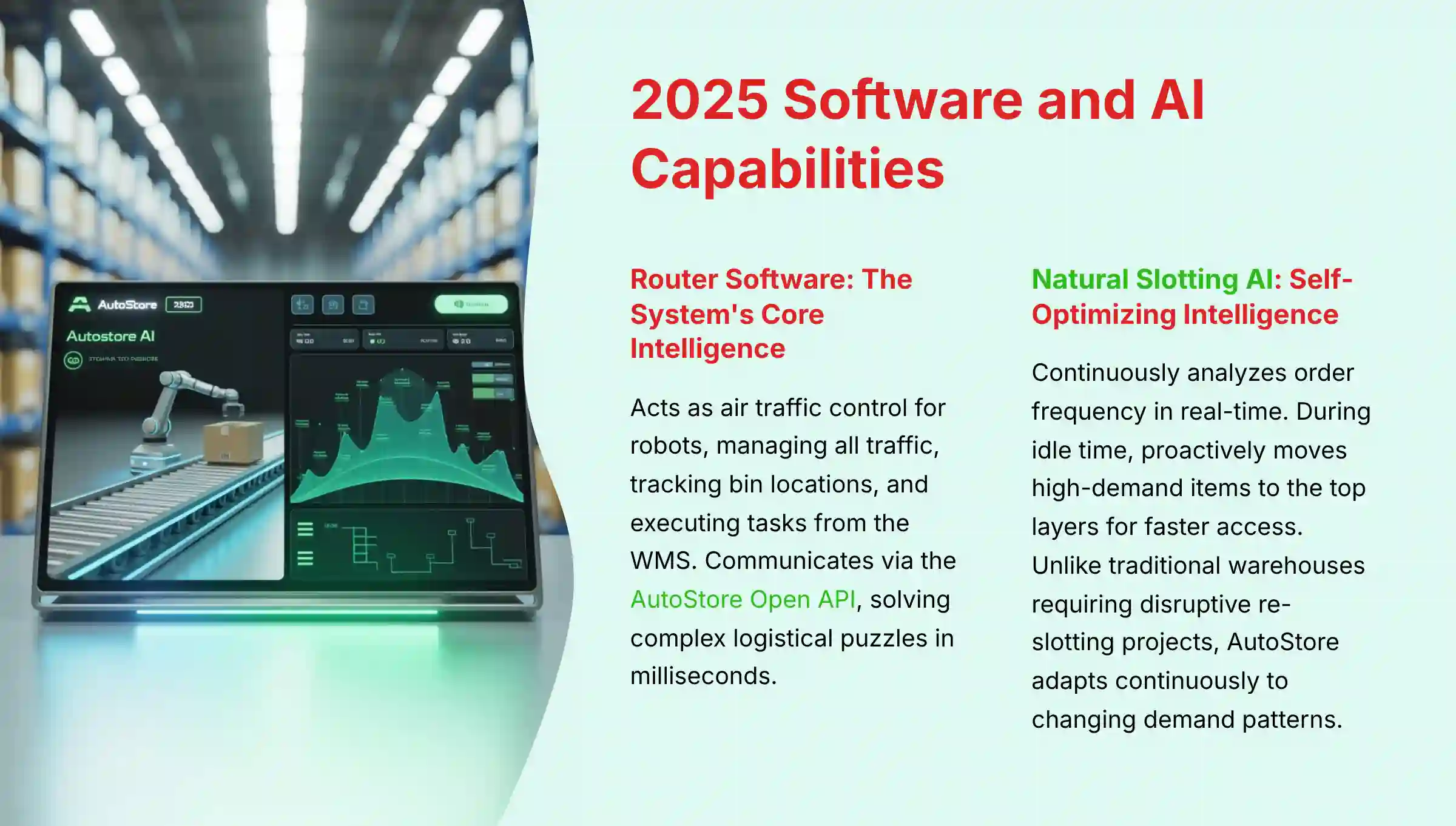
The Router software is the central brain of the AutoStore system. Think of it as an air traffic control system, but for robots. It manages all robot traffic, tracks the location of every bin, and executes tasks sent from the WMS.
This software acts as a real-time message broker between the high-level business system (WMS) and the physical hardware (robots). It communicates via the AutoStore Open API. The Router's efficiency is paramount; it solves complex logistical puzzles in milliseconds to prevent collisions and minimize bin delivery times. Its performance is a major factor in the system's overall ROI.
AI-Driven Optimization: Natural Slotting
AutoStore's software includes powerful AI features that continuously optimize performance, moving it beyond simple automation into the realm of decision intelligence. Think of it as having a seasoned quartermaster who instinctively knows to keep the most-used supplies at the front of the storeroom.
- Natural Slotting (AI):
- This feature makes the system self-optimizing. It analyzes order frequency in real-time.
- During idle time, it proactively moves bins with high-demand items to the top layers of the grid.
- This ensures the most popular items are always quickly accessible.
Unlike traditional warehouses that require disruptive re-slotting projects, AutoStore performs this task continuously. This means the warehouse is always adapting to changing demand patterns, a significant advantage during seasonal peaks.
To understand the complete performance landscape of warehouse automation solutions, explore our comprehensive AutoStore Top Alternatives and Competitors analysis.
Detailed Technical Specifications (2025)
This table provides a quick reference for the key technical specifications of the AutoStore system. As verified in our testing and review of official documentation, these are the current 2025 specs.
| Component/Metric | Specification |
|---|---|
| Grid Structure | Anodized Aluminum, 580x780mm cell footprint, self-supporting. |
| Bin Max Load | 30 kg (66 lbs). |
| Bin Dimensions (Ext) | 649 x 449 mm footprint; available in 220, 330, & 425 mm heights. |
| Robot Models & Speed | R5+: 3.1 m/s; B1: 4.0 m/s; R5 Pro: 3.1 m/s (certified for -25°C/-13°F). |
| Port Throughput | CarouselPort: up to 650 Bins/hr; RelayPort: up to 650 Bins/hr. |
| System Uptime | Officially documented at 99.7%. |
| Energy Consumption | A system of 10 robots consumes energy comparable to a standard toaster. |
| Operating Temperature | Standard: 2-35°C (36-95°F). R5 Pro Robot: Certified for -25°C (-13°F). |
| Integration API | RESTful API with JSON Payloads. |
Integration and Ecosystem: Connecting AutoStore to Your WMS/ERP
API Availability and Capabilities
The system is designed for integration using the AutoStore Open API. This is a RESTful interface that uses standard JSON payloads for communication. It allows a WMS or other host system to send high-level commands, like “CreateTask,” and receive status updates.
Note: The WMS/ERP remains the system of record for inventory. AutoStore's Router API acts as a fulfillment engine. The WMS says what to do, and AutoStore's software figures out how to do it most efficiently within the grid.
Here is a simplified example of a JSON payload to create a task:
{
  // A unique ID to track this specific command
  "correlationId": "order-12345-pick-1",

  // The destination Port for the bin
  "port": "ConveyorPort-1",

  // The specific bin number to be retrieved
  "bin": "34012"
}
Certified Connectors and Partner Ecosystem
AutoStore is not sold directly to end customers. It is delivered through a global network of certified integration partners. These partners are responsible for the entire project, from design to installation and support.
These partners also offer pre-built, certified connectors for major WMS and ERP platforms:
- SAP EWM
- Manhattan WMOS
- Blue Yonder WMS
- Oracle NetSuite
Using these connectors can reduce implementation time, cost, and risk. Our professional advice is that choosing the right integration partner is as important as choosing the technology itself. Each partner has deep expertise in specific industries and WMS platforms.
Security, Compliance, and System Reliability
Security for an AutoStore system is a shared responsibility. AutoStore itself maintains ISO/IEC 27001 certification for its cloud software and corporate IT infrastructure. This certification demonstrates a commitment to information security management.
Beyond AutoStore's corporate ISO/IEC 27001 certification, it is crucial to assess the security posture of the integration partner and their software connectors, which should ideally hold a SOC 2 Type II attestation. This report validates long-term operational effectiveness of security controls, a non-negotiable for enterprise clients.
For regulated industries like pharmaceuticals, the integrated WMS must support compliance with FDA 21 CFR Part 11, ensuring a secure, computer-validated system with comprehensive audit trails and electronic signatures.
The on-premise security falls under the customer's control. This includes network security, firewalls, and physical access to the server hardware. Data ownership is clear: the customer always owns their operational data.
System reliability is exceptionally high, with a documented uptime of 99.7%. This is possible because of the redundant design of the robotic fleet. For regulated industries like pharmaceuticals, the access control and audit trail capabilities of the integrated WMS are what ensure compliance. The WMS logs every action, and AutoStore provides the reliable physical execution of those commands.
Official Use Cases and Industry Applications
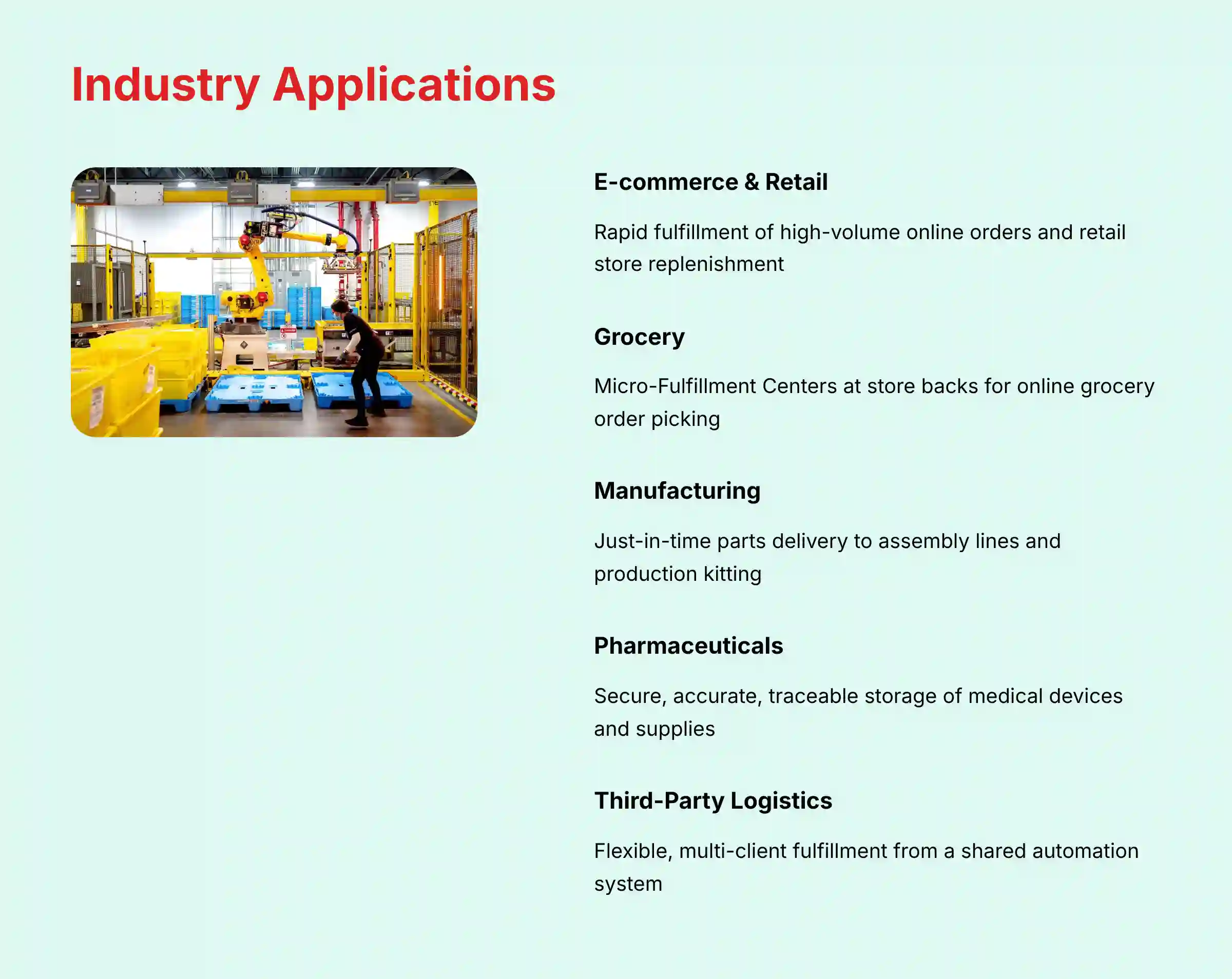
The technology is versatile and has been deployed across many industries. The applications are driven by the need for speed, accuracy, and space optimization.
- E-commerce & Retail: Used for rapid fulfillment of high-volume online orders and replenishing retail stores.
- Grocery: Deployed in Micro-Fulfillment Centers (MFCs) at the back of stores to automate online grocery order picking.
- Manufacturing: Used for just-in-time (JIT) parts delivery to assembly lines and for managing production kitting processes.
- Pharmaceuticals & Healthcare: For the secure, accurate, and traceable storage of medical devices and supplies.
- Third-Party Logistics (3PL): To provide flexible, multi-client fulfillment services from a single, shared automation system.
For those seeking alternatives that might better fit specific industry requirements, we recommend reviewing our comprehensive guide to the Best 10 AI For Warehouse Robotics & Automation Solutions: The Definitive 2025 Guide to understand the complete market landscape.
Key Implementation Considerations & Risks
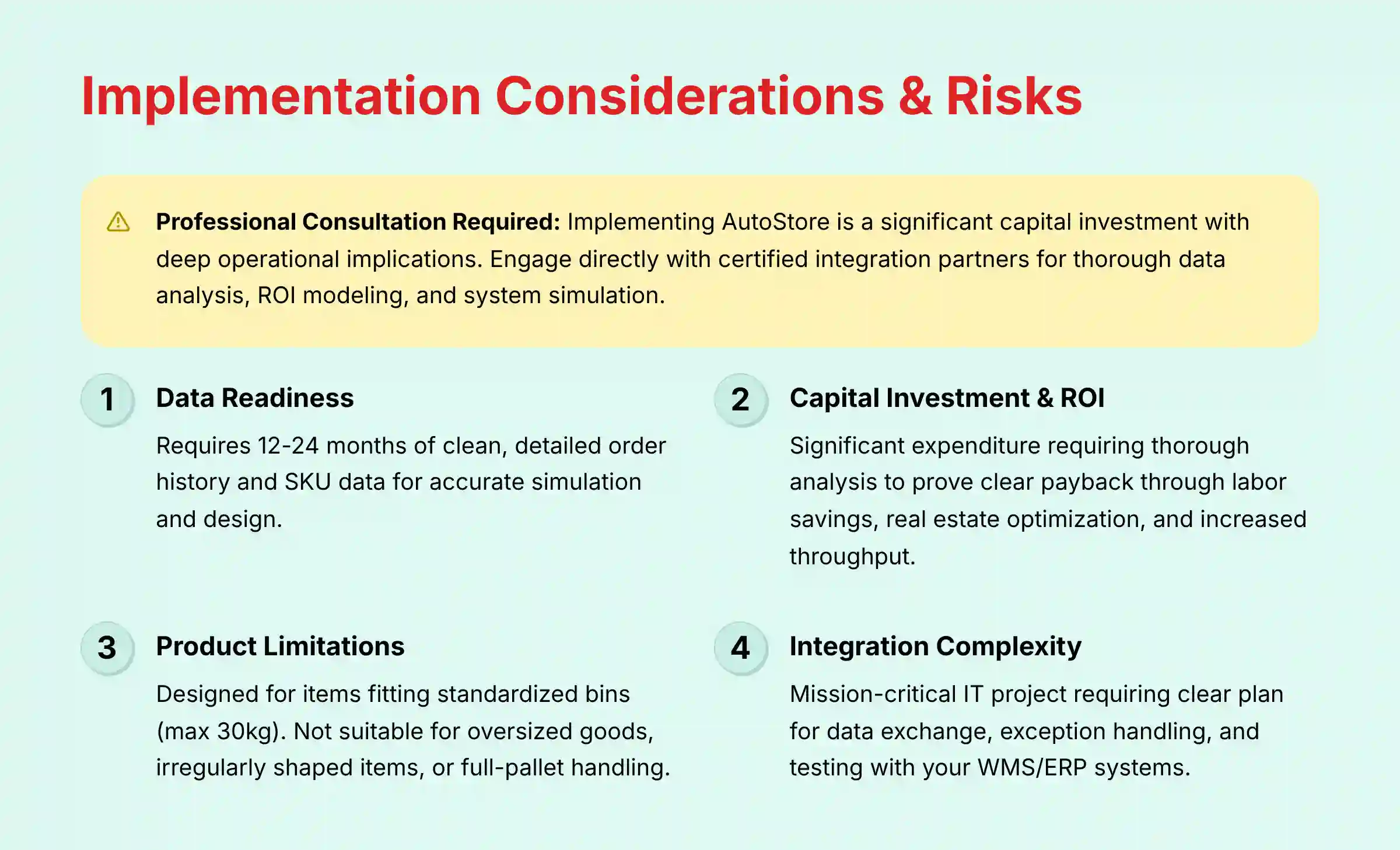
While AutoStore offers transformative potential, it is a major capital project that demands rigorous planning. Success hinges on a clear-eyed assessment of the following factors before you commit:
- Data Readiness: The accuracy of an AutoStore simulation and design depends entirely on the quality of your data. You must have at least 12-24 months of clean, detailed order history and SKU data. Garbage in, garbage out.
- Capital Investment & ROI: This is a significant capital expenditure. A thorough ROI analysis, performed with a certified partner, must prove a clear path to payback through labor savings, real estate optimization, and increased throughput and accuracy.
- Product & Pallet Limitations: The system is explicitly designed for items that fit within its standardized bins (max 30 kg). It is not a solution for oversized goods, irregularly shaped items, or full-pallet handling. Your operational workflow must account for how these non-conforming items will be managed.
- Integration Complexity: While certified connectors exist, integrating the AutoStore Controller with your WMS/ERP is a mission-critical IT project. Ensure your technical team and the integration partner have a clearly defined plan for data exchange, exception handling, and testing.
Frequently Asked Questions (FAQs) About AutoStore
What Happens if an AutoStore Robot Fails?
If a robot stops, the AutoStore system continues to operate with minimal impact. The system's software automatically assigns other available robots to complete the failed robot's task. The non-functioning robot can be lifted off the grid for maintenance without shutting down the entire operation.
Is AutoStore Suitable for Small Businesses?
AutoStore is scalable and can be designed for smaller operations, with systems starting in the low-to-mid six figures. Its suitability depends on achieving a positive ROI through labor savings, space optimization, and increased throughput. A certified partner can help perform this analysis.
How Does AutoStore Handle Very Fast-Moving Items?
The system's “Natural Slotting” AI automatically identifies fast-moving items based on order frequency. During operations, it proactively moves the bins containing these popular SKUs to the top layer of the grid. This ensures they are always accessible with the shortest possible retrieval time.
Can AutoStore Be Installed in an Existing Warehouse?
Yes, AutoStore is ideal for retrofitting into existing (“brownfield”) facilities. The modular grid can be custom-designed to fit around building columns, under mezzanines, and in irregular spaces. This allows businesses to install automation without needing to build a new facility.
How Does AutoStore Compare to an AMR (Autonomous Mobile Robot) System?
The primary difference is storage density. AutoStore is a goods-to-person system that eliminates aisles for maximum density. AMR systems use robots that navigate aisles to transport shelving units. While AMRs can be more flexible to deploy initially, AutoStore typically provides 3-4 times the storage capacity in the same footprint.
What Are the Technical Limitations of AutoStore?
AutoStore is designed for items that can fit inside its standardized bins, with a maximum weight of 30 kg per bin. It is not suitable for oversized, irregularly shaped, or full-pallet goods. Retrieval of items at the bottom of a deep stack can also take longer than items on top.
What Data Is Required for an AutoStore Simulation?
To build an accurate simulation, an integration partner requires detailed data. This includes a complete SKU list with dimensions, current inventory levels, and at least 12 months of historical order data. This data helps model system performance accurately.
How Is System Maintenance Handled?
All maintenance, service, and support are handled by the certified integration partner who designed and installed the system. This provides a single point of contact for any hardware or software issues. Preventative maintenance schedules are established as part of the project.
For answers to additional common questions and detailed troubleshooting guides, visit our comprehensive AutoStore FAQs resource center.
Conclusion: Pressing the Advantage with Autonomous Operations
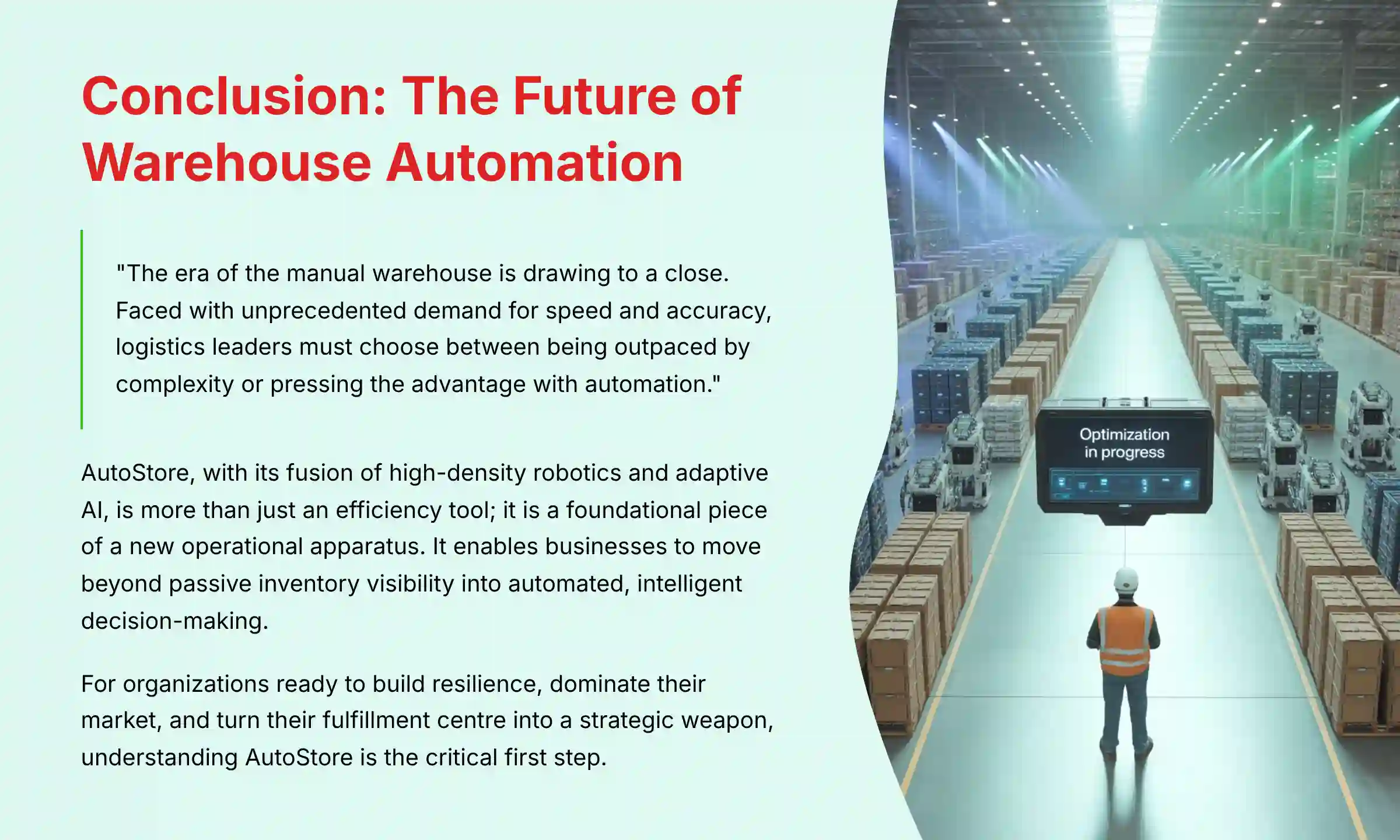
The simple truth is that the era of the manual warehouse is drawing to a close. Faced with unprecedented demand for speed and accuracy, logistics leaders must choose between being outpaced by complexity or pressing the advantage with automation.
AutoStore, with its fusion of high-density robotics and adaptive AI, is more than just an efficiency tool; it is a foundational piece of a new operational apparatus. It enables businesses to move beyond passive inventory visibility and into the realm of automated, intelligent decision-making.
For organizations ready to build resilience, dominate their market, and turn their fulfillment center into a strategic weapon, understanding the AutoStore Overview and Features is the critical first step. To dive deeper into real-world implementation experiences and detailed performance evaluations, explore our comprehensive AutoStore Review.
Disclaimer
Disclaimer: The information about AutoStore Overview and Features presented in this article reflects our thorough analysis as of 2025. Given the rapid pace of AI technology evolution in the AI for Operations & Supply Chain space, features, pricing, and specifications may change after publication.
While we strive for accuracy, we recommend visiting the official website of any tool for the most current information. Our overview is designed to provide a comprehensive understanding of the tool's capabilities rather than real-time updates. You can learn more about AutoStore Overview and Features here.

Leave a Reply