Is Your Warehouse Ready for AI-Driven Operations?
This 2-Minute Quiz Reveals if NetSuite WMS is Your Key!
Key Takeaways
- Advanced Warehouse Operations: NetSuite WMS transforms warehouses into AI-driven fulfillment engines with intelligent pick-and-pack processes, mobile-first operations, and comprehensive automation support
- Beyond Standard Inventory: The full WMS module adds system-directed workflows, dynamic picking strategies, and comprehensive lot/serial tracking compared to basic NetSuite inventory management
- Integration Capabilities: Seamless connectivity with robotics, automation hardware, and 3PL providers through comprehensive APIs and webhooks for real-time data exchange
- Measurable ROI: Organizations typically achieve 25-40% reduction in fulfillment time, 99%+ inventory accuracy, and 15-30% labor productivity improvements
- Digital Twin Foundation: Provides real-time operational data essential for supply chain visibility, predictive analytics, and AI-driven optimization strategies
NetSuite WMS represents a comprehensive solution for modern supply chain operations, addressing the critical need for warehouse automation and AI-driven logistics optimization. This guide explores everything you need to know about implementing NetSuite WMS as part of your AI for Operations & Supply Chain strategy.
What is NetSuite WMS and how does it optimize warehouse operations for modern supply chains?
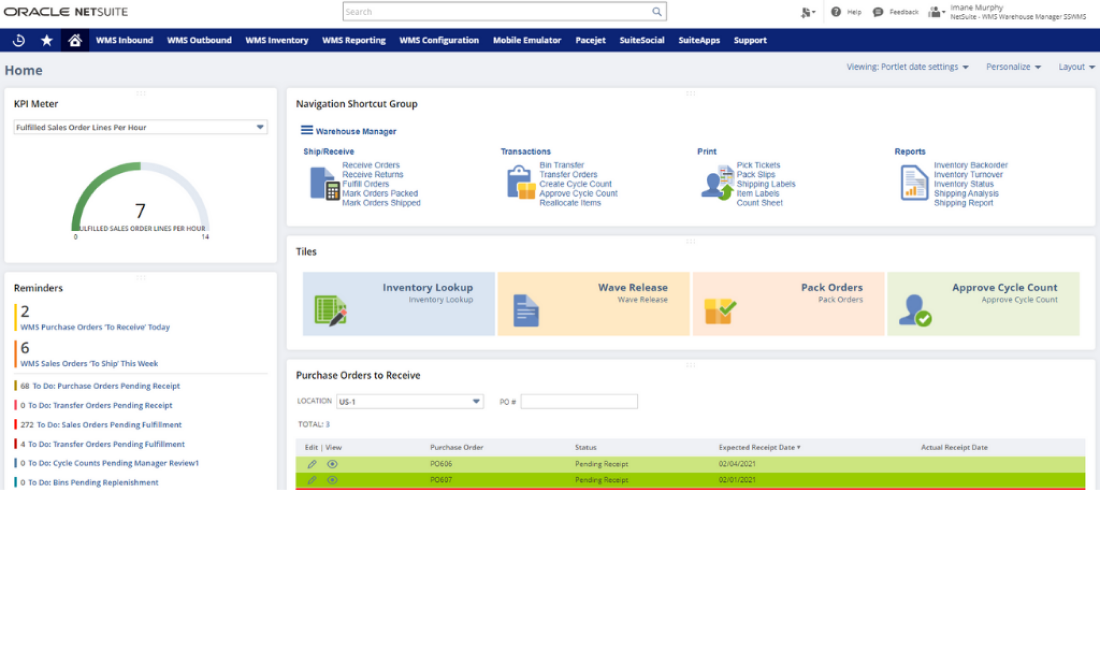
NetSuite Warehouse Management System (WMS) is a cloud-based platform that orchestrates all warehouse activities from receiving and putaway to picking, packing, and shipping. Unlike basic inventory tracking systems, NetSuite WMS streamlines warehouse operations using industry-leading best practices, including intelligent pick-and-pack processes, handheld barcode scanning, cycle counting and integration with shipping systems.
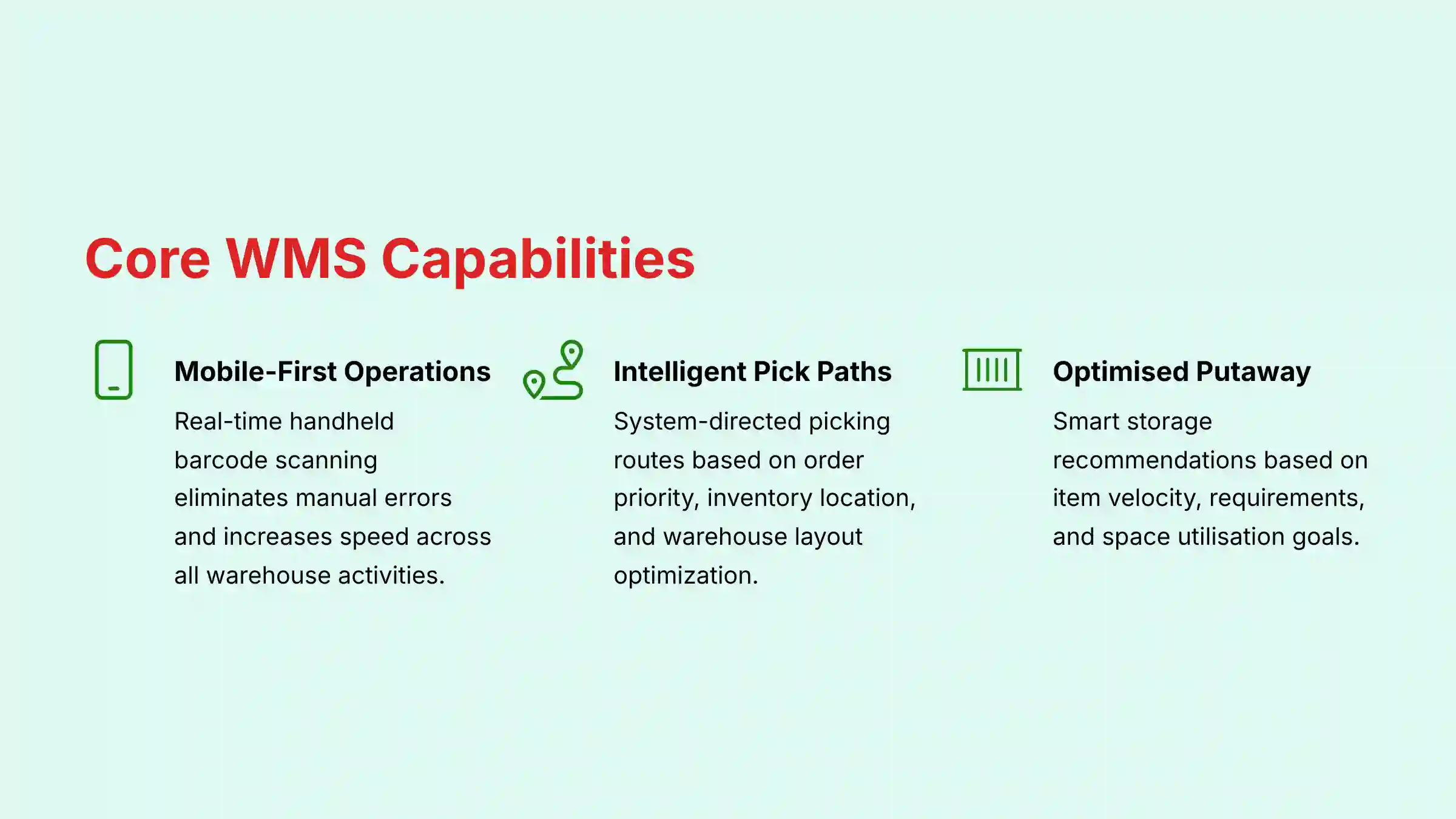
The system transforms warehouses from reactive cost centers into proactive, data-driven fulfillment engines through its sophisticated rules-based optimization engine. This includes system-directed picking paths that generate efficient routes based on configured parameters like order priority, inventory location, and warehouse layout. The WMS provides optimized putaway suggestions upon receipt, recommending storage bins based on user-defined rules such as item velocity, storage requirements, and space utilization goals.
One of the distinguishing features of NetSuite WMS is its mobile-first approach, which empowers warehouse staff to perform their tasks in real-time using handheld devices and barcode scanning. This level of automation eliminates manual errors, increases speed, and provides complete visibility across all warehouse operations.
For AI for Operations & Supply Chain professionals, NetSuite WMS serves as the operational backbone that enables end-to-end visibility and control, supporting advanced supply chain strategies like omnichannel fulfillment, demand-driven replenishment, and integrated 3PL management. To learn more about comprehensive NetSuite WMS Overview and Features, explore the detailed capabilities and implementation considerations.
What is the difference between NetSuite's standard inventory management and the full NetSuite WMS module?
The distinction between NetSuite's standard inventory management and the full WMS module represents the difference between basic visibility and operational control in modern supply chain operations.
NetSuite Standard Inventory Management (Included with NetSuite ERP):
- Provides foundational inventory tracking across multiple locations and bins
- Offers basic cycle counting, reorder point management, and inventory transfers
- Supports barcode scanning for item lookups and quantity updates
- Best suited for businesses with simpler storage needs and lower order volumes
NetSuite WMS Module (Advanced Add-on):
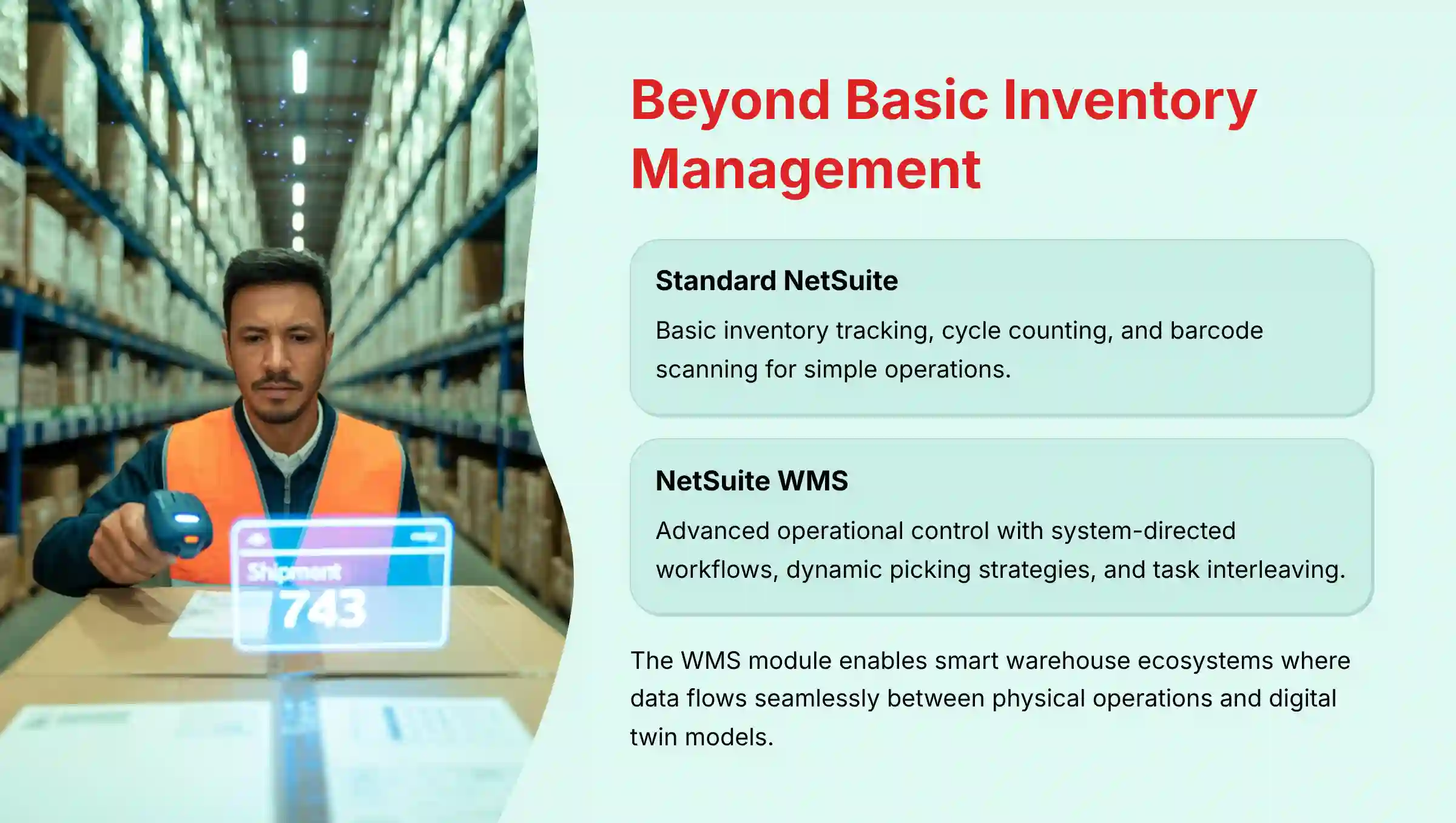
- Optimizes day-to-day warehouse operations using industry-leading practices, such as mobile RF barcode scanning, defined strategies for putaway and picking, task management, return authorization receipts and cycle count plans
- Incorporates all inventory management features plus advanced operational control
- Features system-directed workflows, dynamic picking strategies (wave, zone, batch), task interleaving, and comprehensive lot/serial number tracking
- Designed for high-volume operations requiring maximum labor efficiency and order accuracy
For AI for Operations & Supply Chain applications, the WMS module enables the creation of a smart warehouse ecosystem where data flows seamlessly between physical operations and digital twin models, supporting predictive analytics and continuous optimization of warehouse performance metrics like throughput, accuracy, and labor productivity. For a comprehensive evaluation, check out our detailed NetSuite WMS Review to understand real-world performance and user experiences.
Who should consider implementing NetSuite WMS in their AI for Operations & Supply Chain strategy?
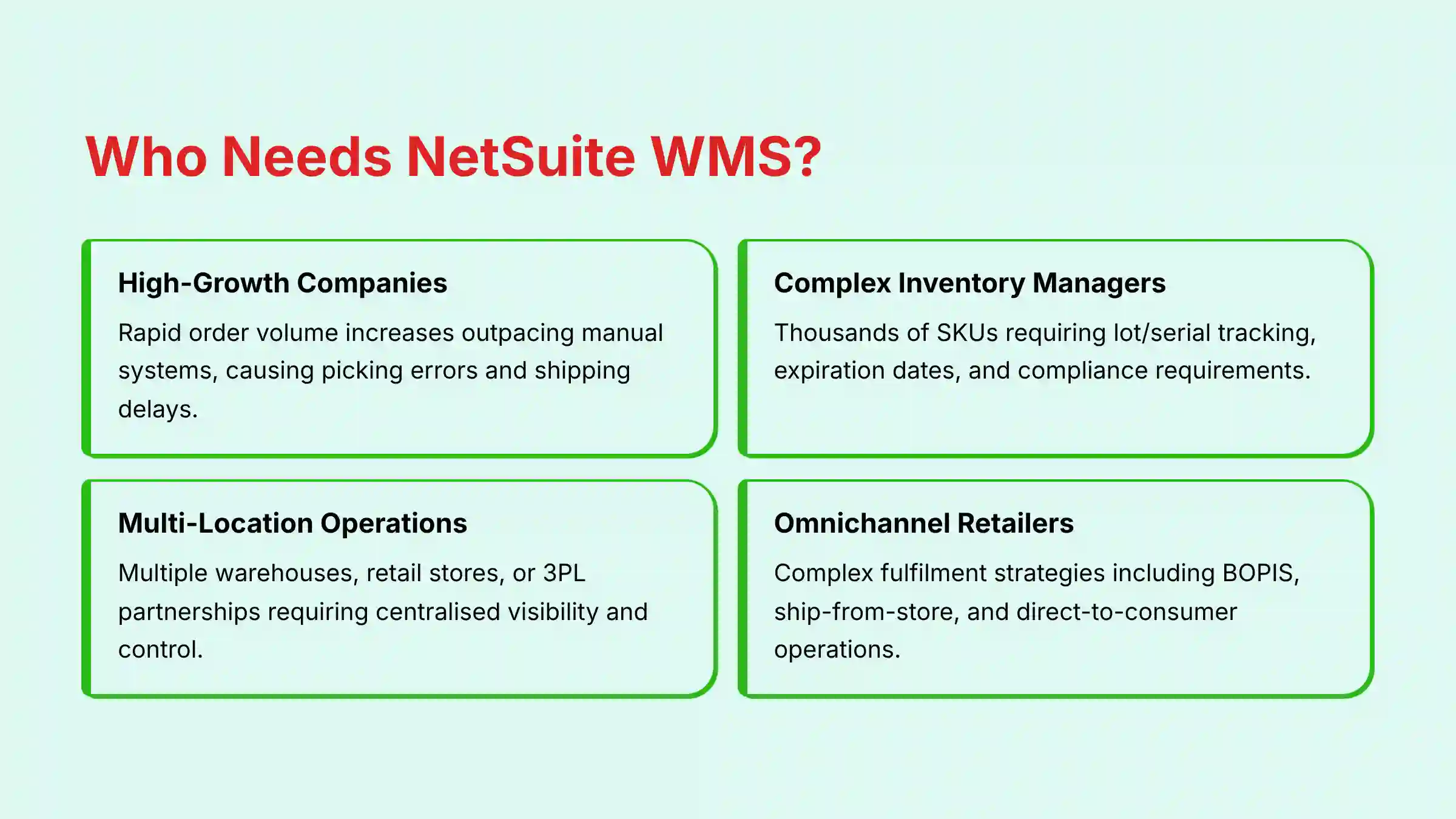
NetSuite WMS is ideally positioned for growing organizations whose warehouse operations have become strategic bottlenecks, limiting their ability to scale efficiently and meet customer expectations. The system is particularly valuable for businesses implementing AI-driven supply chain strategies that require real-time operational data and automated decision-making capabilities.
Prime Candidates Include:
- High-Growth Companies: Organizations experiencing rapid order volume increases that have outpaced manual or spreadsheet-based systems, leading to picking errors, shipping delays, and inventory discrepancies
- Complex Inventory Managers: Businesses handling thousands of SKUs, items requiring lot or serial number tracking (electronics, pharmaceuticals, food & beverage), or products with expiration dates and compliance requirements
- Multi-Location Operations: Companies operating multiple warehouses, retail stores, or 3PL partnerships requiring centralized visibility and control
- Omnichannel Retailers: Organizations executing complex fulfillment strategies like Buy Online Pick Up In Store (BOPIS), ship-from-store, and direct-to-consumer alongside B2B wholesale
The system's cloud-native architecture makes it suitable even for smaller operations with complex requirements. The key determinant isn't company size but operational complexity and the strategic importance of warehouse efficiency to business growth. If inventory accuracy, fulfillment speed, and operational visibility are critical competitive advantages in your market, NetSuite WMS becomes a necessary investment for supporting advanced AI for Operations & Supply Chain initiatives.
Organizations evaluating alternatives should also explore NetSuite WMS Top Alternatives and Competitors to ensure they select the optimal solution for their specific requirements and operational complexity.
How does NetSuite WMS integrate with robotics, automation hardware, and third-party logistics providers?
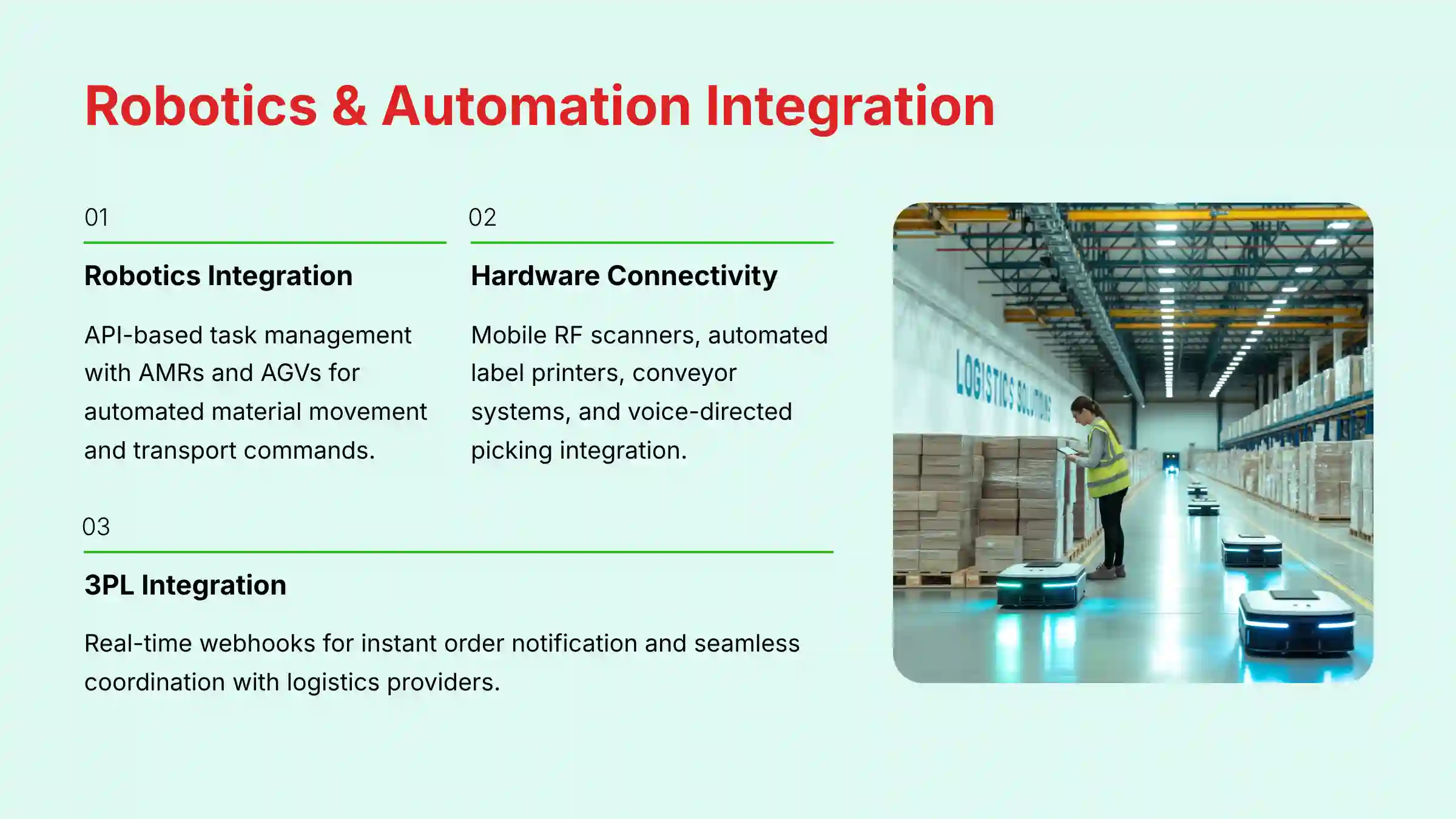
NetSuite WMS serves as the central orchestration layer for modern automated warehouse operations, integrating with robotics, hardware systems, and external partners through its comprehensive API framework and established connector ecosystem. This integration capability is essential for AI for Operations & Supply Chain strategies that require seamless data flow between physical and digital operations.
Robotics Integration:
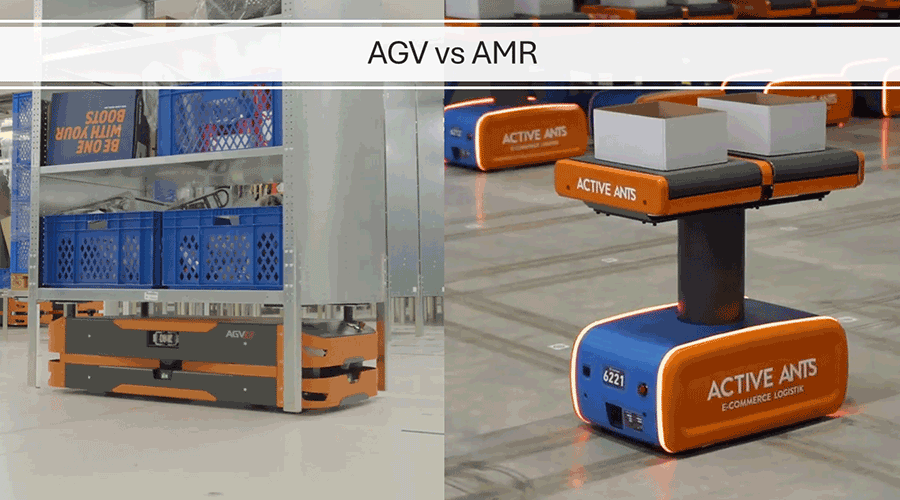
NetSuite WMS connects with Autonomous Mobile Robots (AMRs) and Automated Guided Vehicles (AGVs) through API-based task management. The WMS sends movement commands (e.g., “transport pallet from receiving to bin A-15-3”) to robotics management software, which executes the physical movement and confirms task completion back to NetSuite. This automation frees human workers for higher-value activities like quality control and exception handling.
Hardware Connectivity:
The system seamlessly integrates with essential warehouse hardware including mobile RF barcode scanners running NetSuite's mobile application, automated label printers, conveyor systems, and sorting equipment. Voice-directed picking systems and pick-to-light technologies can also be integrated to further enhance productivity and accuracy.
3PL Integration:
NetSuite's latest updates include state-of-the-art webhooks that act as an event-driven mechanism. Whenever a specified action occurs in NetSuite—such as a new order being placed, an item being updated, or orders being shipped—the webhook instantly sends the relevant data to external systems, providing instant notification of orders and invoicing. This real-time data exchange enables seamless coordination with third-party logistics providers, ensuring inventory visibility and order status accuracy across the entire supply chain network.
This integration architecture supports the creation of digital twin models and enables predictive analytics by providing continuous, real-time operational data from all connected systems. For practical guidance on leveraging these capabilities, explore our comprehensive NetSuite WMS Tutorials and Usecase resources.
What are the typical costs and ROI expectations for NetSuite WMS implementation?
Understanding NetSuite WMS pricing requires evaluating both licensing costs and implementation investment within the context of measurable supply chain performance improvements. The total cost structure reflects the system's position as an enterprise-grade solution designed to deliver substantial operational ROI.
Licensing Structure:
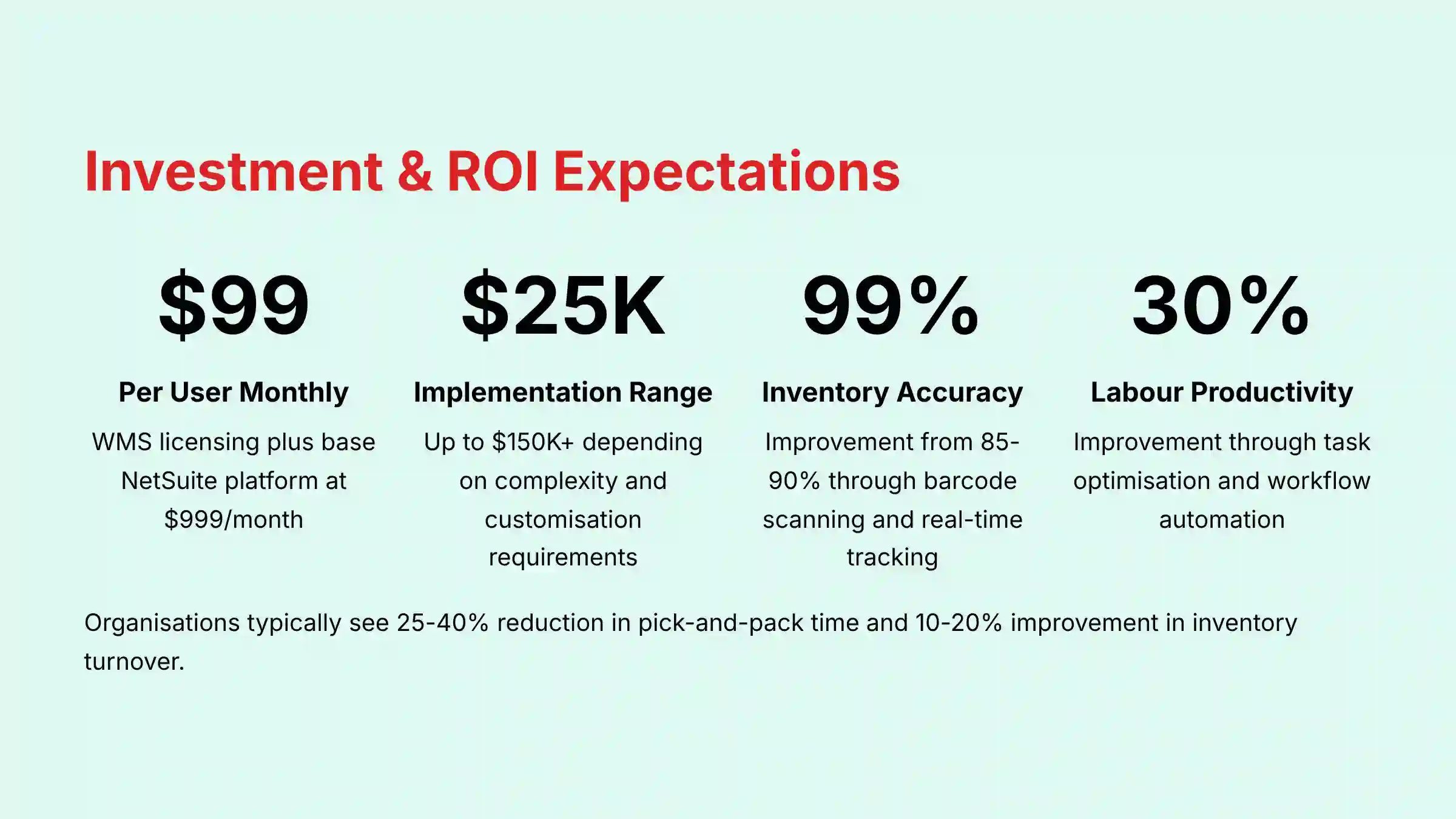
NetSuite WMS pricing starts at $99 per user monthly, in addition to the base NetSuite platform licensing. The starting cost for a base NetSuite license is approximately $999 per month, billed annually, which provides the foundational ERP infrastructure required for WMS functionality. Organizations typically need to budget for full user licenses at $120 per month per full license for warehouse managers and planners requiring comprehensive system access.
Implementation Investment:
NetSuite implementation costs typically range from $25,000 to $150,000+, depending on your project's complexity. Implementation rates typically range $150-$350 per hour based on the level of implementation experience and industry expertise of your NetSuite partner.
ROI Expectations for AI for Operations & Supply Chain:
Organizations implementing NetSuite WMS typically achieve measurable improvements in key supply chain KPIs:
- Inventory Accuracy: Improvements from 85-90% to 99%+ through barcode scanning and real-time tracking
- Order Fulfillment Speed: 25-40% reduction in pick-and-pack time through optimized workflows
- Labor Productivity: 15-30% improvement in warehouse labor efficiency through task optimization
- Inventory Turnover: Enhanced visibility and demand planning typically improve turnover by 10-20%
The system's ability to provide real-time operational data supports advanced analytics and AI-driven optimization, creating compounding value for organizations implementing broader supply chain intelligence initiatives.
How does NetSuite WMS support advanced inventory control and compliance requirements?
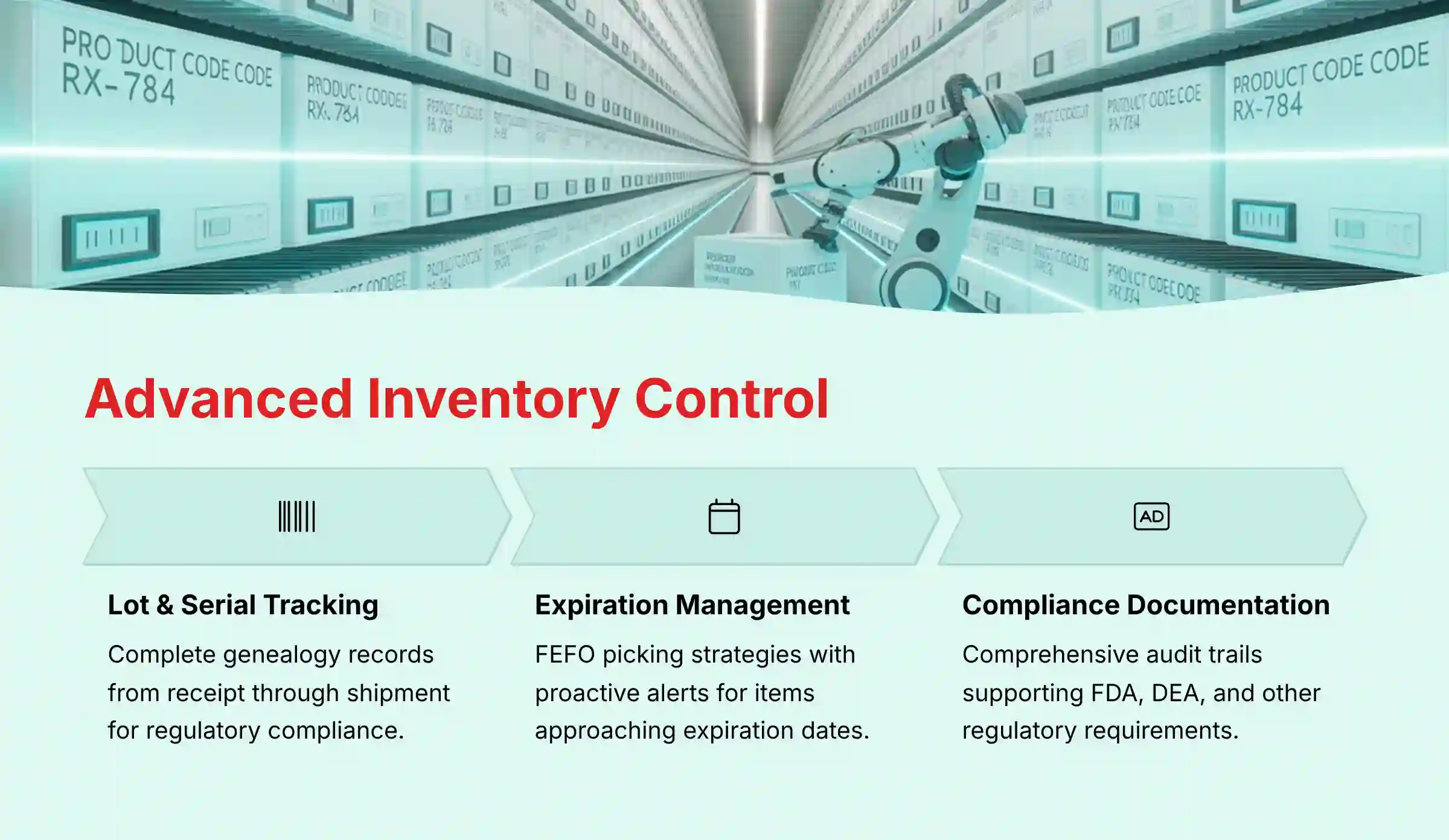
NetSuite WMS provides comprehensive inventory control capabilities designed to meet the stringent requirements of regulated industries and complex supply chain operations. The system's advanced tracking and compliance features are essential for AI for Operations & Supply Chain applications that require complete traceability and audit trails.
Lot and Serial Number Tracking:
The system maintains complete genealogy records for all inventory items, tracking lot numbers from receipt through shipment. This capability is crucial for industries like pharmaceuticals, food & beverage, and electronics where traceability is mandatory for regulatory compliance and quality control. Serial number tracking provides item-level visibility for high-value or warranty-tracked products.
Expiration Date Management:
NetSuite WMS automatically enforces First Expired, First Out (FEFO) picking strategies to minimize waste and ensure product quality. The system provides proactive alerts for items approaching expiration, enabling proactive inventory rotation and markdown strategies.
Cycle Counting and Inventory Accuracy:
The system includes comprehensive cycle count plans that can be configured based on item velocity, value, or accuracy requirements. Mobile RF scanning enables real-time count adjustments, while discrepancy reporting provides visibility into accuracy trends and potential process improvements.
Compliance Documentation:
The system maintains comprehensive audit trails for all inventory movements, supporting compliance requirements for industries subject to FDA, DEA, or other regulatory oversight. Integration with NetSuite's financial modules ensures accurate cost tracking and GAAP-compliant inventory valuation.
For AI for Operations & Supply Chain professionals, these capabilities provide the data foundation necessary for advanced analytics, demand forecasting, and predictive inventory optimization while maintaining the control and visibility required for operational excellence. Organizations seeking comprehensive guidance should explore NetSuite WMS FAQs for detailed implementation and operational insights.
What are the key implementation challenges and best practices for NetSuite WMS?
Successful NetSuite WMS implementation requires careful planning and execution to avoid common pitfalls that can impact ROI and operational effectiveness. Understanding these challenges is crucial for AI for Operations & Supply Chain leaders planning their digital transformation initiatives.
Critical Implementation Challenges:
Data Migration and Cleanup:
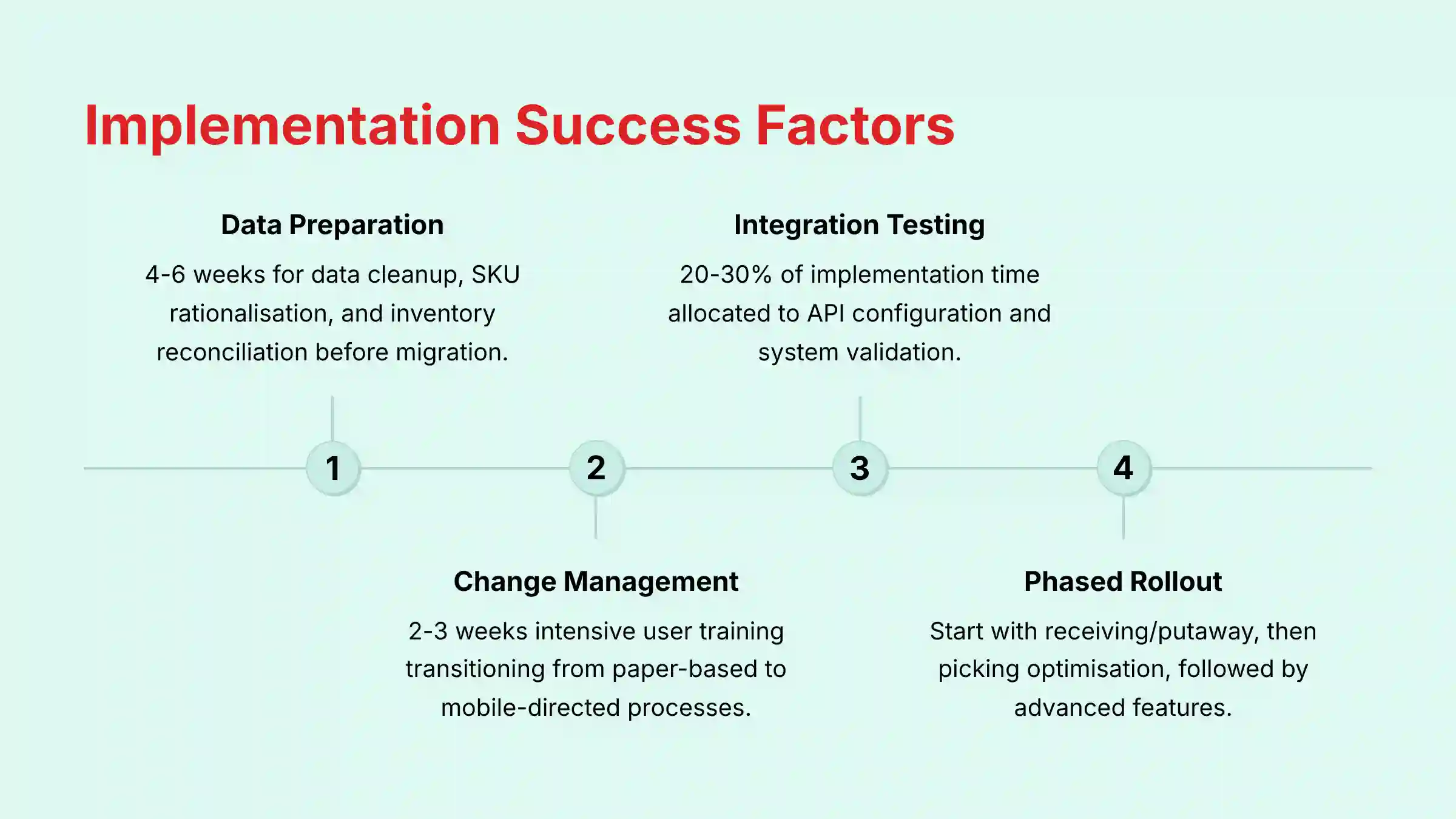
Legacy inventory data often contains inconsistencies, duplicate records, and outdated information that must be cleaned before migration. Organizations should plan for 4-6 weeks of data preparation, including SKU rationalization, location mapping, and inventory reconciliation.
Change Management and Training:
Warehouse staff must transition from paper-based or legacy system workflows to mobile-directed processes. Successful implementations invest heavily in hands-on training and change management, with 2-3 weeks of intensive user training typically required.
Integration Complexity:
Connecting NetSuite WMS with existing systems (ERP, transportation management, e-commerce platforms) requires careful API configuration and testing. Organizations should allocate 20-30% of implementation time to integration testing and validation.
Best Practices for Success:
Phased Rollout Strategy:
Implement core receiving and putaway functionality first, followed by picking optimization, then advanced features like cycle counting and returns processing. This approach minimizes operational disruption while building user confidence.
Process Standardization:
Use implementation as an opportunity to standardize and optimize warehouse processes rather than replicating existing workflows. NetSuite WMS includes industry best practices that should be adopted rather than customized around legacy processes.
Performance Baseline Establishment:
Measure key metrics (order accuracy, fulfillment time, labor productivity) before implementation to quantify post-implementation improvements and ROI.
For organizations pursuing AI for Operations & Supply Chain strategies, successful NetSuite WMS implementation provides the operational data foundation necessary for advanced analytics, machine learning applications, and continuous process optimization.
How does NetSuite WMS enable supply chain visibility and digital twin capabilities?
NetSuite WMS serves as a critical data source for supply chain visibility and digital twin modeling, providing real-time operational insights that support AI-driven decision making and predictive analytics. The system's comprehensive data capture and integration capabilities are fundamental to modern supply chain intelligence initiatives.
Real-Time Operational Visibility:
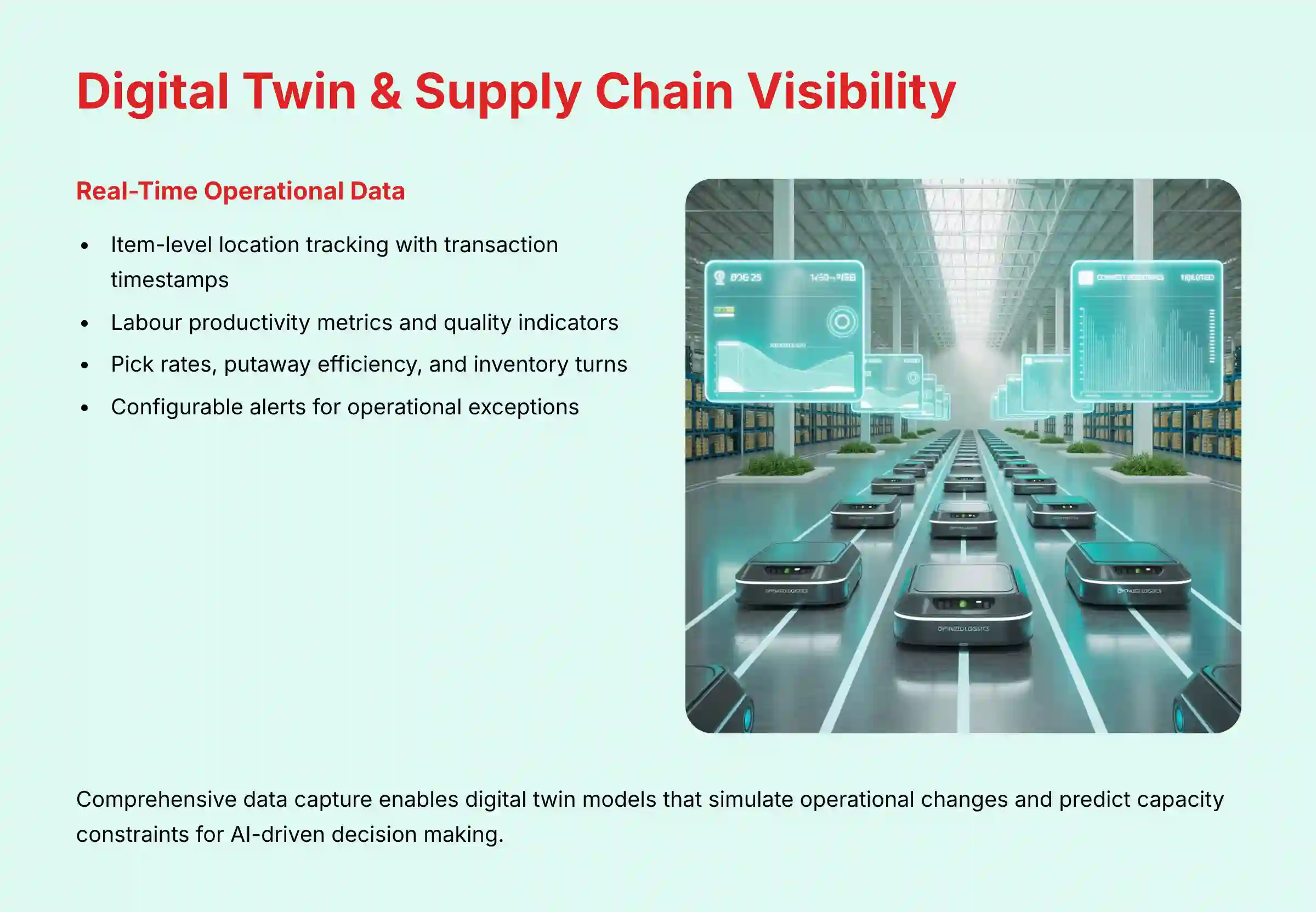
NetSuite WMS provides real-time updates on inventory stock levels, inbound and outbound processes and more for informed decision making. This continuous data stream includes item-level location tracking, transaction timestamps, labor productivity metrics, and quality indicators that form the foundation for supply chain digital twins.
Data Integration and Analytics:
The system captures granular operational data including pick rates, put-away efficiency, inventory turns by location, and order cycle times. This data integrates seamlessly with NetSuite's broader analytics platform and external business intelligence tools, enabling sophisticated performance dashboards and predictive modeling.
Exception Management and Alerts:
NetSuite WMS provides configurable alerts for operational exceptions including inventory discrepancies, delayed orders, and productivity variances. These real-time notifications enable proactive intervention and continuous process optimization.
Digital Twin Support:
The system's comprehensive data capture enables the creation of digital twin models that mirror physical warehouse operations. These models can simulate the impact of operational changes, predict capacity constraints, and optimize resource allocation strategies.
For AI for Operations & Supply Chain applications, NetSuite WMS provides the operational data layer necessary for advanced analytics including demand sensing, inventory optimization algorithms, and predictive maintenance of warehouse equipment. The system's API framework enables real-time data extraction for machine learning models and external analytics platforms. Organizations looking to expand their warehouse automation capabilities should also consider The Best 10 AI for Warehouse & Inventory Management (2025) solutions.
What security and compliance features does NetSuite WMS provide for enterprise operations?
NetSuite WMS incorporates enterprise-grade security and compliance capabilities essential for organizations handling sensitive supply chain data and operating in regulated industries. These features are crucial for AI for Operations & Supply Chain applications that require secure data integration and regulatory compliance.
Data Security Architecture:
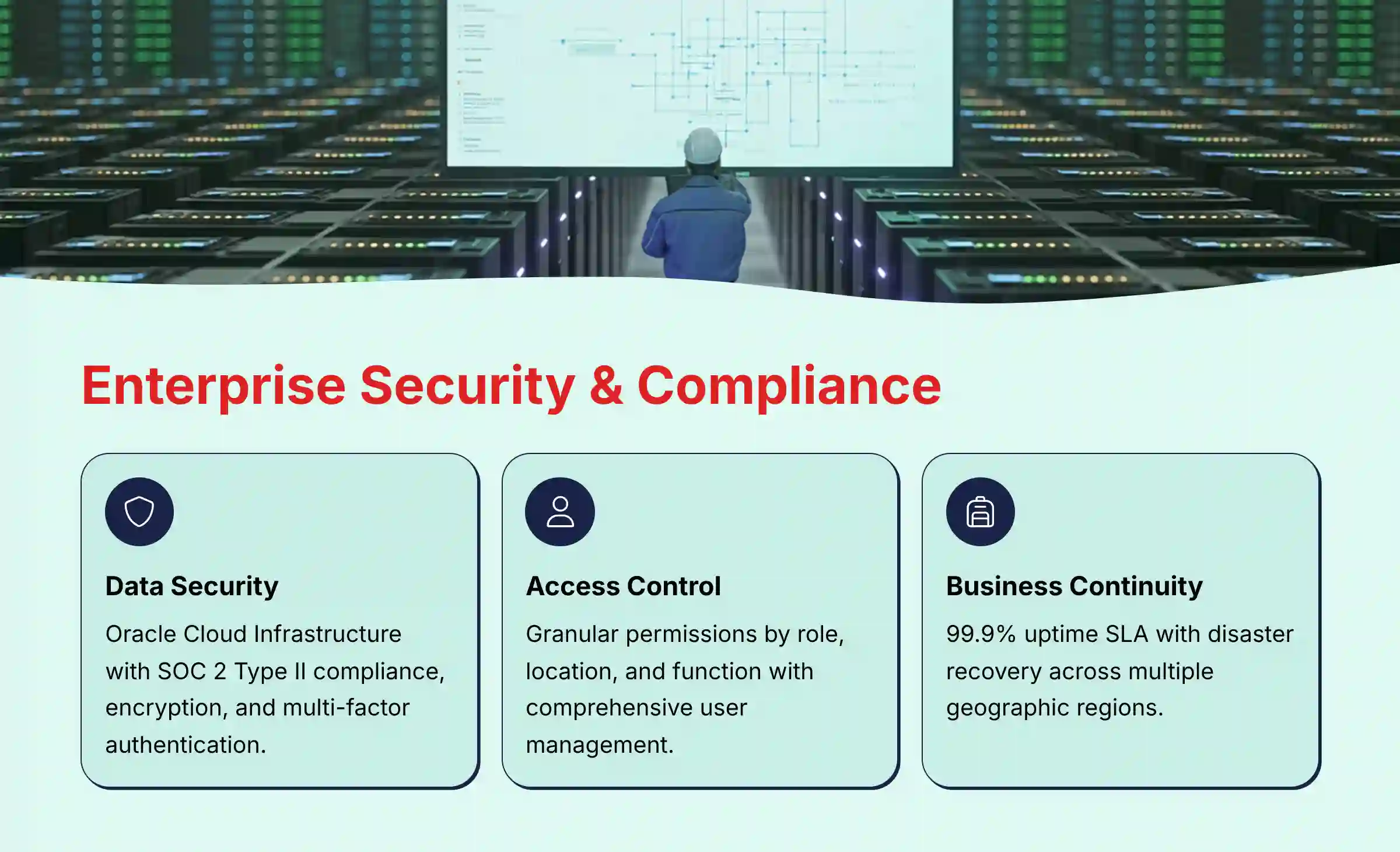
NetSuite WMS operates on Oracle Cloud Infrastructure with comprehensive security controls including data encryption in transit and at rest, multi-factor authentication, and role-based access controls. The system maintains SOC 2 Type II compliance, ensuring continuous monitoring of security controls and procedures.
Access Control and User Management:
The system provides granular permission controls enabling organizations to restrict access based on role, location, and function. Warehouse staff can be limited to specific bins or product categories, while managers maintain broader visibility and control capabilities.
Audit Trail and Compliance Reporting:
All system transactions maintain comprehensive audit trails including user identification, timestamp, and transaction details. This capability supports compliance requirements for industries subject to FDA, DEA, or other regulatory oversight, while providing the documentation necessary for internal and external audits.
Data Integrity and Backup:
NetSuite maintains multiple data backups with point-in-time recovery capabilities, ensuring business continuity in case of system failures or data corruption. The system's cloud architecture provides 99.9% uptime SLA with disaster recovery capabilities across multiple geographic regions.
Integration Security:
API connections with external systems utilize token-based authentication and encryption protocols to protect data in transit. Organizations can implement additional security layers including IP restrictions and VPN requirements for sensitive integrations.
For AI for Operations & Supply Chain initiatives, these security capabilities ensure that sensitive operational data used in analytics and machine learning applications remains protected while enabling the real-time data access necessary for advanced supply chain intelligence applications.

Leave a Reply