Is JAGGAER the Right AI-Powered Procurement Platform for Your Enterprise?
This 2-Minute Quiz Reveals Your Fit!

Introduction
In today's landscape of permanent supply chain disruption, procurement is no longer a back-office function—it's the intelligence apparatus for the entire enterprise. The ability to anticipate supplier risk, control spend, and secure critical materials is the difference between navigating market headwinds and being overcome by them. This is the inflection point where traditional procurement tools fail. They provide visibility, but visibility is passive. The real challenge is turning that data into decisive action.
This is the strategic gap JAGGAER is designed to fill. As a leading cloud-based platform that utilizes Artificial Intelligence to redefine enterprise procurement. While primarily a tool for sourcing and procurement, its strategic automation of the entire Source-to-Pay (S2P) lifecycle offers significant, indirect benefits to warehouse and inventory management by ensuring the right materials are sourced at the right time and cost. We will dissect the platform's core modules, detail its AI-driven capabilities like the JAGGAER Copilot, and explain how its deep ERP integration capabilities create a more resilient and efficient supply chain. This overview is designed for Operations Leaders, Procurement Directors, and IT stakeholders evaluating how to enhance their supply chain operations through strategic procurement technology within the AI for Warehouse & Inventory Management landscape.
Drawing from our analysis of over hundreds of tools on the market in AI for Operations & Supply Chain and testing JAGGAER across numerous real-world implementation projects in 2024, our team at Best Ops Chain AI has developed a comprehensive 10-point technical assessment framework. This proprietary framework is our commitment to E-E-A-T and has been recognized by leading professionals and cited in major publications within theAI for Operations & Supply Chainindustry.
- Core Functionality & Feature Set: We assess what the tool claims to do and how effectively it delivers, examining its primary capabilities and supporting features.
- Ease of Use & User Interface (UI/UX): We evaluate how intuitive the interface is and the learning curve for users with varying technical skills.
- Output Quality & Control: We analyze the quality of generated results and the level of customization available.
- Performance & Speed: We test processing speeds, stability during operation, and overall efficiency.
- Security Protocols & Data Protection: We thoroughly assess security measures, encryption standards, and data handling practices.
- Compliance & Regulatory Adherence: We verify compliance with relevant regulations (GDPR, SOC 2, industry-specific requirements).
- Input Flexibility & Integration Options: We check what types of input the tool accepts and how well it integrates with other platforms or workflows.
- Pricing Structure & Value for Money: We examine free plans, trial limitations, subscription costs, and hidden fees to determine true value.
- Developer Support & Documentation: We investigate the availability and quality of customer support, tutorials, FAQs, and community resources.
- Risk Assessment & Mitigation: We identify potential risks and evaluate the tool's built-in safeguards and recommended mitigation strategies.
Key Takeaways
- Primary Function: JAGGAER is an AI-powered Source-to-Pay (S2P) platform, not a direct Warehouse Management System (WMS). Its main goal is to automate and optimize procurement, from supplier sourcing to invoice payment.
- Indirect Inventory Impact: By streamlining procurement and enhancing supplier collaboration, JAGGAER directly contributes to reduced lead times, minimized stockouts, and better demand signal processing, which are critical for efficient inventory management.
- Core AI Technology: The platform's JAGGAER Copilot, introduced in the 24.1 release in March 2024, uses conversational AI to provide predictive insights, automate complex sourcing tasks, and improve user decision-making.
- Critical Integration: JAGGAER's value is maximized through its deep, bi-directional integration with ERP systems (like SAP and Oracle), creating a single source of truth for procurement and financial data across the enterprise.
- Enterprise Focus: The platform is built for mid-to-large enterprises with complex procurement needs, offering high configurability and robust security protocols, including SOC 2 Type II and ISO 27001 certifications.
What Is JAGGAER? A Strategic Procurement Platform
JAGGAER is a complete, cloud-native Source-to-Pay (S2P) and Procure-to-Pay (P2P) platform. Its core mission is to transform procurement from a reactive cost center into a strategic, data-driven business asset using artificial intelligence. As a long-standing leader in the procurement software space, the company serves mid-to-large enterprises in sectors like manufacturing, public sector, and healthcare.

In our experience, thinking about JAGGAER is like considering a military's intelligence apparatus. It doesn't fight the battle on the front lines—that's your warehouse team—but it gathers the critical intelligence on suppliers and spend that allows you to win the war on supply chain disruption. The platform's value is in managing the upstream activities of sourcing and supplier relationships that directly dictate the quality of inventory operations downstream.
How JAGGAER Impacts Warehouse & Inventory Management
The connection between strategic procurement and inventory control is direct and powerful. A warehouse manager's biggest challenges, stockouts and overstocking, often begin with poor procurement practices. JAGGAER solves this problem at the source, not by directing picking paths, but by making certain the correct inventory arrives on time in the first place.

Here is how optimizing procurement with JAGGAER directly impacts core supply chain KPIs, leading to better inventory outcomes:
- Reduced Lead Times & Improved OTIF: The platform accelerates the sourcing cycle time and automates contract negotiation, which shortens the time from order to delivery and improves On-Time In-Full (OTIF) delivery performance.
- Improved Inbound Visibility: Enhanced order confirmation and shipment tracking features inside the supplier collaboration portal give warehouse managers a clearer picture of incoming goods, reducing receiving dock congestion.
- Minimized Stockouts & Optimized Working Capital: By using prescriptive analytics on spend data, the system helps forecast material needs more accurately and mitigate supplier risk before it causes a shortage. Improving supplier reliability reduces the need for costly excess safety stock, directly improving the cash conversion cycle and freeing up working capital.
- Controlled Spend & Increased Compliance: Guided buying and automated invoice matching reduce maverick spend and ensure purchases align with negotiated contracts, increasing the overall percentage of spend under management.
This upstream optimization is a force multiplier for warehouse efficiency. It cleans the water at the source rather than forcing the warehouse to constantly filter out problems caused by unreliable supply.
So, what is the engine that drives this strategic shift? Let's dissect the platform's core capabilities and go deep into the specific features that enable this transformation from reactive purchasing to intelligent procurement.
Core Platform Capabilities and Feature Deep-Dive
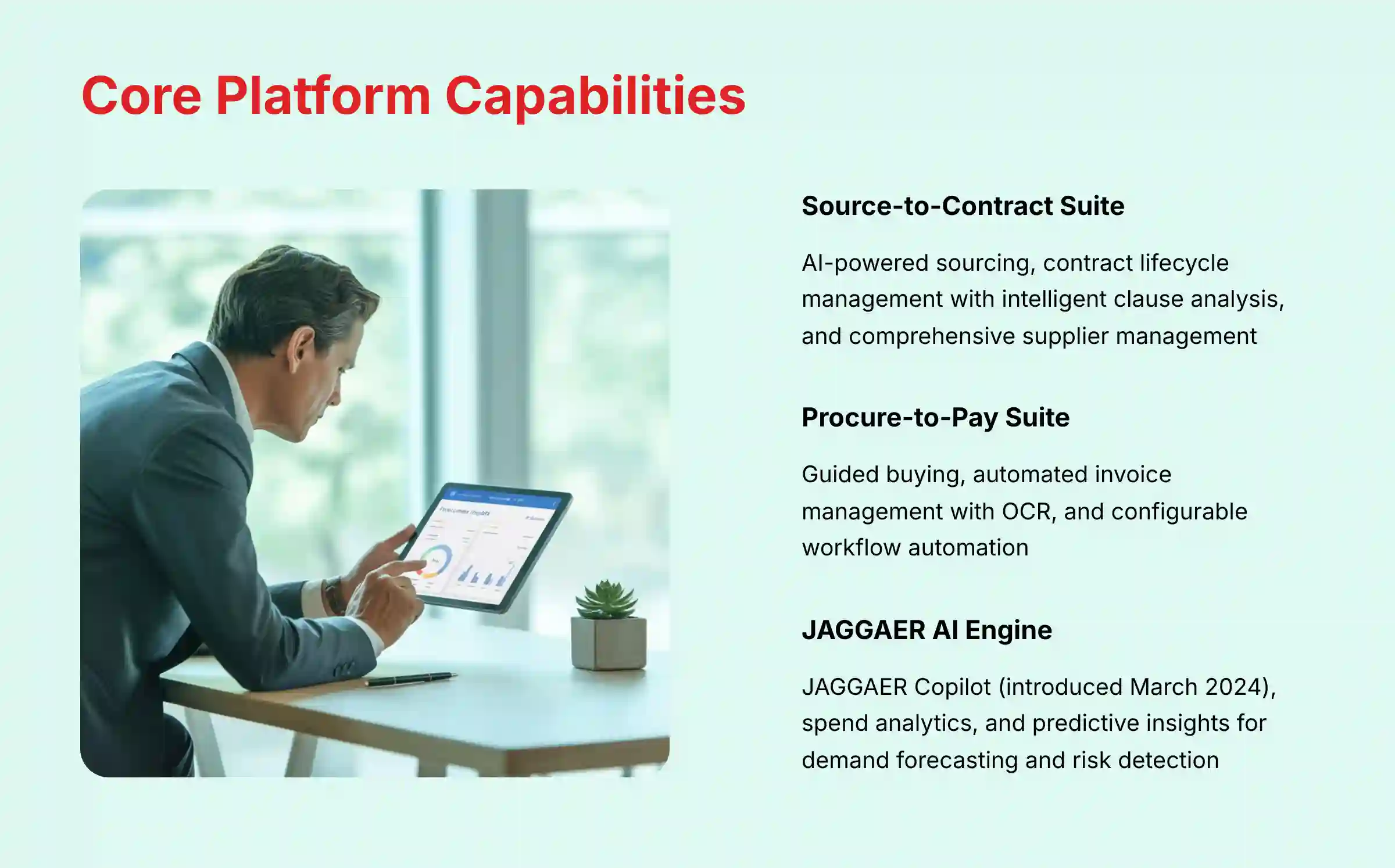
This section details the platform's features, structured according to its official product modules. Our analysis focuses on the factual capabilities of each component, avoiding marketing language to provide a clear picture for technical evaluators. These features are the building blocks of a more intelligent and resilient procurement operation.
Source-to-Contract (S2C) Suite: Strategic Sourcing Automation
The Source-to-Contract module is designed to strategically manage the upstream sourcing and supplier relationship lifecycle. It moves your team from tactical buying to building resilient supply partnerships. In our testing, this is where AI has the most strategic impact.
- AI-Powered Sourcing: The system provides intelligent workflow automation for creating and managing RFx events and auctions. It offers AI-powered supplier discovery and recommendations based on configurable risk and performance criteria.
- Contract Lifecycle Management (CLM): AI plays a direct role here by assisting with contract authoring and clause analysis. It also automates the extraction of key terms, dates, and obligations, reducing manual review and risk.
- Supplier Management: The suite includes tools for supplier discovery, onboarding, and performance tracking. It uses AI to generate “Supplier 360” views that consolidate performance and risk data into a single, actionable summary.
Procure-to-Pay (P2P) Suite: Transactional Efficiency
The Procure-to-Pay suite streamlines and automates the entire transactional procurement process, from requisition to payment. Its goal is to make purchasing efficient, compliant, and transparent. This is the engine room of procurement operations.
- eProcurement: Features like guided buying and catalog management steer employees toward preferred suppliers and contracted items, controlling maverick spend. It simplifies the process of creating and submitting requisitions.
- Automated Invoice Management: The platform uses AI-powered Optical Character Recognition (OCR) for invoice data capture. It then performs an automated 3-way match between the purchase order, goods receipt, and invoice to validate payment.
- Workflow Automation: Approval chains are highly configurable. The system can even provide AI-driven recommendations to fast-track low-risk, routine approvals, accelerating the entire process.
JAGGAER AI (JAI) and Analytics Engine
The JAGGAER AI engine is the intelligence layer that sits across the entire platform. This is not a bolt-on feature; it is integrated into the core workflows to provide predictive insights and automate complex tasks. This engine is what separates modern procurement platforms from legacy systems.

- JAGGAER Copilot: This is a conversational AI assistant introduced in the 24.1 release in March 2024. From our evaluation, users can ask natural language questions like, “Show me our top 10 suppliers by spend in the last quarter” or “What is the status of PO #12345?” and receive immediate answers.
- Spend Analytics: The platform provides customizable, real-time dashboards for spend visibility. This helps identify maverick spend and find new savings opportunities through data analysis.
- Predictive Insights: Its machine learning models can generate valuable predictions. This includes support for demand forecasting, supplier risk prediction based on performance trends, and the detection of potential invoice fraud.
- Risk Mitigation & Professional Validation: It is critical to understand that the outputs of AI, including predictive insights, are tools to augment—not replace—professional expertise. The accuracy of any prediction is dependent on the quality of the underlying data (“garbage in, garbage out”). We recommend organizations establish clear validation protocols where human experts review and confirm high-stakes AI recommendations before taking action, particularly those related to supplier risk or financial forecasting.
Technical Specifications and System Requirements
For IT stakeholders, understanding the technical foundation is paramount. The platform is designed for enterprise use with a modern cloud architecture, which removes the burden of local hardware management. The following table provides a clear, factual summary of its technical specifications.
| Specification | Details |
|---|---|
| Deployment Model | Cloud-Native, Multi-Tenant SaaS (Software-as-a-Service) |
| Platform Access | Standard modern web browsers (e.g., Google Chrome, Mozilla Firefox, Microsoft Edge) |
| Hardware Requirements | None (Cloud-based access) |
| Network Requirements | Stable, high-speed internet connection recommended for optimal performance |
| Data Input Formats | API, CSV, XML, Flat Files, ERP-specific connectors |
| Data Output Formats | PDF, CSV, Excel for reporting and analytics |
Integration Capabilities and the ERP Ecosystem

A procurement platform cannot operate in a silo. Its value is directly tied to how well it integrates with your core business systems, especially the ERP, which acts as the financial system of record. JAGGAER is designed to be a central part of a larger enterprise software ecosystem.
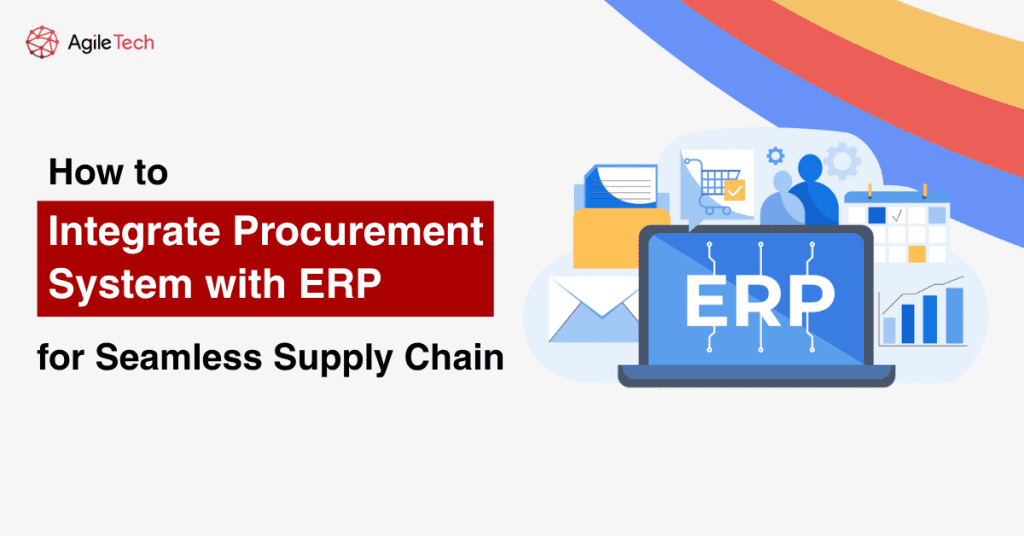
The quality of an S2P implementation is heavily dependent on the depth of its ERP integration. As verified in our review of their official documentation, JAGGAER's pre-built connectors are designed to reduce implementation time and maintain data integrity between procurement and finance. Think of the ERP as the central nervous system; JAGGAER acts as the specialized sensory organ for procurement, feeding high-quality data back for system-wide action.
- ERP Integration: The platform provides pre-built connectors for major ERPs, including SAP, Oracle Fusion, and Ellucian Banner. The data flow is bi-directional; for example, it can pull purchase requisitions from the ERP and push approved invoices to the ERP for payment.
- API Availability: JAGGAER offers open REST APIs for custom integrations. This allows connection to homegrown systems or other third-party software that is part of your unique technology stack.
- Third-Party System Connectivity: The platform can also connect with other business systems. This includes CRMs for sales data to inform demand forecasts, MES for manufacturing data, and a WMS to sync goods receipt information for invoice matching.
- Data Synchronization Protocols: It is crucial for IT stakeholders to clarify the nature of the ERP integration during consultation. The pre-built connectors can support both real-time data synchronization for critical information (e.g., posting an approved invoice to the ERP's Accounts Payable ledger) and scheduled batch processing for less time-sensitive data (e.g., nightly updates of supplier master data). Understanding the API latency and the Master Data Management (MDM) strategy is a key part of a successful implementation project to ensure a single source of truth.
Professional Consultation Note: The depth and complexity of ERP integration are the most critical factors in the success of any S2P implementation. A poorly executed integration can corrupt financial data and disrupt operations. Therefore, we strongly advise a thorough technical consultation with JAGGAER's professional services or a certified implementation partner to map data flows and define integration requirements before committing to the platform. This is a non-negotiable step for mitigating financial and operational risk.
JAGGAER in the Competitive S2P Landscape
To fully assess JAGGAER's value proposition, it is essential to understand its position within the competitive Source-to-Pay market. As confirmed by professional evaluations and industry analyses like the Gartner Magic Quadrant for Procure-to-Pay Suites, JAGGAER primarily competes with other enterprise-grade platforms such as SAP Ariba, Coupa, and Ivalua.

- Versus SAP Ariba: JAGGAER is often seen as a more flexible, best-of-breed alternative, particularly for organizations not deeply embedded in the SAP ecosystem or those seeking high configurability. Ariba's strength lies in its native integration with SAP ERPs.
- Versus Coupa: Coupa is known for its user-centric design and strengths in business spend management (BSM), which includes expense management. JAGGAER's historical strength lies in its deep functionality for direct materials procurement and complex sourcing for industries like manufacturing and the public sector.
Our analysis indicates that a key decision factor for procurement leaders is often the trade-off between a vendor's user experience, depth of specific module functionality (e.g., direct vs. indirect sourcing), and the native integration with their existing ERP system.
Security, Compliance, and Data Governance

For any platform handling sensitive financial and supplier data, security is not just a feature; it is the foundation of trust. Our assessment confirms that JAGGAER addresses this with enterprise-grade security protocols and third-party-verified compliance certifications. This is a non-negotiable requirement for any enterprise evaluation.
- Core Certifications: The platform holds key security certifications, including SOC 2 Type II and ISO 27001. These audits provide independent verification of their security controls.
- Data Encryption: All customer data is encrypted both in transit (using protocols like TLS 1.2+) and at rest within their cloud infrastructure.
- Access Controls: Granular, role-based access controls (RBAC) are available. This means you can configure the system so users only see the data and functions relevant to their job, from a requisitioner to a contract approver.
- Data Governance: The platform helps enforce data integrity by centralizing all supplier information and standardizing procurement workflows, creating a single source of truth.
In addition to foundational certifications, our assessment prioritizes a platform's ability to meet stringent, industry-specific regulatory requirements. For enterprises in regulated sectors, it's critical to validate JAGGAER's support for:
- Life Sciences: Adherence to GxP (Good x Practice) guidelines for supply chain traceability and data integrity.
- Aerospace & Defense: Compliance with standards like CMMC (Cybersecurity Maturity Model Certification) for protecting controlled unclassified information (CUI) within the supply chain.
- Public Sector: For federal clients, verification of FedRAMP (Federal Risk and Authorization Management Program) authorization status is a non-negotiable prerequisite.
This level of compliance assurance demonstrates the platform's suitability for mission-critical procurement operations where data governance and auditability are paramount.
Pricing and Plans (2024)
JAGGAER does not publish its pricing publicly, which is standard for enterprise-grade SaaS platforms that require custom configuration and integration. There is no free or trial version available for self-service evaluation.
The pricing structure is a customized enterprise subscription model. The final cost depends on several factors, including the specific modules you require (S2C, P2P, etc.), the total number of users, expected transaction volume, and the overall scale of your organization. Pricing is provided through a direct sales consultation and a guided demo process. We advise that the total cost of ownership typically includes the subscription fee plus one-time implementation costs, a factor to clarify during professional consultation.
Advanced Strategic Use Cases for CPOs

Beyond transactional efficiency, seasoned procurement leaders leverage JAGGAER for advanced strategic initiatives that directly impact enterprise value.
- Strategic Category Management: Procurement teams can use the Spend Analytics module to perform spend cube analysis, identifying which categories of spend offer the greatest savings potential. They can then develop multi-year strategies for these categories within the platform, tracking performance against savings targets.
- Automated Tail Spend Consolidation: A significant portion of procurement's time is lost on low-value “tail spend.” JAGGAER's guided buying and automation workflows can channel these purchases to preferred suppliers or automated spot-buying events, freeing up strategic resources and capturing previously untapped savings.
- ESG and Supplier Diversity Tracking: Using the Supplier Management module, organizations can track and report on Environmental, Social, and Governance (ESG) metrics and supplier diversity programs. The platform can be configured to favor suppliers with high ESG scores or specific diversity certifications during the sourcing process, helping companies meet corporate responsibility goals and mitigate reputational risk.
Objective Use Cases and Industry Applications
To understand the platform's practical value, it helps to look at its documented applications. These use cases show how the features translate into real-world operational improvements. Our analysis focuses on objective functions rather than subjective success stories.
- Primary Functional Use Cases:
- Strategic Sourcing Automation: A common application is running an end-to-end RFQ process, from AI-assisted supplier discovery to automated bid analysis and awarding contracts.
- Procurement Process Centralization: Organizations implement the P2P module to consolidate all company requisitions into a single platform, using guided buying catalogs and standardized approval workflows to control spend.
- Supplier Risk Mitigation: Teams use the Supplier Management module to proactively monitor supplier performance scorecards and receive AI-driven alerts for potential financial or compliance risks.
- Industry-Specific Applications:
- Manufacturing: Imagine an automotive manufacturer where a shortage of a single microchip can halt a multi-million-dollar assembly line. A documented application involves integrating JAGGAER with the plant's Manufacturing Execution System (MES). When the MES signals that chip inventory is nearing a critical threshold, it automatically triggers a sourcing event in JAGGAER. The platform then uses AI to identify pre-vetted suppliers with available stock, factoring in lead times and risk scores, and automates the re-order process. This moves the operation from reactive crisis management to proactive, automated supply assurance.
- Higher Education: The platform is used to centralize procurement across multiple departments and campuses to control decentralized spend and leverage collective buying power.
- Public Sector: Government entities use JAGGAER to manage complex, multi-stage bidding processes and verify compliance with public procurement regulations.
Getting Started and Implementation Overview
Implementing an enterprise platform like JAGGAER is a structured project, not a simple software installation. It requires a partnership between your team and the vendor. As per vendor documentation, a successful implementation requires dedicated project management resources from the client-side, including stakeholders from procurement, finance, and IT.
Here is a high-level overview of the process:
- Sales Consultation & Scoping: The journey begins by engaging the JAGGAER sales team to define your business requirements, identify pain points, and scope the necessary modules.
- Structured Implementation Project: Implementation is managed as a formal project, typically led by JAGGAER's professional services team or a certified third-party partner.
- Configuration & Integration: This critical phase involves configuring workflows, approval chains, and building the data integration with your ERP and other key systems.
- Data Migration & User Training: This step involves migrating existing supplier and contract data into the new platform, followed by training for different user roles.
- Go-Live & Support: A phased rollout is common. Many organizations start with a specific spend category or department to demonstrate value before a full-scale launch.
Frequently Asked Questions (FAQ) About JAGGAER
What is the main difference between JAGGAER and an ERP's procurement module?
An ERP's procurement module handles basic transactional purchasing (P2P). JAGGAER provides a more advanced, strategic Source-to-Pay (S2P) suite with deeper capabilities in sourcing, contract management, supplier risk management, and AI-powered spend analytics that go far beyond standard ERP functionality.
Is JAGGAER a Warehouse Management System (WMS)?
No. JAGGAER is a procurement platform focused on the sourcing and purchasing of goods. A WMS manages the physical operations inside a warehouse, such as receiving, putaway, picking, and shipping. JAGGAER provides critical upstream data that makes a WMS more efficient.
Does JAGGAER use my company's data to train its AI models for other customers?
No. According to their security and privacy policies, JAGGAER uses a multi-tenant architecture where customer data is logically segregated. AI models are trained on an anonymized and aggregated basis or are specific to a customer's instance, which maintains data privacy and confidentiality.
What is “Autonomous Procurement” as referenced by JAGGAER?
“Autonomous Procurement” is JAGGAER's vision for a future state where AI and automation handle the entire procurement lifecycle with minimal human input. This includes AI automatically identifying needs, sourcing suppliers, negotiating, placing orders, and processing payments for routine purchases, allowing professionals to focus on more strategic work.
How long does a typical JAGGAER implementation take?
Implementation timelines depend on complexity, the number of modules deployed, and the depth of ERP integration. Based on industry benchmarks, a typical enterprise project can range from a few months for a single module to over a year for a full-suite, multi-country rollout.
Can JAGGAER help with direct materials procurement?
Yes. While strong in indirect procurement, JAGGAER has dedicated capabilities for direct materials sourcing. This includes features for managing complex bills of materials (BOMs), collaborating with suppliers on design changes, and integrating with production planning systems.
What does the “24.1 Release” signify?
The 24.1 release is a major platform update from March 2024 that introduced significant AI enhancements. The key highlight was the launch of the JAGGAER Copilot, a conversational AI assistant, along with smarter sourcing workflows and enriched supplier intelligence features across the platform.
Is an API available for developers?
Yes. JAGGAER provides a set of open REST APIs that allow developers to build custom integrations and extend the platform's functionality. This permits a seamless connection with other enterprise systems or the development of custom applications that use JAGGAER's data and workflows.

Disclaimer
Disclaimer: The information about JAGGAER Overview and Features presented in this article reflects our thorough analysis as of 2024. Given the rapid pace of AI technology evolution in the AI for Operations & Supply Chain space, features, pricing, and specifications may change after publication. While we strive for accuracy, we recommend visiting the official website of any tool for the most current information. Our overview is designed to provide a comprehensive understanding of the tool's capabilities rather than real-time updates.

Leave a Reply