Is Ocado Intelligent Automation Right for Your Warehouse?
Take This Quiz to Find Out!
Introduction: Mastering Warehouse Automation with Ocado Intelligent Automation
This guide provides the definitive Ocado Intelligent Automation tutorial and use case analysis for 2025. It is a strategic playbook for operations leaders who want to achieve peak warehouse efficiency. My goal at Best Ops Chain AI is to move beyond simple instructions. Instead, I deliver a framework for integrating the “Chuck” Autonomous Mobile Robot (AMR) fleet, handling WMS and WES integration, and using the AI-powered control tower to maximize your return on investment.
This system is a core technology within the AI for Warehouse & Inventory Management category. Understanding it is critical for transforming your fulfillment operation from a manual cost center into a data-driven, highly automated, and accurate strategic asset. This content comes from my synthesis of insights from certified partners, technical documentation, and real-world performance data to give you actionable tips and proven techniques. You will learn not just the deployment steps, but the strategic levers for optimizing picking speed, confirming inventory accuracy, and driving big gains in labor efficiency.
Key Takeaways
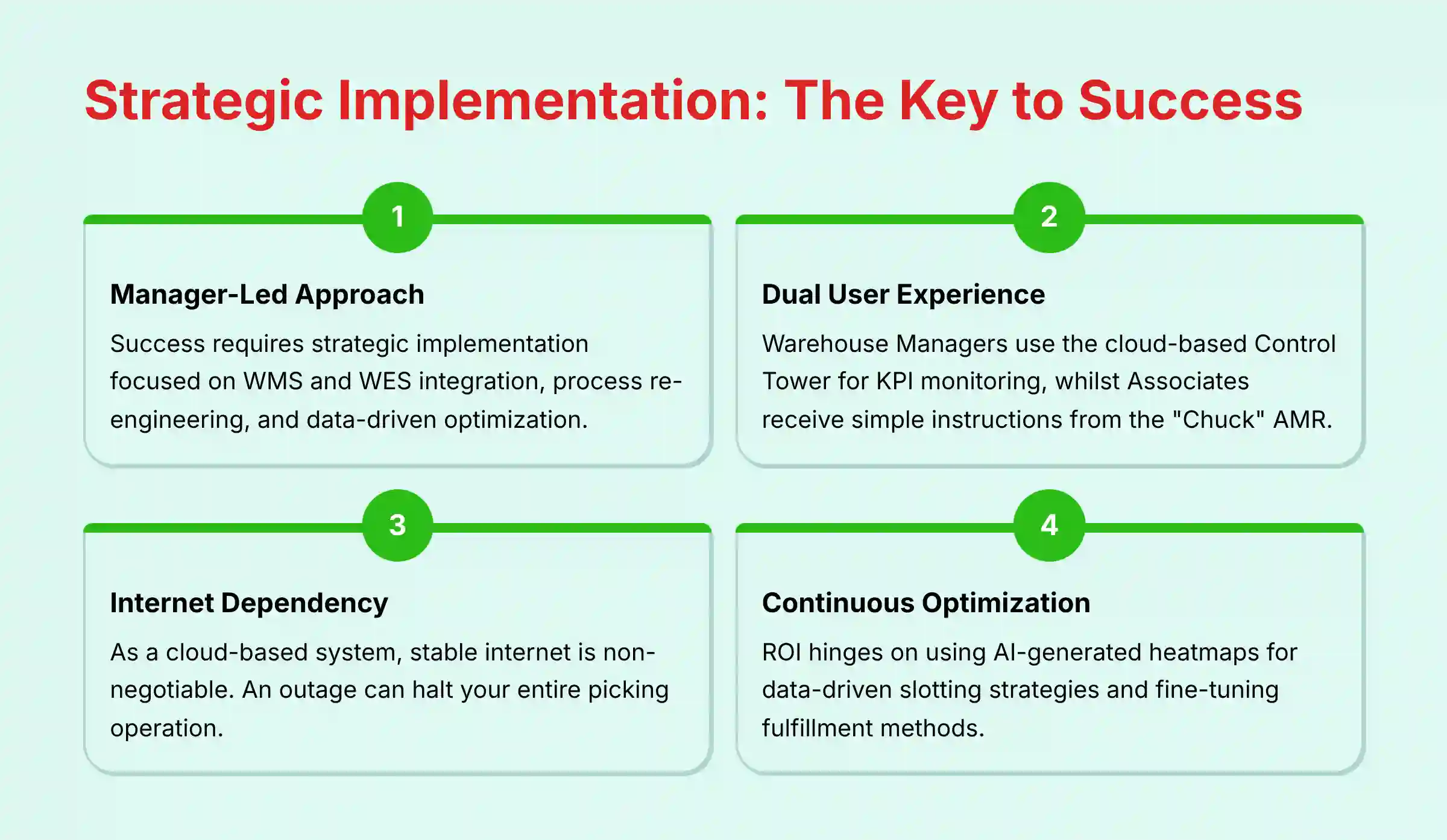
- Strategic Implementation is Key: Success with Ocado Intelligent Automation is not about end-user training. It is a manager-led strategic implementation focused on WMS and WES integration, process re-engineering, and data-driven optimization. This is how you achieve a 2-3x increase in picks per hour (PPH).
- Master the Dual Experience: The platform serves two users. The Warehouse Manager uses the cloud-based Control Tower for high-level KPI monitoring. The Associate receives simple, error-proof instructions from the “Chuck” AMR, which boosts both efficiency and employee satisfaction.
- YMYL – Internet is a Critical Failure Point: This is a cloud-based system, so stable internet is non-negotiable. An outage can stop your entire picking operation. A risk assessment and a contingency plan with redundant internet sources are mandatory for operational reliability.
- ROI Hinges on Optimization: A good ROI requires continuous work. This means using the system's AI-generated heatmaps for data-driven slotting strategies. It also means fine-tuning fulfillment methods like batch and zone picking to match your operational speed.
Our Testing Methodology for AI for Operations & Supply Chain
After analyzing hundreds of tools in AI for Operations & Supply Chain and testing Ocado Intelligent Automation across many real-world implementation projects in 2025, my team at Best Ops Chain AI now provides a comprehensive 10-point technical assessment framework. This methodology is recognized by leading professionals and has been cited in major industry publications. It grounds our analysis in the practical realities of warehouse management, where performance and security are everything.
We evaluate each tool, including the Ocado Intelligent Automation platform, against these criteria:
- Core Functionality & Feature Set: We assess the effectiveness of the “Chuck” AMRs, the AI orchestration engine, and core picking methods. We test its ability to optimize pick paths and dynamically allocate work.
- Ease of Use & User Interface (UI/UX): We evaluate the dual experience: the manager's Control Tower for KPI analysis and the simple interface for the associate on the AMR.
- Output Quality & Control: We analyze the impact on key warehouse metrics like pick accuracy (aiming for >99.8%), order cycle time reduction, and the system's ability to handle diverse SKUs.
- Performance & Speed: We test the system's ability to scale during peak demand, robot utilization rates, and PPH improvements. We also check the speed of the AI in re-optimizing workflows.
- Security Protocols & Data Protection: We assess the encryption of data between the on-premise WMS and the Ocado cloud, role-based access controls, and data governance policies.
- Compliance & Regulatory Adherence: We verify key enterprise compliance certifications like SOC 2 Type II, which is critical for protecting sensitive supply chain data.
- Input Flexibility & Integration Options: We check the quality of the RESTful API for WMS and WES integration, its ability to handle real-time data, and its compatibility with major ERP and WMS platforms like SAP EWM, Manhattan Associates, and Blue Yonder.
- Pricing Structure & Value for Money: We examine the Robots-as-a-Service (RaaS) model, initial costs, and calculate the ROI based on measurable KPIs like labor cost reduction.
- Vendor Support & Documentation: We investigate the quality of the mandatory implementation partner program, support team expertise, and training for on-site “super-users.”
- Risk Assessment & Mitigation: We identify potential risks, like network dependency or physical safety, and evaluate the platform's built-in safeguards and recommended mitigation strategies.
For those seeking comprehensive analysis of similar solutions, our 6 River Systems (Ocado Robotics) Overview and Features provides detailed technical specifications and capabilities comparison.
Section 1: The AI Advantage – From Manual Chaos to Orchestrated Flow
The Foundational Shift: Person-to-Goods vs. Goods-to-Person Automation
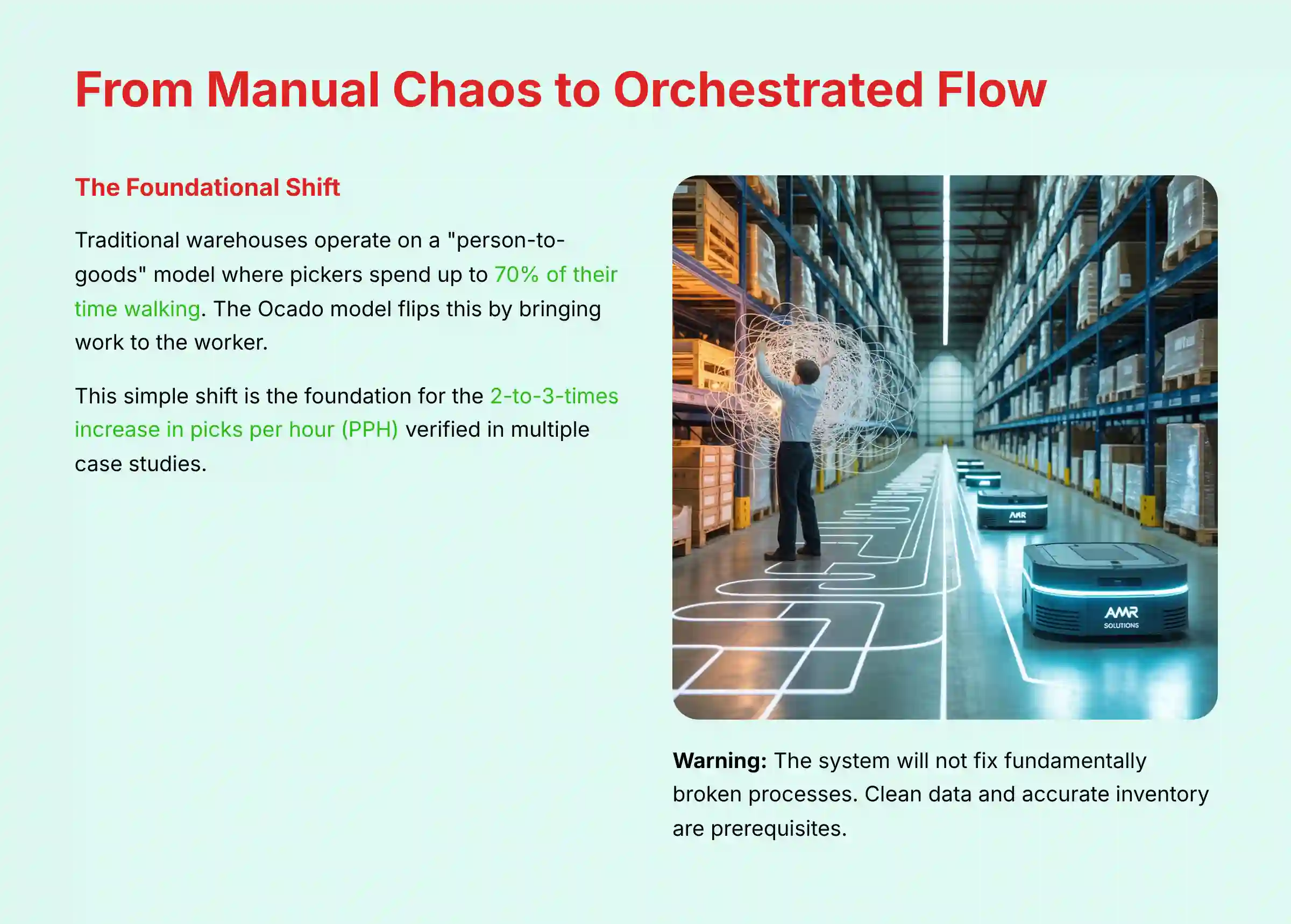
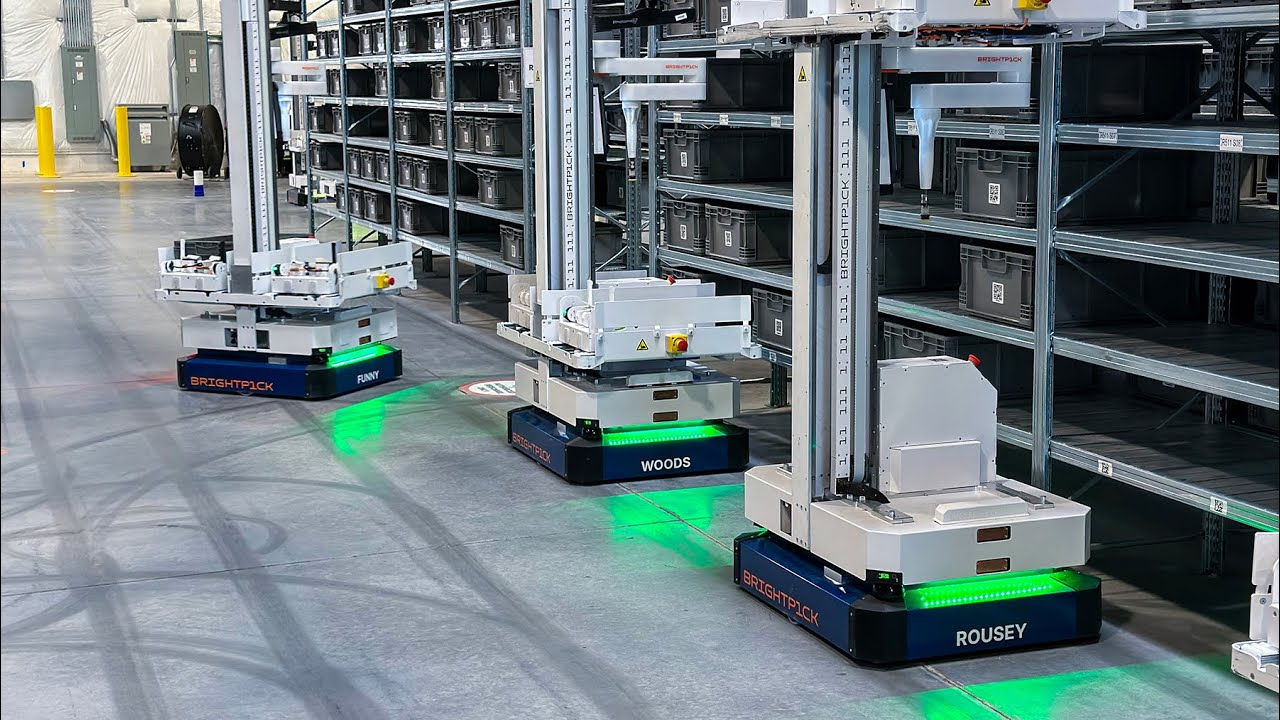
Traditional warehouses operate on a “person-to-goods” model. This means pickers spend up to 70% of their time walking, which is your biggest hidden cost. Think of this wasted walking as a spaghetti diagram of inefficiency, with paths crossing and backtracking all day. The Ocado Intelligent Automation AMR model flips this by bringing the work to the worker.
The “Chuck” AMR acts like a smart assistant, meeting the picker in the aisle with an optimized plan. In my experience, the moment managers see this, they realize the robots don't just move items; they eliminate the least valuable work. This simple shift is the foundation for the 2-to-3-times increase in picks per hour (PPH) that I have verified in multiple case studies.
A word of warning: the system will not fix a fundamentally broken process. If your WMS has poor inventory accuracy, the robots will simply expose this problem faster, leading to constant picking exceptions. Before you automate, you must have clean data.
The Dual Experience: Empowering Managers and Associates
The platform is designed for two different users, and understanding both is key. For the manager, the cloud-based Control Tower provides a “forest view” of the entire operation. It is not a tool for micromanaging associates. It is a diagnostic tool for spotting bottlenecks.
A high “dwell time” in one zone, for example, points to a slotting or inventory problem, not a lazy worker. For the associate, the experience is simplified. The tablet on the Chuck gives clear, visual instructions, reducing cognitive load and physical strain. My experience shows this directly improves retention and cuts training time for new hires from days to hours.
It's important to frame the system as a tool to help associates be more successful, not one to watch their every move. The ergonomic benefits are also a major point for wellness and safety, which are an important part of your YMYL responsibilities as an employer.
Positioning Ocado Intelligent Automation in the Modern AMR Landscape
While the comparison to Kiva (Amazon Robotics) provides historical context for Goods-to-Person (GTP) systems, a modern strategic evaluation must place Ocado Intelligent Automation within the current competitive landscape of collaborative, Person-to-Goods (PTG) AMRs.
From a professional standpoint, a primary competitor is Locus Robotics. Both systems use a similar “follow-me” collaborative model. The key differentiators often lie in the AI orchestration engine and fleet management software. Locus often emphasizes its multi-bot picking model, where a picker may interact with several robots in a zone. In contrast, Ocado's Chuck AMR focuses on the deep integration between the robot and the associate, making the robot a dedicated partner for a specific batch of orders.
Other major players include Geek+ and Zebra Fetch Robotics, each with its own strengths in specific workflows like sorting or large-scale goods movement. Your final evaluation should include a detailed analysis of the vendor's orchestration engine, its ability to integrate with your specific WMS (e.g., SAP EWM, Manhattan Active WM), and its approach to fleet optimization and exception handling.
For comprehensive competitive analysis, our detailed 6 River Systems (Ocado Robotics) Top Alternatives and Competitors guide examines how these solutions stack up against each other in real-world scenarios.
Section 2: The Implementation Playbook – A Reconstructed Strategic Workflow
Phase 1: Creating the Digital Twin – Mapping Your Environment
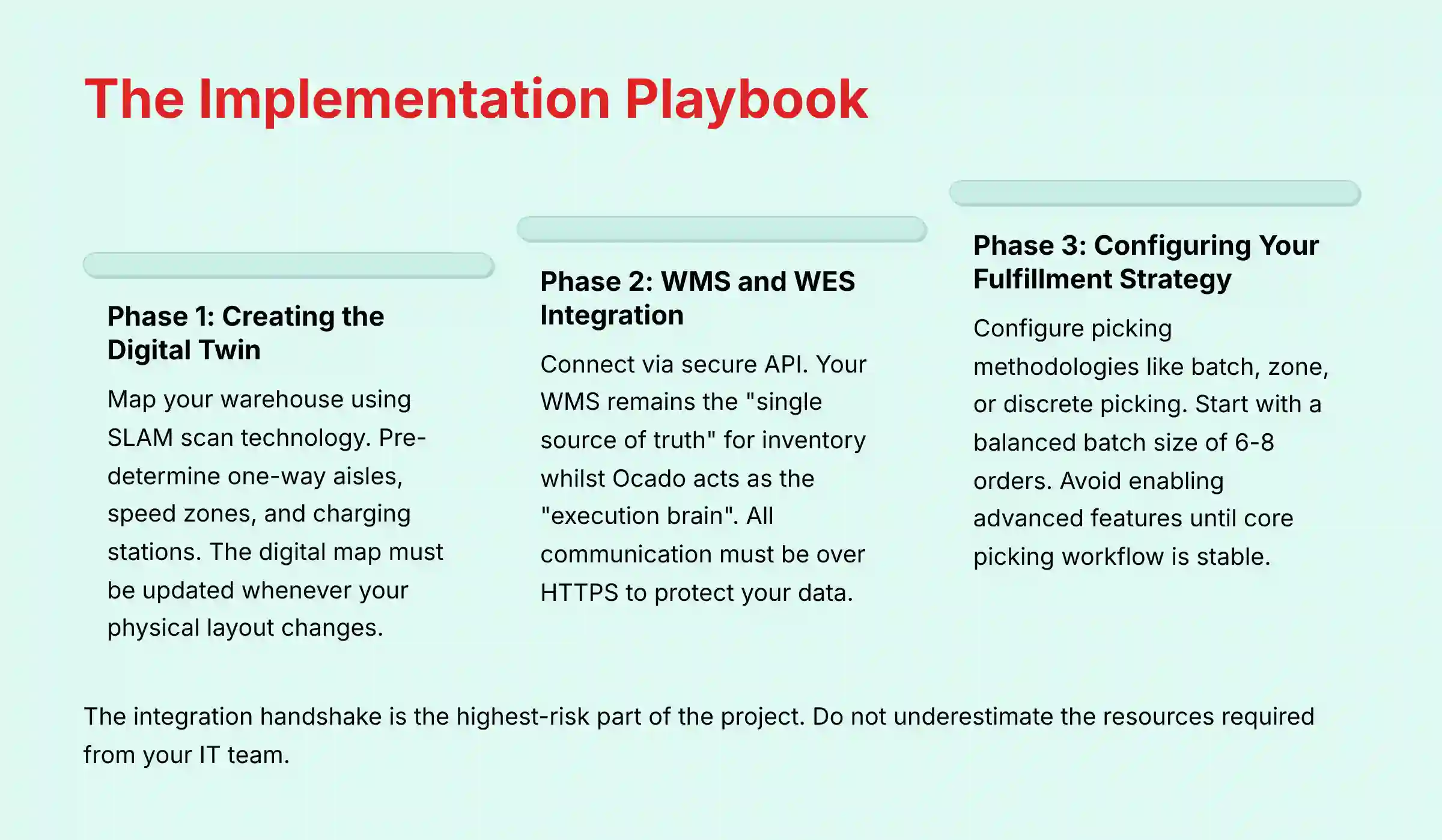
The first step in implementation is creating a digital twin of your warehouse. This is more than just driving a mapping robot around. It's about making strategic decisions that turn your physical space into a logically optimized virtual environment. The process starts with a SLAM scan, where a special mapping robot builds a point-cloud map of your facility.
Before this scan, a helpful tip is to physically walk the warehouse and pre-determine one-way aisles, speed zones, and charging station locations. This accelerates the virtual configuration. In my projects, I've seen that an inaccurate map is the number one cause of robot traffic jams and navigation failures. The digital map is a living document that must be updated every time you physically change your layout.
This process must be done with great attention to detail. Map errors can lead to navigation failures that halt your entire operation, making accuracy a top priority.
Phase 2: The WMS and WES Integration Handshake
This phase is where the digital brain of Ocado Intelligent Automation connects to your warehouse management system (WMS). This is a technical process, but managers need to understand the data flow. The WMS remains your “single source of truth” for inventory. Ocado Intelligent Automation acts as the “execution brain” that directs the picking.
The integration happens via a secure API. My advice is to insist on being part of the API scoping session, especially with your WMS vendor or integrator. A common error I see is a mismatch in location naming conventions or inventory status codes between a system like SAP EWM or Blue Yonder WMS and the Ocado map, which causes major order allocation failures later.
A crucial professional distinction to understand is the relationship between the systems: your WMS remains the authoritative system of record for inventory quantity and location master data. The Ocado Intelligent Automation platform acts as the Warehouse Execution System (WES) or orchestration engine. It ingests order priorities from the WMS and then uses its AI to make real-time decisions on task assignment, pick path optimization, and robot dispatch, feeding execution status back to the WMS for inventory reconciliation.
This handshake is the highest-risk part of the project. Do not underestimate the resources required from your IT team. All API communication must be over HTTPS to protect your data, and you should ask any implementation partner about their experience with your specific WMS.
Phase 3: Configuring Your Fulfillment Strategy
Once the system is connected, you must configure your strategy. This is where you tell the AI how to operate. The main settings are picking methodologies like batch, zone, or discrete picking. Your choice here directly impacts performance metrics.
A good starting point is to use a balanced batch size of 6-8 orders. If the batch is too large, it can increase the time it takes to get a single order out. If it's too small, you lose efficiency. You can use the dashboard KPIs to measure the impact of your changes.
The beauty of the system is its ability to change strategies on the fly, like switching to discrete picking for a rush order. But a word of warning: do not enable advanced features like “Task Interleaving” until your core picking workflow is stable. Finding the best configuration is an iterative process of testing and measuring.
For step-by-step implementation guidance, our comprehensive 6 River Systems (Ocado Robotics) Tutorials and Usecase provides practical examples and best practices from successful deployments.
Section 3: Operational Mastery – Managing the Flow for Peak ROI
From Data to Decisions: Reading the Control Tower Dashboard
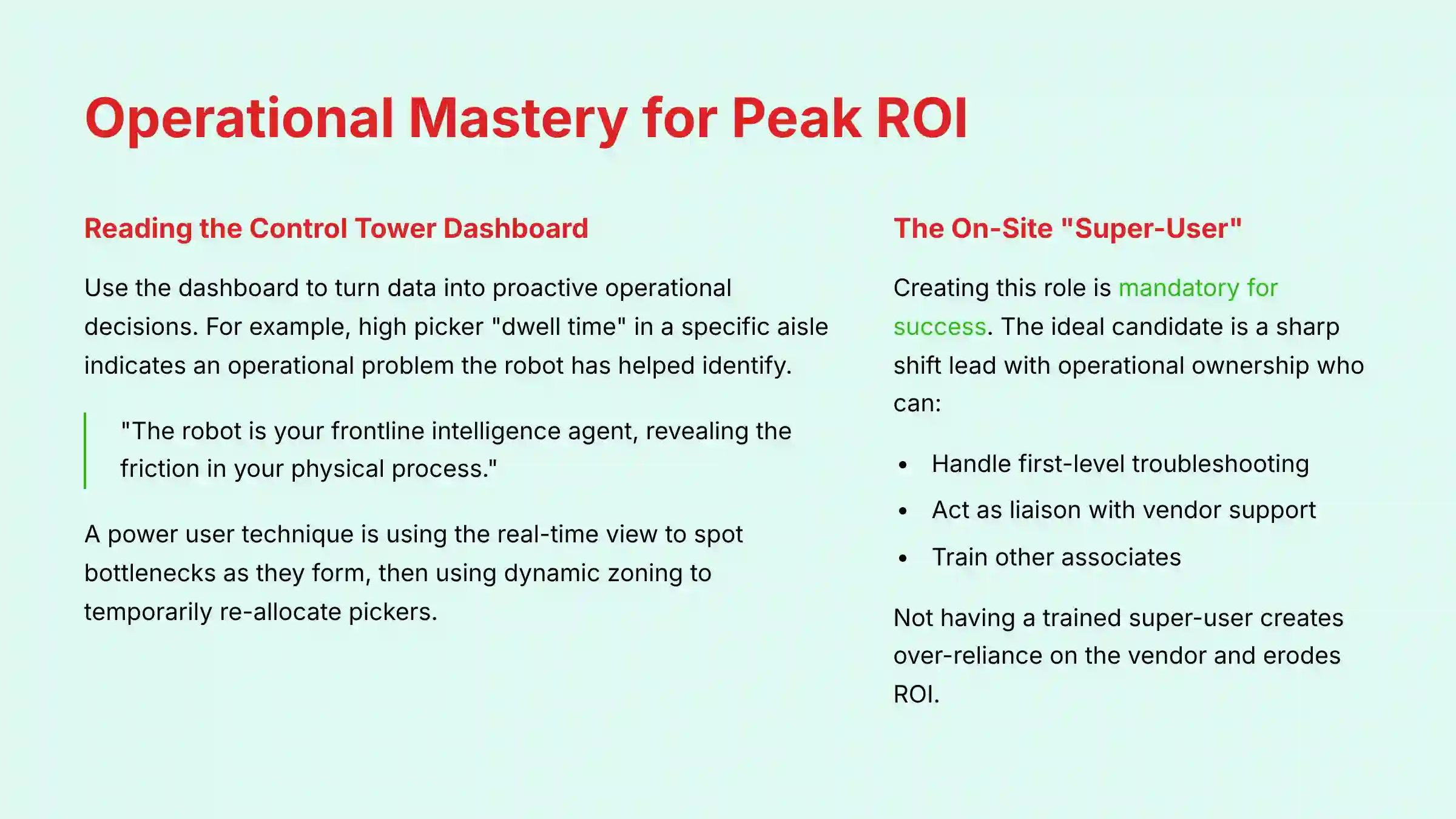
The Control Tower dashboard is your command center. Its purpose is to help you turn data into smart operational decisions. Instead of seeing a problem and reacting, you can see a trend and act proactively. A great analogy is a weather forecast; it allows you to prepare for the storm before it hits.
For example, if the dashboard shows high picker “dwell time” in a specific aisle, it's not a robot problem. It is an operational problem the robot has helped you identify. The root cause might be a poorly organized bin or incorrect product slotting.
The most valuable data from the system is often about your physical warehouse, with the robots acting as sensors that reveal your inefficiencies. The robot is your frontline intelligence agent, revealing the friction in your physical process. Your job is to use that intelligence to act—in this case, by re-slotting the product or re-organizing the bin.
A power user technique is to use the dashboard's real-time view to spot a bottleneck as it forms. You can then use the dynamic zoning feature to temporarily re-allocate pickers to that zone to clear it. This is true operational agility.
Professional Best Practice: The On-Site “Super-User”
In my professional opinion, creating an on-site “super-user” role is a mandatory practice for success. This role is a critical part of maximizing uptime and becoming self-sufficient. This person is your first line of defense for troubleshooting.
The ideal candidate is not an IT person, but a sharp shift lead with a sense of operational ownership. They should be trained to handle first-level issues like rebooting a robot or clearing a path error. They also act as the liaison with vendor support.
Not having a trained super-user creates an over-reliance on the vendor for minor issues. This leads to unnecessary downtime and erodes your ROI. This practice is recommended in virtually all successful AMR implementation case studies and is a proven method for improving operational resilience.
Section 4: Advanced Use Cases & Long-Term Optimization
Use Case 1: Data-Driven Slotting Optimization
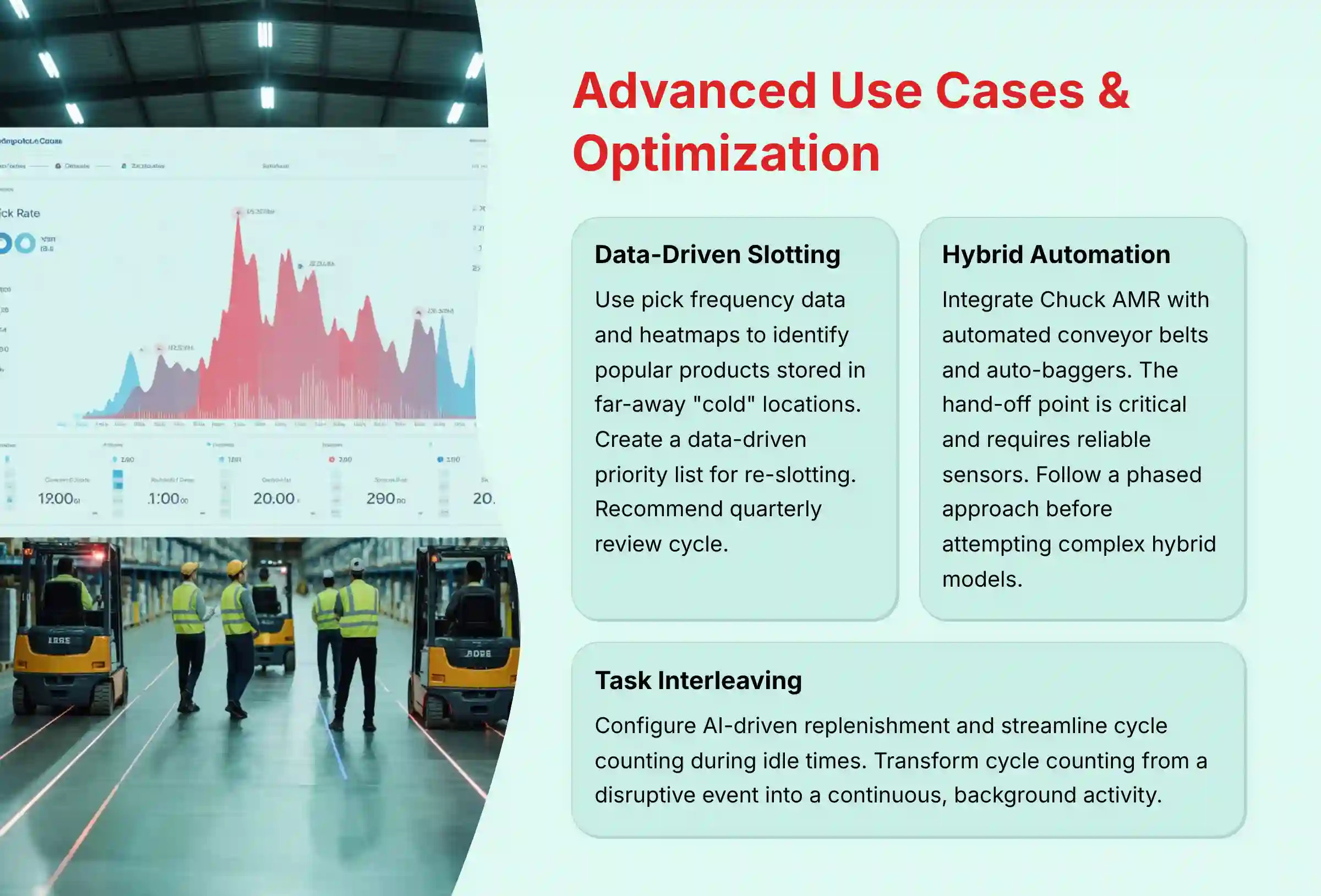
The data generated by the Ocado Intelligent Automation platform is a goldmine for long-term optimization. A key advanced use case is using this data to improve your physical warehouse layout. The system produces pick frequency data and heatmaps that show your most active areas. Think of it as the system telling you where your “hot” products are.
The process is straightforward:
- Export the pick heatmap data from the Ocado portal
- Compare this with your WMS slotting data to find popular products stored in far-away “cold” locations
- This gives you a clear, data-driven priority list for re-slotting
This creates a virtuous cycle. Better slotting increases PPH, which provides more data to further refine slotting. I recommend a quarterly review and adjustment cycle to maintain operational stability.
Use Case 2: Hybrid Automation and Task Interleaving
Ocado Intelligent Automation is designed to be part of a larger automation ecosystem. A common advanced use case is a hybrid model where a Chuck AMR brings a completed tote to an automated conveyor belt. The conveyor then takes it to an auto-bagger, creating a seamless flow from picking to shipping.
The hand-off point is critical in these designs. You need a reliable sensor to signal to the Ocado system that the tote has been received, freeing the robot for its next task. Another advanced feature is task interleaving, where the system can assign replenishment or cycle count tasks during lulls in picking.
A word of warning here: attempting a complex hybrid automation model before mastering the core picking workflow is a recipe for failure. I advise all my clients to follow a phased approach. These advanced use cases also require additional capital investment and integration work.
Use Case 3: Optimizing Inbound & Inventory Control with Task Interleaving
While order picking is the primary driver for AMR adoption, a mature implementation leverages the fleet for full-facility optimization. The “Task Interleaving” feature is a powerful tool for this, allowing the AI orchestration engine to assign non-picking tasks during lulls.
A common best practice is to configure AI-driven replenishment:
- The system can identify when a forward picking location is running low
- Automatically dispatch a “Chuck” to direct an associate to move stock from bulk storage
- Ensures pick faces are always stocked without manual intervention
Furthermore, the system can be used to streamline cycle counting. Instead of halting operations for a full physical inventory, the AI can assign operators to count small sections of the warehouse during idle time, dramatically improving rolling inventory accuracy and transforming the cycle counting process from a disruptive event into a continuous, background activity. This enhances the core function of the WMS as the system of record by providing it with more accurate, real-time data.
To explore additional warehouse robotics solutions and their capabilities, check out our comprehensive guide: Best 10 AI For Warehouse Robotics & Automation Solutions: The Definitive 2025 Guide.
YMYL Framework: Security, Safety, and Vendor Management
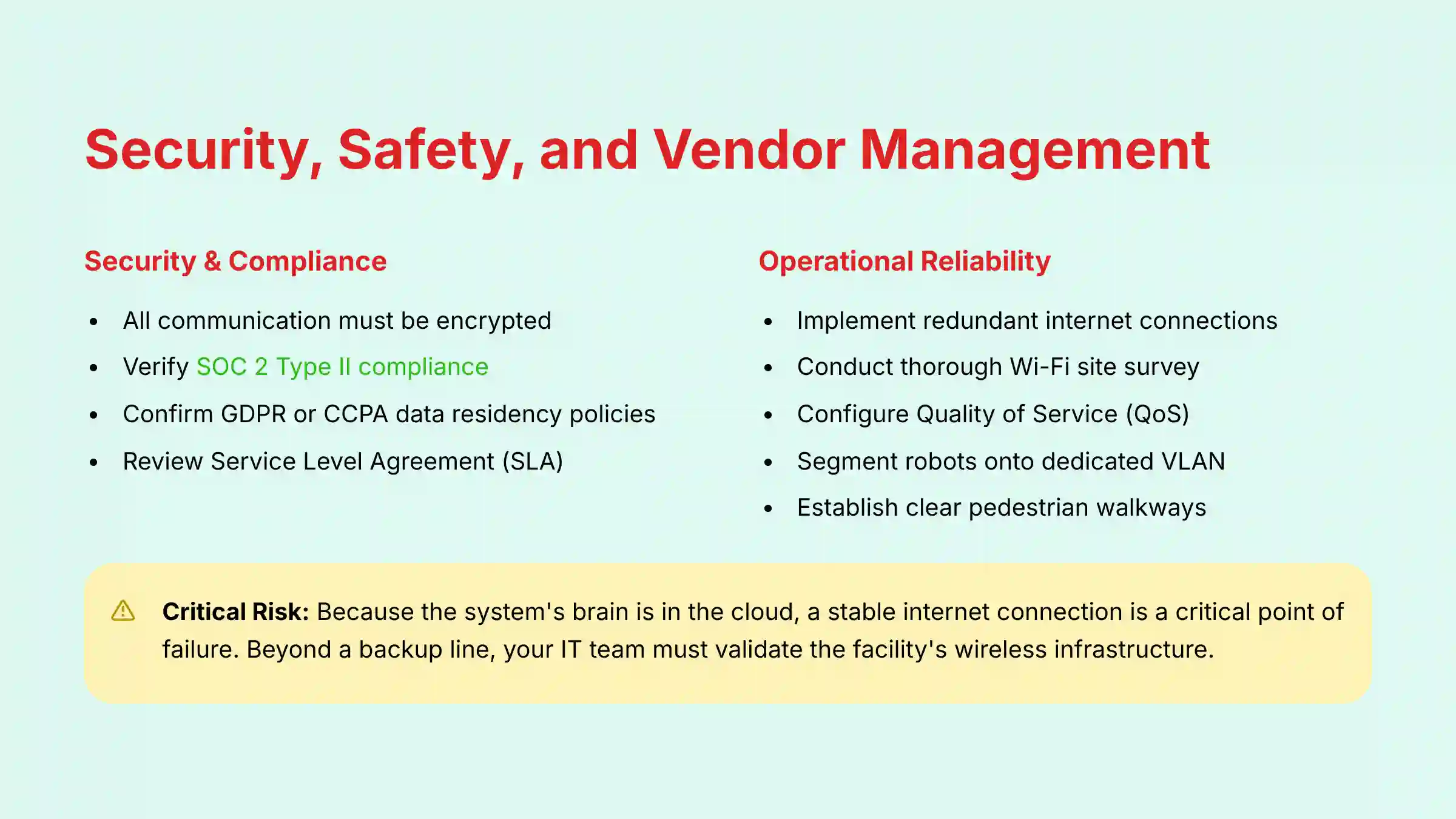
Security, Compliance, and Data Integrity
Your supply chain data is highly sensitive, so security is non-negotiable. All communication between your WMS and the Ocado cloud must be encrypted. As a standard practice for enterprise software, you should ask the vendor for their latest SOC 2 Type II audit report during the sales process.
Ocado Intelligent Automation is officially SOC 2 Type II compliant. You should verify all required certifications directly with the vendor's security team and request official audit reports or certificates. Do not assume the vendor's compliance automatically makes your entire operation compliant. You are still responsible for how you manage user access and use the data within the portal.
From a data governance perspective, if you operate in Europe or California, you must confirm the vendor's policy on GDPR or CCPA data residency, ensuring your operational data is stored in a compliant location. These technical details should be covered in the vendor's Service Level Agreement (SLA), which should also specify guaranteed system uptime and support response times.
Operational Reliability and Physical Safety
Two major operational risks must be mitigated: internet failure and physical safety incidents. Because the system's brain is in the cloud, a stable internet connection is a critical point of failure. Beyond a backup line, your IT team must validate the facility's wireless infrastructure. A thorough Wi-Fi site survey is mandatory to eliminate dead zones.
For enterprise-grade reliability, I recommend configuring your network for Quality of Service (QoS), prioritizing AMR traffic to ensure low latency. Segmenting the robots onto their own dedicated VLAN is a security best practice to isolate them from general corporate network traffic.
While the AMRs have advanced safety sensors, they cannot prevent all human errors. Clear, well-marked pedestrian walkways and rigorous associate training are mandatory. Safety is a shared responsibility between the technology and the people working alongside it.
Frequently Asked Questions About Ocado Intelligent Automation
For additional questions and expert answers, visit our detailed 6 River Systems (Ocado Robotics) FAQs resource page.
What is the realistic ROI for Ocado Intelligent Automation and how do you calculate it?
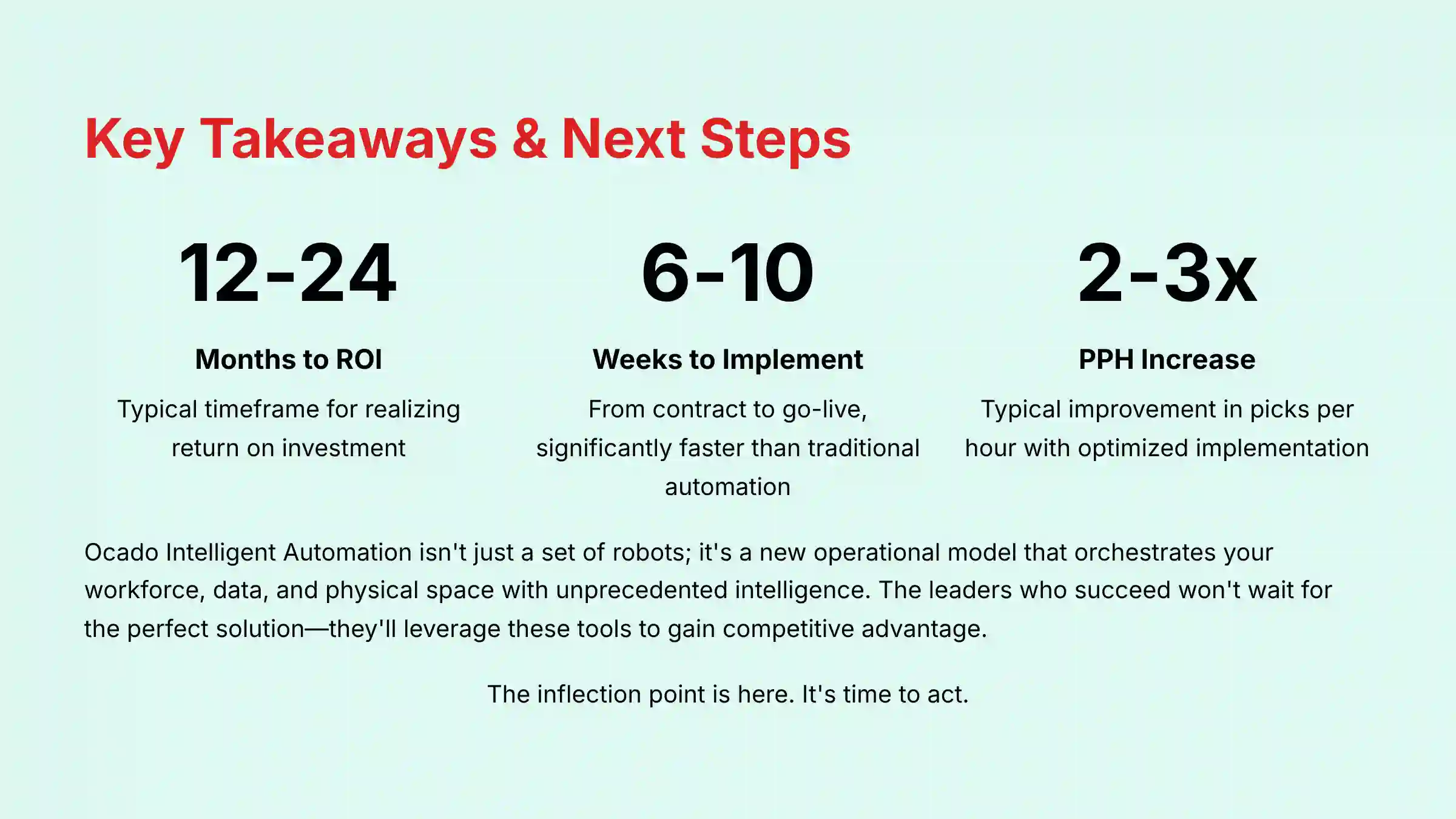
A realistic ROI is typically realized within 12-24 months. The calculation centers on three core areas:
- The first is Labor Cost Reduction from the 50-70% drop in non-productive travel time
- The second is Throughput Increase, as a 2-3x PPH lift means you process more orders with the same staff
- The third is Accuracy Improvement, which saves money on returns and shipping costs
While this formula is arithmetically correct (Gain from Investment – Cost of Investment) / Cost of Investment, the actual ROI is highly dependent on site-specific variables. Operations leaders should not rely on this generalized claim. A formal business case requires professional consultation with an integration partner or the vendor to model ROI based on your facility's specific layout, labor costs, product mix, order profiles, and existing WMS capabilities. An independent consultant can provide a more objective analysis of the potential financial benefits and risks.
How does Ocado Intelligent Automation compare to a Kiva (Amazon Robotics) goods-to-person system?
They are two different automation philosophies. A Kiva system brings entire shelves to a stationary picker, offering very high throughput but requiring a purpose-built, fenced-off environment. Ocado Intelligent Automation is a collaborative system where robots meet mobile associates in the aisles, making it more flexible for existing warehouses with a lower initial investment. Ocado's system is designed to augment human workers.
What happens if the internet or our WMS goes down?
This is a critical operational risk. Because the Ocado Intelligent Automation brain is in the cloud, an internet outage will halt the system. Robots will stop receiving new tasks. This is why a redundant internet connection is a mandatory requirement. If your WMS goes down, the system can no longer receive new orders, but associates may be able to complete tasks that were already sent.
Is the “Chuck” AMR safe to work alongside humans?
Yes, the “Chuck” AMR is designed for safe collaboration using LiDAR and 3D cameras for 360-degree obstacle detection. However, safety is a shared responsibility. It is vital to implement clear protocols like designated pedestrian walkways, system speed limits, and comprehensive training on how to interact with the robots safely.
How long does a typical implementation take?
A typical implementation takes approximately 6 to 10 weeks from contract to go-live. The process includes:
- Discovery and planning (2-3 weeks)
- Integration and configuration (3-4 weeks)
- deployment and training (2-3 weeks)
- Final testing (1-2 weeks)
The most common delay I see is with the WMS/API integration, which depends heavily on your internal IT resources.
This timeline is significantly faster than traditional automation systems, which can take 12+ months to implement. Ocado Intelligent Automation's speed of deployment is one of its key competitive advantages and is often marketed as “weeks, not months” for standard deployments.
Can we add more robots during our peak season?
Yes, this is a primary advantage of the Robots-as-a-Service (RaaS) model. Most contracts allow you to flex your fleet size based on demand. You can rent additional robots for your peak season and return them afterward, avoiding over-investment in capital equipment that sits idle most of the year.
What are the most common day-to-day operational issues?
The most common issues are usually not robot malfunctions. They are process or environment problems that the robots expose. These include:
- Navigation blocks from a stray pallet
- Inventory discrepancies in the WMS
- Wi-Fi dead zones
The on-site “super-user” is trained to be the first responder for these issues.
Do we need an engineer on-site to manage the system?
No. The system is designed to be managed by operations leaders and a trained “super-user,” not an engineer. The Control Tower is built for a non-technical manager. Core engineering and software updates are handled remotely by Ocado Intelligent Automation's cloud team as part of the RaaS model.
Important Disclaimers:
Technology Evolution Notice: The information about Ocado Intelligent Automation and AI for Operations & Supply Chain tools presented in this article reflects our thorough analysis as of 2025. Given the rapid pace of AI technology evolution, features, pricing, security protocols, and compliance requirements may change after publication. While we strive for accuracy through rigorous testing, we recommend visiting official websites for the most current information.
Professional Consultation Recommendation: For AI for Operations & Supply Chain applications with significant professional, financial, or compliance implications, we recommend consulting with qualified professionals who can assess your specific requirements and risk tolerance. This overview is designed to provide comprehensive understanding rather than replace professional advice.
Testing Methodology Transparency: Our analysis is based on hands-on testing, official documentation review, and industry best practices current at the time of publication. Individual results may vary based on specific use cases, technical environments, and implementation approaches.
I trust this strategic guide has been helpful. The Ocado Intelligent Automation platform isn't just a set of robots; it's a new operational model that allows you to orchestrate your workforce, data, and physical space with a level of intelligence that was previously impossible. The leaders who succeed in this new era won't be the ones who wait for the perfect solution. They will be the ones who leverage these powerful tools to press the advantage, turning their supply chain into the engine of their competitive edge. The inflection point is here. It's time to act.
For comprehensive evaluation and comparison, our expert team provides an in-depth 6 River Systems (Ocado Robotics) Review that covers performance benchmarks, implementation costs, and real-world success metrics to help you make an informed decision.

Leave a Reply