Is Oracle SCM Cloud the Right Platform for Your Supply Chain?
This 2-Minute Quiz Reveals the Answer!
Is Oracle SCM Cloud the Right Platform for Your Supply Chain?
This 2-Minute Quiz Reveals the Answer!
The simple truth is that modern supply chain management is no longer about navigating periodic disruptions; it's about operating in a permanent storm. The old playbooks are obsolete. At this critical inflection point, passively tracking operations is a recipe for failure.
The only way to press the advantage is by moving from visibility to action. This is the strategic void that Oracle Fusion Cloud SCM is built to fill. As the founder of Best Ops Chain AI, our work has demonstrated that platforms like this aren't just an upgrade—they are a paradigm shift.
Within the broader category of AI for Logistics and Transportation, Oracle SCM Cloud stands out due to its deeply integrated, suite-based approach. This overview dissects the interconnected modules like Oracle Transportation Management (OTM), Warehouse Management (WMS), and Global Trade Management (GTM) that form the core of the platform.
We will cover the key modules, technical specifications, AI capabilities, and the path to implementation, providing a clear picture of how Oracle's suite approach creates a unified system for logistics professionals. For an in-depth analysis of how these features perform in real-world scenarios, explore our comprehensive Oracle SCM Cloud Review.
Drawing from our analysis of over hundreds of tools on the market in AI for Operations and Supply Chain and testing Oracle SCM Cloud features across numerous real-world implementation projects, our team at Best Ops Chain AI has developed a comprehensive 10-point technical assessment framework. This proprietary framework is our commitment to E-E-A-T and has been recognized by leading professionals and cited in major publications within the AI for Operations and Supply Chain industry.
- Core Functionality and Feature Set: We assess what the tool claims to do and how effectively it delivers, examining its primary capabilities and supporting features.
- Ease of Use and User Interface (UI and UX): We evaluate how intuitive the interface is and the learning curve for users with varying technical skills.
- Output Quality and Control: We analyze the quality of generated results and the level of customization available.
- Performance and Speed: We test processing speeds, stability during operation, and overall efficiency.
- Security Protocols and Data Protection: We thoroughly assess security measures, encryption standards, and data handling practices.
- Compliance and Regulatory Adherence: We verify compliance with relevant regulations (GDPR, SOC 2, industry-specific requirements).
- Input Flexibility and Integration Options: We check what types of input the tool accepts and how well it integrates with other platforms or workflows.
- Pricing Structure and Value for Money: We examine free plans, trial limitations, subscription costs, and hidden fees to determine true value.
- Developer Support and Documentation: We investigate the availability and quality of customer support, tutorials, FAQs, and community resources.
- Risk Assessment and Mitigation: We identify potential risks and evaluate the tool's built-in safeguards and recommended mitigation strategies.
Key Takeaways: Oracle SCM Cloud at a Glance
Key Takeaways
- Integrated Suite Approach: Oracle SCM Cloud is a complete suite, not a point solution. It provides native integration between logistics, inventory, manufacturing, and finance within the Oracle Fusion Cloud ecosystem.
- Embedded AI and ML: Artificial intelligence is built directly into workflows. This powers features like dynamic route optimization, predictive ETAs, and intelligent carrier selection.
- Enterprise-Grade Focus: The platform serves mid-to-large enterprises with complex, global supply chains. It requires a formal engagement and implementation project with customized pricing, and no free trial is available.
- Modular and Specialized: Core logistics functions are handled by powerful, dedicated modules. These are mainly Oracle Transportation Management (OTM), Warehouse Management (WMS), and Global Trade Management (GTM).
What Is Oracle SCM Cloud? An Executive Overview
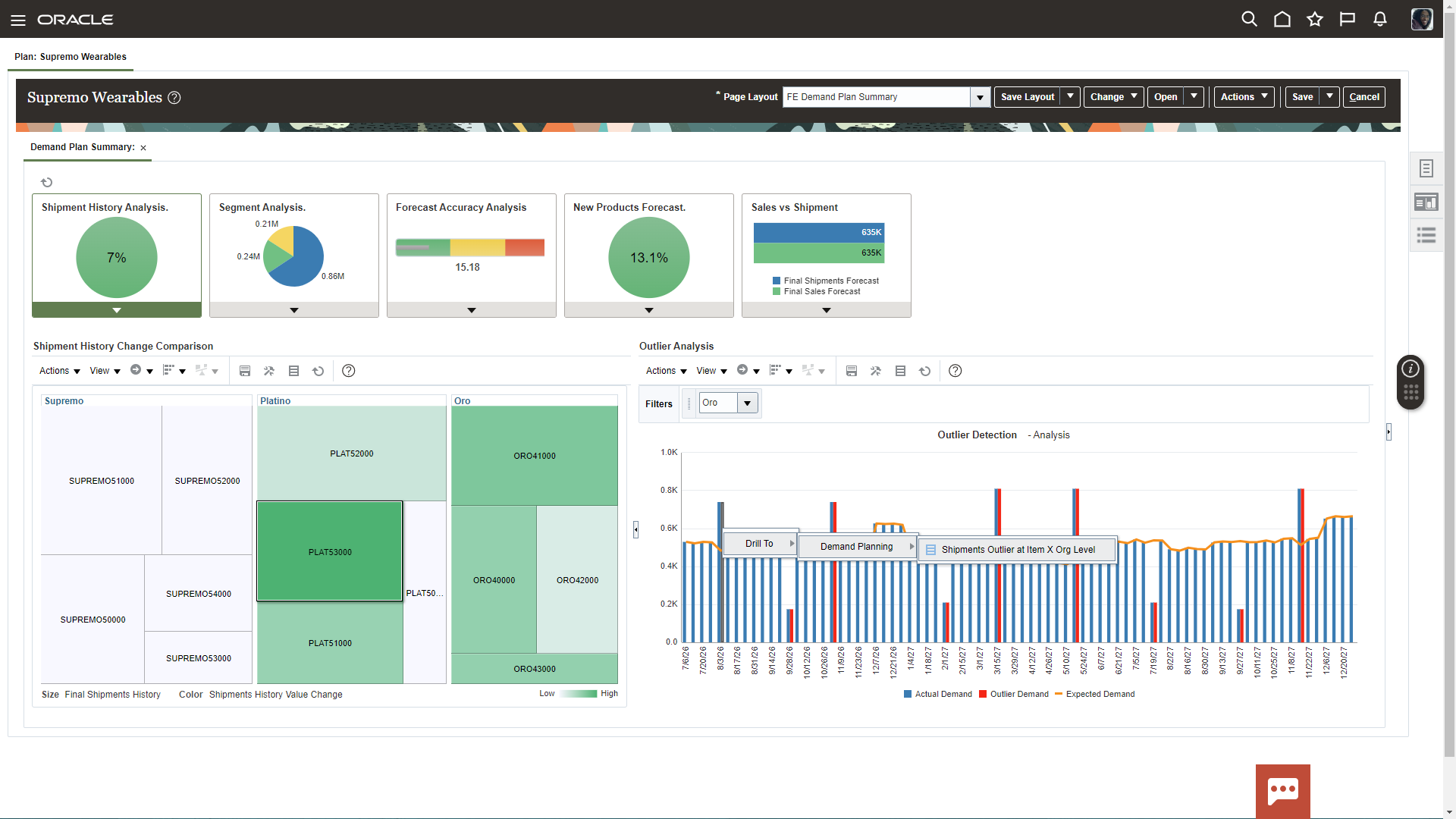
Oracle Fusion Cloud SCM is an integrated suite of applications built to unify and automate supply chain processes on a single cloud platform. The platform is developed by Oracle Corporation, a major enterprise software provider founded in 1977. Since its launch in 2011, the platform has received quarterly updates that continuously add new capabilities.
The main value of the platform comes from its unified data model. It shares this model with Oracle's ERP, HCM, and CX clouds. This structure provides a “single source of truth,” which makes its AI predictions more accurate and reliable.
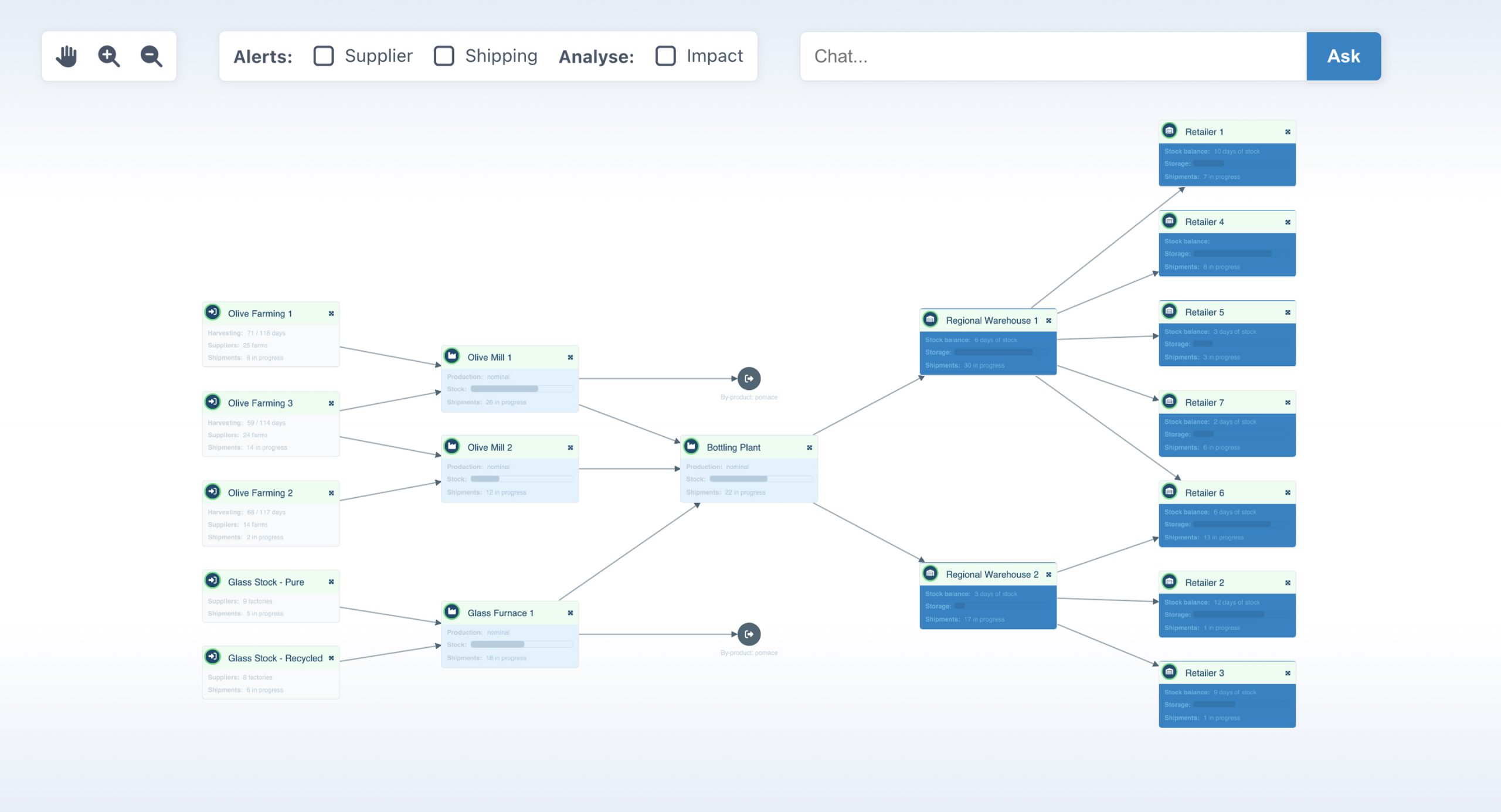
In essence, Oracle SCM Cloud aims to function as a Supply Chain Control Tower, providing a single, unified command center for end-to-end visibility. This moves beyond simple tracking by enabling proactive exception management.
Furthermore, by leveraging its unified data model, the platform lays the groundwork for creating a Digital Twin of the supply chain—a virtual model used to simulate the impact of disruptions and test strategies before committing real-world resources.
Think of it like a national intelligence agency before and after a major reform. Before, data was trapped in silos, and different departments couldn't connect the dots. After reform, a unified system allows everyone to see the same picture, leading to better, faster decisions. Oracle SCM Cloud aims to be that unified system for a business's operations.
Product Definition and Core Purpose
Oracle SCM Cloud is a suite of cloud applications for managing the entire supply chain. Its purpose is to use embedded AI and ML and a unified data model to help businesses shift from reactive to predictive and automated operations. This change helps increase efficiency, reduce costs, and improve resilience.
In our experience, its integrated nature is the key. Many companies struggle with a patchwork of disconnected “point solutions” for warehousing, transportation, and planning. Oracle's approach is to provide one system where the data flows seamlessly, which is a foundational requirement for effective AI.
Target Audience and Ideal Use Cases
The platform is built for mid-to-large enterprises with complex, global supply chains. Key users include Supply Chain VPs, Logistics Managers, and IT Leaders who need a comprehensive solution.
A primary use case is facilitating the Sales and Operations Planning (S and OP) process. By integrating demand forecasts, inventory levels, and production capacity in one platform, it provides the ‘single source of truth' necessary for cross-functional alignment.
For mature organizations, it serves as the engine for Integrated Business Planning (IBP), connecting operational plans directly to financial outcomes like revenue projections and margin analysis.
- Replacing legacy, on-premise SCM systems. Many businesses are still running on outdated, unsupported software that lacks modern AI capabilities.
- Consolidating multiple disparate supply chain software tools. This helps eliminate data silos and reduces the cost and complexity of managing many different vendors.
- Embedding AI capabilities into existing logistics operations. Businesses can use the platform to add predictive and automated decision-making to their current processes.
- Managing multi-site, global supply chain and trade compliance. The GTM module is specifically designed for companies dealing with the complexities of international trade.
Core Architecture and Technology Stack
Oracle SCM Cloud is built on a cloud-native, multi-tenant SaaS architecture. This means the software is delivered over the web and managed entirely by Oracle, so customers do not need to worry about hardware or manual updates. The entire suite runs on the Oracle Cloud Infrastructure (OCI) and uses the Oracle Autonomous Database.
The Autonomous Database is a key component. It is a self-patching and self-tuning system, which enhances both security and performance without requiring manual intervention from a database administrator.
In our analysis, this unified architecture is a major differentiator. Competitors often stitch together acquired products, but Oracle built its suite on a common platform from the ground up.
| Technology Layer | Component | Function and Benefit |
|---|---|---|
| Infrastructure | Oracle Cloud Infrastructure (OCI) | Provides global data centers, high availability, and foundational security. |
| Database | Oracle Autonomous Database | Self-driving, self-securing, and self-repairing database that automates maintenance and tuning. |
| Platform Model | Multi-Tenant SaaS | Software is delivered over the web, managed by Oracle, with quarterly updates. |
| Data Model | Unified Fusion Cloud Data Model | Provides a single source of truth across SCM, ERP, HCM, and CX applications. |
| AI and ML Layer | Oracle Data Science Platform | Powers embedded, pre-built ML models and allows for custom model integration. |
A Deep Dive Into Key Logistics and SCM Modules
This is where the platform's capabilities become clear. The SCM suite is composed of several powerful modules that handle specific logistics functions. These modules use the AI and data from the core architecture to deliver practical, real-world benefits.
Oracle Transportation Management (OTM)
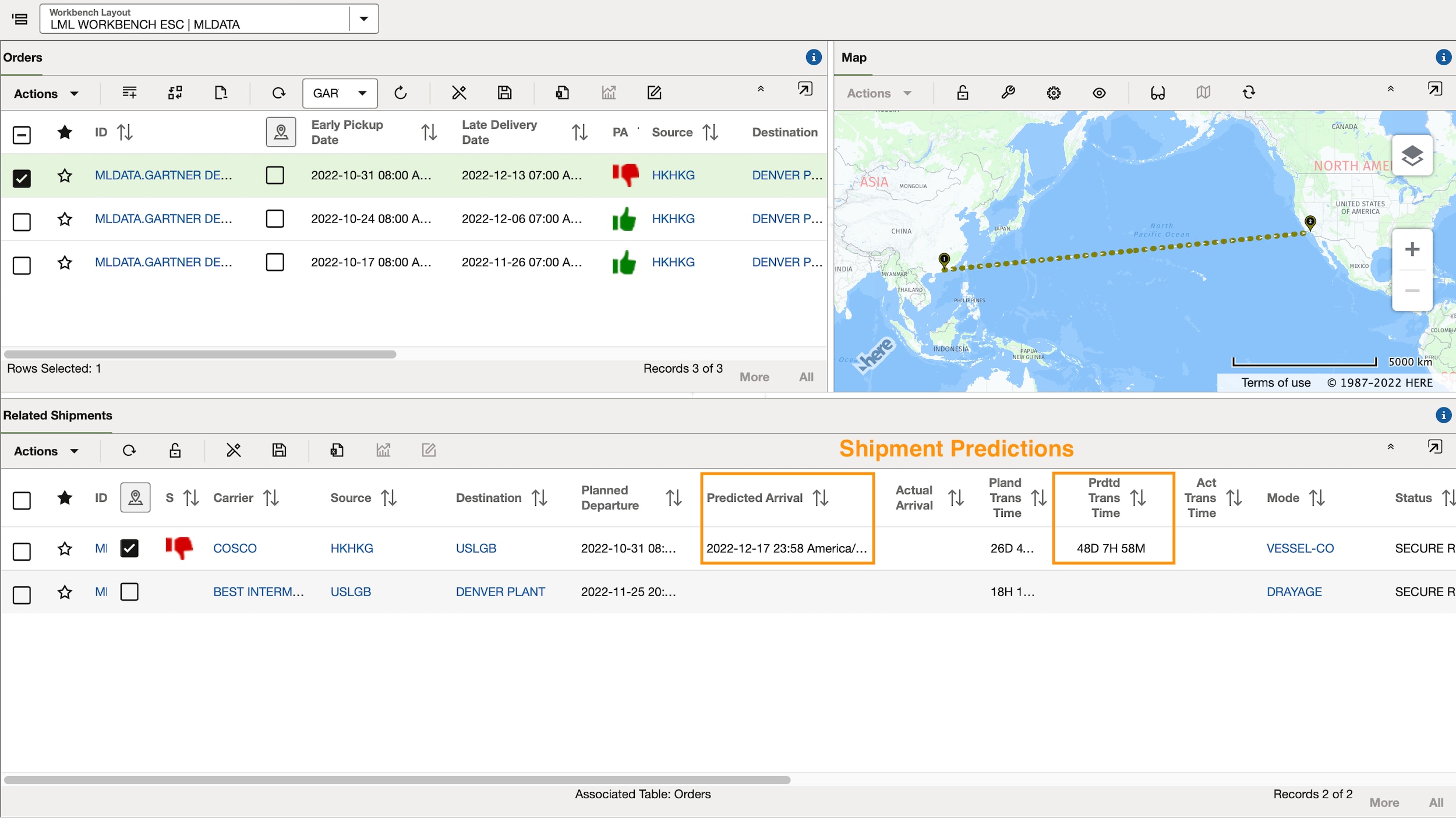
OTM is the module for managing all transportation planning and execution activities. It is designed for both shippers and logistics service providers. It acts as the brain for a company's entire transportation network.
AI-Powered Logistics Planning and Execution
- Dynamic Route Optimization: This feature uses machine learning to analyze real-time data like traffic and weather, along with historical performance. It then recommends the best routes for deliveries.
- Expert Context: In a logistics operation, this is used to react to surprises like port strikes or road closures by automatically re-planning shipments to minimize delays.
- Intelligent Carrier Selection: An AI recommendation engine suggests the best carrier for a shipment. It balances cost, past performance, and sustainability goals to make its choice.
- Predictive Transit Time: The platform uses machine learning models to give accurate transit time predictions. This moves beyond the static, and often unreliable, estimates that carriers provide.
Real-Time Visibility and Anomaly Detection
- Predictive ETAs: By using real-time IoT data and ML, the system provides an estimated time of arrival (ETA) with a confidence score. It proactively flags shipments that are at risk of being late.
- In-Transit Anomaly Detection: The system learns what “normal” transit behavior looks like. It then automatically detects strange events, such as unexpected stops or route changes, and sends an alert.
Oracle Warehouse Management (WMS)
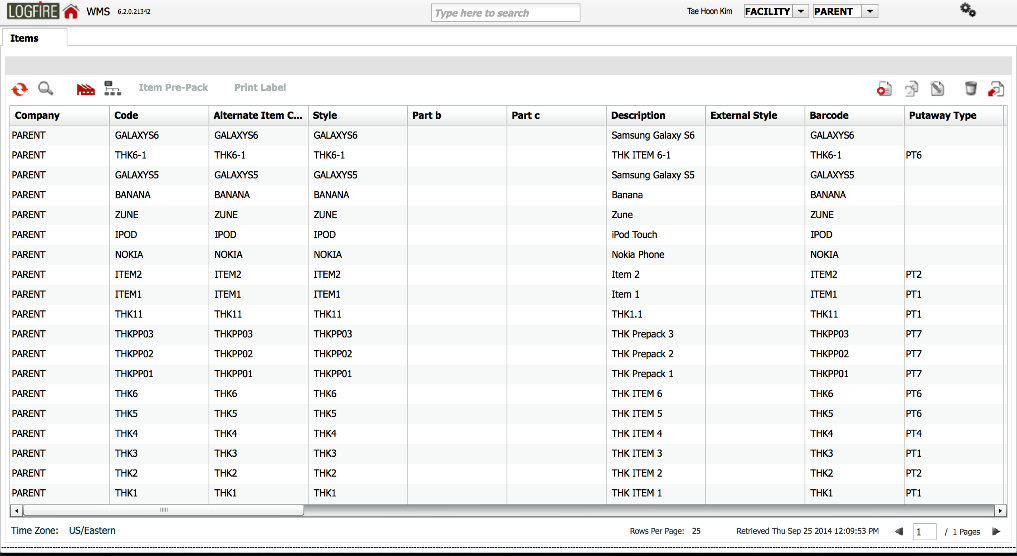
The WMS module is the central nervous system of the warehouse. It's designed to optimize every physical process—from receiving to shipping—to maximize the efficiency of space, labor, and inventory.
Think of it less as a simple inventory ledger and more as an operational brain that makes the entire facility faster, more intelligent, and more responsive.
AI for Warehouse Efficiency
- Dynamic Slotting Optimization: This is like organizing a grocery store for maximum efficiency. The system uses ML to recommend the best place to store each item, reducing the time it takes for workers to pick orders.
- AI-Powered Demand Forecasting Integration: The WMS uses demand forecasts from the planning module to set optimal inventory levels. This helps reduce the amount of expensive safety stock a warehouse needs to hold.
- Labor Management and Task Optimization: The system intelligently assigns tasks to warehouse workers. It considers their location, the task's priority, and their skill set to improve overall warehouse productivity.
Oracle Global Trade Management (GTM)
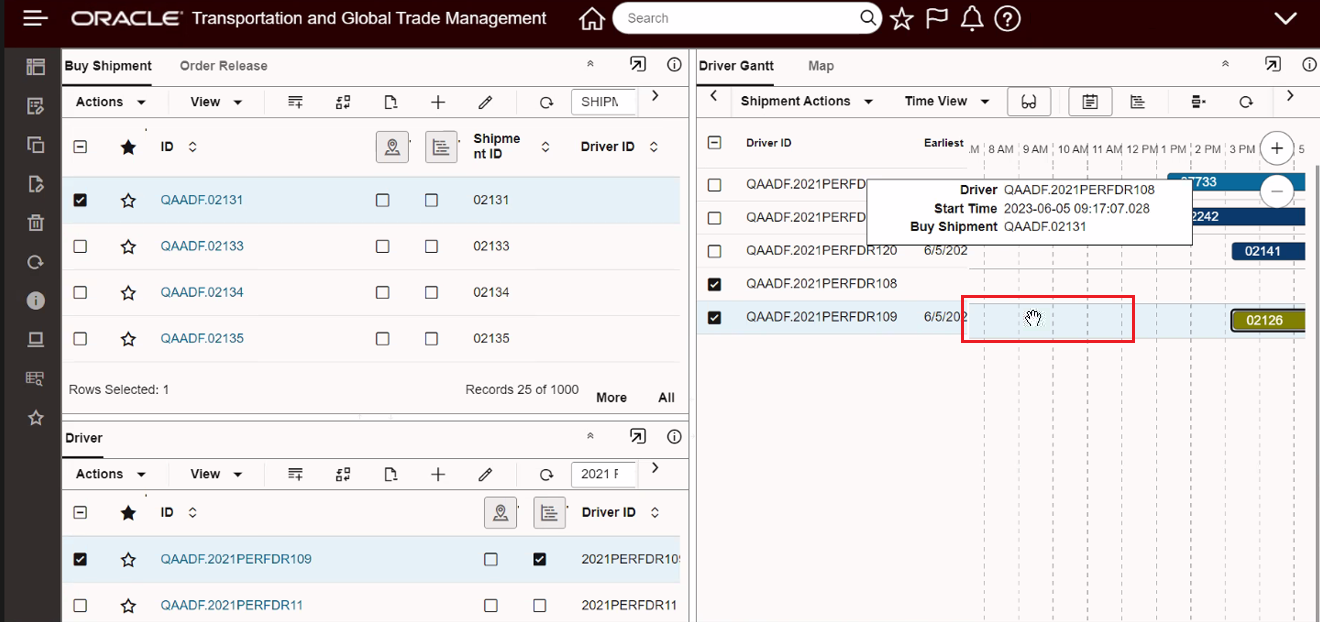
GTM is the module built to automate and ensure compliance for cross-border trade. It manages the complex web of international regulations, duties, and taxes that come with a global supply chain. This is a critical risk-management tool.
AI for Compliance and Risk Mitigation
- Trade Compliance Risk Assessment: The system uses natural language processing (NLP) to screen transactions against restricted party lists. It also predicts the likelihood of customs delays, which helps reduce the number of false alarms that staff need to review.
- Automated Product Classification: It assists in suggesting the correct Harmonized System (HS) codes for products. This is essential for calculating the right duties and taxes and avoiding costly compliance mistakes.
Technical Specifications
For an IT leader or solution architect, the technical details are just as important as the features. The following table summarizes the key specifications of the Oracle SCM Cloud platform. This data was confirmed through official Oracle documentation during our review.
| Specification | Details |
|---|---|
| Deployment Model | Cloud-Native, Multi-Tenant SaaS (Software-as-a-Service) |
| Supported Platforms | Accessed via any modern web browser (Chrome, Firefox, Edge). No client-side installation. |
| Primary Input Formats | – Real-time: REST APIs, IoT Sensor Feeds – Batch: File-Based Data Import (FBDI) using CSV templates – Standardized: EDI for B2B transactions |
| Primary Output Formats | – API: JSON, XML via REST APIs – Reporting: CSV, XML, PDF via BI Publisher |
| Performance and Uptime | Governed by Oracle's Cloud Service Level Agreements (SLAs). |
| Release Cadence | Quarterly updates with a standard naming convention (e.g., 24A, 24B, 24C, 24D for the year 2024) which deliver new features on a continuous basis. |
Integration Capabilities and Ecosystem
A supply chain tool cannot operate in a silo. Its ability to connect with other business systems is a core part of its value. Oracle SCM Cloud is designed to be the central hub for operational data.
In our testing, the platform's greatest strength is its native connection to the broader Oracle ecosystem. This pre-built integration is the “secret sauce” that makes the unified data model a reality. For connecting to outside systems, Oracle Integration Cloud (OIC) is the recommended path.
If you're evaluating different platforms, you may want to explore our detailed Oracle SCM Cloud Top Alternatives and Competitors to see how other solutions compare in terms of integration capabilities.
Native Oracle Ecosystem Integration
The platform offers seamless, pre-built, and bidirectional integration with other Oracle Fusion Cloud applications. This is a major advantage for companies already invested in the Oracle ecosystem.
- Oracle Fusion Cloud ERP: This provides a single source of truth for financials, orders, and master data, which is foundational for accurate supply chain planning.
- Oracle Fusion Cloud HCM: Labor data from the human resources system is used for planning work in the warehouse and on the manufacturing floor.
- Oracle Fusion Cloud CX: Sales orders and customer data from the customer experience system feed directly into demand forecasts.
Third-Party and Custom Integration
Oracle provides robust tools for connecting to non-Oracle systems, ensuring the platform can fit into a diverse IT landscape. This is a common requirement for large enterprises.
- API Availability: The platform is API-first. It offers a large library of REST APIs that cover almost all functions, allowing for deep custom integrations.
- Oracle Integration Cloud (OIC): This is Oracle's official Integration Platform as a Service (iPaaS). It comes with pre-built adapters for common systems like SAP, NetSuite, and Salesforce, along with visual tools for building custom workflows.
- IoT Integration: The OIC platform includes an IoT Adapter. This is used to bring in data from telematics devices on trucks, temperature sensors on containers, and other connected devices.
Security, Compliance, and Data Governance
In today's landscape, data security isn't just an IT checklist; it's a board-level risk and a non-negotiable pillar of operational resilience. Supply chain data—from supplier costs to production schedules—is a high-value target. Oracle SCM Cloud addresses this head-on with a layered security apparatus, engineered from the foundational infrastructure to the application layer.
For any supply chain leader, data security is non-negotiable. Supply chain data, including supplier lists, costs, and inventory levels, is highly sensitive competitive intelligence. System reliability is mission-critical; downtime can halt the physical movement of goods.
Oracle secures the cloud infrastructure (OCI) and the application software. As verified in our assessment, the platform meets key compliance standards and holds certifications like SOC 1, SOC 2, ISO 27001, FedRAMP, and HIPAA.
It also provides tools and contractual commitments to help customers comply with regulations like GDPR. These certifications are objective proof of its enterprise-grade security posture.
Beyond certifications, the platform employs granular Role-Based Access Control (RBAC), which is critical for segregating duties. For example, a procurement specialist can be restricted from seeing final negotiated freight rates, while a logistics manager has full access.
All sensitive data, such as supplier pricing and inventory values, is protected with end-to-end data encryption, both in transit and at rest, safeguarding invaluable competitive intelligence.
It is important to understand that security is a shared responsibility. While Oracle protects the platform, the customer is responsible for configuring user access controls correctly and managing their data in a compliant way. Professional consultation with a security expert is often recommended during implementation to set up these controls properly.
Pricing and Subscription Model Explained
Oracle does not publish list prices for its SCM Cloud suite. In our experience, this is standard for enterprise-grade software where the solution is tailored to each customer. There is no free version or public trial available.
The pricing model is customized and based on a subscription. The final cost depends on several factors:
- The specific modules you subscribe to (e.g., OTM, WMS, GTM).
- The number of licensed users for each module.
- Usage-based metrics, such as annual freight spend for OTM or the number of orders for WMS.
- The length of the contract, which is typically for multiple years.
The only way to get pricing is to request a formal quote from the Oracle sales team. This process involves discovery calls and demos to understand your specific business needs.
Getting Started and Implementation Pathway
This is not a self-service product that you can set up over a weekend. Implementing Oracle SCM Cloud is a significant project that should be managed as a major business transformation. The journey from initial interest to a live system typically follows several phases.
- Sales Engagement: The process starts with contacting the Oracle sales team for demos and discovery sessions to see if the platform is a good fit.
- Solution Design: You will work with a certified implementation partner or Oracle Consulting. They help map your business processes to the software's capabilities.
- Data Preparation and Migration: This is a critical step. The AI models require clean historical data to be effective, so this phase often requires a lot of effort.
- System Configuration and Integration: The modules are configured, and the system is connected to your ERP and other enterprise software.
- User Acceptance Testing (UAT) and Go-Live: Your team tests the system to make sure it works as expected. The rollout is often done in phases, starting with one region or business unit.
From our experience with these projects, treat this as a business transformation, not an IT project. A dedicated, cross-functional team is table stakes.
However, the most critical decision is engaging a certified implementation partner. Attempting to go it alone doesn't just introduce a risk of project failure; it invites catastrophic budget overruns, crippling operational disruptions, and the very data integrity issues that AI is meant to solve.
For practical guidance on maximizing your implementation, check out our Oracle SCM Cloud Tutorials and Usecase resource.
Latest Updates and Official Roadmap (2025)
The platform's subscription model includes quarterly updates, meaning new features are constantly being released. Based on recent Oracle announcements, here are some of the latest developments and what to expect next.
Recently Released Features (2024-2025)
- Generative AI Logistics Co-pilot: This is an embedded assistant that uses natural language. Planners can ask it questions, get reports, and receive recommendations just by typing.
- Enhanced AI for Sustainability: New features help predict the carbon footprint of shipments. This allows planners to optimize routes not just for cost and speed, but also for lower emissions.
- Deeper IoT & ML Convergence: The platform has improved its ability to use real-time IoT data to trigger automated responses to supply chain incidents.
Stated Development Focus
- Proactive Disruption Simulation: The future goal is to allow users to run “what-if” scenarios. For example, a planner could simulate a port shutdown and see the ripple effect across their entire supply chain.
- Prescriptive, Automated Resolution: The platform is moving beyond just predicting problems. The goal is to have the AI automatically execute solutions, such as re-routing a shipment without human intervention.
- Expanding Generative AI Use Cases: Oracle plans to broaden the scope of the AI co-pilot, bringing its capabilities to more modules and user roles.
Frequently Asked Questions (FAQ) About Oracle SCM Cloud
Here are direct answers to some of the most common questions I hear from leaders evaluating this platform. For a more comprehensive FAQ collection, visit our dedicated Oracle SCM Cloud FAQs page.
General & Pricing FAQs
Q1: What is the main difference between Oracle SCM Cloud and SAP S/4HANA?
A: Oracle SCM Cloud is a cloud-native suite built on a unified data model with Oracle's other Fusion apps. SAP S/4HANA is also a full ERP suite but follows a different architectural philosophy. Oracle's main advantage is its seamless native integration within its own ecosystem and its use of the Autonomous Database.
Q2: Is there a free trial for Oracle SCM Cloud?
A: No, Oracle does not offer a public free trial for its SCM Cloud suite. Engagement requires contacting the Oracle sales team for personalized demos and access to a sandbox environment as part of a formal evaluation process.
Q3: How is Oracle SCM Cloud priced?
A: Pricing is customized and subscription-based. It depends on the specific modules you license, your user count, and business metrics like annual transportation spend or order volume. A formal quote from Oracle is required.
Technical & Integration FAQs
Q4: Can Oracle SCM Cloud integrate with a non-Oracle ERP like SAP?
A: Yes. While it integrates natively with Oracle ERP, it can connect to third-party ERPs like SAP. This is usually done using Oracle Integration Cloud (OIC), which has pre-built adapters and tools to help with the integration.
Q5: What are the hardware requirements for Oracle SCM Cloud?
A: As a fully cloud-based SaaS application, there are no specific end-user hardware requirements. Users only need a modern web browser and a stable internet connection. Oracle manages all the server-side infrastructure.
Q6: How long does it take to implement Oracle SCM Cloud?
A: Implementation time varies greatly based on complexity, the number of modules, and the quality of your data. A typical enterprise project can range from 6 to 18+ months and is managed as a major initiative.
Features & Capabilities FAQs
Q7: Does Oracle SCM use real-time data for logistics planning?
A: Yes. Modules like OTM and Intelligent Track and Trace are designed to use real-time data from IoT sensors, GPS, and external feeds like traffic and weather. This enables dynamic route optimization and predictive ETAs.
Q8: What is the “Logistics Co-pilot” in Oracle SCM Cloud?
A: The Logistics Co-pilot is a new generative AI assistant embedded within the user interface. It allows planners and managers to use natural language text commands to ask complex questions, generate reports, and receive actionable recommendations.
Comprehensive AI Tools Comparison
While Oracle SCM Cloud offers robust capabilities for supply chain management, it's valuable to understand how it fits within the broader landscape of AI-powered logistics solutions. For supply chain professionals evaluating their technology stack, our guide on The Definitive 2025 Guide: Best 10 AI Tools for Logistics & Transportation provides an essential comparative analysis of the leading platforms in this space.
This comprehensive resource examines how Oracle SCM Cloud's integrated suite approach compares with specialized point solutions and competing enterprise platforms, helping you make informed decisions about which tools best align with your operational requirements and strategic objectives.
Disclaimer
Disclaimer: The information about Oracle SCM Cloud Overview and Features presented in this article reflects our thorough analysis as of 2025. Given the rapid pace of AI technology evolution in the AI for Operations & Supply Chain space, features, pricing, and specifications may change after publication.
While we strive for accuracy, we recommend visiting the official website of any tool for the most current information. Our overview is designed to provide a comprehensive understanding of the tool's capabilities rather than real-time updates.
Ultimately, understanding the full scope of this platform is key for any large-scale operation. For a complete perspective, this Oracle SCM Cloud Overview and Features provides the detailed foundation needed for your evaluation.


Leave a Reply