Is Oracle SCM Cloud the Right AI Solution for Your Supply Chain?
This 2-Minute Quiz Reveals Your Fit.
Key Takeaways
- AI-Powered Transformation: Oracle SCM Cloud integrates AI and Machine Learning across all modules to transform supply chain management from reactive to proactive operations with predictive insights and intelligent automation.
- Comprehensive Module Integration: AI capabilities are embedded throughout SCM modules including Demand Management, Intelligent Track and Trace, IoT Production Monitoring, and Transportation Management for end-to-end optimization.
- Data Quality is Critical: Success requires accurate, complete, timely, and consistent data across all systems—typically 2-3 years of clean historical data for effective AI model training.
- Robust Integration Capabilities: Oracle SCM Cloud offers extensive integration options through Oracle Integration Cloud (OIC) and REST APIs for seamless connectivity with non-Oracle ERP systems and third-party applications.
- Strategic Implementation Approach: Successful deployment requires 6-18 months with phased implementation, strong executive sponsorship, experienced implementation partners, and comprehensive change management programs.
What is Oracle SCM Cloud and how does it use AI to transform supply chain management?
Oracle SCM Cloud is a comprehensive suite of cloud-based applications that manages an organization's entire supply chain operations, from planning and procurement to manufacturing and logistics. What distinguishes it from traditional systems is its deep integration of Artificial Intelligence (AI) and Machine Learning (ML) capabilities across all modules, fundamentally transforming supply chain management from reactive to proactive operations.
The system leverages AI to deliver predictive insights that forecast future events rather than simply reporting past performance. This includes predicting demand with higher accuracy, anticipating potential machine failures in manufacturing facilities, and identifying shipment delays before they occur.
The AI also enables intelligent automation of complex decisions, such as automatically selecting the most cost-effective shipping carrier based on real-time rates and constraints or re-prioritizing production schedules in response to material shortages.
Through its digital twin technology, Oracle SCM Cloud creates a real-time virtual model of the entire supply chain, providing end-to-end visibility from a single control tower view. This allows managers to monitor inventory, shipments, and production across global operations, identifying and managing exceptions before they escalate into critical problems.
The ultimate goal is to create a more resilient and agile supply chain that reduces costs through optimized inventory and logistics while simultaneously improving customer service levels and operational efficiency. For a comprehensive Oracle SCM Cloud Overview and Features analysis, explore the full platform capabilities.
Which specific Oracle SCM Cloud modules are enhanced with AI and machine learning?
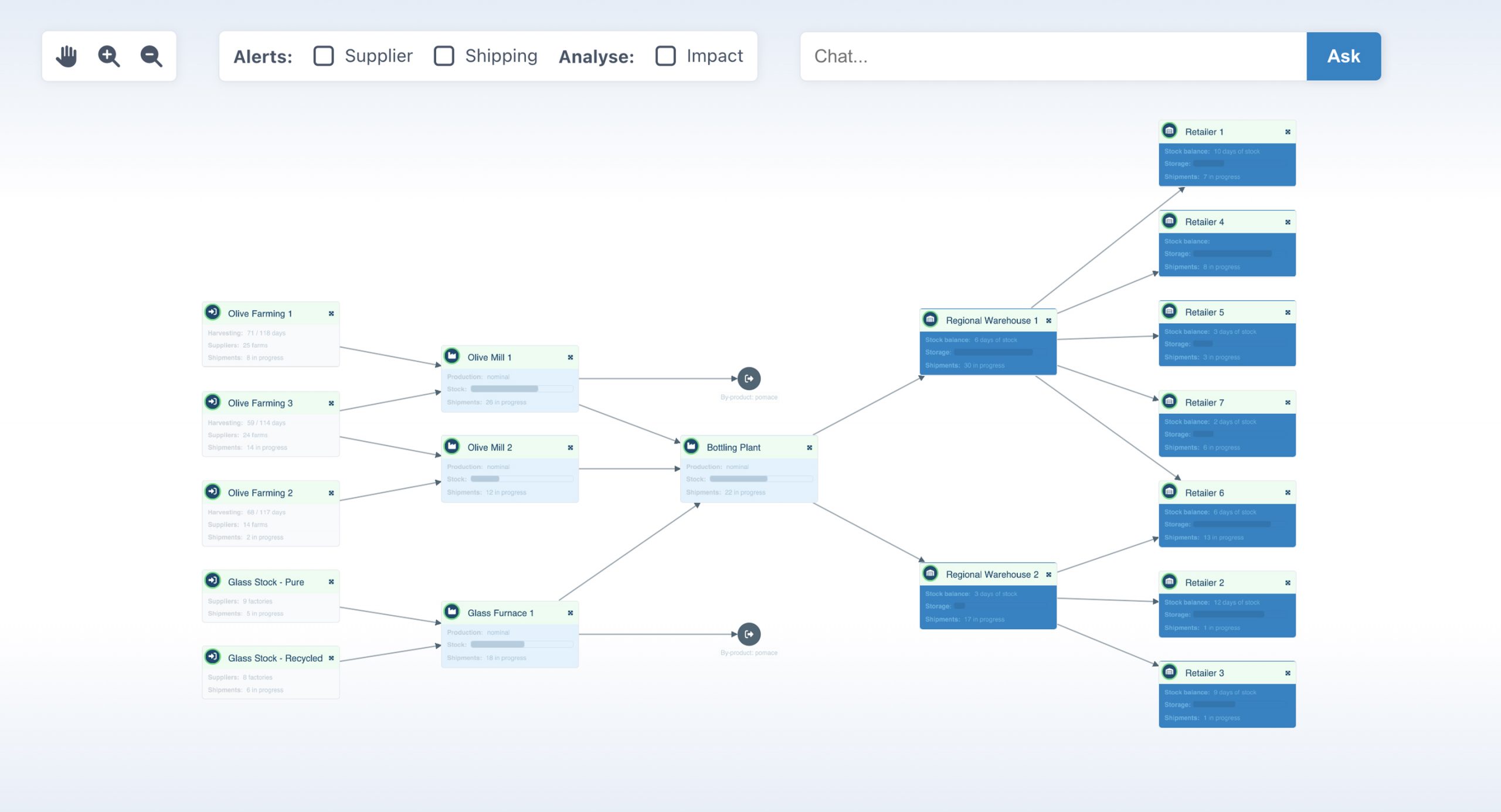
Oracle has embedded AI and Machine Learning capabilities throughout its SCM suite rather than isolating them in a single tool, enabling different functional areas to benefit from predictive analytics and automation.
The most prominent AI-driven modules include Demand Management & Supply Chain Planning, which uses ML algorithms to analyze thousands of data points including historical sales, seasonality, promotions, and external signals like weather patterns to create significantly more accurate demand forecasts and reduce the bullwhip effect.
The Intelligent Track and Trace module leverages AI and IoT data to provide real-time visibility into shipments and inventory across the entire supply chain network, predicting arrival times with greater accuracy and automatically flagging shipments at risk of delay.
In manufacturing, the IoT Production Monitoring module connects to machinery sensors to power predictive maintenance, learning normal operating parameters to predict potential failures before they occur, thereby maximizing uptime and improving Overall Equipment Effectiveness (OEE).
The Transportation Management System (TMS) employs AI to automate and optimize logistics decisions, performing dynamic route optimization that adjusts in real-time to traffic conditions, automating carrier selection based on cost and performance metrics, and facilitating load consolidation to minimize empty miles and reduce freight spend.
This comprehensive AI integration across modules ensures that supply chain professionals can leverage advanced analytics throughout their operations. Dive deeper into the detailed Oracle SCM Cloud Review to understand implementation benefits.
How does Oracle SCM Cloud's AI for demand forecasting compare to top competitors like SAP IBP or Blue Yonder?

Oracle SCM Cloud, SAP Integrated Business Planning (IBP), and Blue Yonder represent top-tier solutions for AI-driven demand forecasting, each with distinct philosophical approaches and ecosystem strengths.
Oracle's primary advantage lies in its unified data model and seamless integration within the broader Oracle Fusion Cloud ecosystem, including ERP, EPM, and CX applications. For organizations already operating within Oracle's ecosystem, SCM Cloud offers unparalleled out-of-the-box connectivity and data consistency.
Oracle has invested significantly in “touchless” forecasting capabilities where AI can autonomously run and update forecasts, flagging only major exceptions requiring human intervention, thereby enhancing planner productivity.
SAP IBP excels in its deep integration with the S/4HANA ERP core and powerful Sales & Operations Planning (S&OP) capabilities, particularly in scenario planning and simulation features that allow real-time modeling of financial and operational impacts from different demand scenarios.
Blue Yonder, as a best-of-breed supply chain specialist, offers exceptional depth and granularity in forecasting algorithms through its Luminate™ Platform, designed for high extensibility and complex, large-scale supply chain operations.
The critical deciding factor often comes down to existing technology infrastructure—Oracle-centric organizations typically benefit from native integration and unified data models that provide lower Total Cost of Ownership (TCO) and faster time-to-value, outweighing marginal feature advantages from competitors. Explore comprehensive Oracle SCM Cloud Top Alternatives and Competitors for detailed comparisons.
What kind of data quality is required to get meaningful results from Oracle's supply chain AI?
Achieving meaningful, reliable results from Oracle SCM Cloud's AI features requires data that meets four critical criteria: accuracy, completeness, timeliness, and consistency. The principle of “garbage in, garbage out” applies particularly strongly to AI systems, making data quality foundational to successful implementation and operation.
Accuracy demands that master data—including item numbers, bills of materials, customer addresses, and supplier lead times—must be correct. Inaccurate data, such as incorrect lead times or product dimensions, will result in faulty inventory planning and failed shipment load plans regardless of the AI's sophistication.
Completeness requires sufficient historical data volume for pattern identification; demand forecasting typically needs at least 2-3 years of clean sales history to train models effectively.
Timeliness ensures that real-time information from IoT sensors, vehicle telematics, and operator scanners is ingested with minimal latency, as delayed data renders AI recommendations obsolete.
Consistency mandates that data formats and identifiers remain identical across all integrated systems, with SKUs matching perfectly between ERP, WMS, and e-commerce platforms to prevent integration failures and model errors.
Organizations must invest in thorough data audits and cleansing projects before implementation, establishing strong data governance practices with clear ownership for key data domains. This foundational work, while resource-intensive, is essential for differentiating between successful AI deployment and costly operational failures.
What are the integration capabilities of Oracle SCM Cloud with non-Oracle ERP systems and third-party applications?
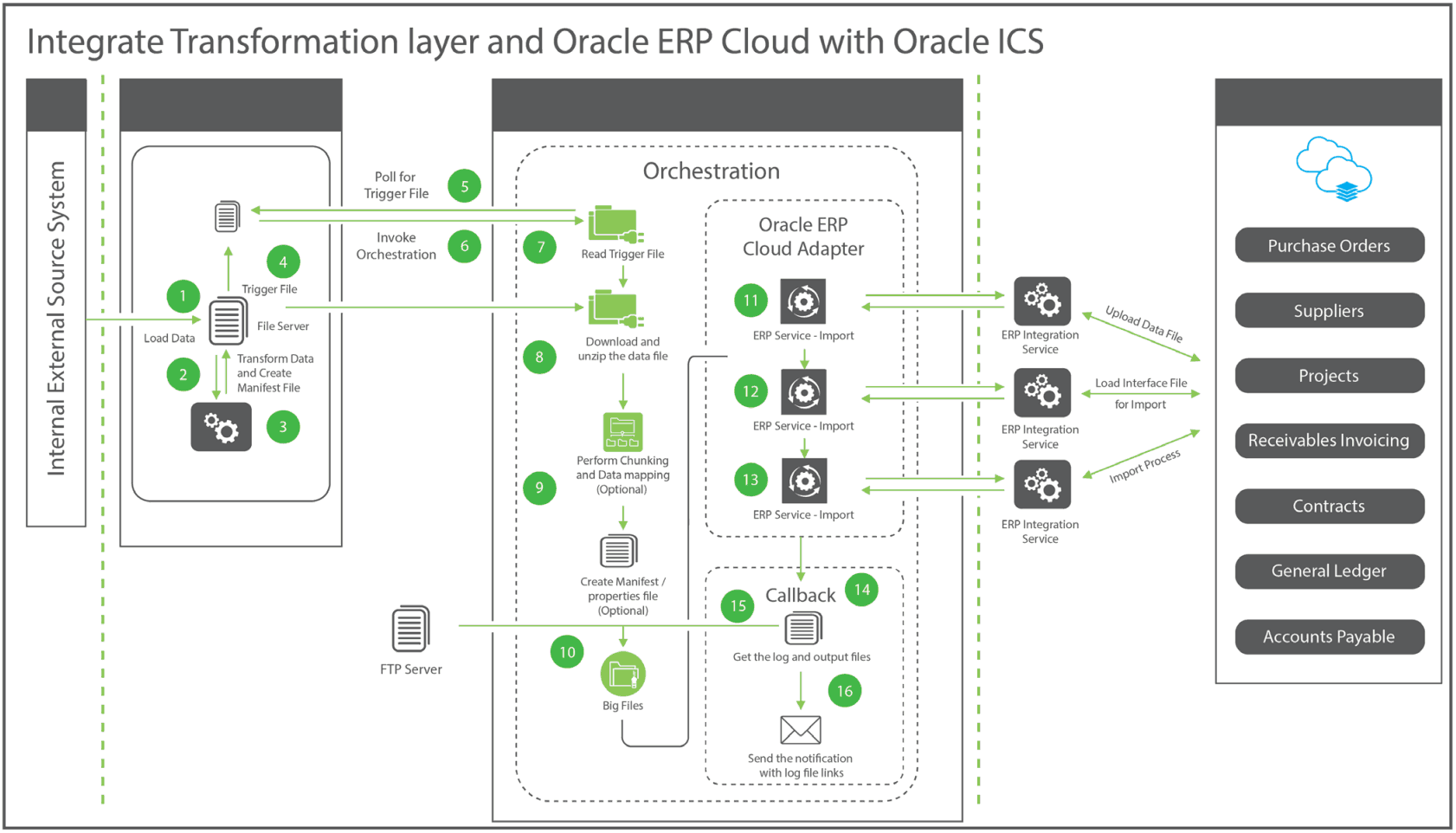
While Oracle SCM Cloud operates most effectively within its native Fusion Cloud ecosystem, it provides robust integration frameworks for connecting with external systems and legacy applications, a necessity for most large enterprises. Integration is primarily facilitated through Oracle Integration Cloud (OIC) and a comprehensive library of REST APIs that enable seamless connectivity across diverse technology landscapes.
For common enterprise systems including major ERPs like SAP and NetSuite, plus Oracle's own JD Edwards and E-Business Suite, Oracle offers pre-built integration adapters through OIC. These adapters provide out-of-the-box connectors for critical business objects such as sales orders, purchase orders, and inventory updates, significantly accelerating integration processes and reducing custom coding requirements through handled data mapping and process orchestration.
For specialized third-party applications, custom systems, or unique data sources including 3PL provider portals, IoT platforms, and manufacturing software, Oracle SCM Cloud exposes extensive, well-documented REST APIs.
These APIs grant granular access to virtually every function and data object within SCM modules, enabling development teams to build custom, real-time integrations for data ingestion (such as real-time shipment status from carriers) and data distribution (including advanced shipping notices to customer systems).
The platform also supports high-volume data ingestion from external sources like IoT sensors and telematics devices, essential for AI-driven features including predictive maintenance and intelligent track-and-trace. This comprehensive integration capability ensures that organizations can maintain operational continuity while leveraging Oracle's advanced AI functionalities.
For practical implementation guidance, review Oracle SCM Cloud Tutorials and Usecase examples.
What security and data privacy protocols does Oracle SCM Cloud have in place?
Oracle treats supply chain data as highly sensitive mission-critical information, designing both Oracle Cloud Infrastructure (OCI) and the SCM application layer with a security-first approach that adheres to rigorous international standards for data protection, integrity, and operational reliability. The platform's security framework encompasses multiple layers of protection to ensure comprehensive coverage.
Key security pillars include:
- Compliance Certifications: SOC 2 Type II and ISO 27001, which provide essential third-party validation of security controls and operational processes for public companies and regulated industries.
- Data Encryption: Protects information both at rest (when stored in databases) and in transit (during system communications) using strong AES-256 protocols to prevent unauthorized access.
- Role-Based Access Control (RBAC): Enables granular security configurations, allowing organizations to define specific roles—including Demand Planner, Warehouse Manager, Procurement Specialist, and Logistics Coordinator—with permissions tailored to job requirements, preventing unauthorized access to sensitive cost data or unapproved changes to production plans.
- Operational Reliability and Business Continuity: High uptime Service Level Agreements (SLAs) and robust disaster recovery protocols supported by Oracle's global data center footprint, ensuring system availability even during regional outages.
These comprehensive security measures provide enterprises with confidence to run critical supply chain operations in the cloud, knowing their competitive data remains secure and the platform maintains resilience against potential threats and disruptions.
What is the pricing model for Oracle SCM Cloud and what factors influence the Total Cost of Ownership?
Oracle SCM Cloud employs a complex, tailored subscription-based pricing model typically structured through multi-year contracts without public price lists. The subscription price is determined by specific usage metrics that vary by module, with core AI-driven modules priced using business-value metrics rather than user counts.
Module-Specific Pricing Metrics:
- Demand Management & Supply Planning: Priced based on Annual Revenue
- Transportation Management: Correlates to Annual Freight Under Management (total freight spend)
- Procurement: Priced according to Annual Spend managed through the system
- Intelligent Track and Trace: Operates on a transactional basis measured by Thousand Transaction Lines processed monthly
While some access is licensed per user (Hosted Named User), the strategic AI modules central to supply chain operations utilize these value-based pricing structures.
Total Cost of Ownership Components:
- One-time Implementation Costs: System configuration, data migration, and integration development—often matching or exceeding first-year subscription costs
- Integration Development: Using Oracle Integration Cloud (OIC) for system connectivity
- Training and Change Management: Comprehensive programs essential for user adoption and ROI achievement
- Ongoing Support: Managed services beyond standard subscriptions
Prospective customers must engage directly with Oracle sales representatives or certified implementation partners to obtain precise quotes based on specific operational metrics and module selections, ensuring accurate budgeting and avoiding unexpected expenses.
What are the typical implementation risks and timelines for an Oracle SCM Cloud project?
Implementing Oracle SCM Cloud represents a major business transformation initiative rather than a simple IT installation, with typical timelines ranging from 6 to 18 months depending on project scope, module complexity, data migration volumes, and integration requirements.
The most significant implementation risks are organizational rather than technical, focusing on people, processes, and data quality foundations.
Primary Implementation Risks:
- Poor Data Quality: Inaccurate or incomplete data undermines system functionality, erodes user trust, and prevents ROI realization. This represents the most critical risk factor.
- Lack of Executive Sponsorship: Insufficient leadership support and inadequate change management programs can lead to user resistance and reversion to spreadsheet-based workflows.
- Unrealistic Scope: Attempting to implement all modules simultaneously often results in project failure and resource overextension.
- Inexperienced Implementation Partners: Choosing partners without certified expertise in specific SCM modules and proven methodologies for enterprise data migration, integration, and change management introduces substantial project risk.
Success requires meticulous planning, dedicated resources, and clear understanding that this is a strategic business initiative demanding organizational commitment beyond technical implementation.
Recommended Approach:
Organizations should adopt phased implementation approaches, starting with core modules addressing primary pain points to achieve quick wins before expanding functionality. This methodology, combined with strong data governance and change management, significantly enhances implementation success probabilities and long-term system value.
For additional insights and answers to common questions, visit our comprehensive Oracle SCM Cloud FAQs resource.


Leave a Reply