
Is SAP Commerce Cloud Right for Your Warehouse Operations?
Take This 2-Minute Quiz to Find Out!
Key Takeaways
- Enterprise Integration: SAP Commerce Cloud serves as the intelligent interface between customer-facing systems and warehouse management, providing real-time inventory synchronization and automated order routing
- AI-Powered Optimization: Machine learning algorithms optimize warehouse picking, inventory allocation, and demand forecasting, typically improving inventory turnover by 20-30%
- Automation Ready: Direct integration with AMRs, robotic systems, and warehouse automation platforms through RESTful APIs and pre-built connectors
- Implementation Timeline: Expect 8-15 months for enterprise warehouse deployments, with costs ranging from $250K to $1.5M+ depending on complexity
- Enterprise Security: SOC 2 Type II certified with ISO 27001 compliance, providing enterprise-grade security for sensitive inventory and supply chain data
What is SAP Commerce Cloud and how does it optimize warehouse and inventory management?
SAP Commerce Cloud (formerly known as SAP Hybris) is an enterprise-grade e-commerce platform designed to serve as the digital front-end for complex inventory and warehouse operations. For warehouse and inventory leaders, it functions as the intelligent interface that connects customer-facing systems directly to your warehouse management system (WMS) and ERP backbone.
The platform transforms static product catalogs into dynamic, AI-powered inventory systems that provide real-time product availability, location-specific stock levels, and automated order routing intelligence. This directly optimizes warehouse operations by:
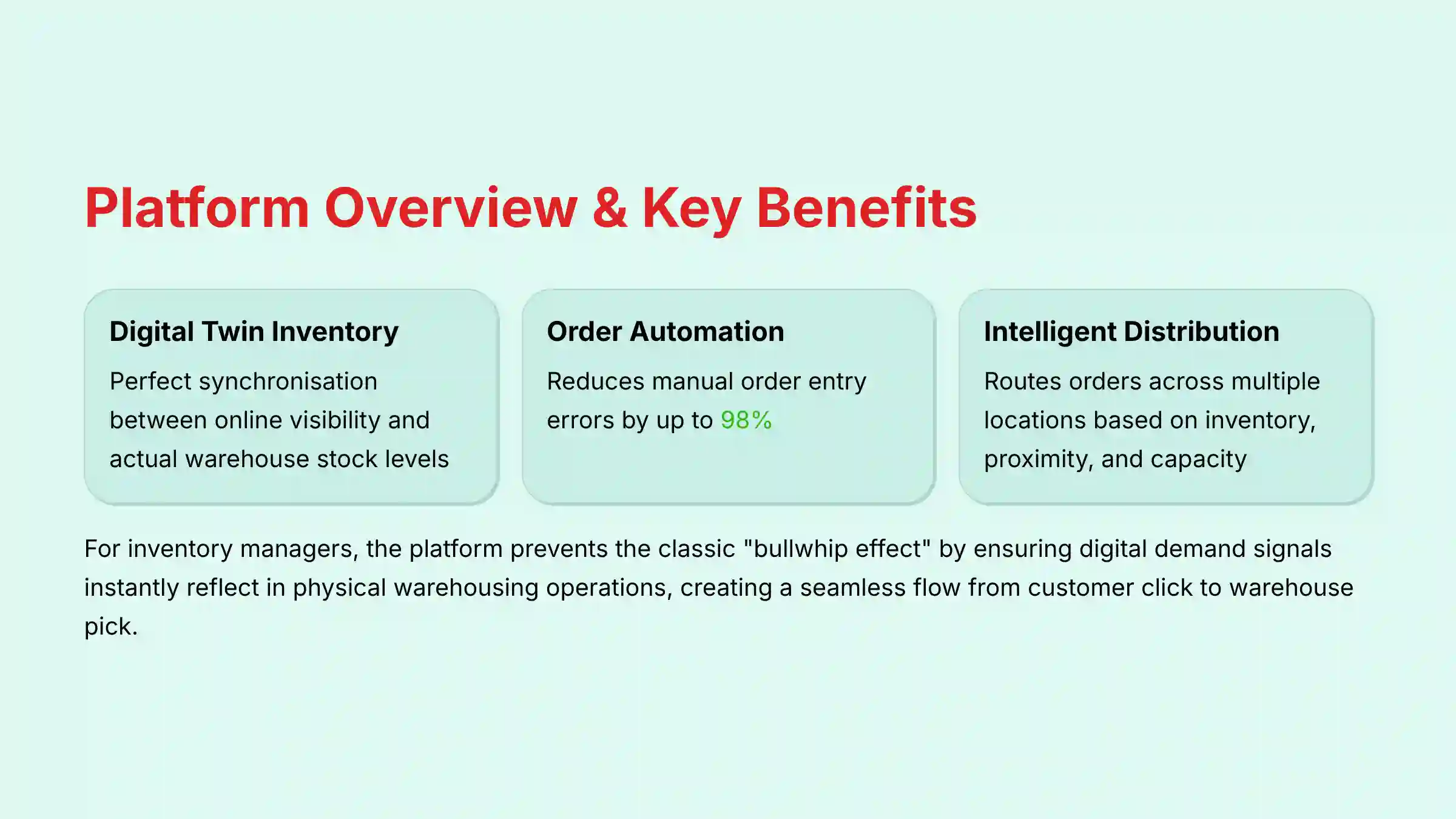
- Automating the entire order-to-fulfillment process, reducing manual order entry errors by up to 98%
- Creating a digital twin of your inventory that maintains perfect synchronization between what customers see online and actual warehouse stock levels
- Intelligently distributing orders across multiple fulfillment locations based on inventory availability, proximity to customer, and warehouse capacity
- Supporting complex warehouse configurations including multi-node networks, dark stores, and hybrid fulfillment models
For inventory managers, the platform's greatest value is preventing the classic “bullwhip effect” by ensuring that digital demand signals are instantly and accurately reflected in your physical warehousing operations, creating a seamless flow from customer click to warehouse pick. The comprehensive SAP Commerce Cloud Overview and Features provides additional insights into these core capabilities.

How does SAP Commerce Cloud use AI to optimize warehouse picking and inventory allocation?
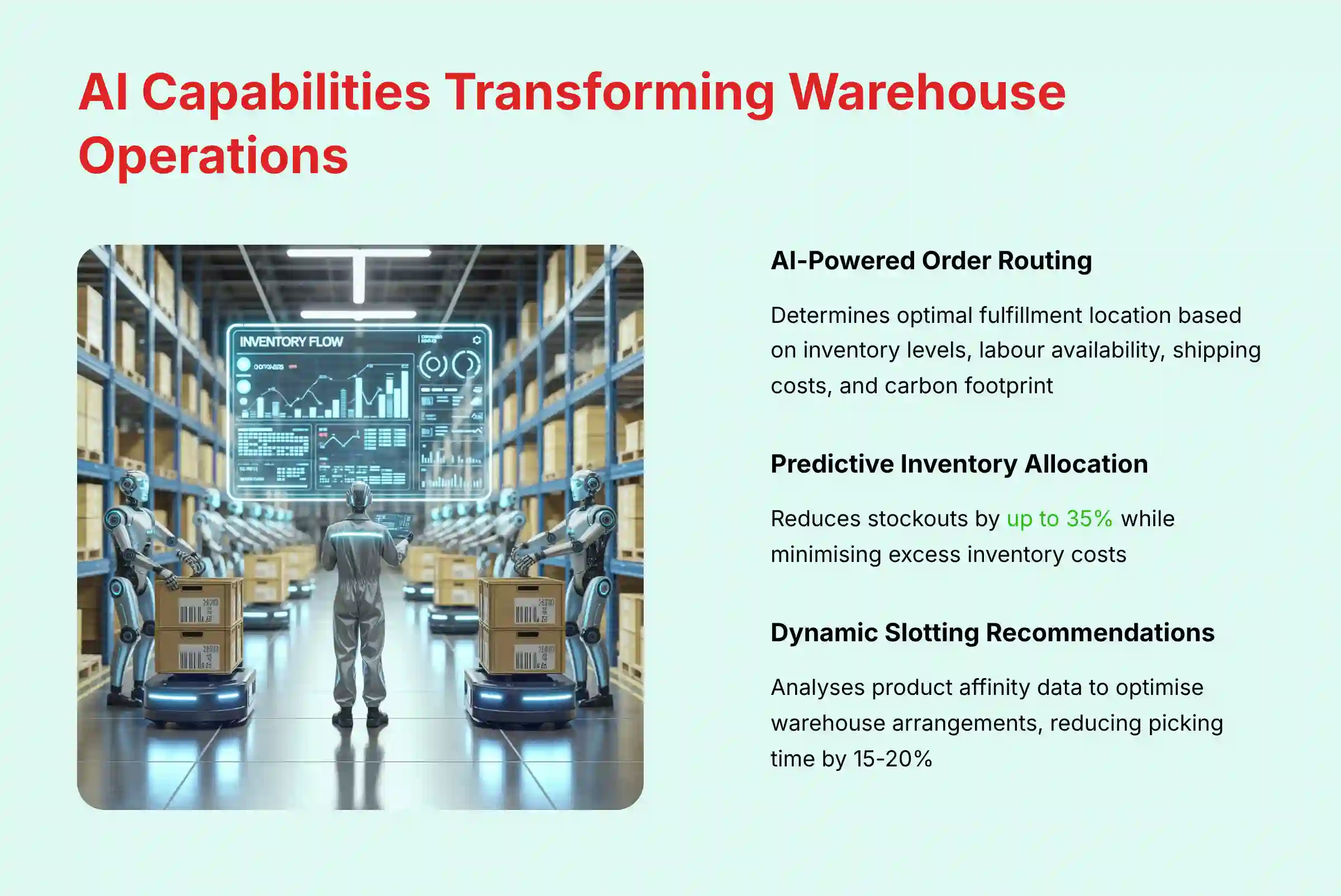
SAP Commerce Cloud leverages several AI and machine learning capabilities to transform traditional warehouse operations into intelligent, self-optimizing fulfillment centers. While not a standalone WMS, its AI capabilities directly enhance inventory efficiency through these key features:
- AI-Powered Order Routing & Sourcing Logic: The Order Management System (OMS) component uses machine learning algorithms to determine the optimal fulfillment location for each order based on multiple variables including current inventory levels across warehouses, labor availability, shipping costs, delivery promises, and even carbon footprint calculations.
- Predictive Inventory Allocation: The platform can analyze historical order patterns, current stock levels, and seasonal trends to automatically pre-position inventory across your warehouse network, reducing stockouts by up to 35% while minimizing excess inventory costs.
- Dynamic Slotting Recommendations: For warehouse operations, the AI can analyze product affinity data (items frequently purchased together) to recommend optimal warehouse slotting arrangements, potentially reducing picking time by 15-20%.
- Smart Replenishment Triggers: Machine learning models continuously analyze sales velocity, lead times, and safety stock requirements to generate automated replenishment recommendations before stock reaches critical levels.
These AI capabilities work together to transform static warehouses into intelligent fulfillment nodes that continuously adapt to changing demand patterns, resulting in higher order accuracy, reduced labor costs, and improved inventory turnover. For detailed analysis of implementation approaches, explore our SAP Commerce Cloud Review which covers real-world performance metrics.
Can SAP Commerce Cloud integrate with autonomous mobile robots (AMRs) and warehouse automation systems?
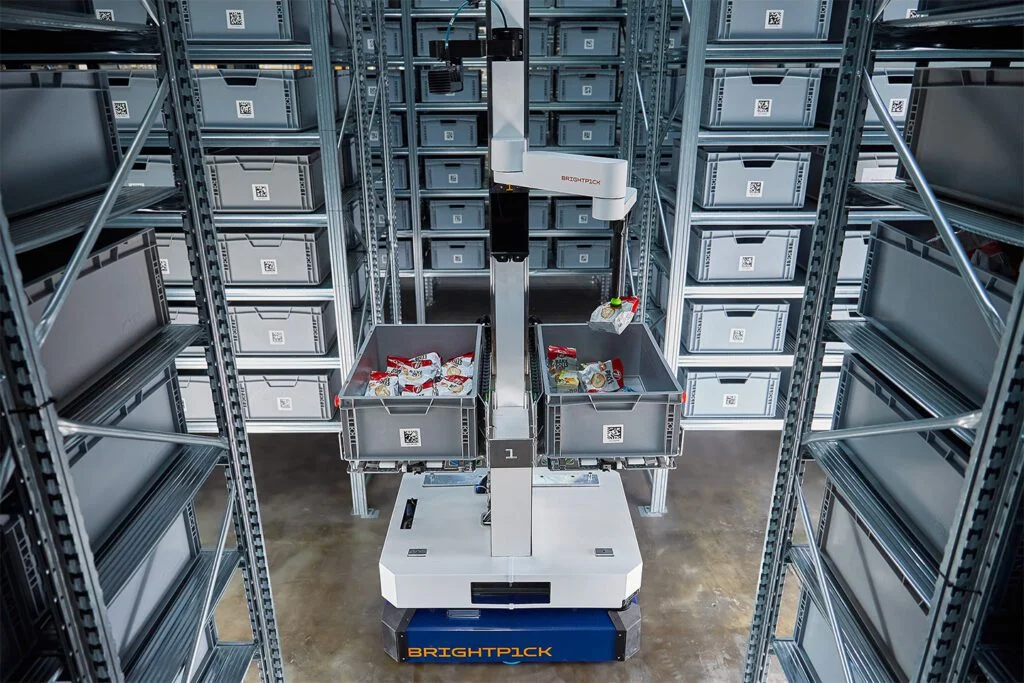
Yes, SAP Commerce Cloud offers robust integration capabilities with warehouse automation technologies, including Autonomous Mobile Robots (AMRs), Automated Storage and Retrieval Systems (AS/RS), and picking robots. This integration happens through three primary mechanisms:
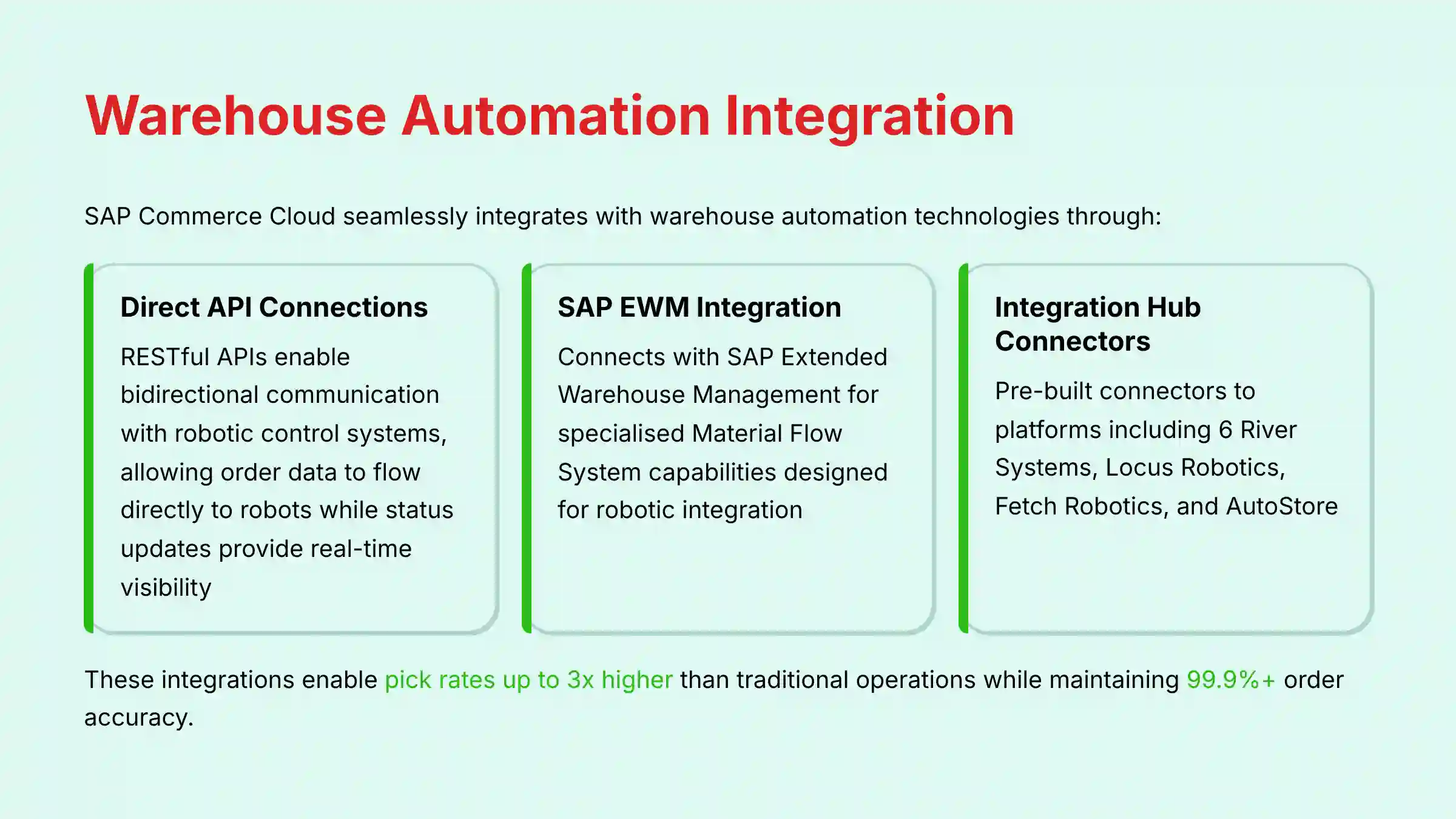
- Direct API Connections: SAP Commerce Cloud provides RESTful APIs that allow bidirectional communication with robotic control systems. This enables order data to flow directly from the commerce platform to the robots for execution, while status updates flow back to provide customers with real-time visibility.
- SAP EWM Integration: For more advanced automation scenarios, SAP Commerce Cloud connects with SAP Extended Warehouse Management (EWM), which provides specialized Material Flow System (MFS) capabilities designed specifically for robotic integration and warehouse automation control.
- Integration Hub Connectors: The platform offers pre-built connectors to common warehouse automation platforms including 6 River Systems, Locus Robotics, Fetch Robotics, and AutoStore through SAP's Integration Suite.
These integration capabilities allow operations that deploy SAP Commerce Cloud to create truly connected warehouses where human-operated processes, robotic systems, and digital commerce channels operate as a unified system. This integration is particularly valuable for high-volume operations with complex inventory profiles, enabling them to achieve pick rates up to 3x higher than traditional manual operations while maintaining 99.9%+ order accuracy.
The most successful implementations follow a phased approach, starting with basic order flow integration and progressively adding more sophisticated robotic process automation as warehouse teams develop expertise. For comprehensive tutorials on automation integration, visit our SAP Commerce Cloud Tutorials and Usecase section.
How does SAP Commerce Cloud handle multi-location inventory visibility and allocation?
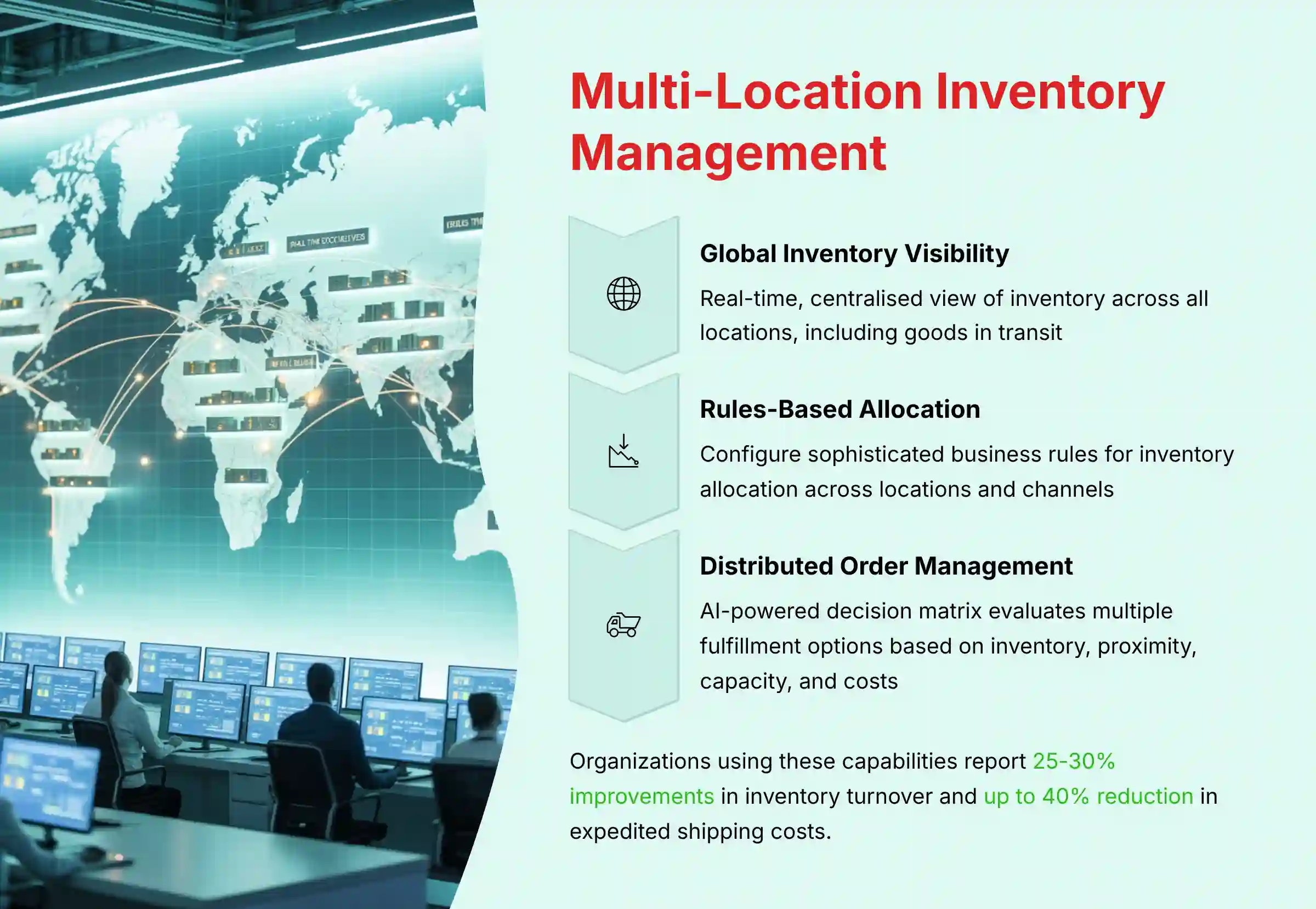
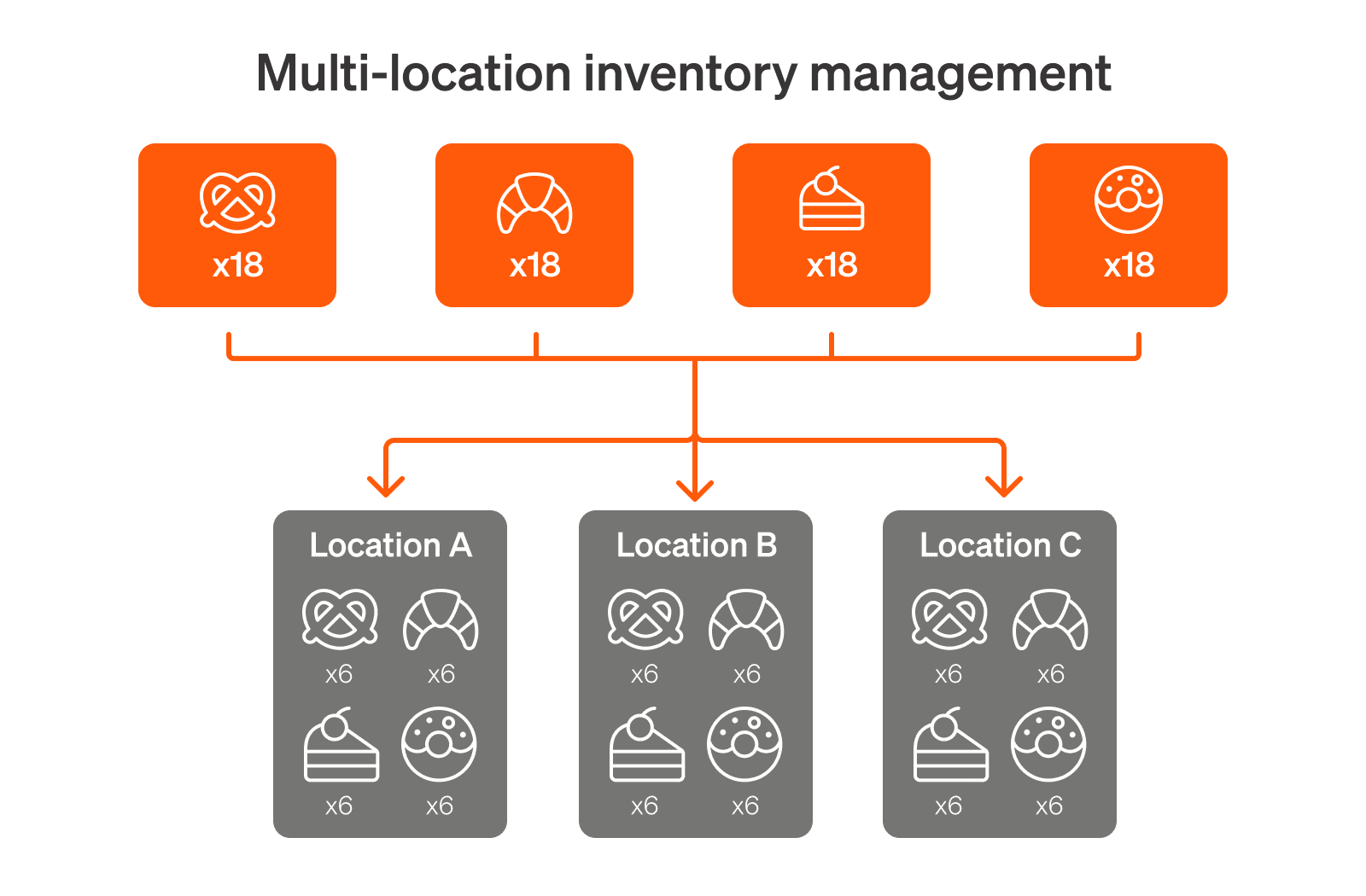
SAP Commerce Cloud excels at managing complex, multi-location inventory scenarios through its advanced inventory visibility and allocation engine. This capability is critical for operations with multiple warehouses, distribution centers, stores functioning as mini-fulfillment centers, or hybrid fulfillment models.
The platform's multi-location inventory management includes:
- Global Inventory Visibility: The system maintains a real-time, centralized view of inventory across all locations, including goods in transit between facilities. This single source of truth is accessible to both customers and internal teams.
- Rules-Based Allocation Logic: Inventory managers can configure sophisticated business rules that determine how inventory is allocated across locations and sales channels. For example, you can reserve specific inventory quantities for high-priority wholesale customers versus e-commerce channels.
- Distributed Order Management (DOM): When an order is placed, the DOM engine evaluates multiple fulfillment options using an AI-powered decision matrix. It considers factors such as:
- Current inventory levels at each location
- Proximity to customer destination
- Warehouse capacity and labor availability
- Shipping costs and carrier performance
- Order priority and service level agreements
- Split Shipment Intelligence: For orders containing multiple items, the system can intelligently determine whether to split the order across locations (to speed delivery) or consolidate from a single location (to reduce shipping costs), based on configurable business rules.
This comprehensive approach ensures that inventory is utilized optimally across your entire network, leading to faster delivery times, reduced shipping costs, and significantly lower risk of stockouts. Organizations using SAP's multi-location capabilities typically report 25-30% improvements in inventory turnover rates and up to 40% reduction in expedited shipping costs.
What security protocols and compliance certifications does SAP Commerce Cloud offer for inventory data?
SAP Commerce Cloud implements enterprise-grade security specifically designed to protect sensitive inventory, customer, and supply chain data. This is critical for warehouse and inventory operations where data breaches could expose proprietary information about stock levels, supplier relationships, and fulfillment capabilities.
The platform's security framework includes:
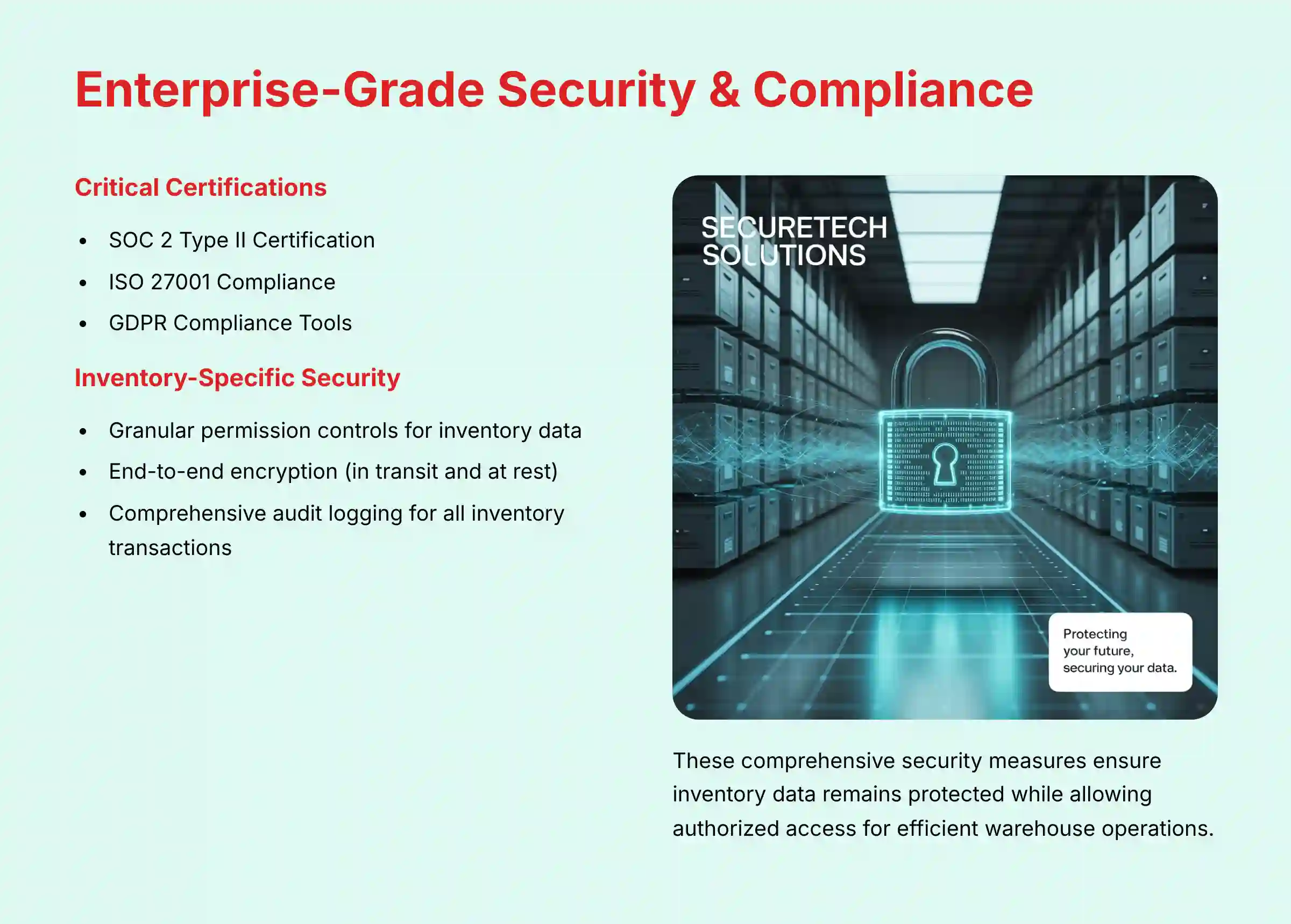
- SOC 2 Type II Certification: SAP Commerce Cloud has achieved SOC 2 Type II attestation, verifying that effective controls are in place for securing customer data based on the five trust service criteria: security, availability, processing integrity, confidentiality, and privacy.
- ISO 27001 Compliance: The platform adheres to ISO 27001 standards for information security management systems (ISMS), demonstrating a systematic approach to managing sensitive company information.
- Granular Inventory Permission Controls: The system allows administrators to define precise role-based access controls for inventory data. For example, warehouse associates might only see inventory in their assigned zones, while managers can view full facility data, and executives can access network-wide visibility.
- End-to-End Data Encryption: All inventory and warehouse data is encrypted both in transit (using TLS 1.2+) and at rest, protecting it from unauthorized access.
- Audit Logging for Inventory Transactions: Every inventory transaction is tracked with a detailed audit trail that records who accessed or modified inventory data, when, and what specific changes were made. This is essential for regulatory compliance and loss prevention.
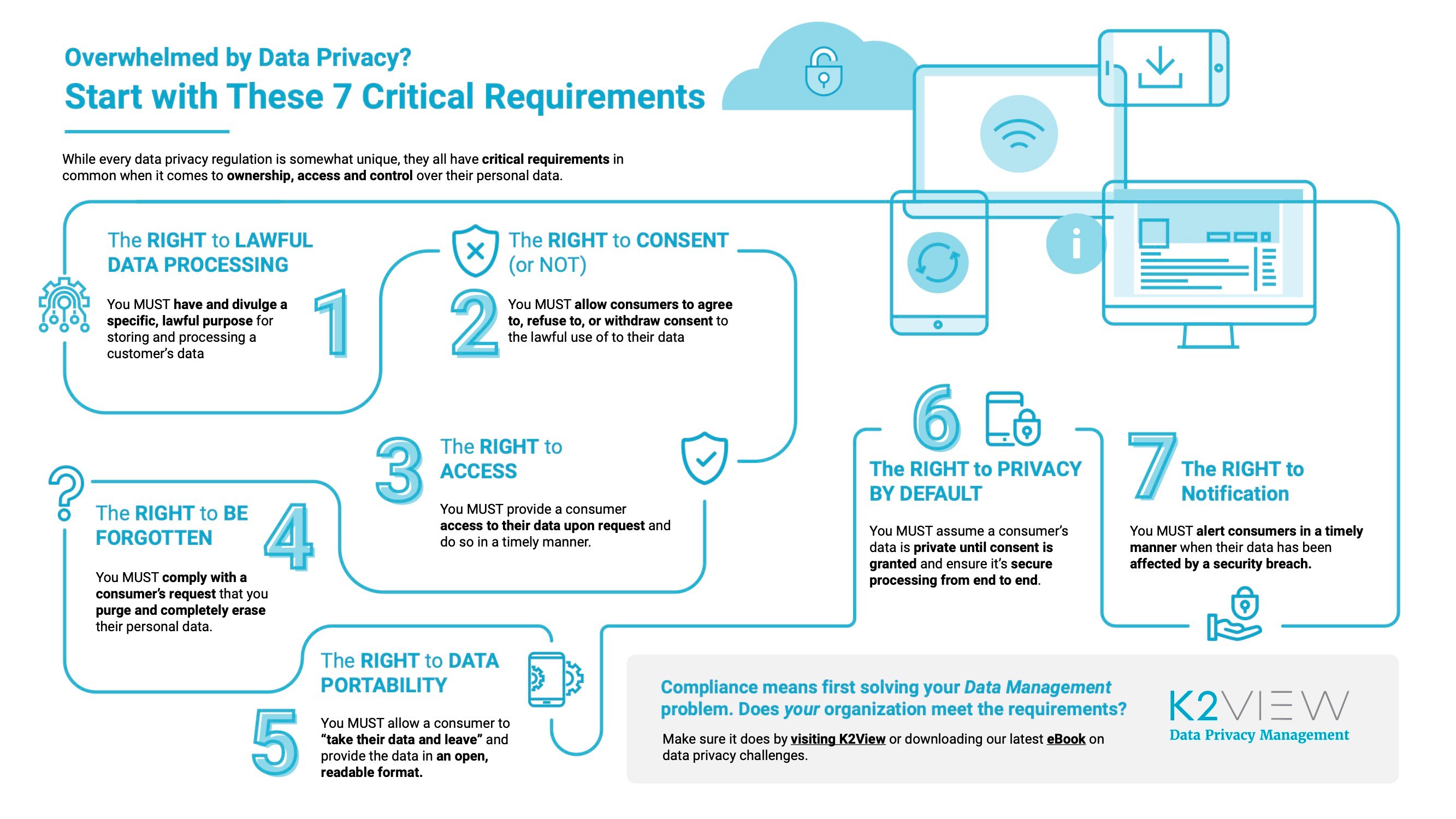
- GDPR Compliance Tools: For operations with European presence, the platform includes tools to manage customer data in accordance with GDPR requirements.
These comprehensive security measures ensure that your inventory data remains protected while still allowing authorized personnel and systems to access the information they need for efficient warehouse operations. This security framework is particularly valuable for inventory operations in regulated industries like pharmaceuticals, food and beverage, and defense manufacturing.
How does SAP Commerce Cloud integrate with SAP EWM and other warehouse management systems?
SAP Commerce Cloud offers multiple integration approaches with warehouse management systems, with particularly deep integration capabilities for SAP's Extended Warehouse Management (EWM) solution. This integration is crucial for creating a seamless digital thread from online ordering through warehouse execution.
Integration with SAP EWM:
The most robust integration exists between Commerce Cloud and SAP EWM, facilitated through SAP's Integration Suite and pre-built data models. This native integration enables:
- Real-time Inventory Synchronization: Available-to-Promise (ATP) information from EWM is continuously synchronized with the commerce platform, ensuring customers only see products that can be fulfilled.
- Automated Order Flow: Orders placed in Commerce Cloud are automatically converted into warehouse tasks in EWM, triggering picking, packing, and shipping processes without manual intervention.
- Pick/Pack/Ship Status Updates: As warehouse operations progress through the fulfillment workflow in EWM, status updates are pushed back to Commerce Cloud, enabling customer-facing order tracking.
- Returns Processing: Return authorizations created in Commerce Cloud generate corresponding inbound processing tasks in EWM, streamlining the reverse logistics process.
Integration with Third-Party WMS Solutions:
For organizations using non-SAP warehouse management systems, Commerce Cloud provides several integration options:
- REST API Framework: The platform offers comprehensive APIs for inventory, order, and fulfillment data exchange with any modern WMS.
- Pre-built Connectors: Through the SAP Integration Suite, connectors exist for major WMS providers including Manhattan Associates, Blue Yonder (formerly JDA), and HighJump.
- Middleware Options: For more complex integration scenarios, SAP supports integration through middleware solutions like MuleSoft, Dell Boomi, or SAP Process Orchestration.
The most successful implementations follow a phased integration approach, starting with basic inventory synchronization and order flows, then progressively adding more sophisticated integration points like carrier selection, rate shopping, and advanced shipping notifications (ASNs). For competitive analysis and alternative options, review our SAP Commerce Cloud Top Alternatives and Competitors guide.
What is the pricing model for SAP Commerce Cloud in warehouse-centric deployments?
SAP Commerce Cloud follows a subscription-based pricing model for warehouse-centric deployments, with several factors influencing the total cost of ownership (TCO). Understanding these components is essential for building an accurate business case:
- Order Volume-Based Subscription: The primary pricing metric is based on the number of orders processed annually through the platform. SAP typically sells subscriptions in blocks of orders (e.g., “Blocks of 10,000 Orders per year”) with tiered pricing that decreases the cost per order as volume increases.
- Environment Requirements: The standard subscription includes one production environment and a limited number of non-production environments (development, testing, staging). Additional environments for complex development workflows or region-specific deployments increase costs.
- Additional Modules: Warehouse-specific functionality such as the Order Management System (OMS) with advanced allocation rules or the Distributed Order Management (DOM) module for multi-location fulfillment optimization may require additional licensing.
- Implementation Services: Implementation costs are separate from the subscription and typically range from $250,000 to $1.5+ million depending on complexity, customization requirements, and integration needs. For warehouse-centric deployments with complex inventory models, implementation costs often reach the higher end of this range.
- Ongoing Support and Maintenance: Expect to budget 15-20% of the initial implementation cost annually for ongoing support, enhancements, and platform upgrades.
Risk Disclaimer: SAP Commerce Cloud pricing is complex and subject to negotiation based on specific commercial agreements. The Total Cost of Ownership extends significantly beyond the subscription fee to include implementation, customization, and ongoing maintenance costs.
Organizations evaluating SAP Commerce Cloud for warehouse operations must obtain a detailed quote directly from SAP or a certified partner, as final pricing will be specific to your organization's unique operational requirements and scale.
How does SAP Commerce Cloud compare to Salesforce B2B Commerce for inventory-intensive businesses?
For inventory-intensive businesses, the choice between SAP Commerce Cloud and Salesforce B2B Commerce comes down to core architectural differences that align with different operational priorities:
SAP Commerce Cloud
SAP Commerce Cloud excels for organizations with complex inventory models, multiple fulfillment locations, and intricate warehouse operations. Its distinct advantages include:
- Native SAP Ecosystem Integration: If your warehouse and inventory operations run on SAP S/4HANA or SAP EWM, Commerce Cloud offers superior out-of-the-box integration that eliminates the need for complex middleware for inventory synchronization.
- Complex Product and Inventory Models: The platform was built to handle massive catalogs with intricate attribute hierarchies, configurable products, and multi-dimensional inventory (e.g., tracking inventory by batch, lot, serial number, and location simultaneously).
- Sophisticated Warehouse Rules Engine: Commerce Cloud's Order Management capabilities include advanced constraints processing that can model complex warehouse allocation rules, wave planning limitations, and zone-based fulfillment logic.
- Real-time ATP Calculations: The platform offers superior real-time Available-to-Promise calculations that account for committed inventory, safety stock levels, and warehouse-specific allocation rules.
Salesforce B2B Commerce
Salesforce B2B Commerce is better suited for businesses where customer relationship management is the primary focus and inventory complexity is moderate. Its strengths include:
- Unified Customer Experience: If your sales teams already use Salesforce CRM, B2B Commerce provides a 360-degree view of customer interactions across sales, service, and commerce channels.
- Faster Time-to-Market: Generally offers quicker implementation timelines for standard B2B scenarios with moderate inventory complexity.
- Superior Mobile Experience: Provides more advanced native mobile capabilities for warehouse associates and B2B buyers through the Salesforce Mobile SDK.
- AI-Powered Customer Insights: Einstein AI offers superior customer behavior analysis and recommendation engines, though less focus on warehouse optimization.
For truly inventory-intensive operations with complex fulfillment requirements across multiple locations, SAP Commerce Cloud typically provides superior capabilities for warehouse-specific scenarios, while Salesforce excels when the customer relationship is the central focus of the digital commerce strategy.
| Feature | SAP Commerce Cloud | Salesforce B2B Commerce |
|---|---|---|
| Complex Inventory Models | Excellent – Multi-dimensional tracking | Good – Standard inventory features |
| Multi-Location Management | Superior – Advanced DOM capabilities | Moderate – Basic multi-location support |
| Warehouse Integration | Native SAP EWM integration | Third-party integration required |
| Implementation Timeline | 8-15 months for complex deployments | 4-8 months for standard scenarios |
| CRM Integration | Requires integration effort | Native Salesforce ecosystem |
What is a typical implementation timeline for SAP Commerce Cloud in a warehouse environment?
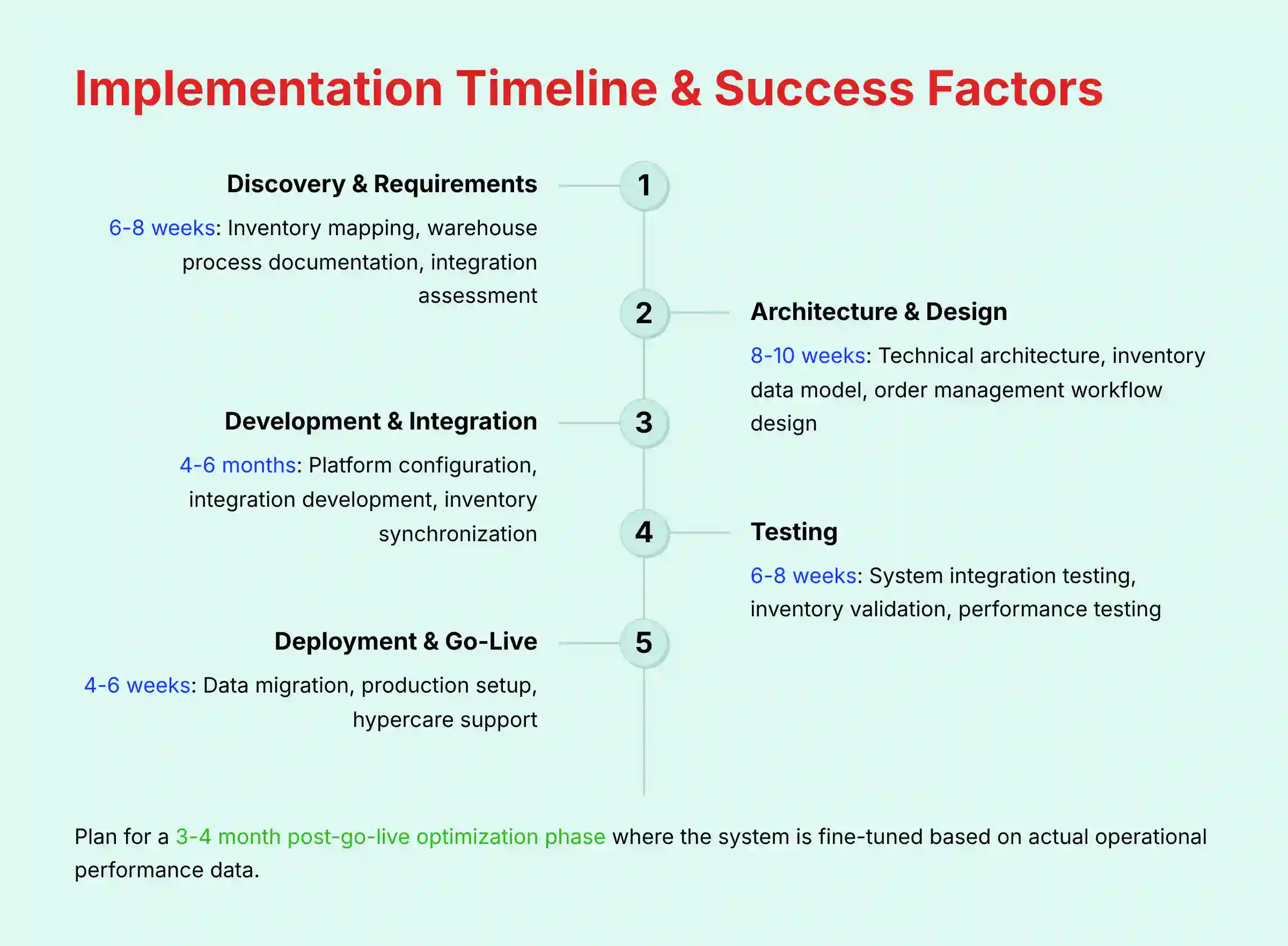
Implementing SAP Commerce Cloud in a warehouse-intensive environment typically follows a more extended timeline than standard e-commerce deployments due to the complexity of inventory, fulfillment, and integration requirements. A realistic timeline ranges from 8 to 15 months for enterprise-scale deployments, with the following phases:
1. Discovery & Requirements Phase (6-8 weeks)
- Detailed inventory model mapping across all locations
- Warehouse process documentation and optimization opportunities
- Integration requirement assessment for ERP, WMS, and other systems
- Order routing and fulfillment rule definition
- Security and compliance requirement documentation
2. Architecture & Design Phase (8-10 weeks)
- Technical architecture design including integration patterns
- Inventory data model configuration
- Order management and fulfillment workflow design
- User experience design for both B2B buyers and warehouse operators
- Performance requirements definition for peak order volumes
3. Development & Integration Phase (4-6 months)
- Core platform configuration and customization
- Integration development with ERP, WMS, and logistics systems
- Inventory synchronization mechanism implementation
- Order management workflow configuration
- Warehouse-specific extensions and customizations
- Mobile application development for warehouse operations (if required)
4. Testing Phase (6-8 weeks)
- System integration testing across the fulfillment ecosystem
- Inventory accuracy validation
- Order processing workflow validation
- Performance testing under peak load conditions
- User acceptance testing with warehouse operations teams
5. Deployment & Go-Live (4-6 weeks)
- Data migration and inventory reconciliation
- Production environment setup and hardening
- Cutover planning and execution
- Hypercare support during initial operations
Critical Success Factors:
- Dedicated inventory and warehouse SMEs throughout the project
- Comprehensive testing with real-world inventory scenarios
- Phased rollout approach starting with less complex product categories or locations
- Thorough training for warehouse teams on new processes and systems
Organizations should plan for a post-go-live optimization phase of 3-4 months where the system is fine-tuned based on actual operational performance data. The most successful implementations typically start with a Minimum Viable Product (MVP) approach focused on core inventory and order processes, then add more advanced capabilities in subsequent phases.
What are the key AI features in SAP Commerce Cloud for optimizing inventory turnover?
SAP Commerce Cloud incorporates several AI and machine learning capabilities specifically designed to optimize inventory turnover across warehouse networks. These intelligent features work together to reduce holding costs while preventing stockouts:
1. AI-Powered Demand Forecasting
The platform's machine learning algorithms analyze historical order patterns, seasonal trends, and external signals (like promotions or market events) to generate SKU-level demand forecasts. These forecasts drive automated inventory positioning across your warehouse network, helping to:
- Place fast-moving items in optimal picking locations
- Distribute inventory based on regional demand patterns
- Adjust safety stock levels dynamically based on forecast confidence
2. Intelligent Order Routing
Using reinforcement learning techniques, the system continuously optimizes how orders are routed to different fulfillment locations:
- Balances inventory levels across the network to prevent localized stockouts
- Considers warehouse capacity constraints and labor availability
- Factors shipping costs, delivery times, and carbon footprint
- Adapts routing decisions based on performance feedback loops
3. Inventory Health Monitoring
AI-powered algorithms continuously monitor your inventory health across warehouses:
- Identify slow-moving or at-risk inventory before it becomes obsolete
- Generate automated recommendations for inventory transfers between locations
- Suggest targeted promotions for aging inventory
- Predict potential stockouts before they occur
4. Dynamic Pricing Optimization
For inventory-constrained items, the AI can suggest price adjustments to optimize both margin and turnover:
- Incrementally increase prices on low-stock, high-demand items
- Recommend strategic discounts on overstocked items
- Balance price elasticity with inventory carrying costs
5. Assortment Intelligence
Advanced analytics help optimize which products should be stocked at which warehouses:
- Identify complementary products that should be co-located
- Recommend warehouse-specific assortments based on regional demand
- Suggest SKU rationalization for slow-moving variants
Organizations implementing these AI capabilities typically see inventory turnover improvements of 20-30% while simultaneously reducing stockouts by 15-25%. The most successful implementations follow a phased approach, starting with basic demand forecasting and progressively adding more sophisticated AI capabilities as the system accumulates performance data. Learn more about AI integration in our Best 10 AI for Order Fulfillment & Picking 2025 comprehensive guide.
How does SAP Commerce Cloud facilitate returns processing and reverse logistics?
SAP Commerce Cloud offers comprehensive capabilities for managing returns processing and reverse logistics operations, turning what is typically a cost center into a potential value recovery opportunity. The platform's returns management functionality streamlines the entire returns lifecycle:
1. Customer-Facing Returns Initiation
- Self-service returns portal allows customers to initiate returns without contacting customer service
- AI-powered return reason analysis identifies patterns in return behavior
- Configurable rules engine determines return eligibility, refund methods, and return locations
- Digital return label generation with barcode/QR code tracking
2. Returns Authorization & Routing
- Automated approval workflows based on product type, condition, and return reason
- Intelligent routing directs returns to the optimal facility based on:
- Return volume and processing capacity
- Disposition options at each location
- Specialized handling requirements (e.g., hazardous materials)
- Potential for resale or refurbishment
3. Warehouse Returns Processing
- Mobile-optimized receiving interface for rapid returns scanning and condition assessment
- Rules-based disposition determination (resell, refurbish, liquidate, scrap)
- Automated quality inspection checklists tailored by product category
- Return-to-inventory workflows with real-time inventory updates
4. Financial Processing & Analytics
- Automated credit processing based on inspection results
- Return reason analytics to identify product quality issues
- Supplier chargeback management for defective items
- Cost of returns reporting by product, category, and vendor
5. Value Recovery Optimization
- AI-driven recommendations for optimal disposition to maximize recovery value
- Integration with secondary market channels for liquidation
- Refurbishment workflow management
- Warranty and parts recovery tracking
The platform's returns capabilities integrate directly with warehouse management systems to create efficient reverse logistics workflows that minimize processing costs while maximizing recovery value. Organizations using SAP's returns management typically report 25-40% reductions in returns processing costs and 15-20% improvements in recovery value from returned inventory.
For complex operations with high return volumes, the system can be configured to support specialized reverse logistics facilities dedicated to returns processing, refurbishment, and remarketing operations.
How can I find a certified SAP implementation partner specializing in warehouse optimization?
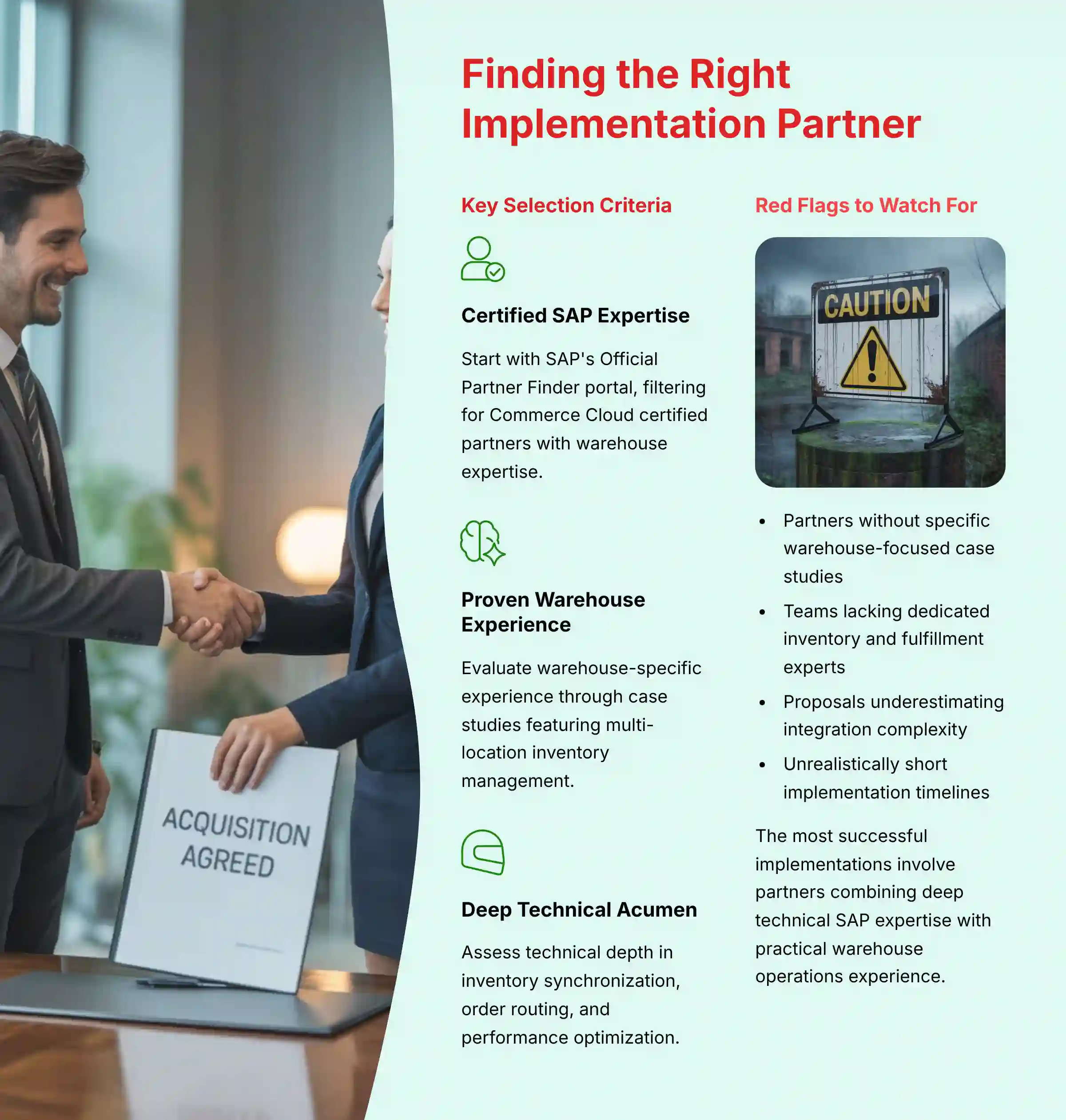
Finding the right implementation partner is critical for warehouse-focused SAP Commerce Cloud deployments, as these partners bring specialized expertise in inventory management, fulfillment optimization, and warehouse integration. Follow this structured approach to identify a partner with proven warehouse and inventory expertise:
1. Start with SAP's Official Partner Finder
Begin your search on the SAP Partner Finder portal (partners.sap.com), where you can:
- Filter specifically for SAP Commerce Cloud certified partners
- Further refine by industry expertise and warehouse/inventory specialization
- Check for specific qualifications like “SAP Recognized Expertise in Supply Chain Management”
2. Evaluate Warehouse-Specific Experience
As you develop a shortlist, look for evidence of specialized warehouse expertise:
- Case studies featuring multi-location inventory management
- Experience integrating with WMS and ERP systems in your industry
- Demonstrated expertise with order management and inventory optimization
- Client references from inventory-intensive businesses similar to yours
3. Assess Technical Depth in Key Areas
During initial conversations, probe for expertise in these critical warehouse-related areas:
- Real-time inventory synchronization approaches
- Order routing and allocation rule configuration
- Distributed order management implementation experience
- Returns processing and reverse logistics capabilities
- Performance optimization for high-volume order processing
4. Evaluate Implementation Methodology
The best warehouse-focused partners will have:
- A phased implementation approach starting with core inventory functions
- Specialized testing methodologies for inventory accuracy validation
- Warehouse-specific training programs for operations teams
- Post-go-live optimization services for tuning inventory performance
5. Consider Geographic Alignment
For multi-location warehouse operations, consider:
- Partners with presence near your primary distribution centers
- Experience with regional fulfillment requirements and carrier integrations
- Understanding of local warehousing regulations and compliance needs
Red Flags to Watch For:
- Partners who cannot provide specific warehouse-focused case studies
- Teams that lack dedicated inventory and fulfillment subject matter experts
- Proposals that underestimate integration complexity with warehouse systems
- Implementation timelines that appear unrealistically short for complex inventory scenarios
The most successful implementations typically involve partners who combine deep technical SAP expertise with practical warehouse operations experience. Request detailed references from clients with similar warehouse complexity, and speak directly with their operations teams about the partner's performance throughout the implementation journey.
For additional guidance on implementation planning and partner selection, explore our comprehensive SAP Commerce Cloud FAQs resource center.

Leave a Reply