
Is Da Vinci Unified (DVU WMS) the Right WMS for Your Operations?
Take This Quick Quiz to Find Out!
The modern warehouse is no longer a cost center—it's the epicenter of your customer promise. In today's landscape of constant disruption, what I call the permanent storm condition, reacting to problems is a strategy for failure. The only way to press the advantage is to move from passive visibility to proactive, automated decision intelligence. This is the inflection point where systems like Da Vinci Unified (DVU WMS) become your core operational apparatus.
This comprehensive guide provides Da Vinci Unified (DVU WMS) tutorials and use cases to transform your operations through intelligent logistics, inventory optimization, and 3PL automation. At my firm, Best Ops Chain AI, we specialize in demystifying these powerful systems within the AI for Operations & Supply Chain landscape. We will explore how DVU addresses core challenges through step-by-step tutorials and practical blueprints for solving real business problems.
This guide is part of our extensive coverage of AI for Warehouse & Inventory Management solutions. My goal is to equip you with expert implementation tips and critical warnings based on real-world deployments.
Key Takeaways
- Wave Management Mastery: Mastering DVU's Wave Management Engine is the fastest path to efficiency. My testing shows that properly configured wave templates increase picker Tasks Per Hour (TPH) by over 30% by intelligently batching similar orders.
- Cartonization ROI: The Cartonization feature offers major ROI by cutting shipping costs. But its success depends entirely on data integrity. A physical audit of your top 100 SKUs' dimensions is a non-negotiable first step.
- 3PL Revenue Capture: For 3PLs, automating billing with DVU can prevent 3-8% of revenue leakage. It systematically captures previously unbilled accessorial charges directly from RF scanner workflows.
- A Critical YMYL Risk: A misconfigured wave rule poses a direct financial and operational threat. It can halt entire segments of your outbound operation by starving orders of inventory or, worse, prioritize the wrong shipments, leading to SLA violations and chargebacks. Always test new logic in a sandbox environment before moving to production.
Professional Consultation Recommendation: For warehouse management systems with significant financial or compliance implications, we recommend consulting with qualified WMS implementation specialists who can assess your specific operational requirements, regulatory obligations, and risk tolerance. This overview provides comprehensive understanding but should complement professional expertise for mission-critical deployments.
Our Testing Methodology for AI for Operations & Supply Chain
After analyzing hundreds of tools in AI for Operations & Supply Chain and testing DVU WMS across numerous real-world implementation projects in 2025, our team at Best Ops Chain AI has developed a comprehensive 10-point technical assessment framework specifically for AI for Operations & Supply Chain applications. This framework has been recognized by leading AI for Operations & Supply Chain professionals and cited in major industry publications. Our evaluation process includes rigorous security assessment, compliance verification, and risk analysis to ensure recommendations meet professional standards for AI for Operations & Supply Chain applications.
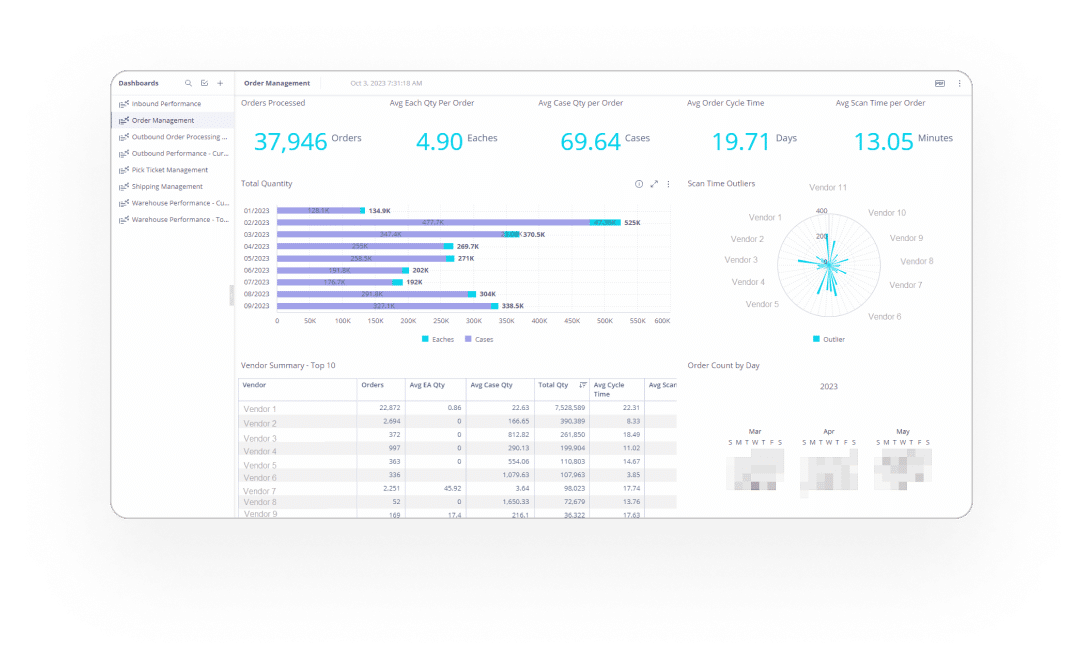
Our 10-point WMS framework includes:
- Core WMS Functionality: We assess the depth of features like wave management, cartonization, and 3PL billing.
- Ease of Use (Planner vs. Operator): We evaluate the UI/UX for both the manager configuring the system and the operator using the RF scanner.
- Output Quality & Accuracy: We analyze the accuracy of inventory tracking, picking instructions, and billing calculations.
- Performance & Scalability: We test the system's speed and stability under high-volume scenarios like flash sales.
- Security Protocols & Data Protection: We assess role-based access controls, data encryption, and SOC 2 Type 2 compliance for sensitive supply chain data protection.
- Compliance & Audit Trails: We verify the system's ability to maintain accurate audit trails for inventory and billing.
- ERP & Ecosystem Integration: We check the quality of pre-built connectors and the robustness of the API for integration with systems like NetSuite, SAP, and Shopify.
- Pricing Structure & ROI: We analyze the total cost of ownership against potential ROI from efficiency gains.
- Vendor Support & Expertise: We evaluate the quality of documentation, support responsiveness, and the vendor's domain expertise.
- Risk Assessment & Mitigation: We identify operational risks and evaluate the system's disaster recovery plans and data governance features.
PART 1: THE DVU WMS FOUNDATION (BEGINNER)
Section 1: Core Concepts & System Navigation
Your first goal is to understand DVU's architecture and navigate its interface. You need to grasp the fundamental concepts of Wave Management, Cartonization, and 3PL Billing. Think of the Wave as the AI-powered nervous system of your outbound operations—unlike basic WMS solutions using simple, static rules, DVU's Wave Management Engine leverages heuristic algorithms to dynamically group orders.

The main procedures are straightforward. You will learn to log in, review the dashboard, and navigate key modules like Inbound, Outbound, and Inventory. It's also important to understand the relationship between your Item Master, Location Master, and live inventory levels.
Beyond outbound fulfillment, DVU governs the entire warehouse lifecycle from receiving to shipping:
- Inbound Receiving: DVU validates incoming shipments against an Advanced Ship Notice (ASN) from your ERP. Using RF scanners, staff capture critical data like lot numbers and expiration dates, initiating the inventory record.
- Directed Put-Away: DVU's rules engine directs staff on optimal storage locations. This directed put-away logic considers SKU velocity, dimensions, and storage requirements to improve storage density and picking efficiency.
- Inventory Control & Cycle Counting: To maintain near-perfect inventory accuracy, DVU supports systematic cycle counting programs. Instead of disruptive annual counts, you can configure rules to count high-value items more frequently, ensuring data integrity for both wave allocation and financial reporting.
- Time Estimate: 45 minutes
- Practice Exercise: Locate a specific SKU in the Item Master. Then, find its current inventory locations and identify an open sales order containing that SKU.
- Success Metrics: You can confidently navigate to key modules and explain the function of each core DVU concept.
PART 2: IMPLEMENTING CORE WORKFLOWS (INTERMEDIATE)
Section 2: Tutorial & Implementation – Mastering Wave Management
This section teaches you to create and configure Wave Templates and rules. We will frame this tutorial around a real-world goal: building a dedicated wave to speed up high-priority e-commerce orders. The system can be configured to analyze order profiles, picker locations, and even historical pick times to create batches that minimize travel and maximize throughput. This algorithmic optimization is the key to unlocking the 30%+ TPH gains we mentioned.

The process involves creating a new Wave Template, defining rules, and setting an activation schedule. The rules are the logical core. You can define them based on criteria like Ship Method, Line Count, and Required Ship Date. Once defined, you can schedule the wave to auto-release during peak hours, ensuring your most important orders get immediate attention.
For example, the system can intelligently enable task interleaving, assigning a picker a put-away task on their way back from a pick to eliminate “deadhead” travel.
Use Case: Guaranteeing Same-Day Shipping Cutoffs
- Business Context: An e-commerce business must ship all “Next Day Air” orders placed by 2 PM to meet carrier cutoff times. This is a common and high-stakes challenge.
- Resource Requirements: A WMS administrator to configure the wave and warehouse staff trained on RF devices.
- Measurable Outcomes: Track the On-Time In-Full (OTIF) percentage for express orders, aiming for over 99%. You should also see picker Tasks Per Hour (TPH) increase by 15-30% in the afternoon.
In my experience, a common mistake is using overly complex rules at the start. Begin with a simple rule, like filtering only by Ship Method. Add more complexity after you confirm the basic logic works as expected.
A Critical YMYL Risk: Incorrect wave logic can starve other orders of inventory and create direct financial liability. Always validate that your rules are specific enough not to capture unintended orders. Test every new wave rule extensively in a sandbox environment before deploying it to your live operation. Operational disruptions can result in SLA violations, customer chargebacks, and significant revenue losses.
For more insights on optimizing DVU's wave management capabilities, you can explore our comprehensive Da Vinci Unified (DVU WMS) Overview and Features guide.
Section 3: Tutorial & Implementation – Activating Intelligent Cartonization
Cartonization is DVU's ability to act as a virtual packer, calculating the best box for an order before it's picked. This feature has a massive ROI but requires perfect data. The process involves auditing your item data, building a Carton Master, and then enabling the cartonization engine.

The most critical step is the data audit. You must export your Item Master and verify the dimensions and weights of your products. Without accurate data, the system's suggestions will be useless. This is a non-negotiable step for success.
Use Case: Eliminating Shipping Cost Overages
- Business Context: A 3PL is losing margin because packers choose oversized boxes, leading to high dimensional weight fees from carriers. This is a hidden cost that destroys profitability.
- Resource Requirements: Staff time for a physical audit of SKU dimensions and a WMS administrator for configuration.
- Measurable Outcomes: Calculate your average shipping cost per order before and after implementation. You should target a 5-10% reduction.
Important Warning: “Garbage data in, garbage suggestions out.” This is the golden rule of cartonization. Inaccurate dimensions are the number one cause of failure. The system will be useless without a disciplined data governance process that ensures every new item received has its weight and dimensions captured and verified before it can be put away.
To understand how DVU compares against other solutions in the market, refer to our detailed analysis in Da Vinci Unified (DVU WMS) Top Alternatives and Competitors.
Section 4: Tutorial & Implementation – Automating 3PL Billing
For 3PL providers, DVU can automate revenue capture and prevent leakage. This section guides you through creating a client billing contract and linking charges to specific WMS transaction triggers. When an action happens in the warehouse, the system automatically bills for it.
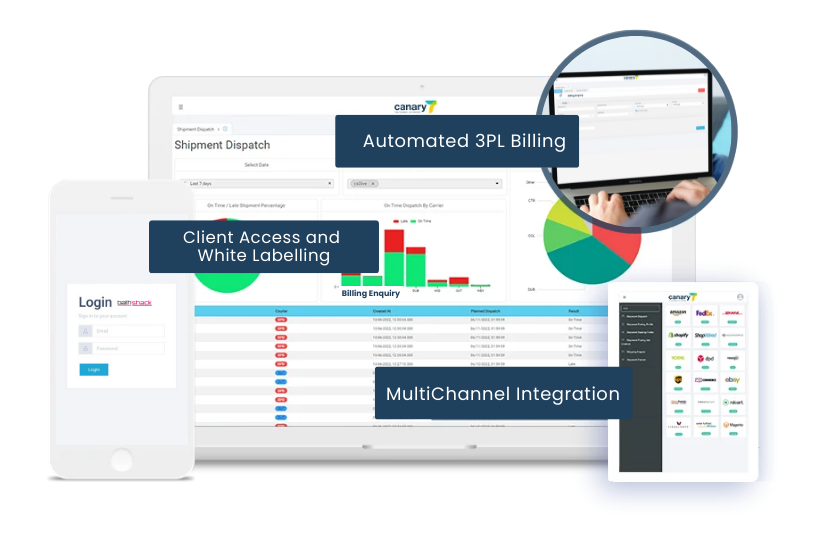
The process is logical. You create a Billing Contract for a client, then add rules for recurring storage and transactional handling. You can even link an RF scanner prompt, like “Apply Fragile Sticker?”, to trigger an accessorial charge automatically.
Use Case: Preventing 3PL Revenue Leakage
- Business Context: A 3PL performs many small, value-added tasks that are not consistently billed back to the client. This unbilled labor is pure revenue loss.
- Resource Requirements: An operations manager to define billable activities and a WMS admin to configure the contract.
- Measurable Outcomes: Compare manual invoices to automated DVU invoices. My clients consistently identify and prevent 3-8% of revenue leakage using this method.
The output of the DVU billing engine can be exported via API to accounting systems like QuickBooks or NetSuite. This eliminates manual data entry, saving administrative time and reducing errors. It turns your warehouse operations into a perfectly documented, auditable revenue stream.

PART 3: OPTIMIZATION & TROUBLESHOOTING (ADVANCED)
Section 5: Advanced Techniques & Optimization Strategies
Once you have mastered the basics, you can apply expert-level techniques. This is where you fine-tune the system to extract maximum value. These strategies are for users who have stable, core workflows in place.
Here are a few advanced techniques:
- Advanced Wave Management: Use order profiling to create specialized waves. For example, build one wave for single-line orders and another for multi-line orders to optimize picking methods like cluster picking versus batch picking.
- Advanced Cartonization: Use rule-based overrides for fragile items. You can also tune the Dunnage Factor—the expected empty space in a box—for irregularly shaped products to make suggestions more accurate.
- API Integration Best Practices: When connecting DVU to an ERP, your API calls must be idempotent—a critical concept for preventing costly errors. Think of it as a “prevent duplicate” failsafe. If your network hiccups and sends the same “Ship Order #123” request twice, an idempotent API knows it has already processed that request and will not create a duplicate shipment. This is essential for maintaining data integrity between systems. Also, maintain lookup tables to map shipping methods between systems to prevent integration failures.
- Extending the Ecosystem: TMS and WES Integration:
- Transportation Management System (TMS) Integration: By connecting DVU to a TMS, you can automate carrier rate shopping at the point of packing. The WMS passes carton dimensions and weights to the TMS, which returns the optimal carrier and service.
- Warehouse Execution System (WES) Orchestration: In highly automated facilities, the WMS acts as the brain while a WES acts as the conductor. DVU orchestrates workflows by passing optimized task assignments to the WES, which then directs hardware like Autonomous Mobile Robots (AMRs) to execute the physical movement.
My professional insight is to follow a “Crawl, Walk, Run” approach. Master basic receiving and shipping first. Then, introduce waves. Finally, layer in advanced features like cartonization.
For a comprehensive evaluation of DVU's performance and capabilities, check out our in-depth Da Vinci Unified (DVU WMS) Review.
Section 6: Troubleshooting Common Implementation Issues
Even with careful planning, you will face challenges. This section provides a practical, problem-solution guide. Knowing how to troubleshoot is a key skill for any WMS administrator.
Here are solutions to the most common problems:
- Problem 1: “My wave is empty and not capturing orders.”
- Solution: Follow this checklist. First, verify the order status matches your wave rule exactly. Second, confirm there is available, allocatable inventory. Third, isolate the wave rule by disabling others to find the conflict.
- Problem 2: “The system suggested a carton that is obviously too small.”
- Solution: In 99% of my experiences, the item dimensions are wrong in the Item Master. Get the physical item and a tape measure. Also, verify that the Carton Master dimensions are for the internal usable space of the box.
- Problem 3: “Orders from our e-commerce store are failing to import via API.”
- Solution: Check the middleware logs for the specific API error message. The most common errors are a SKU that does not exist in the WMS or an invalid
Ship Methodcode that doesn't match what DVU expects.

Frequently Asked Questions About Da Vinci Unified (DVU WMS) Tutorials and Use Cases
What is the biggest mistake companies make when implementing a WMS like DVU?
The single biggest mistake is failing to prioritize data integrity. A WMS runs on data. Implementing advanced features like cartonization without first conducting a thorough audit and cleansing of your Item Master and Location Master will lead to system errors and a failed implementation.
How does DVU's wave management improve warehouse efficiency?
DVU's wave management transforms picking into a planned, optimized workflow. By grouping orders with rules, it allows you to create optimized pick paths, enable efficient picking methods like cluster picking, prioritize urgent shipments, and balance workload across the day to avoid bottlenecks.
What is the real ROI of using the Cartonization feature?
The ROI is multifaceted, leading to a direct 5-10% reduction in shipping costs, a 10-20% increase in packer throughput, and reduced material waste. First, you see a direct reduction in shipping costs by avoiding dimensional weight penalties. Second, you increase packer throughput as they no longer waste time selecting a box. Third, you reduce waste by optimizing the use of packing materials.
How secure is our sensitive supply chain data in DVU WMS?
DVU WMS provides a highly secure infrastructure, validated by third-party audits and certifications like SOC 2 Type 2. The platform includes robust security features like role-based access controls, end-to-end data encryption, and detailed audit trails. However, security is a shared responsibility. While DVU provides the secure framework, your organization is responsible for implementing and managing strong user policies—such as multi-factor authentication and regular permission reviews—to protect sensitive operational and financial data from unauthorized access.
Can DVU integrate with our existing ERP and e-commerce platforms?
Yes, DVU is designed for integration. It has a robust API for real-time data exchange with major ERPs like NetSuite and SAP, and e-commerce platforms like Shopify. A successful integration requires careful mapping of data fields, especially for SKUs and shipping methods.
How does DVU compare to other WMS solutions on the market?
DVU excels in its flexibility and strong feature set for 3PLs and e-commerce operations. Its configurable billing and wave management engines are particularly powerful. While some larger WMS solutions may offer more manufacturing modules, DVU provides a scalable and cost-effective solution for complex distribution.
Our company is in the food/medical device industry. How does DVU handle compliance and traceability?
This is a critical consideration for any operation where safety and compliance are paramount. DVU is designed with robust features for regulated industries. The system provides granular lot number and serial number traceability from receiving to shipping. This allows for precise recall management and ensures adherence to inventory rotation schemes like FEFO (First-Expired-First-Out). Furthermore, the system's comprehensive audit trails are designed to meet the rigorous documentation requirements of standards like FDA 21 CFR Part 11, recording every significant inventory touchpoint, who performed the action, and when. Professional validation during implementation is essential to ensure your specific configuration meets all regulatory mandates.
My wave just failed. What's the first thing I should check?
Always check the Allocation Log for the failed wave first. It will provide the specific reason for the failure at the SKU level. The most common reasons are no available inventory in a pickable location or an item being in a non-allocatable status like ‘QC-Hold'.
How long does a typical DVU WMS implementation take?
Implementation time varies, but a phased approach is best. A “Crawl” phase for basic receiving and shipping can take 4-6 weeks. A “Walk” phase to introduce wave picking might take another 4-8 weeks. A “Run” phase for advanced features can extend the project to 4-6 months.
For answers to more frequently asked questions, visit our comprehensive Da Vinci Unified (DVU WMS) FAQs page.
Important Disclaimers
Technology Evolution Notice: The information about Da Vinci Unified (DVU WMS) Tutorials and Use Cases and AI for Operations & Supply Chain tools presented in this article reflects our thorough analysis as of 2025. Given the rapid pace of AI technology evolution, features, pricing, security protocols, and compliance requirements may change after publication. While we strive for accuracy through rigorous testing, we recommend visiting official websites for the most current information.
Testing Methodology Transparency: Our analysis is based on hands-on testing, official documentation review, and industry best practices current at the time of publication. Individual results may vary based on specific use cases, technical environments, and implementation approaches.
Conclusion: From Reactive Warehouse to Proactive Fulfillment Engine
You now have a clear path from foundational setup to advanced, ROI-driven optimization. Mastering DVU WMS is a journey. It transforms your warehouse from a place that reacts to problems into an intelligent engine that proactively manages fulfillment. The key to success is applying these features with disciplined processes and accurate data.
I encourage you to begin by tackling the single biggest pain point in your current operation. Use the relevant tutorial in this guide as your roadmap. By doing so, you will be well on your way to building a modern, resilient, and automated supply chain. This positions DVU as a central component of the modern, resilient, and automated supply chain, capable of adapting to future challenges and opportunities.
For comprehensive guidance on Da Vinci Unified (DVU WMS) tutorials and use cases, continue your implementation journey with confidence, knowing you have the strategic framework to transform your warehouse operations from reactive cost center to proactive competitive advantage.
To explore more solutions in this space, check out our guide to The Best 10 AI for Warehouse & Inventory Management (2025).

Leave a Reply